November 5, 2019
After a fairly good nights sleep and having had breakfast it was time to head out for the day. I made sure my room was locked before leaving.
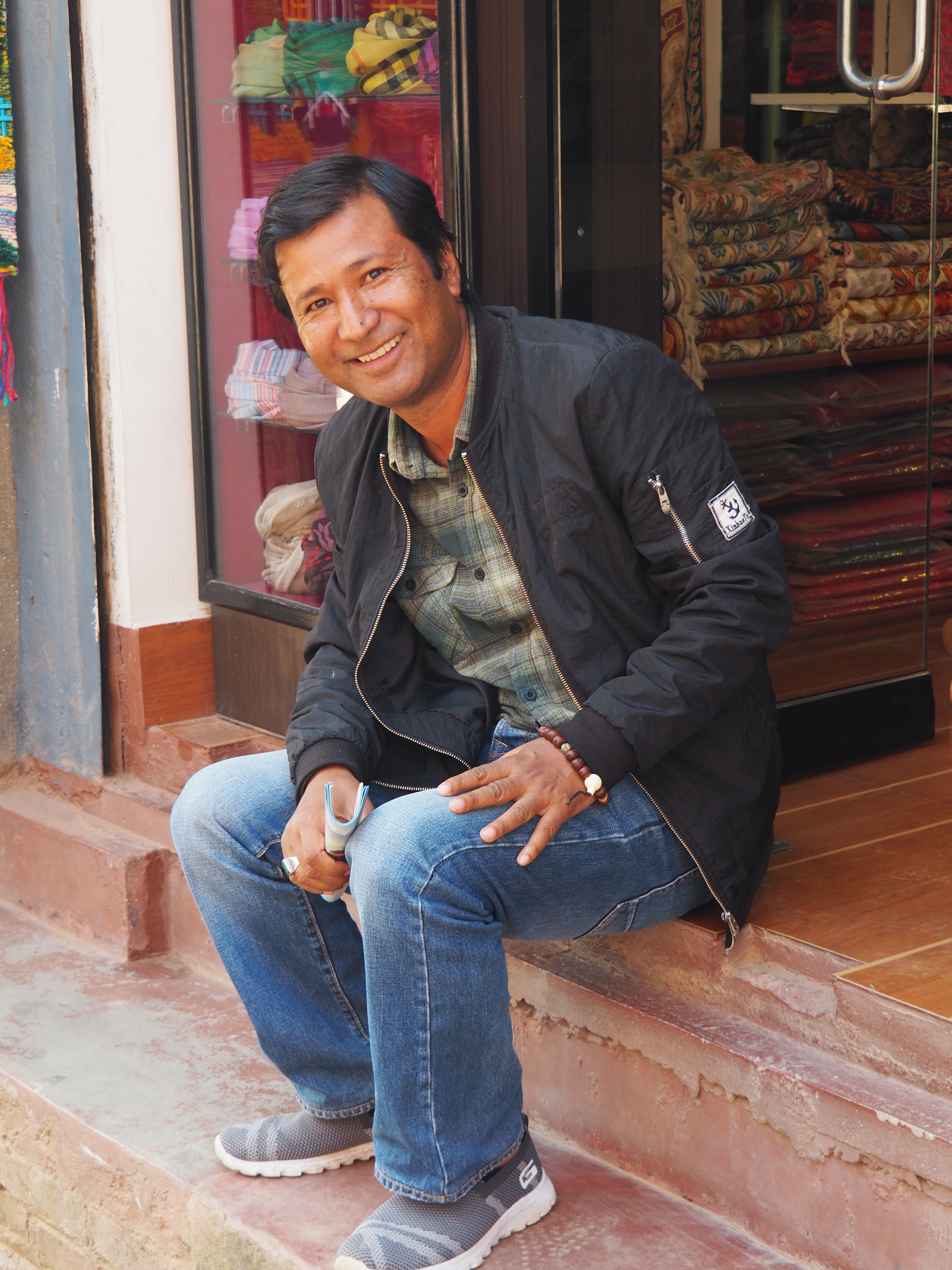
Suman met us at 9 o’clock. One of the things I enjoy about touring is getting to know about the guides and their lives. Suman is extremely friendly and knowledgeable but quite reserved. He doesn’t open up about himself much at all. We did learn a bit …He is 35 years old and has two brothers who live away from the family’s home. He lives with his mother in the family home which is about a 20 minute walk from our hotel. He went to a local university and studied management. I’m not sure how he got into tourism.
I asked Suman about the 2015 earthquake. He said he was at home on the fourth floor of their four story house and that it was utterly terrifying. He and his mother left the house and didn’t live there for some period of time afterward, until repairs could be made and the house was secure. People lived outside in the streets, and then in tents for a long time after the quake. He said people still have trauma and don’t sleep well. As he said this, I think he was speaking for himself as much as for anyone else.
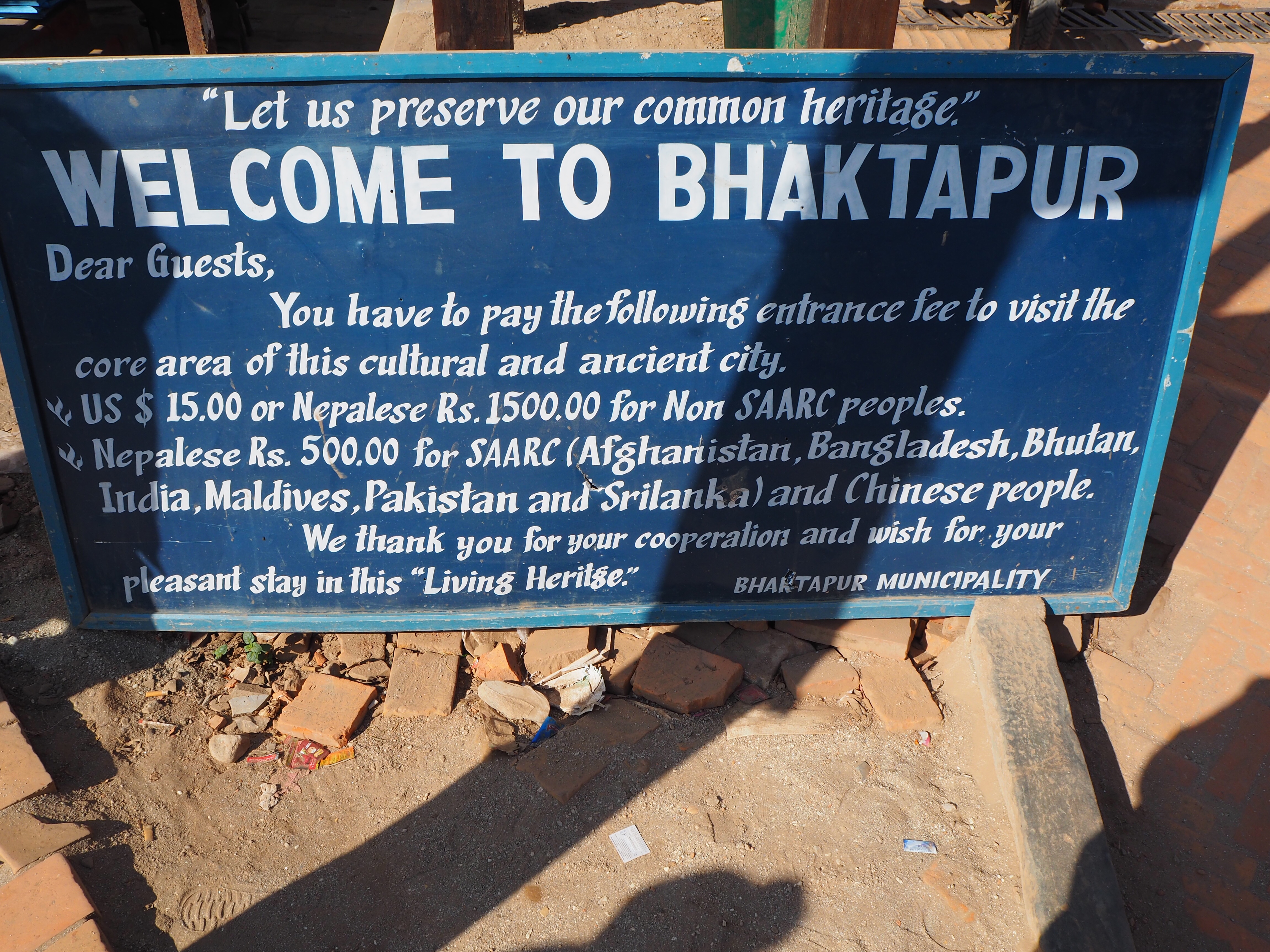
Our original schedule called for staying in the city for about a half day’s tour. We asked for a change which would take us to Bhaktapur, an ancient city about a 45 minute drive from our hotel. At one point in time, this was quite a ways from town, now it is seems to be more of a suburb. We were on busy streets and in fairly heavy traffic for the entire drive. Suman said that the sprawl is causing a loss of important farmland.
Bhaktapur dates from the 8th century and was the country’s capital until the 12th century. It is shaped like a flying pigeon! Like so much of what we have seen, this area sustained major damage during the earthquake in 2015. The name means “city of devotees”, which seems appropriate given the many temples and shrines that we saw.
It was great to wonder through the streets and alleys of this town. We got a great sense of how people live, seeing the local shops and restaurants as well as old and new houses, and even some “temporary” housing for people displaced by the quake.
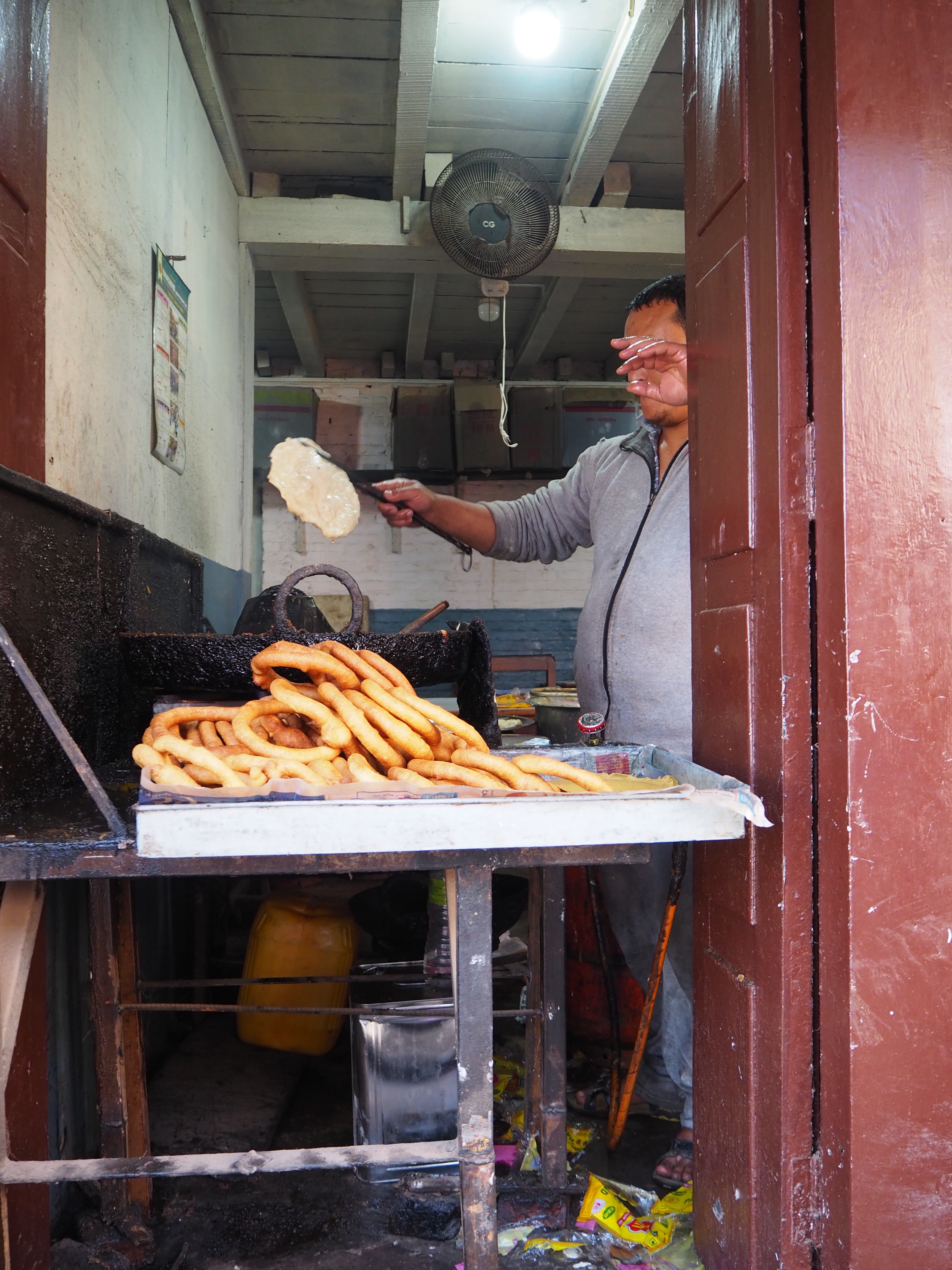
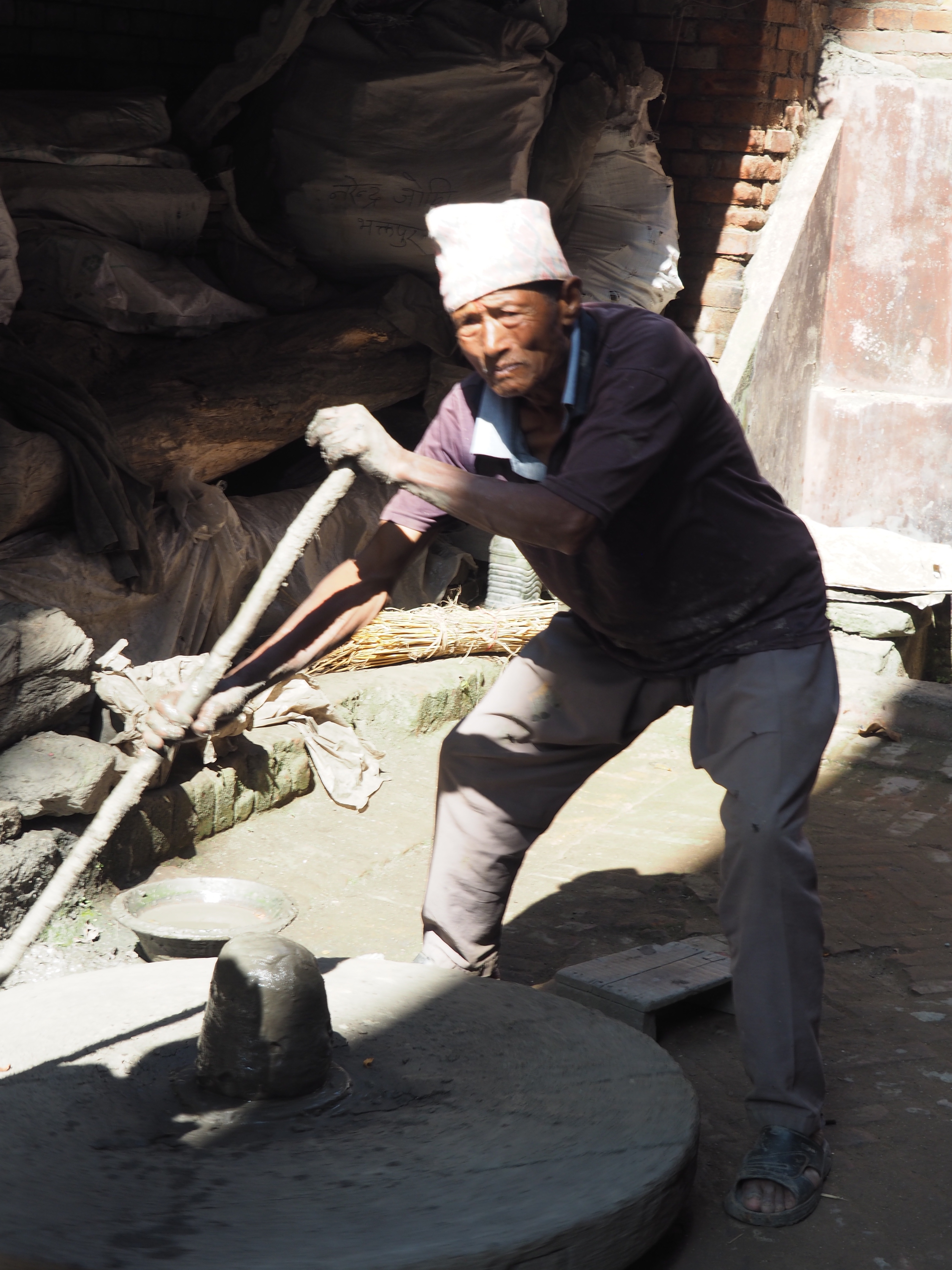
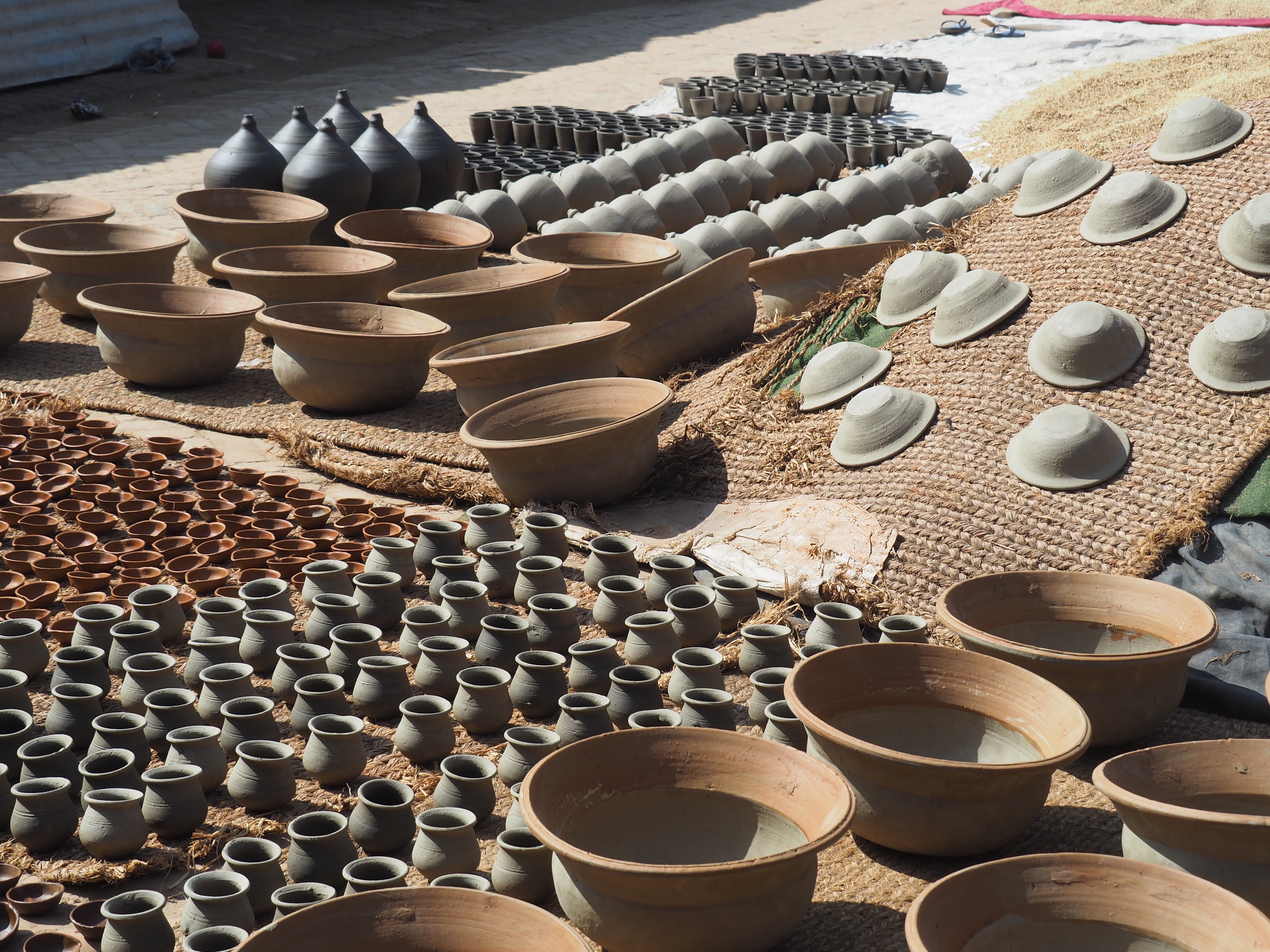
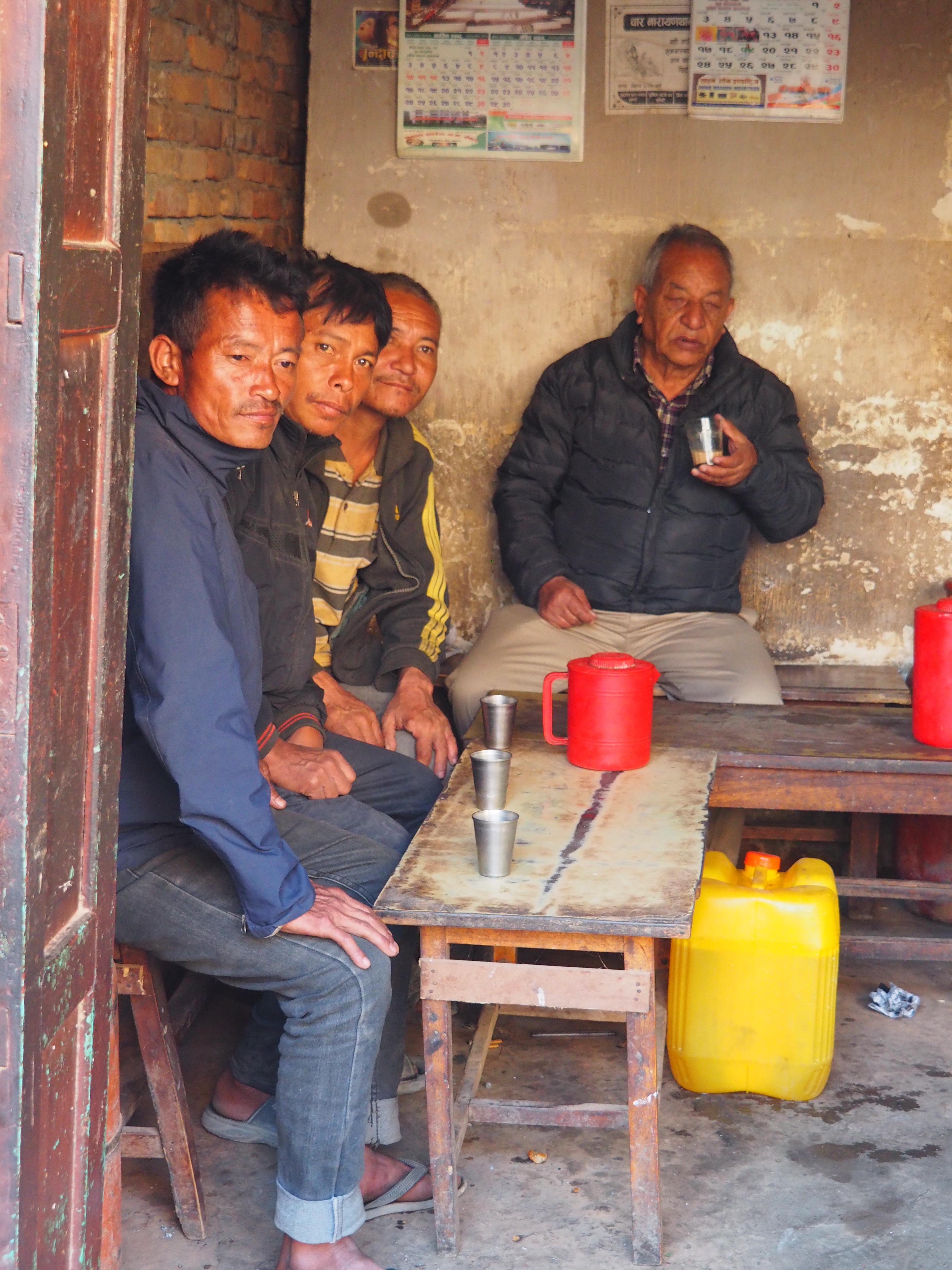
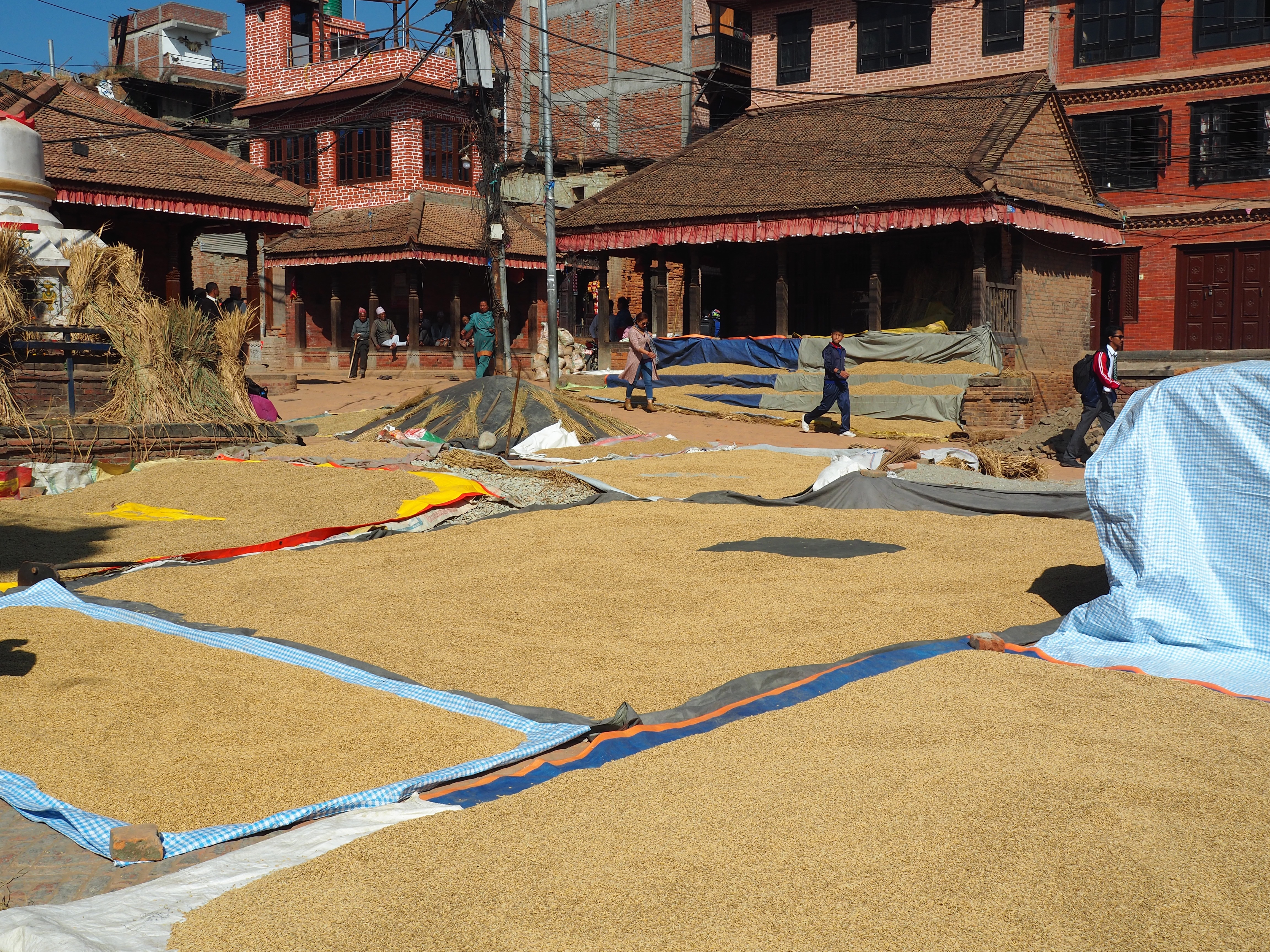
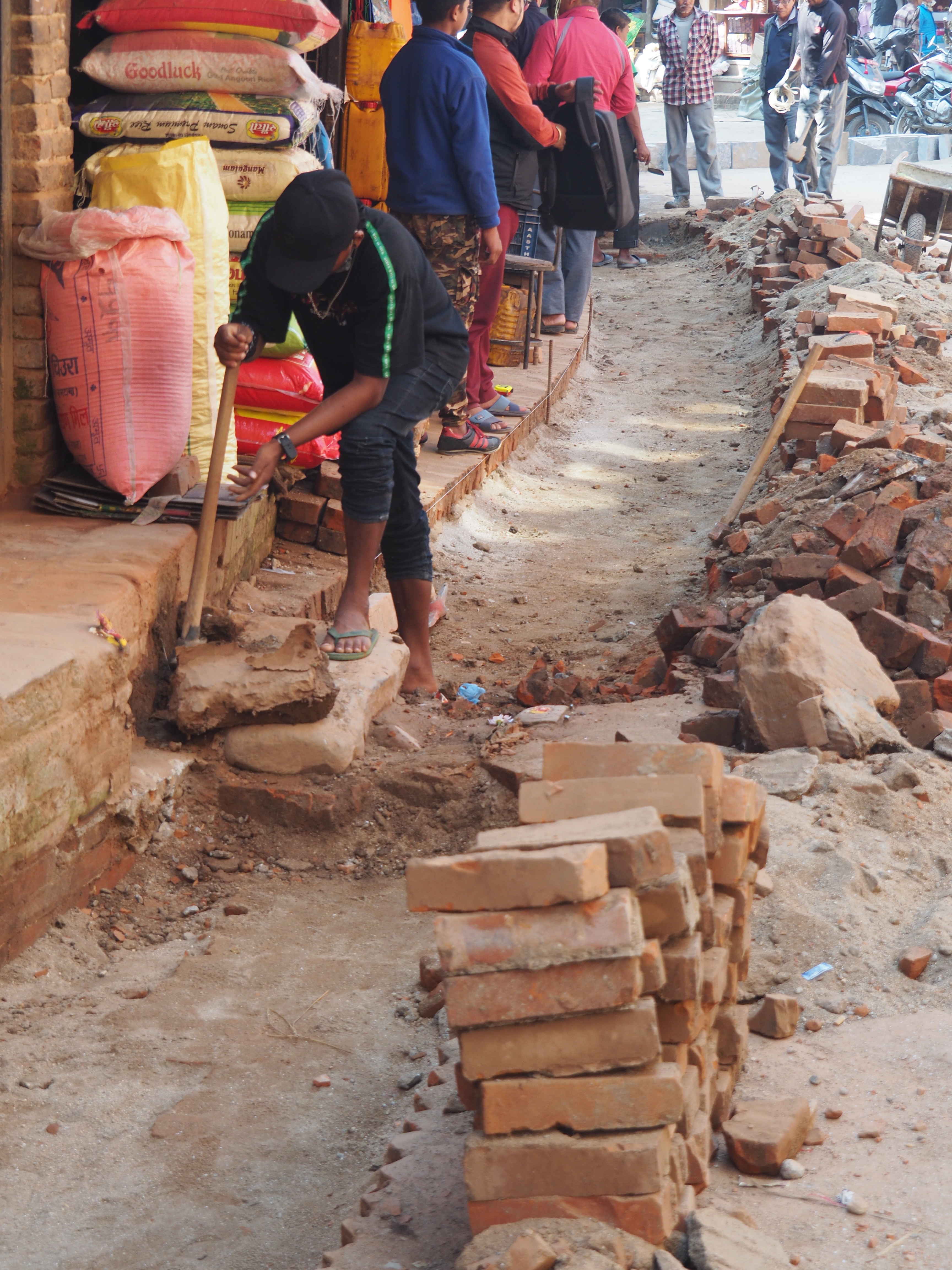
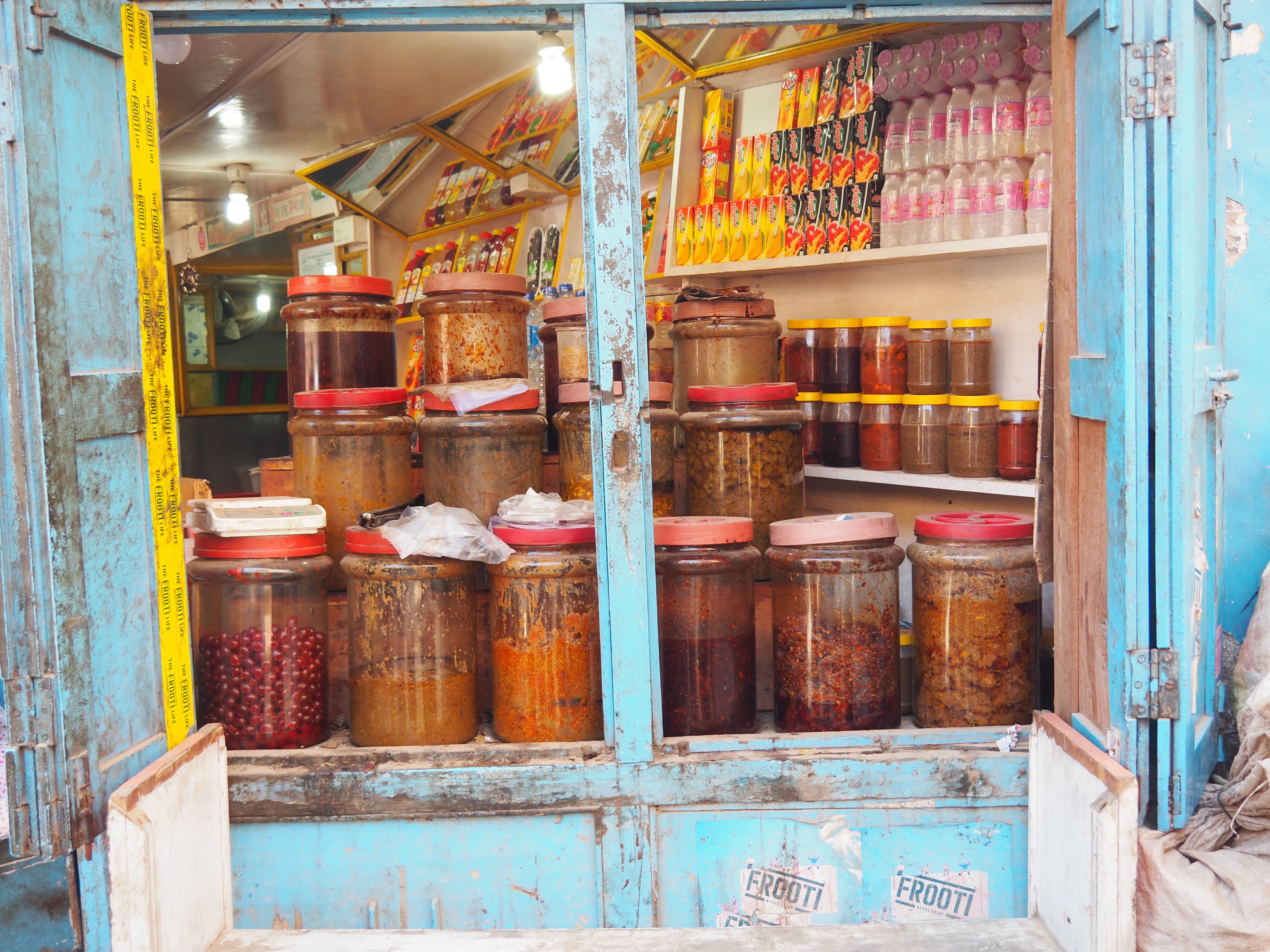
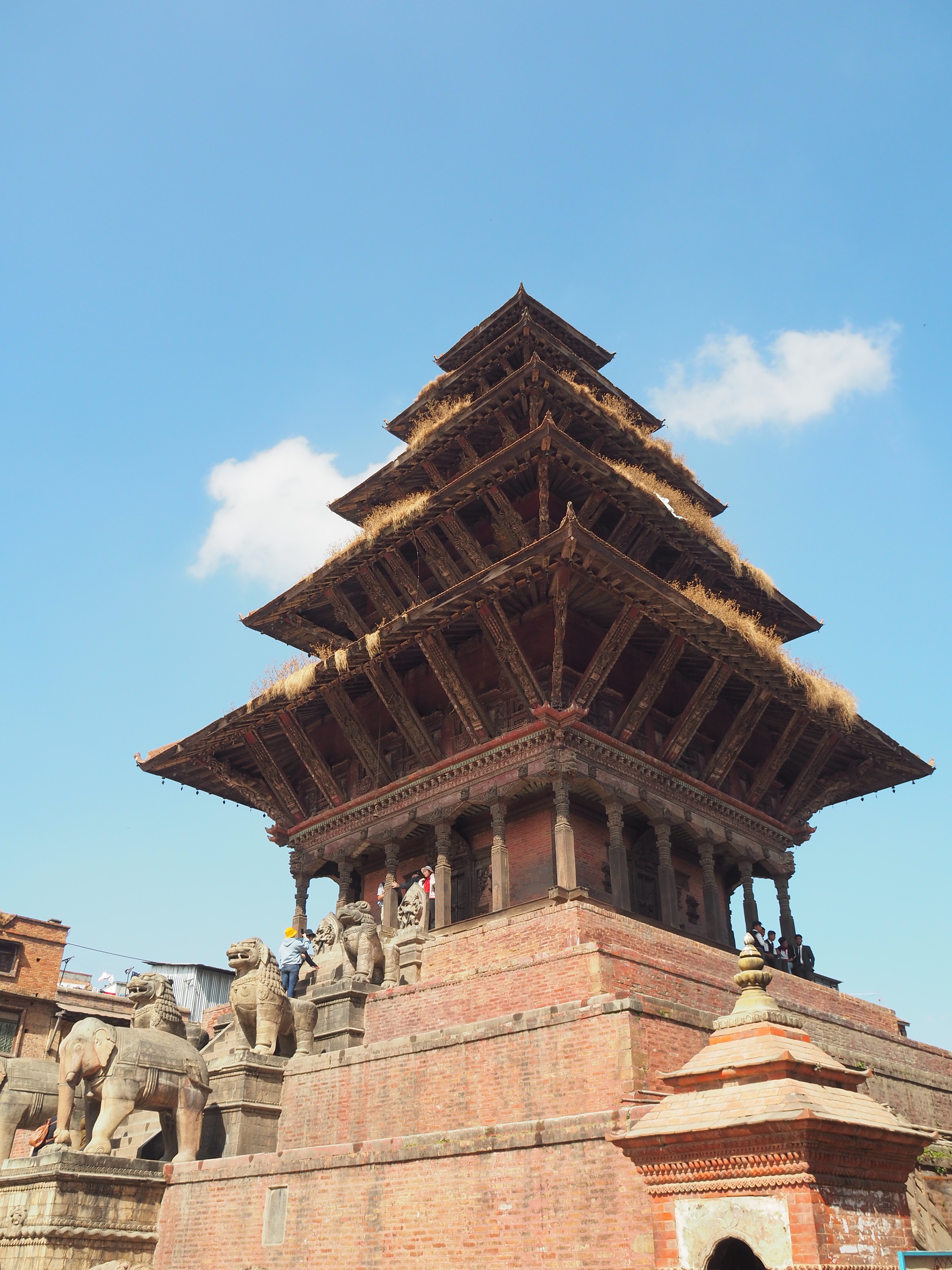
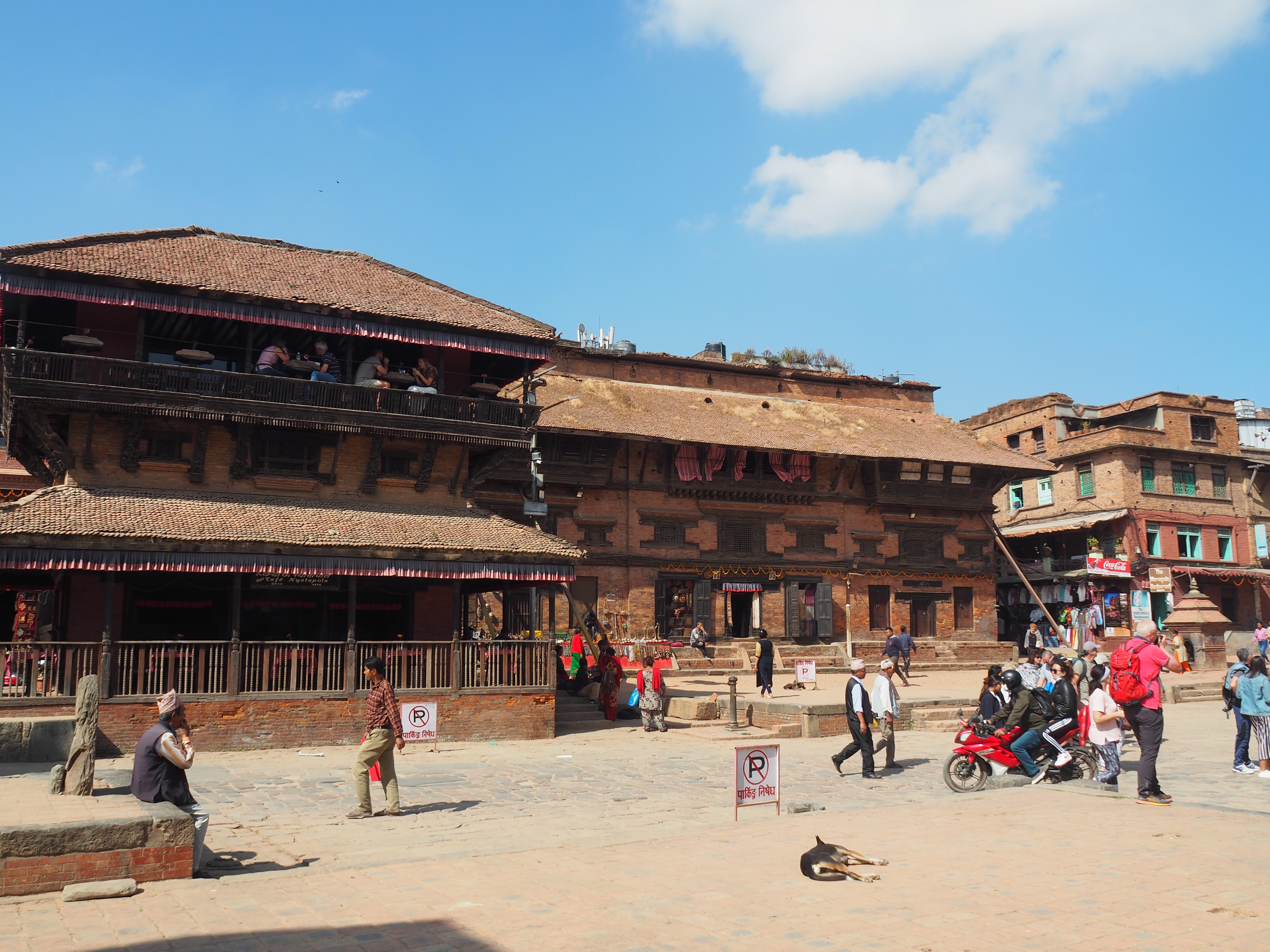
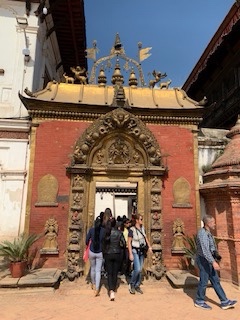
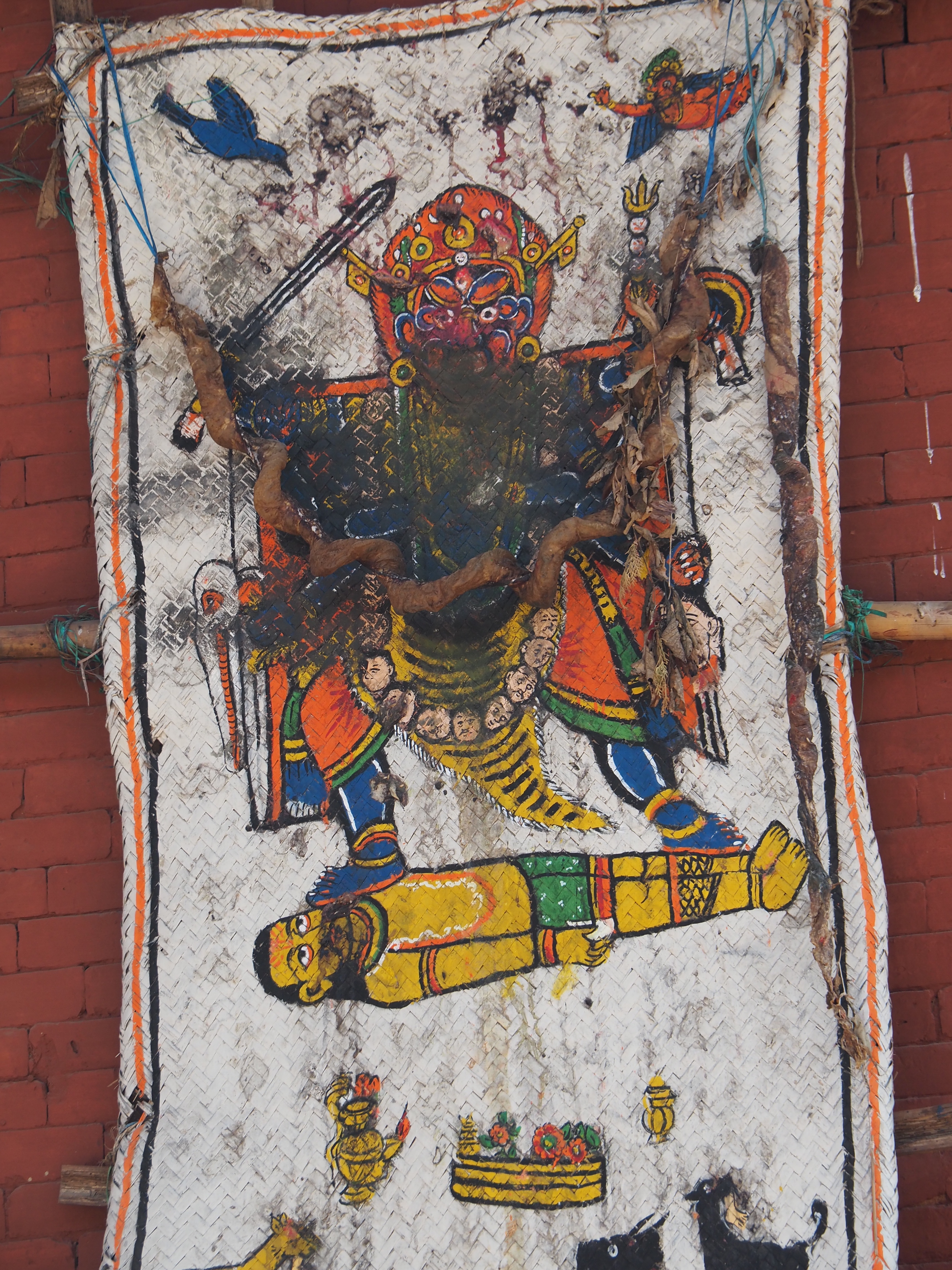
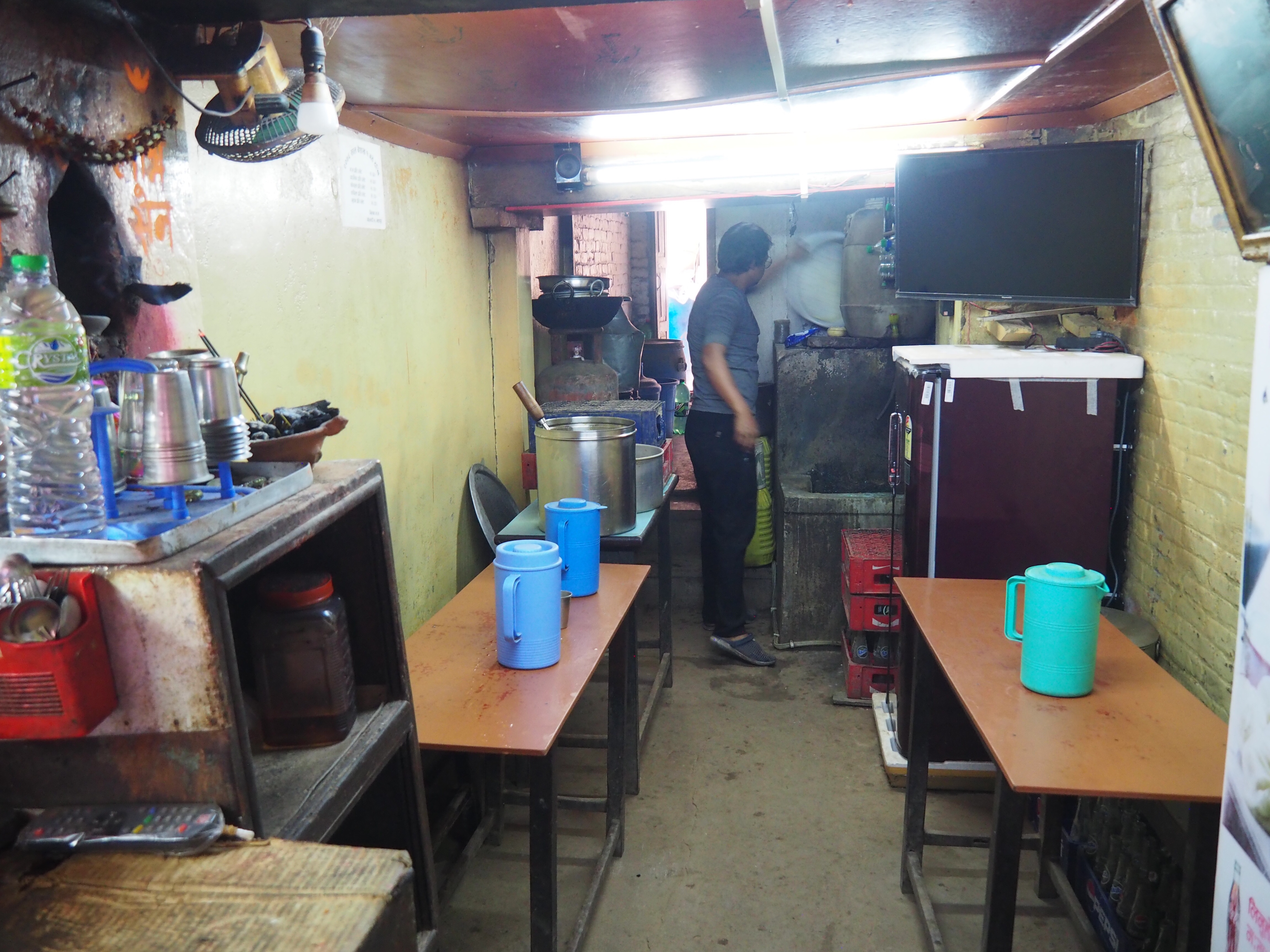
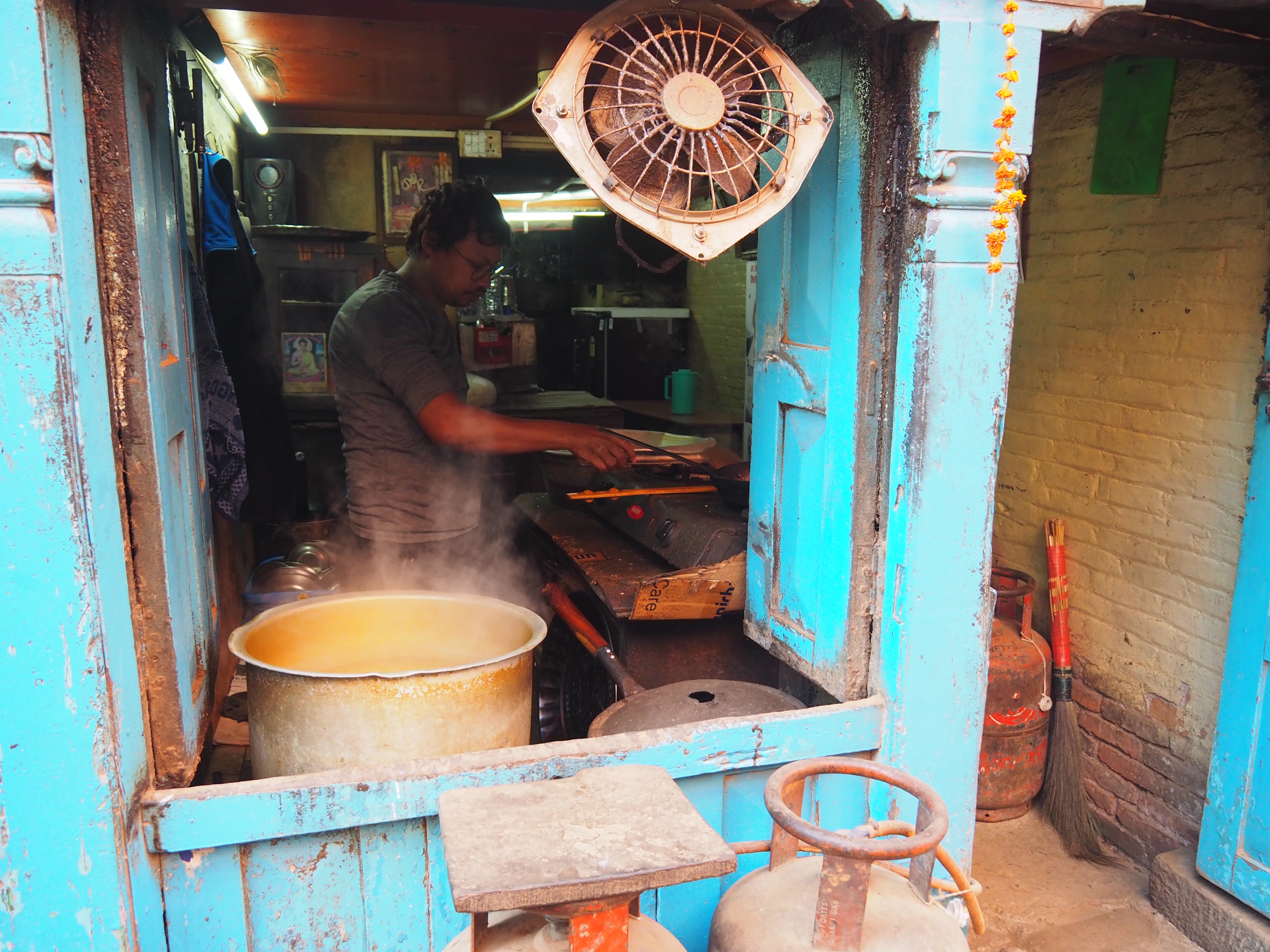
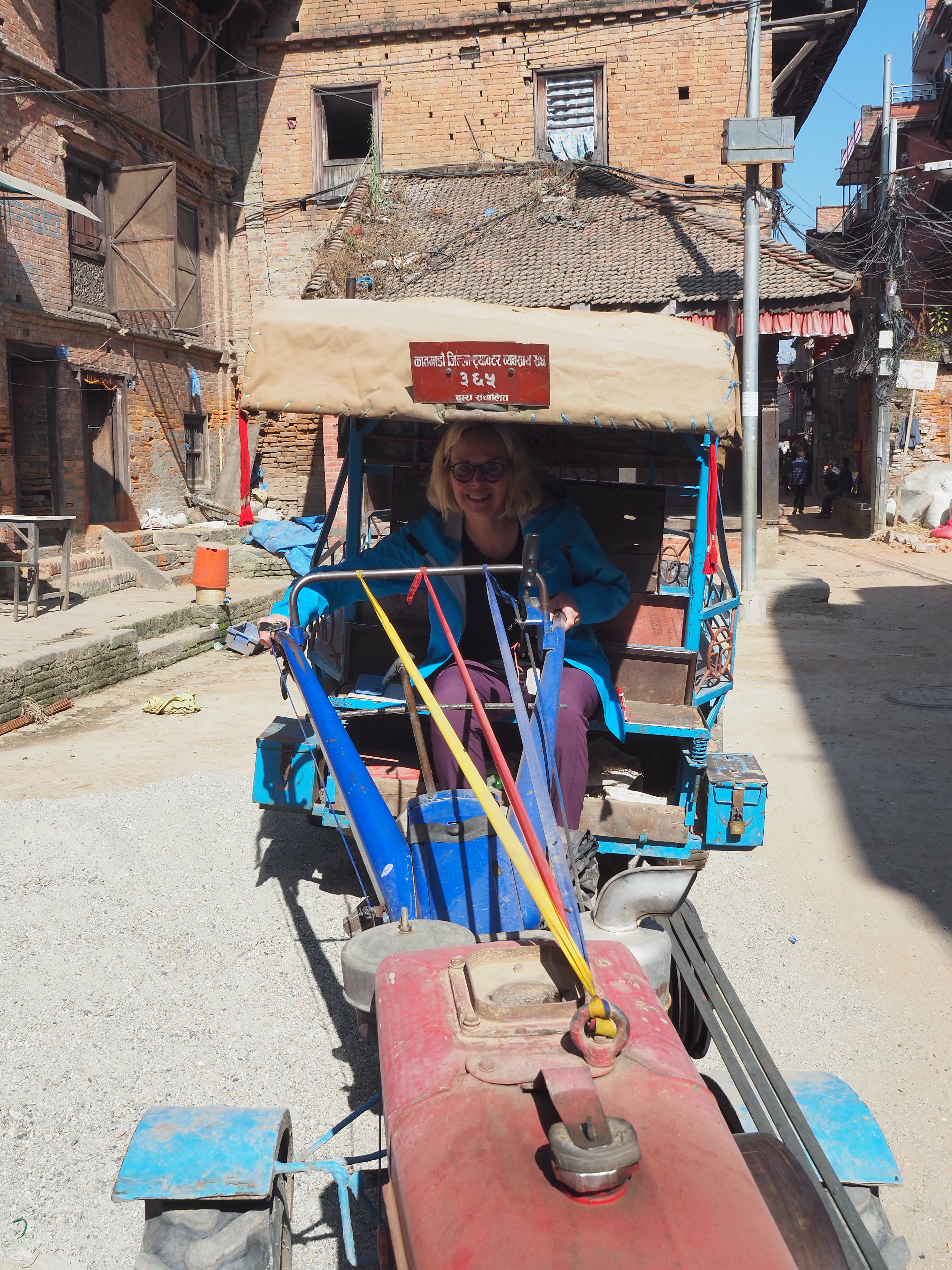
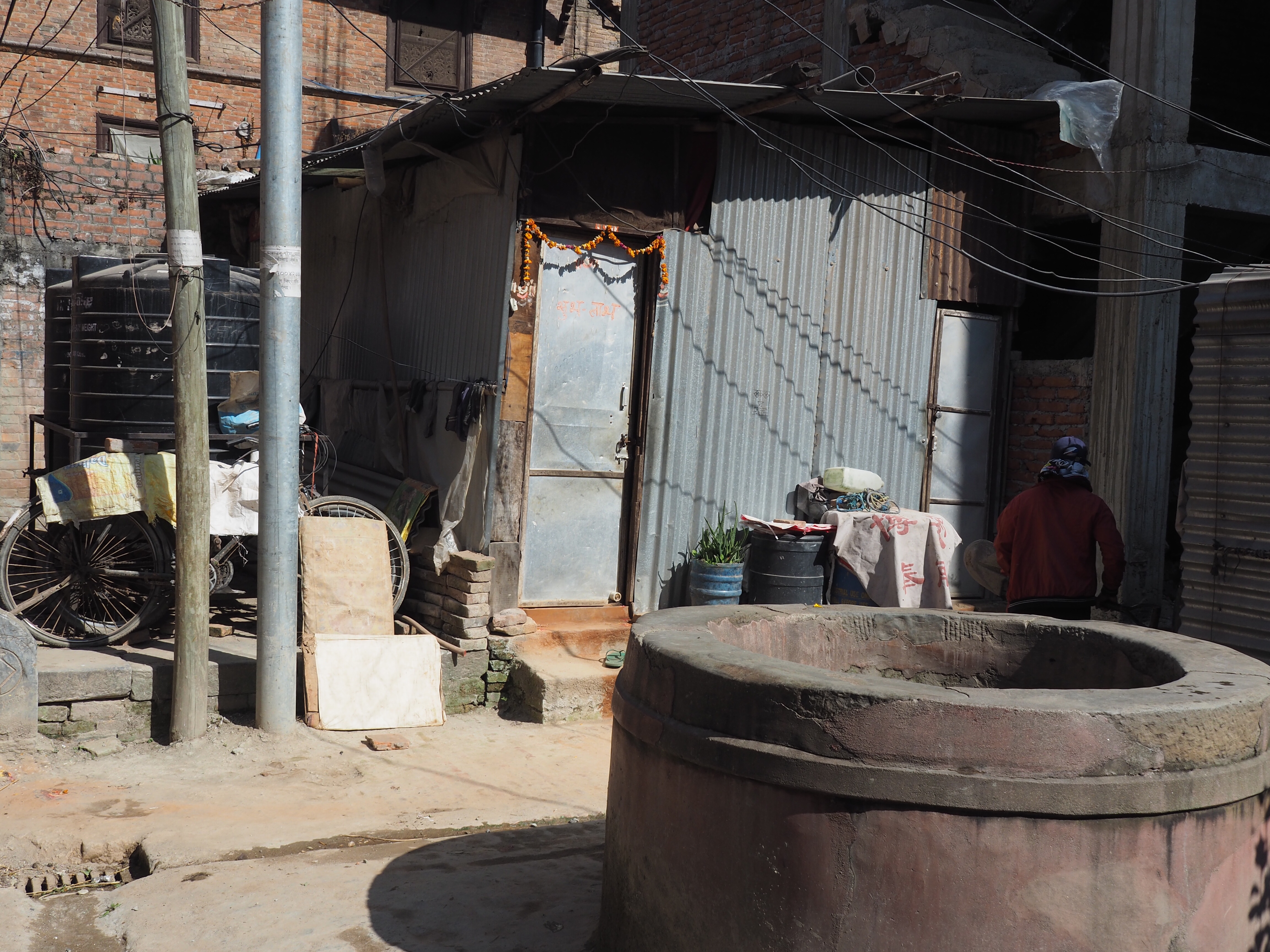
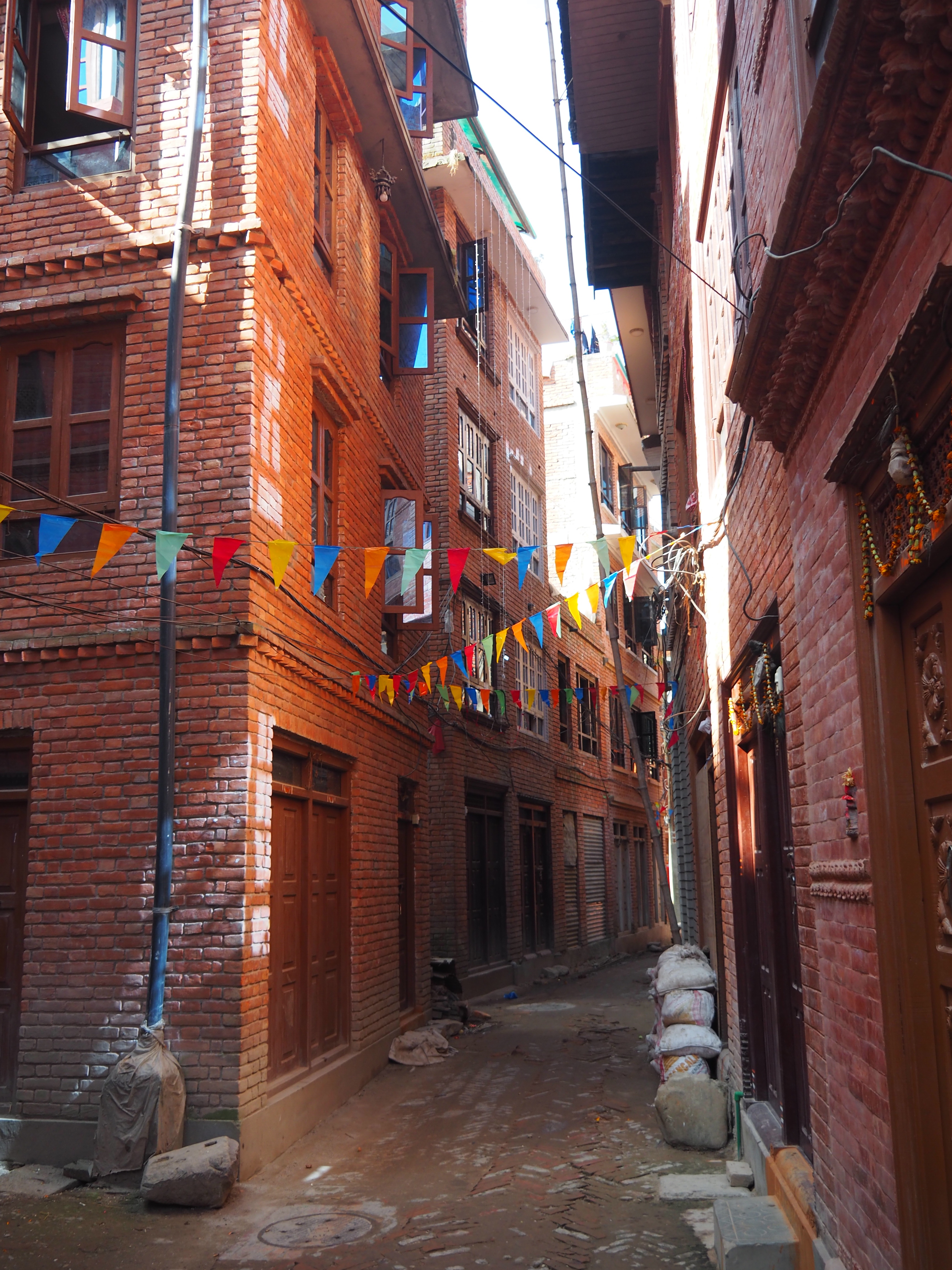
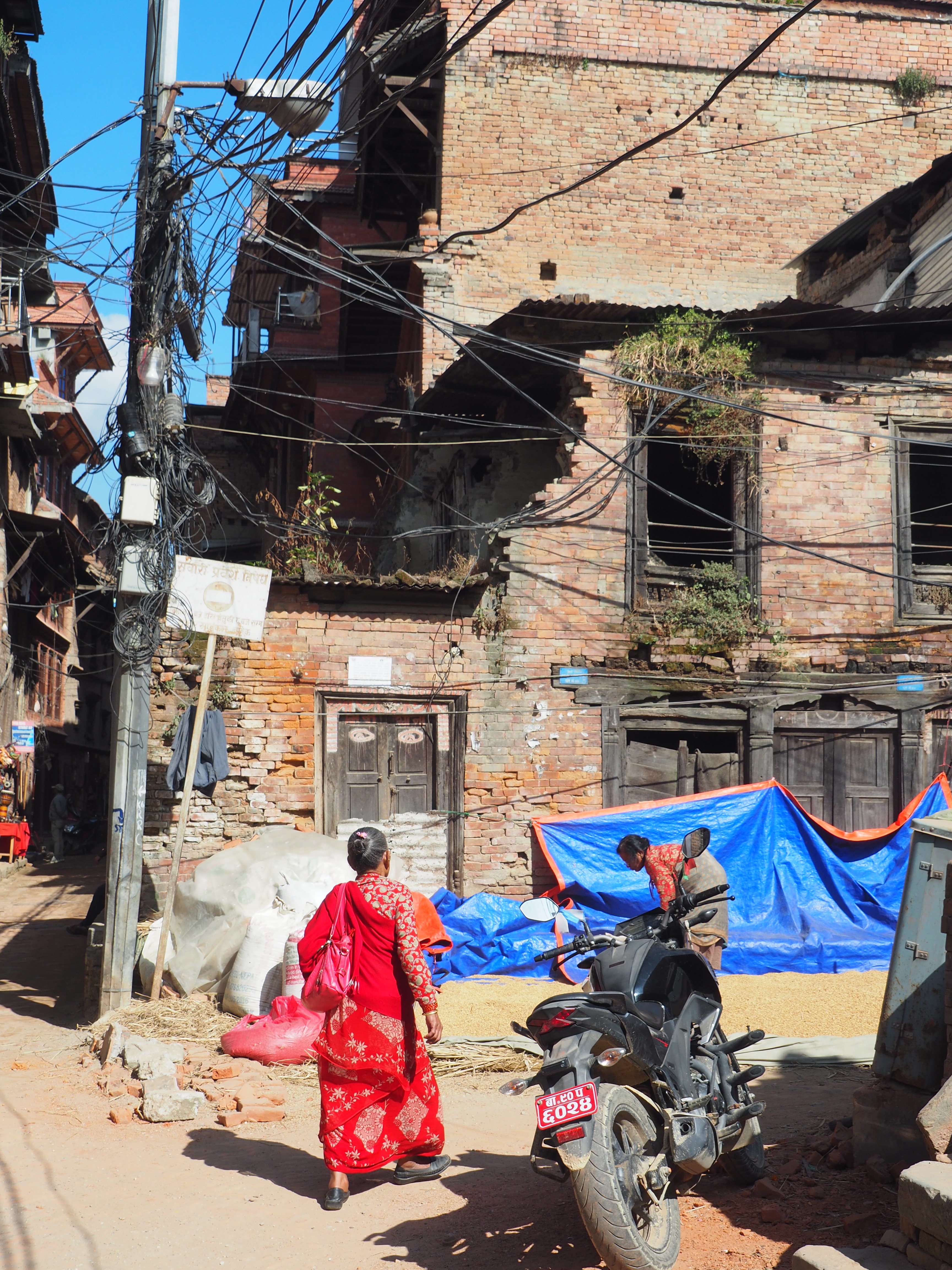
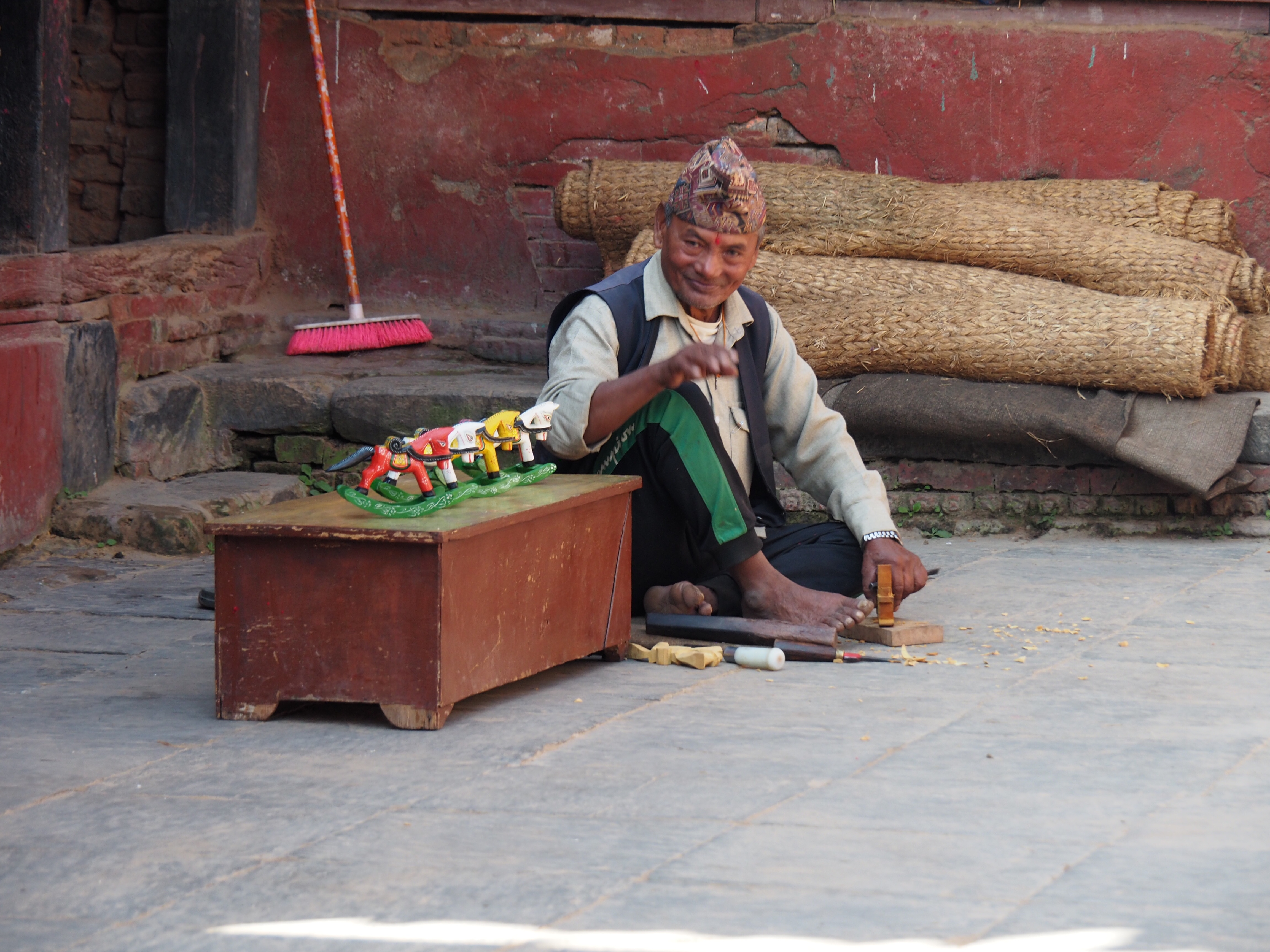
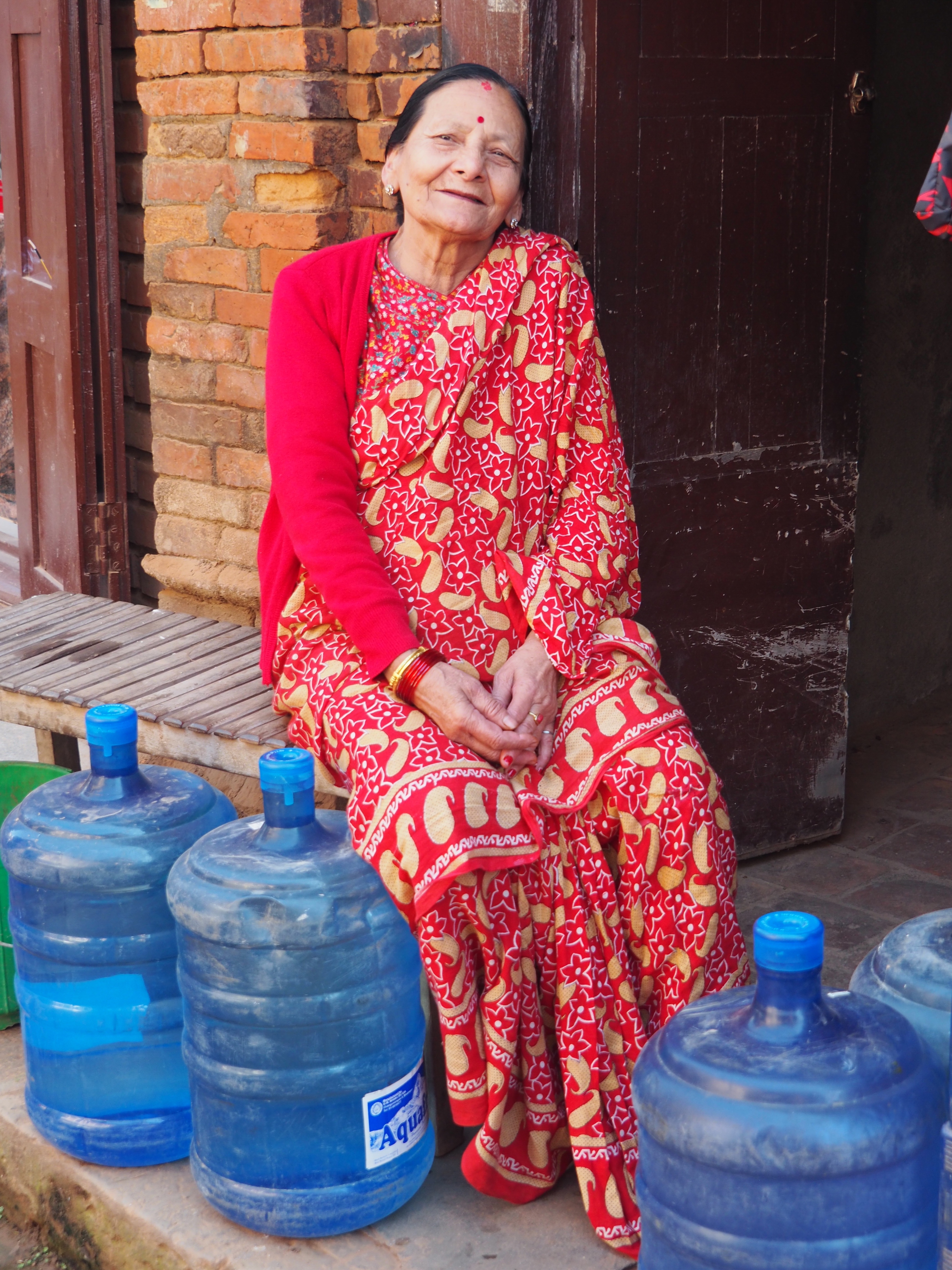
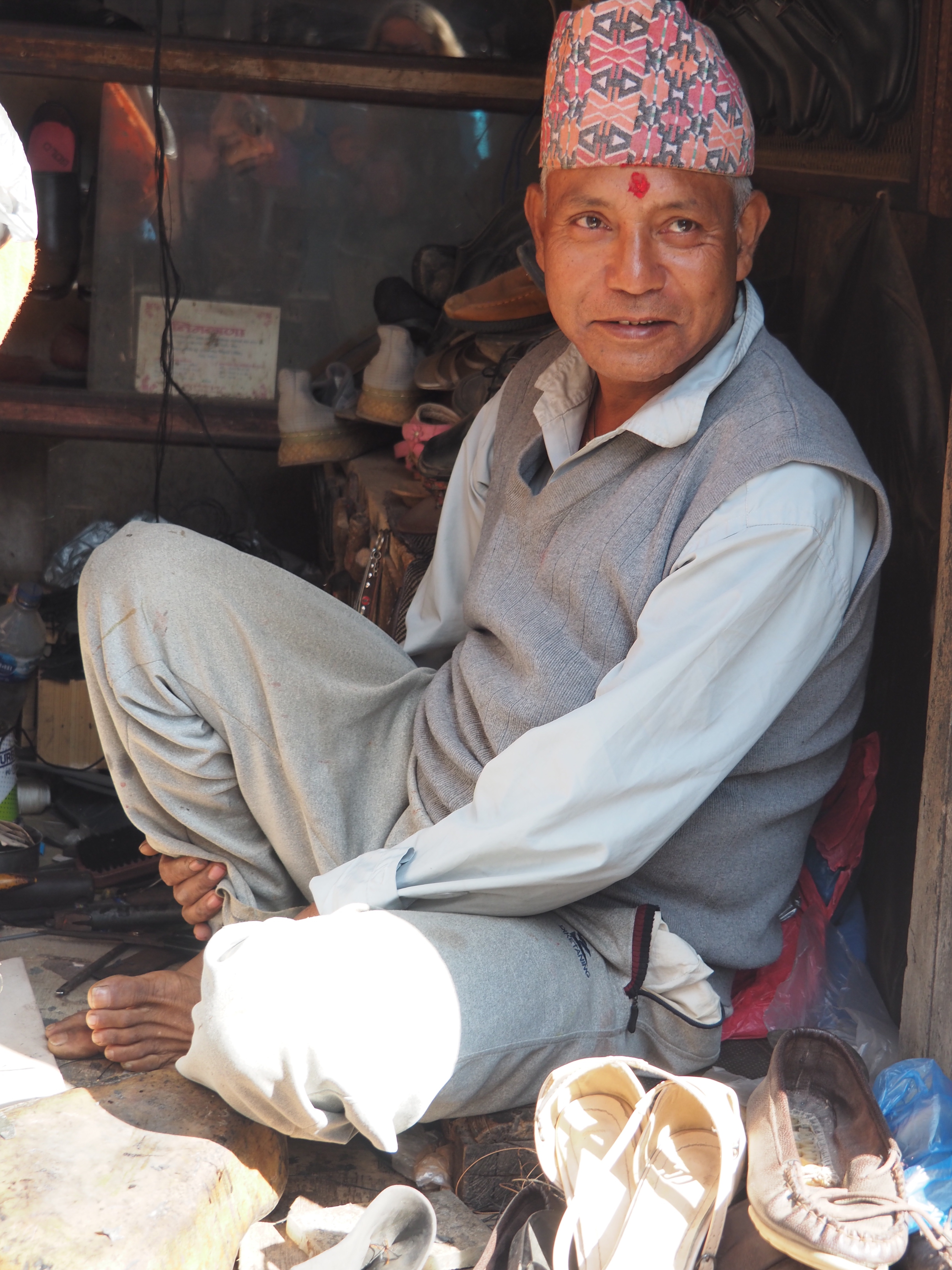
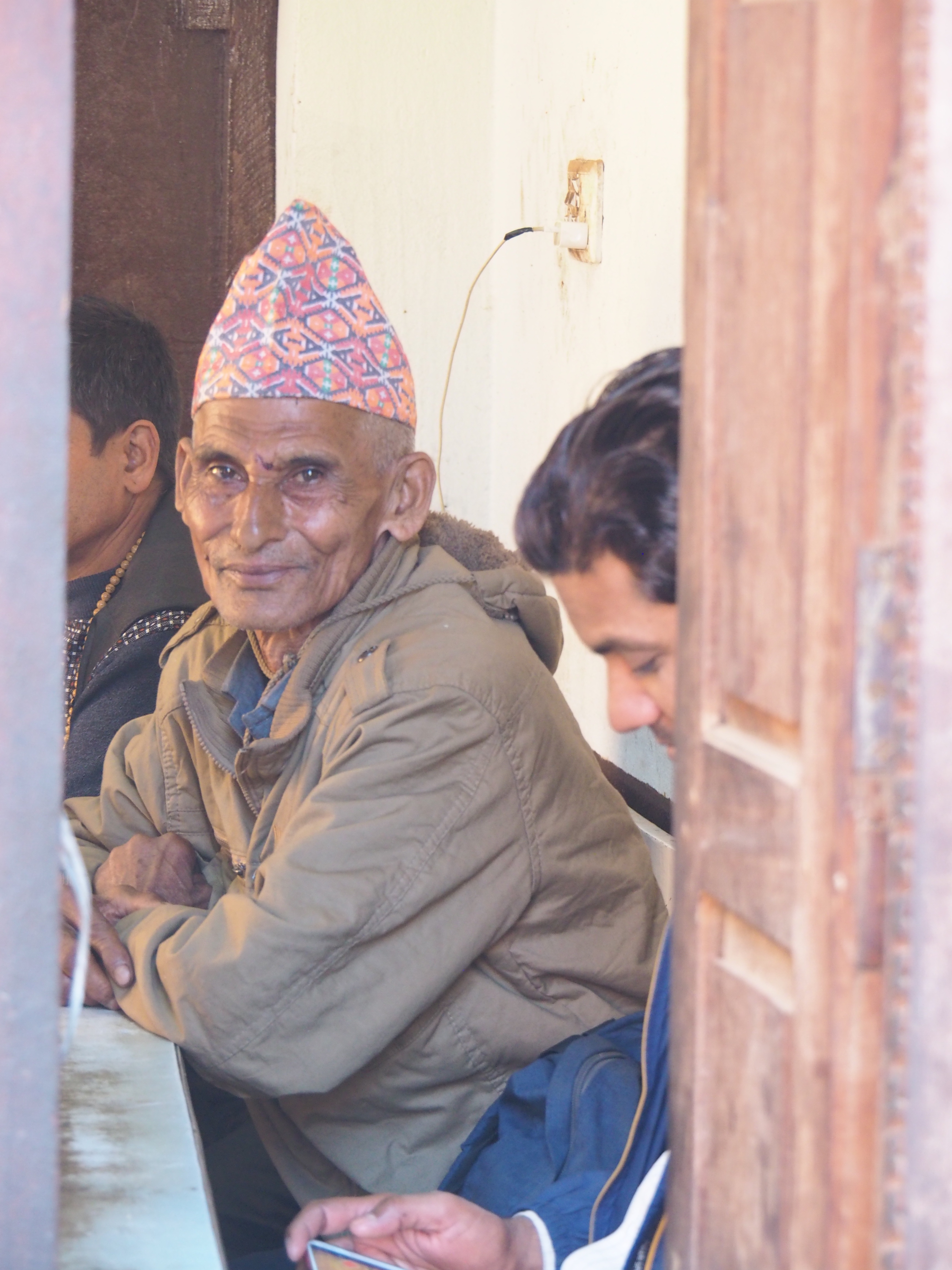
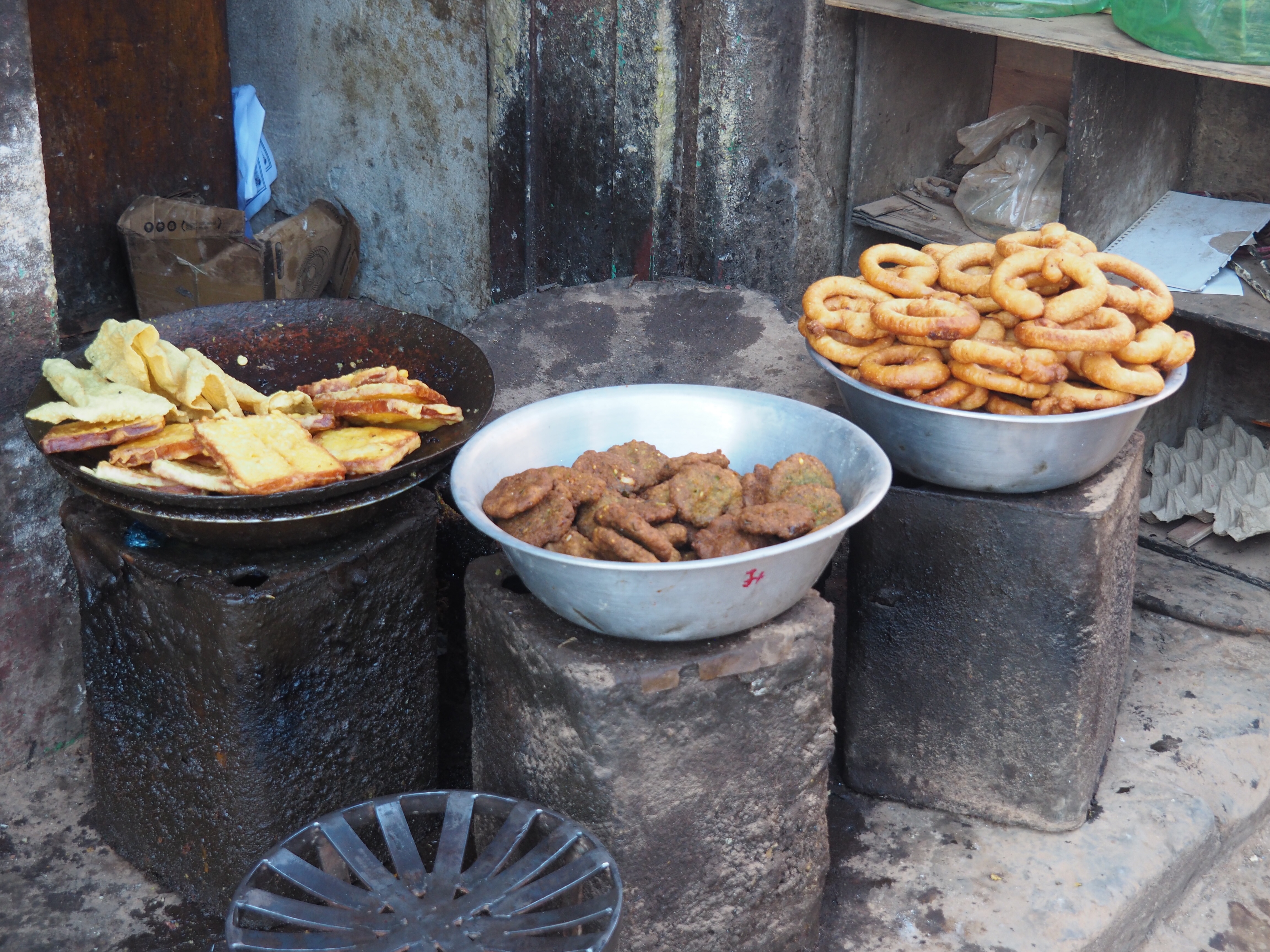
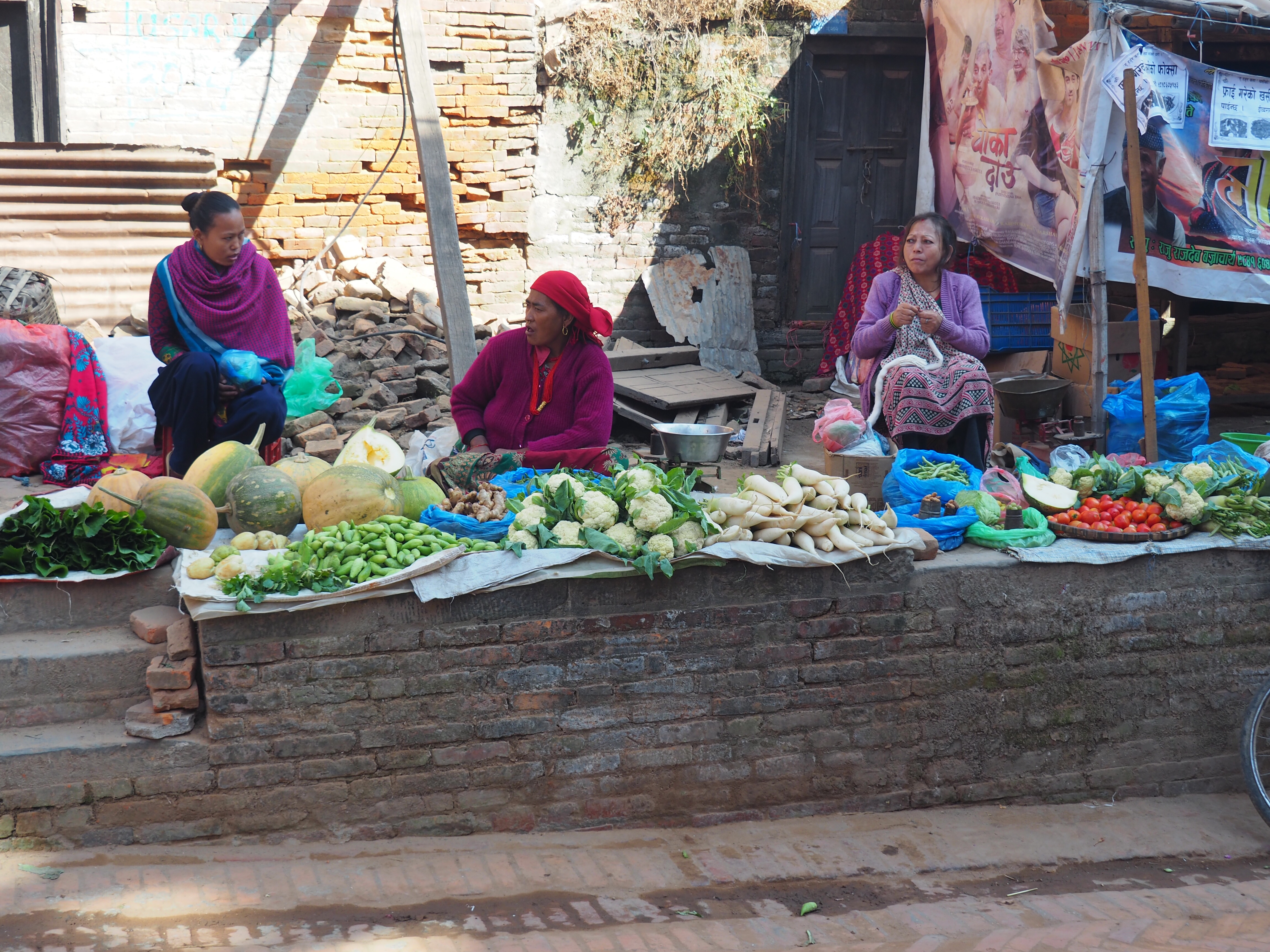
The visit to Bhaktapur was truly a highlight for all of us… and yet, we still had more things to see! Next we made our way back to Kathmandu to visit the Great Boudha Stupa, one of the largest in the region. It is 100 feet in diameter and over 140 feet high. There is a large Tibetan settlement in the area of the stupa, which dates from around 600 AD, when the Tibetan king converted to Buddhism.
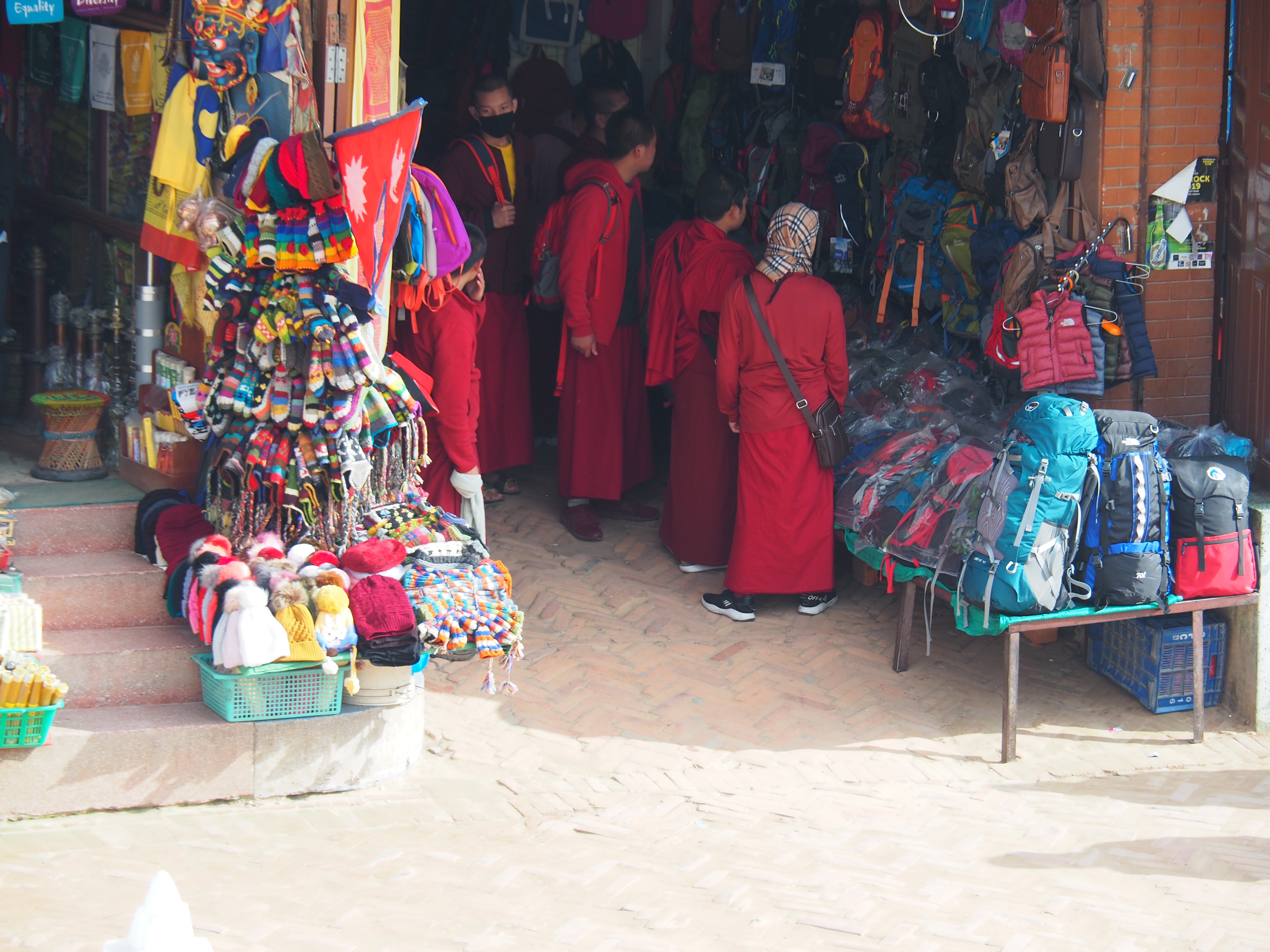
There are many monasteries near the stupa and we saw many monks in the area.
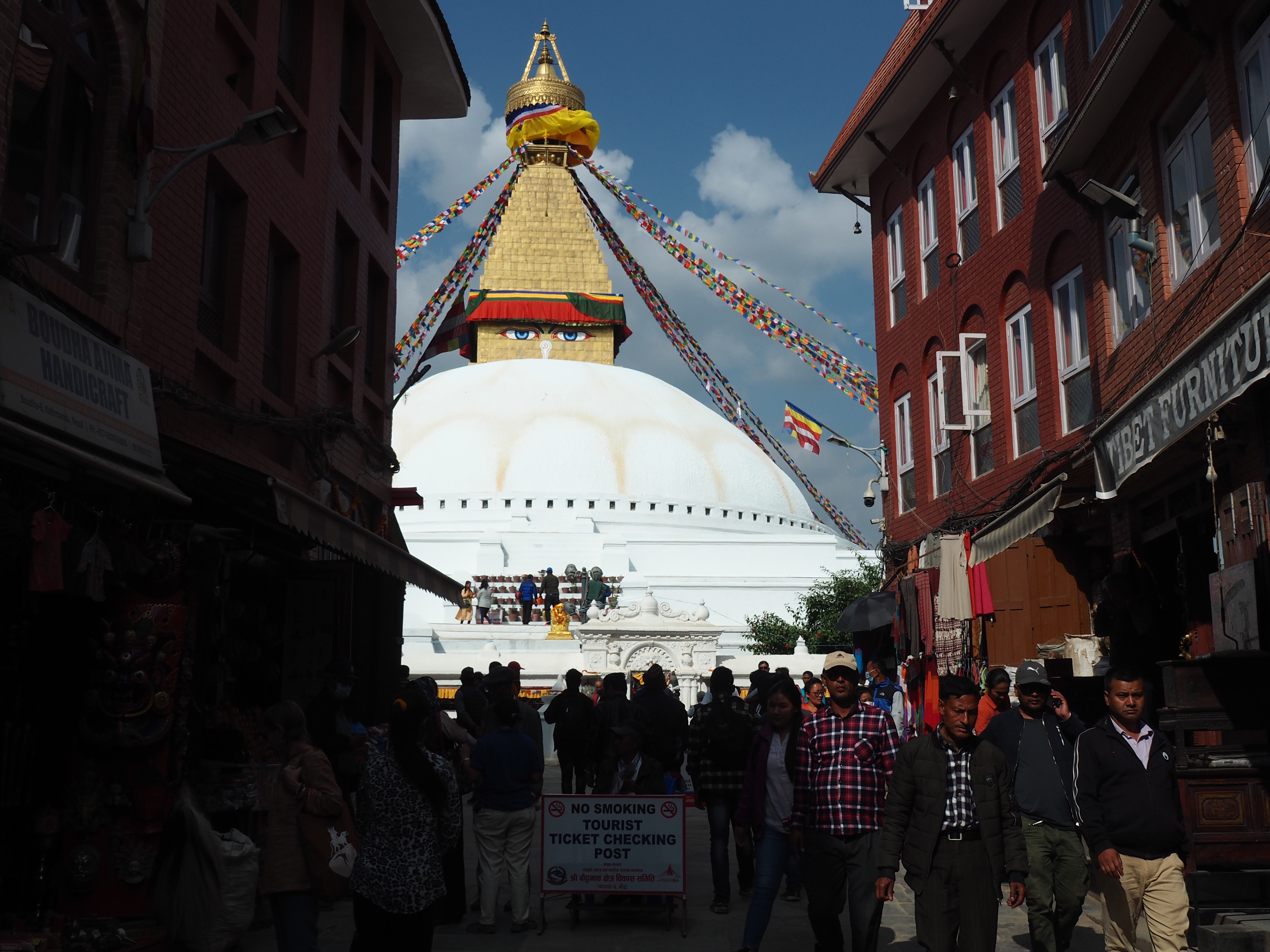
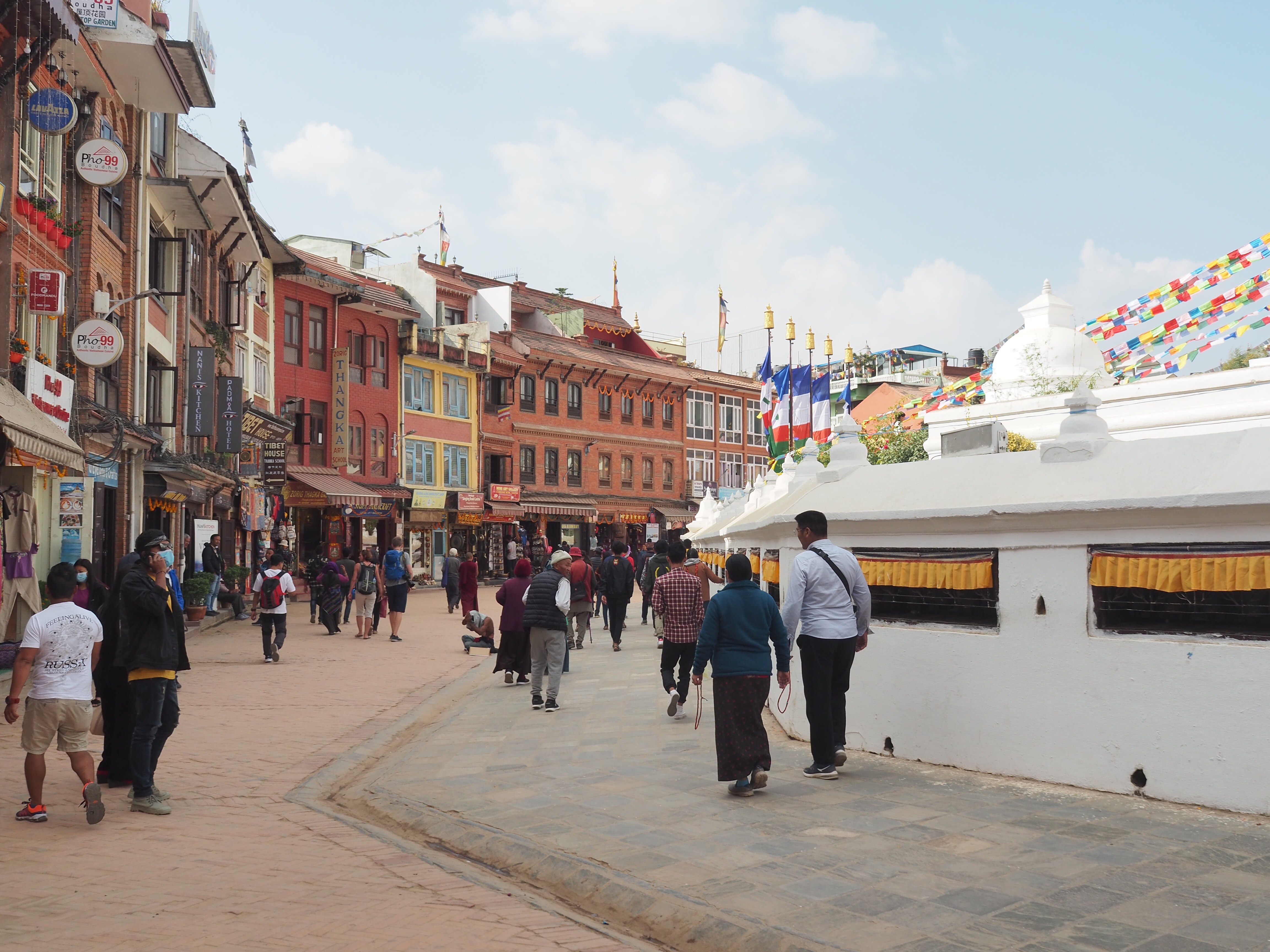
Before taking a clockwise walk around the stupa, which is the traditional way to visit, we had lunch at a restaurant overlooking the area.
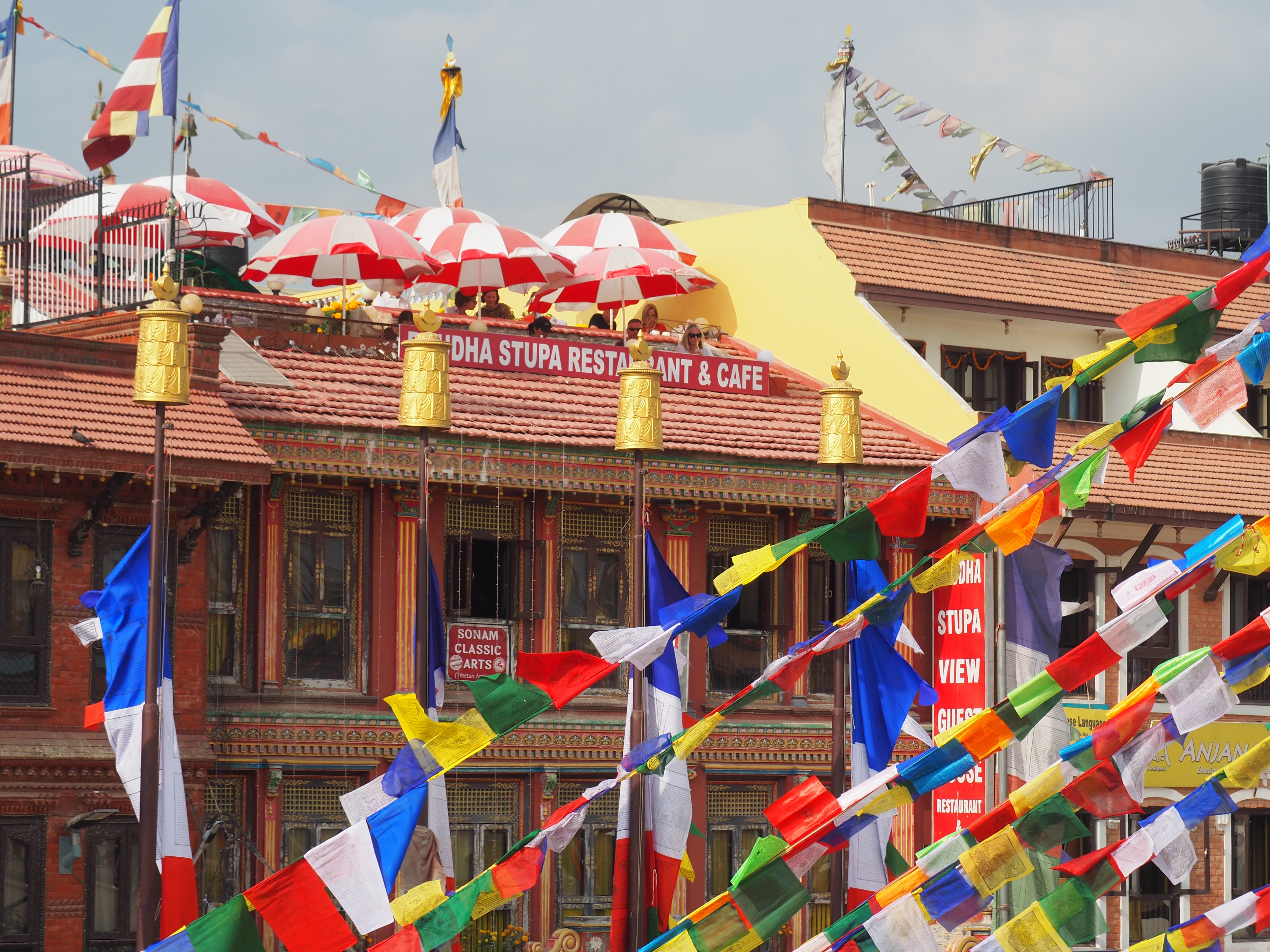
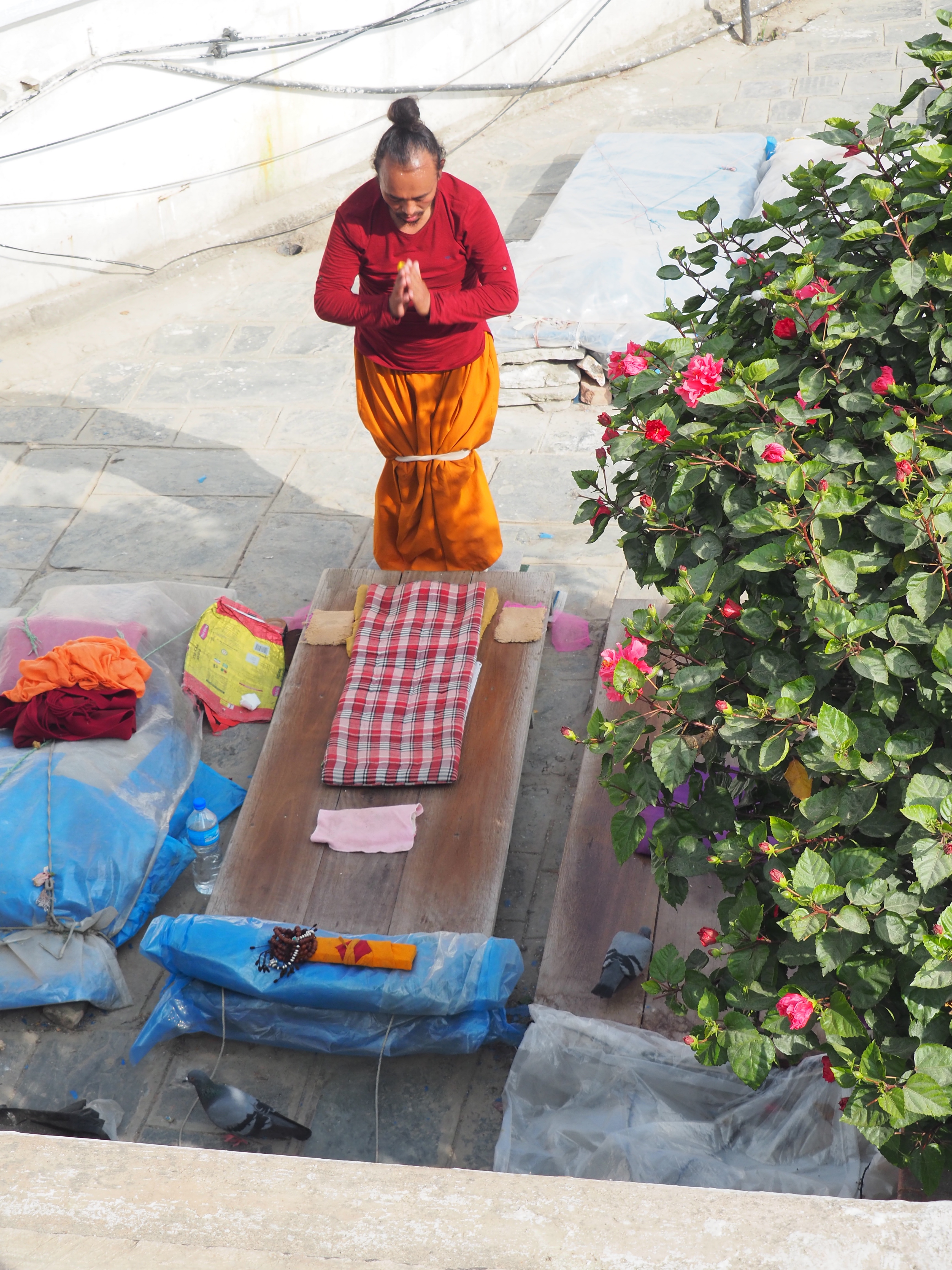
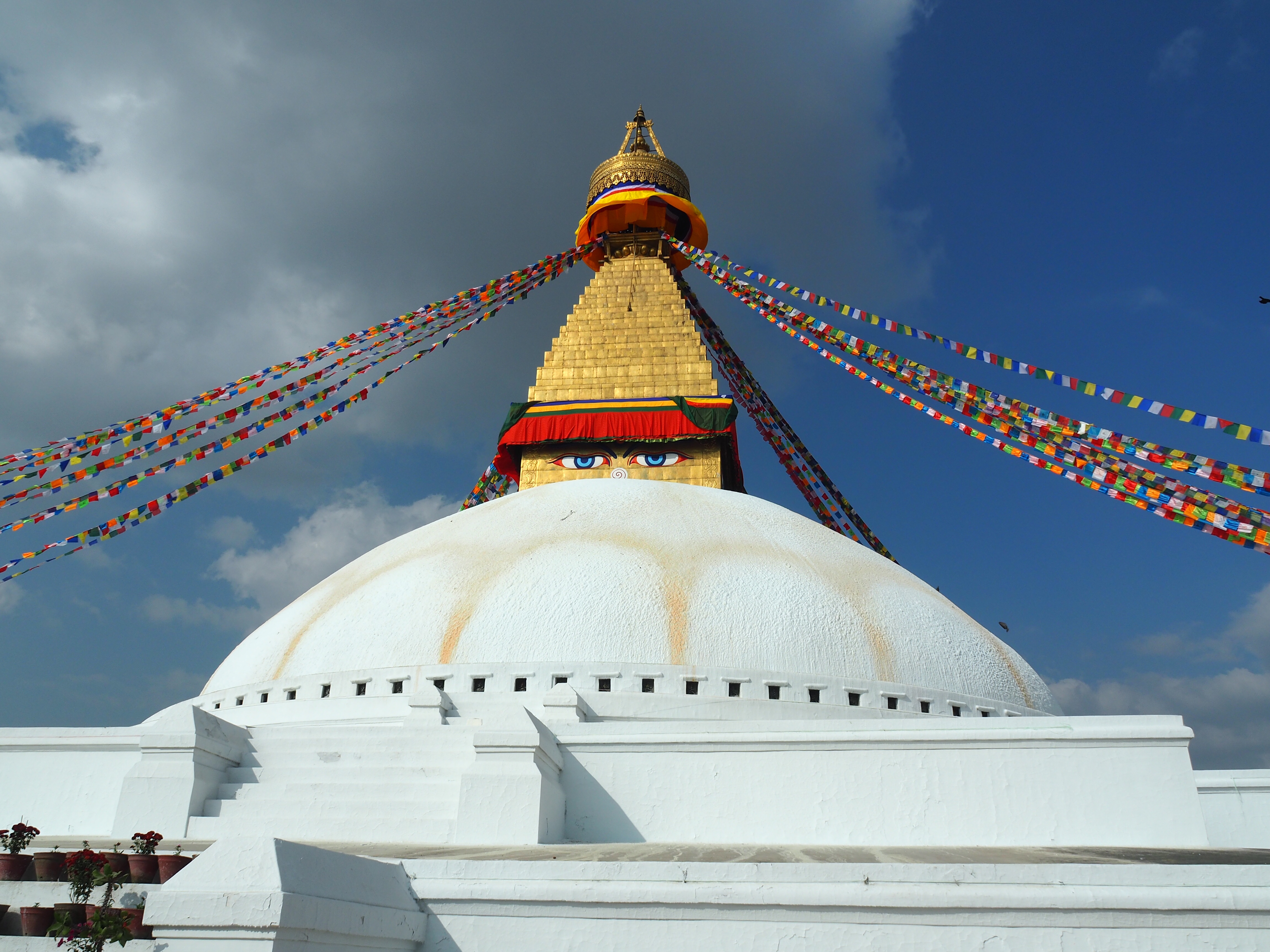
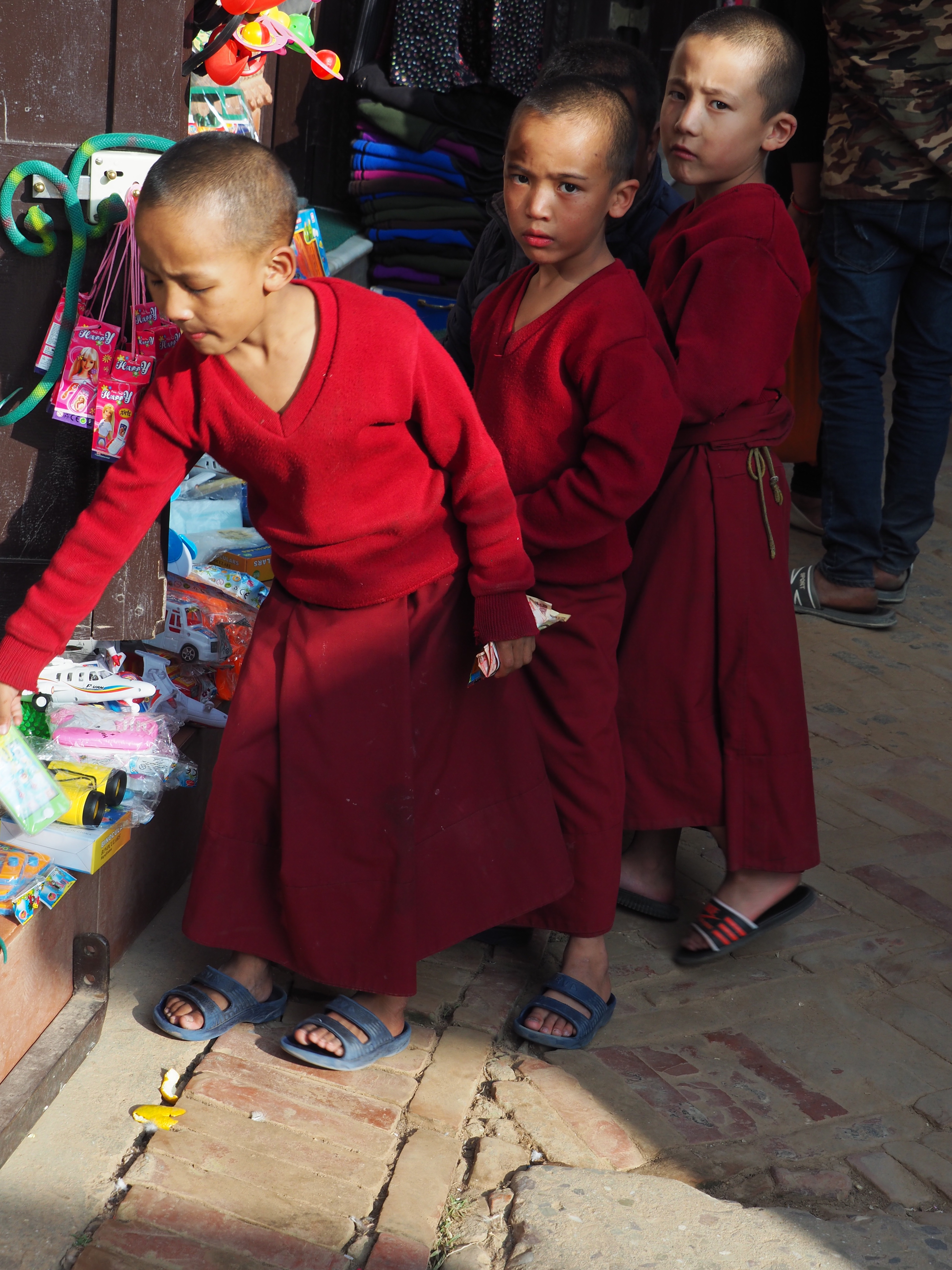
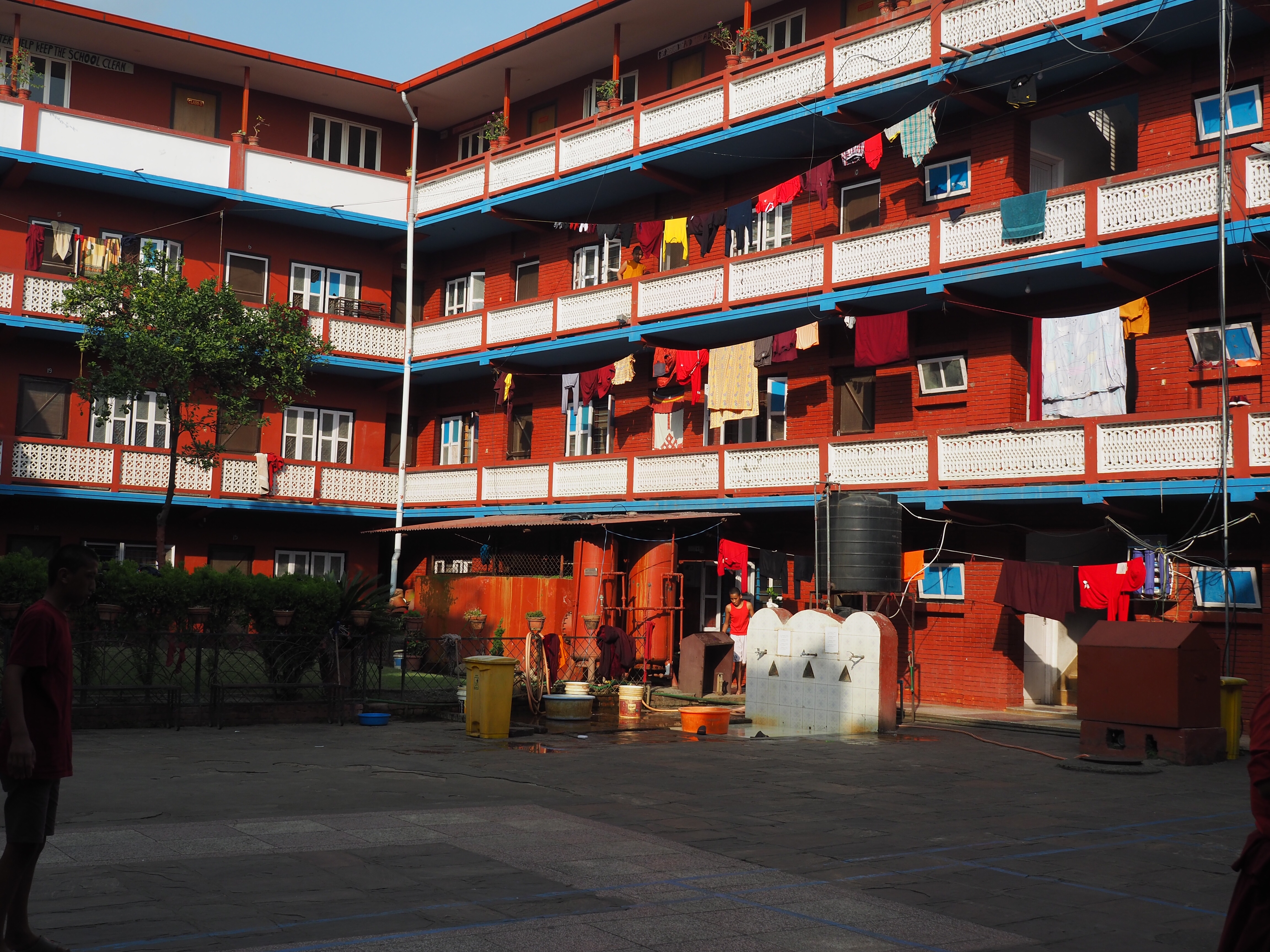
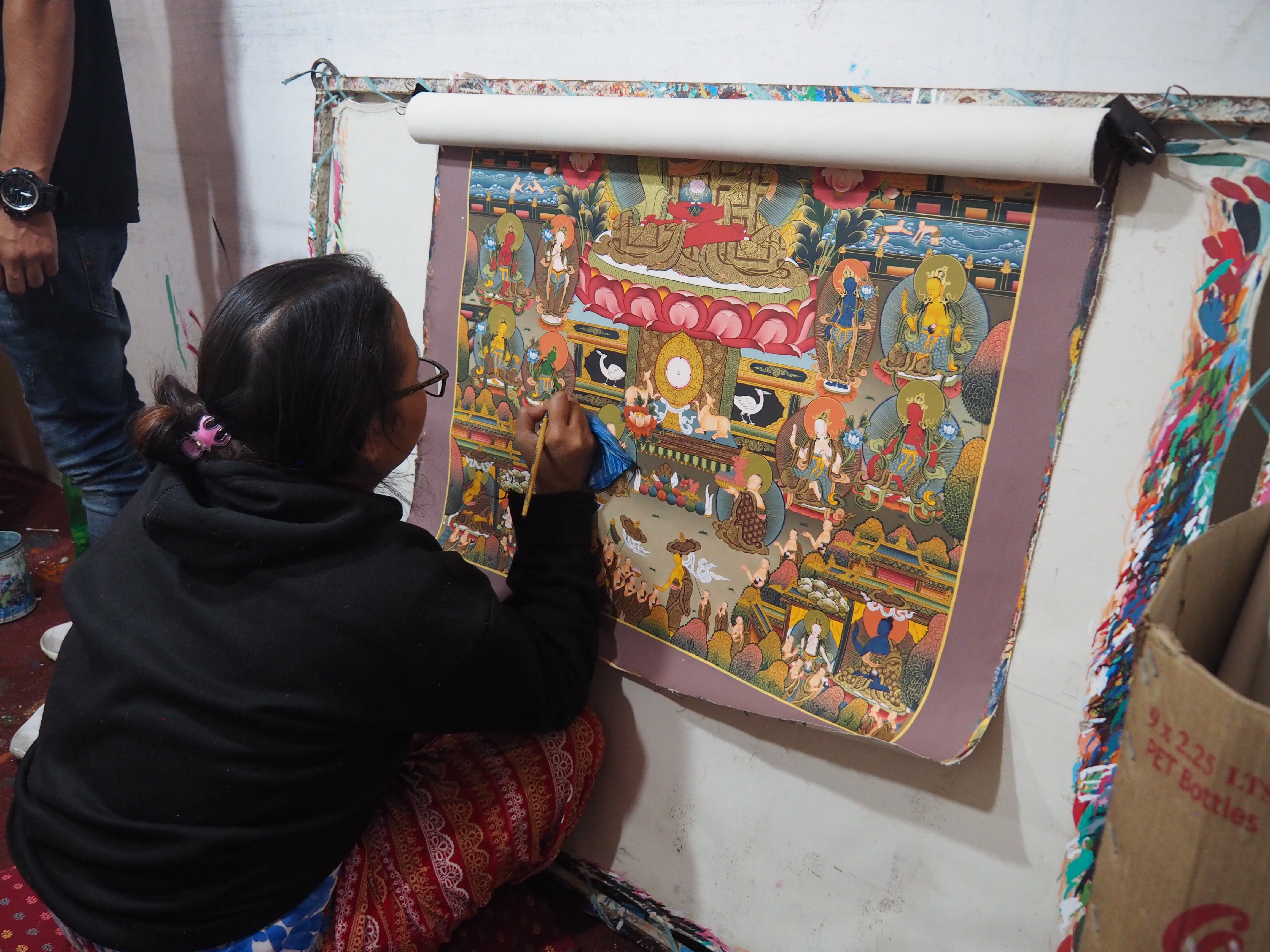
Before leaving the area, we visited a school where traditional painting is taught. These paintings seem to tell Buddhist stories and also help to focus the mind for meditation.
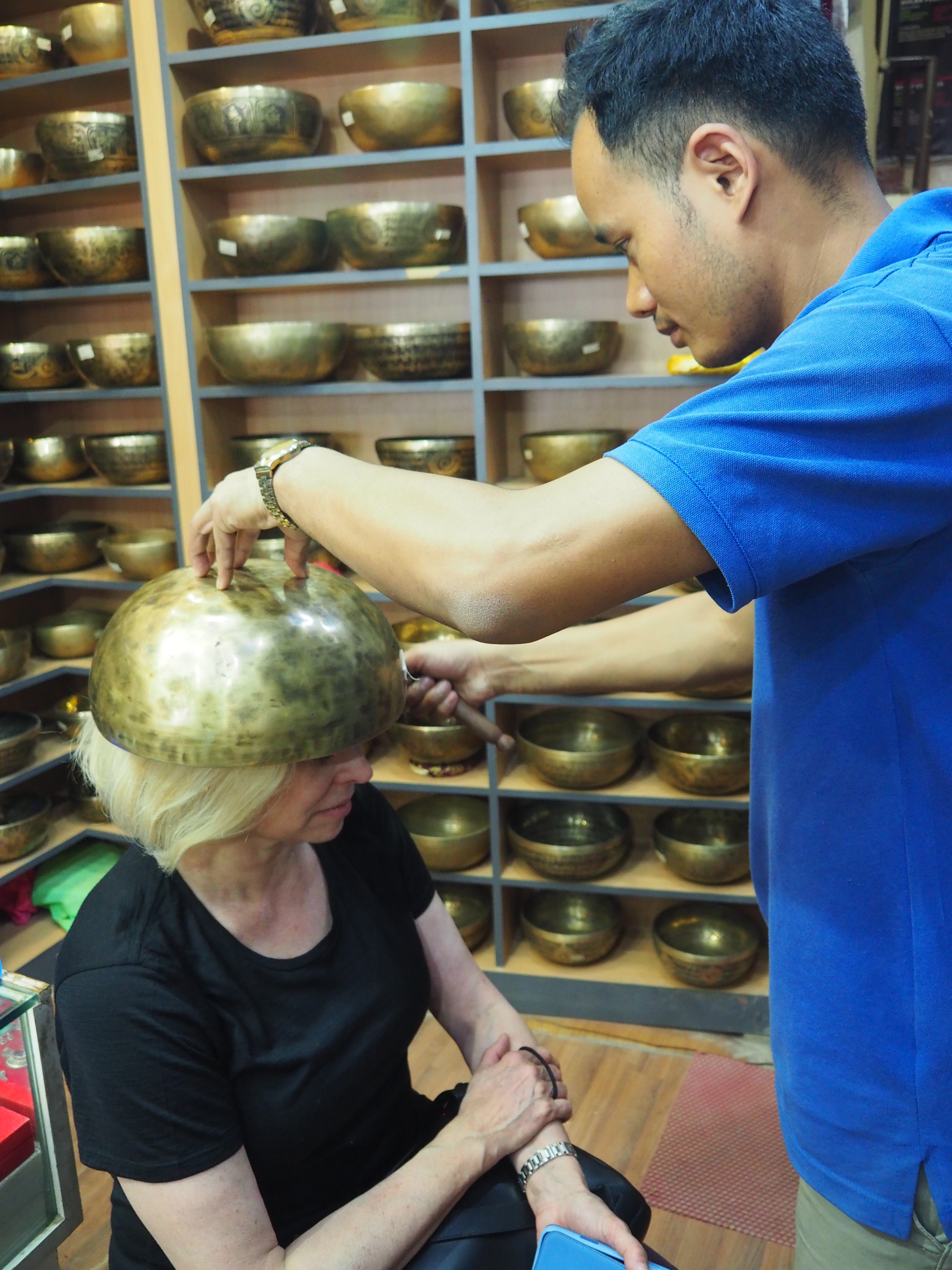
Finally, we visited a store where they sell “singing bowls”; I have seen these used in yoga and meditation, however, they have medicinal properties as well! The vibration is used to help cure ills! Maryse had her headache treated and I had some work done on my shoulder! Afterward, the practitioner told us is would take several treatments to make a difference. I wondered if this was a ploy to sell bowls… neither Maryse or I bought one. I think the PT on my shoulder is going well and the plastic band I brought weighs much less than a singing bowl does!
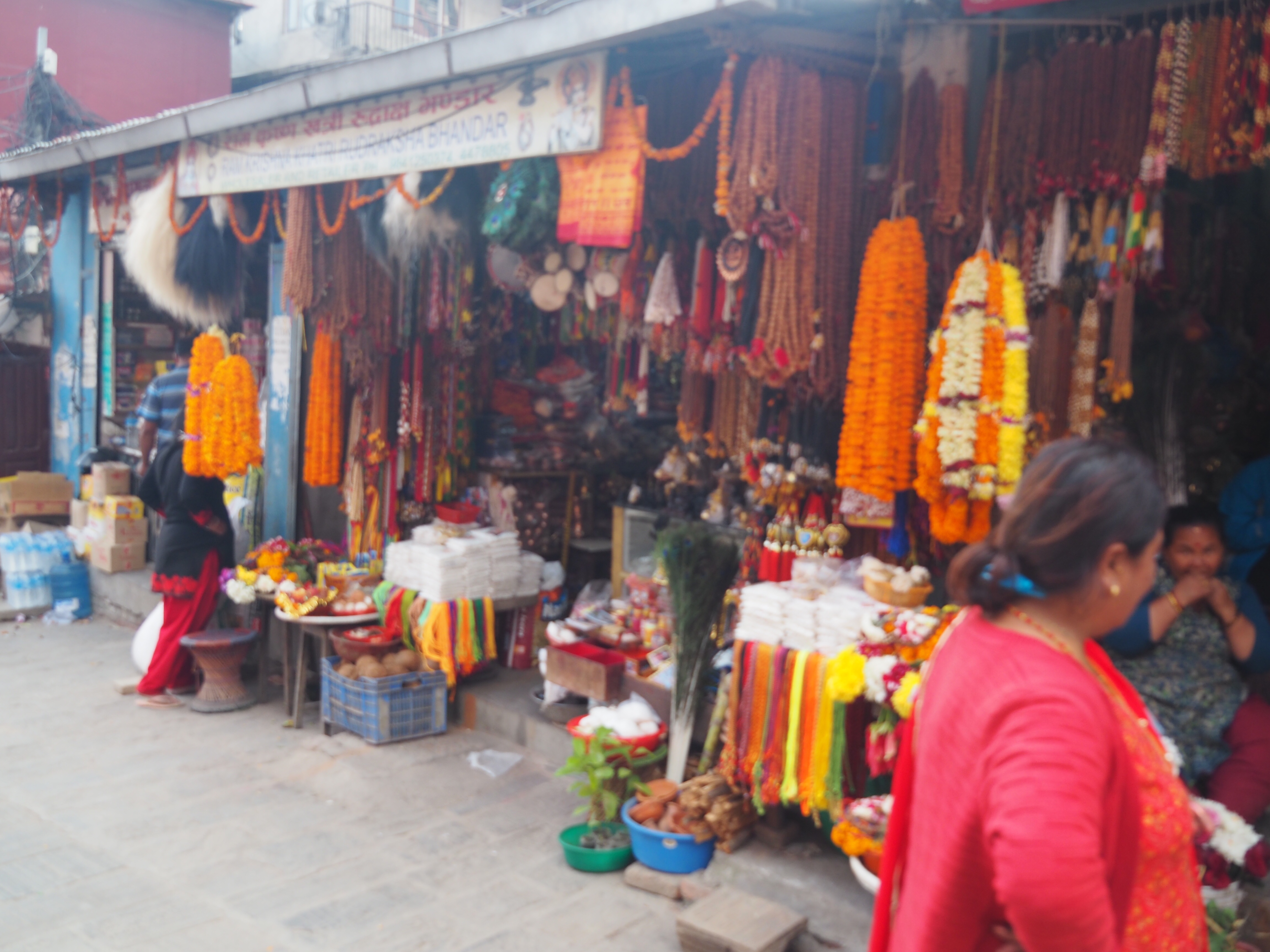
We weren’t quite finished with our sightseeing for the day. We had one more stop, to Pashupatinath which the country’s most important temple. It stands on the banks of the holy Bagmati a River. Outside the temple area, there are many stalls selling all the items needed for offerings such as marigolds, incense, conch shells, beads, etc.
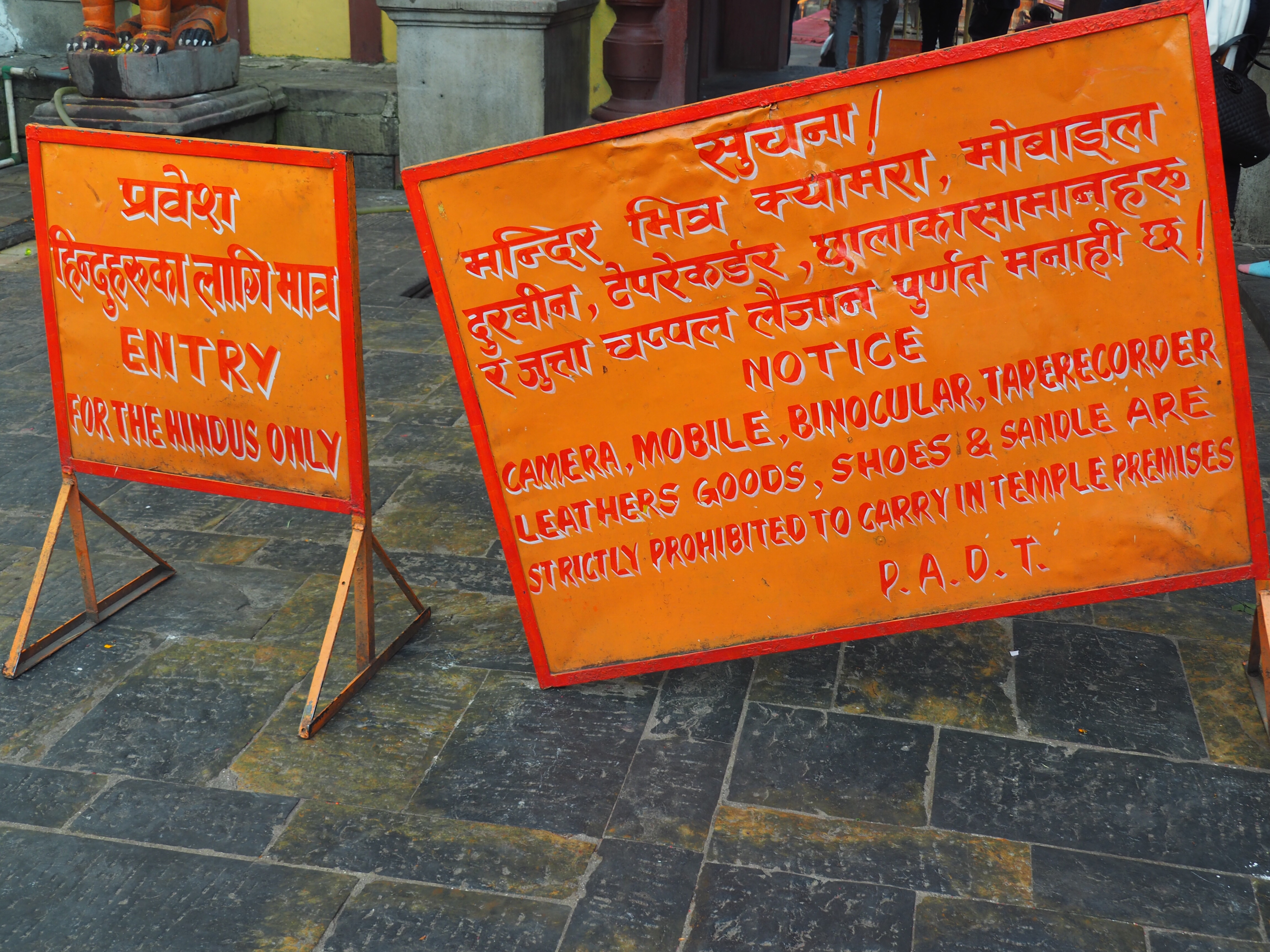
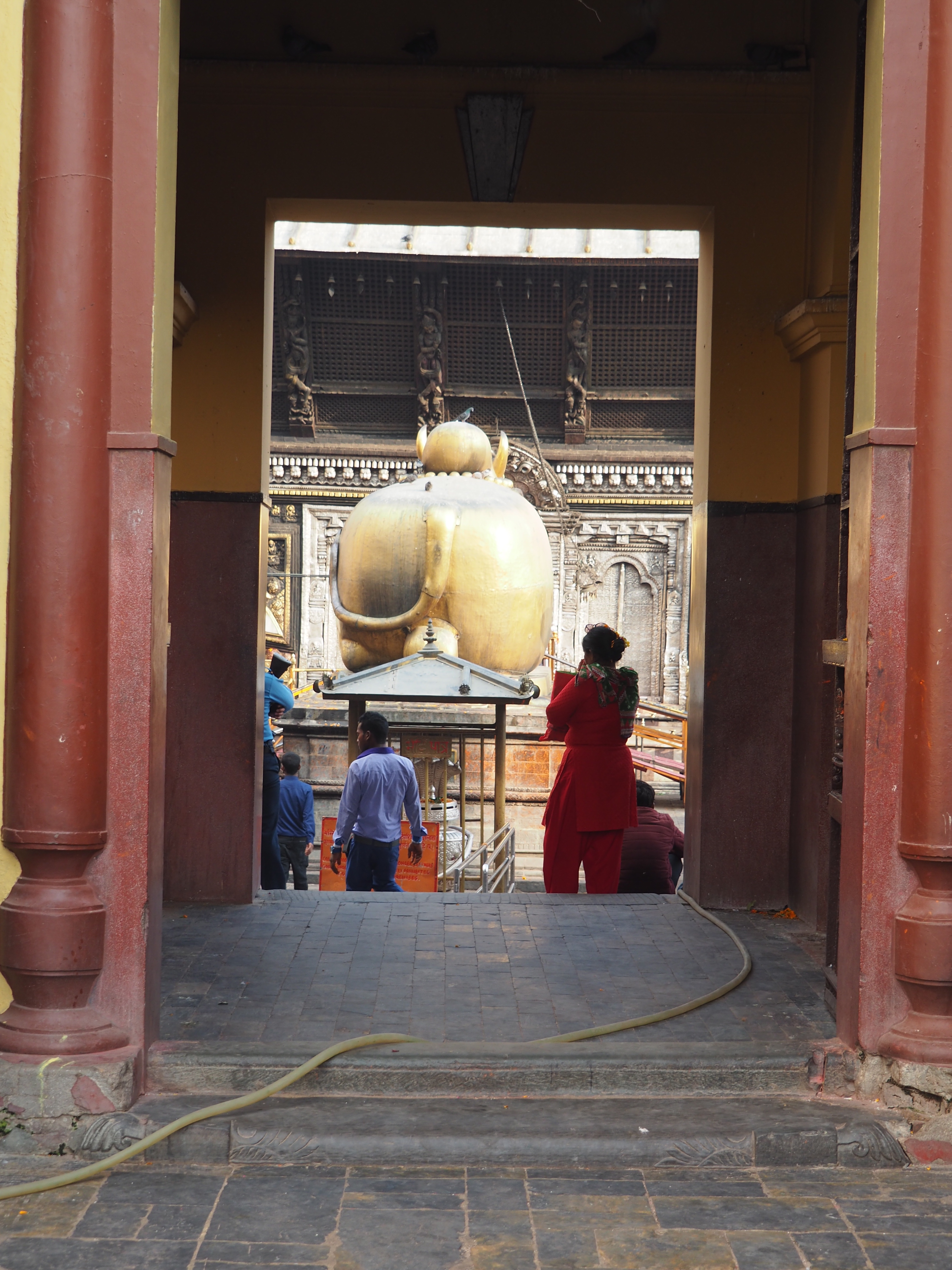
We could visit the grounds, but only Hindus May enter the temple, though we could peek through the door. This is one of the places where Hindus must visit by pilgrimage during their lifetimes.
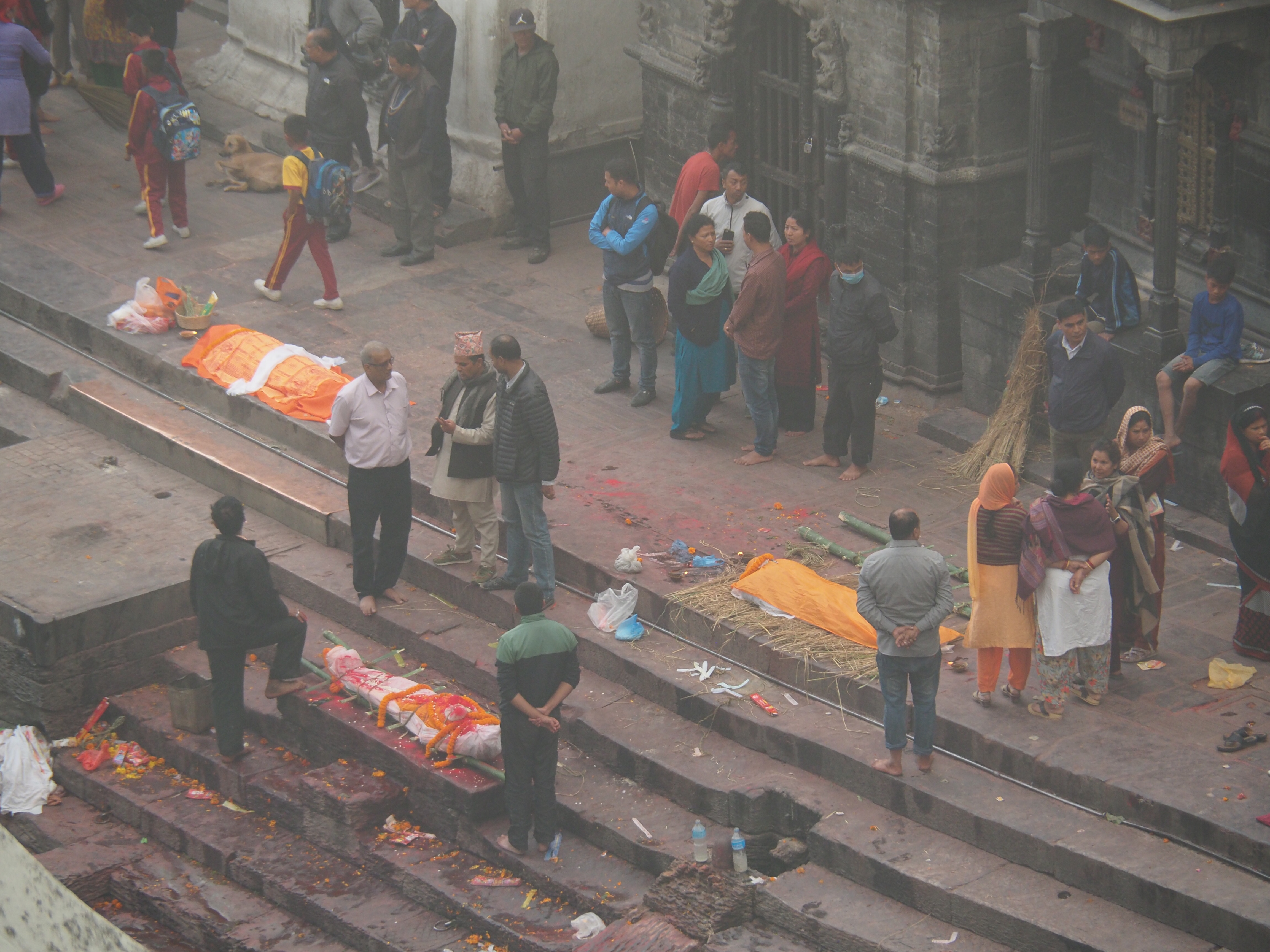
The grounds also contain cremation sites for Hindus. Suman told us the area is one of the most sacred in the Hindi faith. The cremations take place on ghats. Funerals take place here every day, 24 hours a day. Bodies are wrapped in shrouds and then laid out on the riverbank before being cremated on a wooden pyre. It was quite something to view…the pictures below were taken from a far distance out of respect to the families.
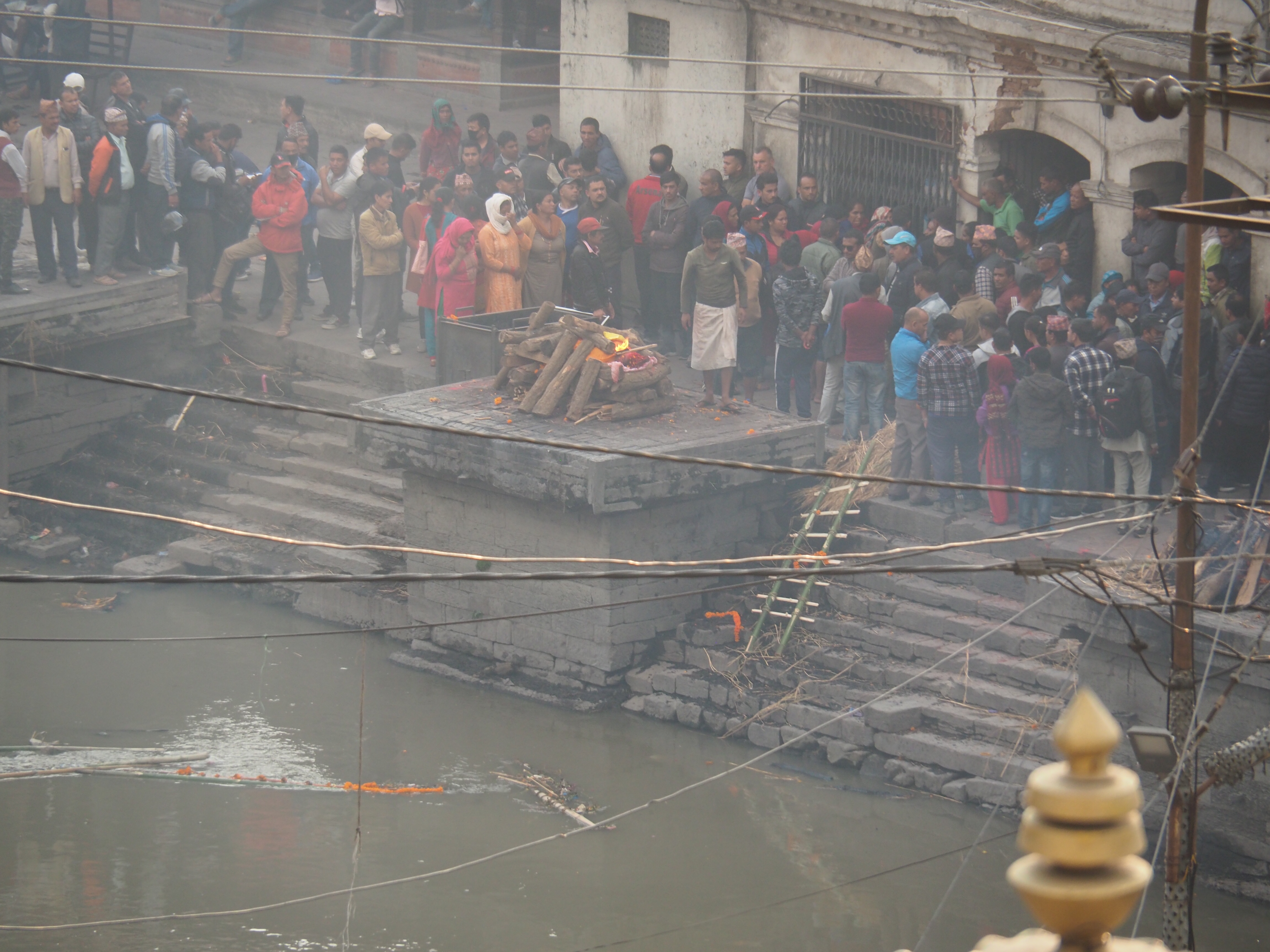
After the fire burn out, the ashes are put into the river, which flows into the Ganges (sp).
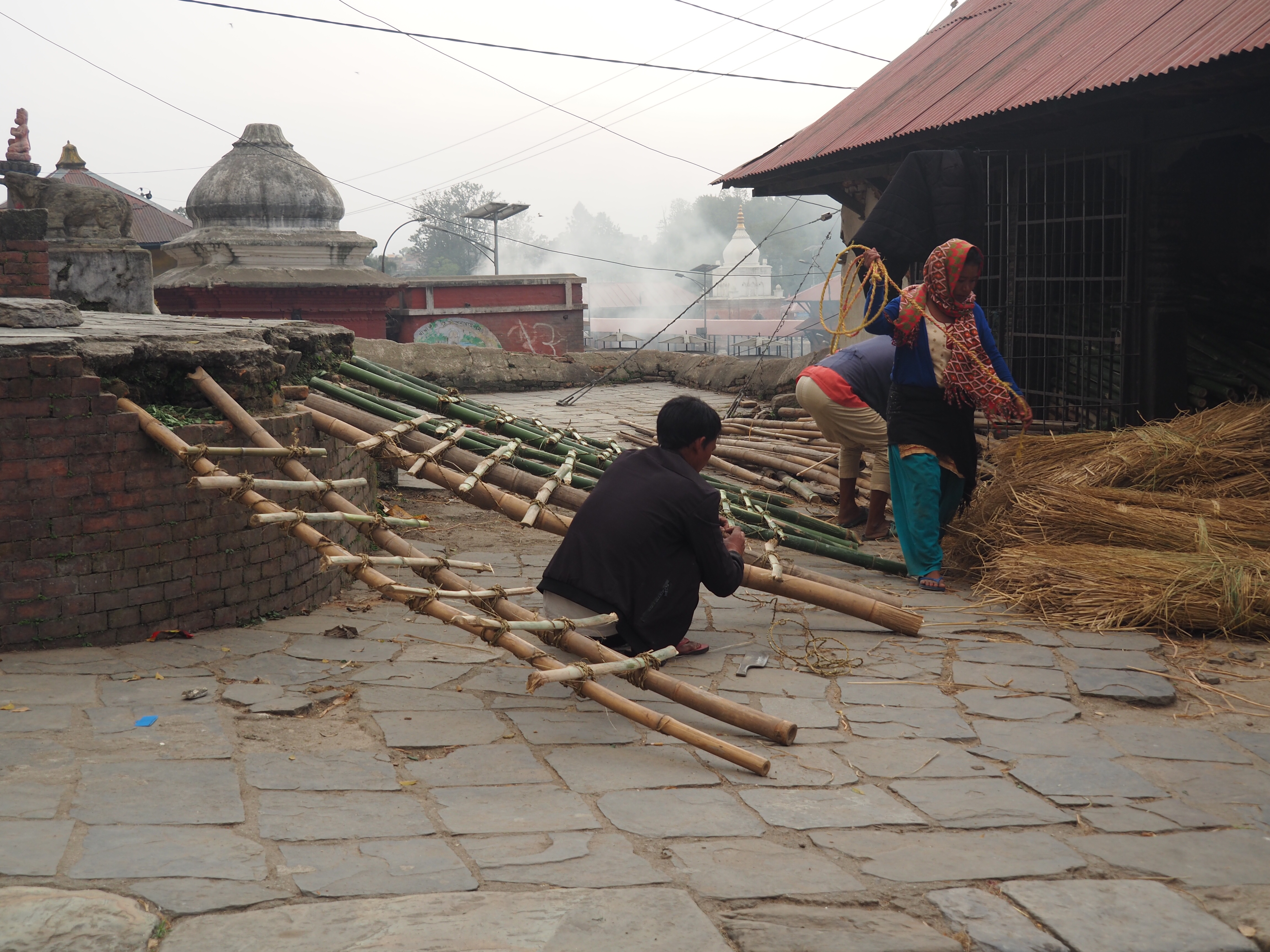
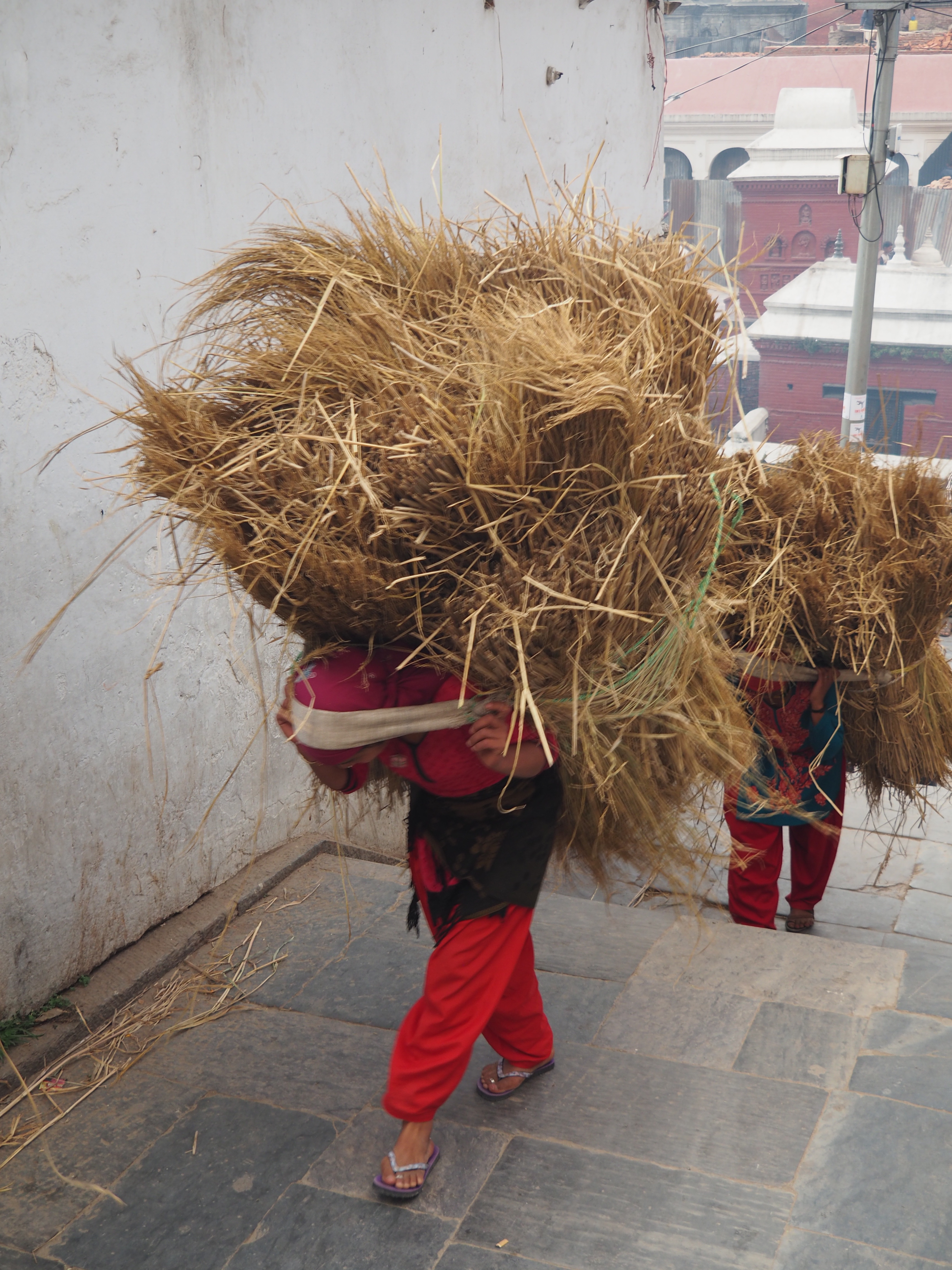
Here are a few more pictures from around the temple complex:
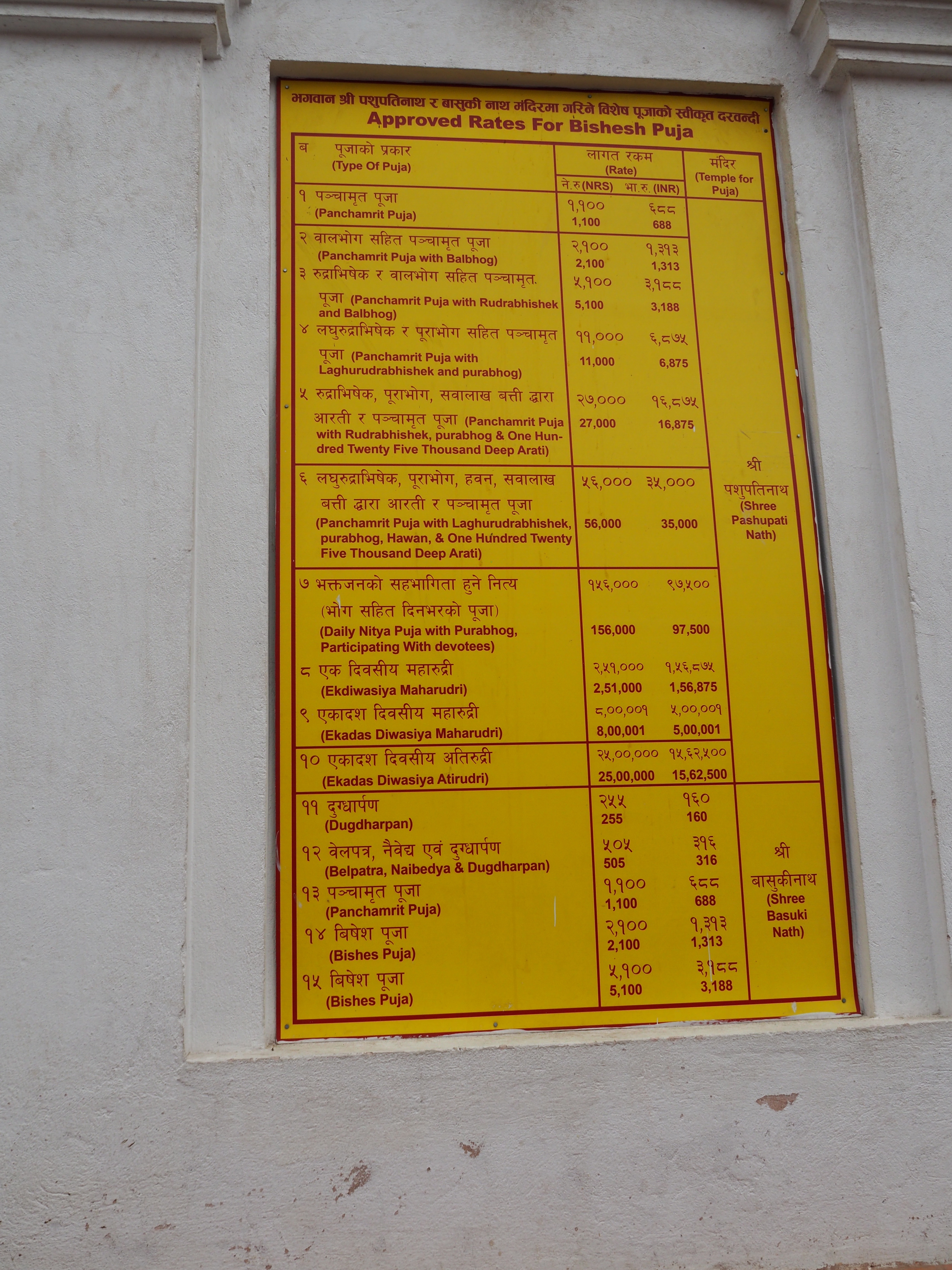
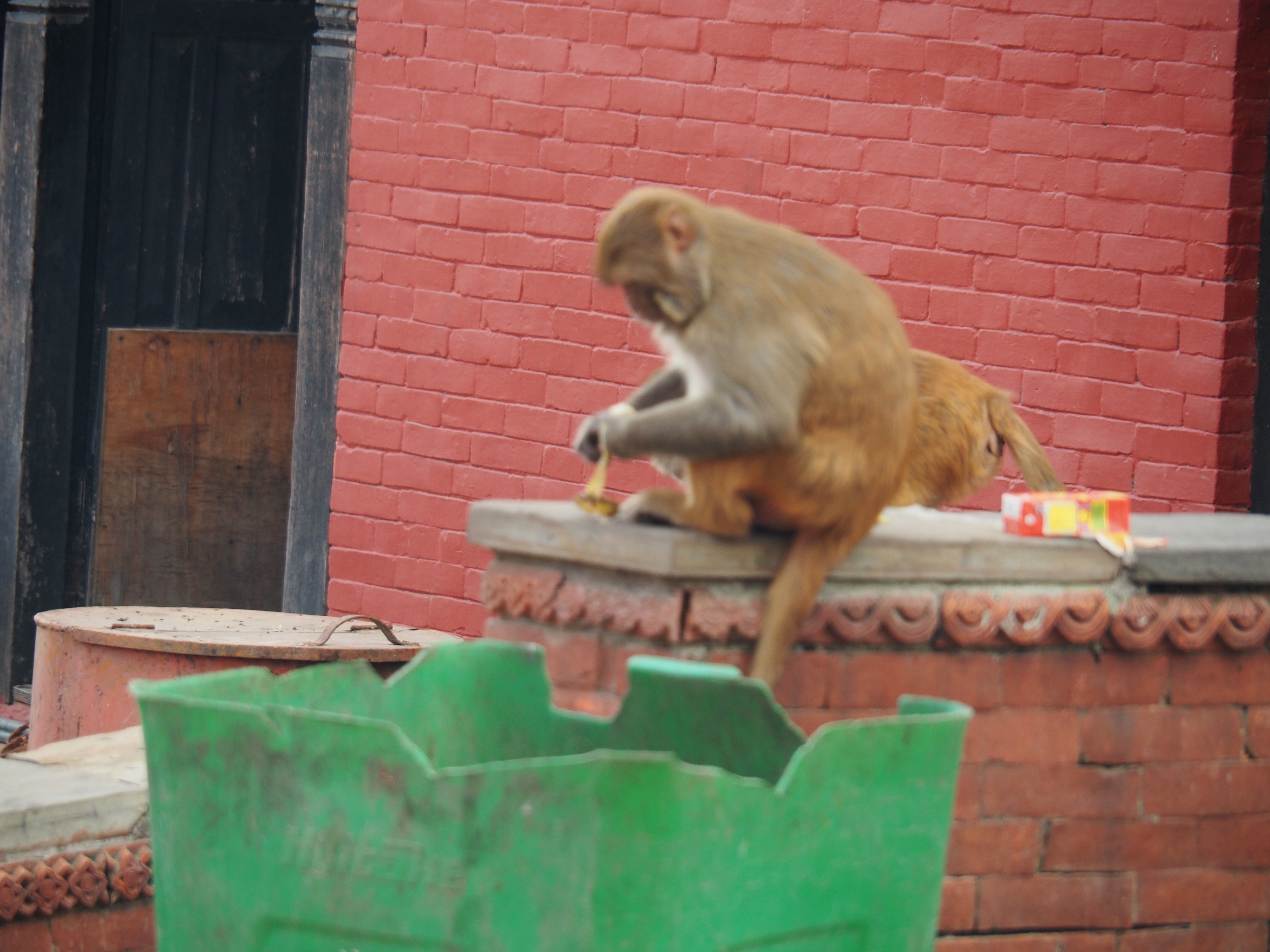
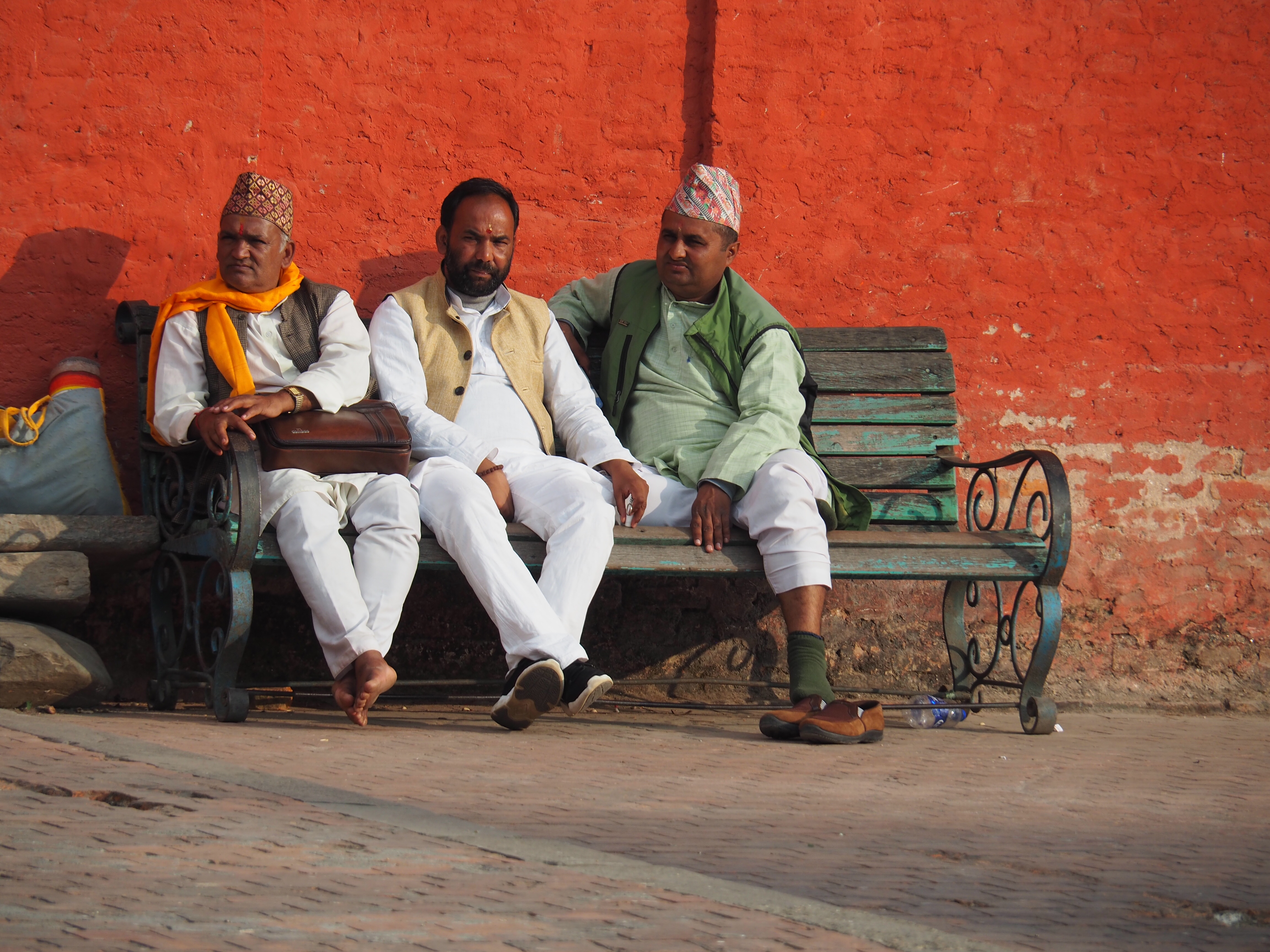
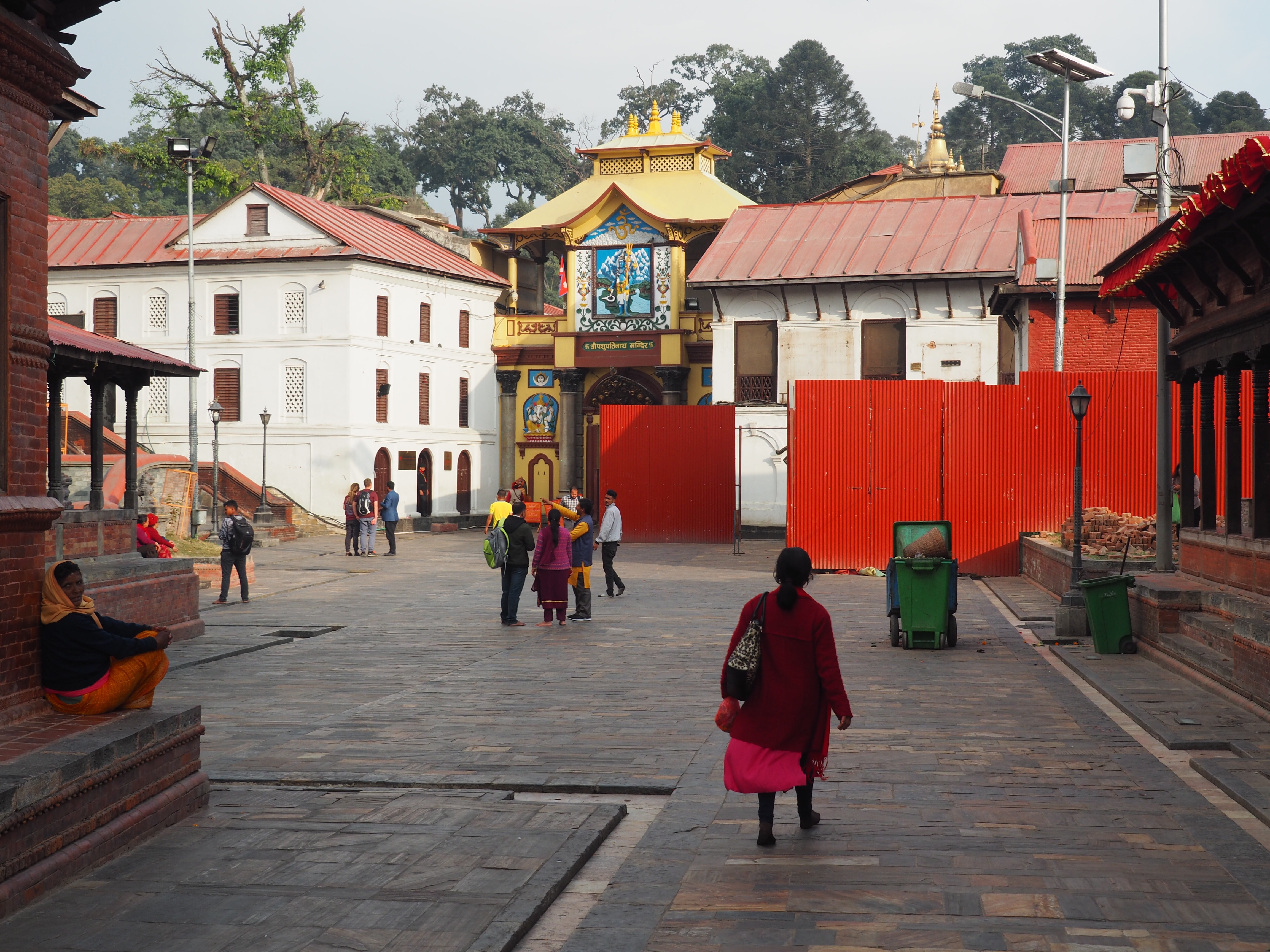
Here are a few more things I learned today:
– The regular work week is Sunday through Thursday and a half day on Friday. Government hours are 10-5, but private business has longer hours.
– The average monthly salary is $200; these low wages are the reason that people leave. Traditional jobs are going away as technology changes the way of life.
– We have seen garlands of marigolds on many buildings all over. These are left over from the Dwvali festival.
– the earthquake caused severe devastation all over the area. Most people didn’t have insurance to cover the damages leaving them with property they are not able to to repair. As a result, many people have sold the land and moved out of the city.
It is not easy to get a driver’s license here. One must get an eye test, s blood test, a physical from a doctor, take a written test, take a verbal test, and take a driving test, A driver has to have insurance. The fee for a license is $50, in addition to playing for the various medical tests.
Well…. we finally made it back to the hotel a bit after five and we were all tired. We met in the hotel restaurant for dinner and then called it an early night. Fortunately, we have a leisurely morning because we don’t have to depart until noon, when we will go to the airport for our flight to Bhutan!
 jrhnepalandbhutan2019
Omg. So interesting and your pictures are amazing! Steph
Sent from my iPhone
>
LikeLike
Seems like a wonderful trip so far, Jeannette. The pictures are great! I still wonder how/why Nepal ended up on the 3/4 hour time zone. All well back in STL.
LikeLike
Wow! Amazing pictures!
LikeLike