November 8, 2019
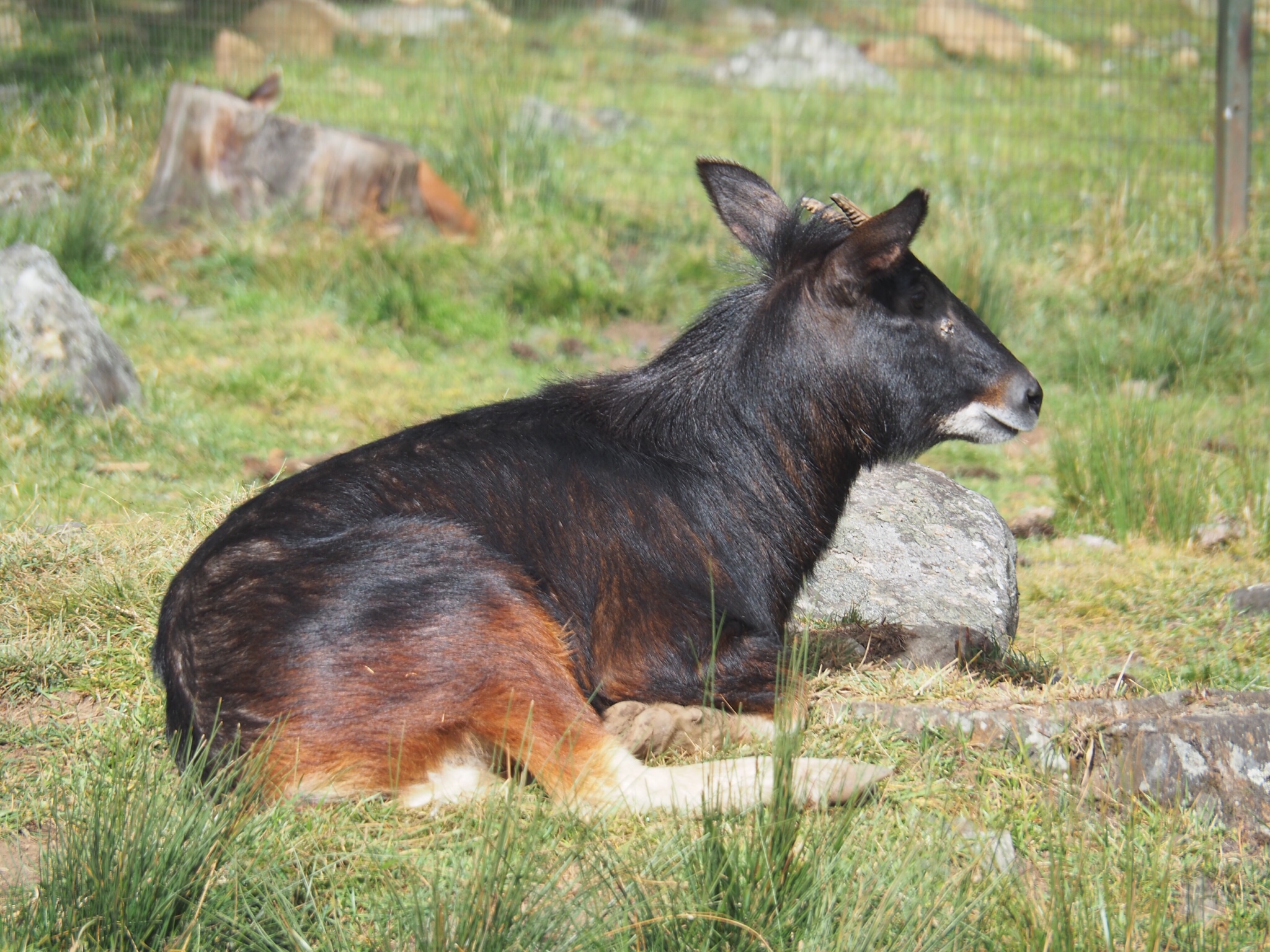
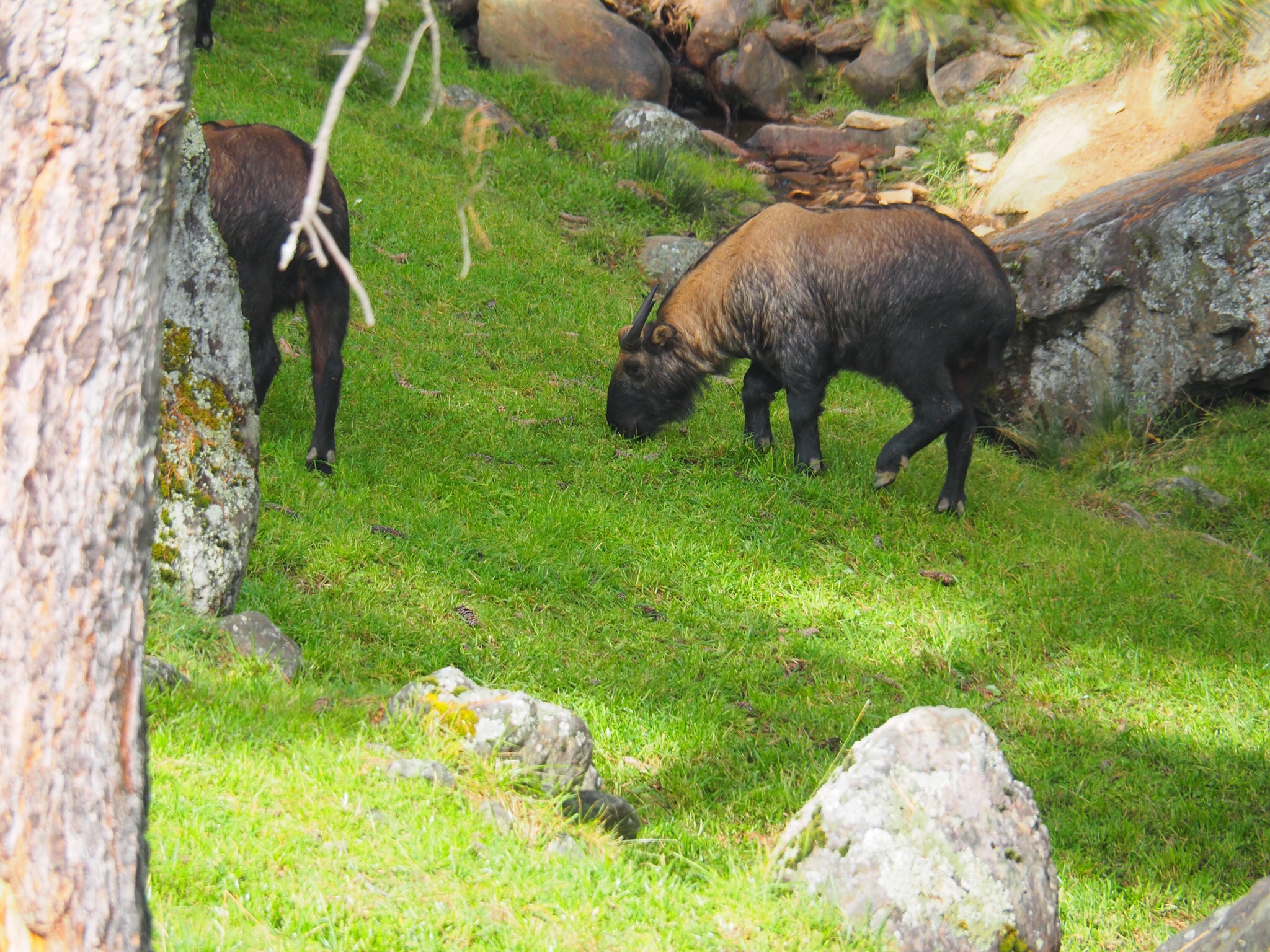
Today we finished sightseeing in Thimpu before making the drive to Punakha, We visited the zoo where we had a walk around the grounds to see some takins, the national animal.
The takin is the national animal because of it’s importance in religion and mythology. The story goes that the divine madman (a lay lama) visited Bhutan in the 15th century and performed a miracle by taking a goat’s head and putting it on a cow’s body. The story is more complicated than that, but suffice it to say it’s a bit of a strange looking creature.
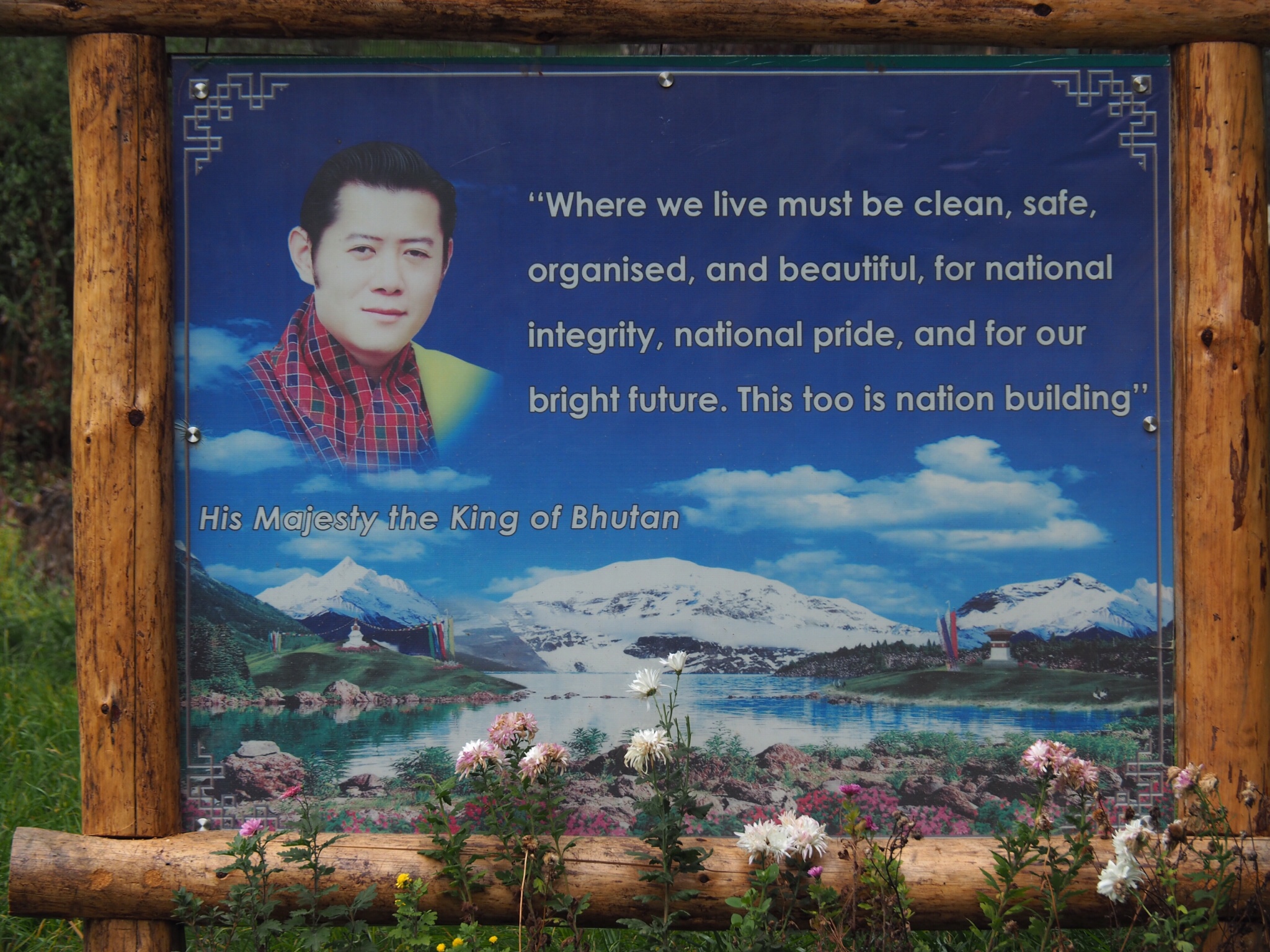
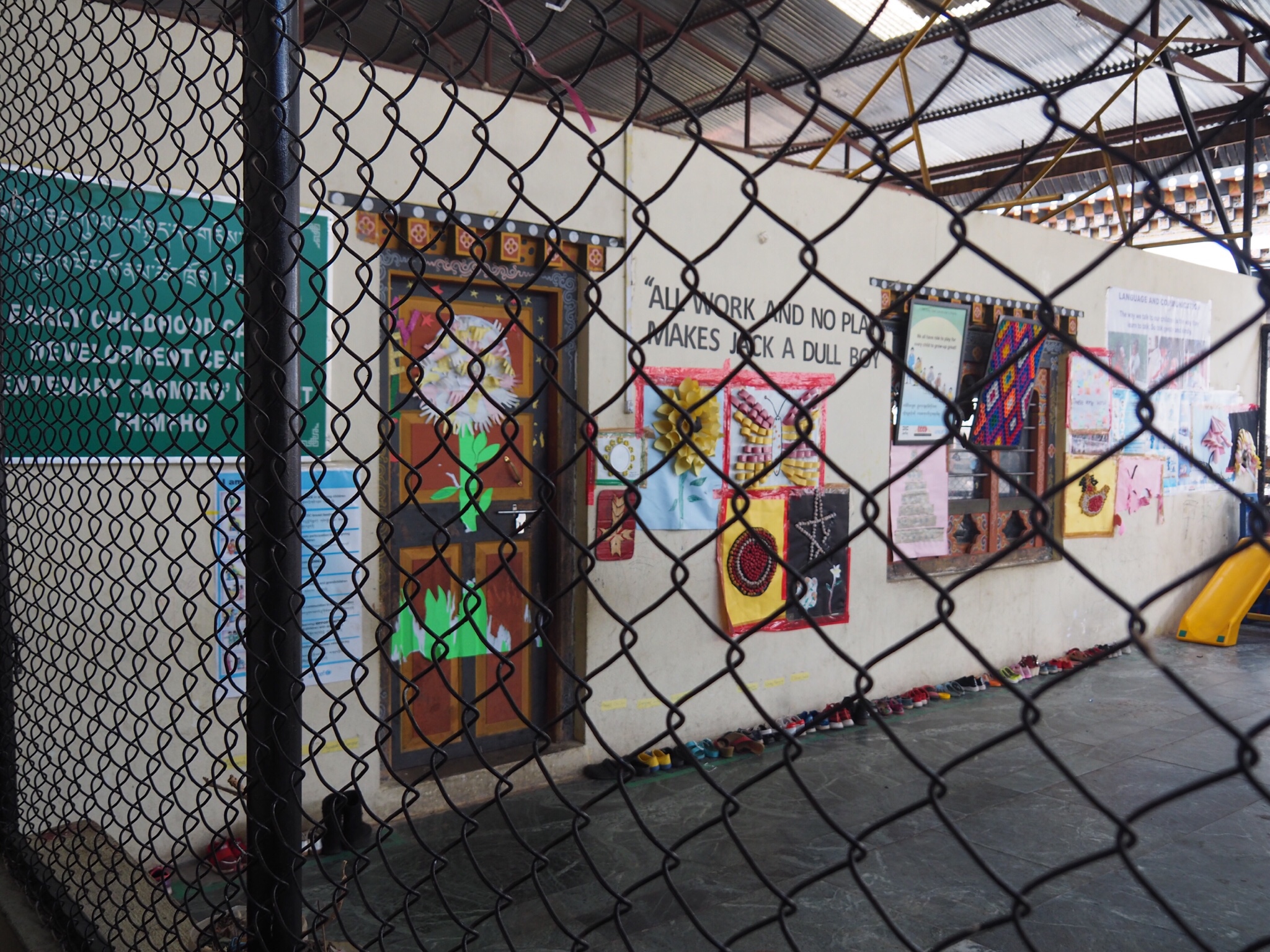
This sign is at the entrance to zoo:
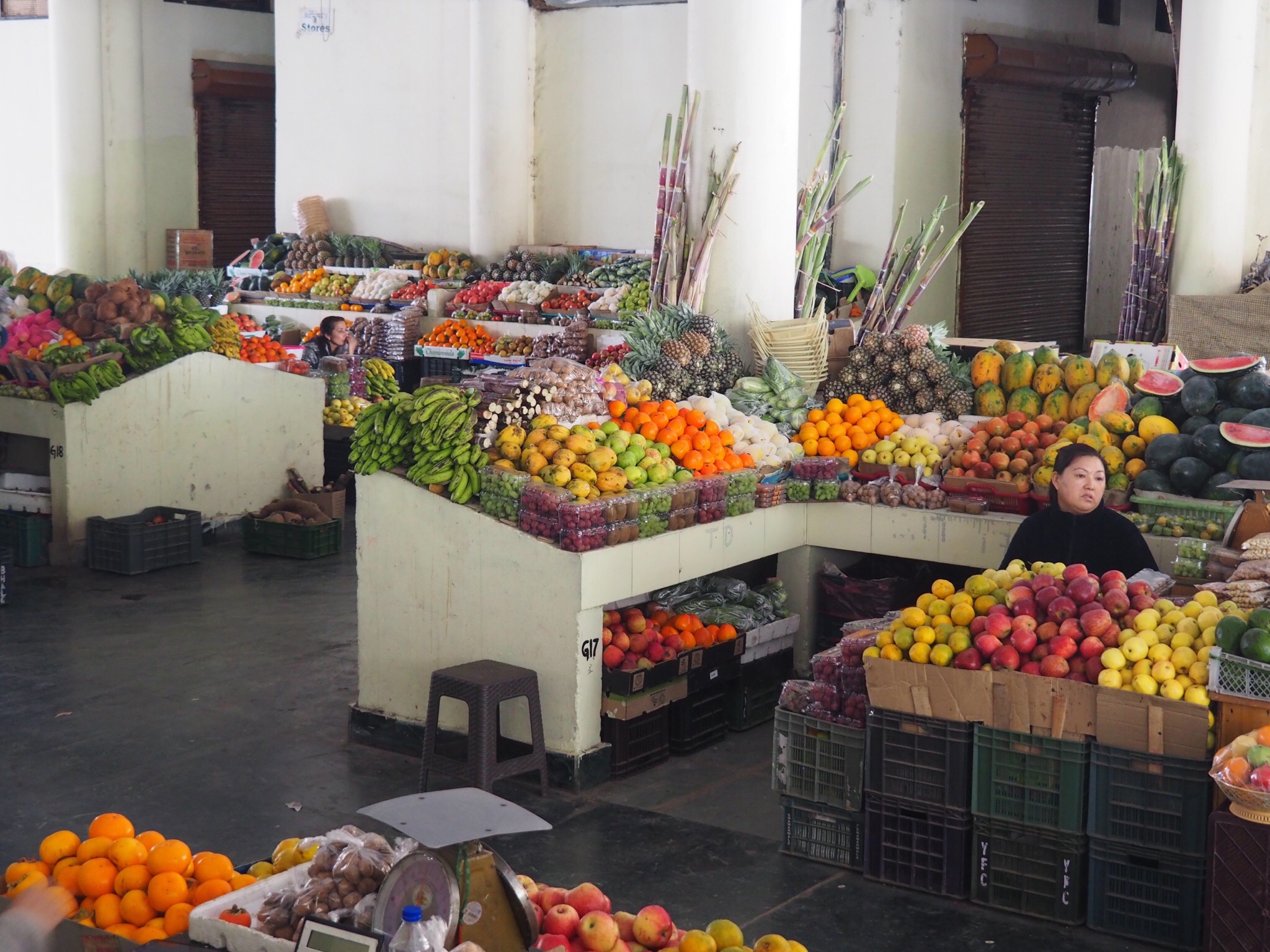
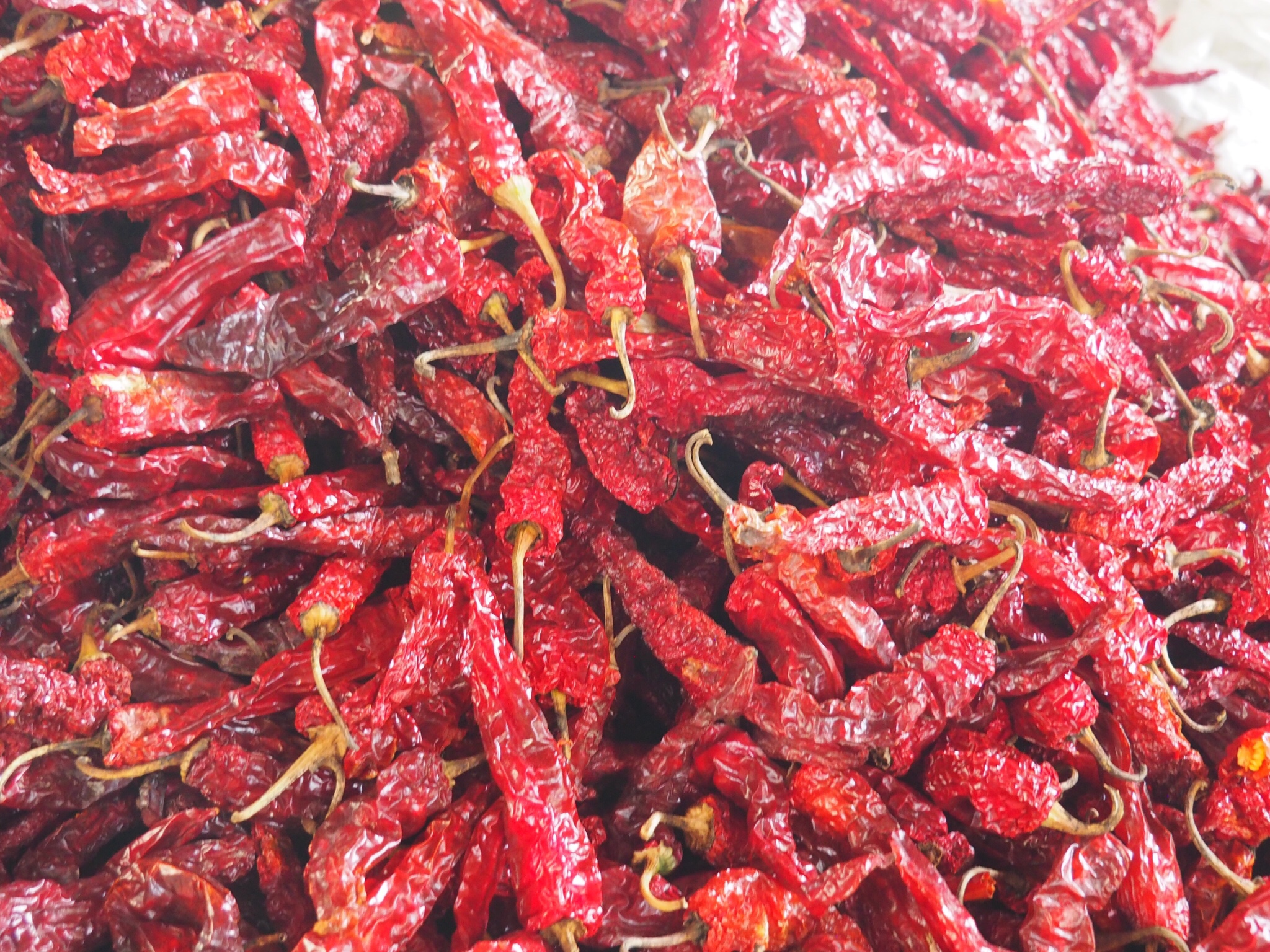
We made a stop at the local market.
After our visit, we began our drive to Punakha. It is only about 40 miles, but the drive takes nearly three hours. The roads are paved but are only a narrow two lanes with no lines. We constantly Made hairpin turns for the entire drive. This is not a country to visit if one is prone to serious car sickness!
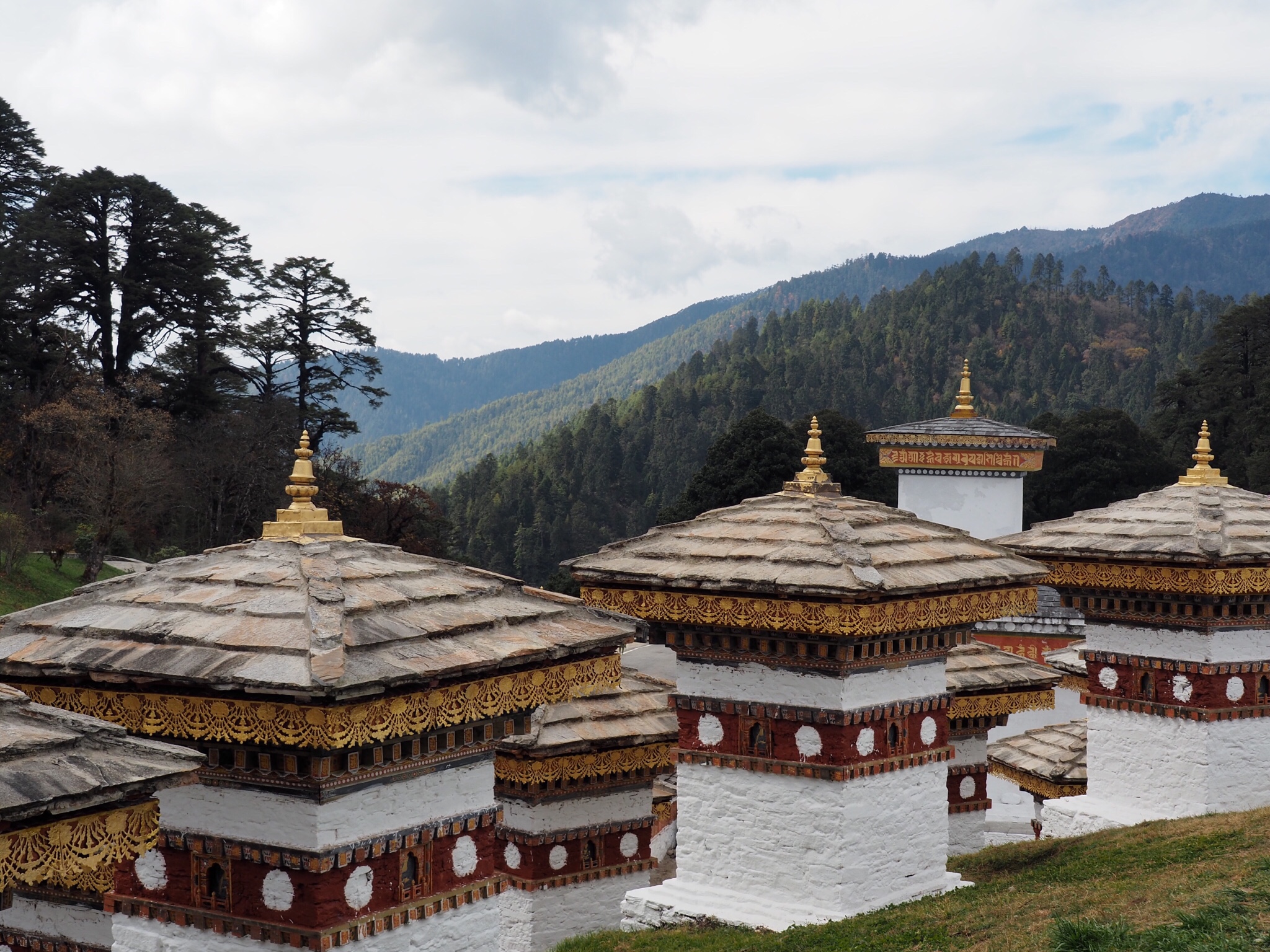
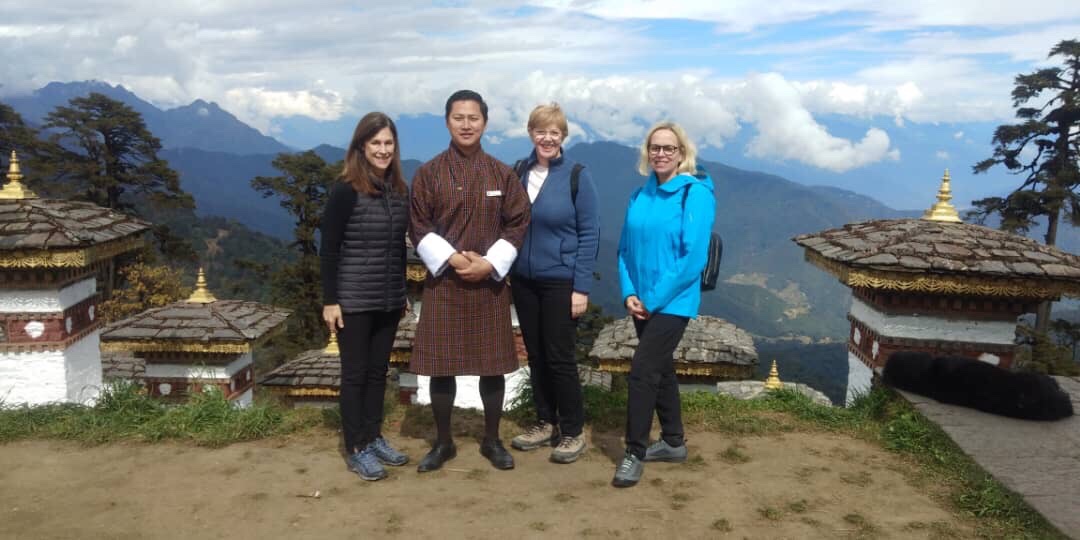
Our drive was broken up with a few stops along the way. We crossed the Dochu La Pass which it at 3100 meters (over 10,000 feet). We made a stop at the top and had an incredible view of the Himalayas. There are also 108 Chortens (receptacles for religious offerings) which commemorate the loss of life in an uprising in southern Bhutan. We walked around the site and then had some tea at the restaurant that is there.
We continued for awhile longer until we stopped for lunch and then continued on to our hotel in Punakha.
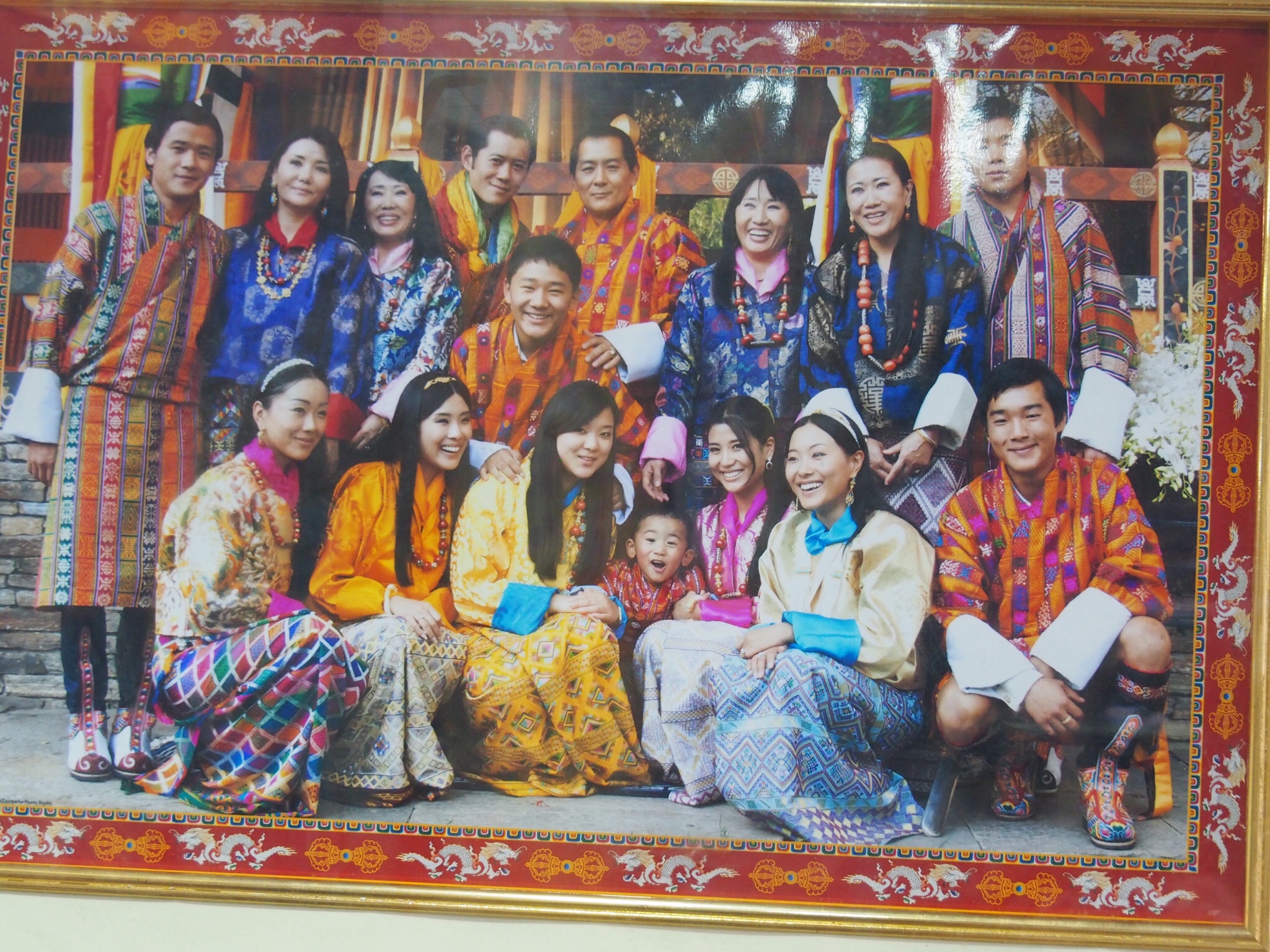
At the lunch restaurant we saw this photo of the fourth king, all his wives, his son who is the current king and his siblings. More information about all of them is below.
Punakha sits low in a valley in central Bhutan and lies at the junction of two rivers. It was the National capital until 1955 and is an area with very fertile farmland. It serves as the winter home of the Central Monk Body, I think this is like the governing group for the monks.
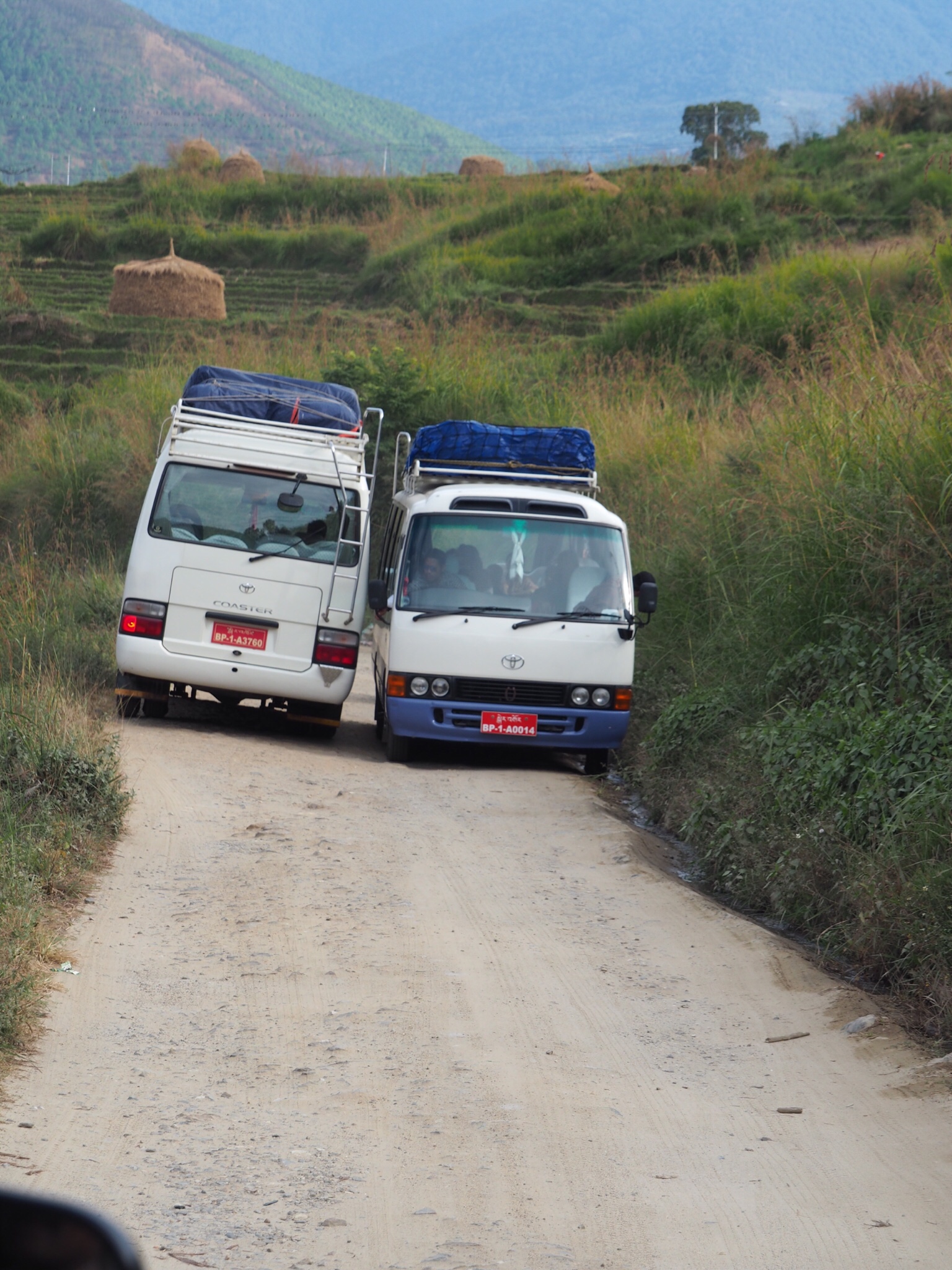
Since Wang had a full afternoon planned for us, we didn’t linger at the hotel before heading out. He originally had planned for us to take a 45 minute walk to get to our first stop, but I think he took a look at his tired group and gave us a break…. Mr. Poo would drive us instead. The drive involved a stretch on a one lane dirt road:
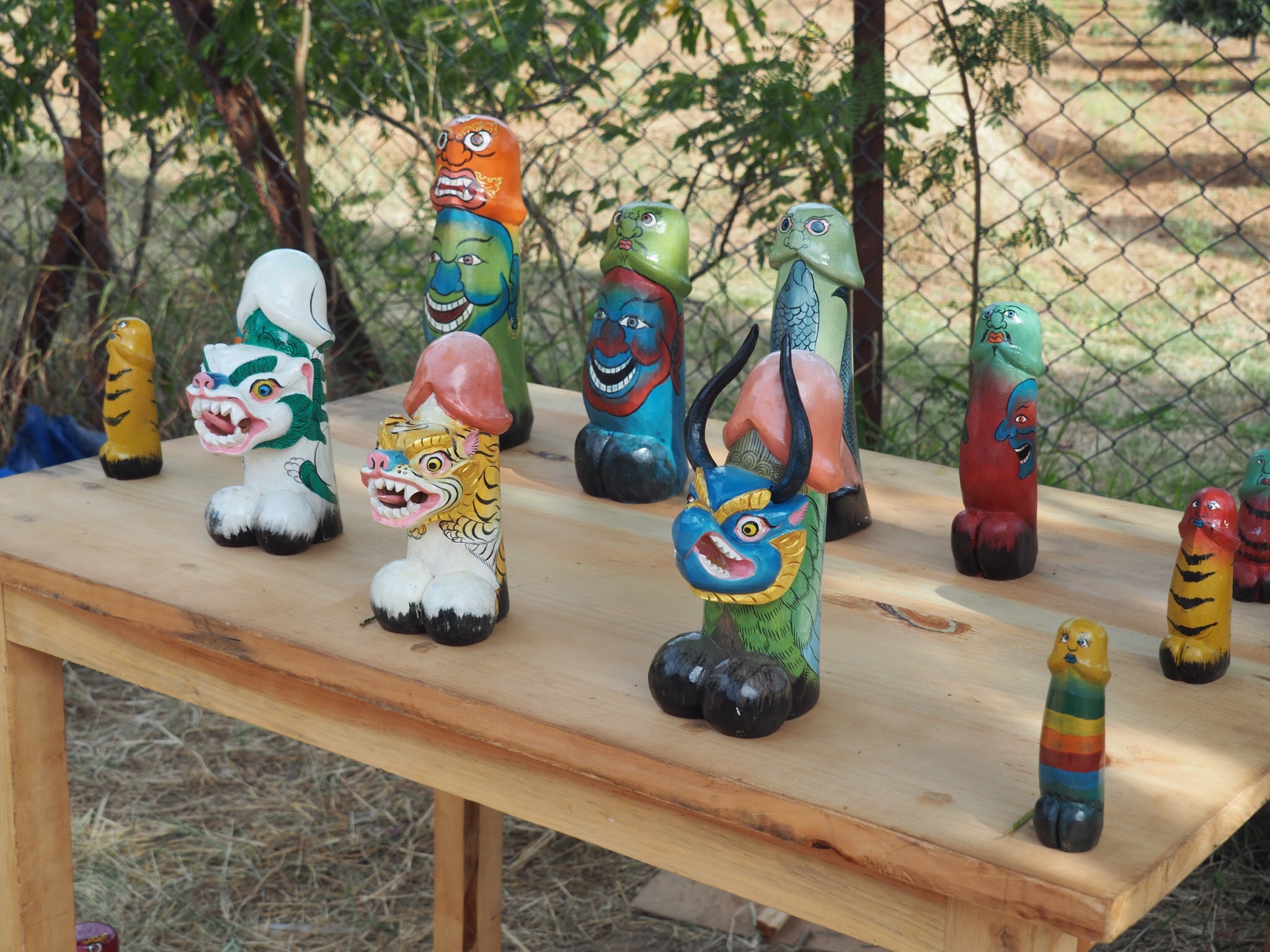
Our destination at the end of the road was the Chimi Lhakhang, the temple of Drukpa Kunley, otherwise known as the divine mad monk, who is one of the country’s favorite saints. He was from Tibet but traveled all over this country using crazy stories, songs, and outrageous behavior to share his teachings. He is the one to introduce the phallus to Bhutanese Buddhism. This latter fact is commemorated in many interesting items available for purchase outside the temple.
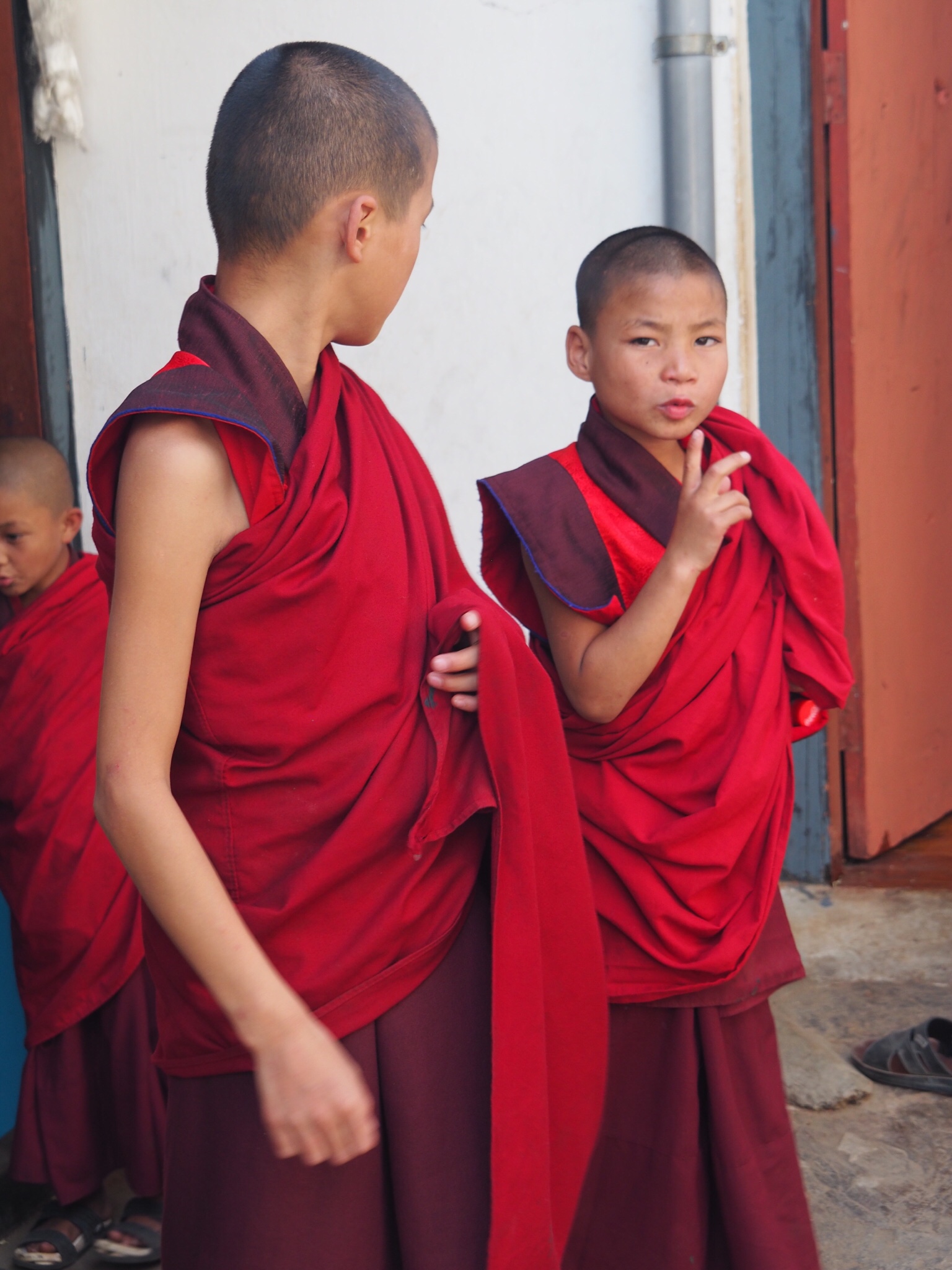
Inside the temple we witnessed a group of monks making a pilgrimage to the site. We listened to their prayers, which were mesmerizing. After their prayers, Maryse and I were fortunate enough to receive a blessing from a monk who used the madman’s bow and arrow and a wooden phallus. I think that is likely going to be a once in a lifetime experience!
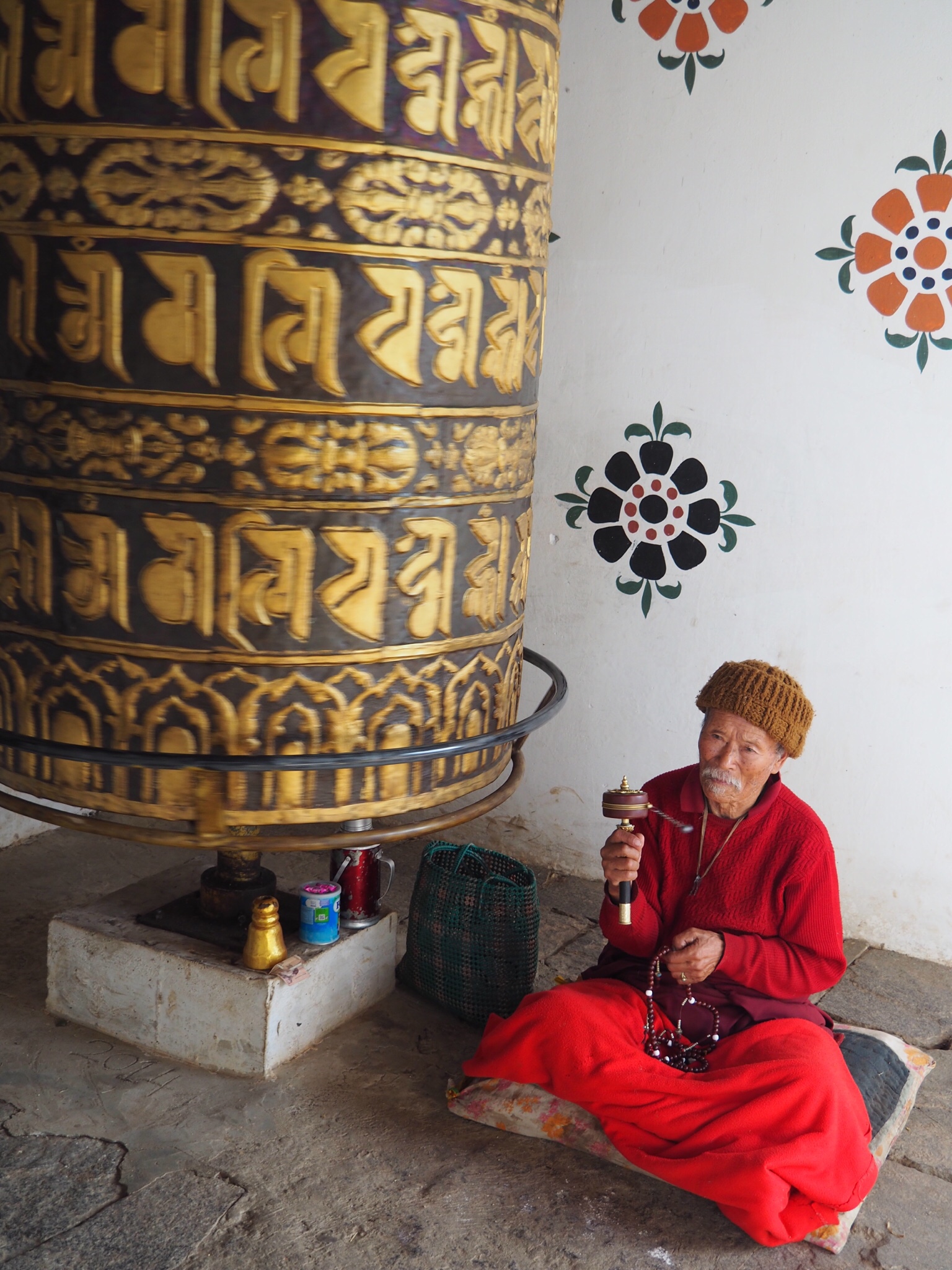
This man was near the entrance, using his prayer wheel. We learned that inside the wheel there are a series of prayers. One always spins it clockwise.
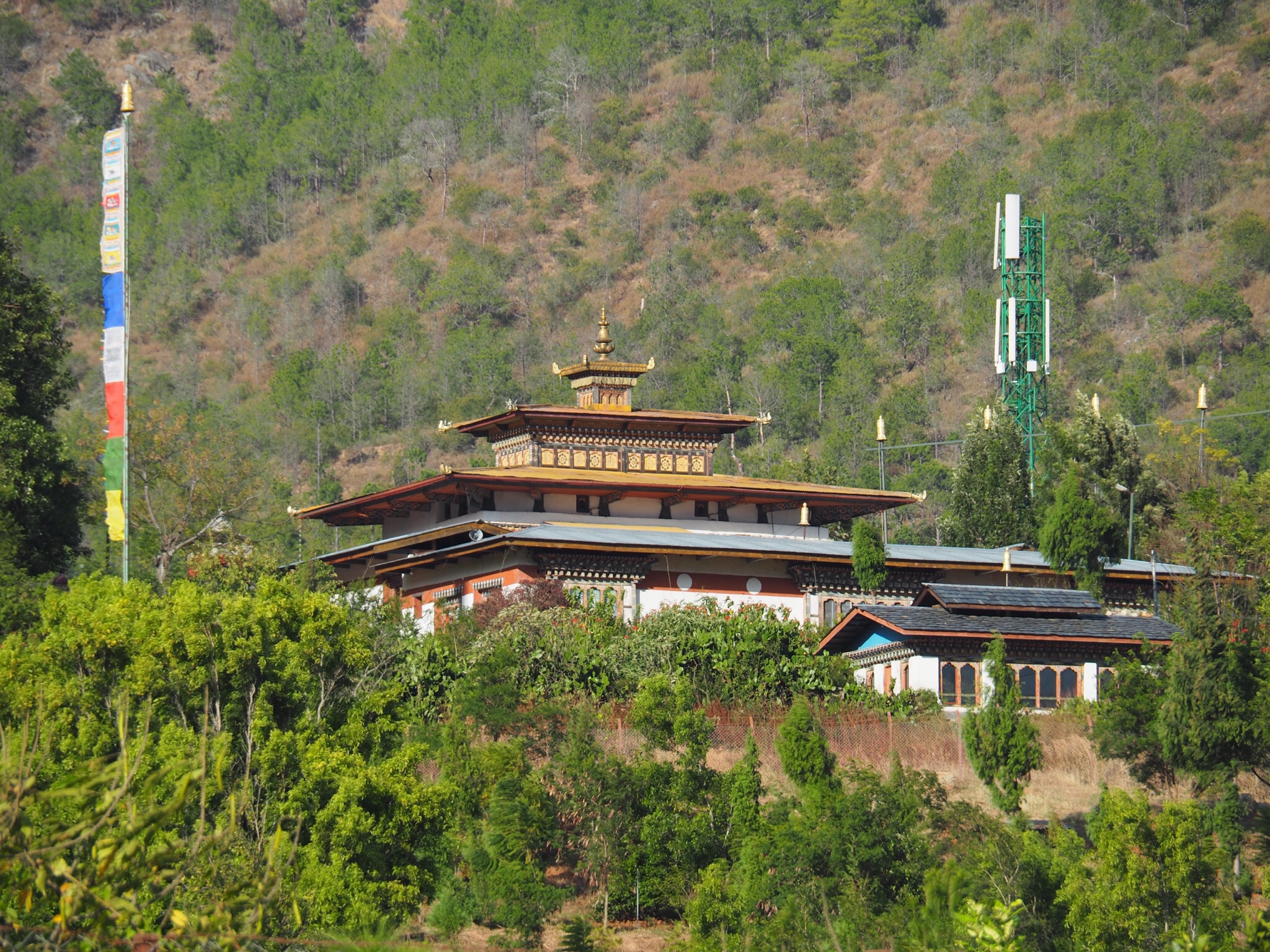
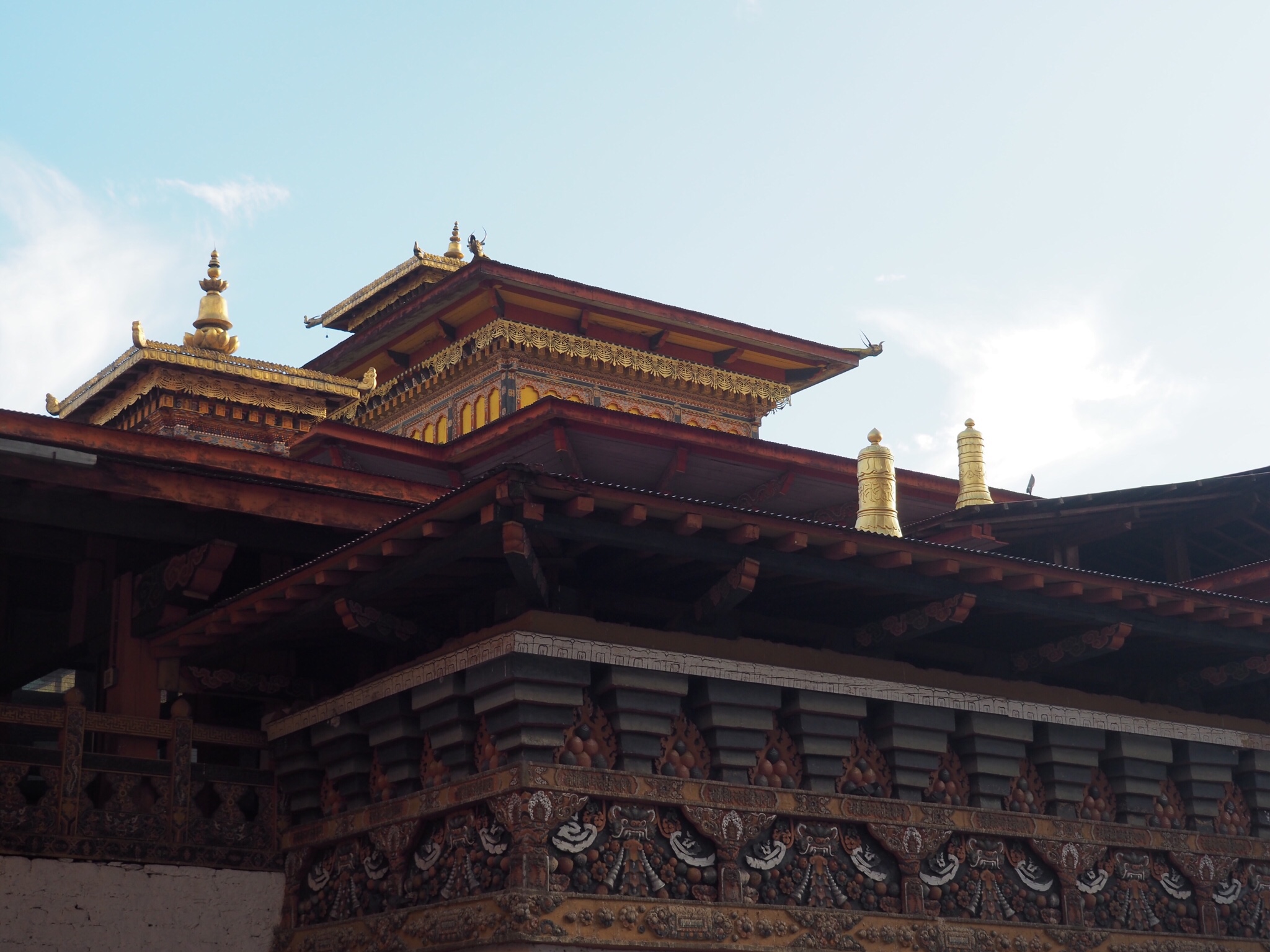
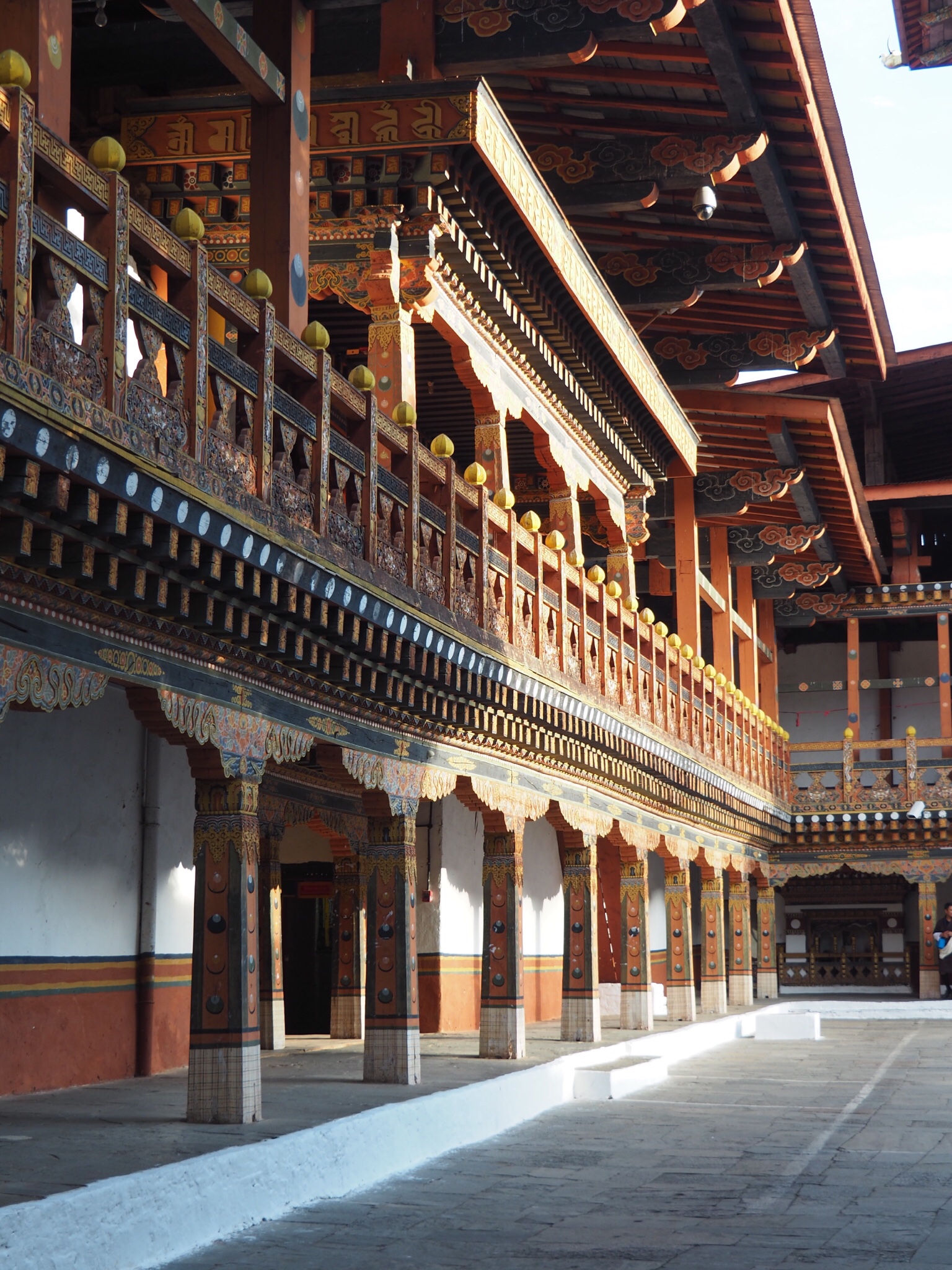
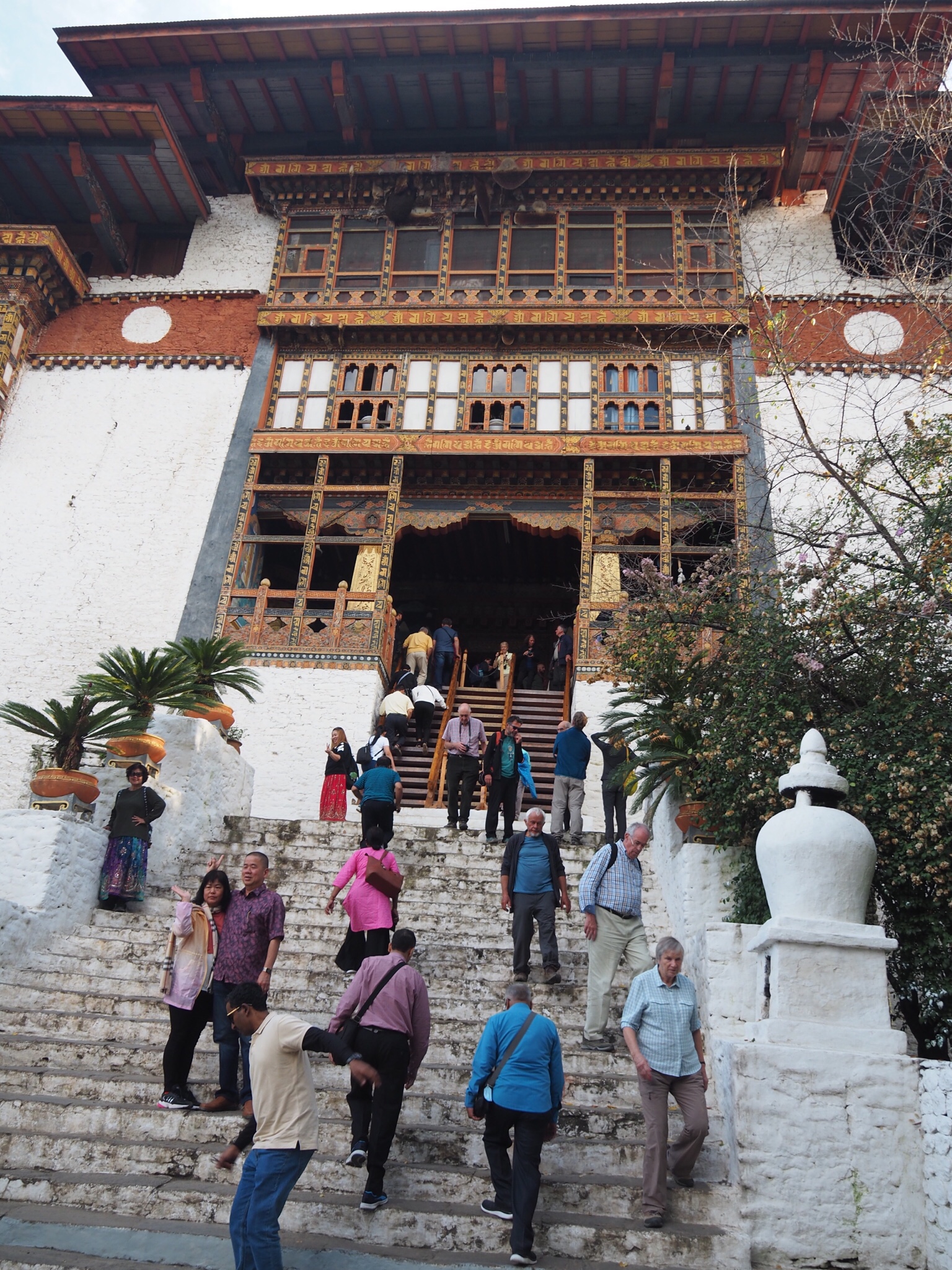
After our visit, we retraced our steps along the one lane dirt road back to a main road to travel to the Punakha Dzong. As I mentioned before, a Dzong can be both the religious and government center for an area. It served as the center of government until the capital moved in 1955. This one is situated at the confluence of the two rivers, it is lovely.
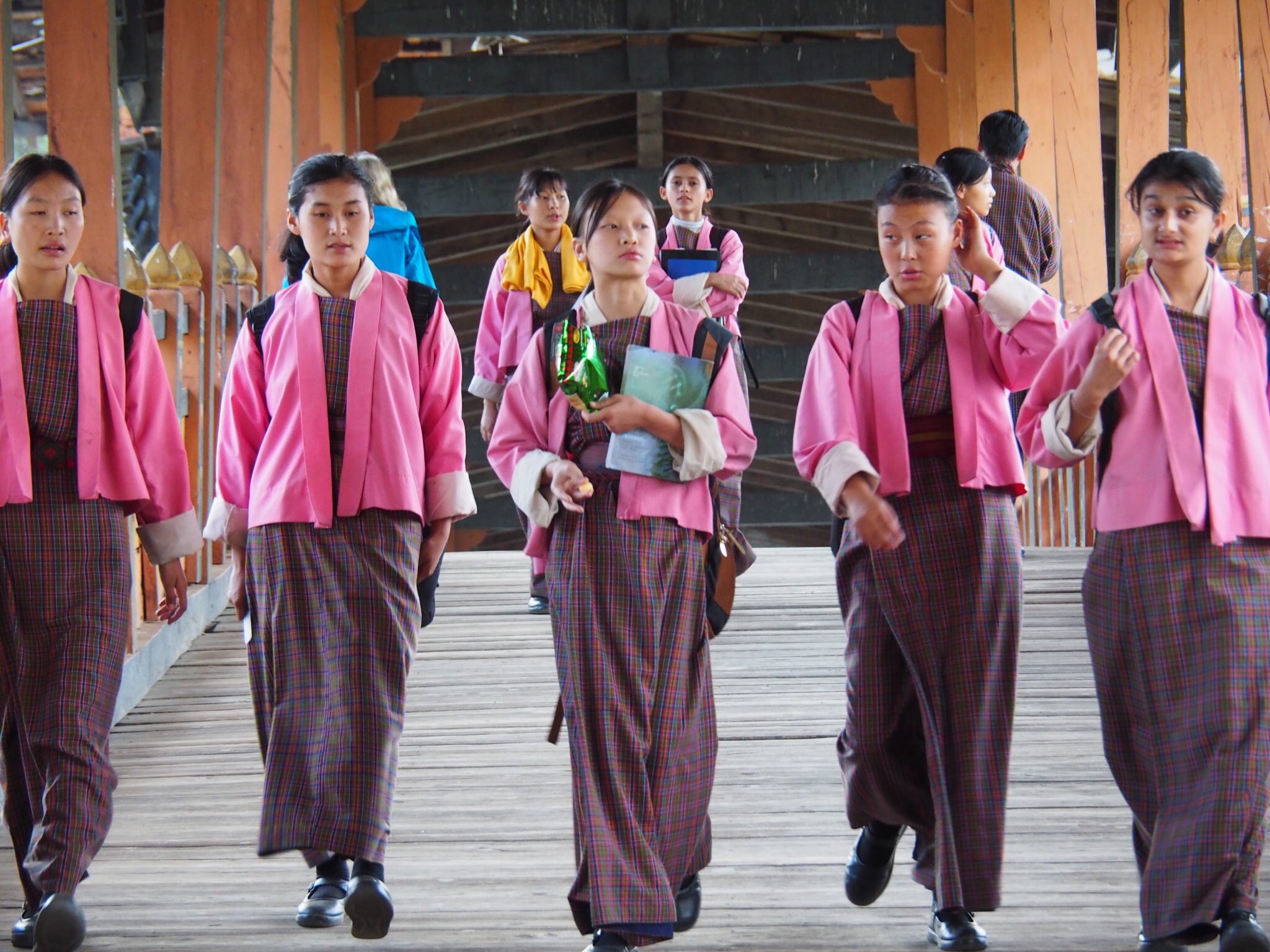
On our way out, we saw these girls walking home from school. They are wearing the traditional dress for girls/women called kiras.
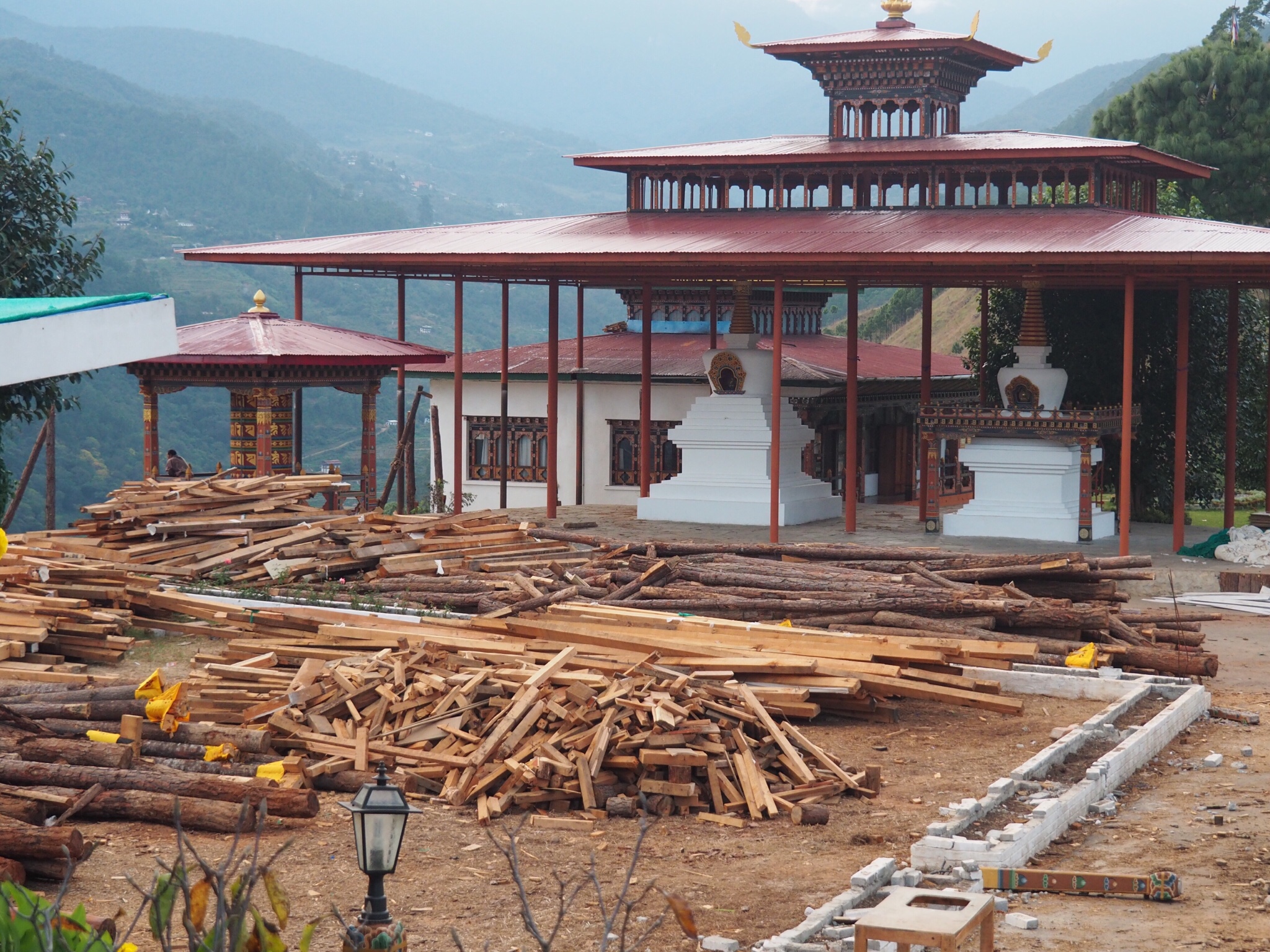
We still had one more stop to make before our day was complete. This was to the nunnery. This one was financed by the fourth king’s father-in-law (the current king’s maternal grandfather) to serve as a Buddhist college for over 100 nuns. The king’s grandparents’ house can be seen just across the parking lot from the nunnery. The grandfather died in October of this year and they were still taking down the stands and rooms that were used for his cremation service. His stupa and the one that will be used for his wife are in the outside courtyard.
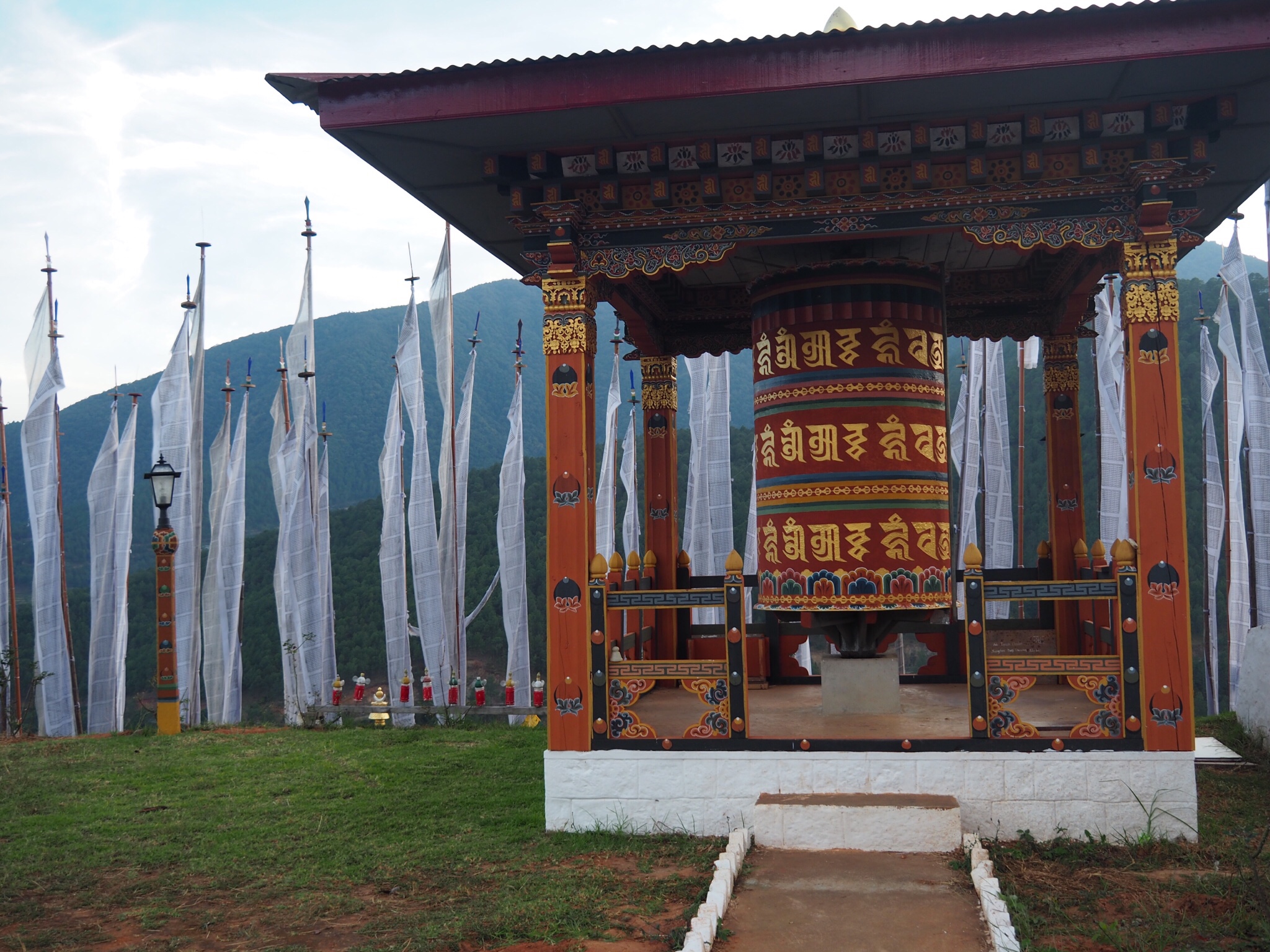
These are prayer flags in honor of the king’s grandfather. We see this all over on the hillsides. There are always 108 of them out in memory of someone after he or she does. They must be placed where there is wind to take the prayers.
Wow….this was a very full day! We all opted for an early dinner because tomorrow we have not one, but two hikes on the agenda. One will take us along one of the rivers and through fields. The other will take us to another temple. We have joked with Wang that he is testing us to see if we will be able to make it to the Tiger’s Nest on Monday. He assures us that we will all make it.
I have felt fine physically from our various walks, however, I have really felt the effects of the altitude. My breathing is extremely labored. They say we become more acclimated but so far I am not convinced!
Some interesting things to know about Bhutan:
– Like Nepal, this area is prone to earthquakes. Unlike Nepal, their traditional architecture is designed to withstand the quakes. Thus, they haven’t had the devastation that Nepal has had.
– School is taught in English. All the signage is in English, making it very easy for tourists like us to understand things and to get around.
– The current king is 38 years old and his wife is 28. They got married three or four years ago. They first met when she was ten years old and the king (before he was king) visited her school. It was, literally, love at first sight…he told her “we will meet again”. They did, and now they are married.
– The king’s father, the fourth king, has four wives and all of them are sisters! He married them in one ceremony. The current king is the second child of ten from all the wives, but he is the first born son.
– Yesterday, I showed you Wang wearing his white scarf over his robe. One can tell a man’s role by the color of his scarf. The commoner wears white, a government official wears orange, and a regional official wears maroon.
– The money here is called the Ngultrum, Nu for short. It is tied to the Indian Rupee.
– We see stray dogs everywhere! Evidently, the government takes care of getting them vaccinated. The dogs recognize the white truck and don’t want to go for their shots, who can blame them? In Thimphu, the dogs sleep all day and then roam at night and bark in the wee hours! They are loud enough to wake people up, including everyone in our group!
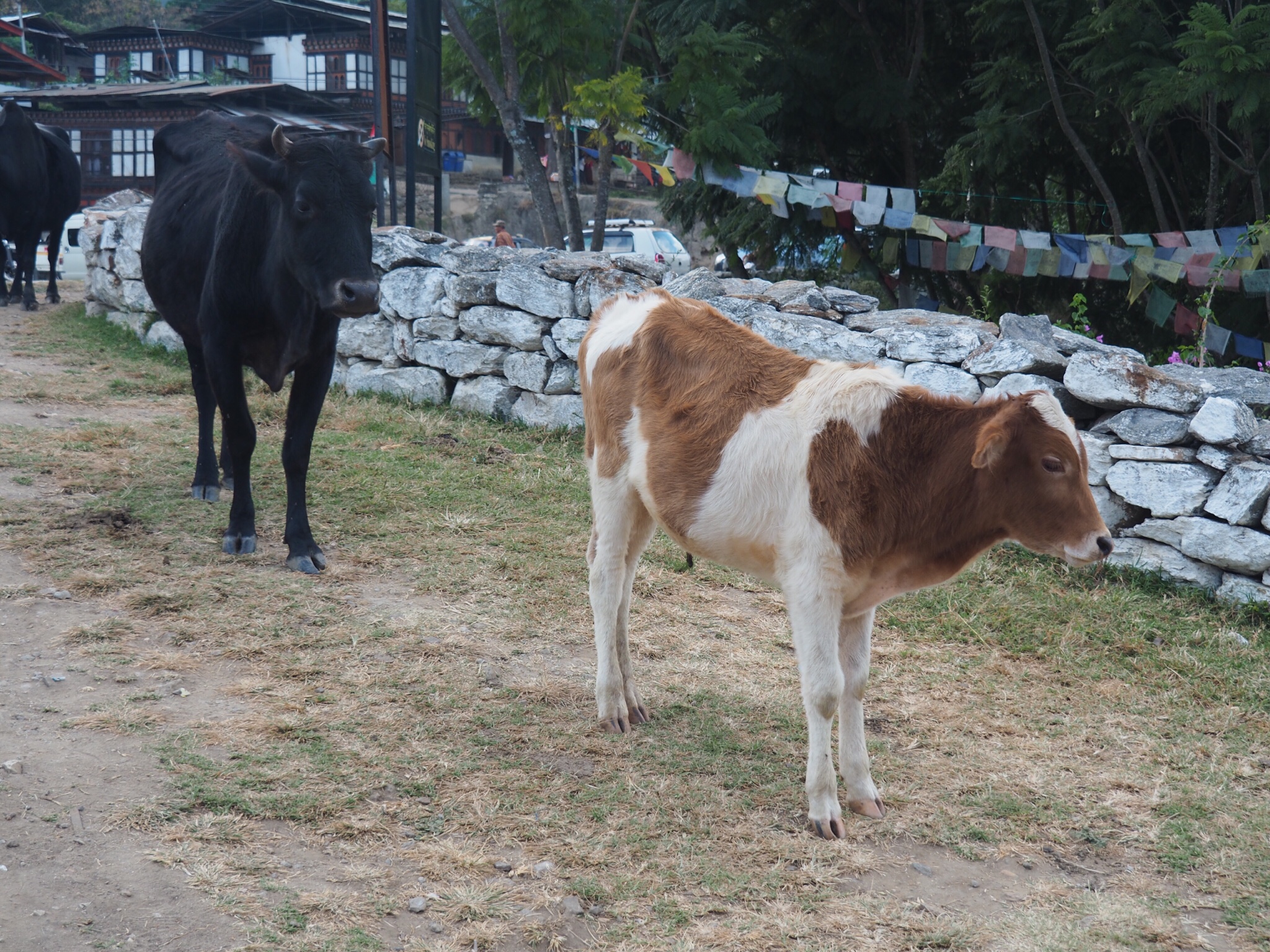
– I mentioned the cows we have seen wandering along the roads, but we have also seen a lot of horses!
– We asked Wang if people use more traditional or western medicine. This area is known for its many medicinal herbs and plants. He told us that about 70 percent of the people opt for western medicine; it’s free from the government.
– The average laborer makes the equivalence of about $200 per month.
– People from Eastern and Central Bhutan are known to be more kind and humble. Those from the west are know to have more dominant personalities.
– Whenever we visit a stupa or go around a prayer wheel we must walk in a clockwise direction.
– Plastic is mostly banned. At the market there are some items packaged in plastic out of necessity.
I haven’t written much about Buddhism. Frankly, the more I hear and learn about it, the more utterly confused I become. I do know that the Bhutanese are Tibetan Buddhists and that seems to be quite different from other types. I will attempt an explanation as best I can before I leave here!
 jrhnepalandbhutan2019
What a fantastic post! Thanks so much for sharing! Love the photos 🙂
LikeLike