Traveling to Bhutan

November 6, 2019

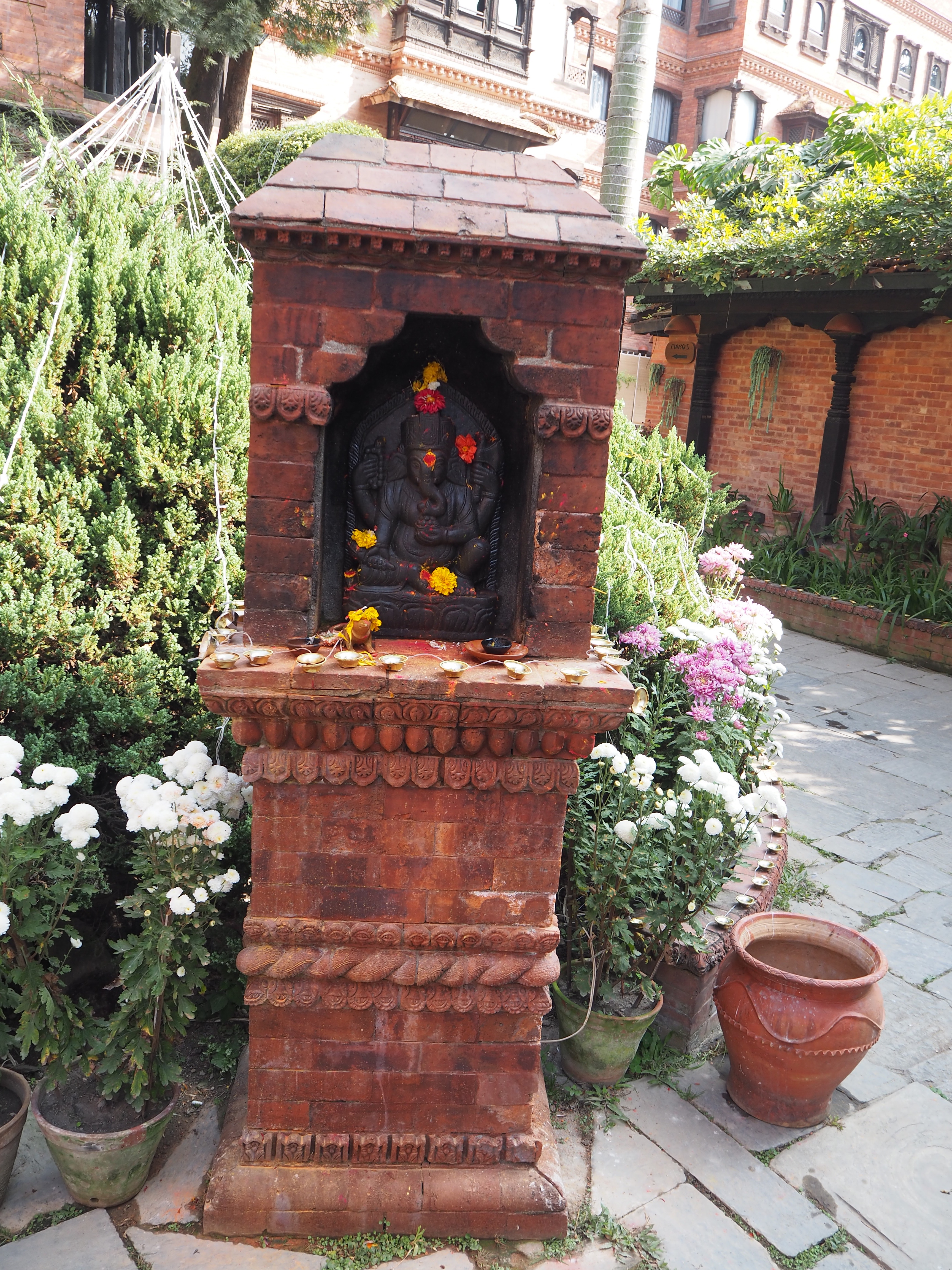
This small shrine is located in the hotel courtyard of our Kathmandu hotel; people make a small prayer to start the day.
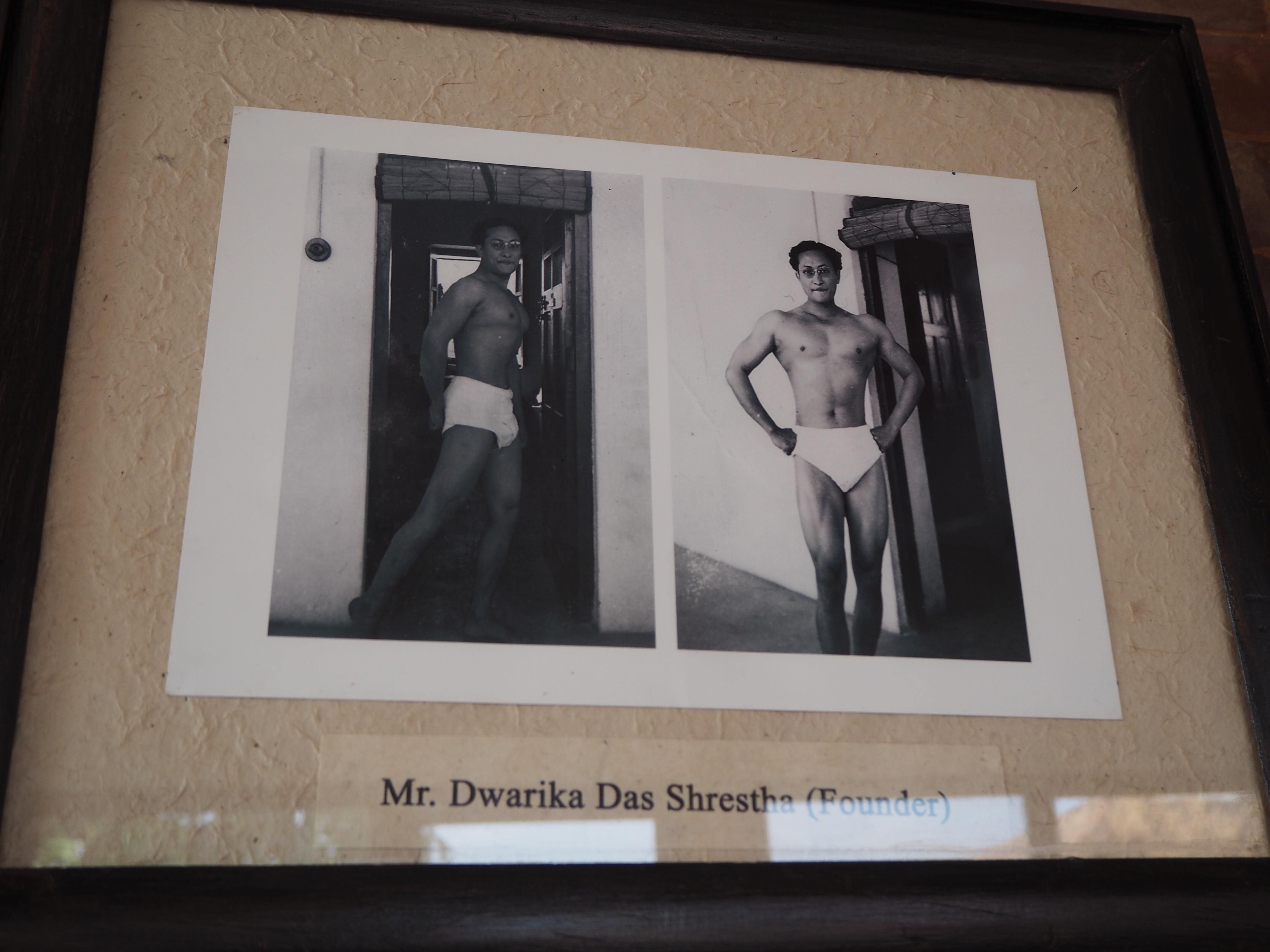
After our very full day yesterday, it was nice to have a leisurely morning; we didn’t have to depart the hotel until noon. I used the time to go to the gym, have breakfast and get myself organized. The man who founded the hotel is also evidently the person who brought fitness to Nepal. Here are photos of him that hang in the gym:
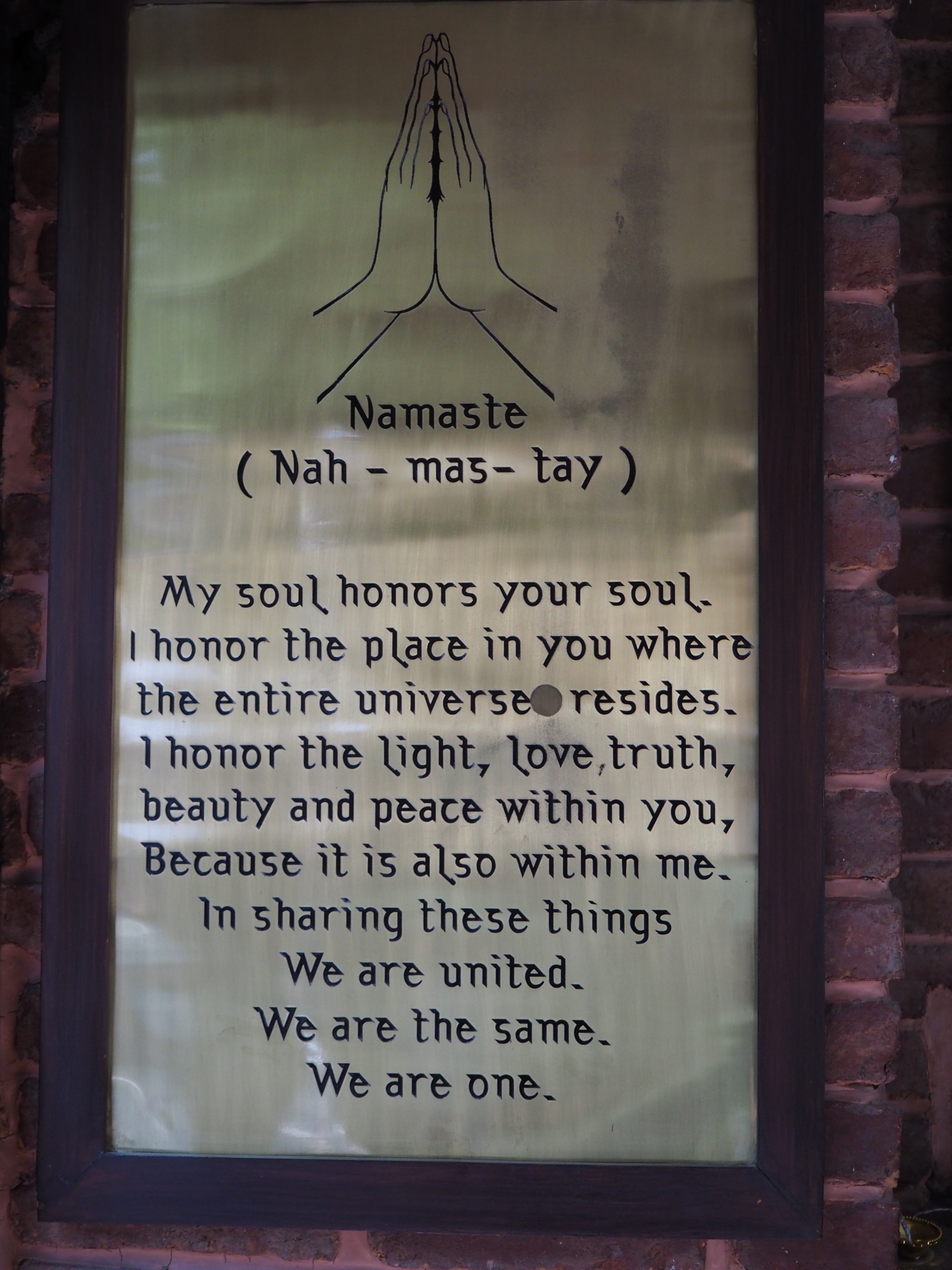
While waiting to leave, I noticed this sign in the lobby. We receive the Namaste greeting everywhere. It is done with hands folded, as shown in the picture.
The young man from the local travel company, Christian, met us and got us to the airport.

On the way to the airport, we passed one of two golf courses in Kathmandu. Christian said he had seen people out there walking with bags but he had absolutely no idea how the game is played. I used some of the time during our short ride to explain it to him. He said it costs about $90 to play 18 holes.

Christian is a true miracle worker because he checked us in online yesterday and got each of us a window seat on the left hand side of the plane, from which it is possible to see Mt Everest. We arrived at the airport in plenty of time for what was supposed to be a 2:30 flight. Once inside and waiting, we had a bit of confusion about what the actual flight time was – our boarding passes said the boarding time was 2:30 pm, but the itinerary and the airport signage said the departure time was 2:30 pm. Since we had passes through our credit cards for the lounge, we decided to split the difference and stay in the lounge until about 2 pm… we would be a bit early for a 3:30 departure, but wouldn’t miss a 2:30 flight. Our waiting time was spent in two very different environments.
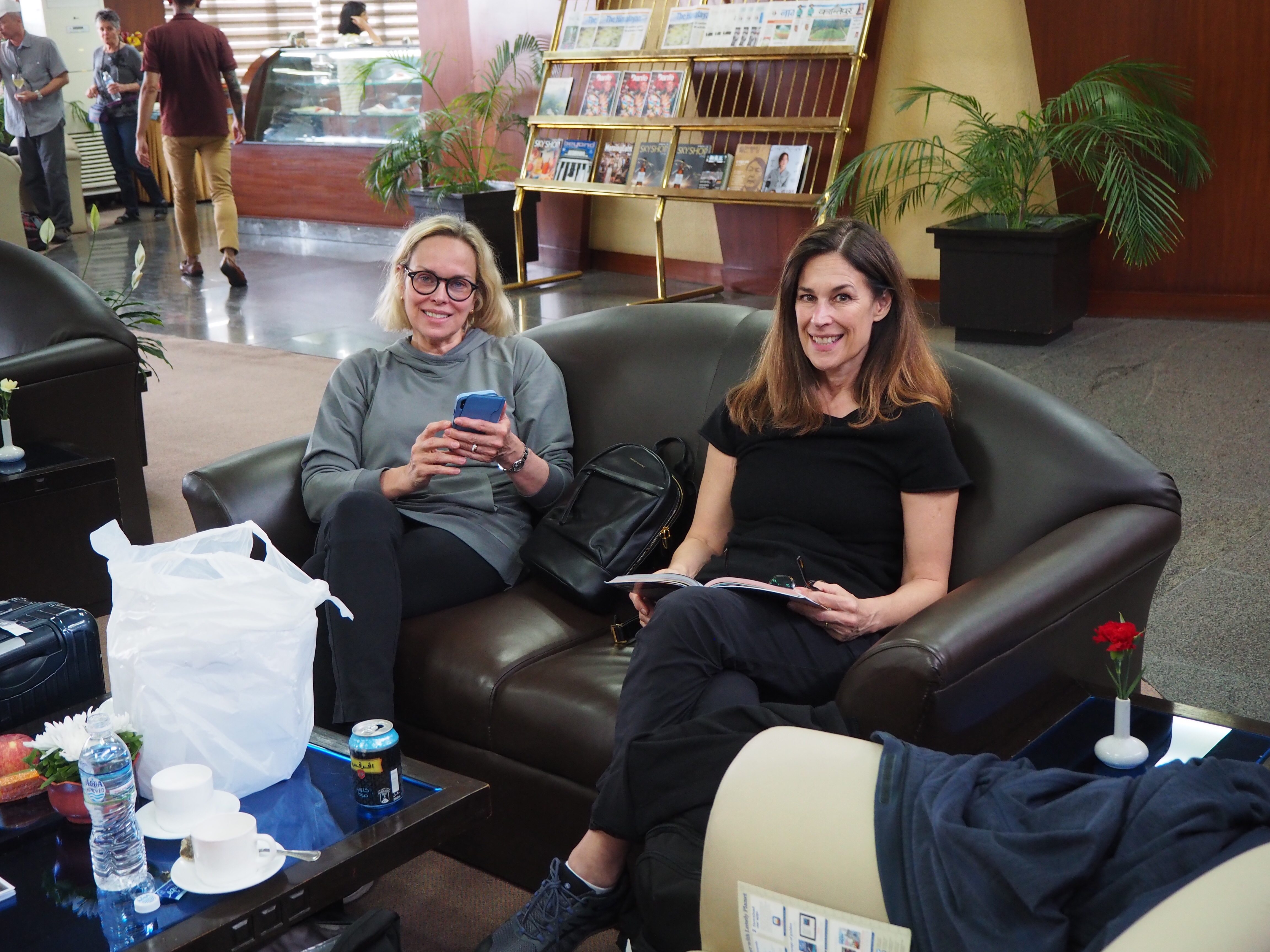
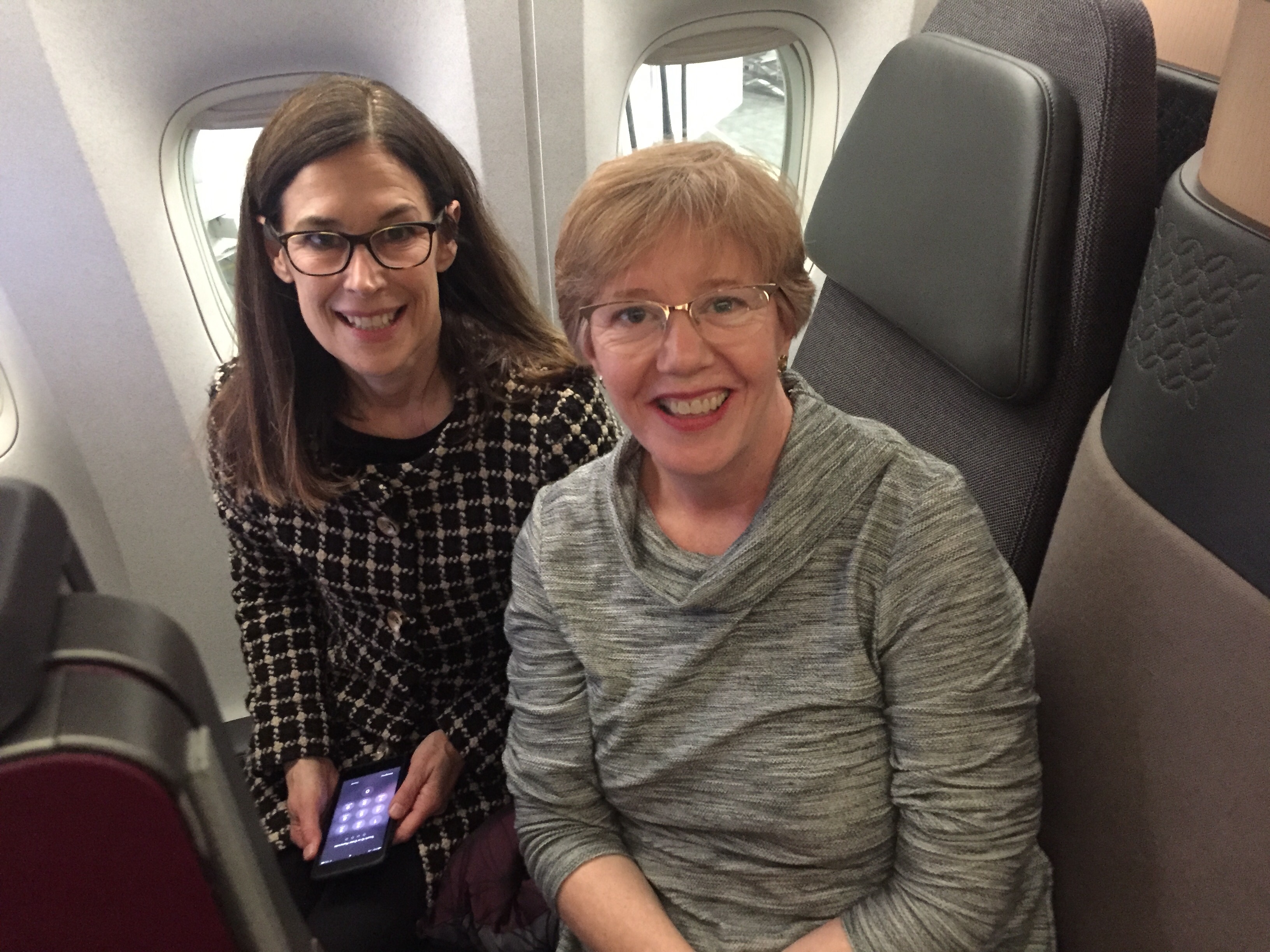
Kathy and Maryse enjoying the lounge.
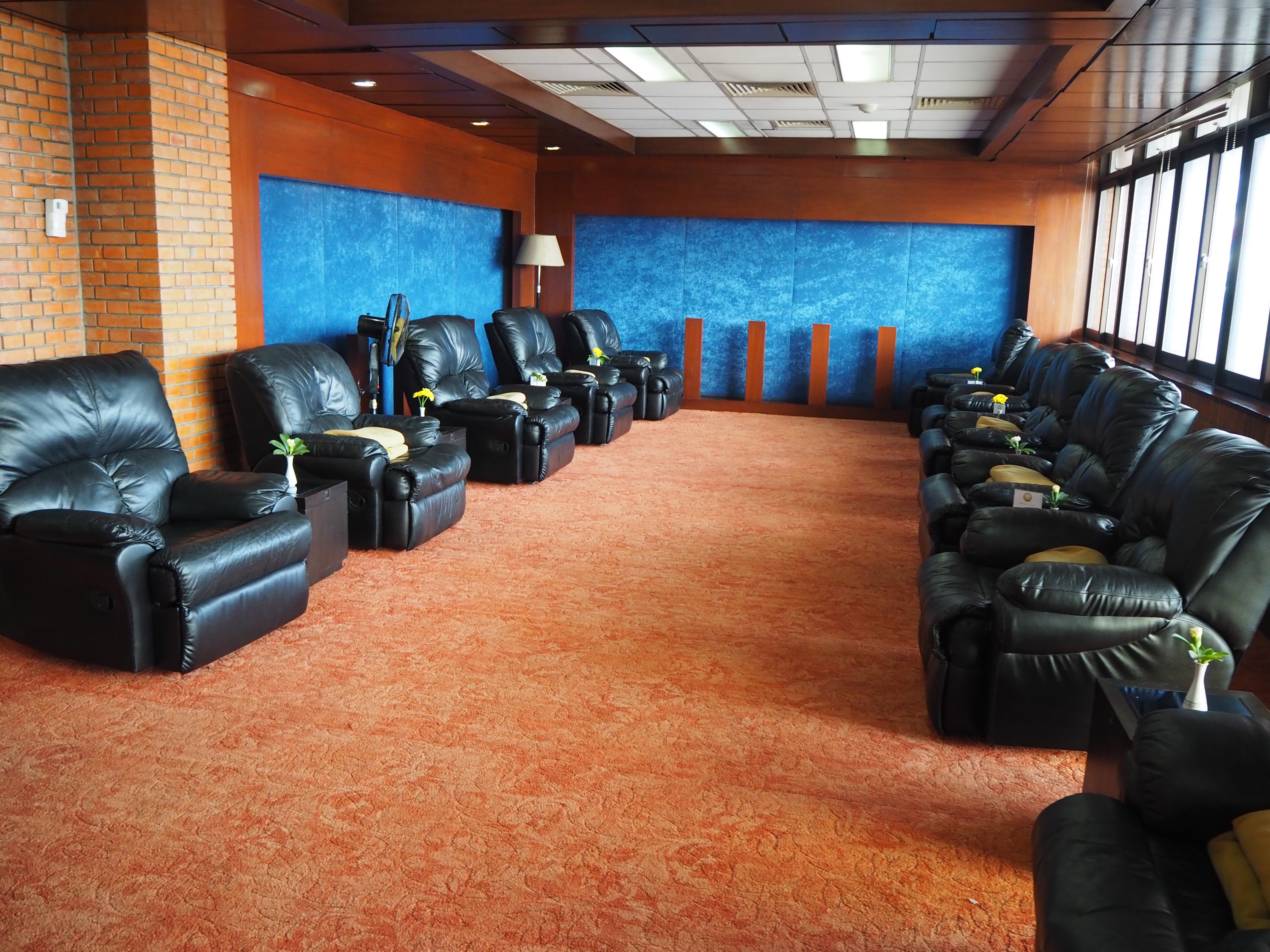
The lounge “40 Winks Room” wasn’t very popular.
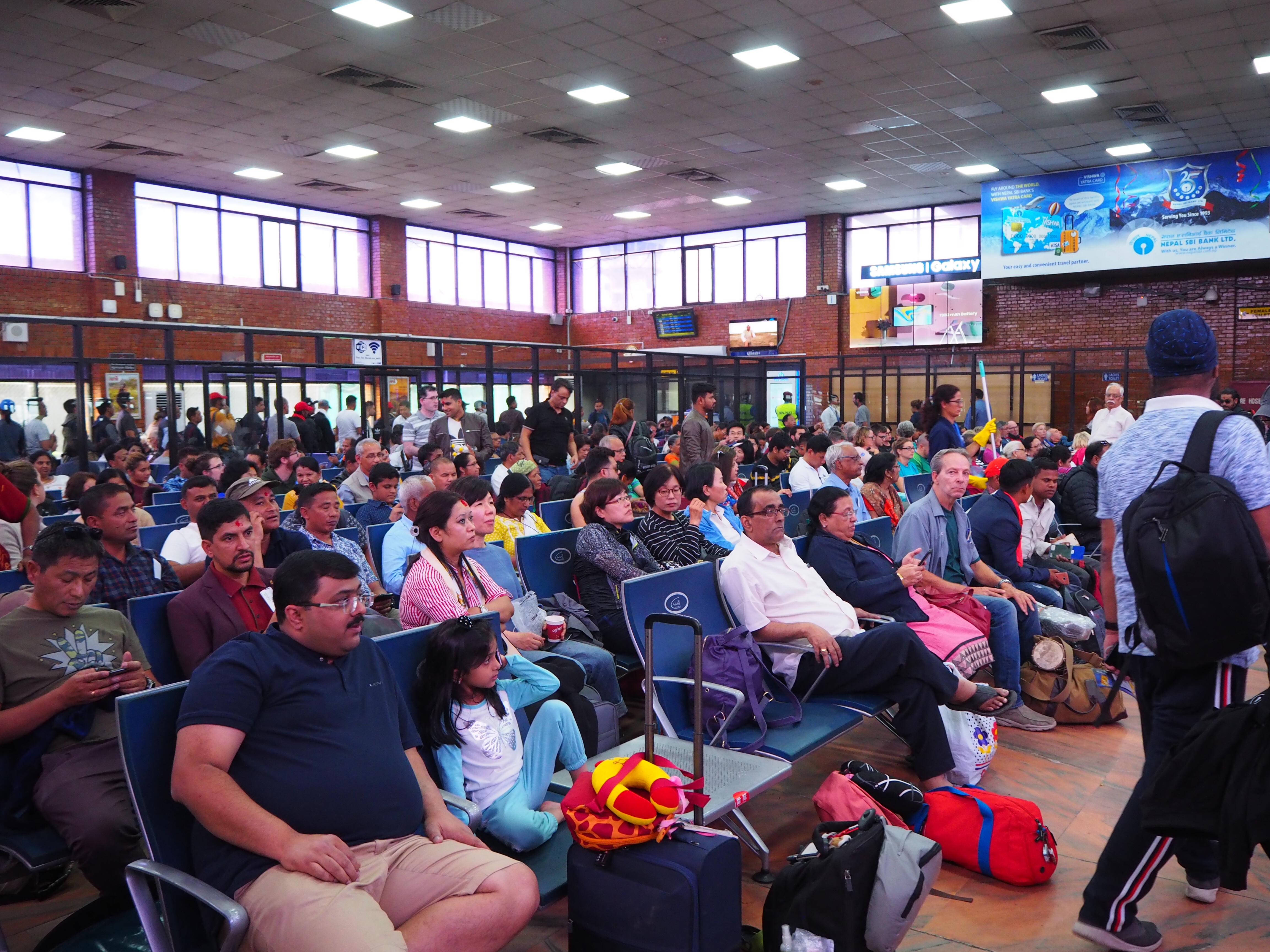
The general boarding area.

The Kathmandu airport is clearly too small for all the traffic it has. There are only about 5 or 6 gates and the flights leave constantly. We watched flight after flight board until our flight was finally called at about 3 pm. There were hundreds of people crammed into a relatively small area. When a flight was called, there was a rush to take the seats of the people who were leaving. The only diversion was a small shop/restaurant.
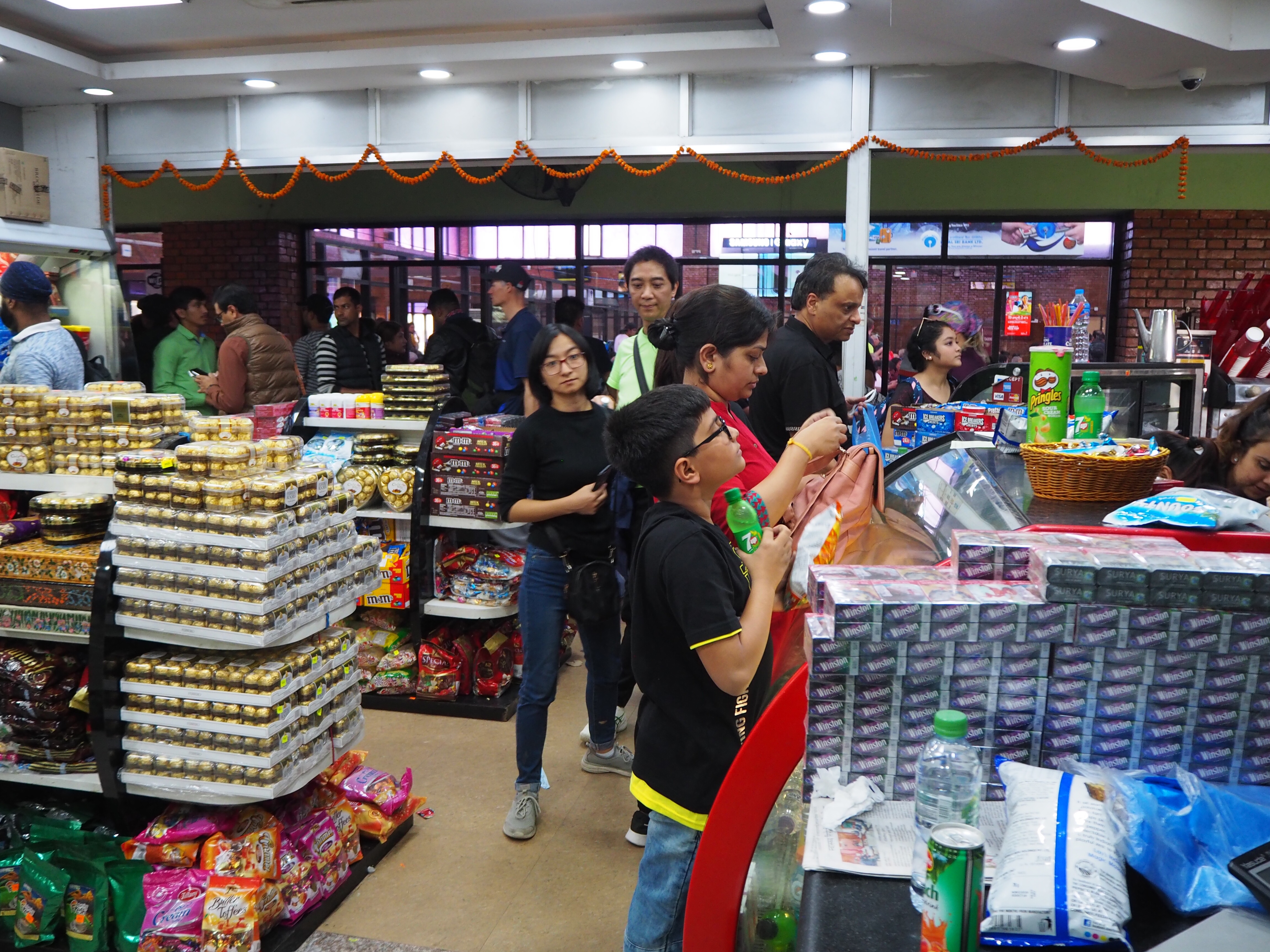
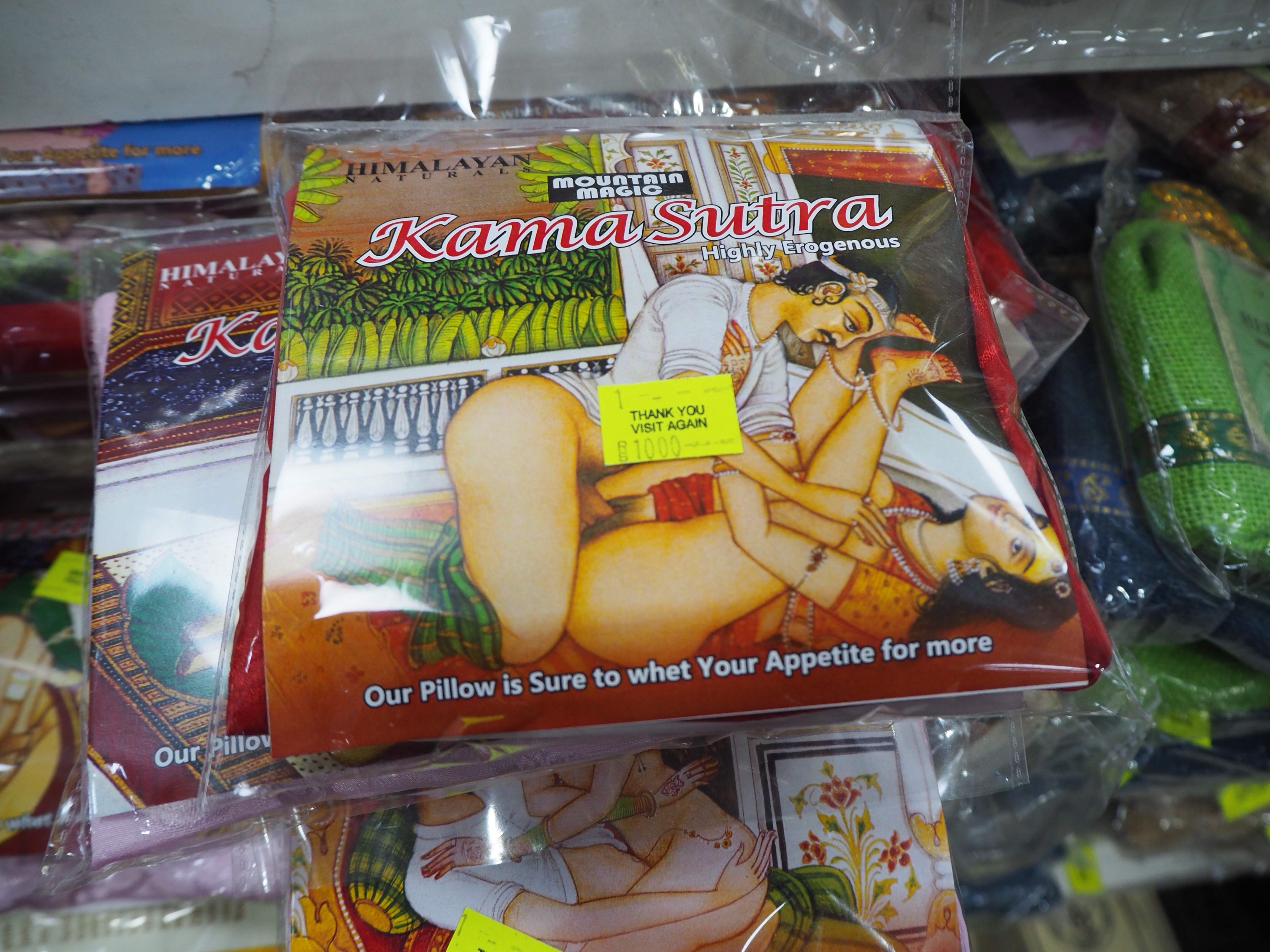
There was everything you might want in this shop from cigarettes, to Oreos, to this interesting pillow!
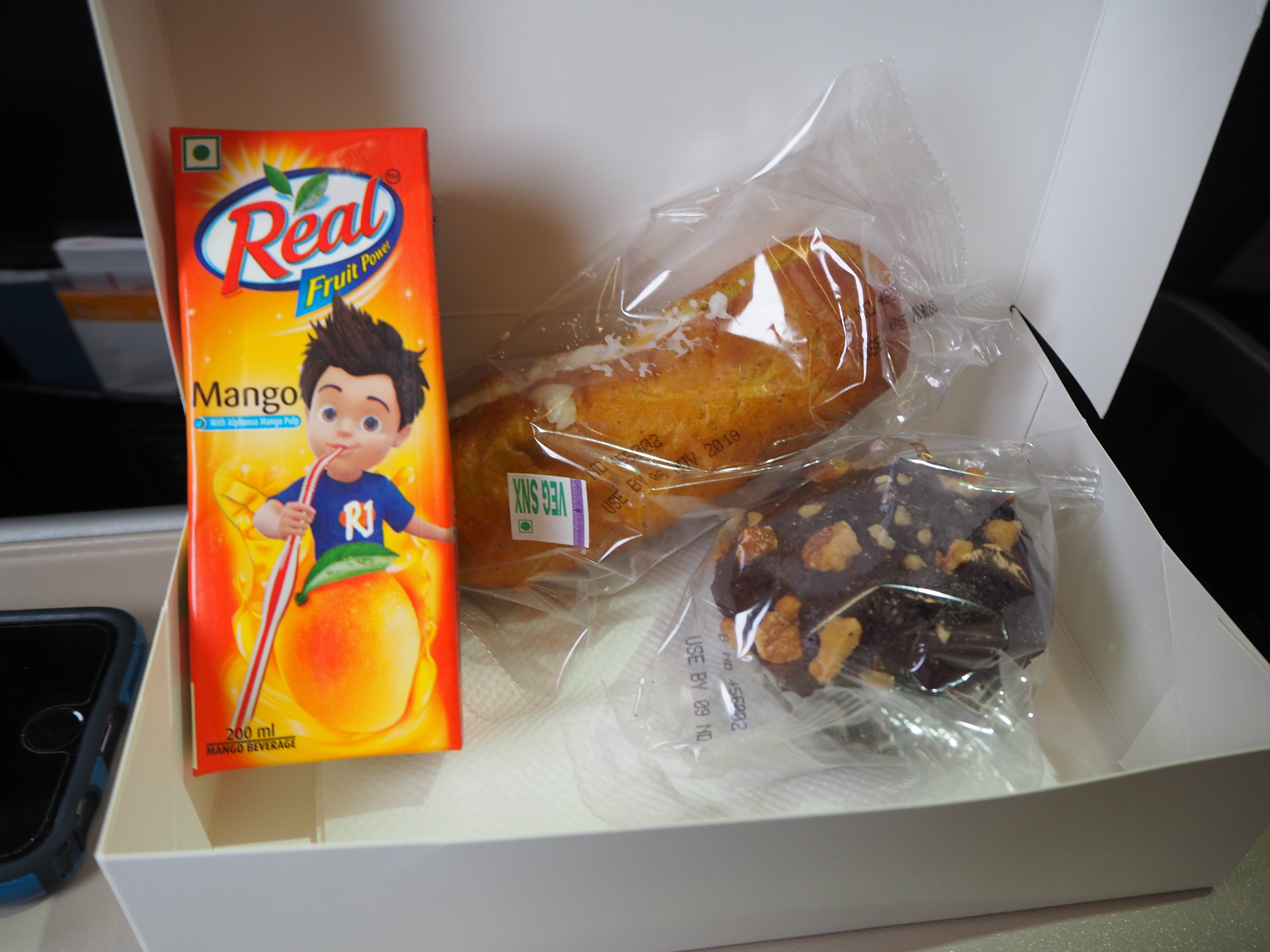
Once in the air, we were served this snack…I opted to just drink the water that was served with it.
The views of the Himalayas were spectacular from plane. Unfortunately, clouds prevented us from seeing Mt Everest.
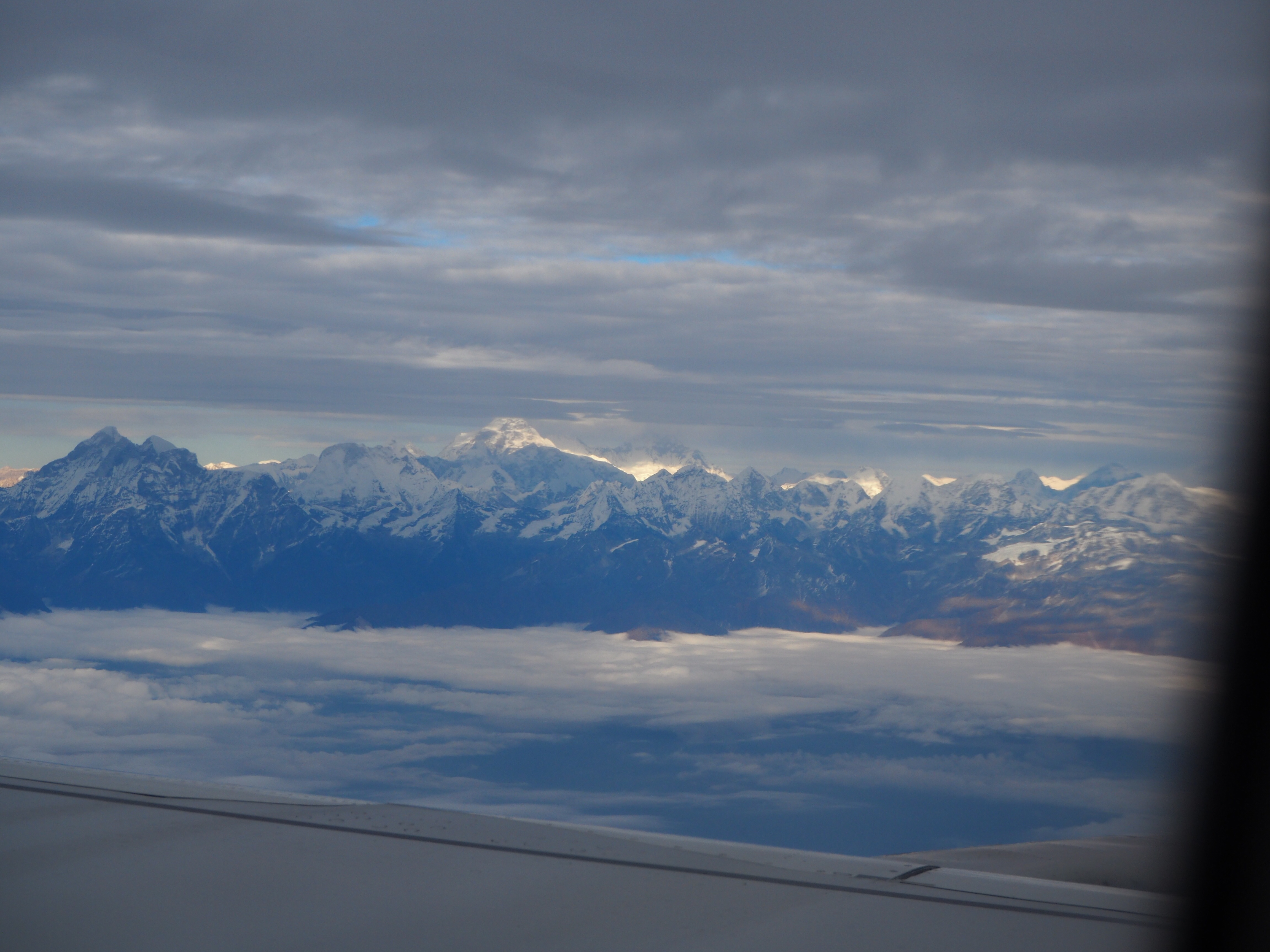
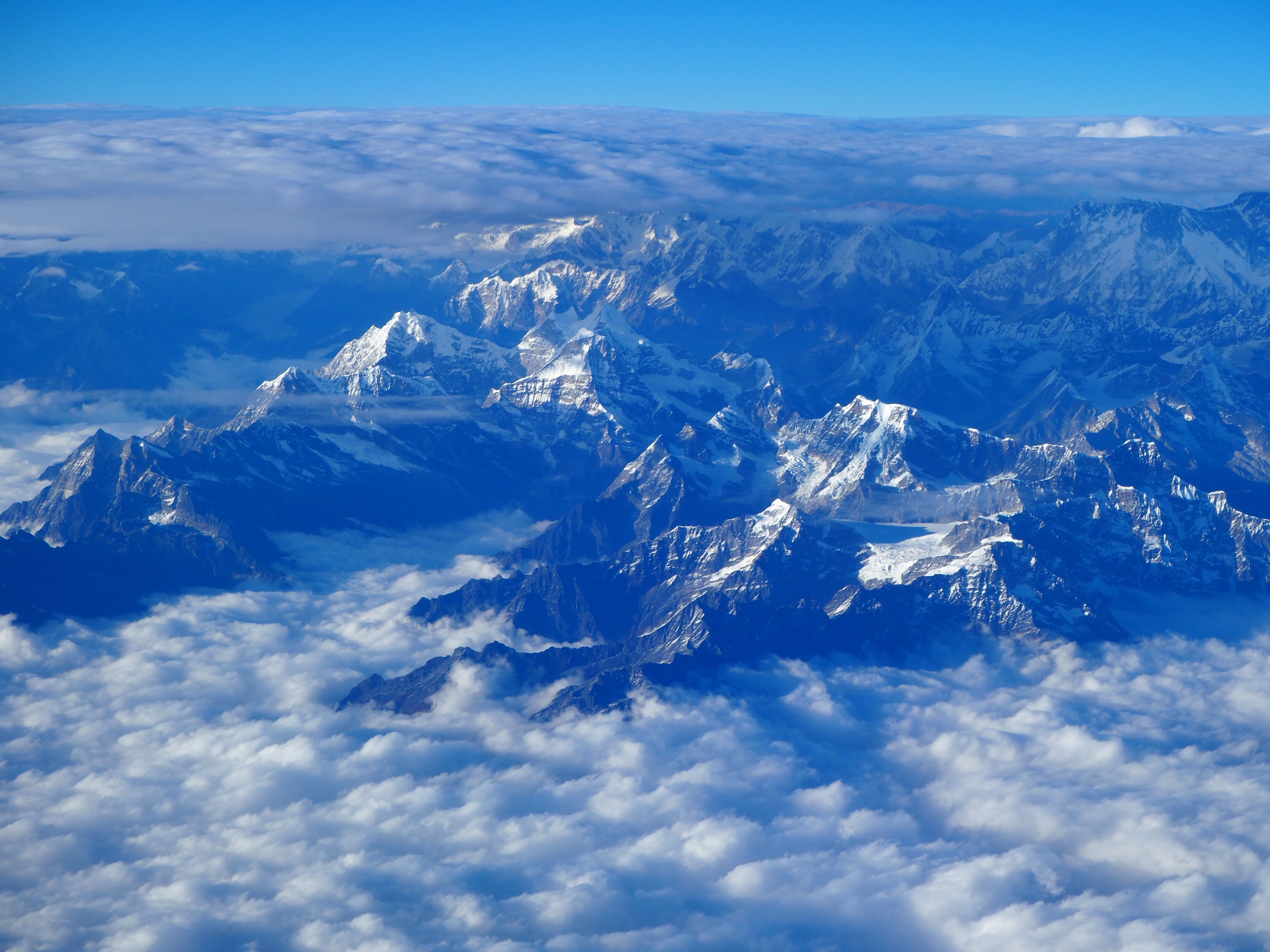
The descent into Paro, Bhutan is unlike anything I’ve experienced. We literally flew in between the mountains, and it wasn’t a straight descent. Our guide later told us that only Bhutanese trained pilots are allowed to land planes into the airport.
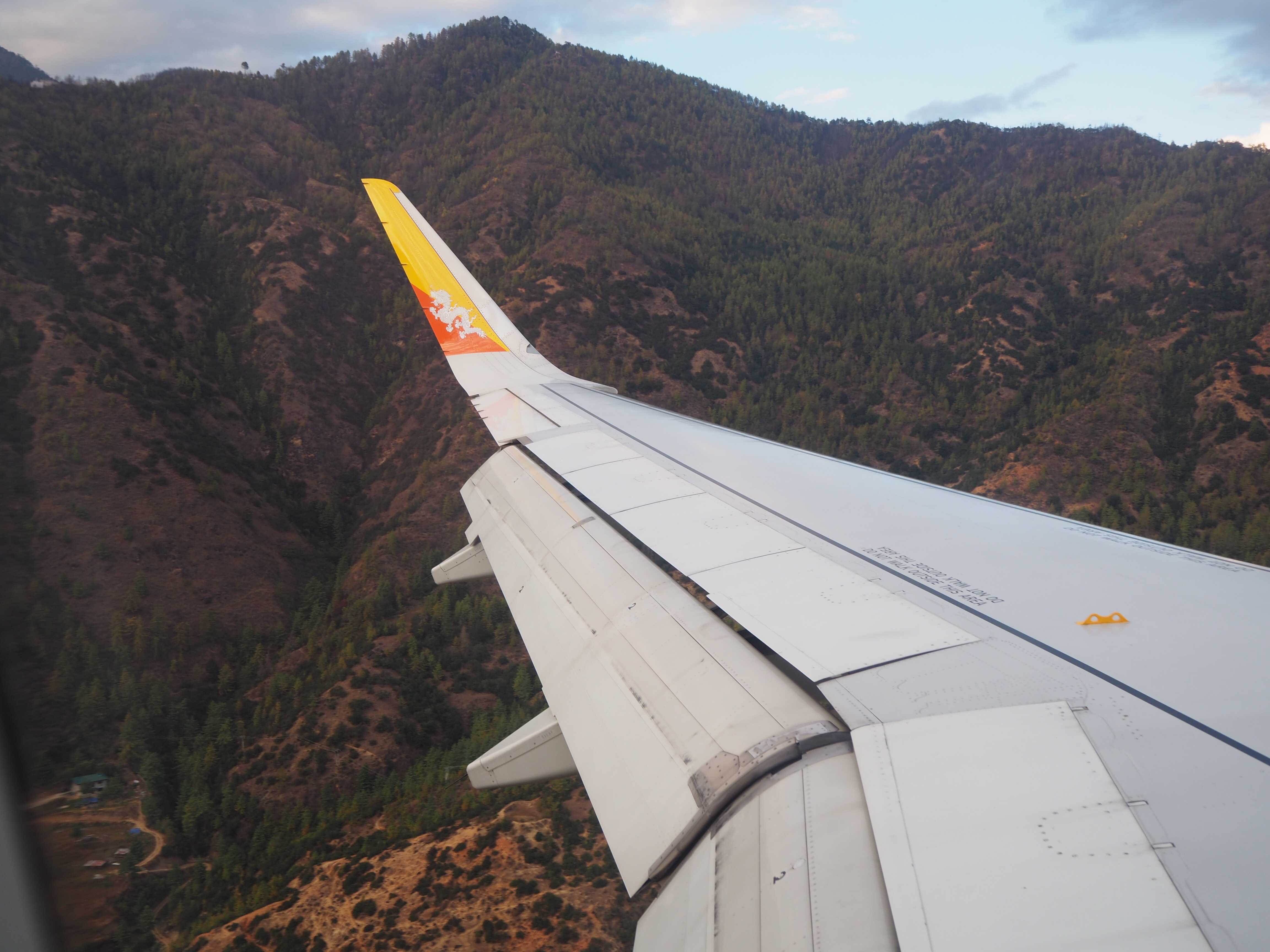
We flew very close to the mountainsides.

Once safely on the ground, unlike Nepal, the immigration formalities were a breeze, they keep the visa information electronically. Our bags came out immediately and we were on our way. Outside we met our guide, Wang (pronounced Wong) and our driver, Mr. Poo. We began our one hour drive to Thimphu. The time here is 15 minutes later than in Nepal, so we are now 12 hours ahead of St. Louis time.

The road was completely repaved recently because prime minister Modi from India visited about a month ago; he traveled the same route. The road is two lane, and while the speeds we traveled were not very fast, all the curves reminded me a bit of a slow version of Mr Toad’s Wild Ride at Disneyland with the addition of lots of hills. Since it was late, most of our ride took place in the dark so we couldn’t see much.

Want gave us a bit of an introduction during our trip:

-Bhutan is known for its National Happiness Index. The people are happy because they are in harmony with self, society, and nature.

– Wang told us that we have good Karma because we made the trip. Now they will work to be sure we have a good experience.

-The area where we are now is at an altitude of over 7000 feet.

-Visitors to Bhutan pay a daily fee of about $250 per person per day. This covers basic accommodation, food, and a guide. These fees help to fund the country’s education and medical care which are free for all citizens. There are about 60-70,000 international tourists who visit each year in addition to about 100,000 regional tourists (from India, Tibet, etc.)

-Two Bhutanese airlines fly 7-8 flights into the country each day.

-The major industries are forestry/agriculture, hydropower, and tourism. They export power to India.

-Bhutan is the only country in the world that is carbon negative.

-The country is a protectorate of India. They receive no support from China.

– The goal is have 100 percent organic food in 1-2 years. They currently import some food from India that isn’t organic.

– Sixty percent of the population relies on subsistence farming. The government provides special schooling for children of farmers. They go to boarding school and receive room and board, books, uniforms, etc.

– Government schooling is for seven years. The country has one university but students can go elsewhere for college. Wang went to university in India.

– The country is a constitutional monarchy. The first king took power in 1908. On the centennial of that event the fourth king abdicated and his son took power. The current king, the fifth, is 38 years old and is married with one son.

-Also in 2008, before abdicating, the fourth king decided the country should become democratic and the first elections we held. A prime minister was elected for a five year term; there have been two elections since. Each prime minister serves a single five year term.

Whew…we learned a lot during our drive! Tomorrow we begin our Bhutan sightseeing.
Bhaktapur and Kathmandu

November 5, 2019

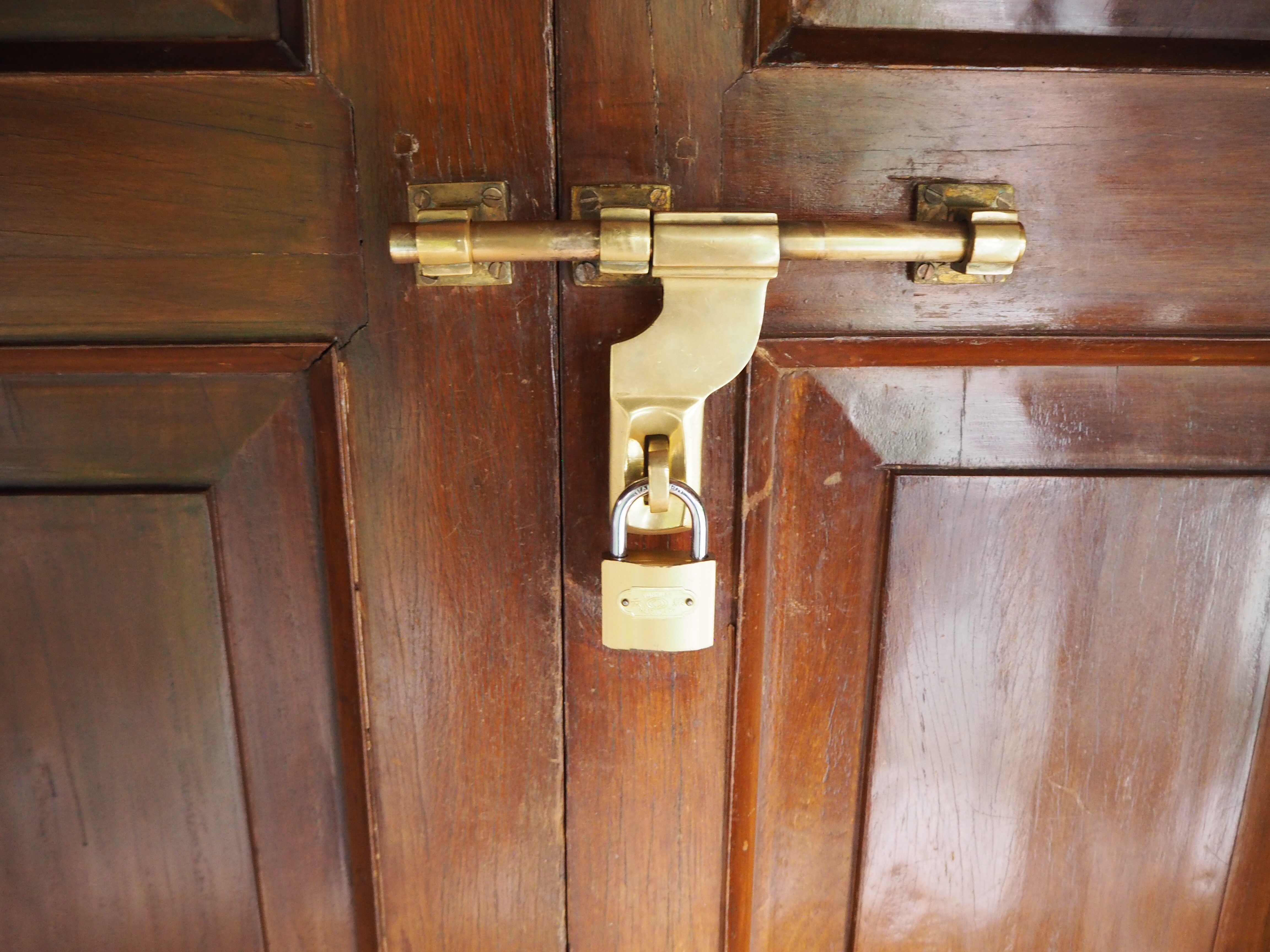
After a fairly good nights sleep and having had breakfast it was time to head out for the day. I made sure my room was locked before leaving.
This is a fairly typical lock on doors here. In addition to keeping the place secure, you can tell if someone is home or not!

Suman met us at 9 o’clock. One of the things I enjoy about touring is getting to know about the guides and their lives. Suman is extremely friendly and knowledgeable but quite reserved. He doesn’t open up about himself much at all. We did learn a bit …He is 35 years old and has two brothers who live away from the family’s home. He lives with his mother in the family home which is about a 20 minute walk from our hotel. He went to a local university and studied management. I’m not sure how he got into tourism.

I asked Suman about the 2015 earthquake. He said he was at home on the fourth floor of their four story house and that it was utterly terrifying. He and his mother left the house and didn’t live there for some period of time afterward, until repairs could be made and the house was secure. People lived outside in the streets, and then in tents for a long time after the quake. He said people still have trauma and don’t sleep well. As he said this, I think he was speaking for himself as much as for anyone else.
Suman

Our original schedule called for staying in the city for about a half day’s tour. We asked for a change which would take us to Bhaktapur, an ancient city about a 45 minute drive from our hotel. At one point in time, this was quite a ways from town, now it is seems to be more of a suburb. We were on busy streets and in fairly heavy traffic for the entire drive. Suman said that the sprawl is causing a loss of important farmland.

Bhaktapur dates from the 8th century and was the country’s capital until the 12th century. It is shaped like a flying pigeon! Like so much of what we have seen, this area sustained major damage during the earthquake in 2015. The name means “city of devotees”, which seems appropriate given the many temples and shrines that we saw.

It was great to wonder through the streets and alleys of this town. We got a great sense of how people live, seeing the local shops and restaurants as well as old and new houses, and even some “temporary” housing for people displaced by the quake.

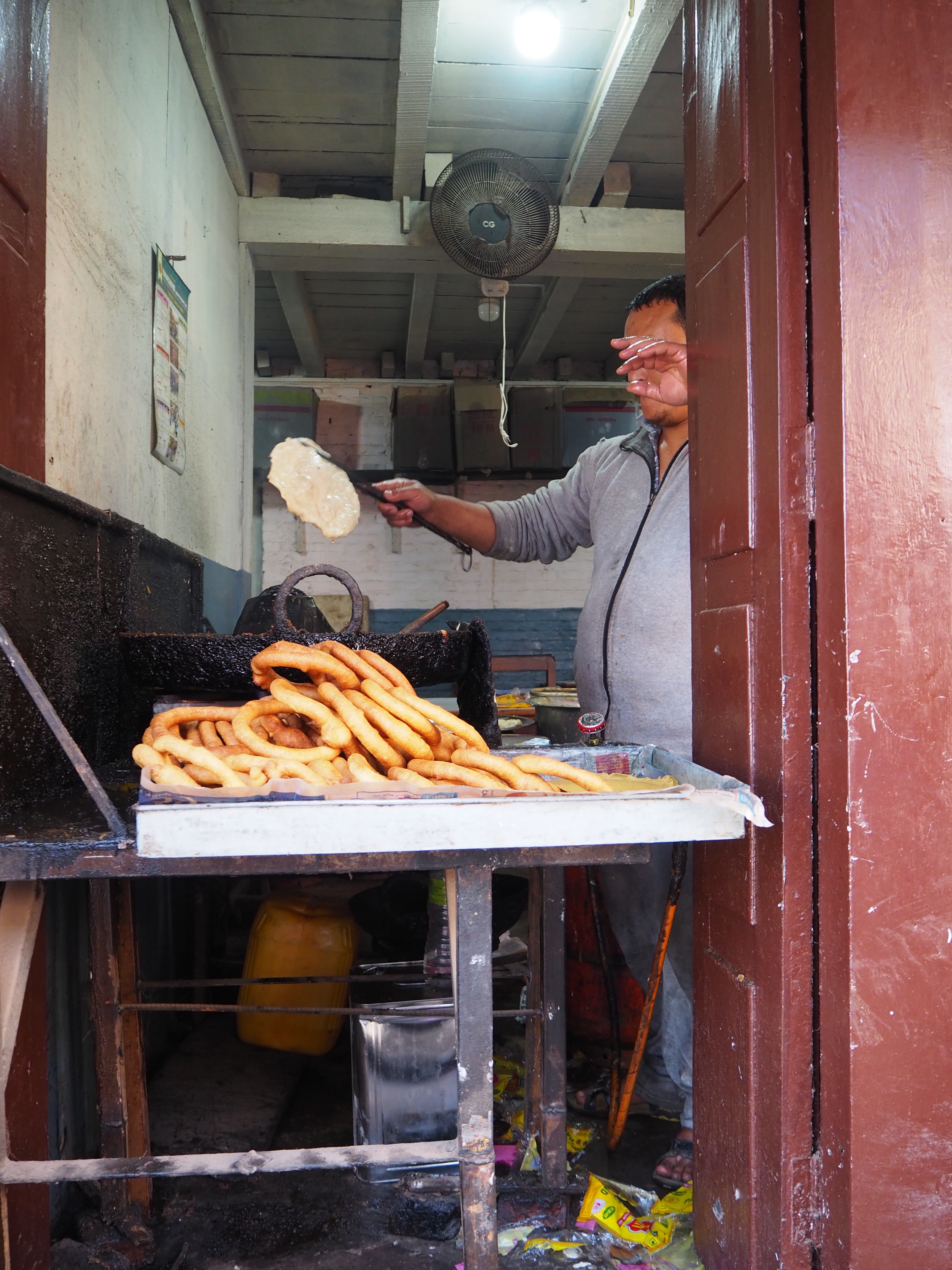
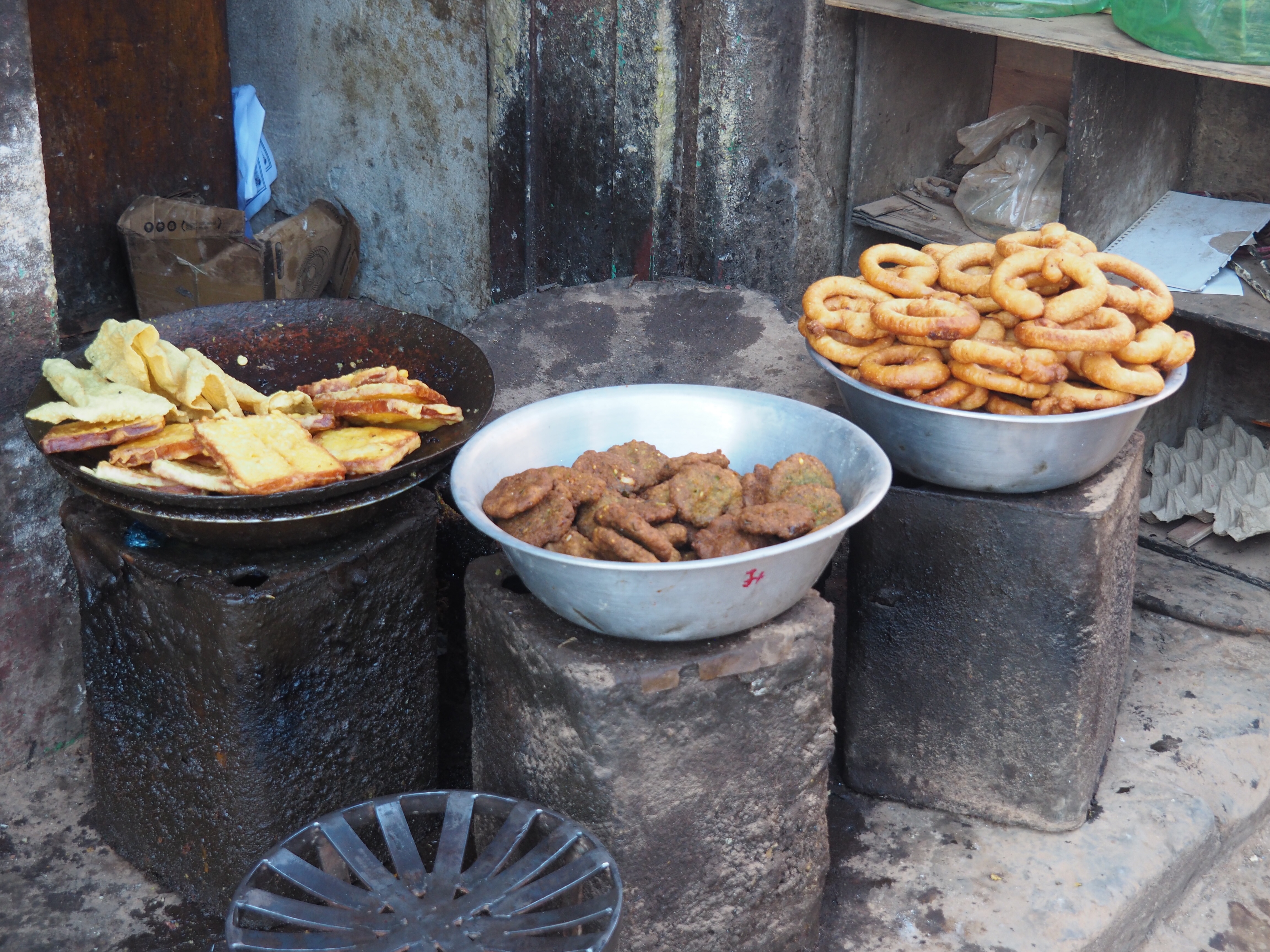
This man was making and selling breakfast pastries which are made with rice flour.
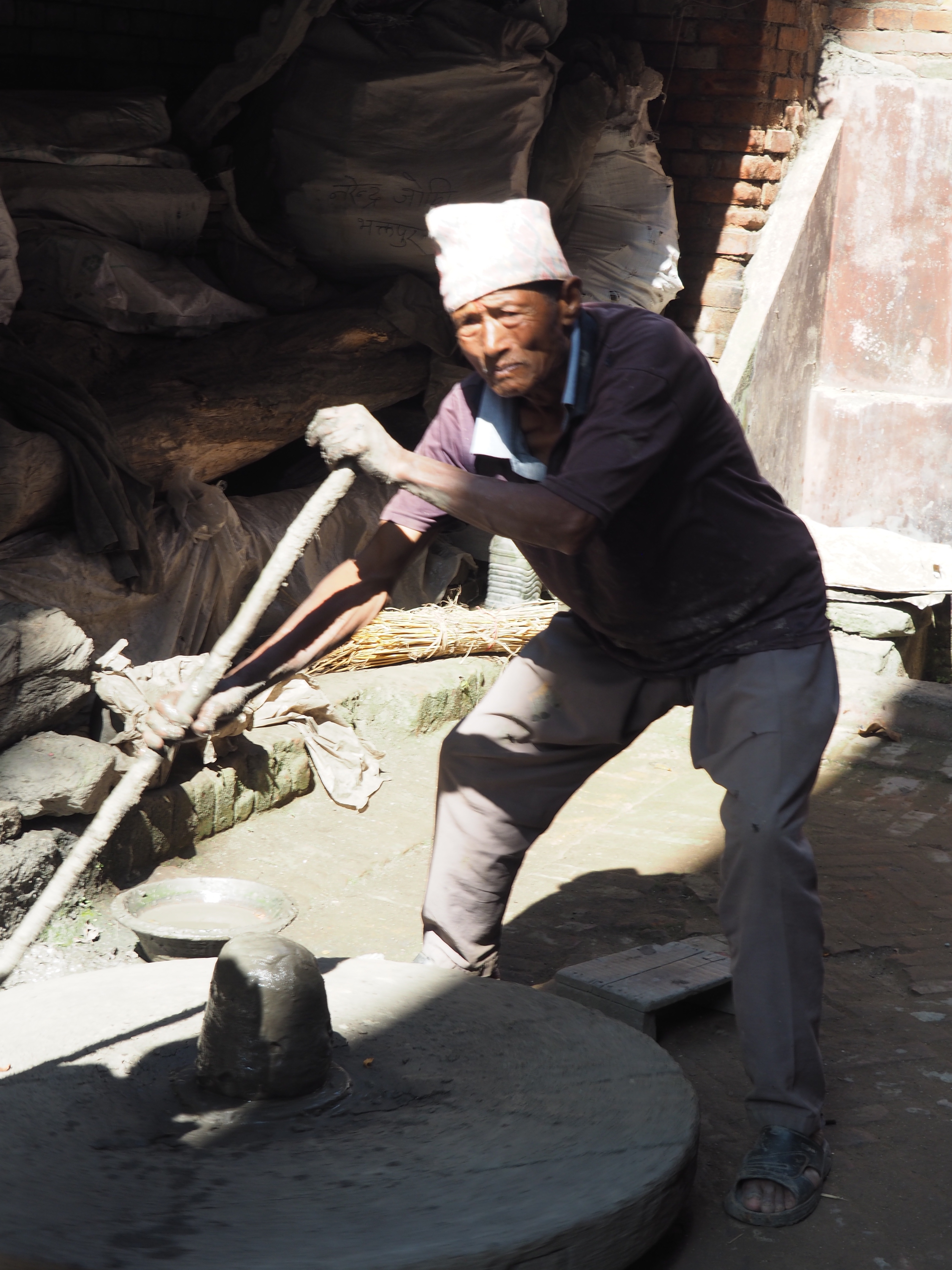
A man making pottery in the traditoinal way.
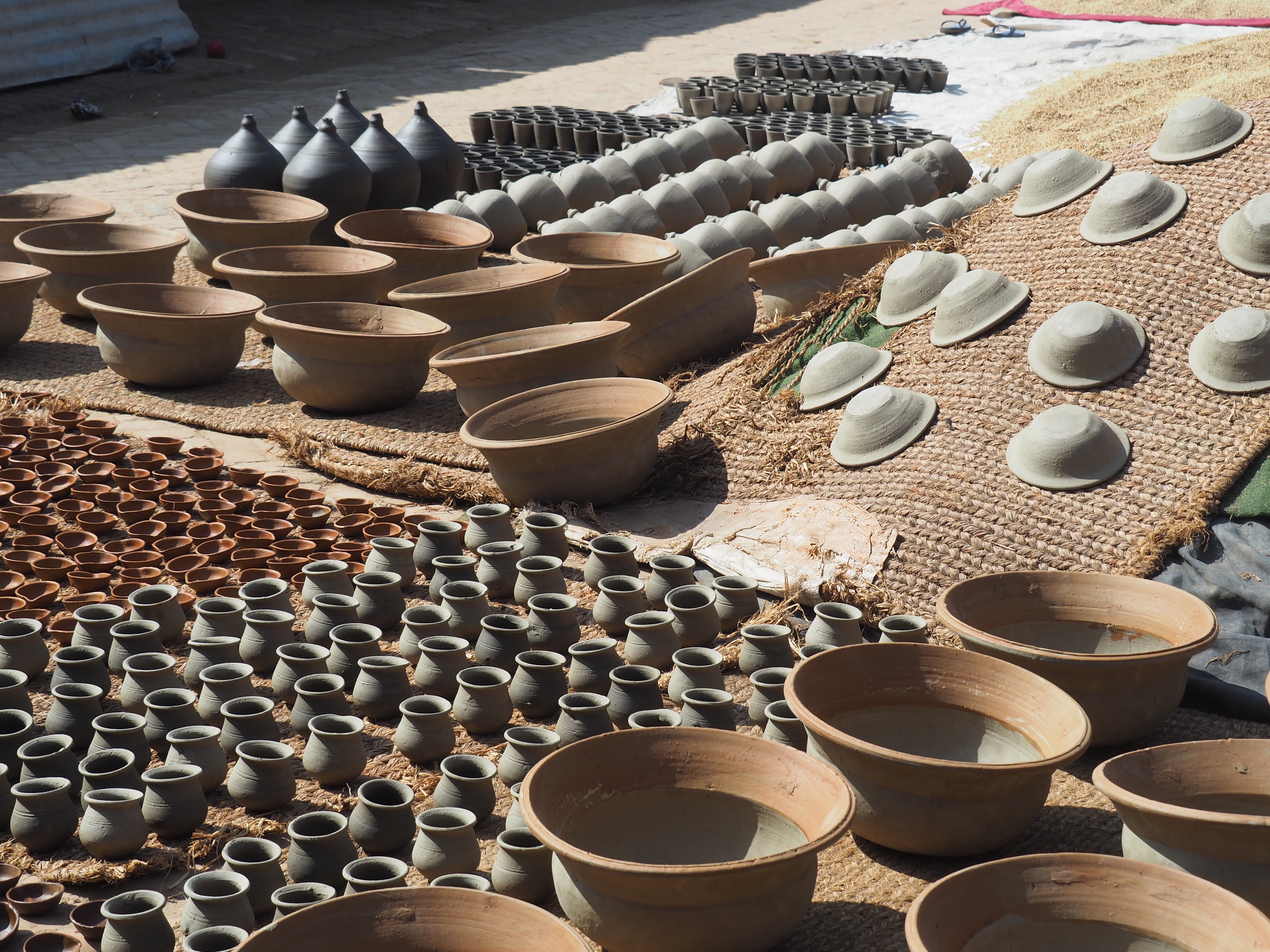
Some of the local pottery.
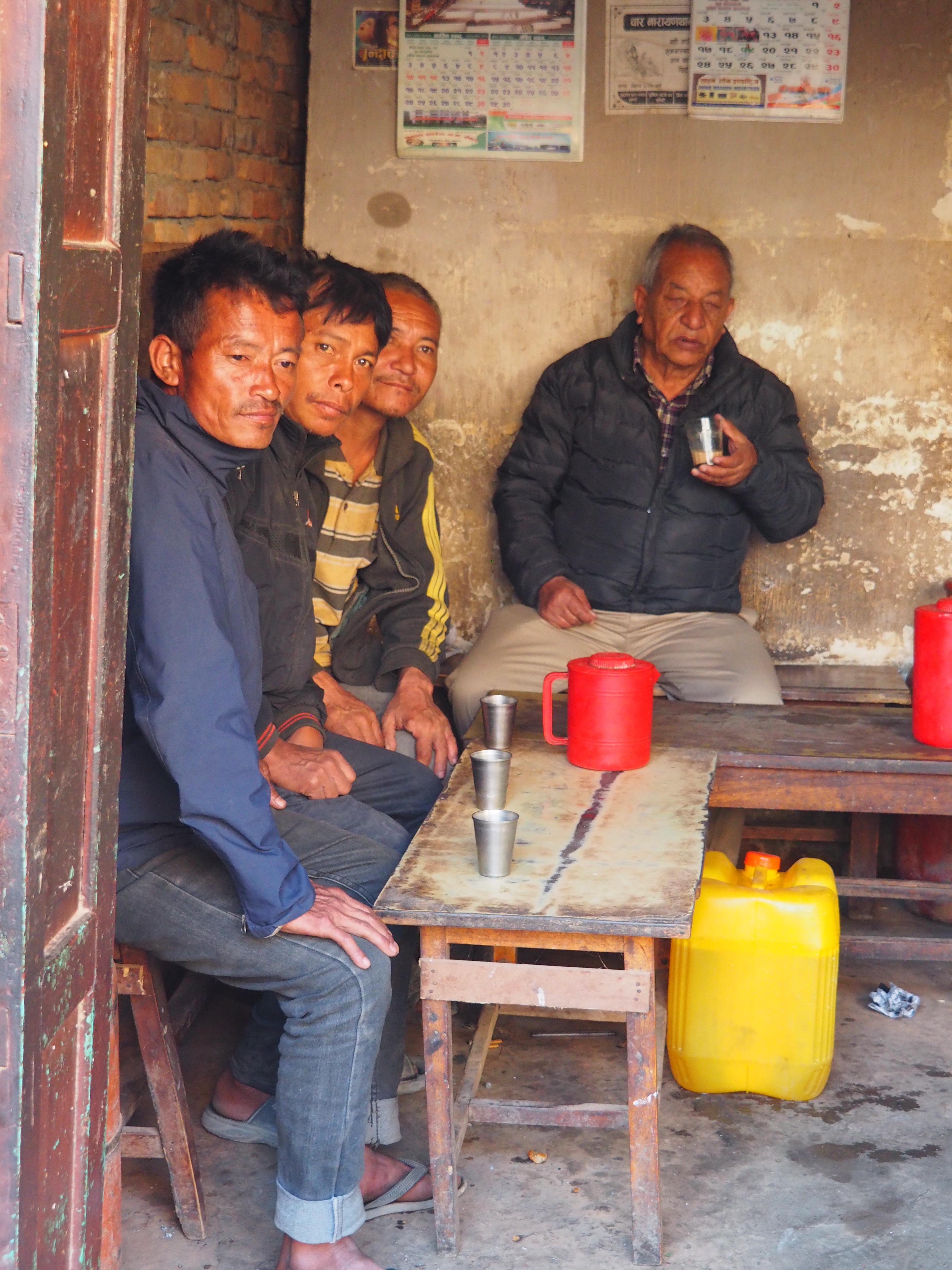
Men in a local restaurant.
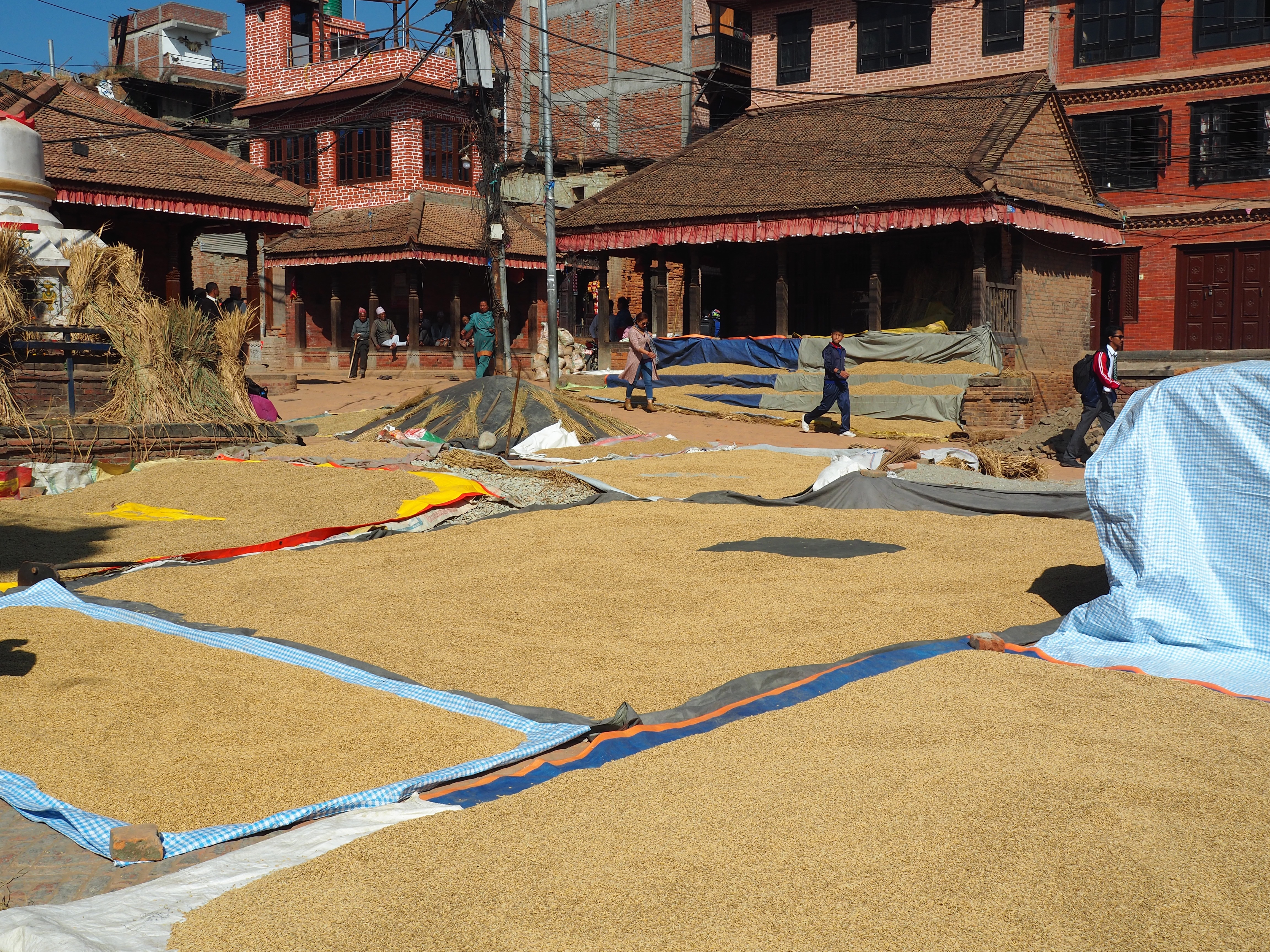
Rice from local farms drying in the sun. Each square represents the crop from one family’s farm.
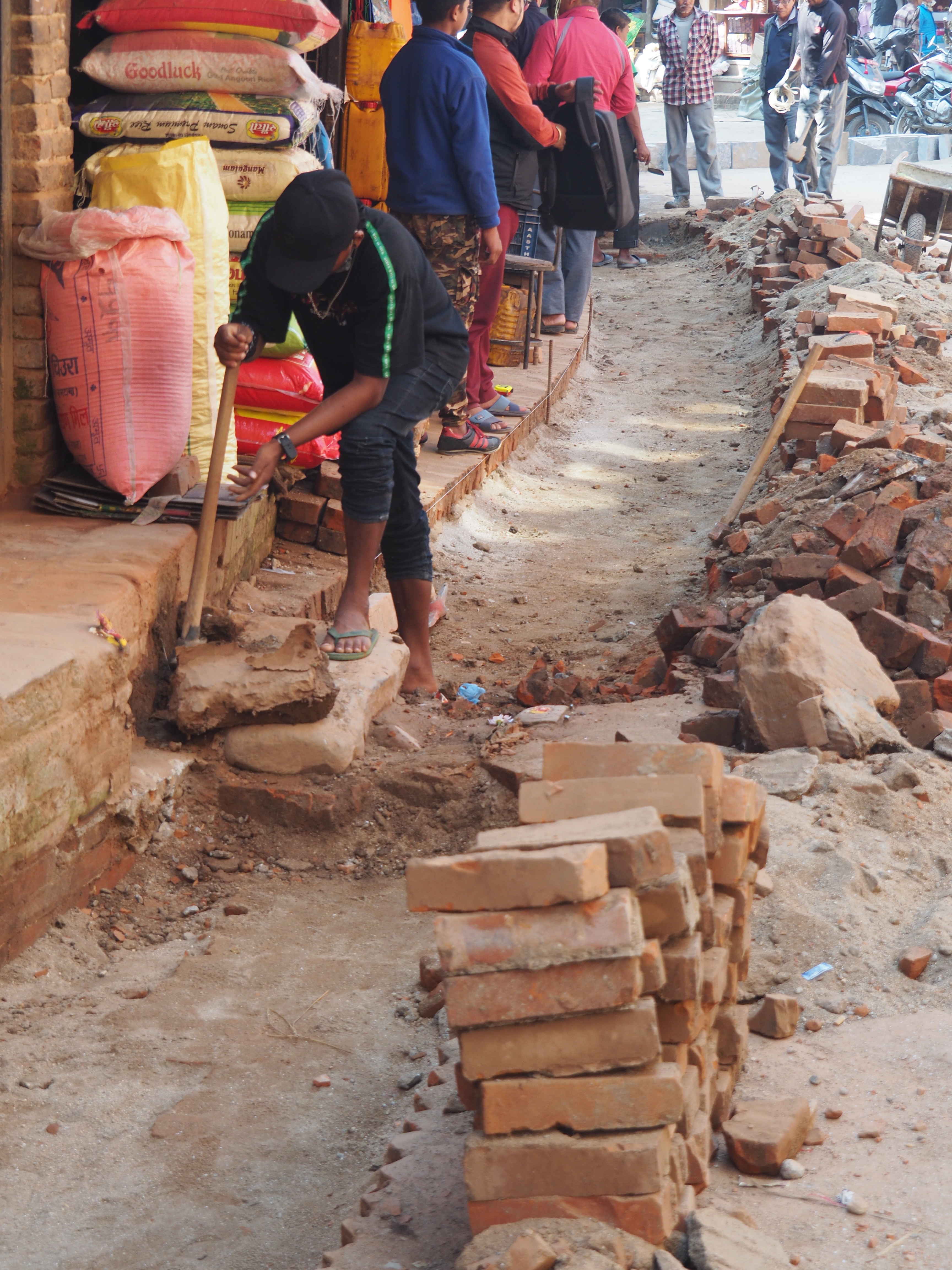
Roadwork being done by hand.

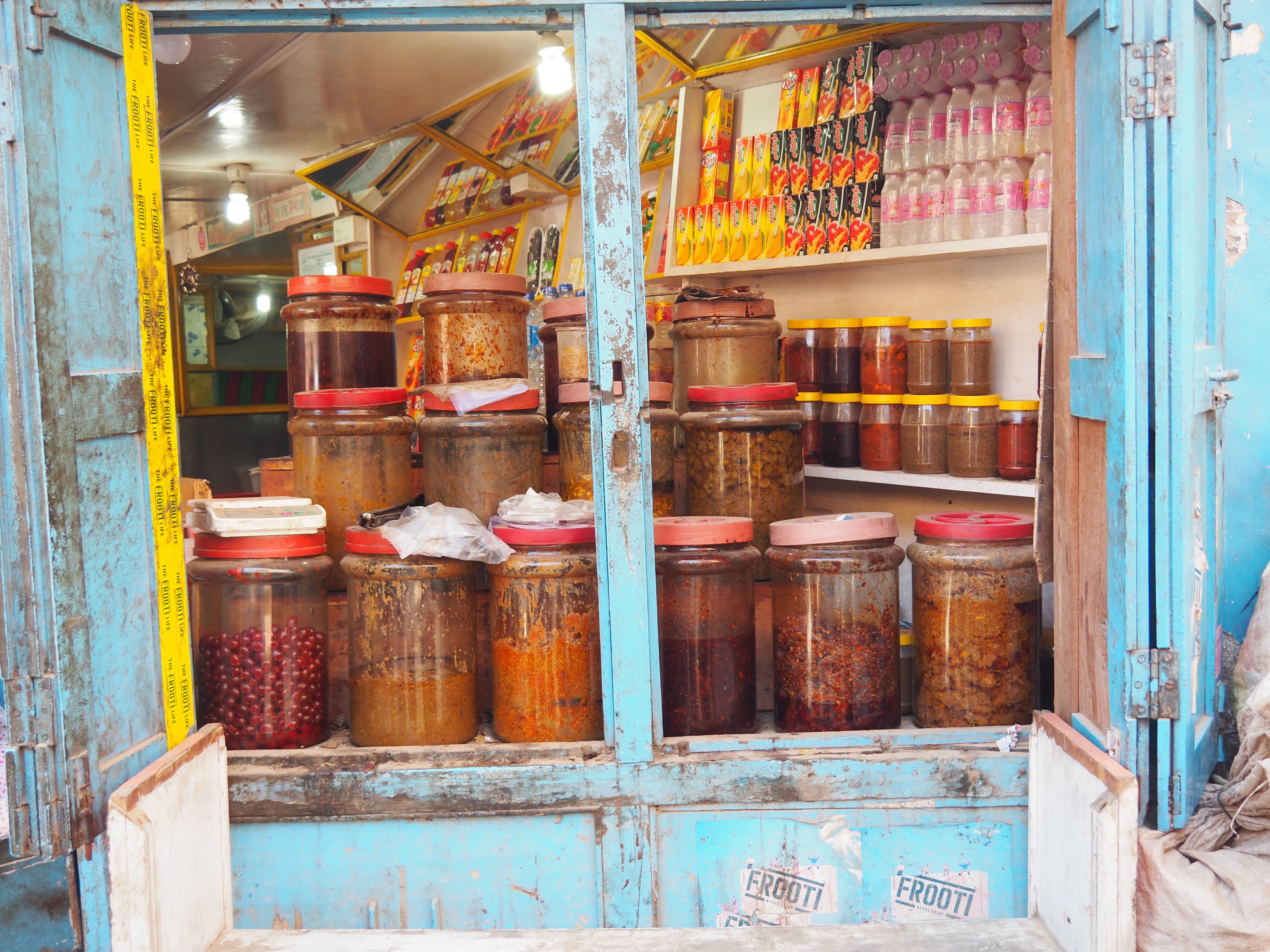
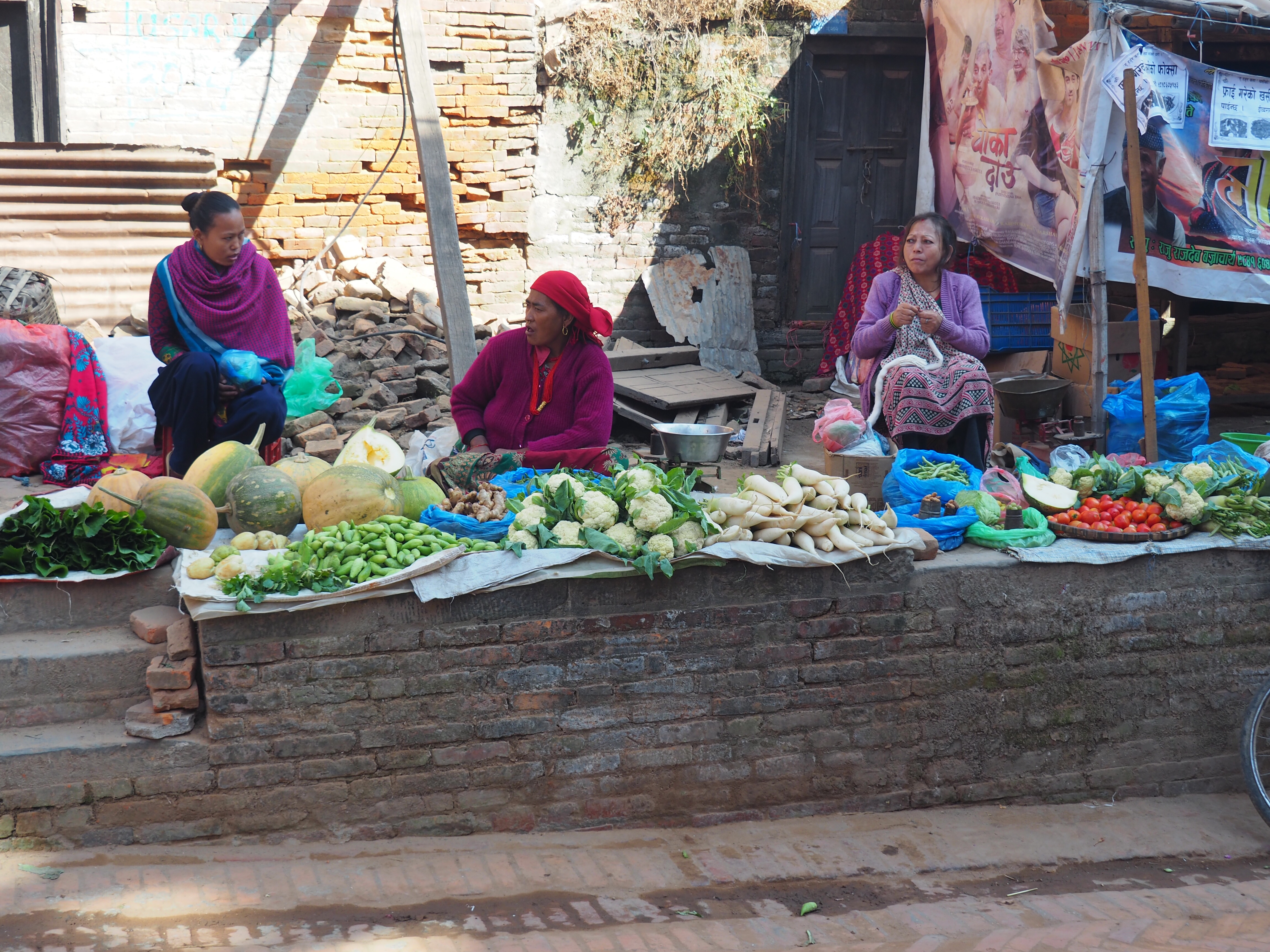
Pickles for sale.
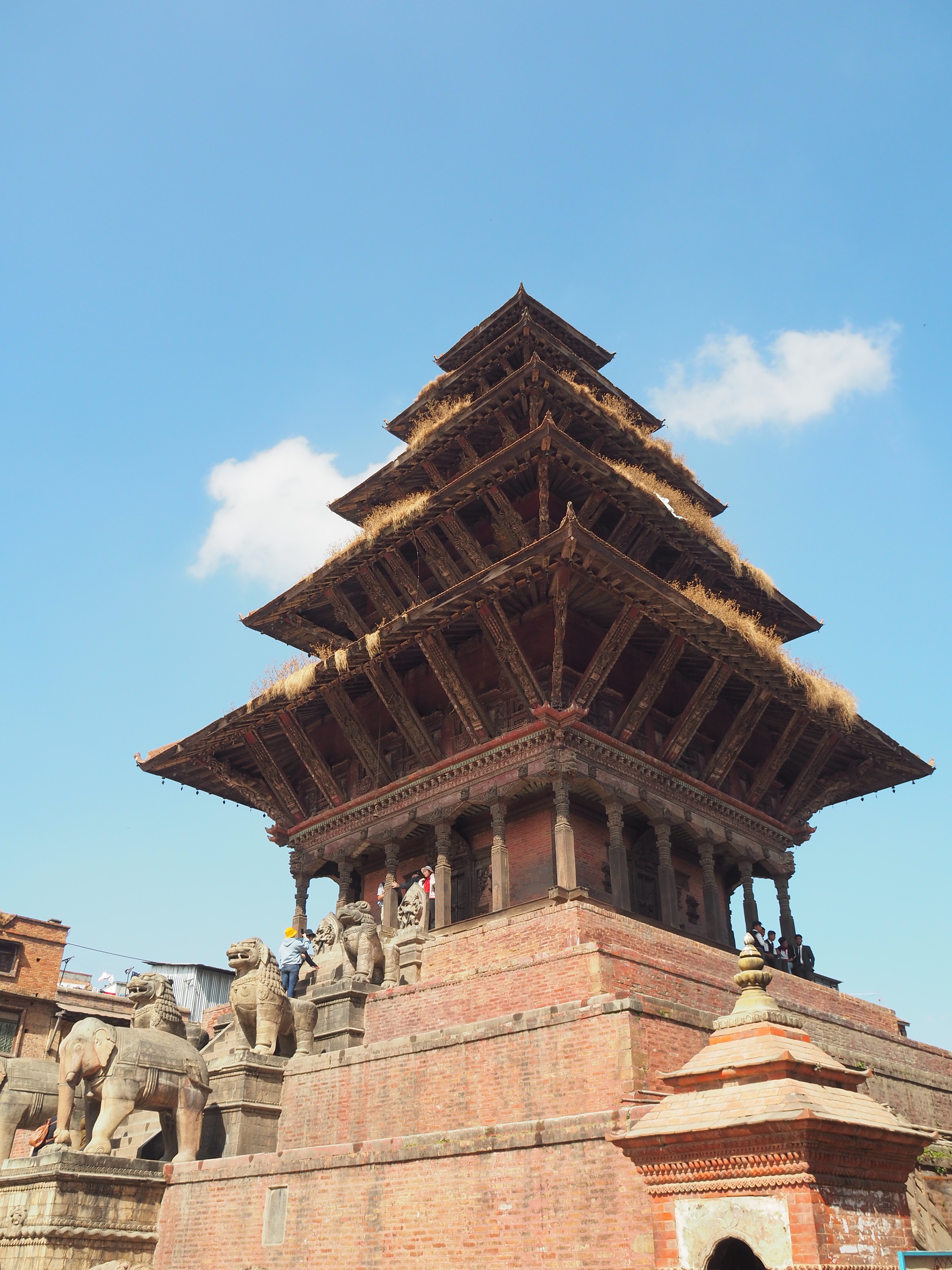
Nyatapola Temple. This is the tallest temple in all of Nepal. It was built in 1792. It was built so well that it had only minor damage in the earthquake.
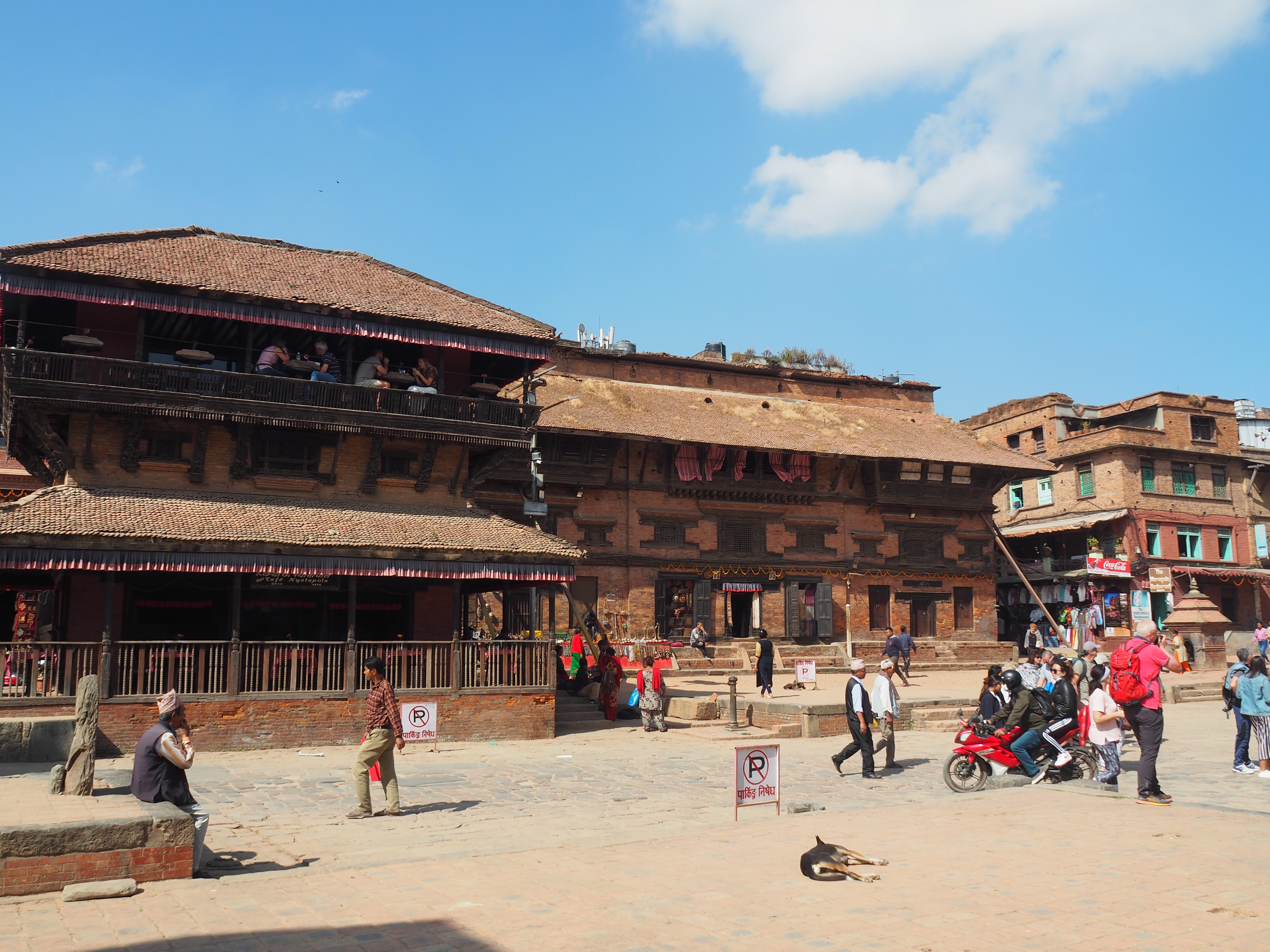
Durbar Square, yes..it has the same name as the one we visited yesterday in Kathmandu. This square suffered major damage in the earthquake.
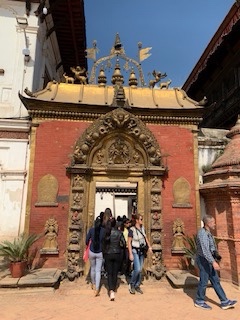
Golden Gate which leads from the square to the palace. It shows some very fine Nepalese metalwork.
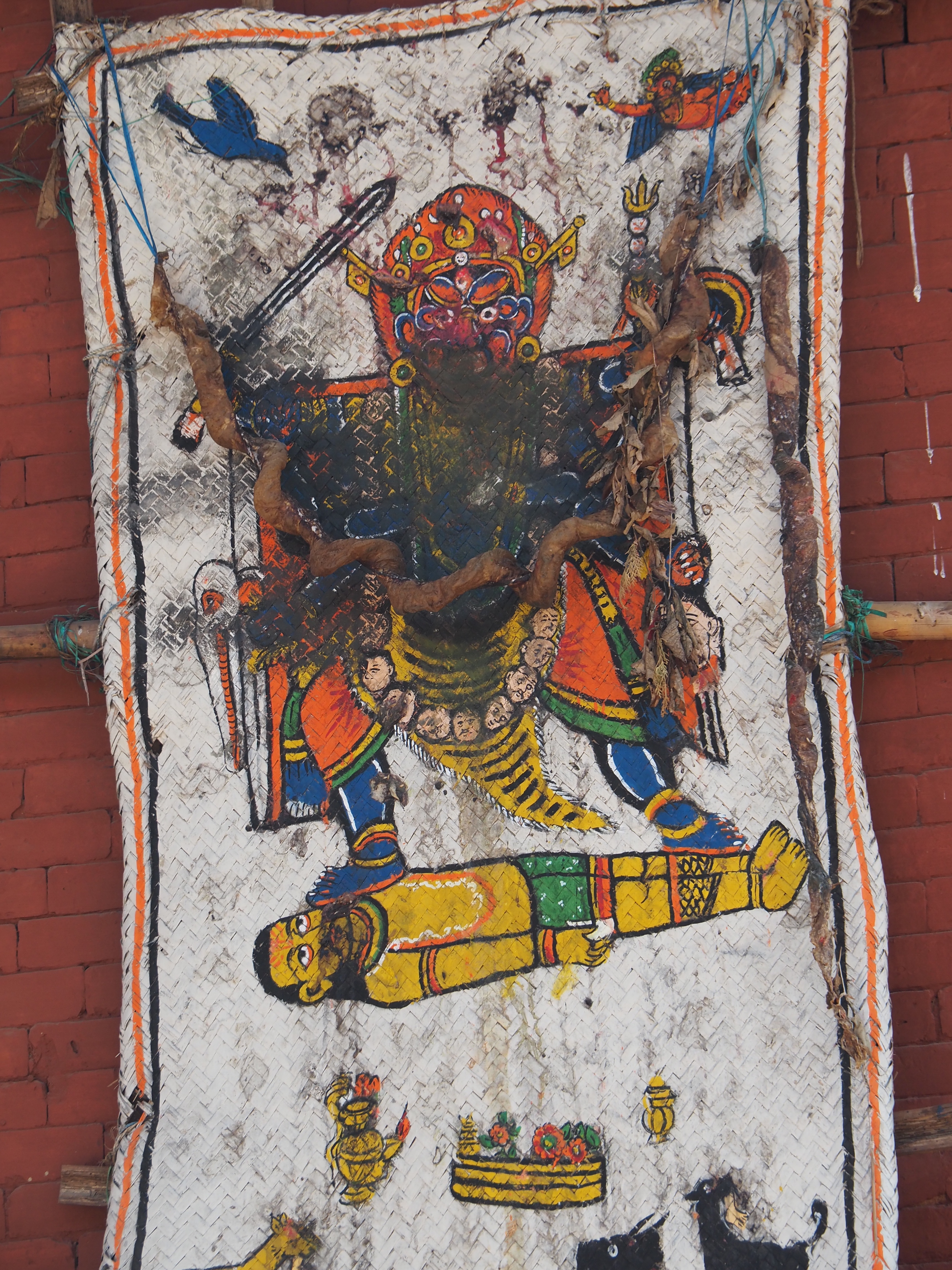
These are intestines left from a recent animal (Buffalo) sacrifice in the square. They slit the animal’s throat and find a vein to drain the blood. They then eat the meat.
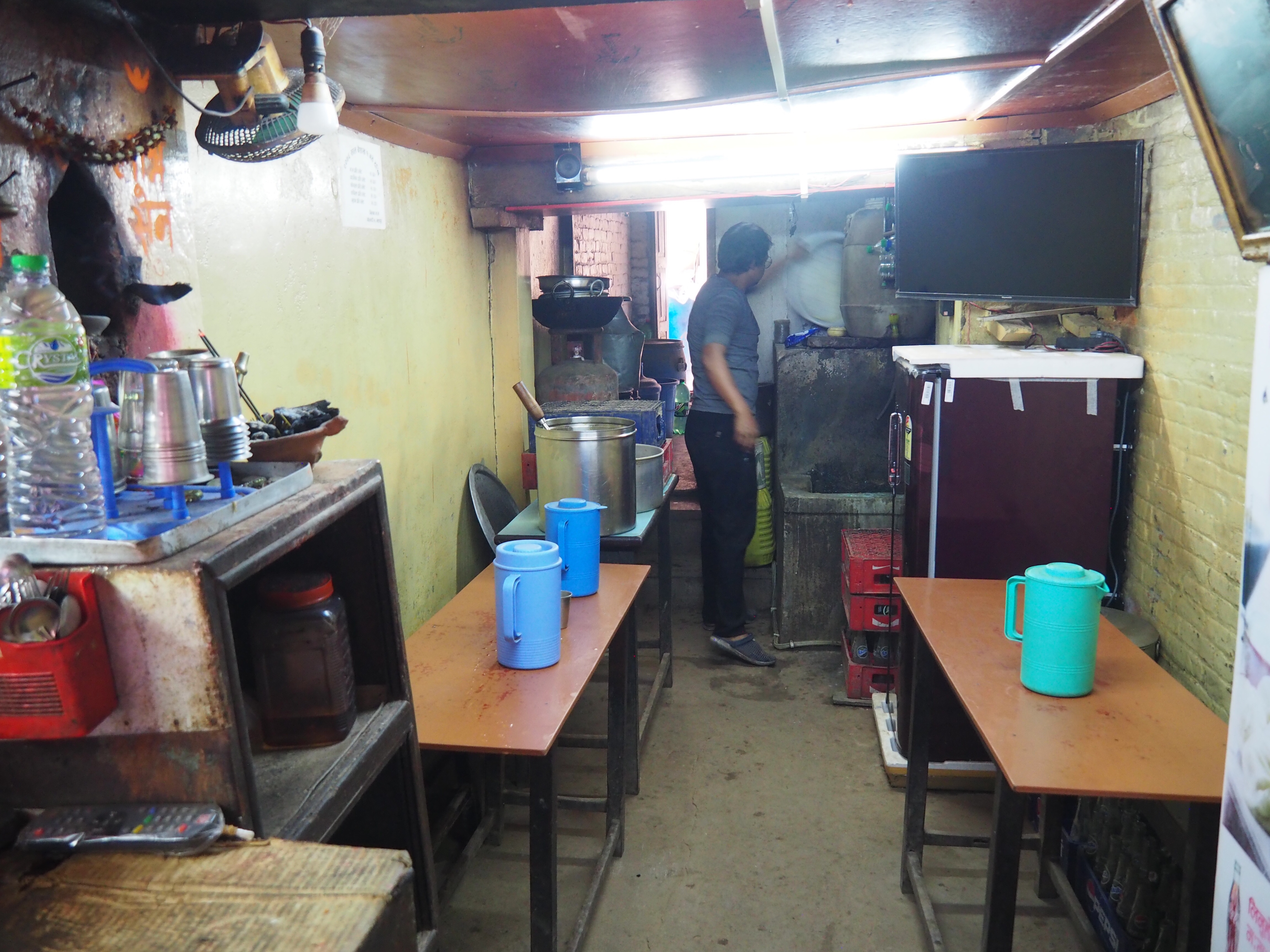
The inside of a local restaurant just before lunch time.
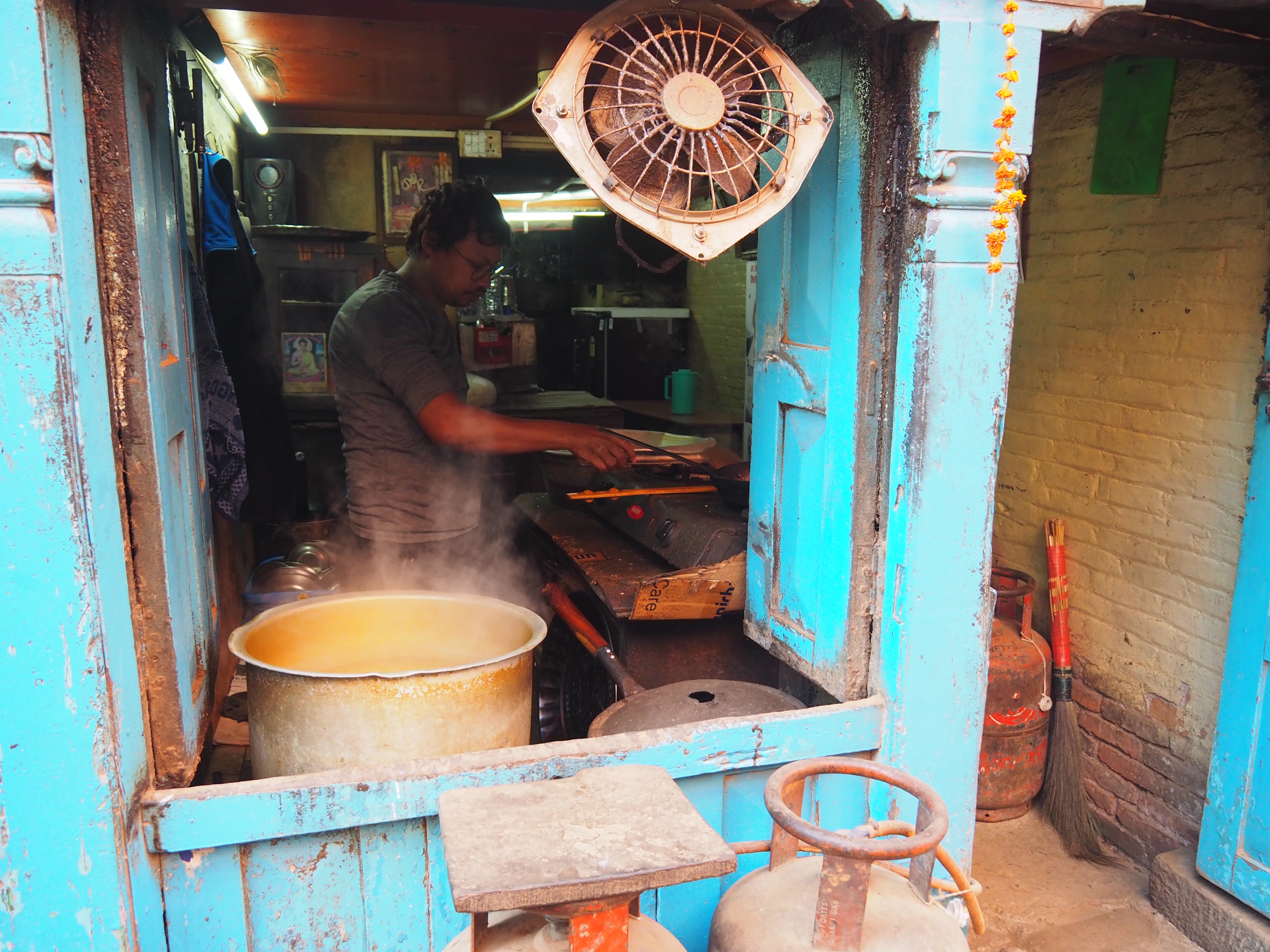
The proprietor preparing the day’s meal.
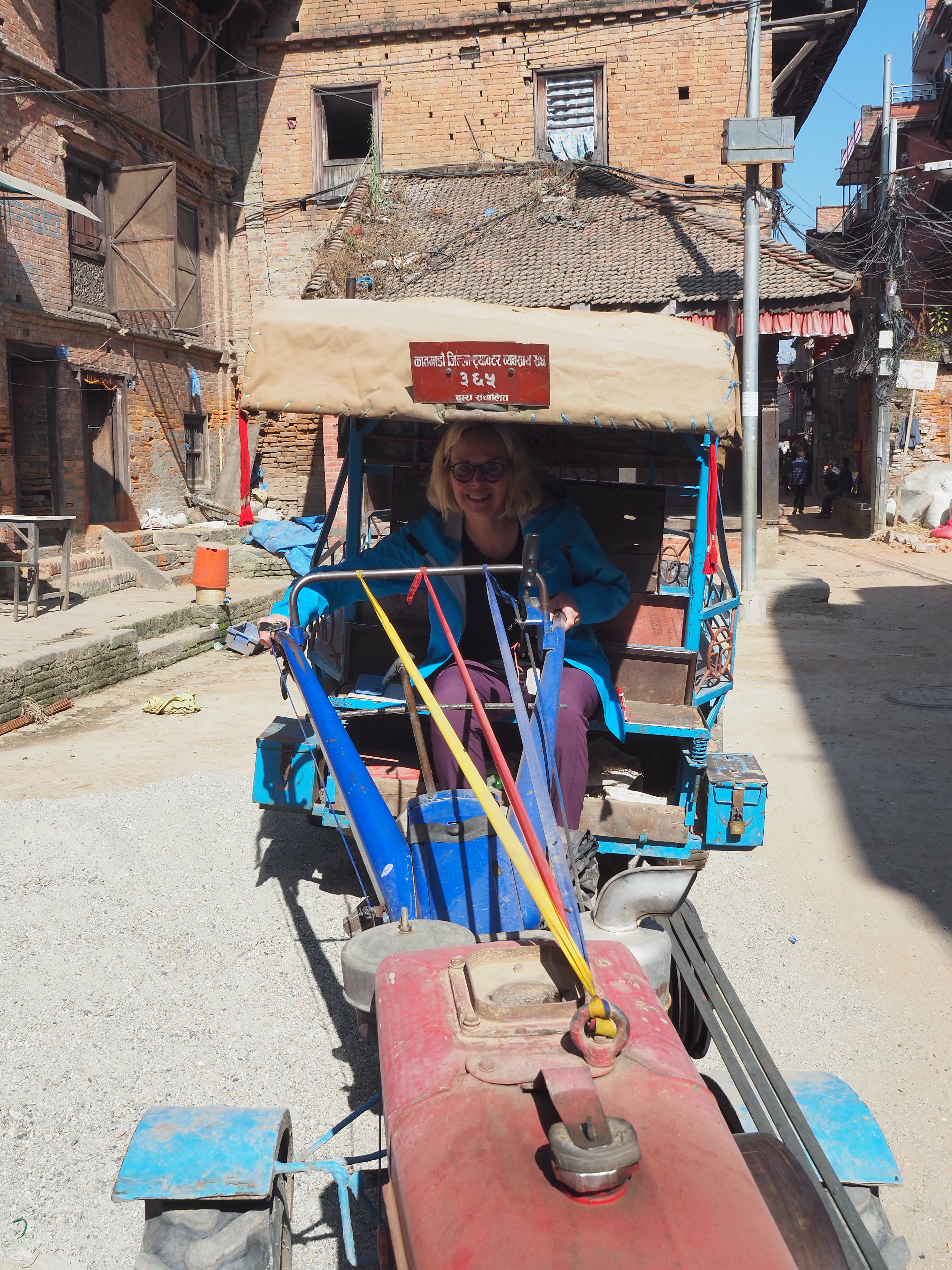
Maryse trying her hand at driving a local tractor.
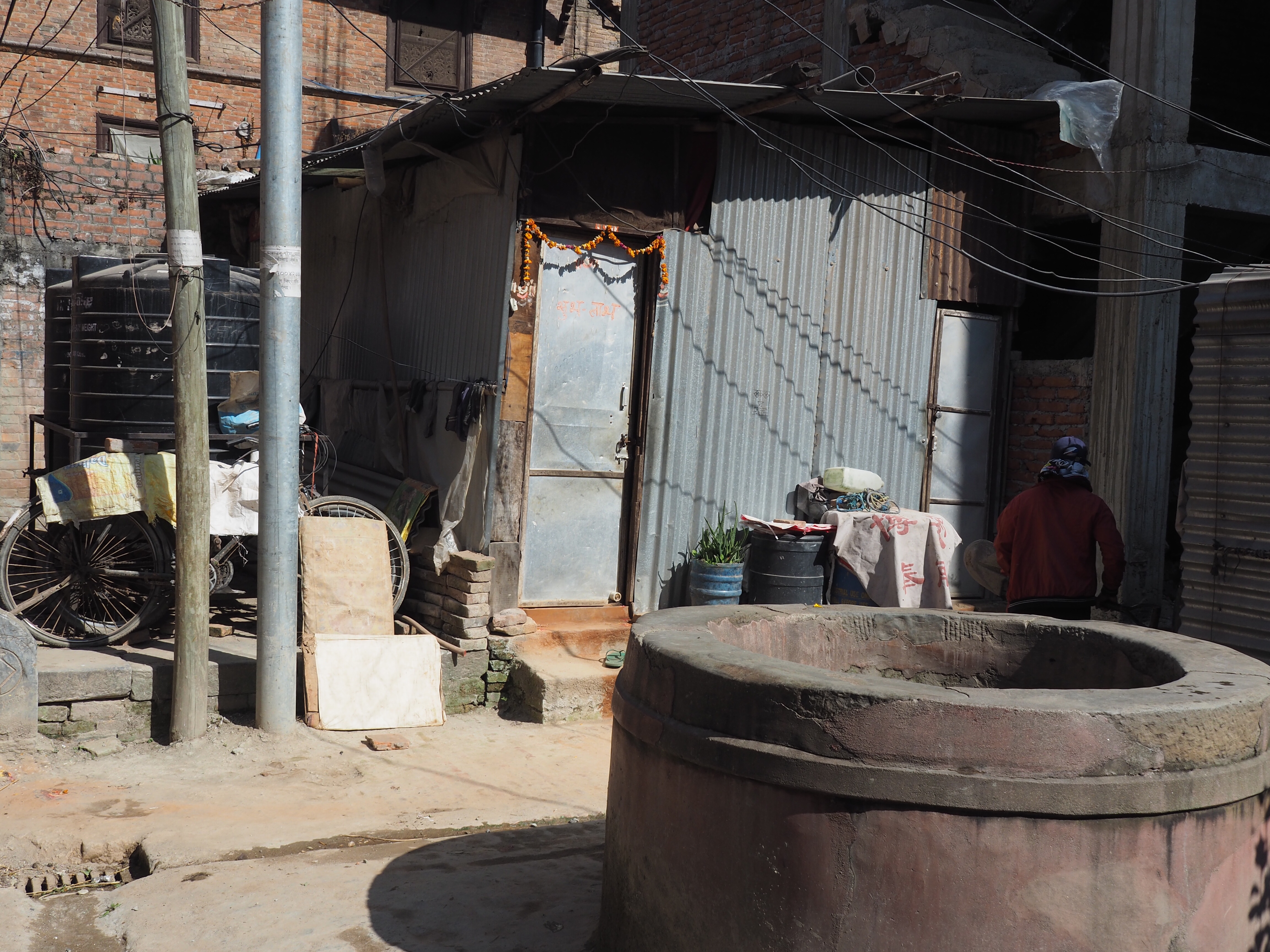
We saw this type of “temporary” house all over the place.
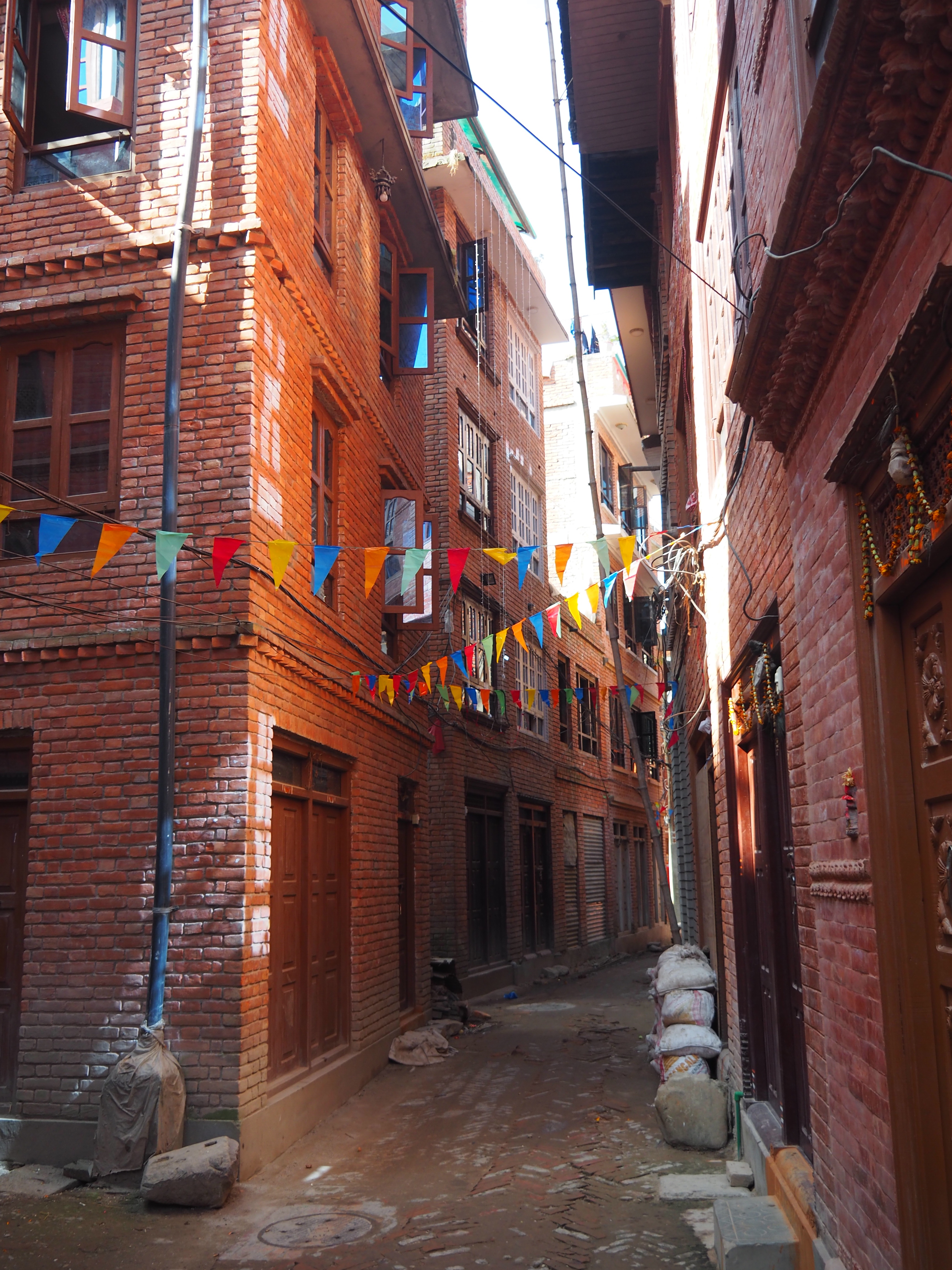
Housing that has been rebuilt.
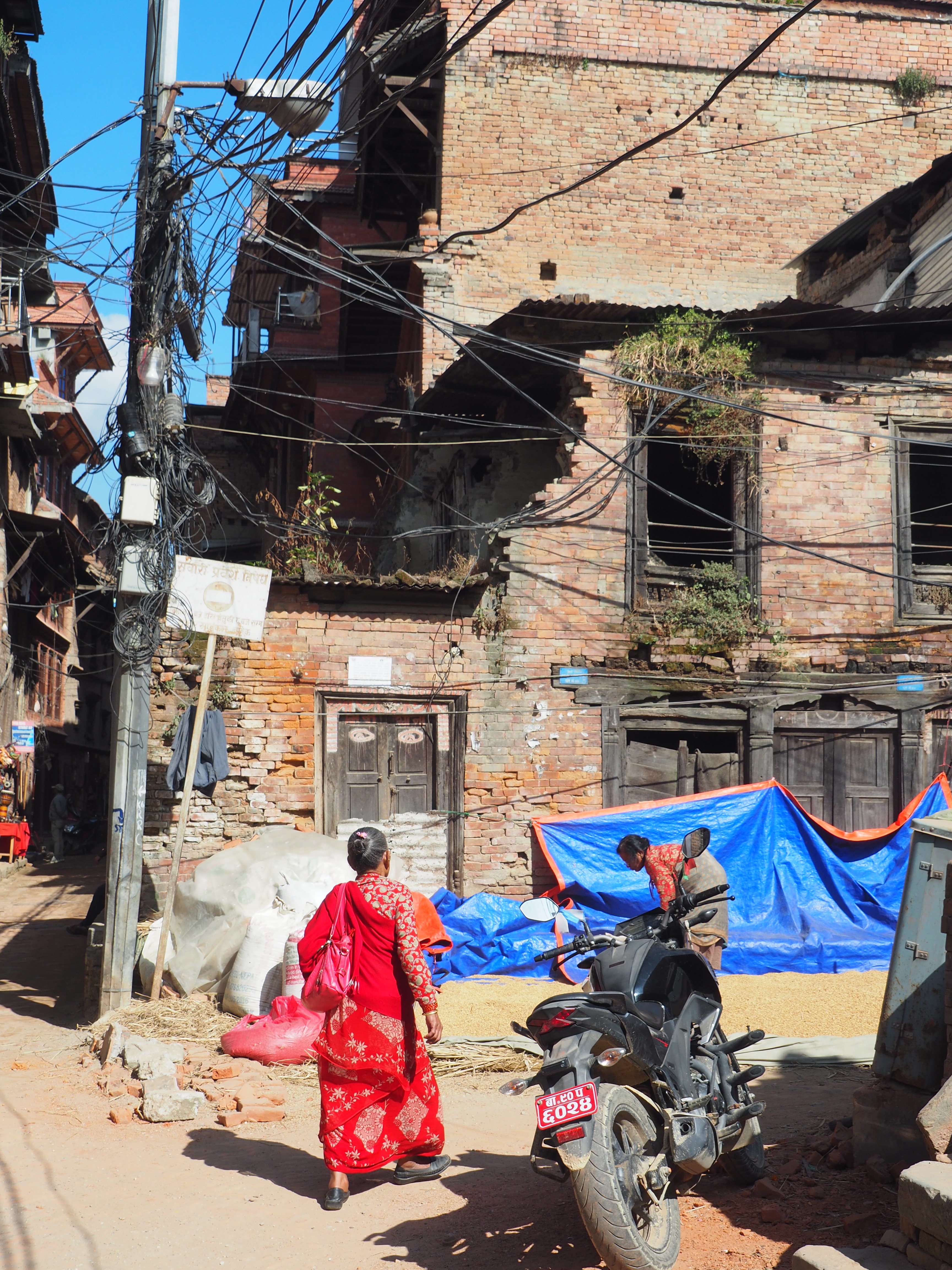
Damaged housing.
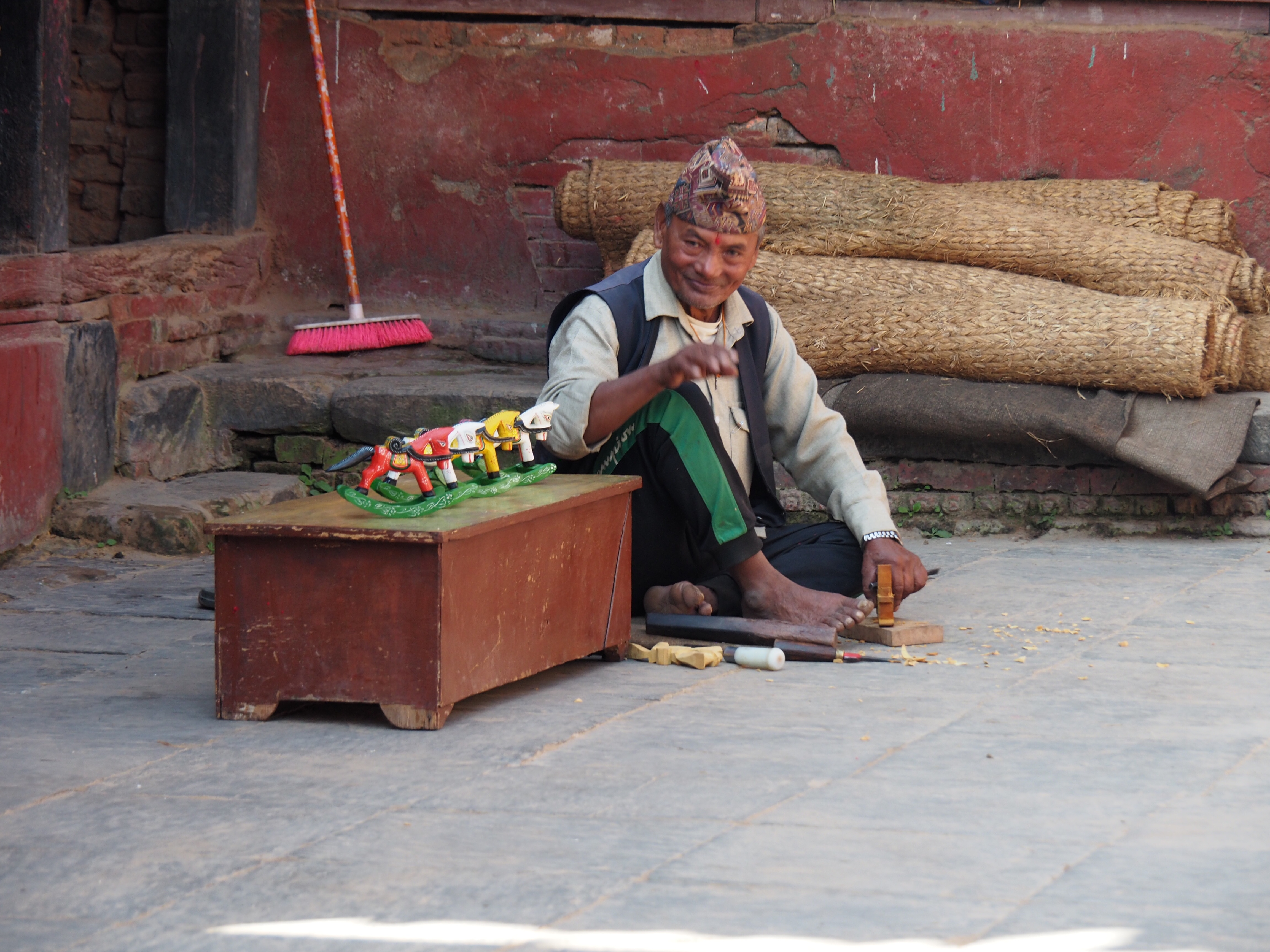
This man wanted me to buy a rocking horse.
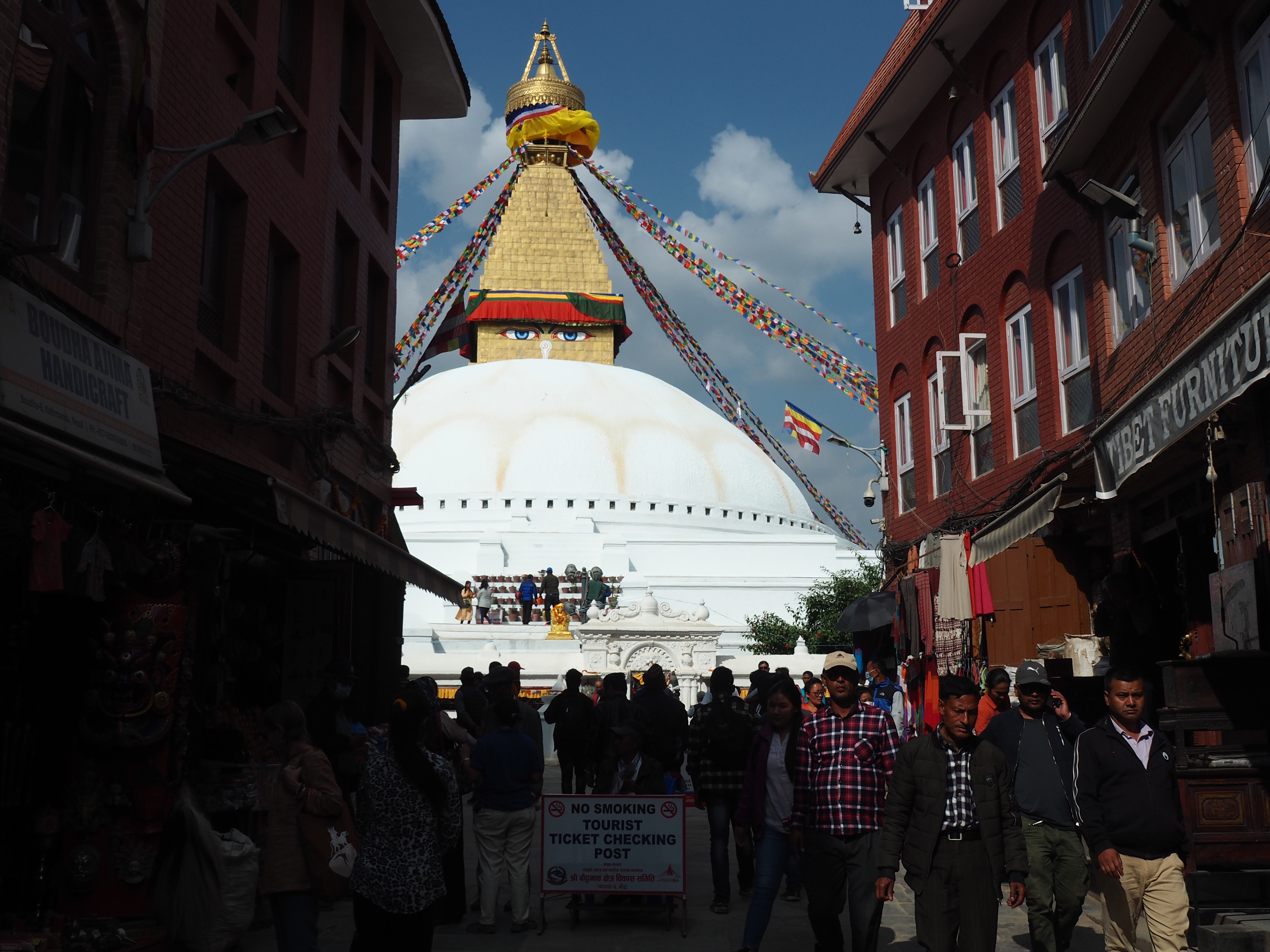
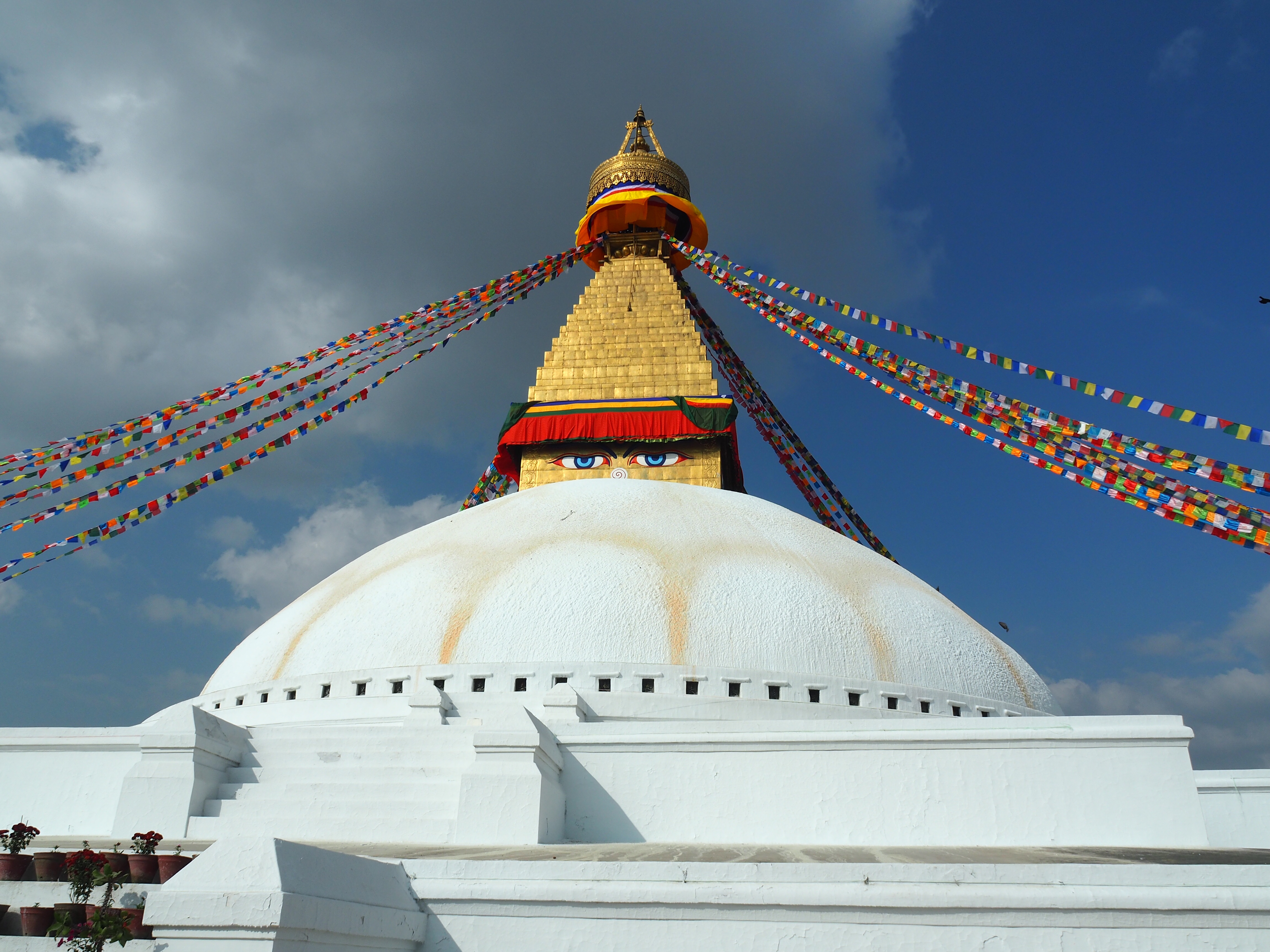
The visit to Bhaktapur was truly a highlight for all of us… and yet, we still had more things to see! Next we made our way back to Kathmandu to visit the Great Boudha Stupa, one of the largest in the region. It is 100 feet in diameter and over 140 feet high. There is a large Tibetan settlement in the area of the stupa, which dates from around 600 AD, when the Tibetan king converted to Buddhism.

There are many monasteries near the stupa and we saw many monks in the area.

We entered the area of the stupa from a very busy street, once inside it was quiet and hard to believe how close we were to the hustle and bustle of the city.
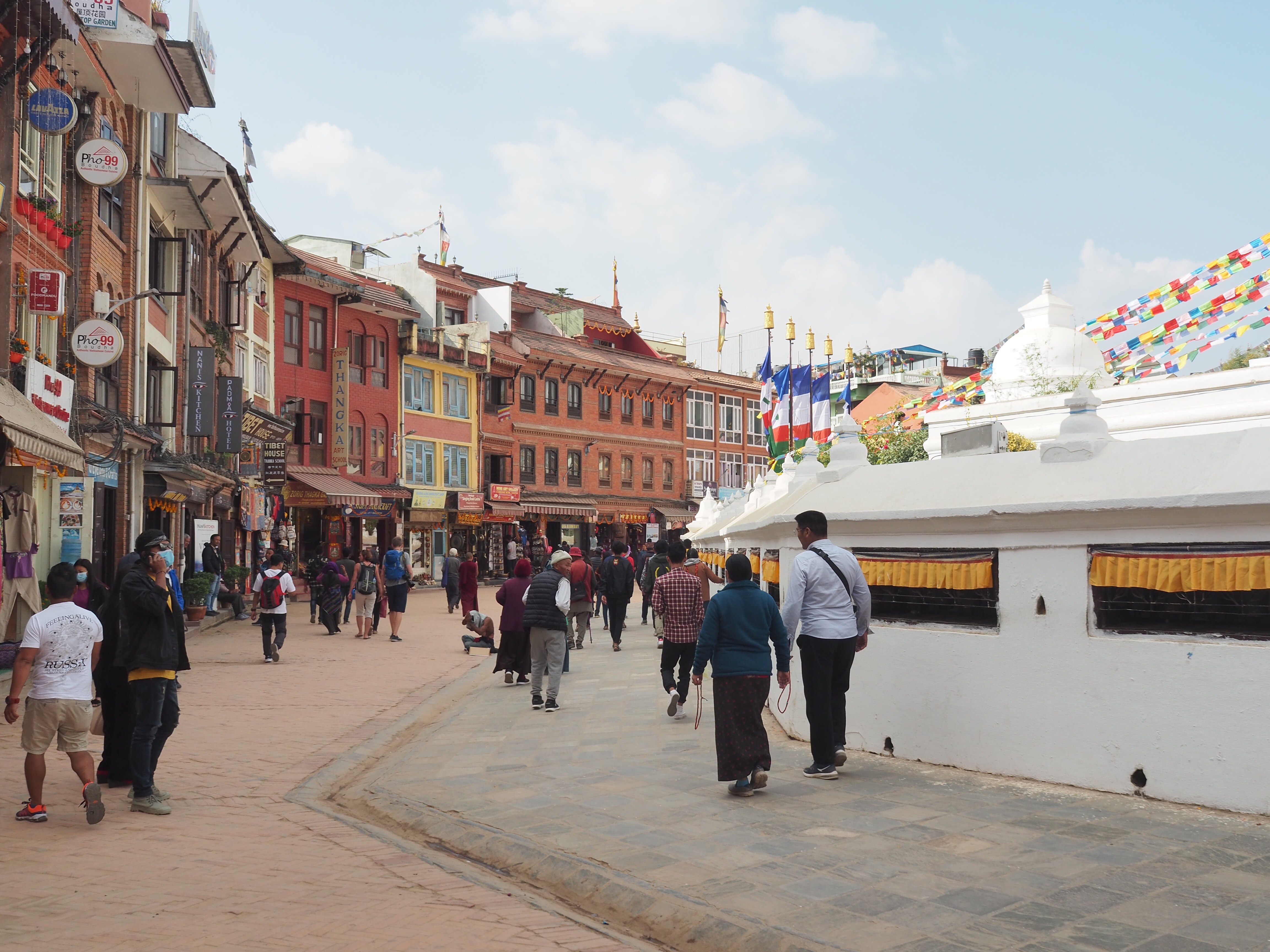
The stupa is octagonal in shape and is surrounded all the way around by shops, restaurants, monasteries. The building hight is regulated to not be higher than three floors.


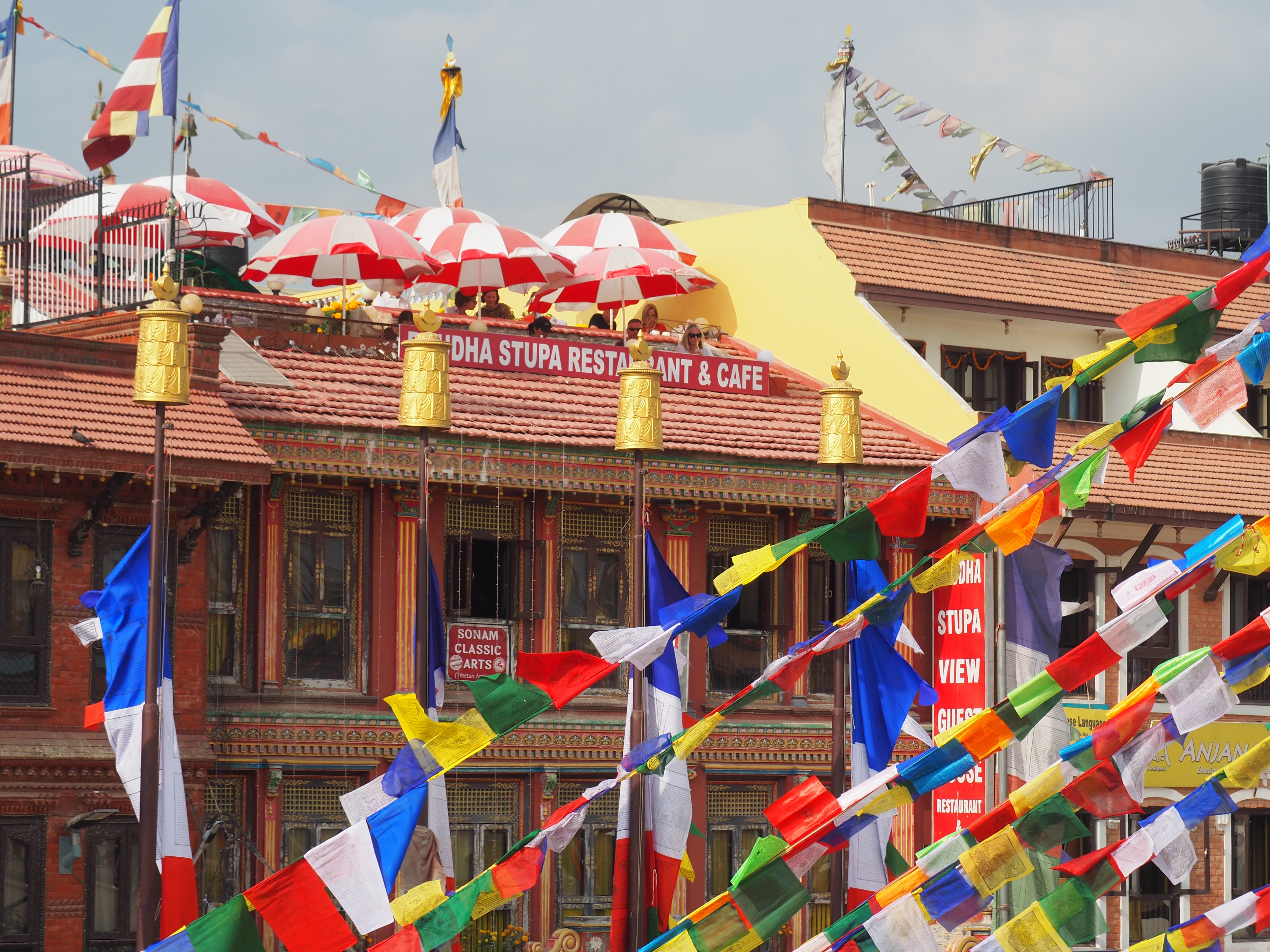
Before taking a clockwise walk around the stupa, which is the traditional way to visit, we had lunch at a restaurant overlooking the area.

A view of our lunch spot from below.
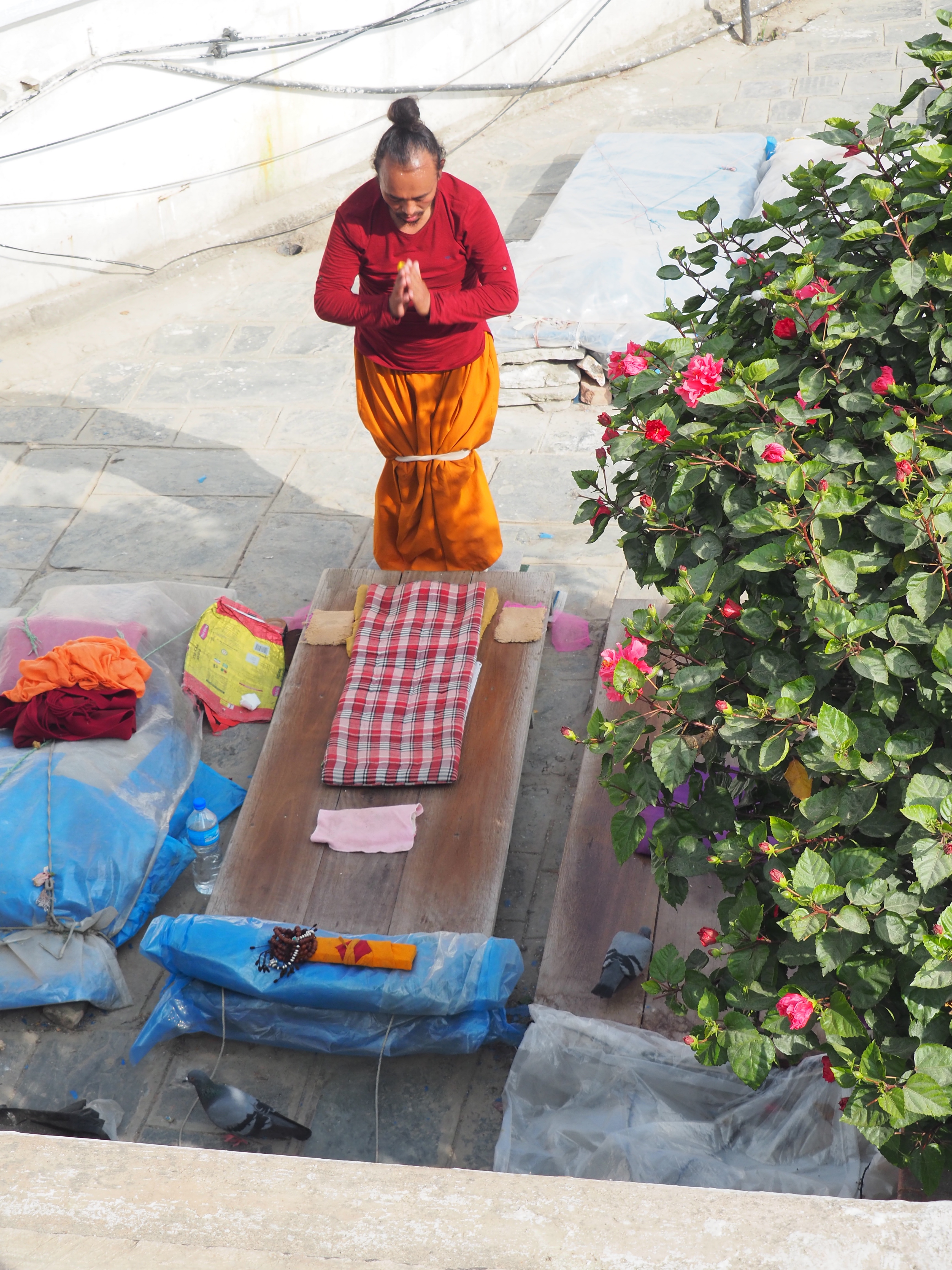
A monk praying at the base of the stupa.
The stupa is whitewashed during the full moon.
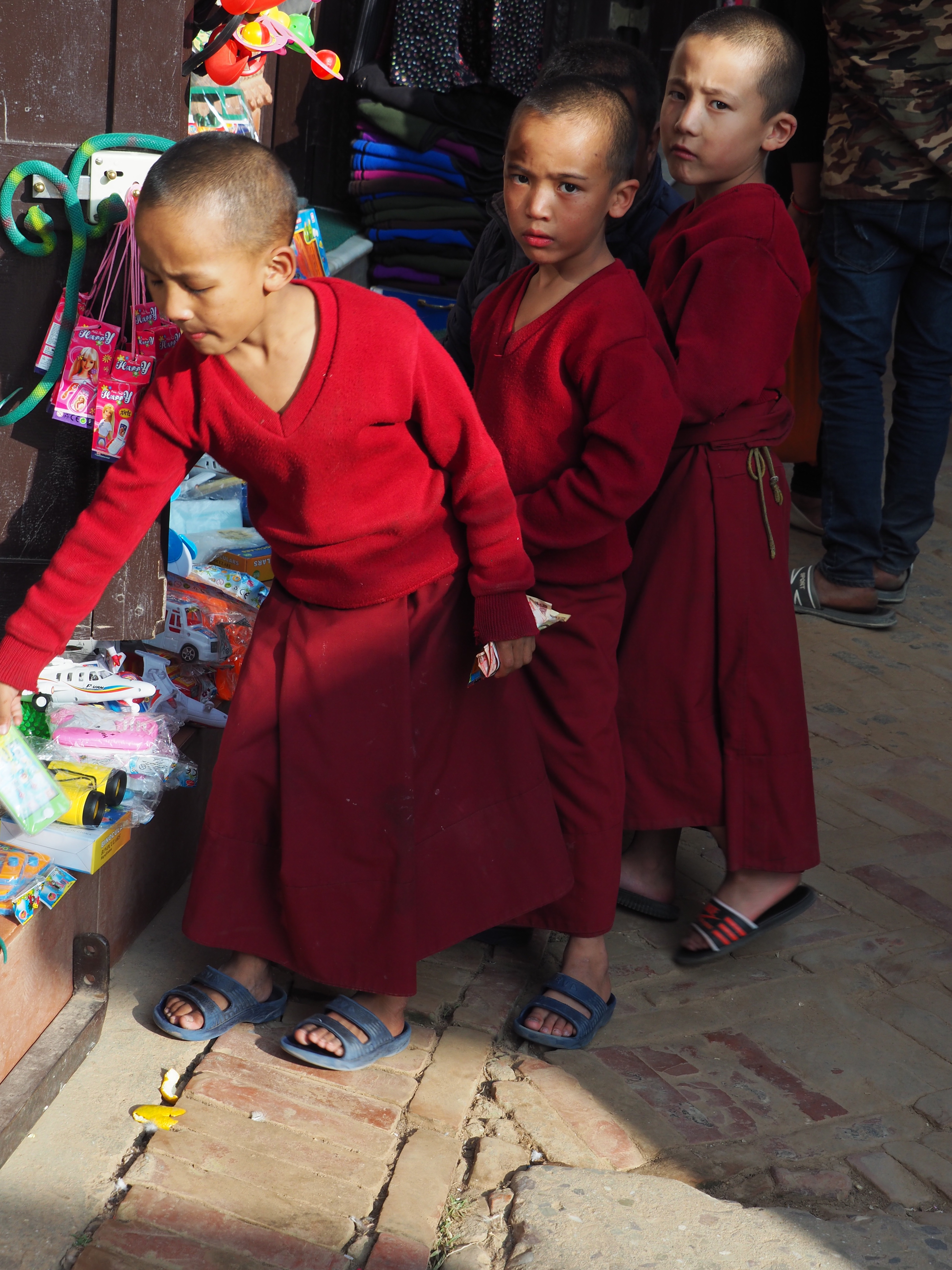
Young monks
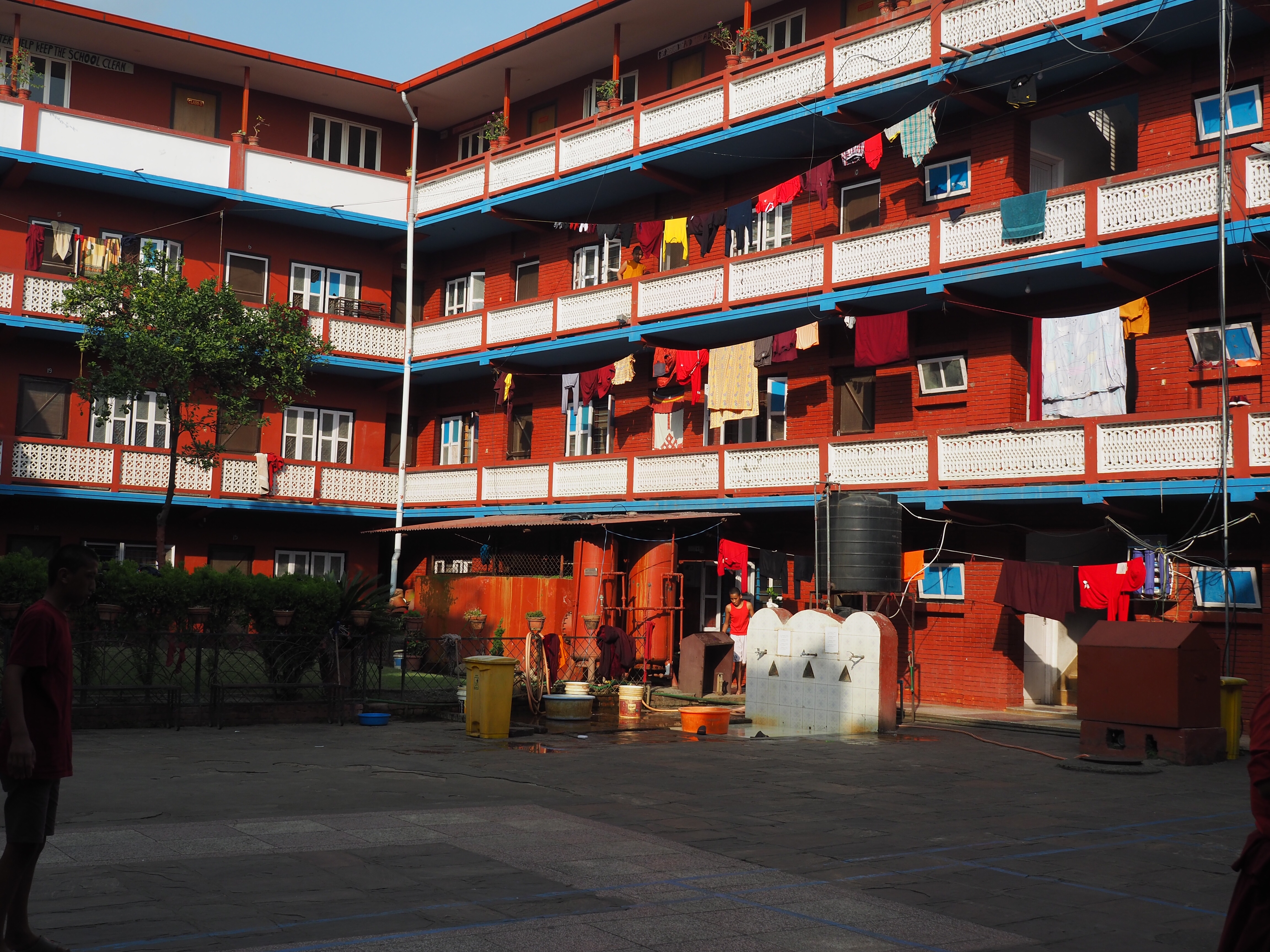
Courtyard of a school for young monks. A family might send a boy to be a monk by the time he is about five years old.
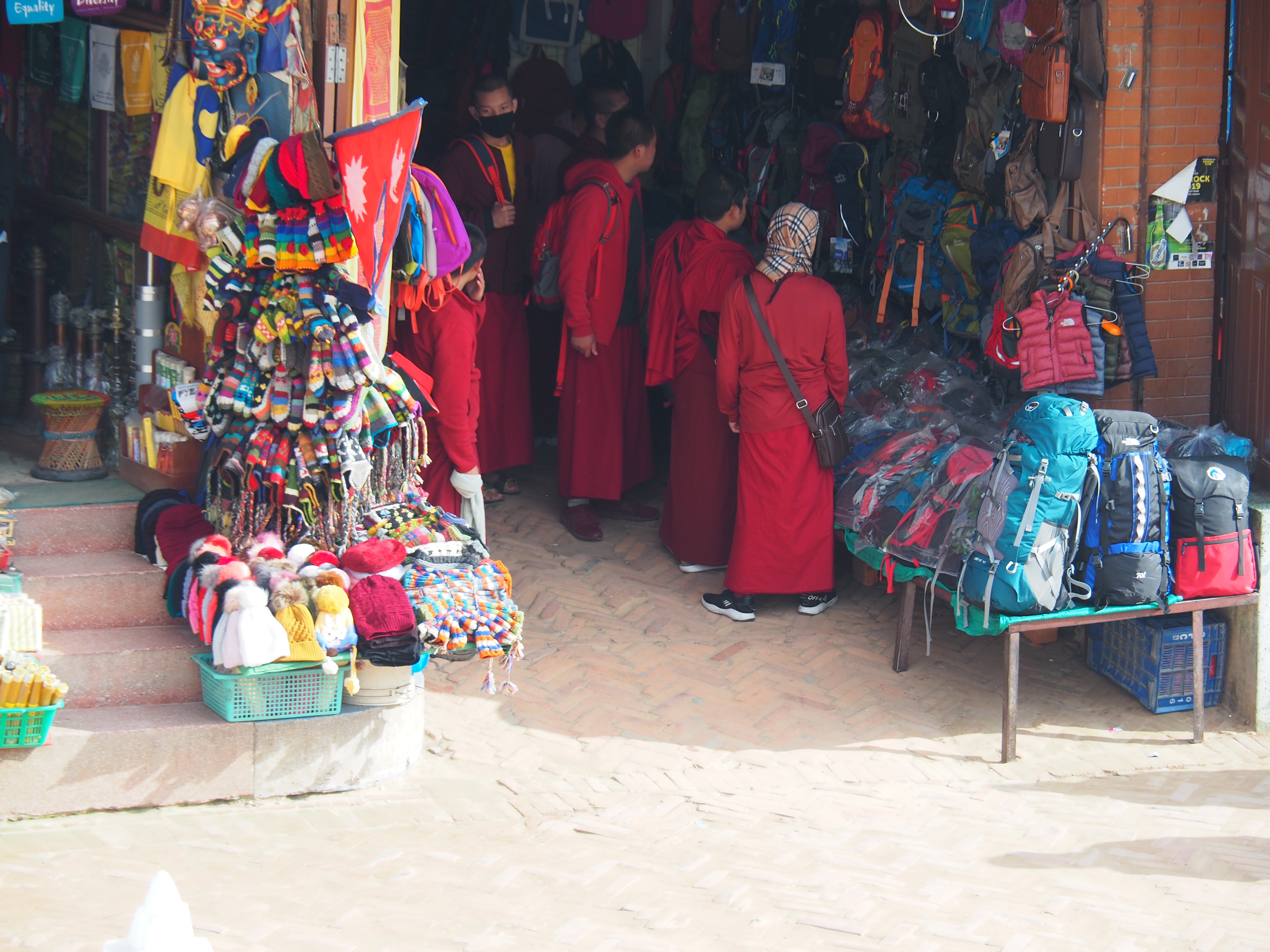
Monks doing a bit of retail therapy.

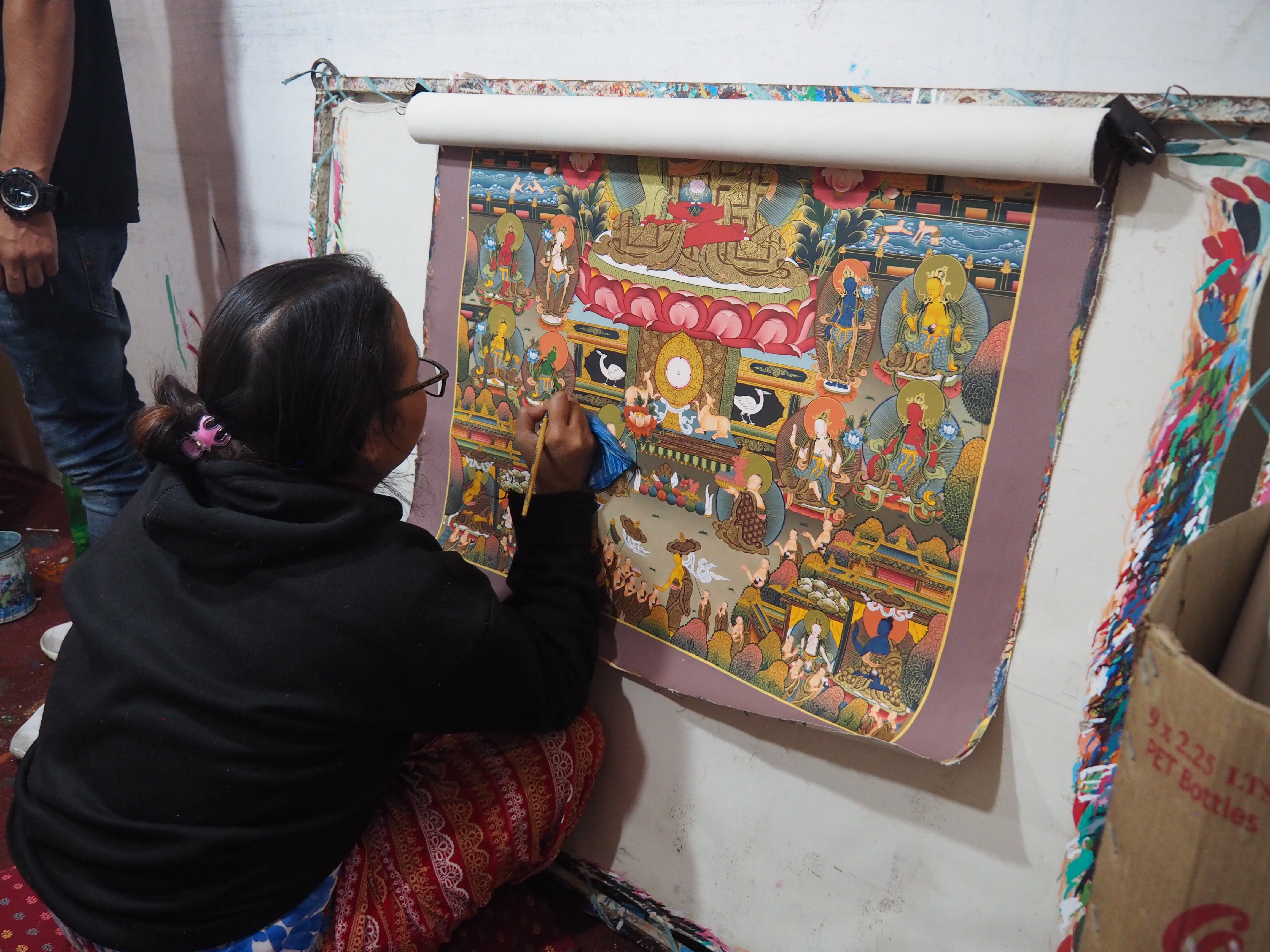
Before leaving the area, we visited a school where traditional painting is taught. These paintings seem to tell Buddhist stories and also help to focus the mind for meditation.

Student in the painting school practicing her craft. It takes six years to be trained.

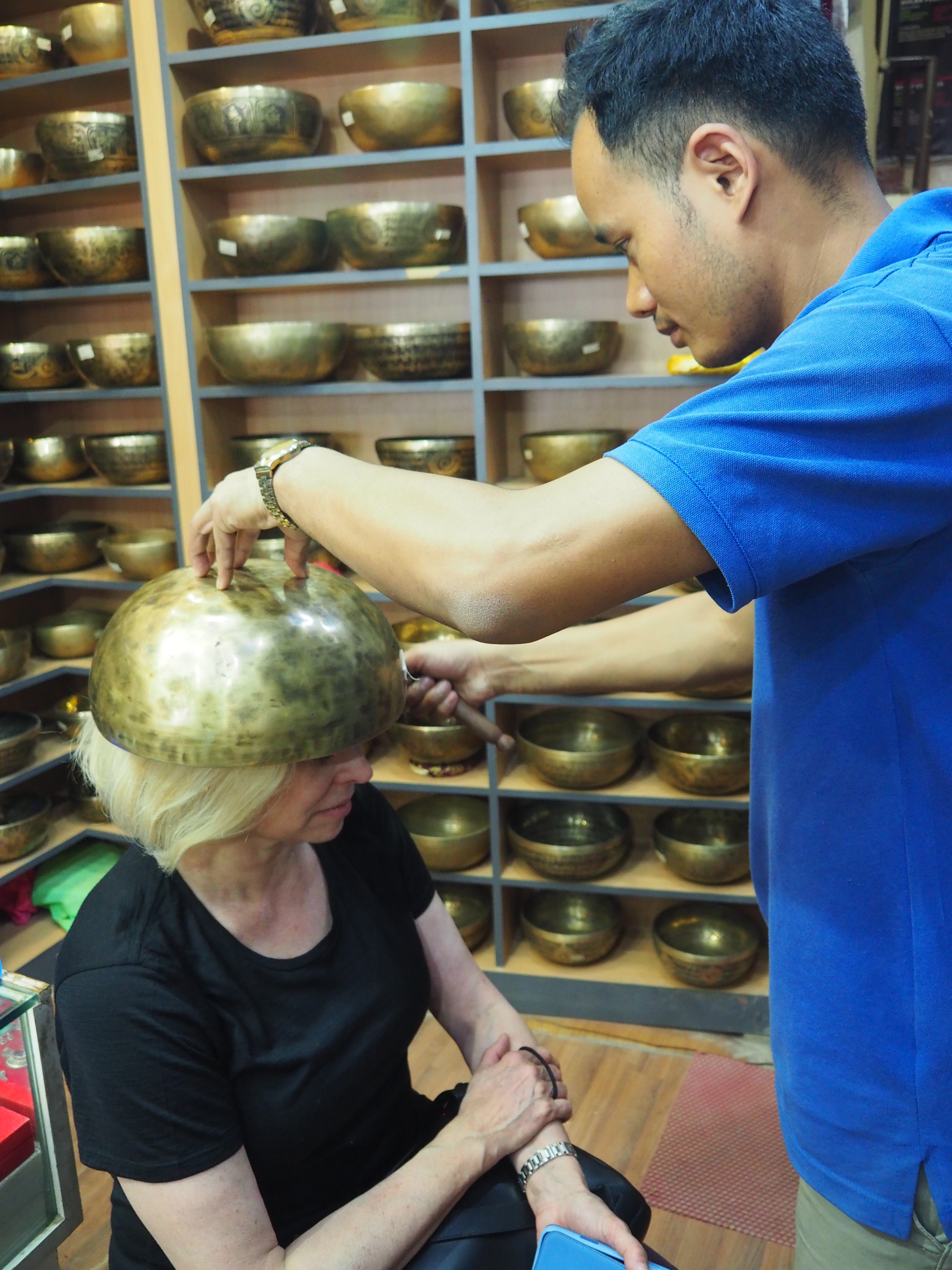
Finally, we visited a store where they sell “singing bowls”; I have seen these used in yoga and meditation, however, they have medicinal properties as well! The vibration is used to help cure ills! Maryse had her headache treated and I had some work done on my shoulder! Afterward, the practitioner told us is would take several treatments to make a difference. I wondered if this was a ploy to sell bowls… neither Maryse or I bought one. I think the PT on my shoulder is going well and the plastic band I brought weighs much less than a singing bowl does!

Maryse having her headache treated with vibration from a singing bowl.

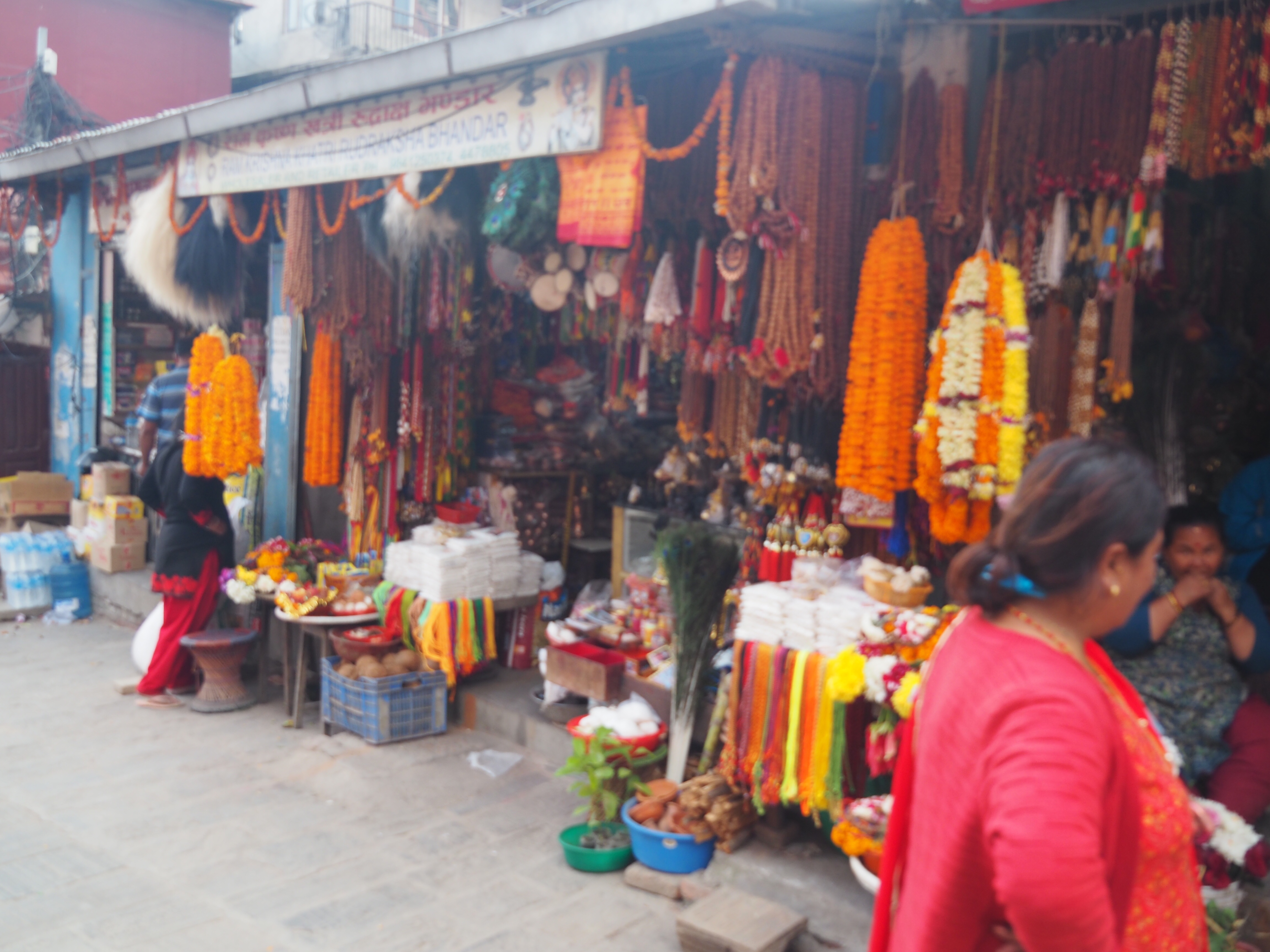
We weren’t quite finished with our sightseeing for the day. We had one more stop, to Pashupatinath which the country’s most important temple. It stands on the banks of the holy Bagmati a River. Outside the temple area, there are many stalls selling all the items needed for offerings such as marigolds, incense, conch shells, beads, etc.

Stalls outside the temple grounds.

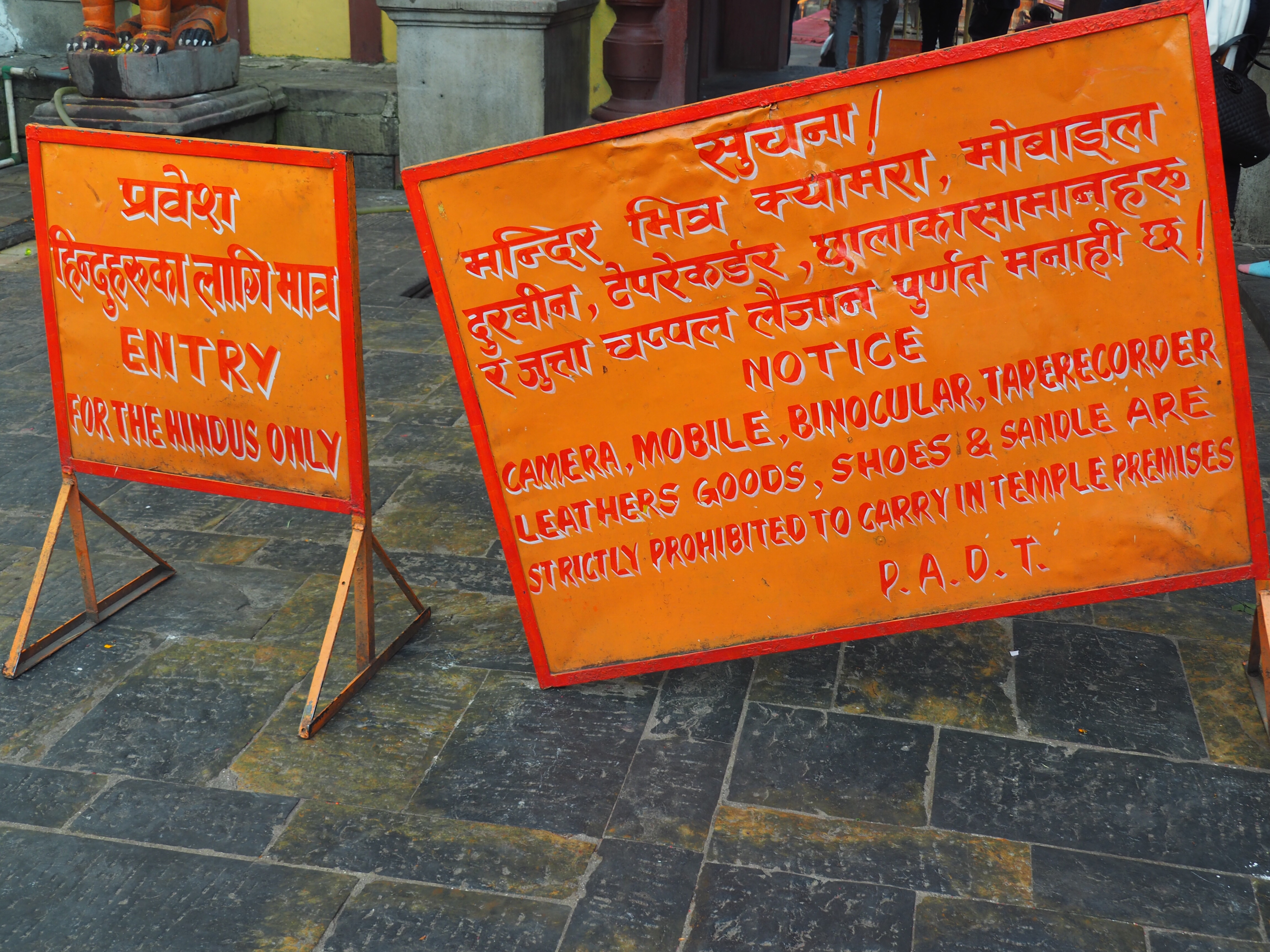
We could visit the grounds, but only Hindus May enter the temple, though we could peek through the door. This is one of the places where Hindus must visit by pilgrimage during their lifetimes.

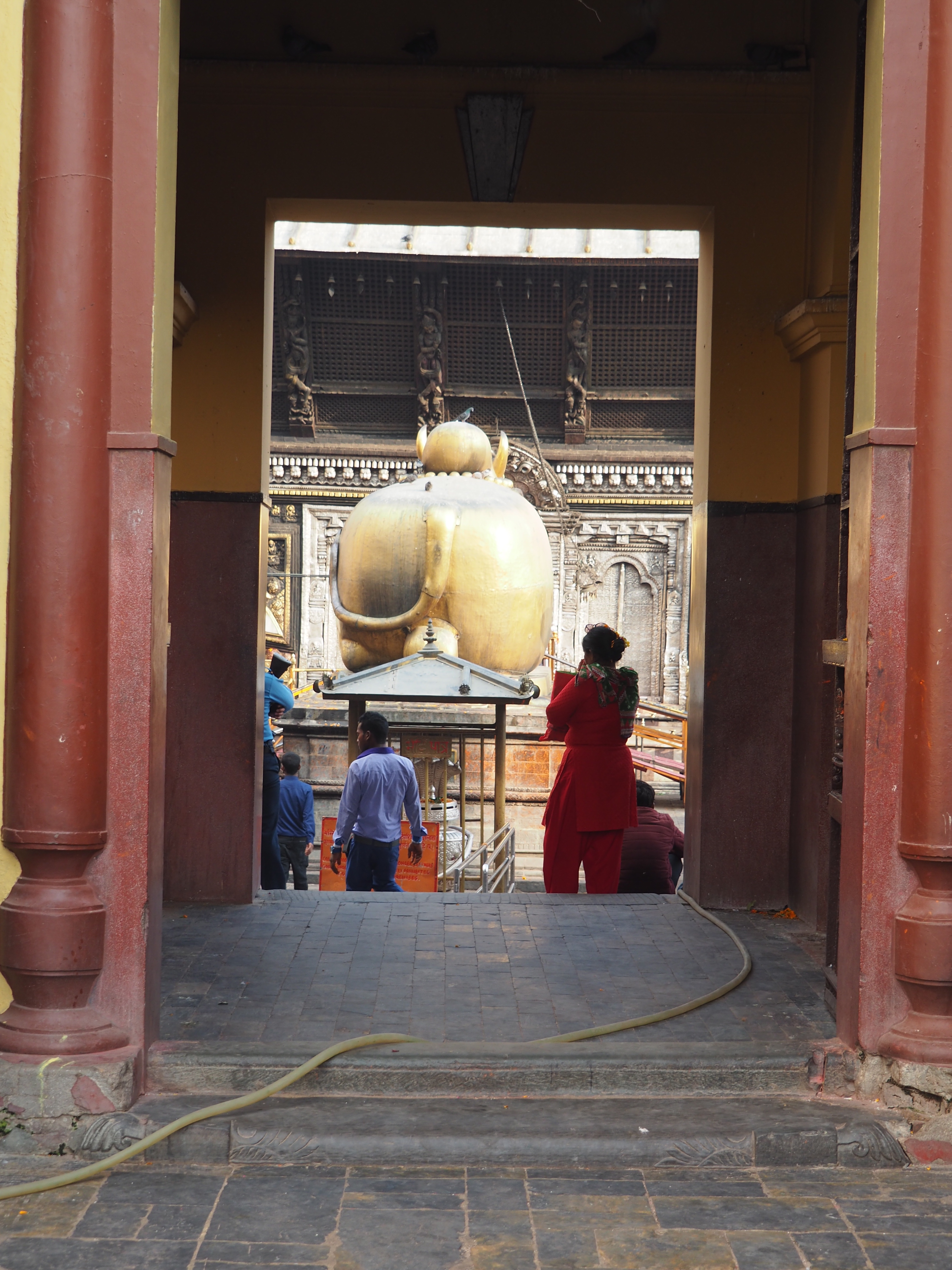
A peak inside, all we could really see was the backside of a Shiva’s giant bull!

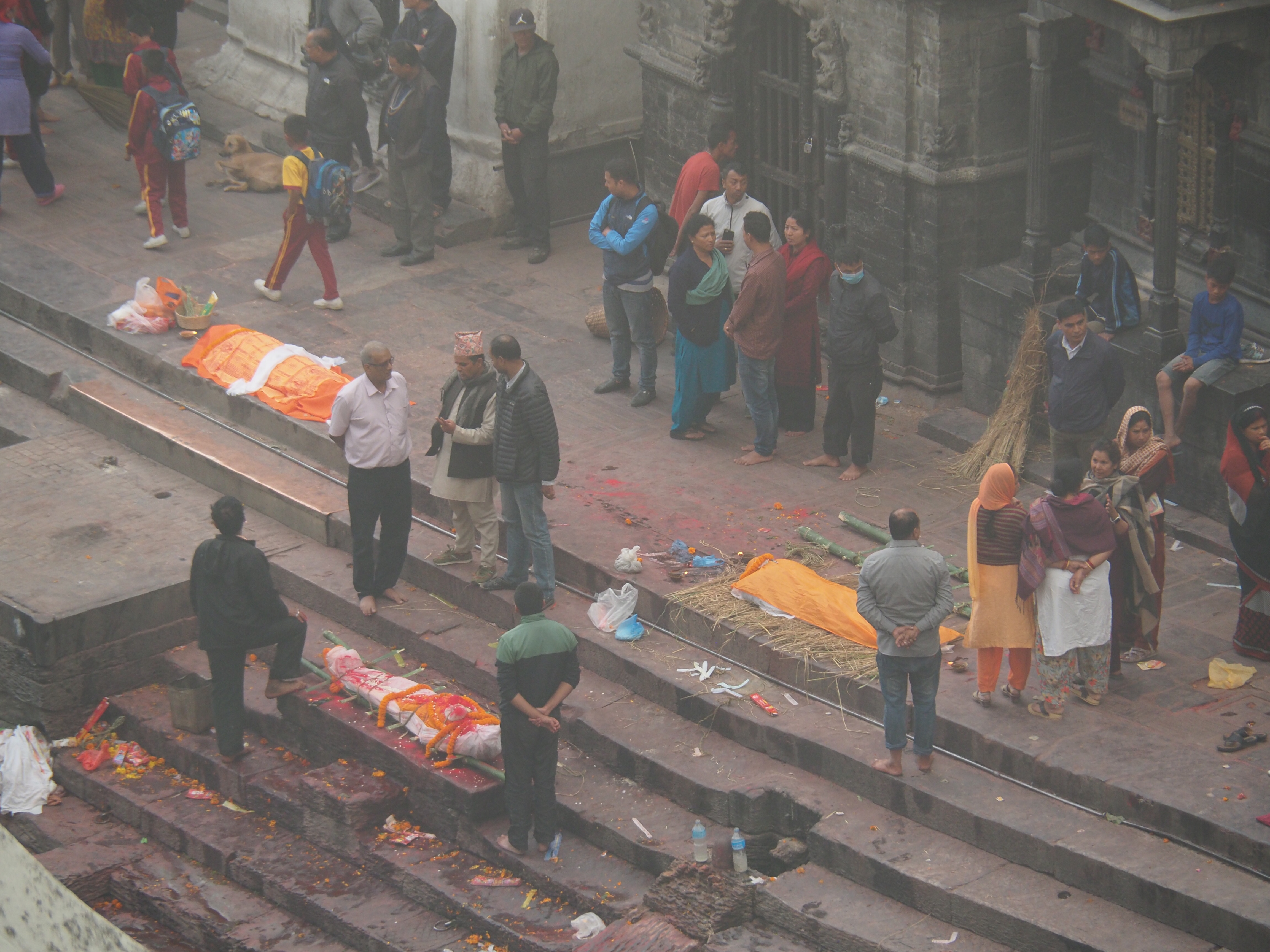
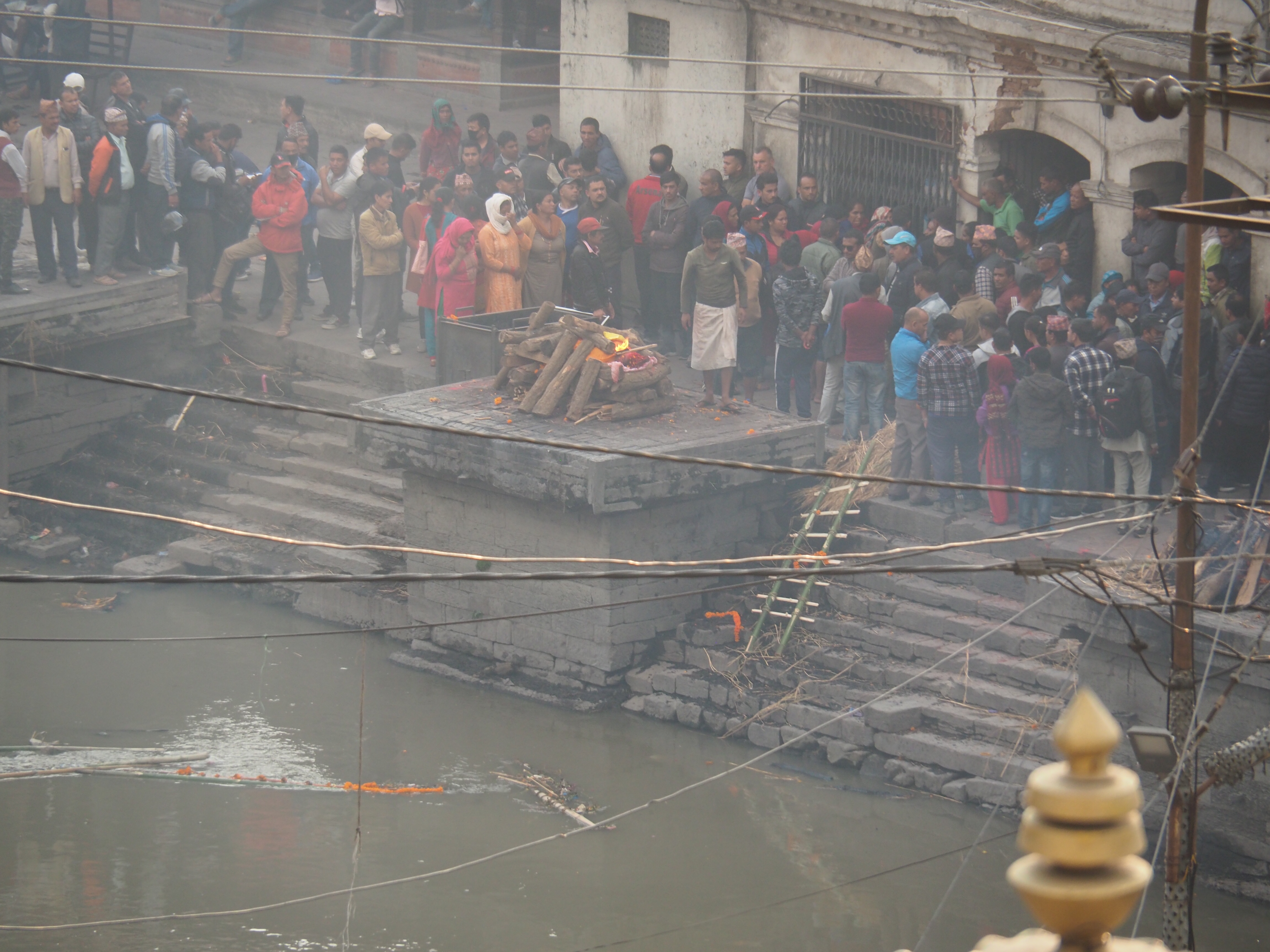
The grounds also contain cremation sites for Hindus. Suman told us the area is one of the most sacred in the Hindi faith. The cremations take place on ghats. Funerals take place here every day, 24 hours a day. Bodies are wrapped in shrouds and then laid out on the riverbank before being cremated on a wooden pyre. It was quite something to view…the pictures below were taken from a far distance out of respect to the families.

Bodies being prepared for cremations.
A family member lights the fire and then a priest tends the fire until it burns out.

After the fire burn out, the ashes are put into the river, which flows into the Ganges (sp).

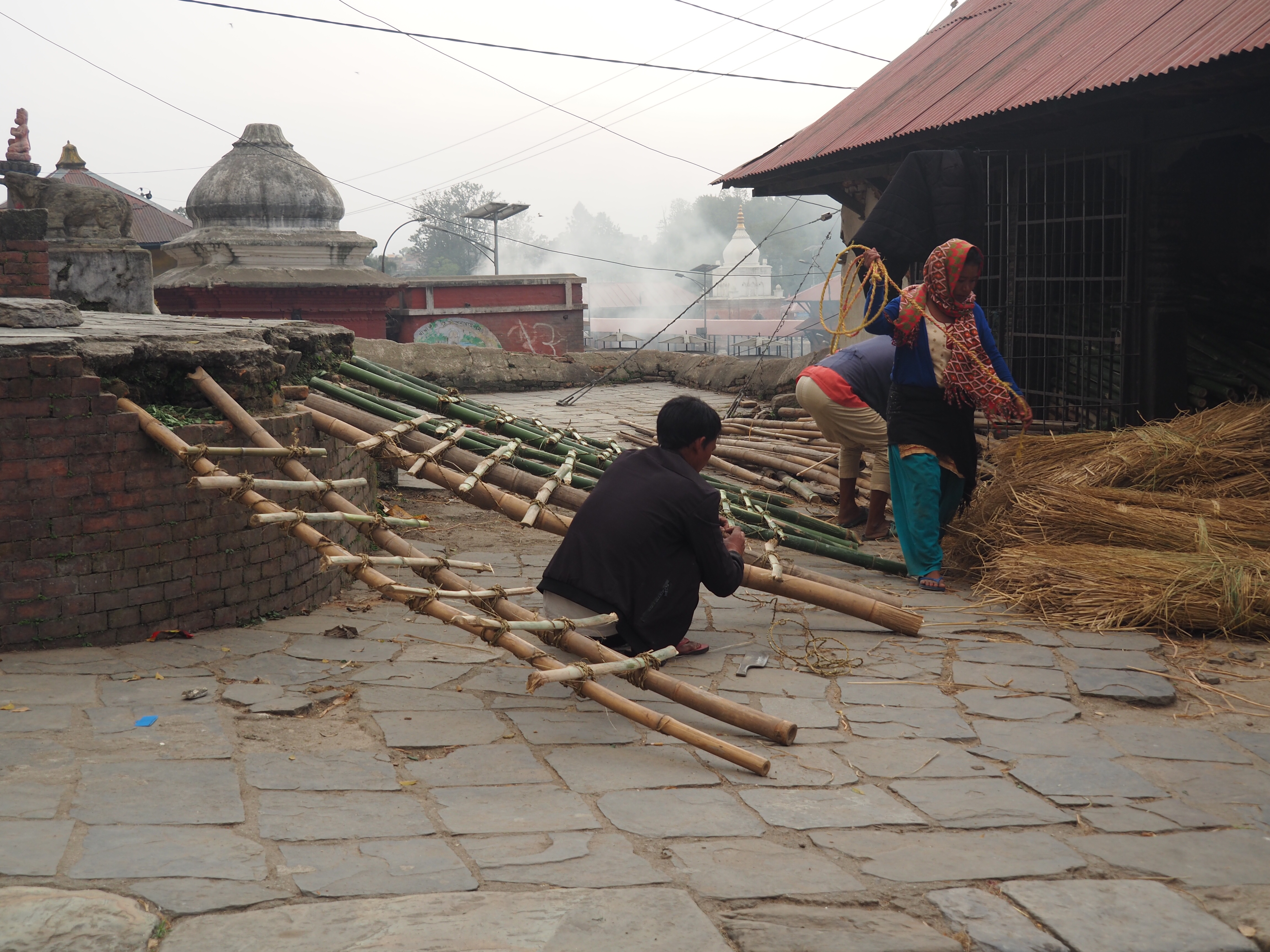
People preparing the bamboo planks for the bodies.
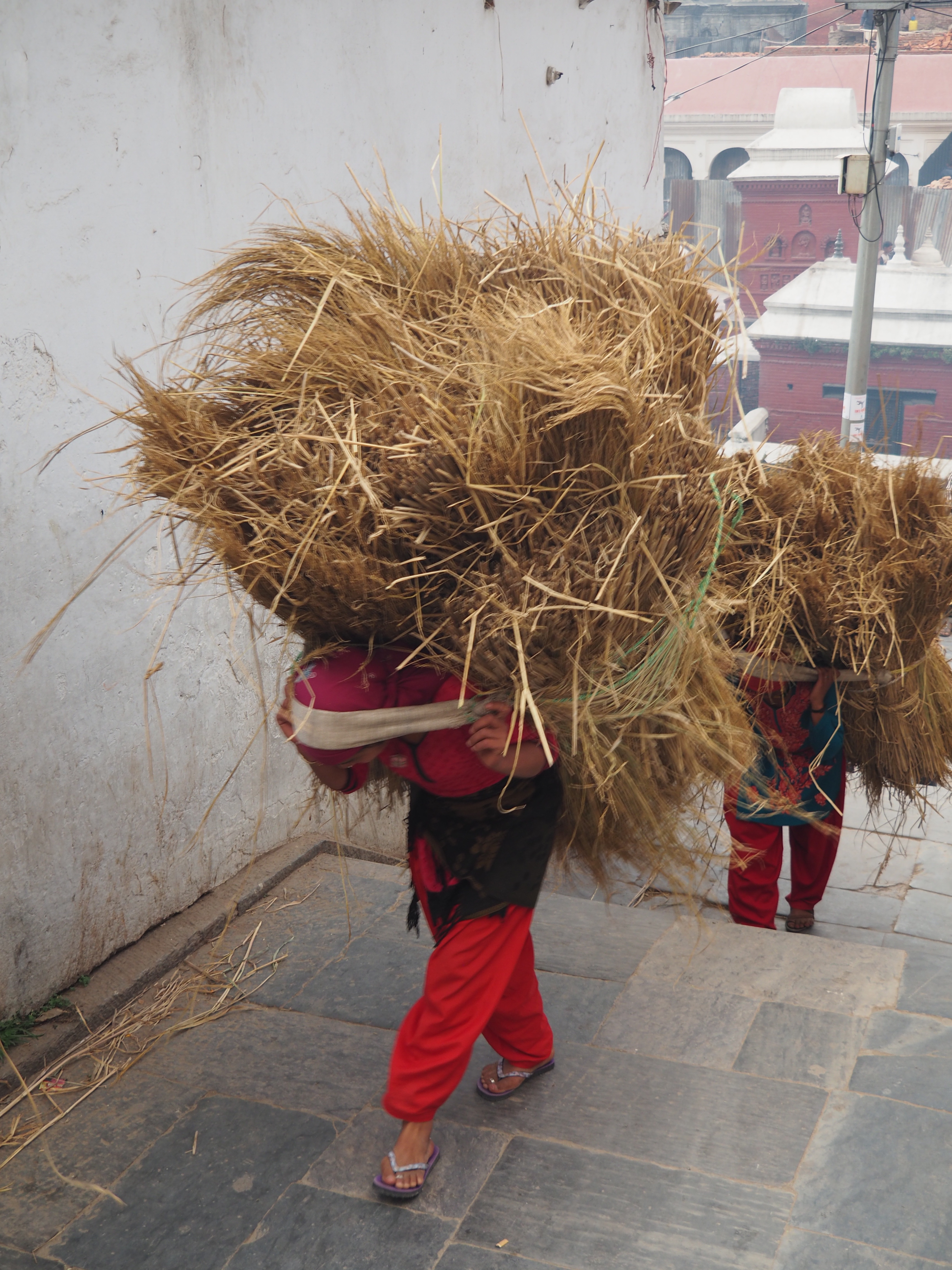
Women carrying straw that will be used in the cremations.

Here are a few more pictures from around the temple complex:

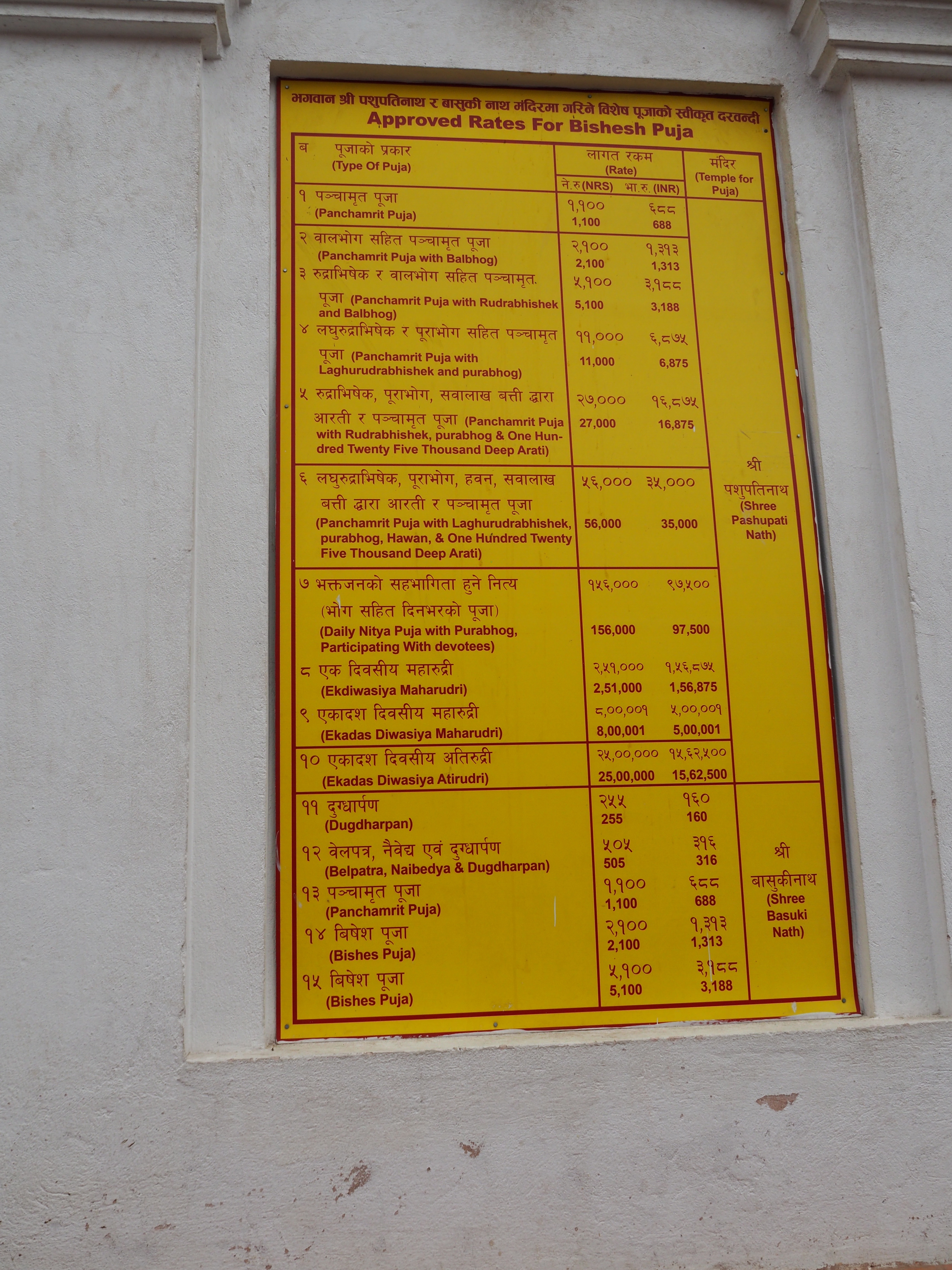
This is the price list for the various services and offerings one can get. This temple is the richest in the country. Their land includes the area where the airport sits…they collect rent!
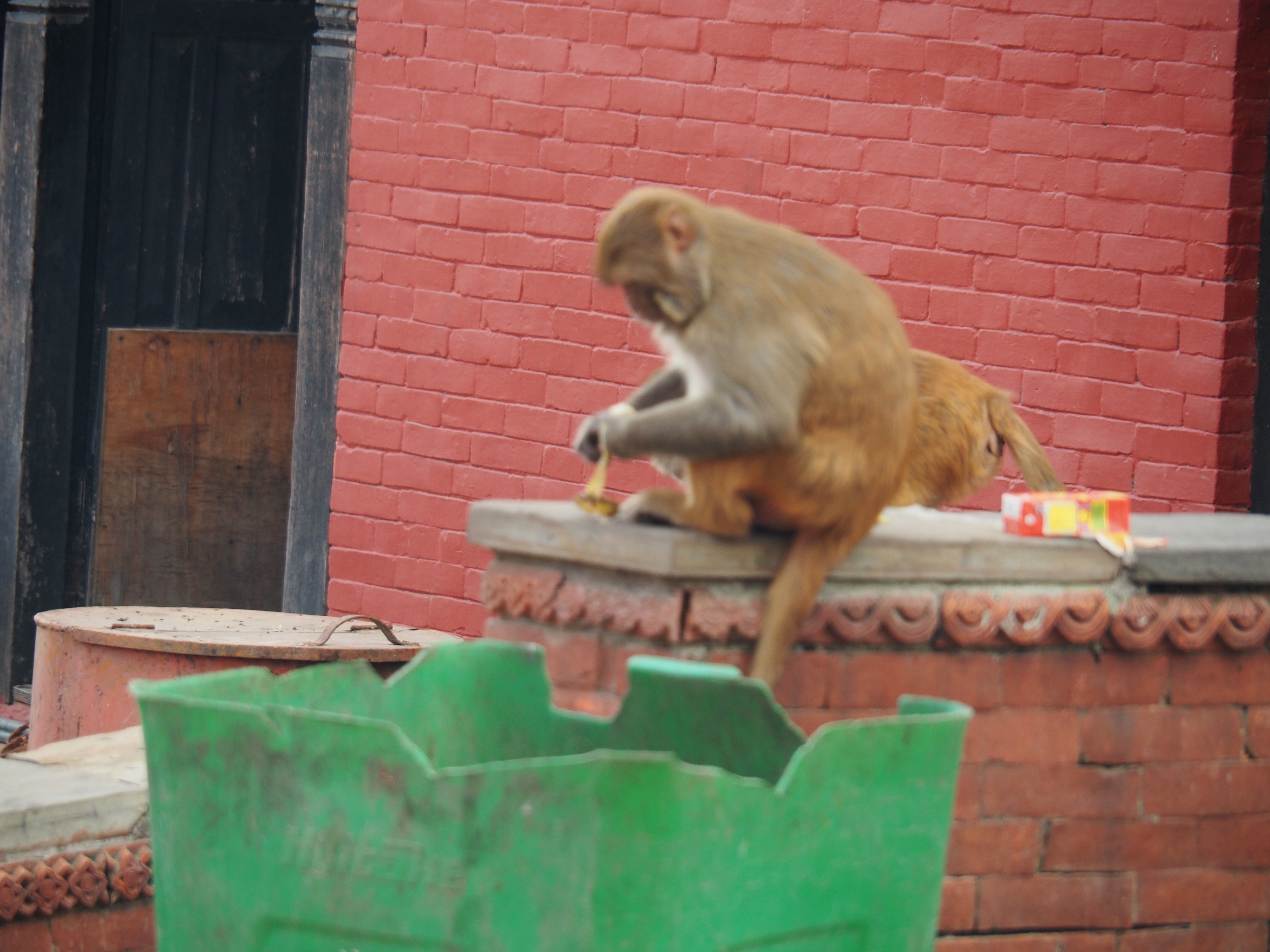
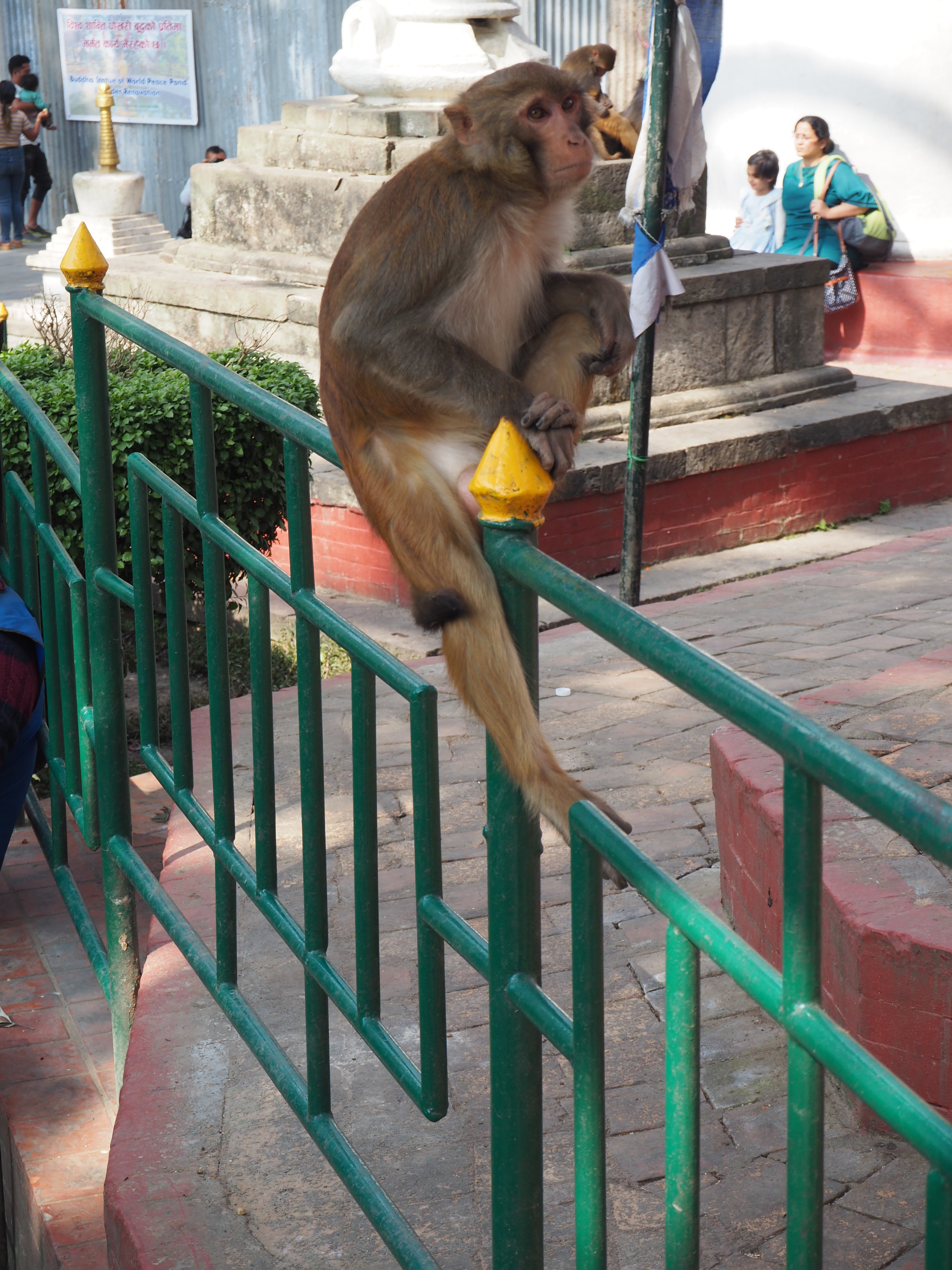
Lots of monkeys here too!
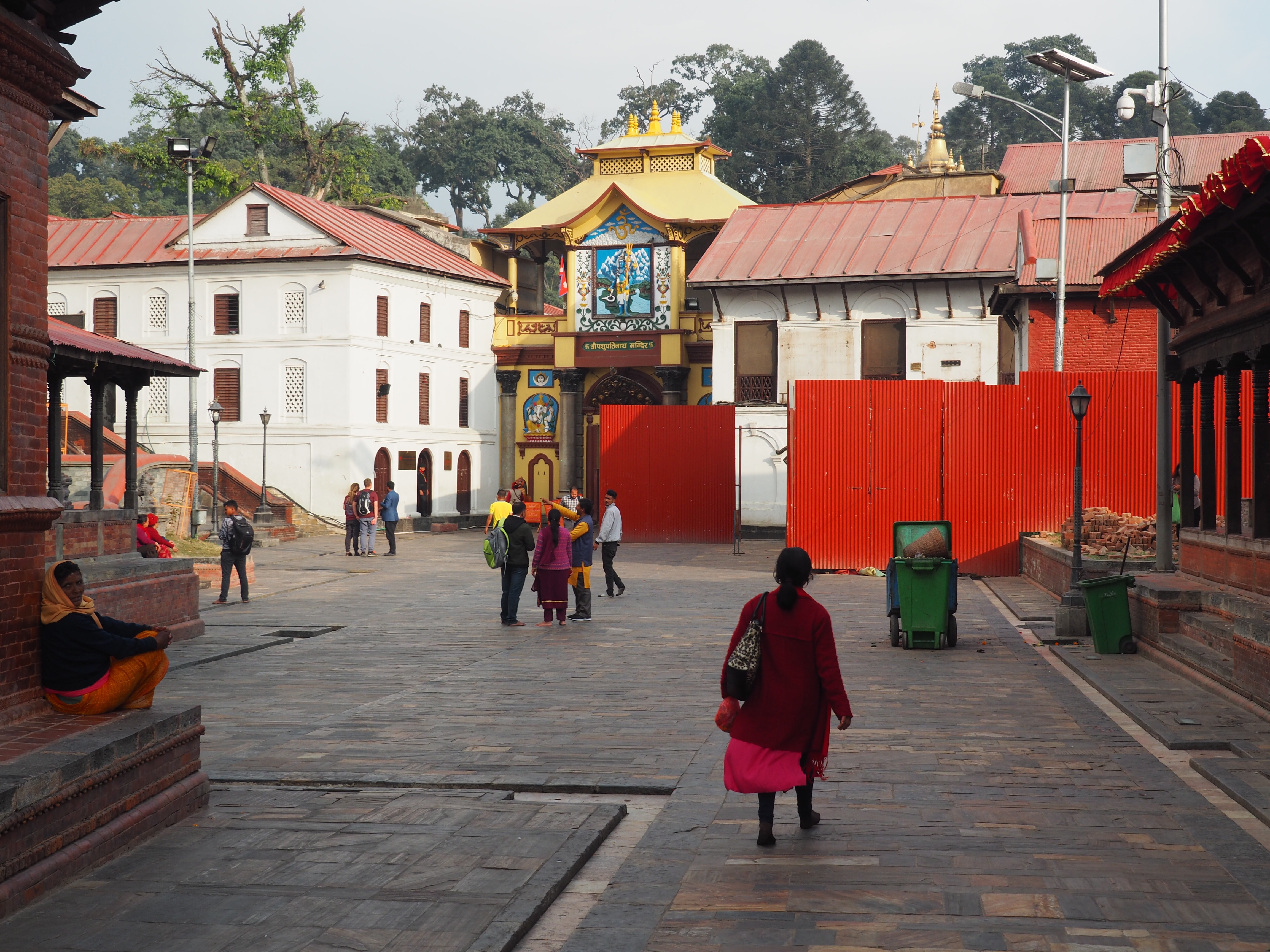
The golden area at the back is the actual temple.

Here are a few more things I learned today:

– The regular work week is Sunday through Thursday and a half day on Friday. Government hours are 10-5, but private business has longer hours.

– The average monthly salary is $200; these low wages are the reason that people leave. Traditional jobs are going away as technology changes the way of life.

– We have seen garlands of marigolds on many buildings all over. These are left over from the Dwvali festival.

– the earthquake caused severe devastation all over the area. Most people didn’t have insurance to cover the damages leaving them with property they are not able to to repair. As a result, many people have sold the land and moved out of the city.

It is not easy to get a driver’s license here. One must get an eye test, s blood test, a physical from a doctor, take a written test, take a verbal test, and take a driving test, A driver has to have insurance. The fee for a license is $50, in addition to playing for the various medical tests.

Well…. we finally made it back to the hotel a bit after five and we were all tired. We met in the hotel restaurant for dinner and then called it an early night. Fortunately, we have a leisurely morning because we don’t have to depart until noon, when we will go to the airport for our flight to Bhutan!

Kathmandu

November 4, 2019

Since you have changed time at home, we are now eleven hours and 45 minutes ahead of St. Louis.

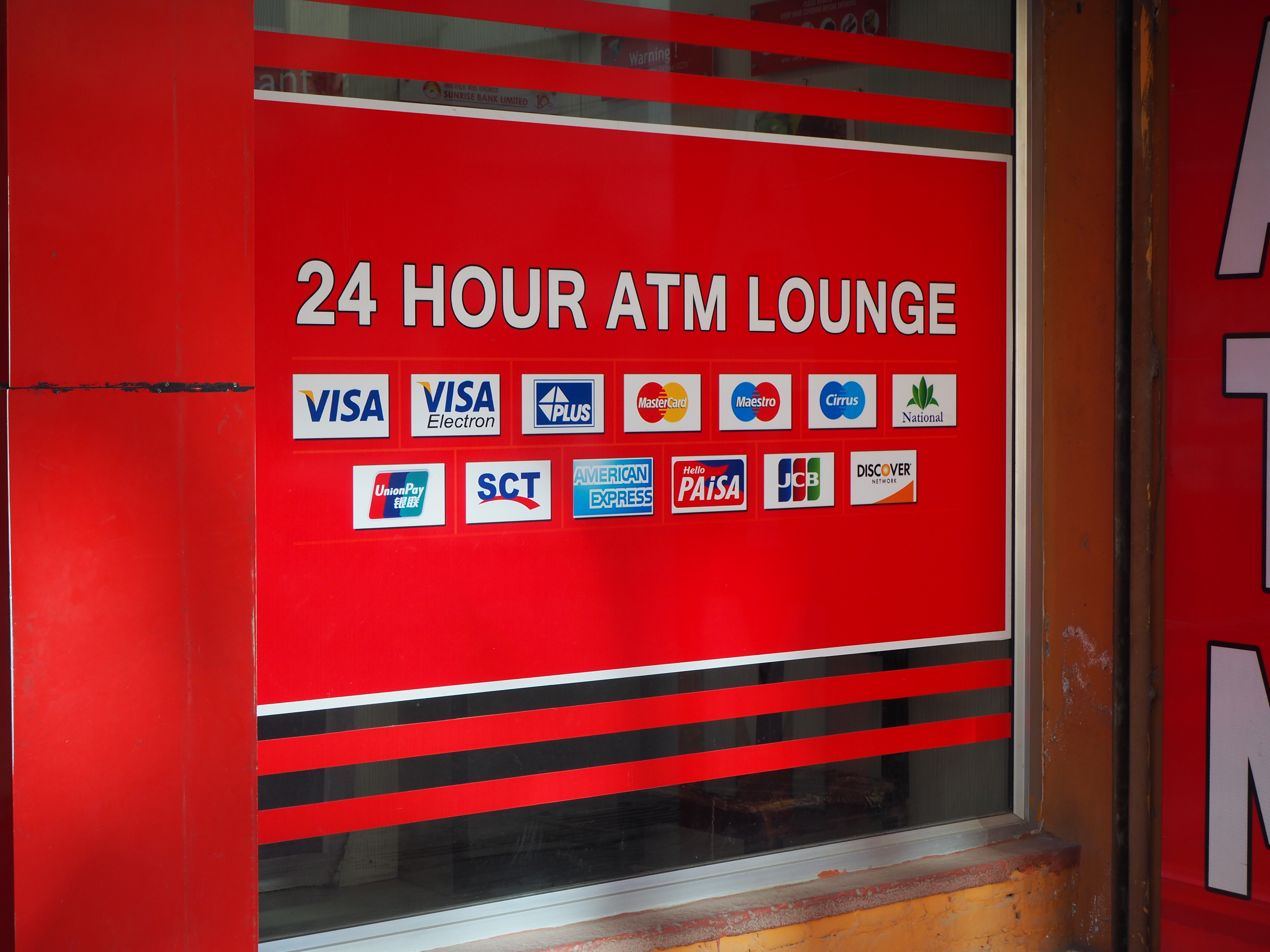
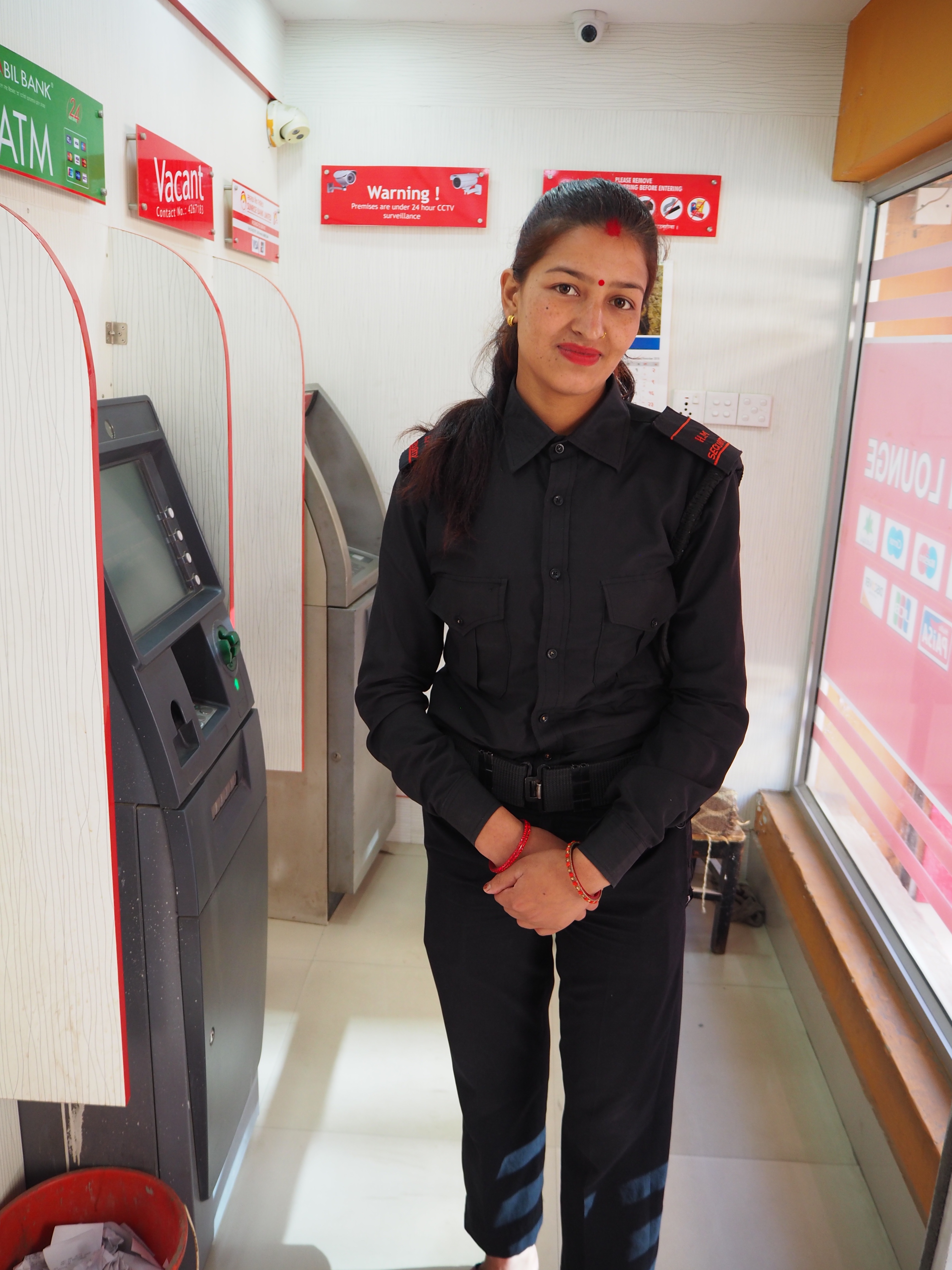
Before heading out for the day, I made a visit to the ATM Lounge down the street from our hotel. There were about seven machines that I could use choose from, as well as a very kind woman who helped me.

The “lounge” attendant/guard.

Today was our first day of sightseeing and we spent it in Kathmandu. Let me begin with a bit of general information. Nepal has a population of about 30 million, with Kathmandu having about 3 million people. About 80 percent of the population is Hindu, about ten percent are Buddhist and about 5 percent are Muslim.

We were met at 9:30 by our guide, Suman, and our driver, Deepak. Our first stop was at Durbar Square. Durbar means palace and this is the area where the kings were crowned and from where they ruled. The area dates from the 16th/17th centuries This part of the city suffered serious damage during the 2015 earthquake making our visit as much a tour of restoration projects as anything. I would say that “square” isn’t a very good description, while there is an actual square, it is really better described as an historical section of the city. The area is filled with temples, each is dedicated to a different god.

Many countries are assisting with the restoration of the buildings in the square. China’s presence was quite notable.

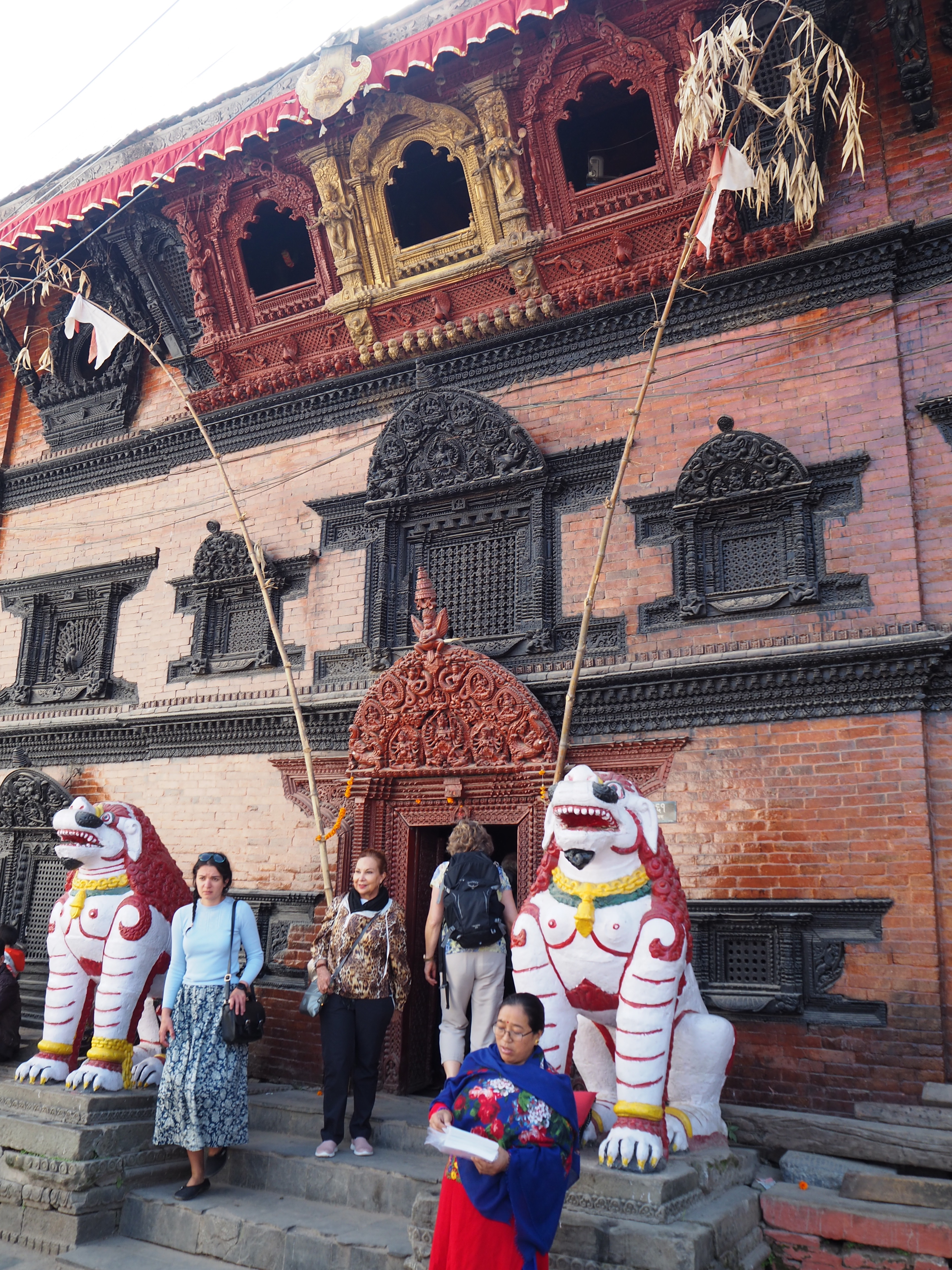
One of our stops was at the Kumari Palace, home of Nepal’s living goddess. The Kumari is a girl who is selected to fill the role and serves from about age 3 or 4 until puberty. She must have black hair and black eyes and there is quite a process to choose her. She shows her face periodically for the tourists and she did appear for us, but we were not allowed to photograph her. She only goes outside the palace to participate in festivals. She is cared for by nannies, she has tutors for her education, and priests and her family visit.

Entrance to the Kumari Palace
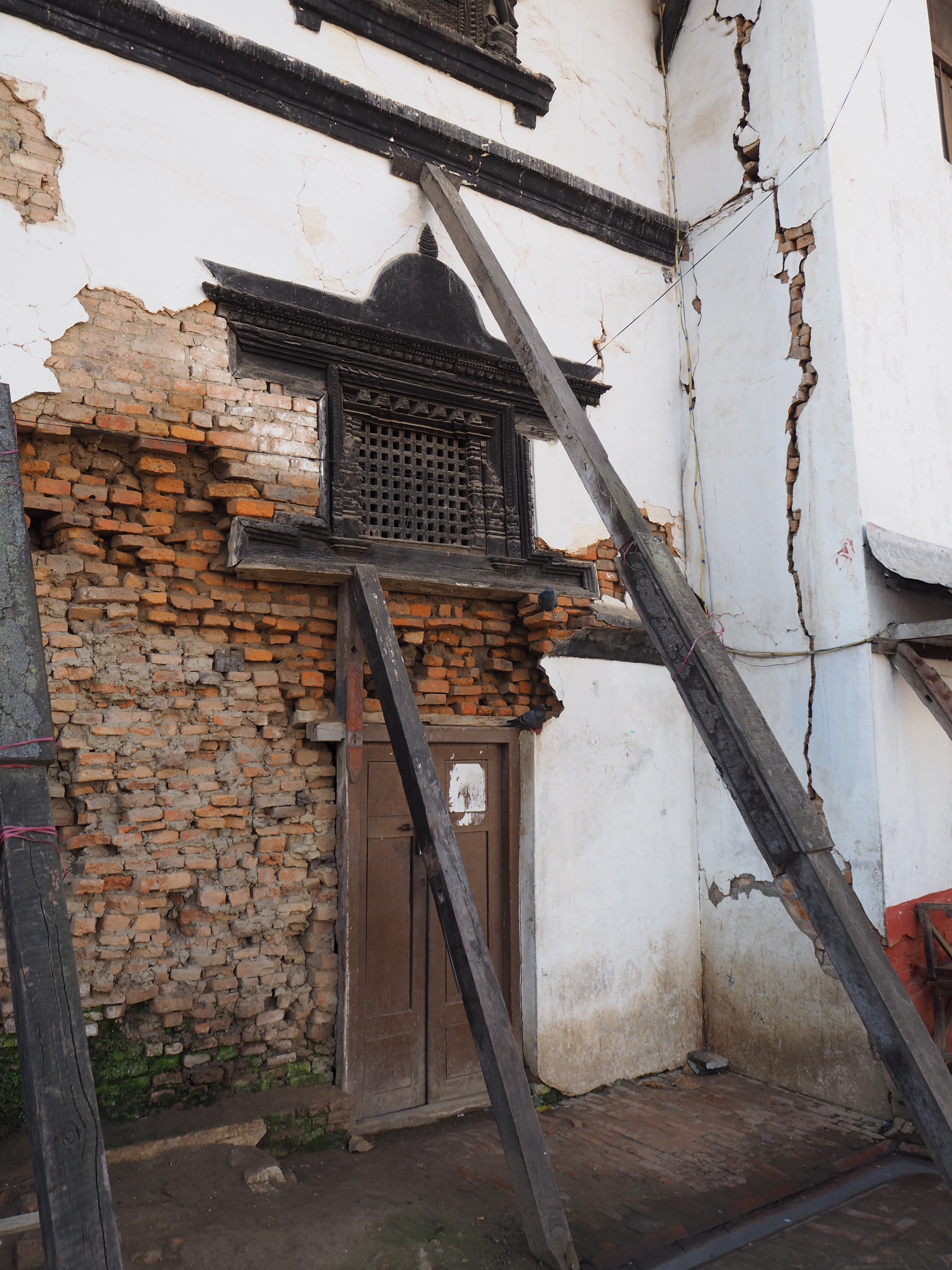
This building is being held up by the supports, you will notice the cracks in the structure to the right.

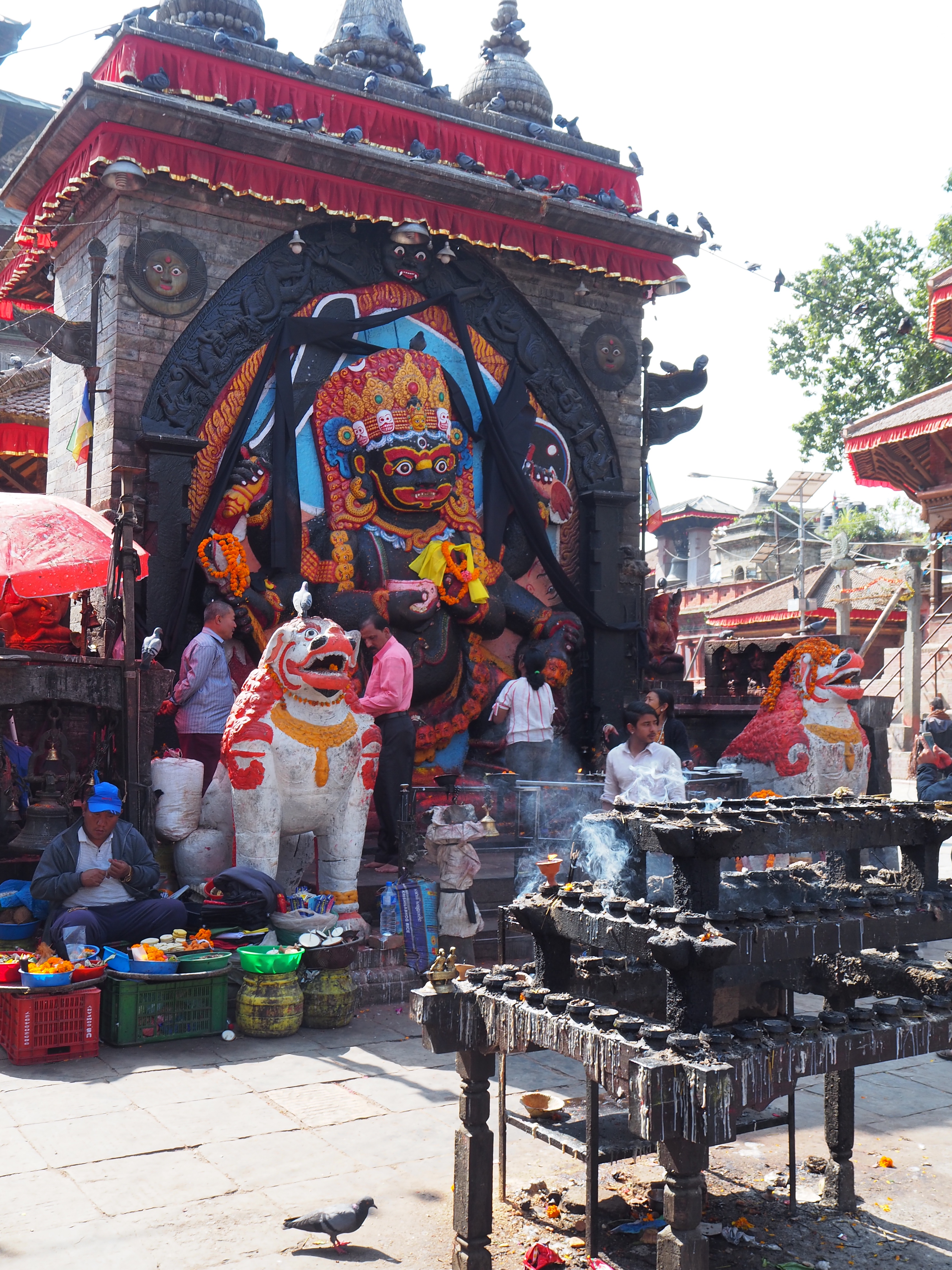
This is the Black Bhairab. It was carved from one piece of stone, it represents a very fearsome shiva (a deity).
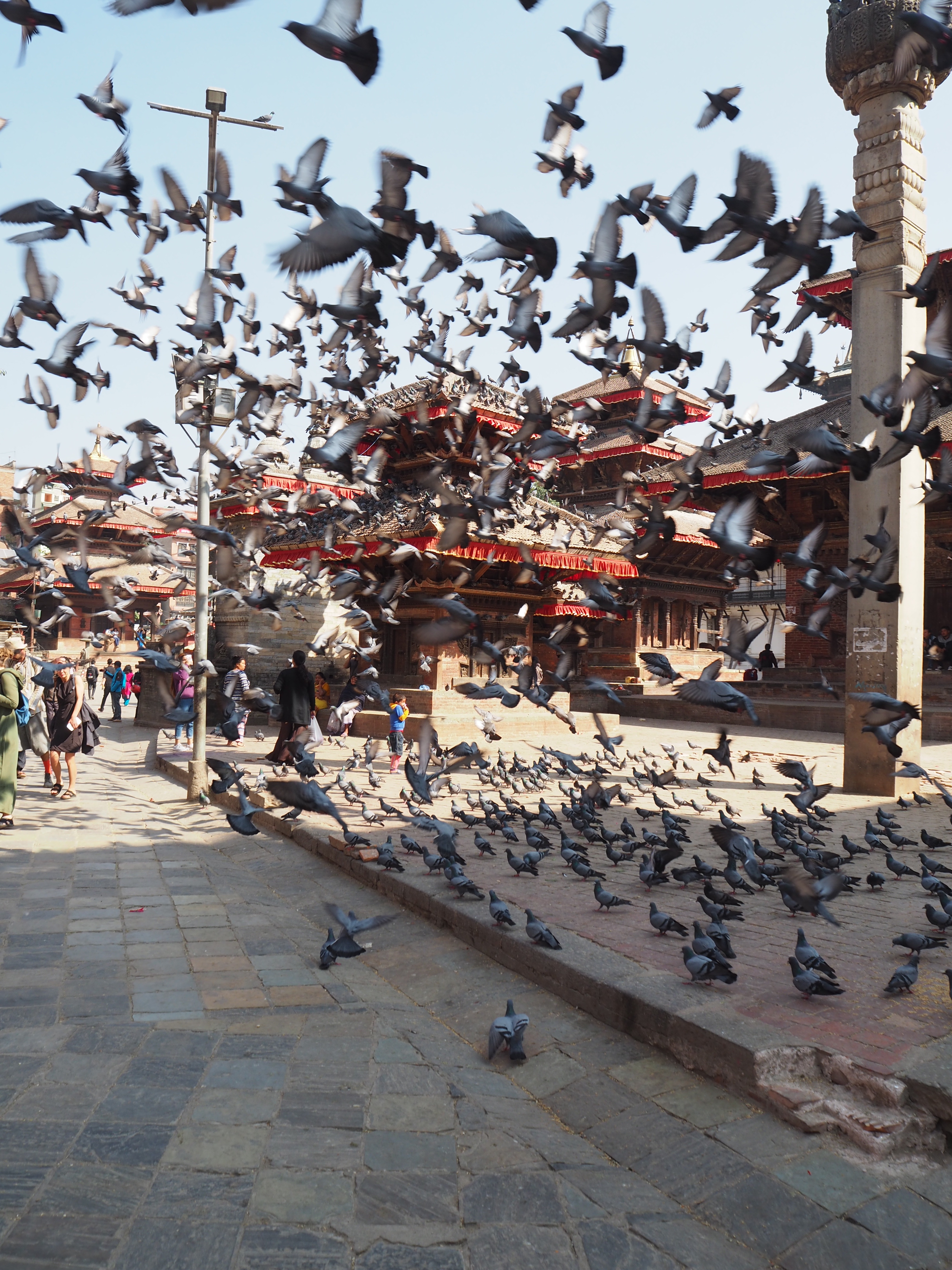
Pigeons in the main square
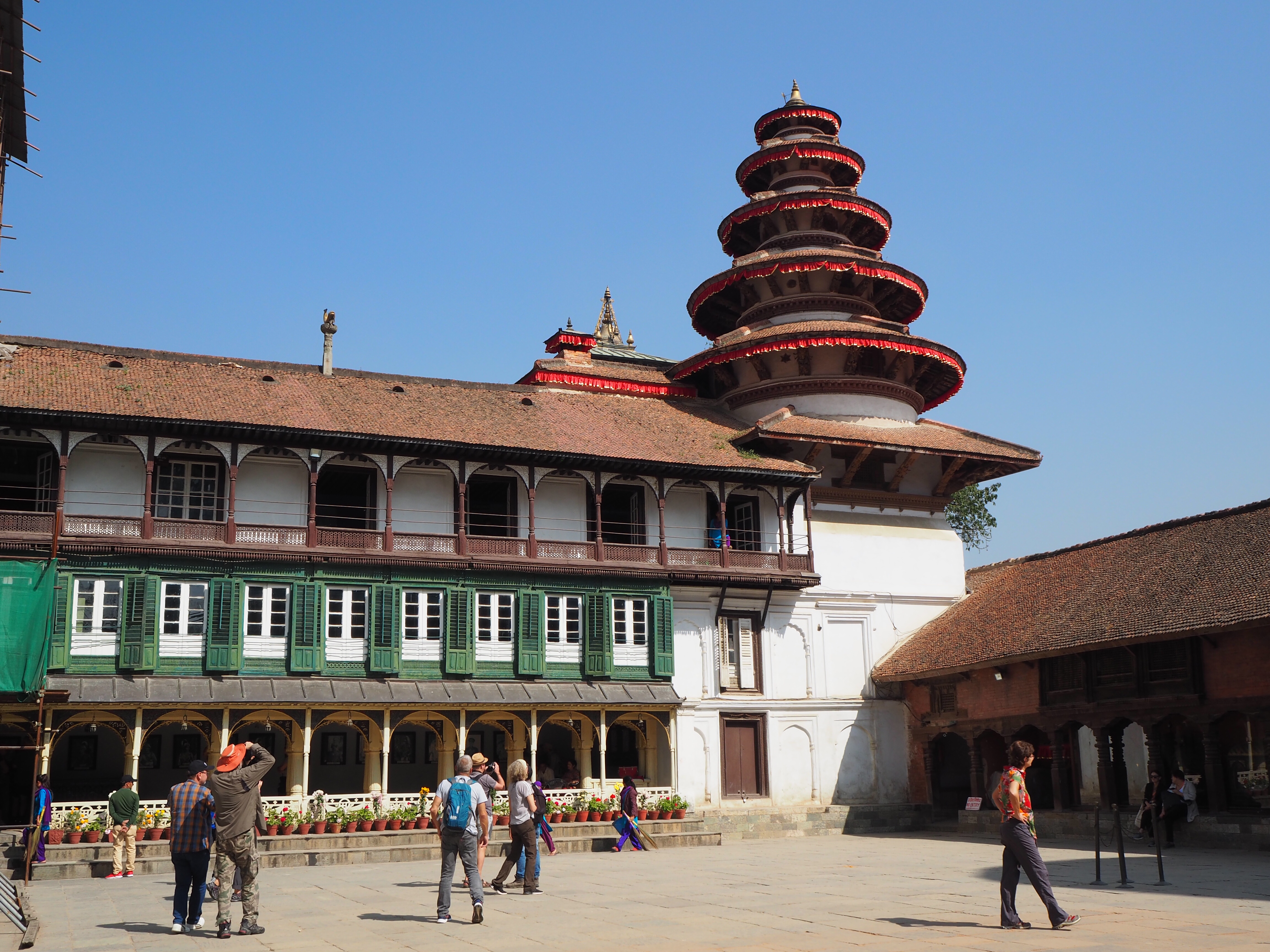
Courtyard of Hanuman Dhoka, the royal place
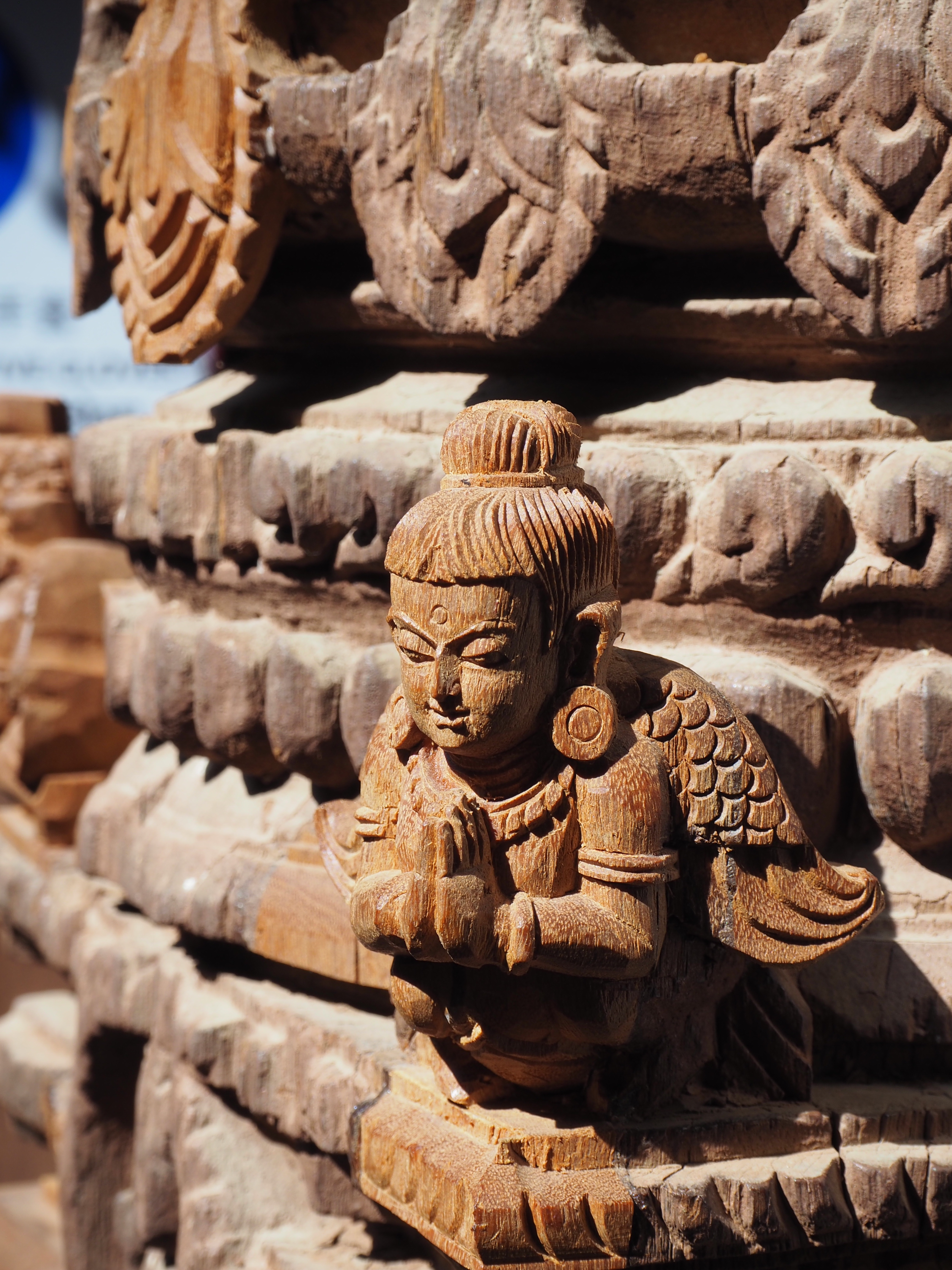
Carvings that have been restored, you can see the new pieces that are a brighter color.
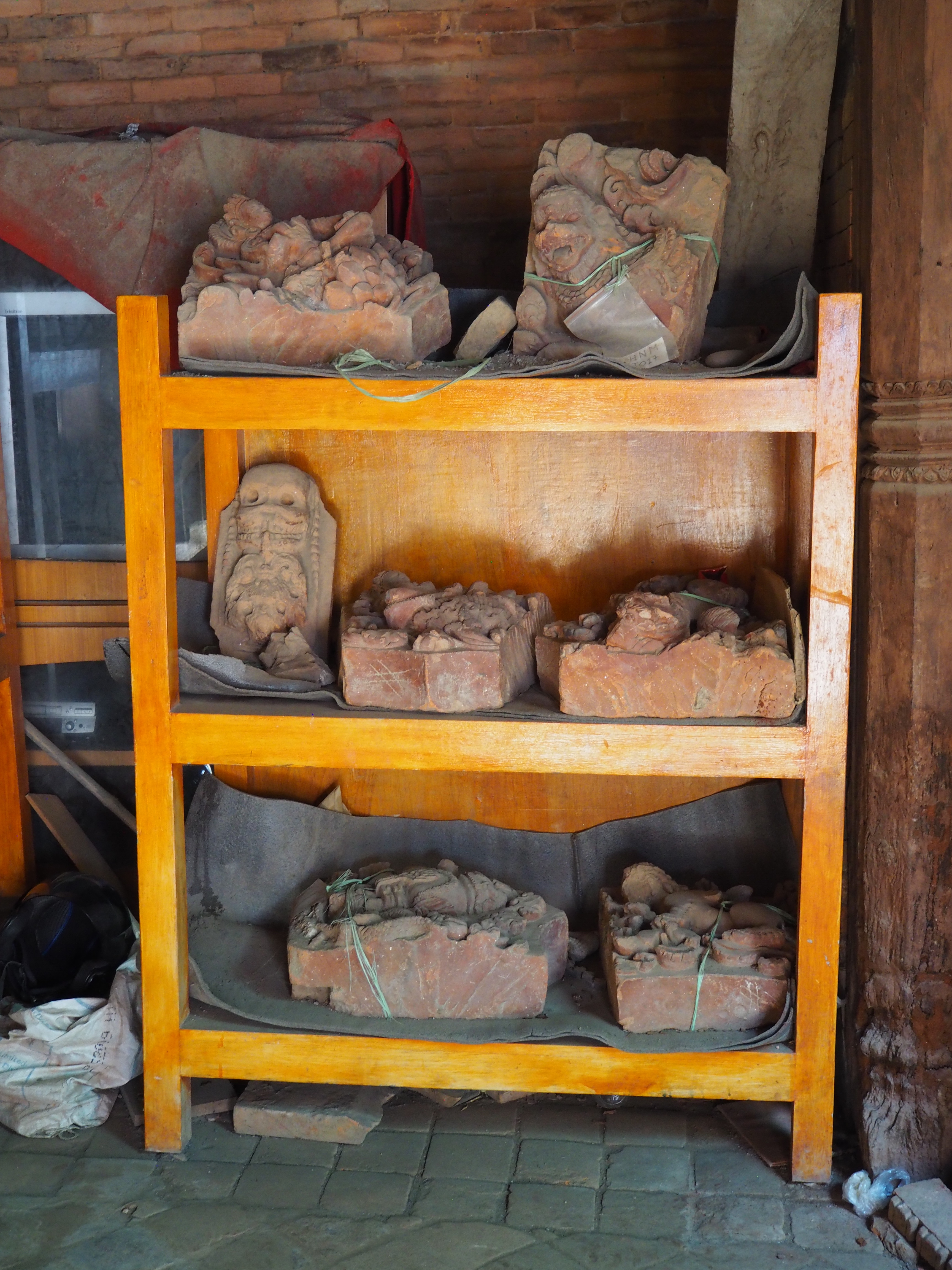
Pieces from the buildings that will be used in the restoration

Suman shared some interesting information about the country:

-Farming here is changing quite rapidly. What used to be family farms are becoming more commercialized. Greenhouses have been built. He mentioned that they grow tomatoes, spinach, and mushrooms to name a few.

-Many people are leaving the country and moving to the Middle East to get jobs. Those people send $8-9 billion in remittances back to Nepal each year.

-There has been great western influence in the country and the culture is changing.

-Housing is expensive. It is possible to spend about $150,000 to get an apartment in a suburban area but the average cost for one is about $200,000. In the city it can cost several million. Rental apartments are becoming more common as real estate investors buy property.

-Life expectancy in the rural areas is 58-59 years and in the city is is 70-75. This difference is due primarily to better medical care in the urban areas. Basic medical care is provided by the government but people who can afford it pay extra for better care. The hospitals are required to give 10 percent of their care to the poor.

-The Kathmandu Valley is over populated and water is becoming a big issue here.

-Nepal was never occupied and never colonized by another country. It does sit in a very strategic area even though it is landlocked.

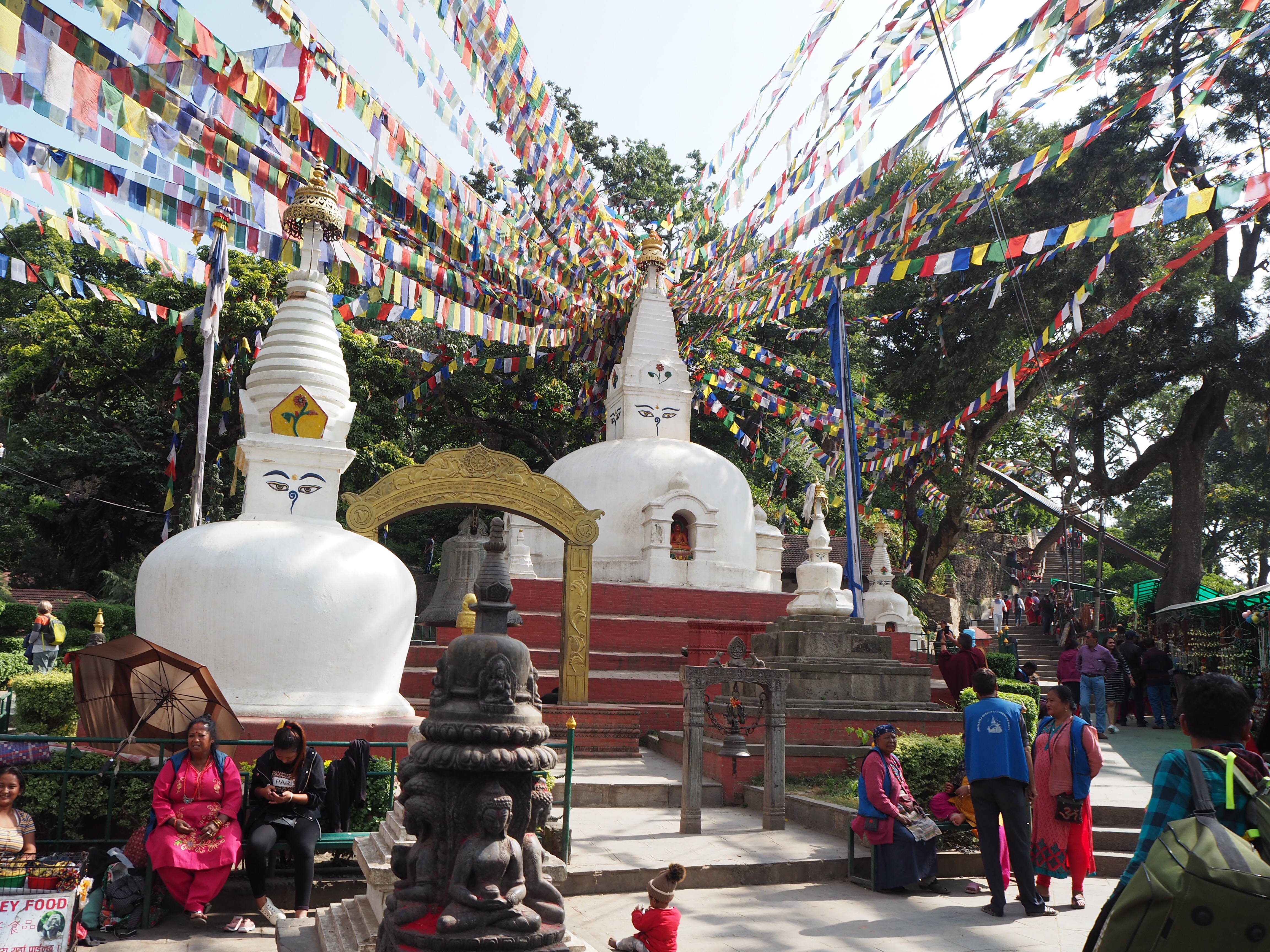
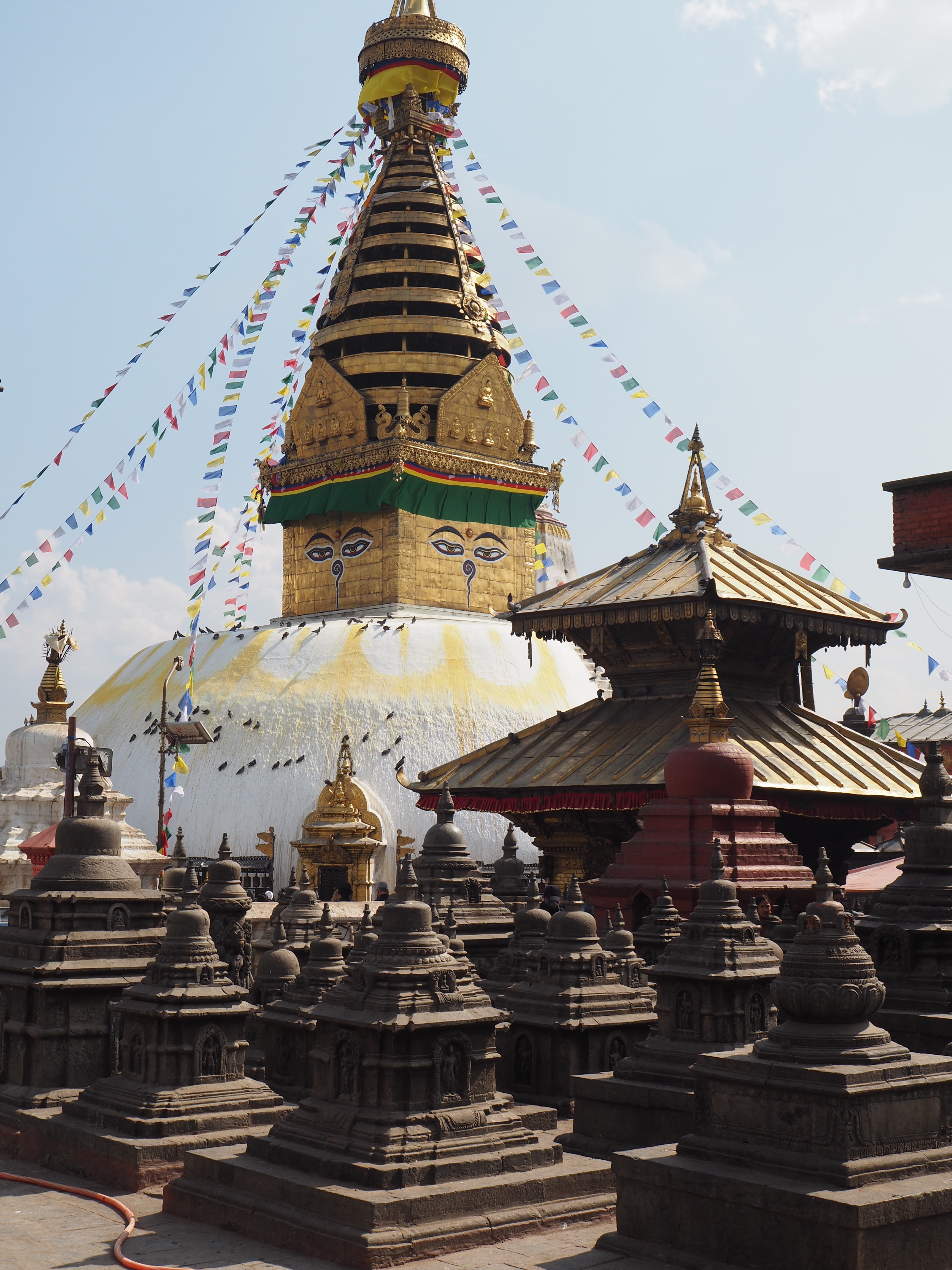
Our second stop was Swayambhunath , better known as the “monkey temple”; we did see a number of monkeys in the area. It is one of the most revered sites in Nepalese Buddhism and sits on a hill overlooking the valley. The four sides of the stupa have the eyes of Buddha on them.

Entrance to the site. The flags are prayer flags…you wired a pray on them and then hoist the flag. The wind carries the prayers.
The main stupa.
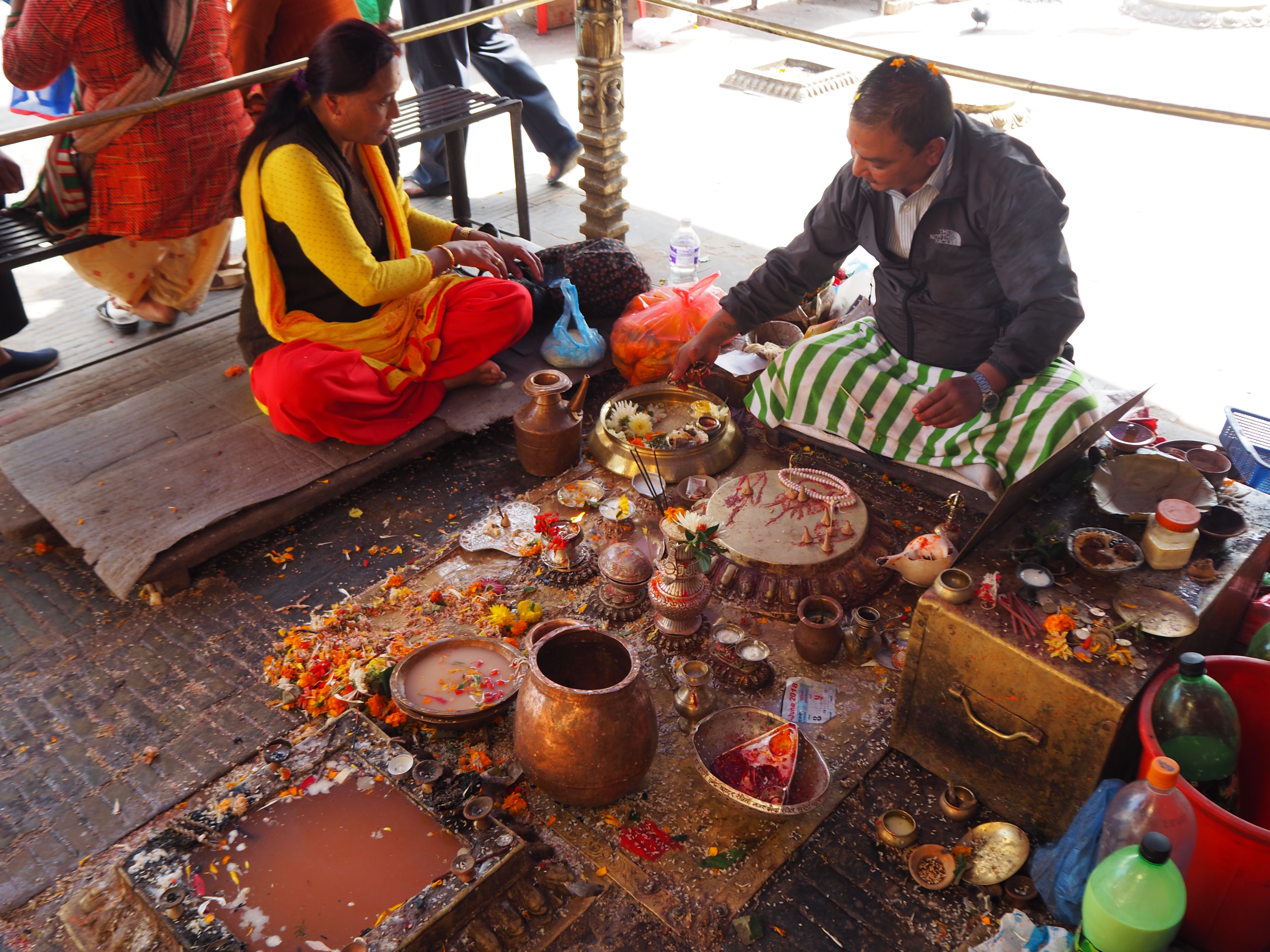
Priest offering a blessing to this woman. It costs about $100 to have the priest do this sort of blessing.
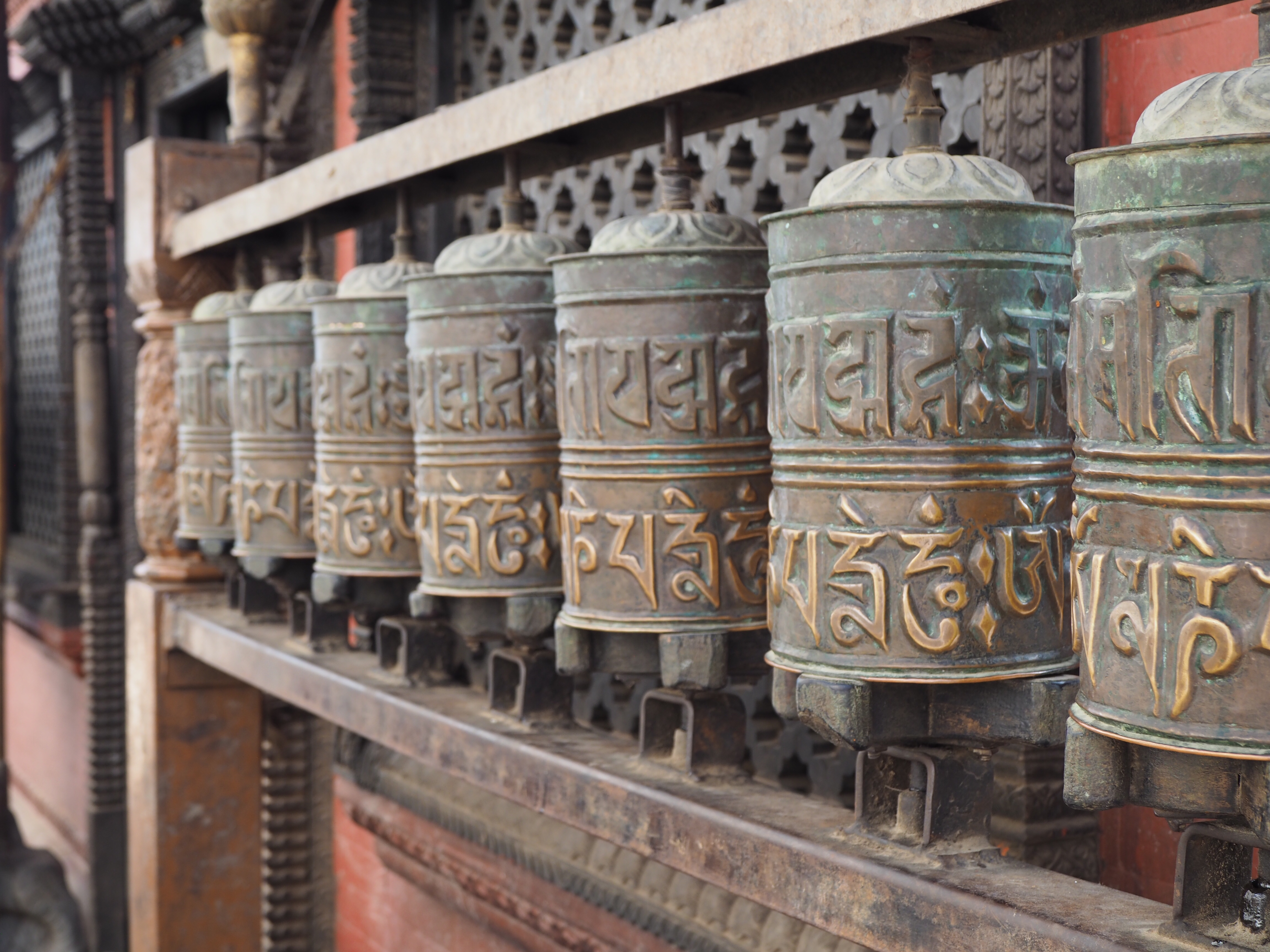
Prayer wheels

Other things we saw along the way:

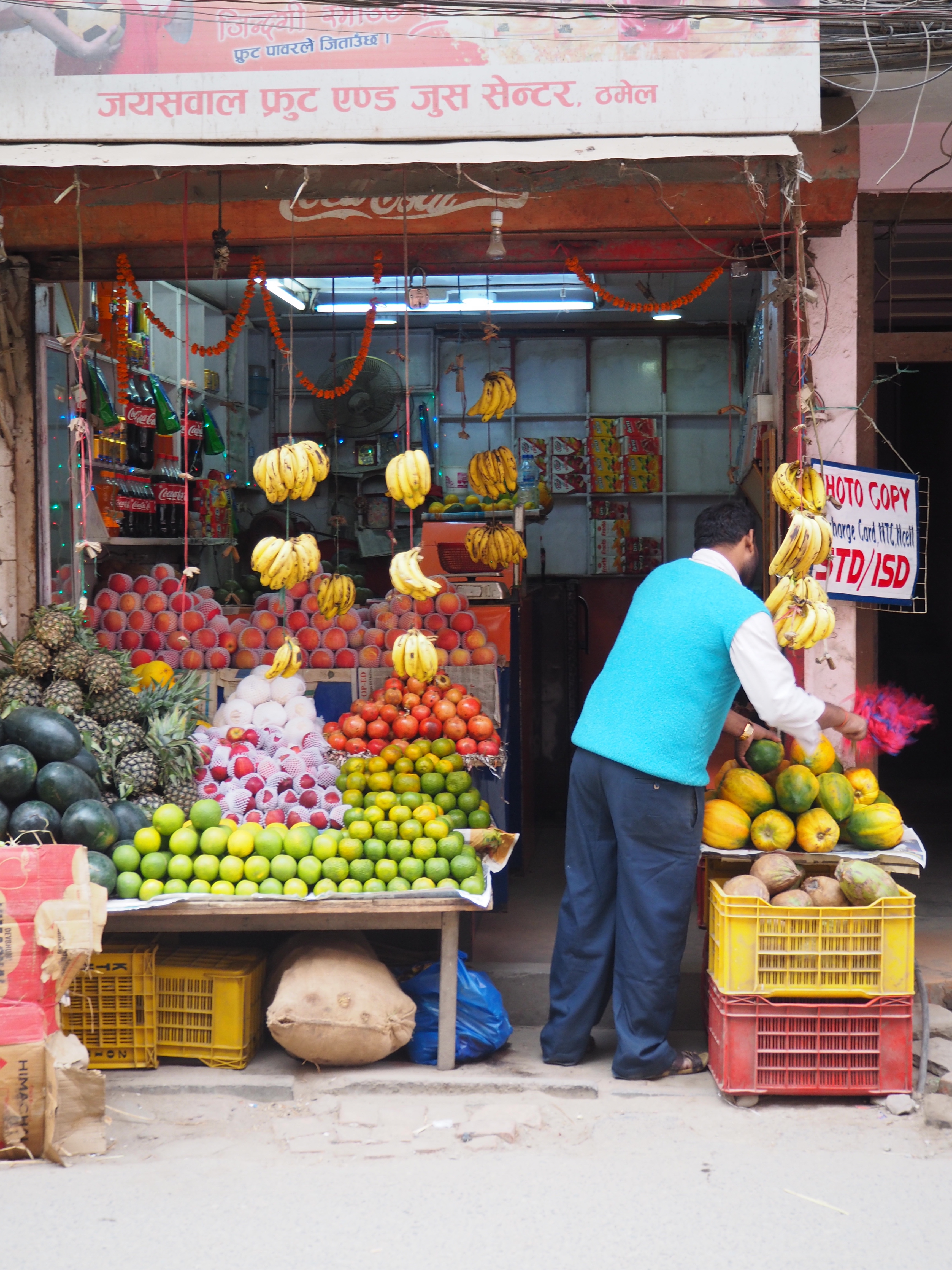
A general store
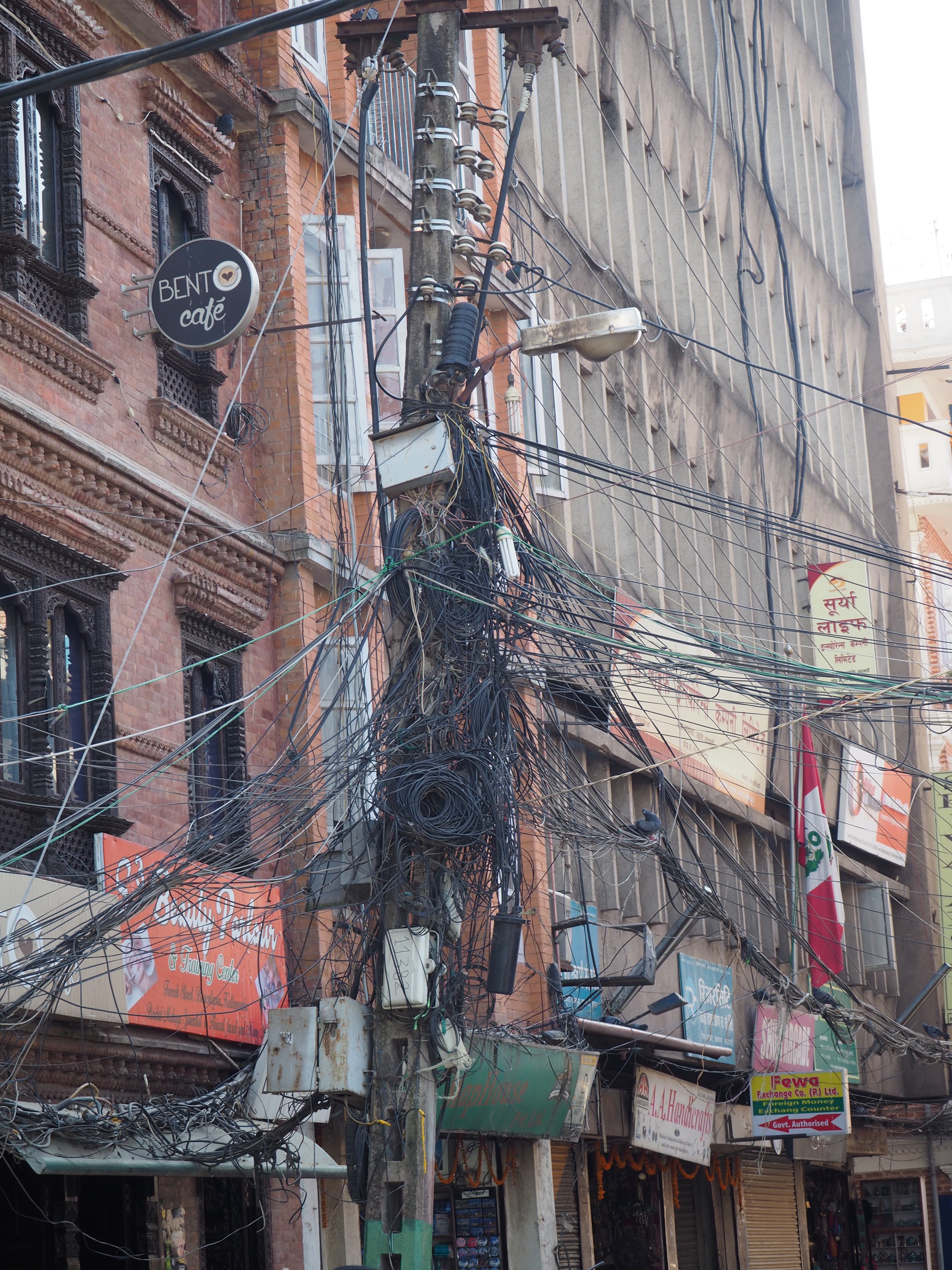
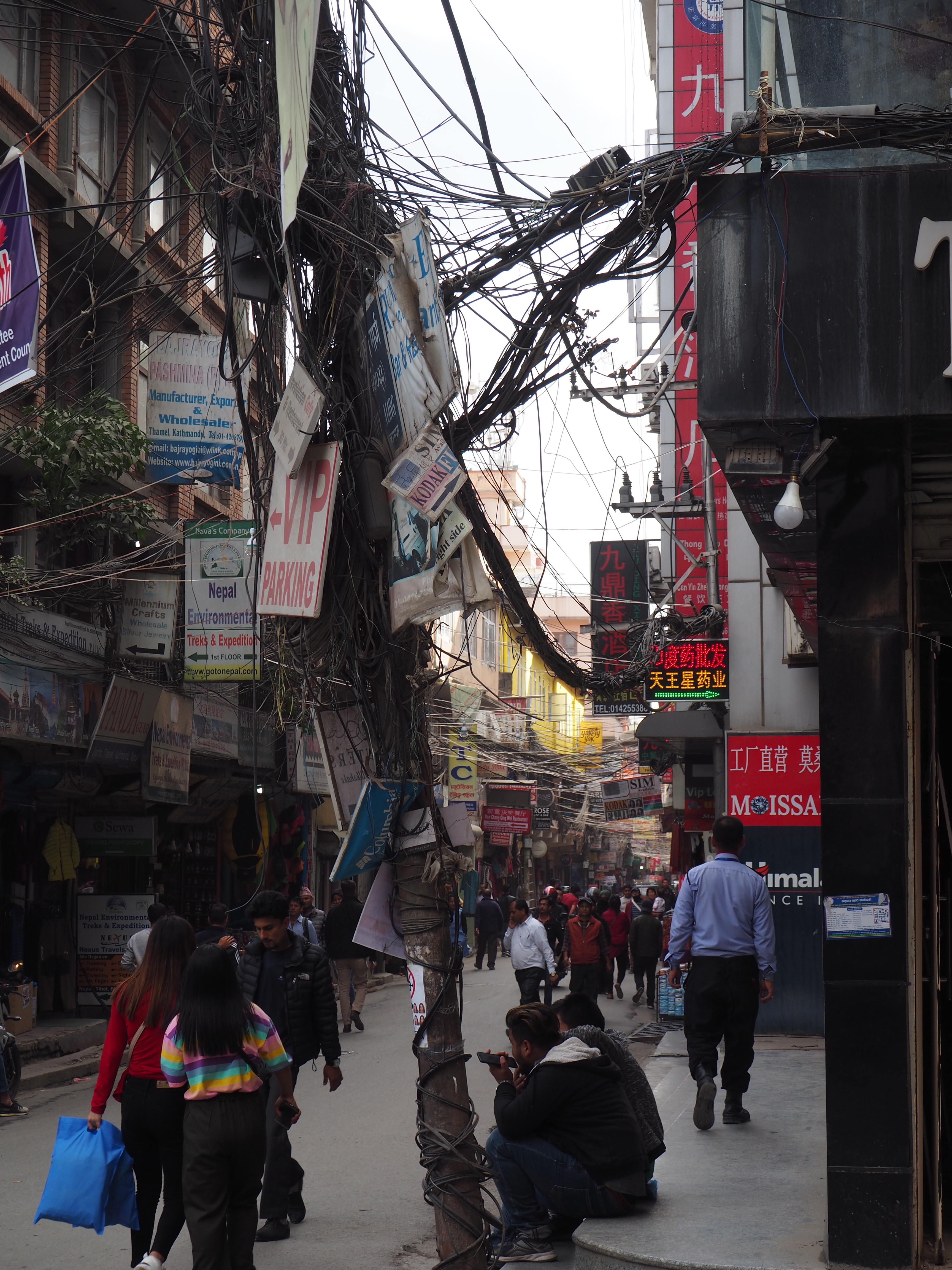
We see wiring like this everywhere!

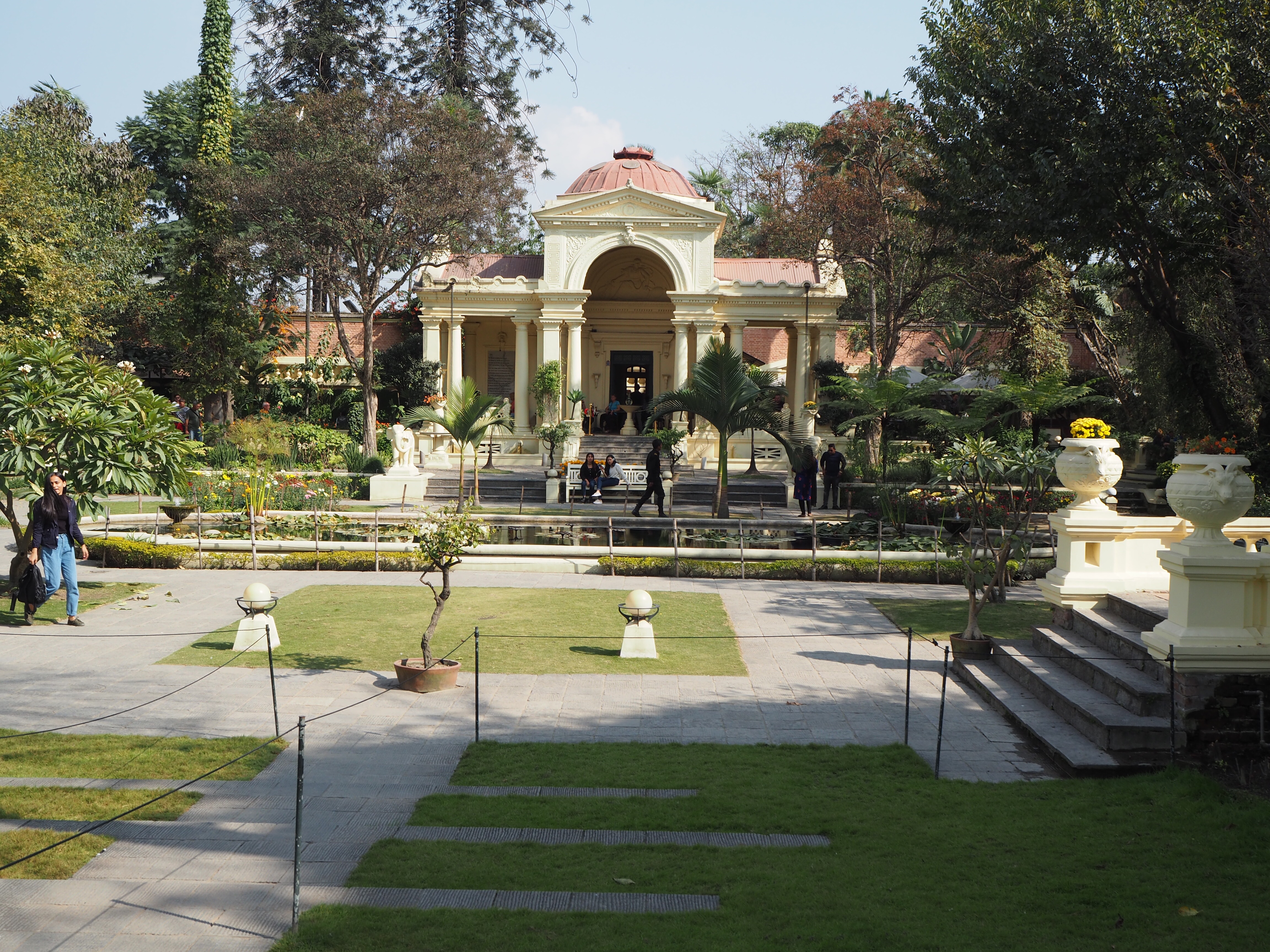
We left Suman and our driver early in the afternoon. We asked to be dropped off in the Thamel section of town, which is where there are many shops and restaurants. I have to say that it seemed to me to be a giant market. I’m glad I saw it, but don’t feel a need to go back. We did have a nice lunch in the “Garden of Dreams”, a lovely garden area right in the middle of town.

The Garden of Dreams
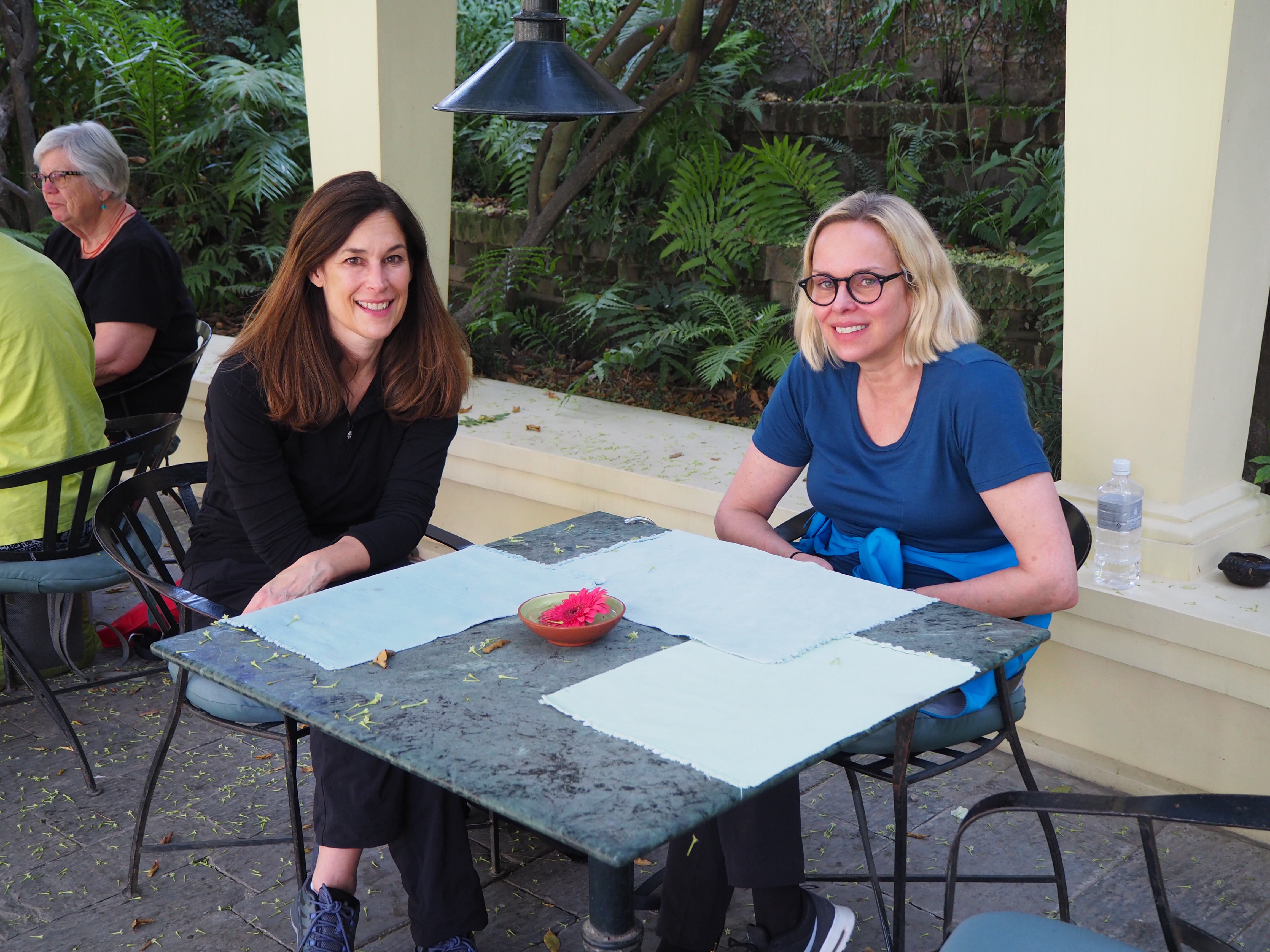
Kathy and Maryse

After wandering through a bit of the area, we made our way by taxi back to the hotel. The traffic is really insane. They drive on the left hand side of the road here. At one point, our driver simply pulled to the other side of the street and drove against traffic.

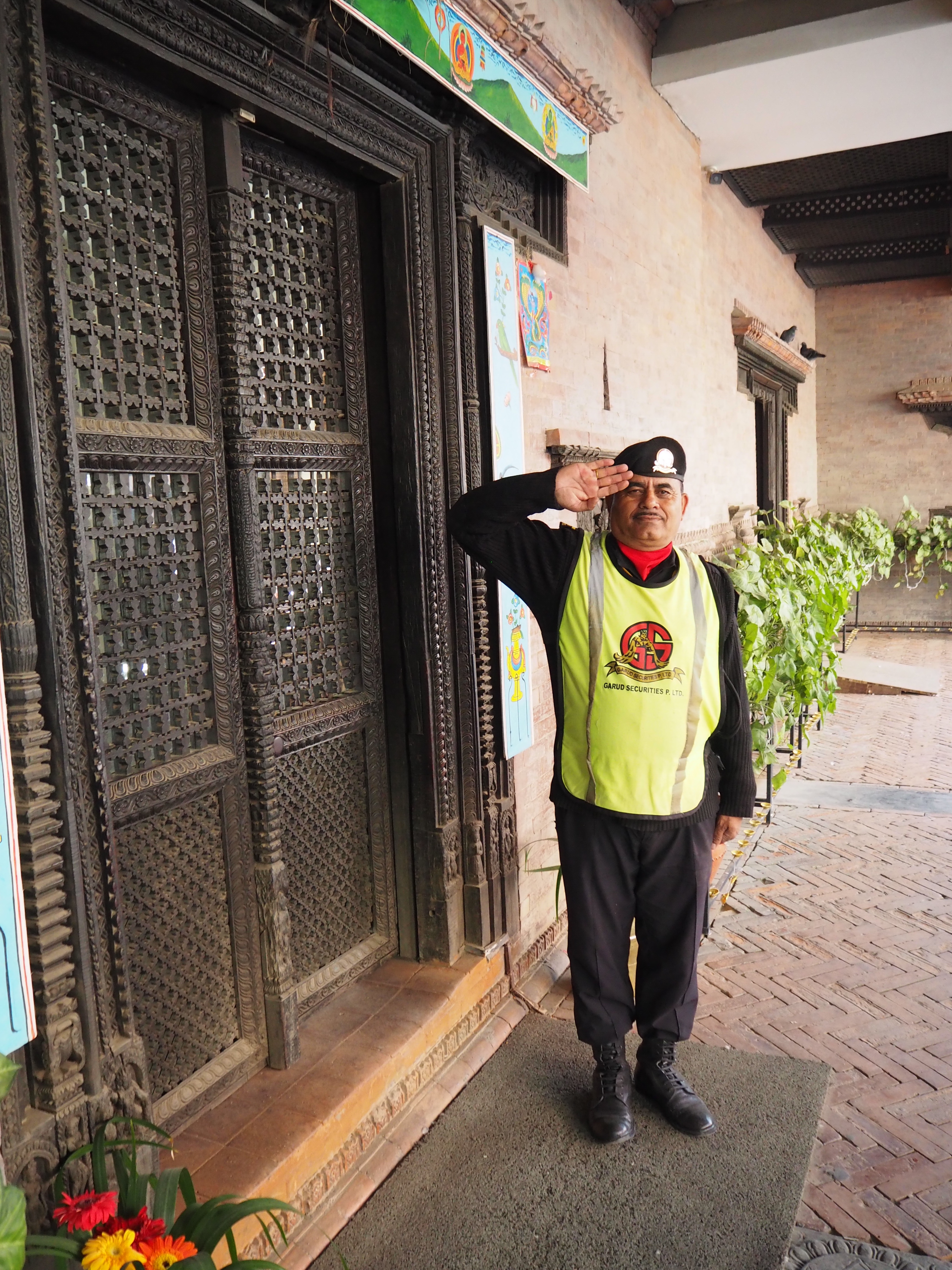
When we arrived back at the hotel, we were greeted by this man who salutes whenever people enter!

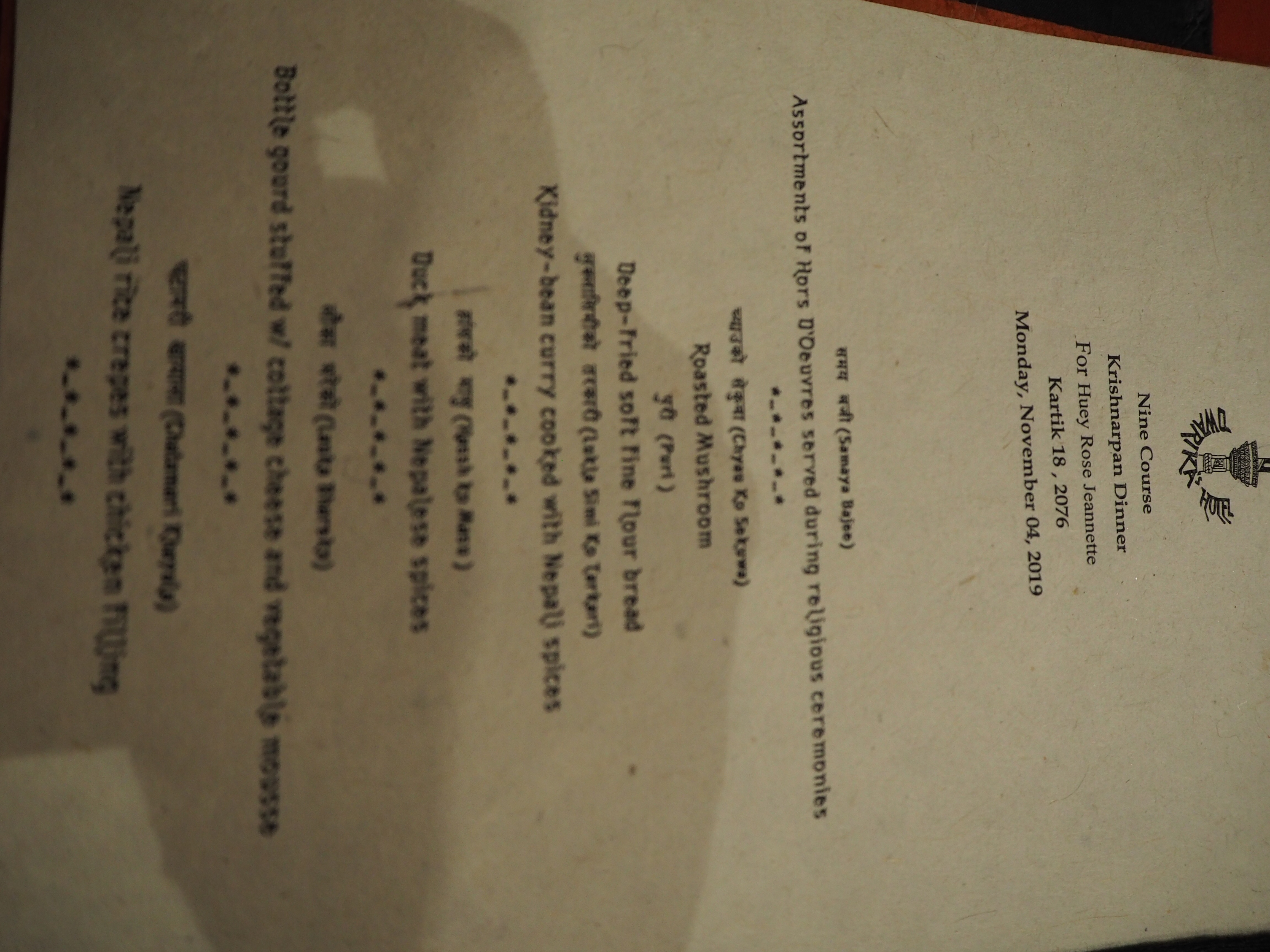
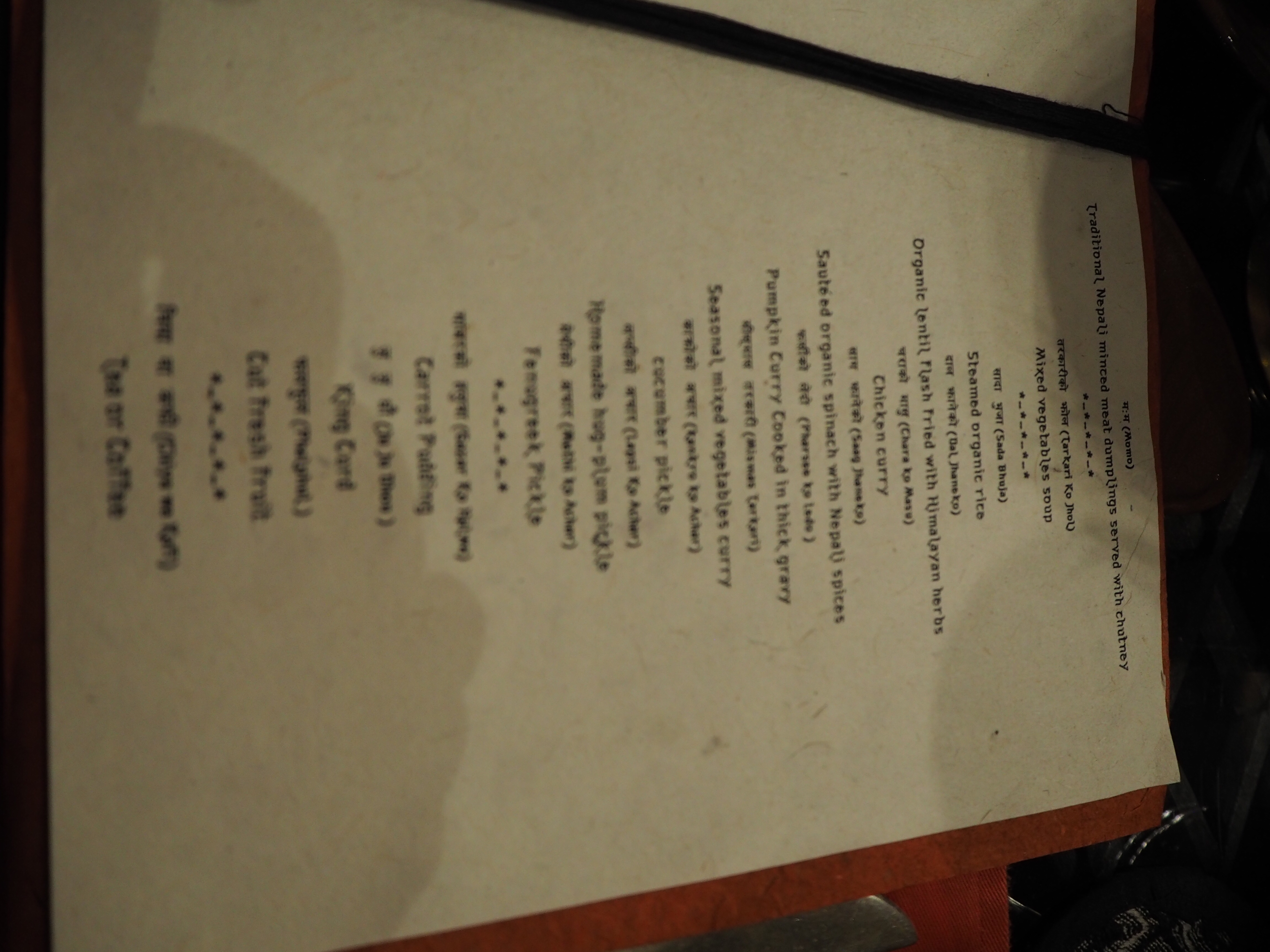
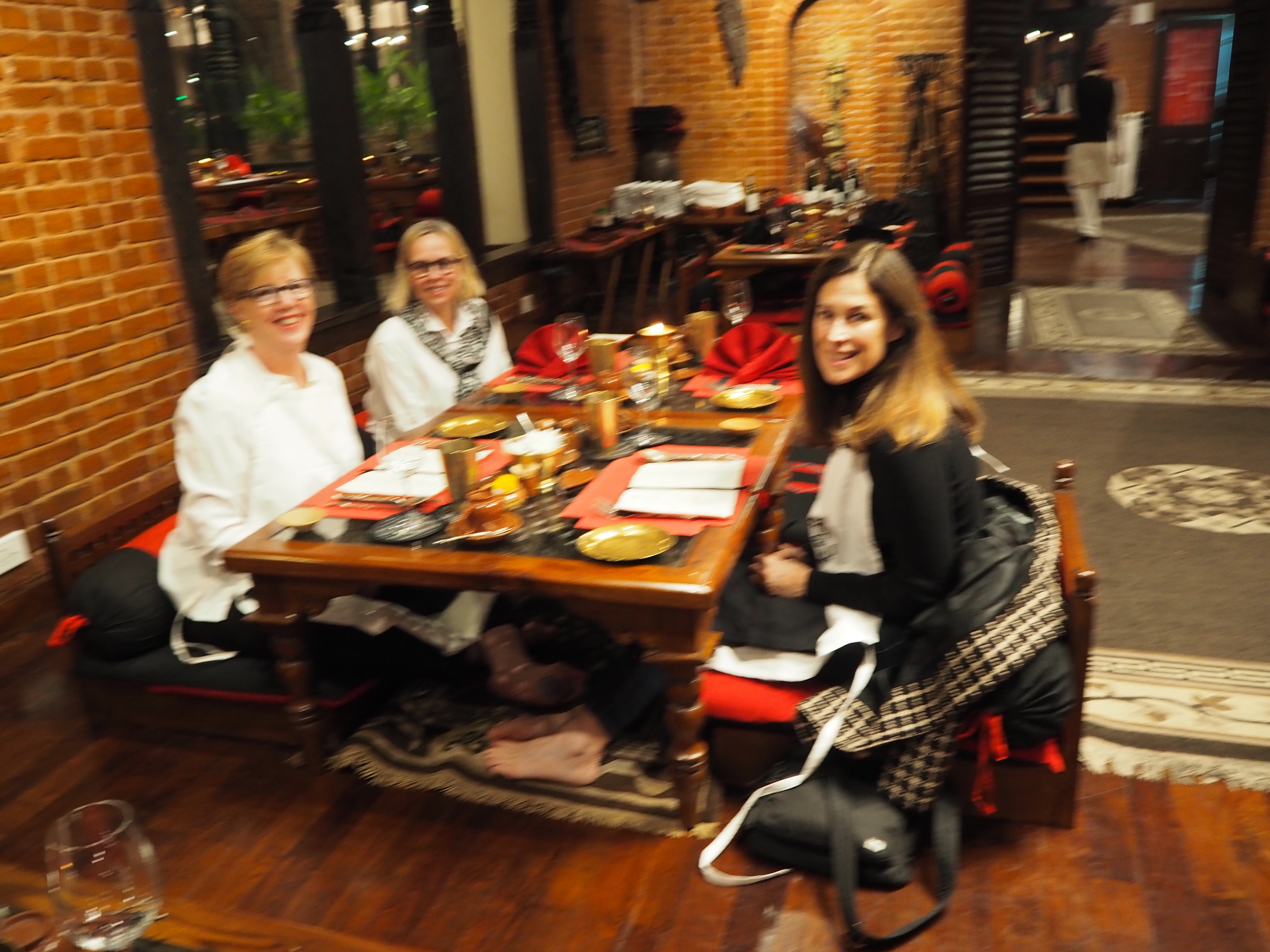
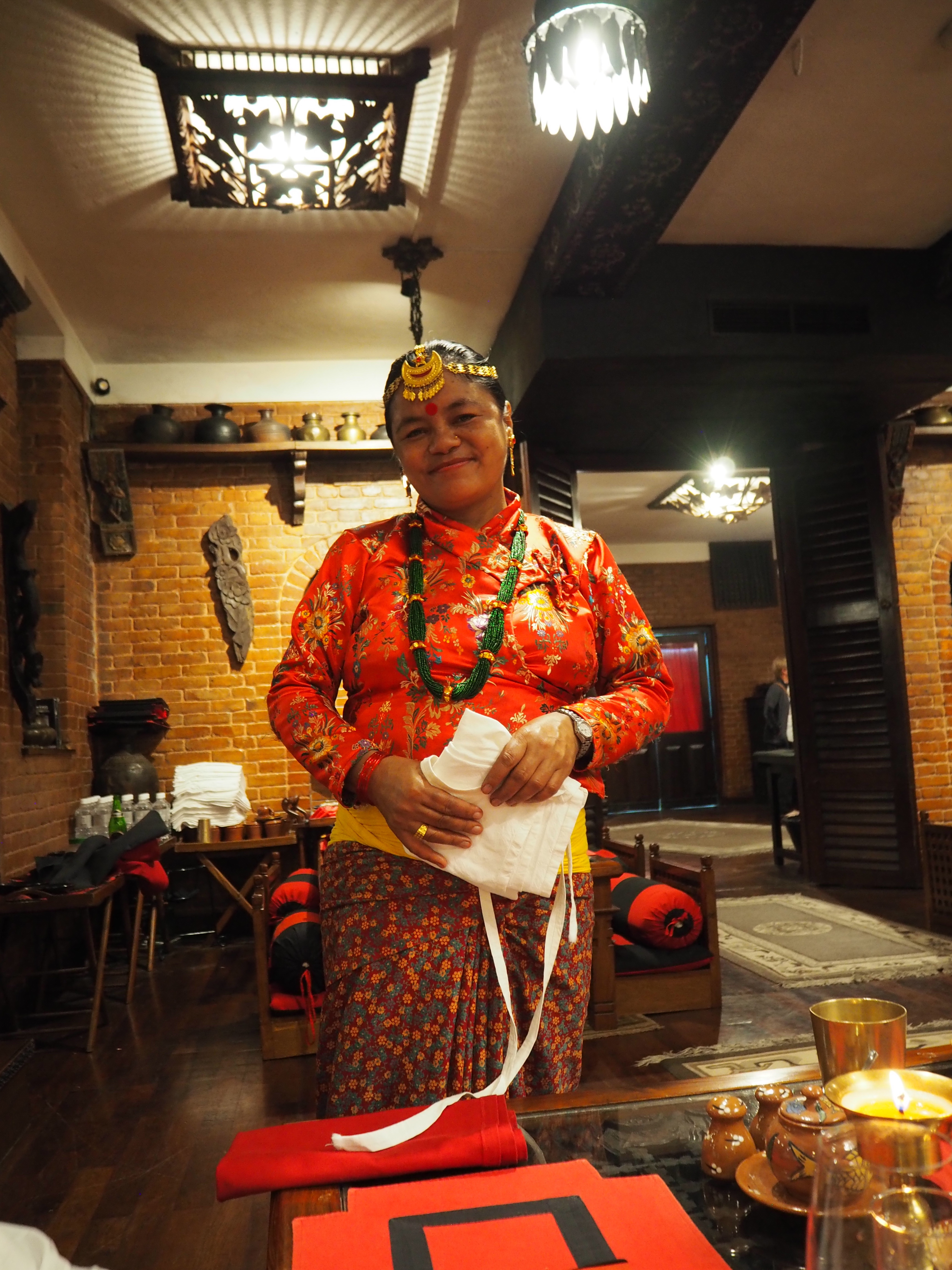
We had a bit of down time before experiencing a traditional Nepali meal at the hotel. We had our choice of 6-22 courses! The concierge suggested we try 9; I think I could have done with only six! That said, it really was an amazing meal. When we arrived at the restaurant we had to take off our shoes and had our hands washed by the server pouring water over them. We were seated on cushions at low tables and given an apron to wear. A personalized menu spelled out everything we ate. We had buffalo meat (a staple here)

As we left the restaurant, there were pictures of celebrities who had dined there…Prince Charles, Jimmy Carter, Demi Moore, and Hillary Clinton to name a few.

It has been a very full and interesting day, it is now time to go to bed!

Traveling to Nepal

November 1-3, 2019

It isn’t easy to get to Nepal. My friend, Kathy, and I departed from St. Louis at 1:45 pm on Friday and after a four hour layover in O’Hare, we boarded our Qatar Airways flight for Doha. Though the scheduled flight time is 13 1/2 hours, we made it in under twelve…thank goodness for those winds we have been having!

It turns out that they are doing work on the runways on Kathmandu, which has resulted in flight schedules being changed….what was originally going to be a few hours in Doha turned out to be twelve hours there. I had the foresight to book a room at the in airport hotel. This turned out to be one of my better moves.

Ready for takeoff

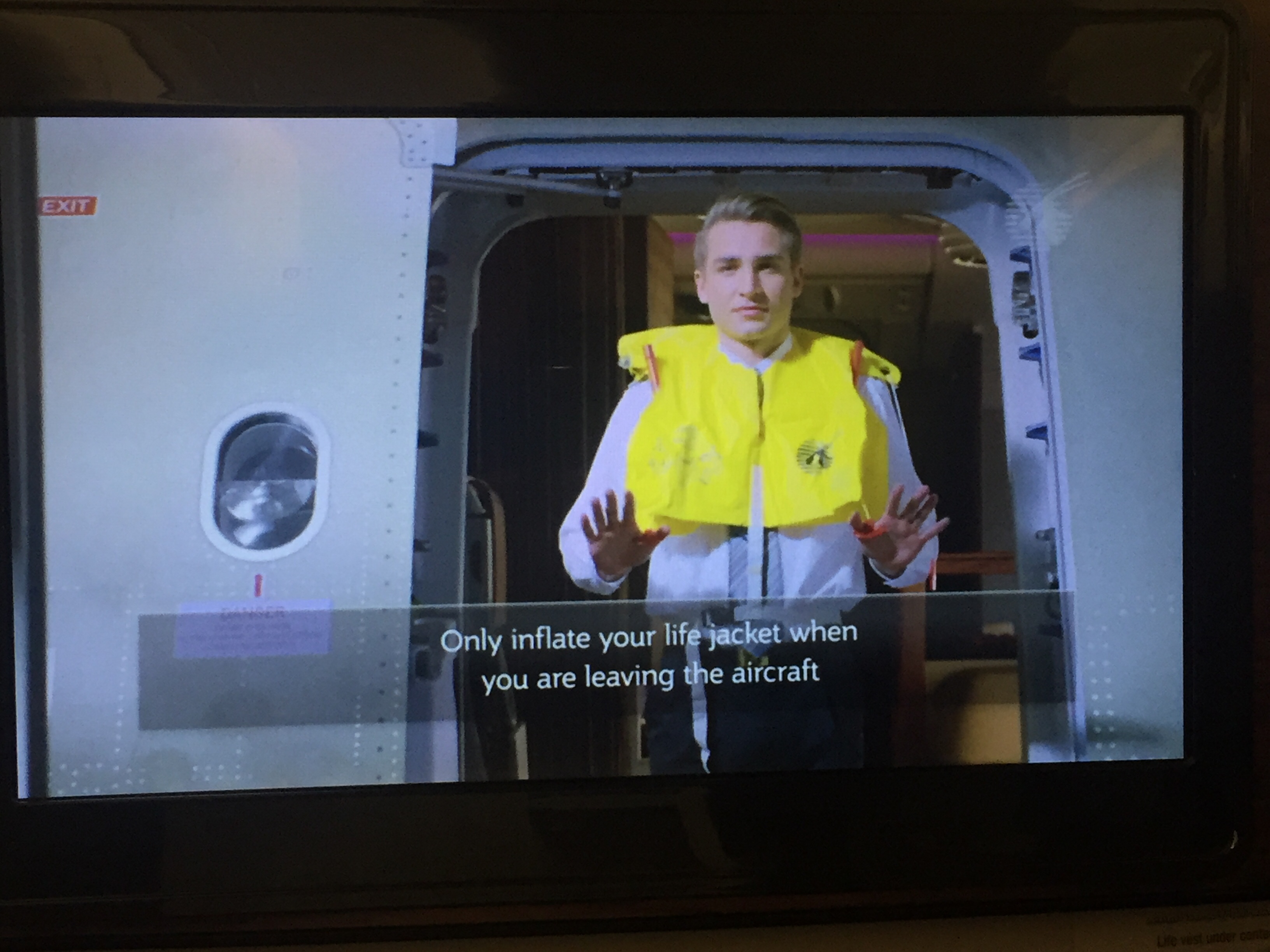
The safety video on Qatar Airways is rather mundane compared to many airlines, it doesn’t feature a catchy tune, dancers, or comic book characters,,,, just a regular guy telling us what do to in case of an emergency.

Safety video guy

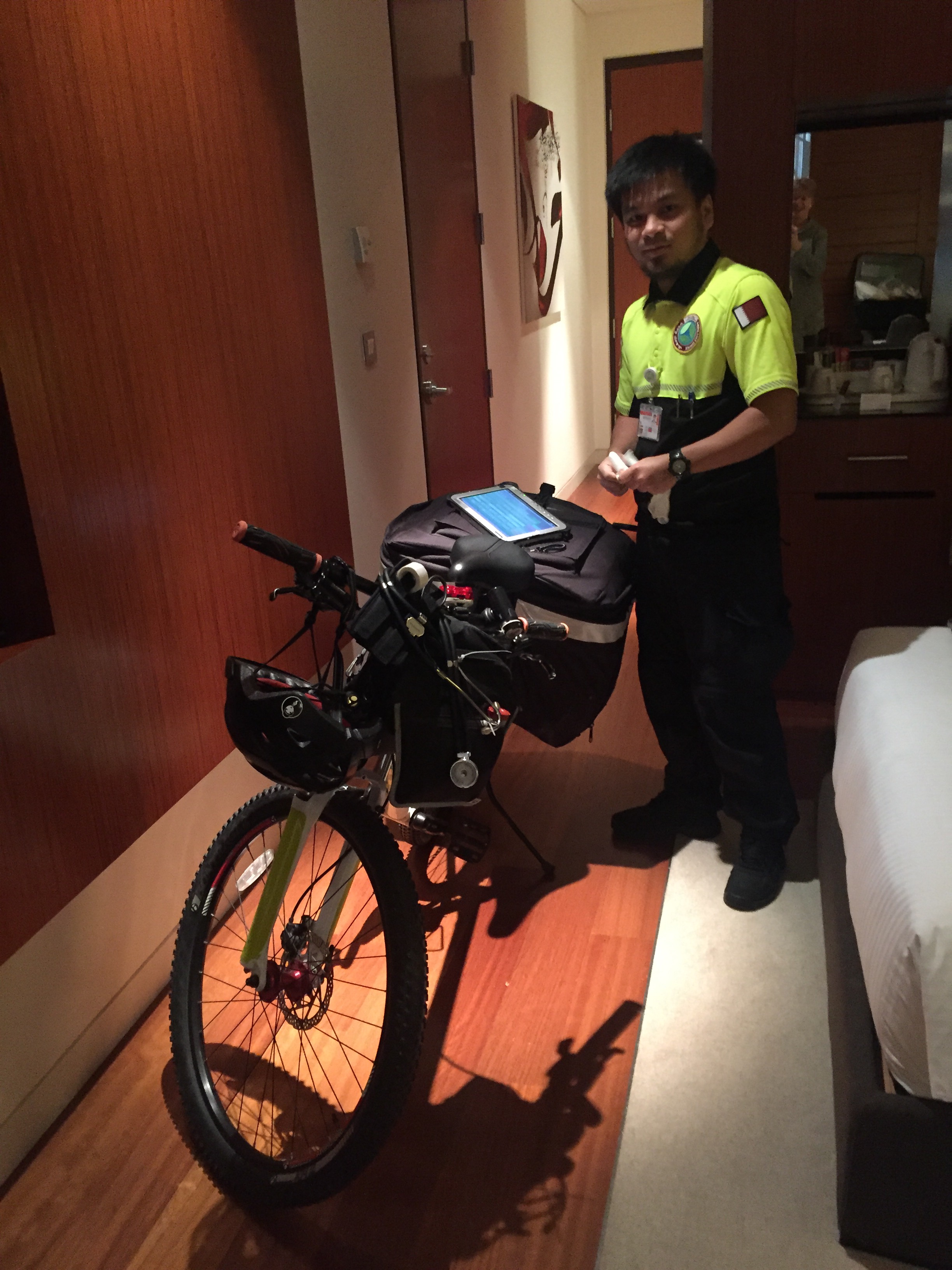
Upon arrival in Doha, I learned that Kathy had been quite sick during the second half of our flight. Since we weren’t sitting together, I had been unaware of her circumstances until landing. So, immediately upon checking into the hotel and exploring the options, we decided our best move was to ask for a visit from the airport medic. The hotel staff called him and within a few minutes he arrived at the door. He pulled his bike right into the room!

The bicycle riding medic!

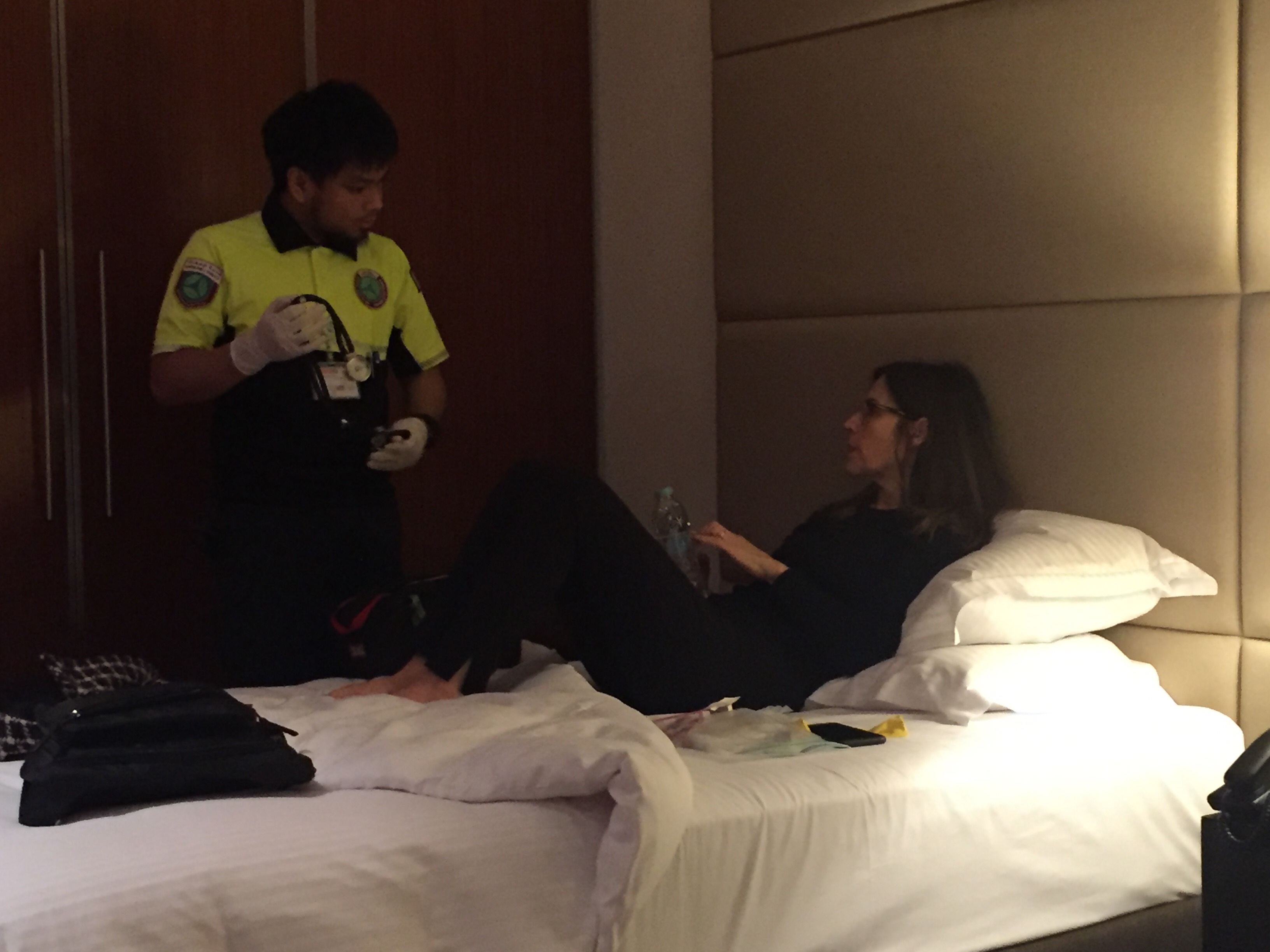
The bicycling medic checked her vital signs and all was normal. He gave the option of going to the on site airport clinic but Kathy decided to rest and see how she felt after that.

The patient with the medic

I thought my best move was to give her time to rest. The hotel has a lovely gym, pool, and spa. I opted for some time on the elliptical and then had dinner. Upon returning to the room, the patient was definitely looking perkier.

We had landed at about 4 pm local time and after getting back to the room it was about 7:30. I decided to go to sleep for as long as possible since we needed to head to our gate by about 2 am. When I woke up at about 12:30, Kathy was already awake. She was feeling much better and was ready to have something to eat. …. she headed for the airport Burger King; I showered and got ready and we met at the gate.

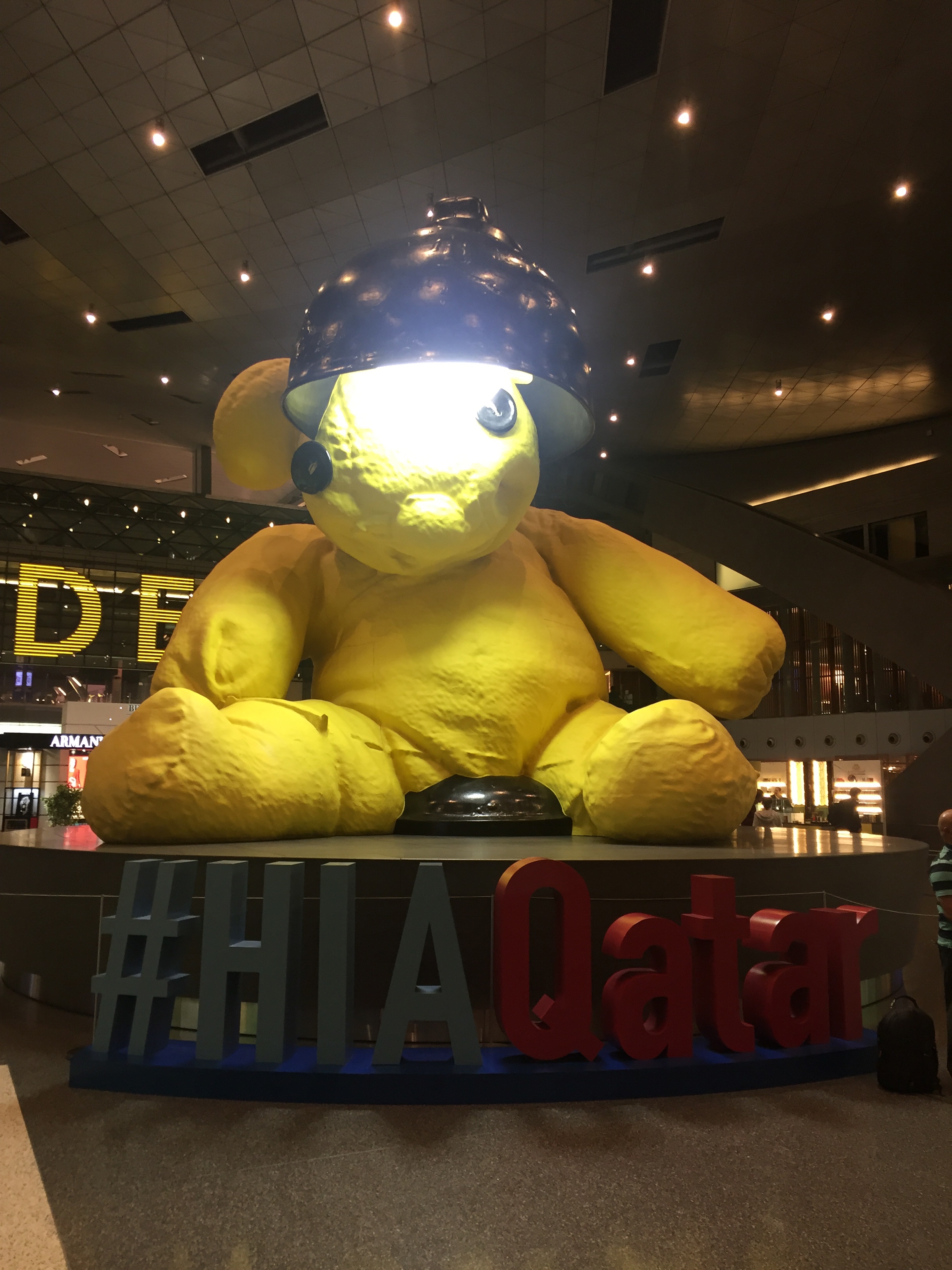
Even though it was the middle of the night, the airport was a beehive of activity.

This guy greets airport visitors.

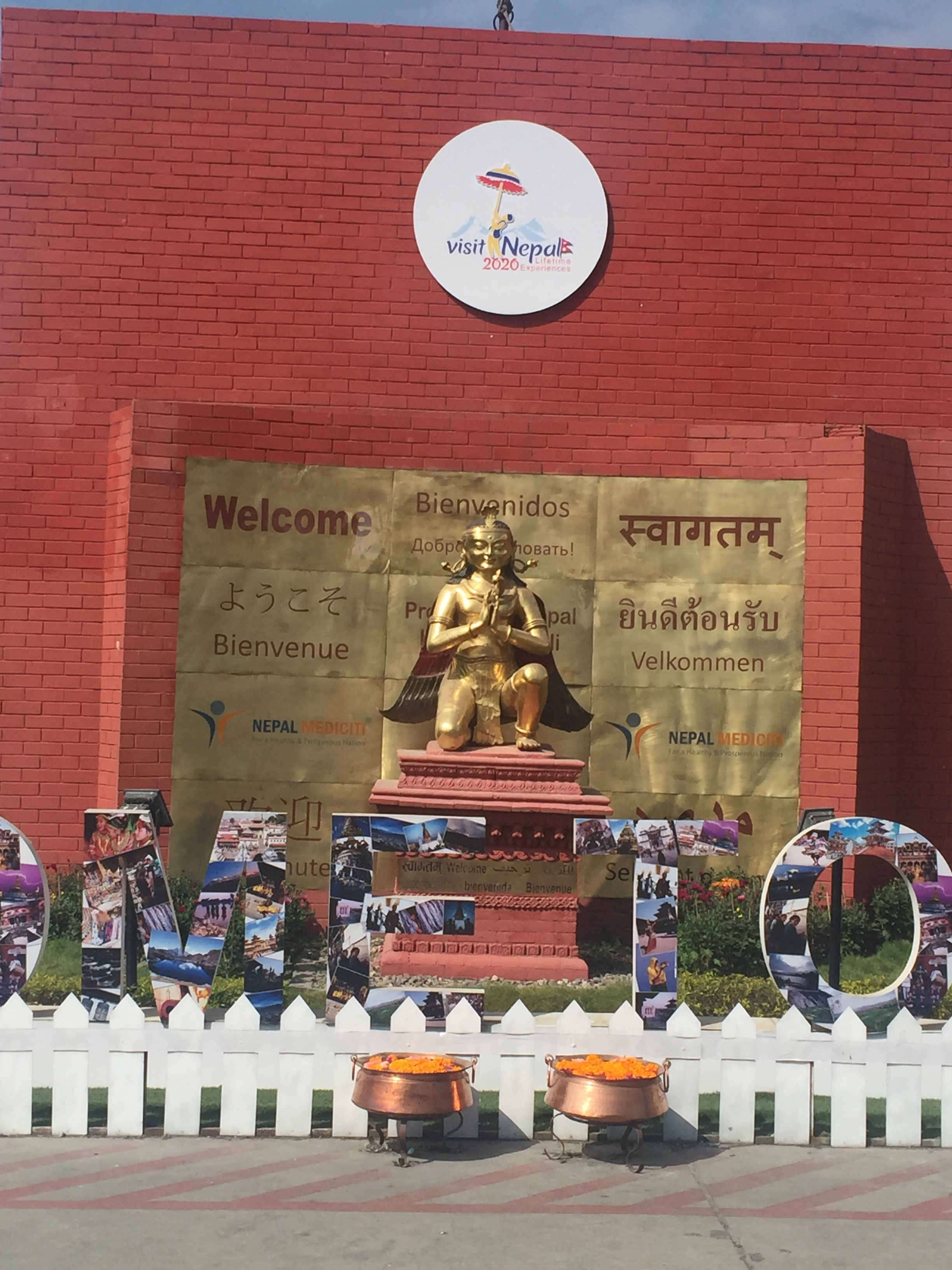
Our last flight for the day was uneventful and we arrived in Kathmandu by 11 am local time, about 45 minutes late due to having to circle the airport before landing. Interestingly, the time in Nepal is ten hours and 45 minutes ahead of St. Louis time. I’ve been to countries that have times on the half hour difference from home, but never 3/4 hour. It took nearly 36 hours from the time I left my house until landing in Nepal, but we finally made it! Little did we know what adventures lay ahead…just to get out of the airport! We disembarked and took a bus to the terminal, where this welcome sign greeted us:

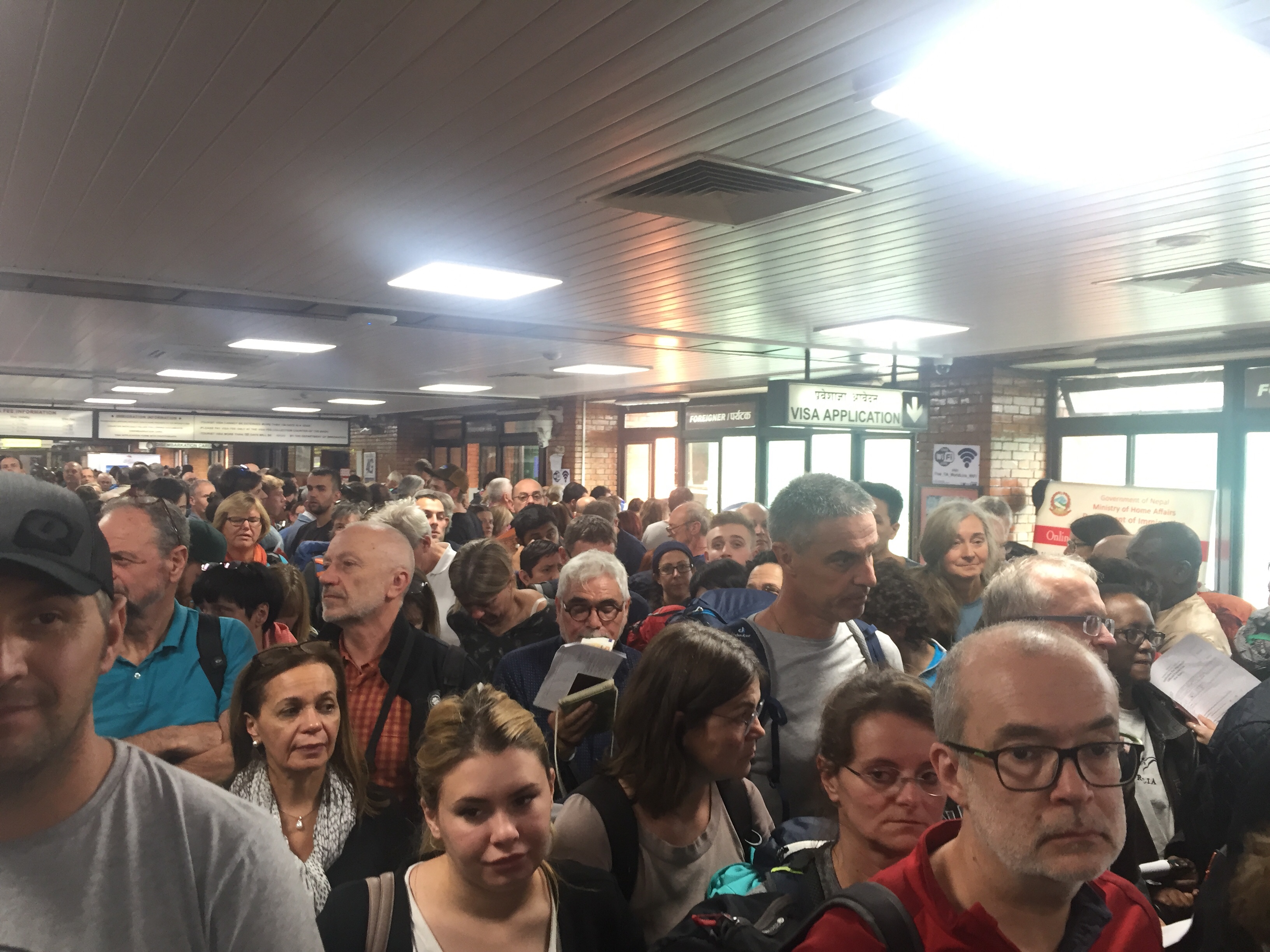
We made our way into the terminal, along with people from numerous other flights… to say it was a chaotic scene would be generous. We had to fill out landing forms, go to a kiosk to fill out immigration forms, then get in line to pay for our visas, before proceeding through the immigration line. There were no organized lines, just a sea of tired humanity pushing forward at each step.

“Line” of people waiting to pay the visa fee.

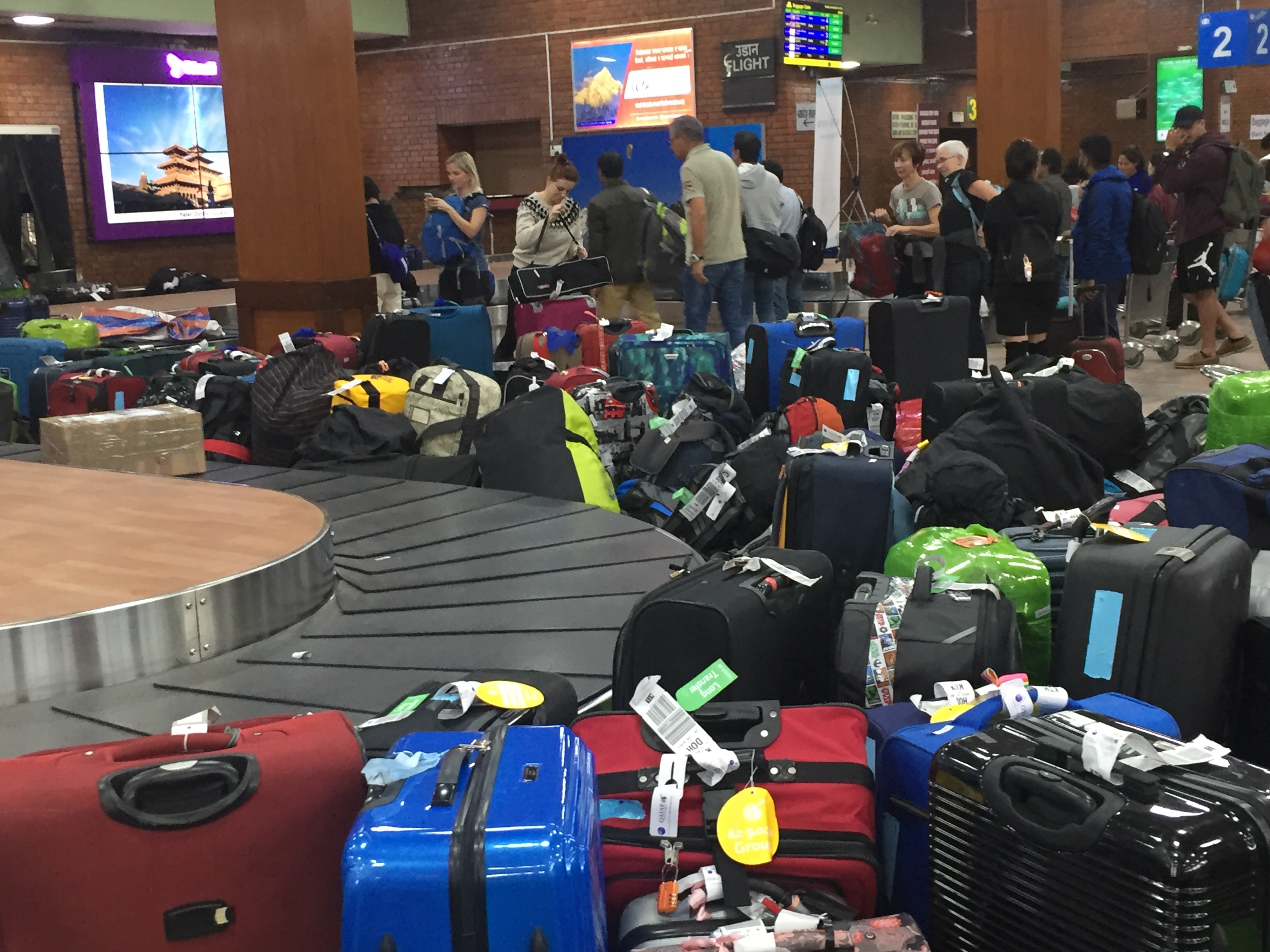
About 45 minutes to an hour after landing, we made it through the entire process. Next, we went downstairs and, after passing a sign for the “Gold, Silver, Diamond Metal Testing Room”, we found ourselves in another line, this one for security screening. We had to walk through a metal detector and put our carry on bags through screening. I found it interesting that it didn’t seem to matter if you set off the alarm or not, they waved everyone through. Also, I noted that the baggage screener wasn’t paying any attention to the screen. At the end of this process, we found ourselves in the baggage claim area.

Baggage claim. The good thing about taking so long in immigration is that you don’t have to wait for your luggage, the bad part is trying to find it!

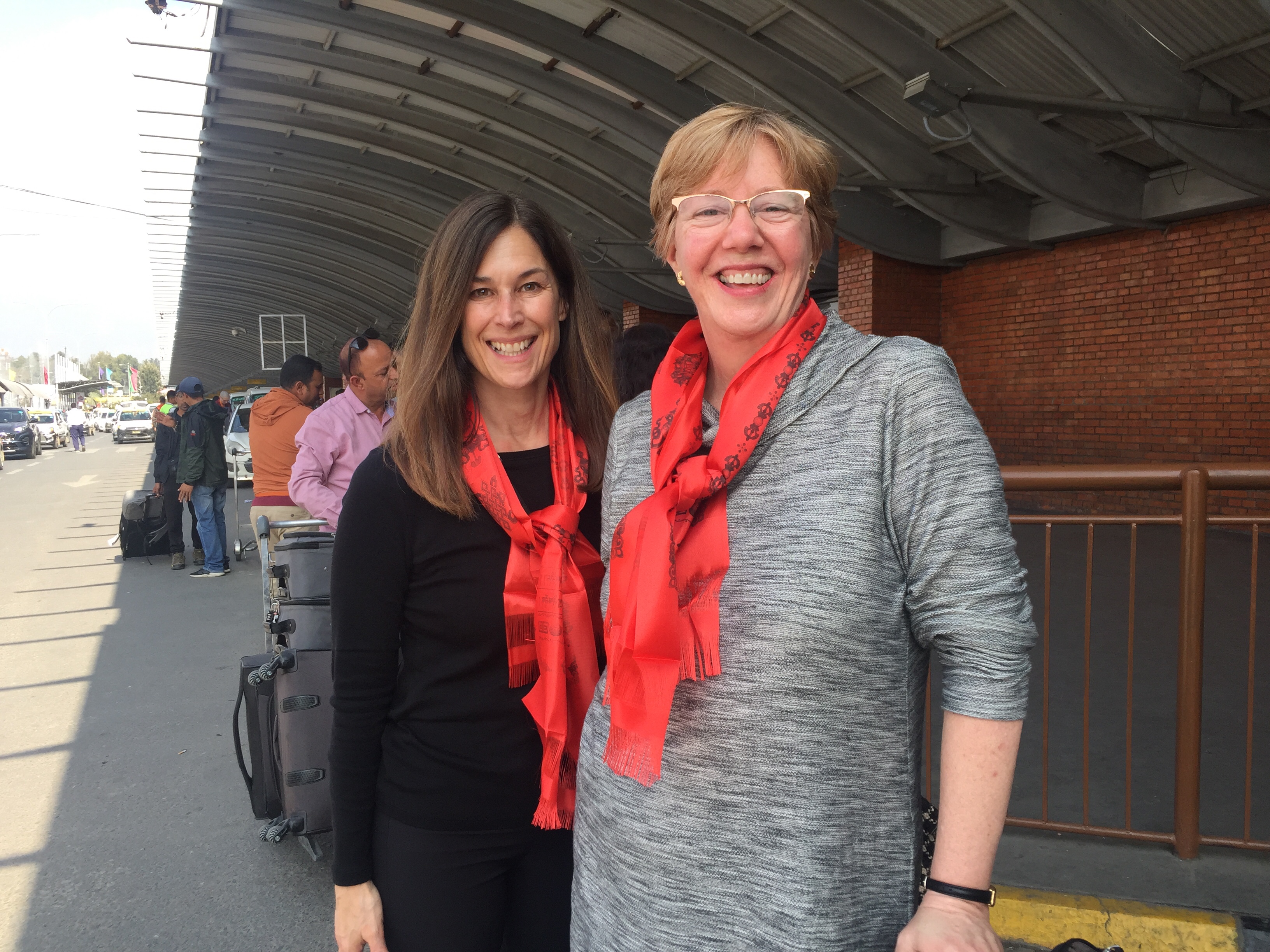
We did find our luggage without too much trouble and made our way outside where we were met by a representative from the travel company, who greeted us each with a red scarf. I gather this is a traditional Nepalese way of welcoming guests because we received another at the hotel.

Showing off our scarves…I don’t think we look terrible for having been on the road for over 36 hours.

Our hotel is only one kilometer from the airport. The traffic was crazy. It reminded me a bit of the traffic in India where the laws are more like suggestions.

Maryse arrived yesterday and greeted us in the lobby. It is wonderful to see her! For new readers, she and I met four years ago on a trip to the Middle East and have done a trip together each year since. Because of the aforementioned runway work, her flights had been changed as well. For some reason she was rerouted to arrive exactly 24 hours before Kathy and me.

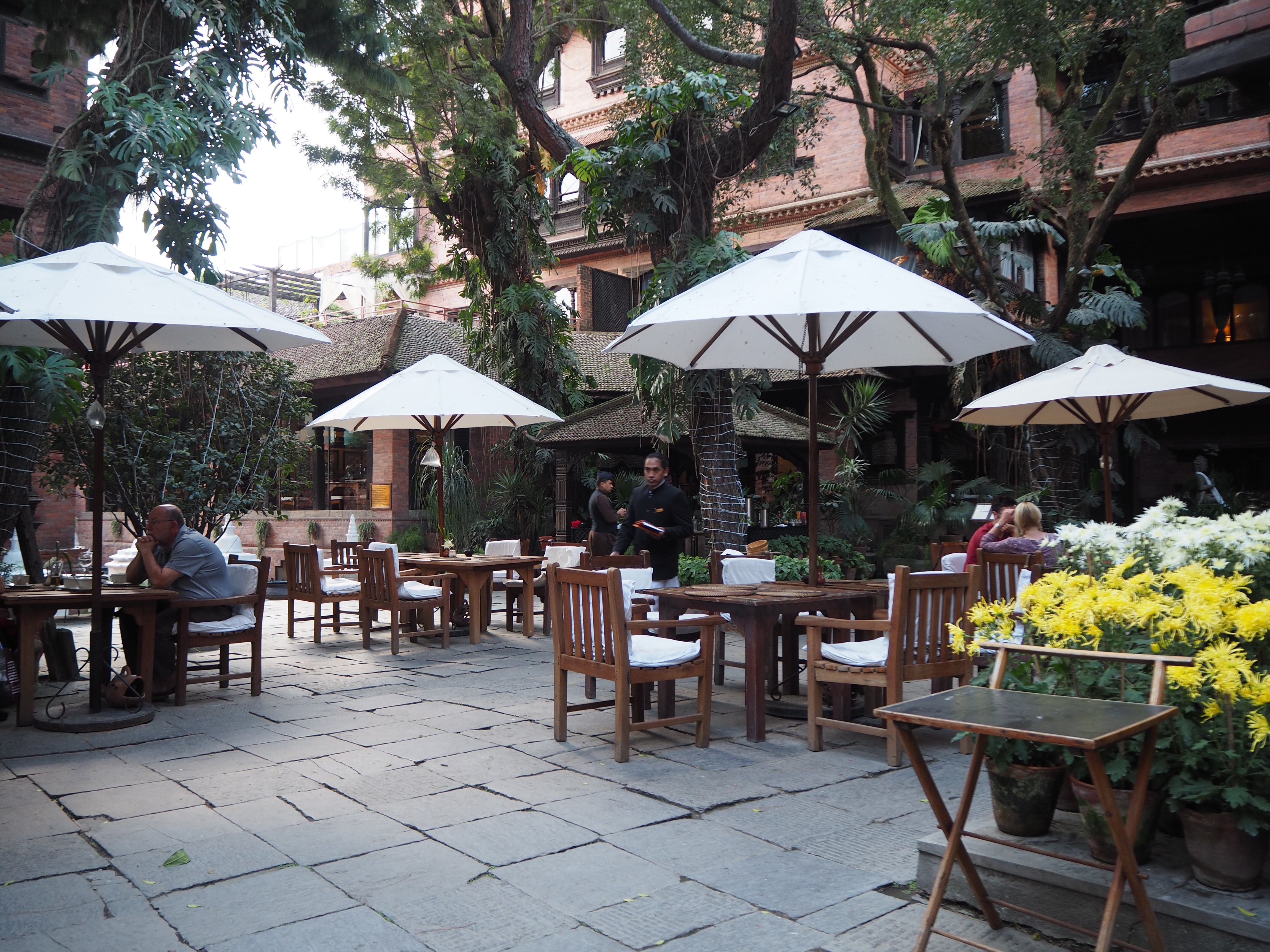
The hotel is lovely, a quiet spot made up of several historic buildings with pretty courtyards and a nice pool area. You would never know we are right in the middle of the city. We enjoyed lunch in one of the courtyards before taking a bit of time to get settled.

Hotel courtyard
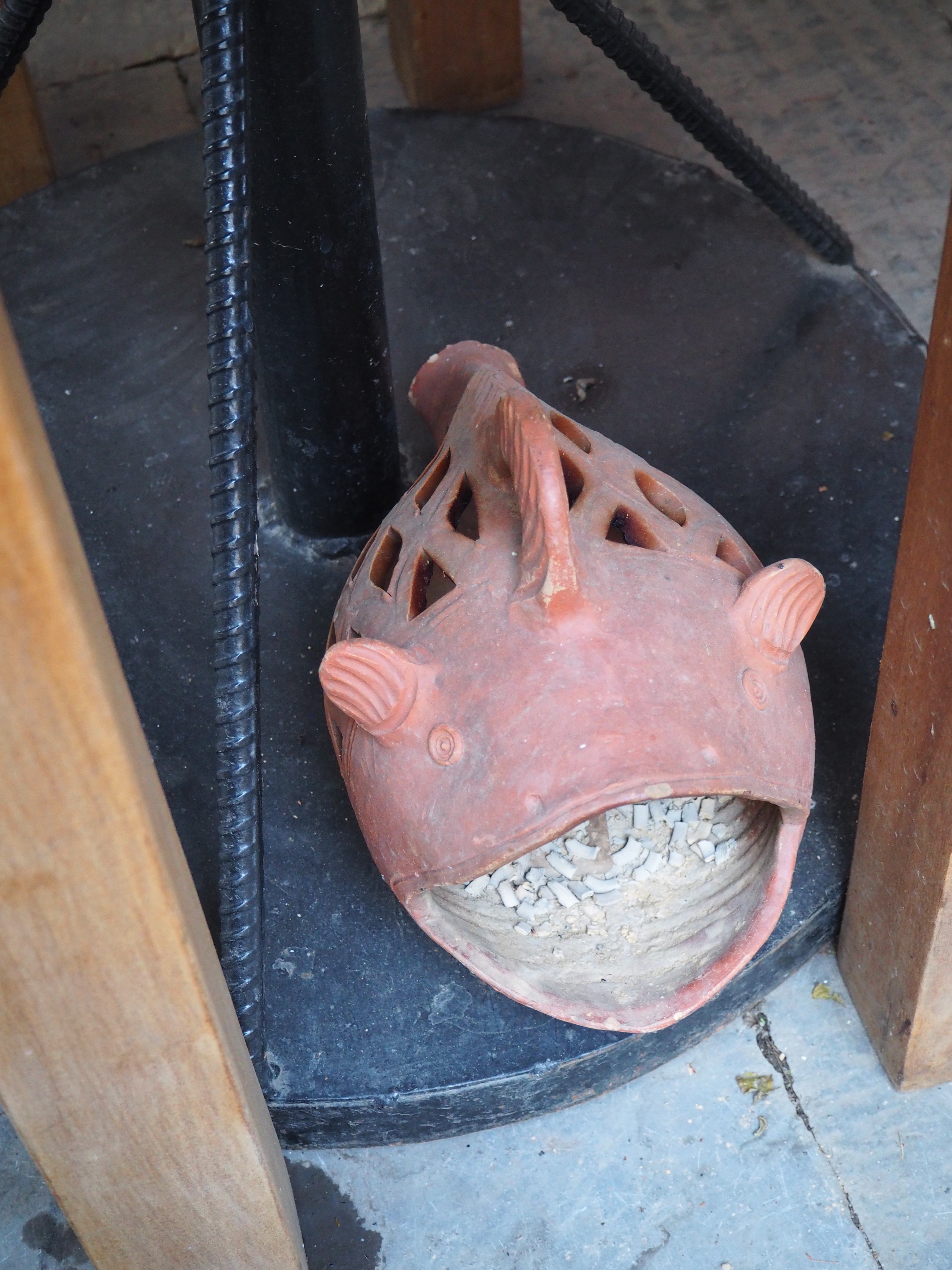
These little guys are everywhere … their job is to keep the mosquitoes away!
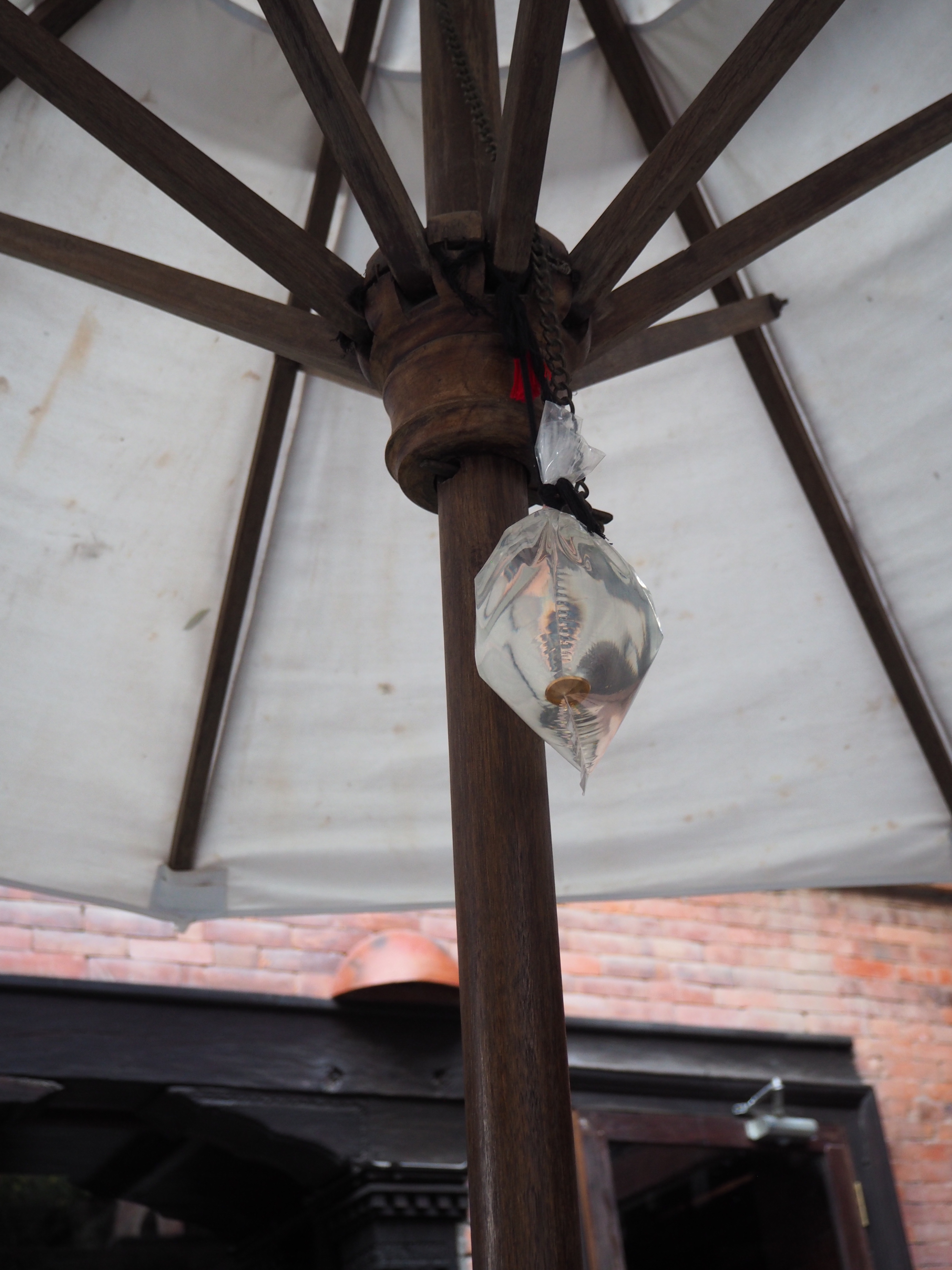
These bags of water hang from the umbrellas. The waiter told us that they are there to keep the flies away… they don’t like the reflection.

I have spent my down time going to the gym and relaxing. I am heading out shortly to meet Maryse and Kathy for dinner. I don’t imagine any of us will make a late night of it. Tomorrow we will meet our guide and begin our Kathmandu sightseeing!

Design a site like this with WordPress.com
Get started