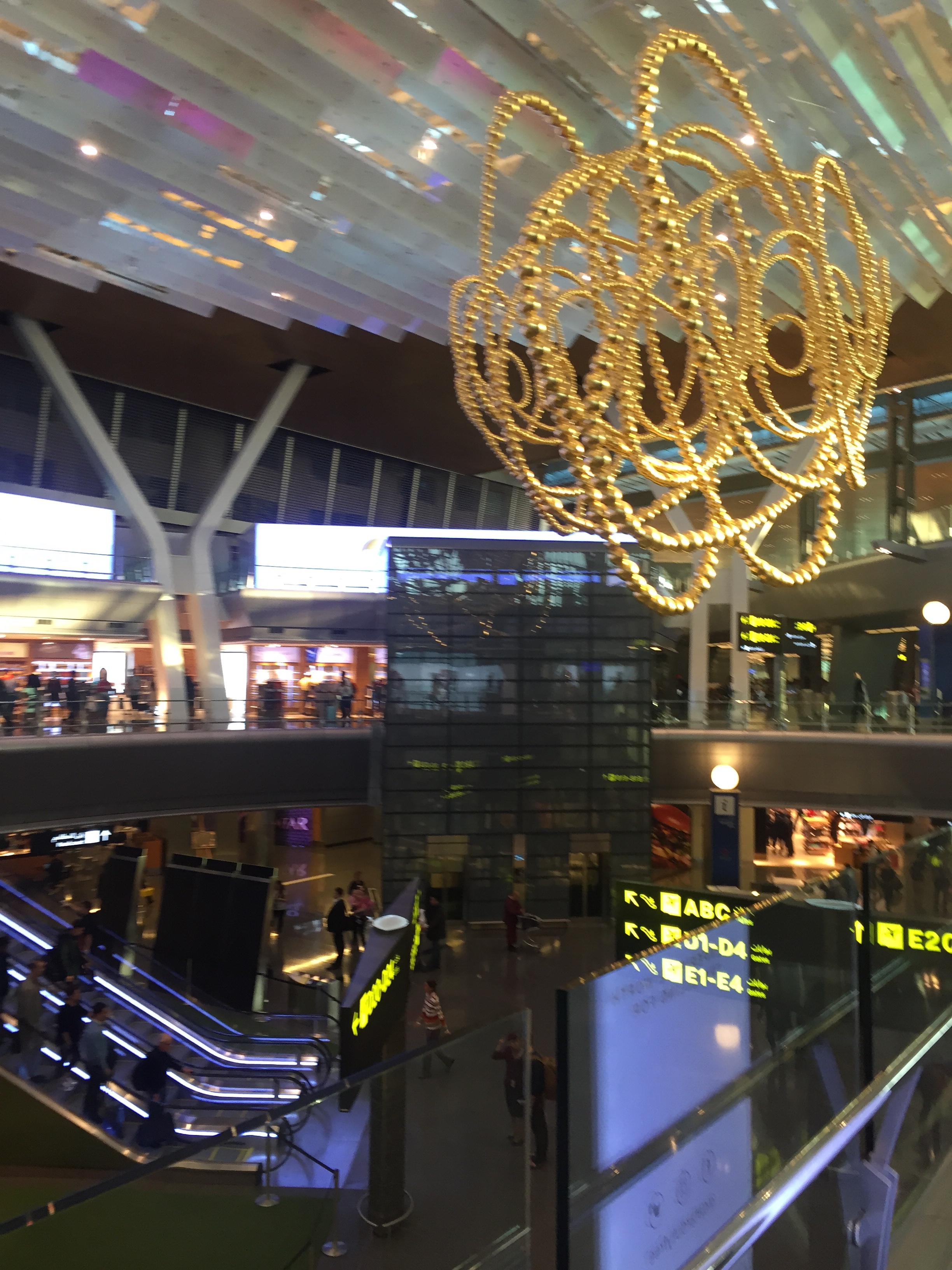
We had an uneventful layover in Doha. The airport is like grand central station 24 hours a day. We were clearly back in the “first world”, at least as far as airport security goes. Kathy read that Nepal has some of the worst airport security in the world; I’m not surprised by that and have to believe that Doha is at the other end of the spectrum. We had to clear security twice, once when landing and another time when entering our departure gate. Each time was very thorough unlike our experiences in Nepal, in particular.
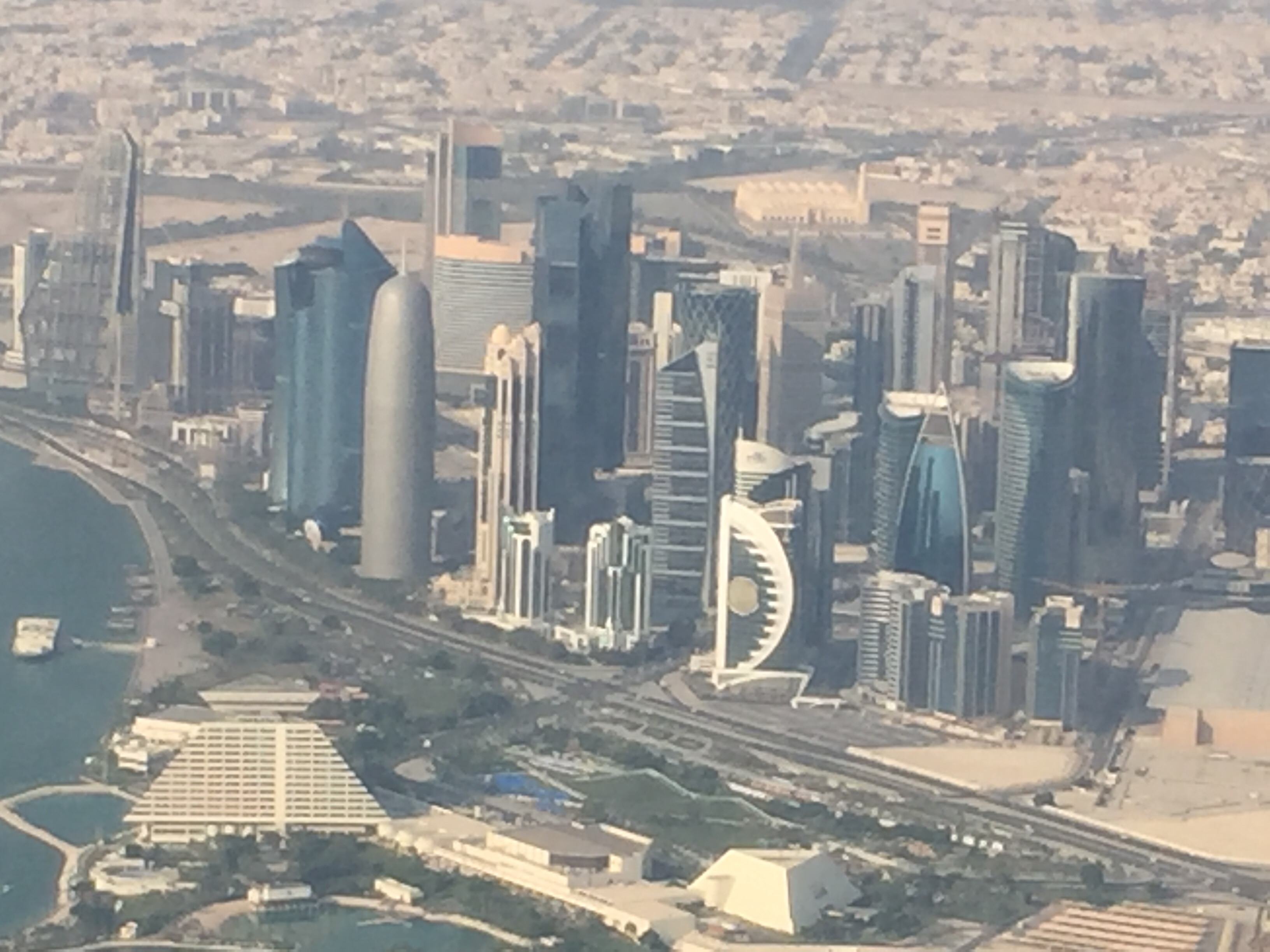
Doha airport Doha from the air
Like before, we had a hotel room at the airport and each of us got about five hours of sleep which felt great. Our flight to Chicago was on time and I was able to sleep again. I spent a bit of time talking with one of the pilots. He told me that there are four pilots on board and they are all in the cockpit during takeoff and landing and then they each work 6 1/2 hours and have 6 1/2 hours rest. Their rest quarters are up above us where they have beds and a couple of business class seats. This man is originally from Honduras but now lives in Doha. He travels all over the world but likes to get to he US at least twice a month so that he can get groceries for his family!
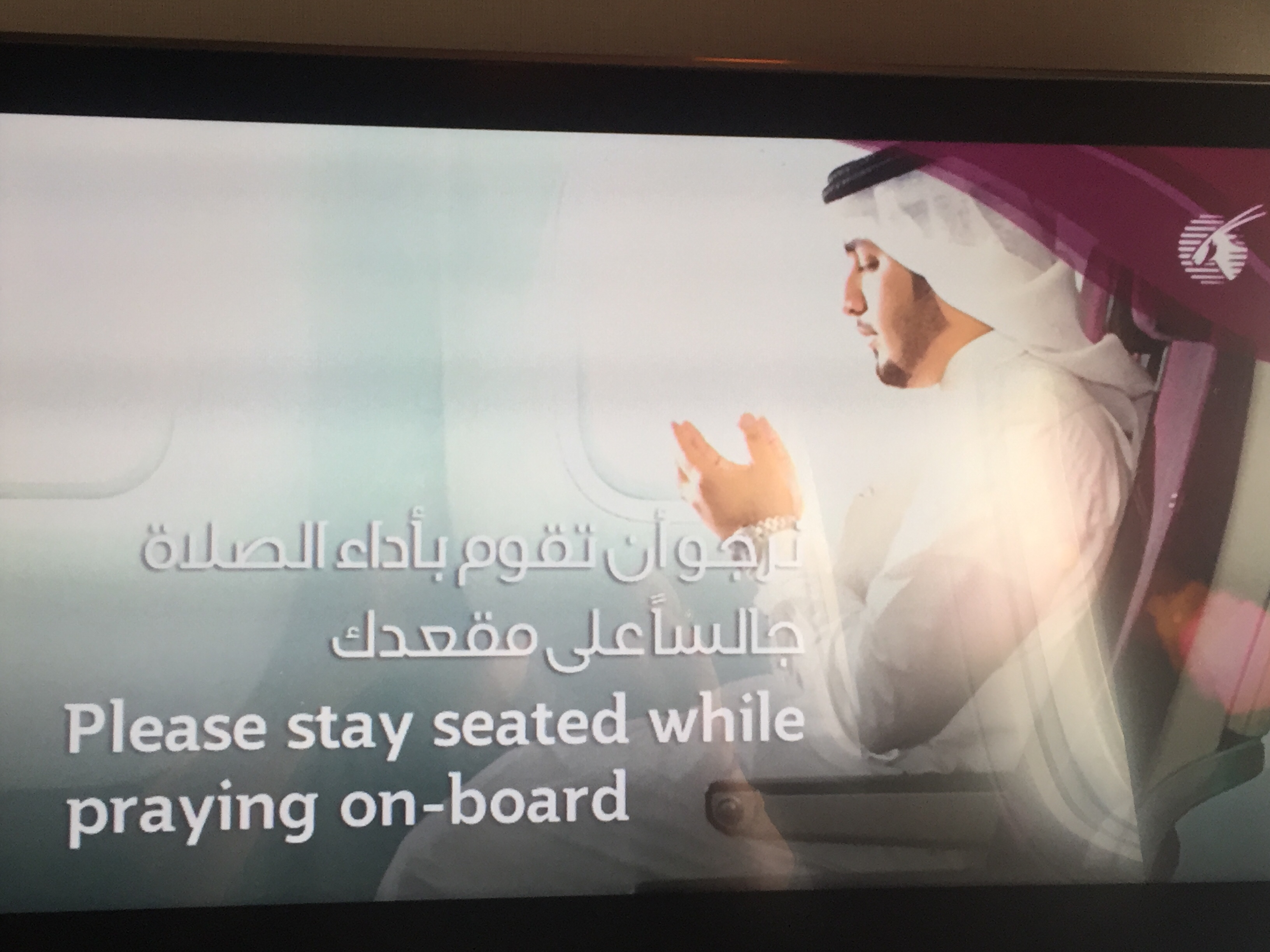
This sign came on the screen periodically.
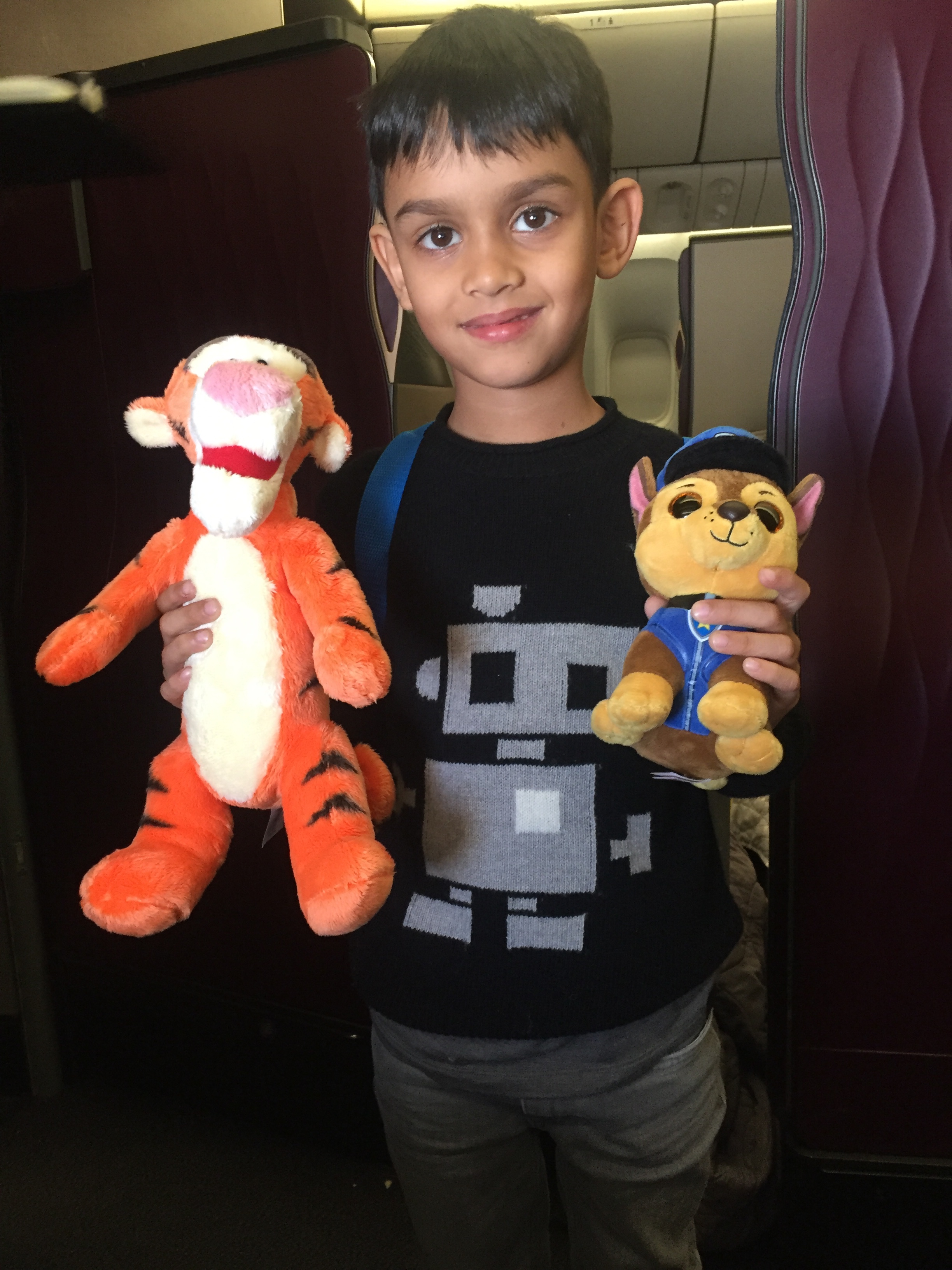
I also spent time getting to know, Noah, the six year old boy who, along with his four year old brother, was traveling with his grandmother to Indianapolis for a two month stay. The family is very international, the boys live in India , with their American mother and Indian father. The grandparents are Mexican and American.
My new friend Noah with his and his brother’s friends.
It will be nice to get home … I look forward to eating a salad, brushing my teeth with tap water, having ice in a drink, and to sleeping in my own bed. It’s been a great adventure. One this I realize whenever I travel to far corners of the world is that, I’m spite of all of our problems, the US is still a good place to live.
Here are a few last photos … some may be duplicates from earlier posts.
Today is our last day in Nepal. White is today’s color at the hotel. Here is the information about Friday:
– the gem for the day is the diamond.
– Venus is the planet. When it comes to the symbolic meaning of days, Venus is a highly appropriate “vibe” for Friday, the traditional end of the workweek day. Venus is about love, connection, belonging, comfort, sensuality, and passion.
– Friday is a great day for pleasure and appreciation; trips to places that make you feel indulged, luxurious, or pampered are good too.
– Today, appreciate the people on your life, go on a date, show your love, recognize beauty, and make new friends. – The plant for Venus is the Cluster Fig. The cluster fog tree is astringent, a ti-diabetic, anti- asthma, anti-inflammatory, antioxidant, anti-ulcer, anti-pyretic (a fever), and anti-diarrheal in action. It’s latex is used to treat piles (remember from yesterday that those are hemorrhoids). The bark of the tree is used to treat infections, swelling,man’s inflammation. This one doesn’t seem to be the wonder drug like yesterday, but it’s not bad.
I woke up well before the alarm I set so that I could see Maryse before her 7:30 am pickup. It is interesting that none of us has slept well here; it doesn’t make sense, the setting is beautiful and serene and the activities are all designed around health, wellness, and relaxation. I wonder if it may be the altitude. I don’t think we will ever know. Christian was early to pick up Maryse, and off she went…
In passing the maitre d’ heard me mention that I woke up with a sore throat. He made me a wonderful turmeric and thyme tea! Here is the recipe.
After having the tea, I decided to wait to have breakfast until after my pranayam class. PranayamI was the only one in the class, with the same teacher I had for meditation yesterday. I didn’t understand her much better today! In the class I learned four different breathing techniques for relaxation. I found two to be nice, and there is zero chance I will ever do the two other ones again. One of the “bad” techniques involved snorting like a pig! It is supposed to help your vocal chords.
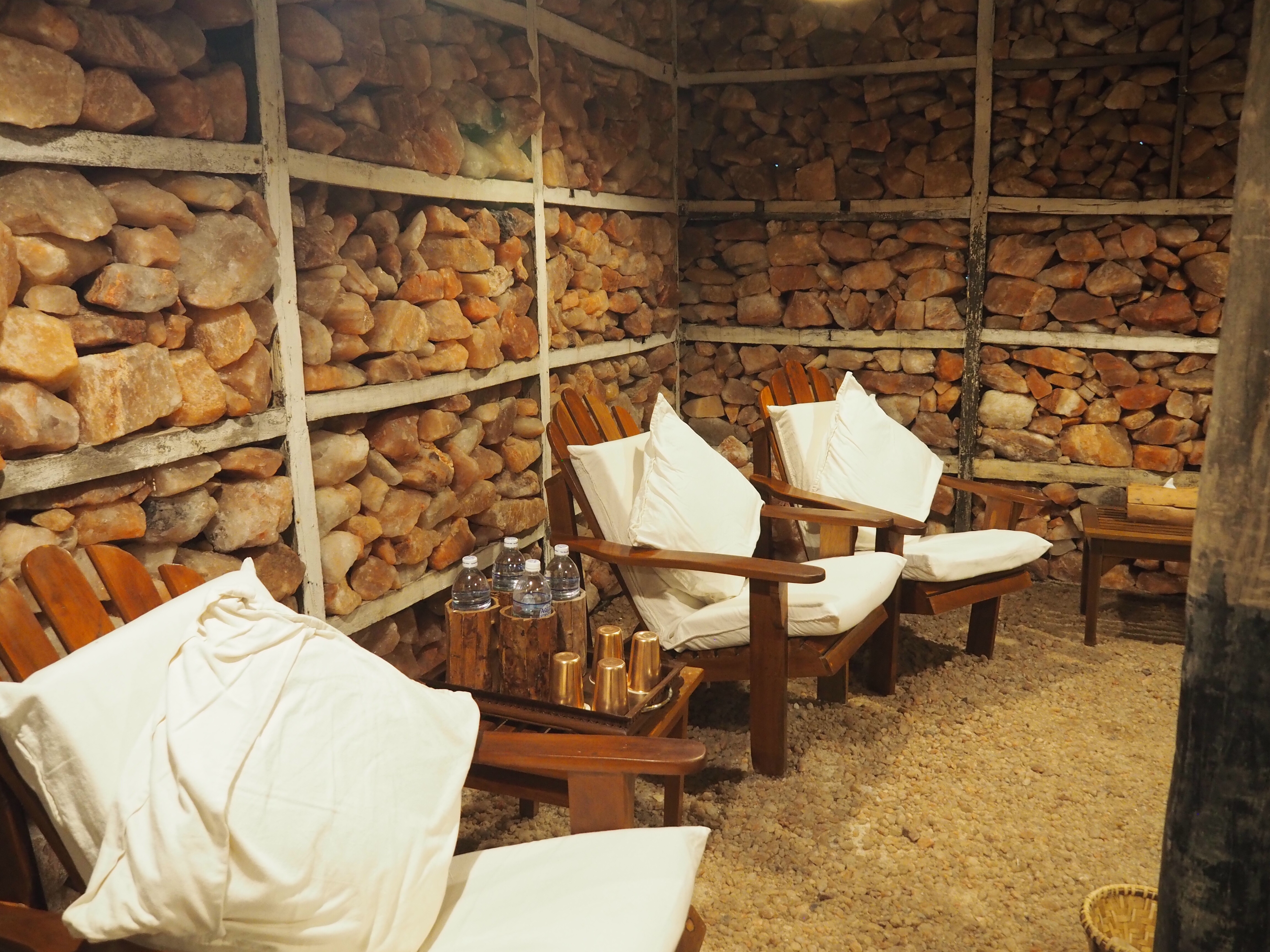
On my the way back down the mountain, I viisted the salt room for a final time. Since I don’t feel all that well, I figured it couldn’t hurt!
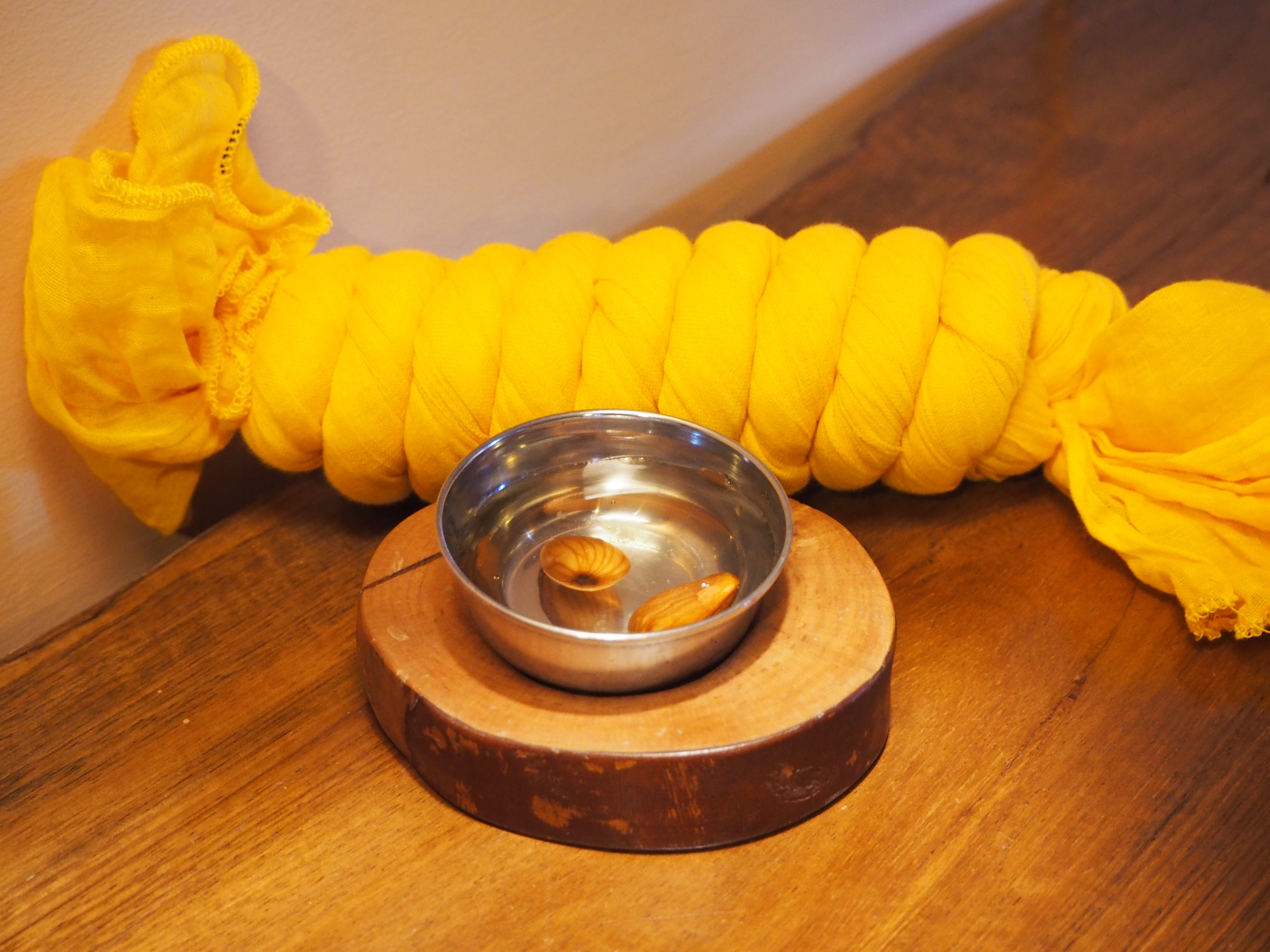
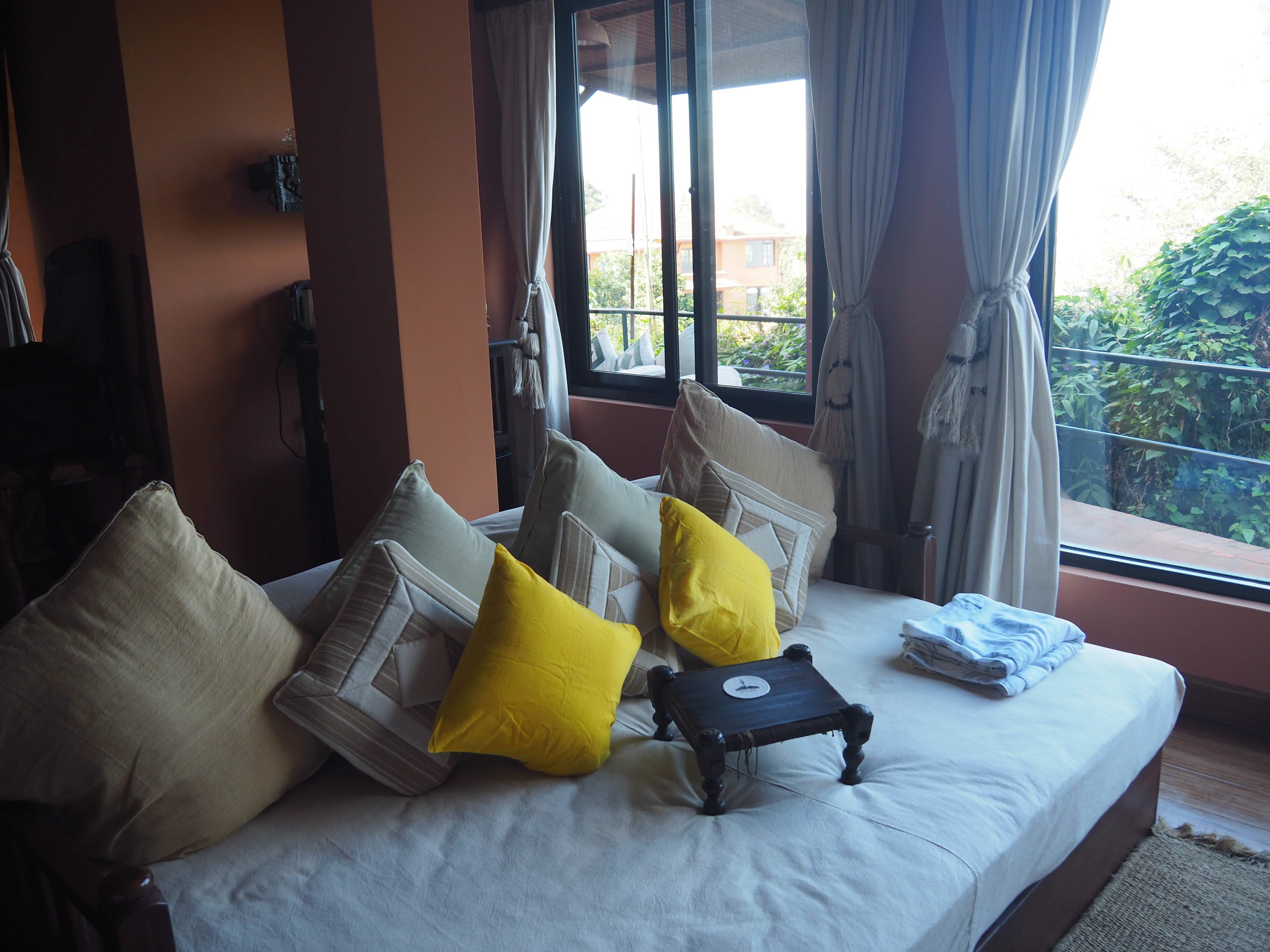
Last night I received a yellow scarf to wear today. Today, two throw pillows in my room were also changed from green to yellow.
This is my scarf. I learned the almond is to be eaten first thing in the morning. The throw pillows for today. I think this place must have an enormous supply of pillows in seven different colors. They put the color of the day everywhere!
Here is the information about Thursday.
– The gem for this day is the sapphire. This one doesn’t make sense to me since the sapphire is blue.
– Thursday is the day of Jupiter. Jupiter is the planet of enterprise and expansion. It’s also an extremely optimistic planetary energy that can be felt all through the day on Thursdays when we tune into it.
– The best tasks for Thursday include socializing, networking, and marketing.
– Thursday is the day of vision, spiritual insight and expansion.
– The plant for Jupiter is Sacred Fig. The bark is cooling and astringent and is useful in inflammation and glandular swelling of the neck. Root bark is good for stomatitis, (inflamed or sore mouth), clean ulcers, and it is astringent In leucorrhoea ( a vaginal discharge) and promotes granulations (tissue that grows from a wound). According to the Unani (a Persian/Arabic form) system of medicine, root bark is aphrodisiac and also good for lumbago (lower back ache) The roots are said to be good for gout. The roots are chewed to prevent gum disease. The fruit is a laxative, promotes digestion, and stops vomiting. Ripe fruits are alexipharmic (an antidote or defensive remedy against poison, venom, or infection). They are also good for thirst and heart disease. The seeds are cooling, laxative, and refrigerant and are also useful in urinary troubles. The leaves alone are used to treat constipation. And infusion or decoction (boiling time extract the medicine) of the bark is used with some honey to treat gonorrhea, ulcers, skin diseases, and scabies. Wow! This stuff sounds like it will cure almost anything!
The whole day of the week information is really like a horoscope but I have to be honest and say that I’m unclear how the plants really relate to this. That said, I bet you had never before heard of the Sacred Fig and all that it can do!
As I made my way to breakfast, Kathy was departing for a hike to the farms from which the hotel gets its produce. She was the only one brave enough to take the hike, which was just over five miles and straight uphill all the way back. She did have an interesting encounter with her guide who asked her to sponsor him for travel to the US!
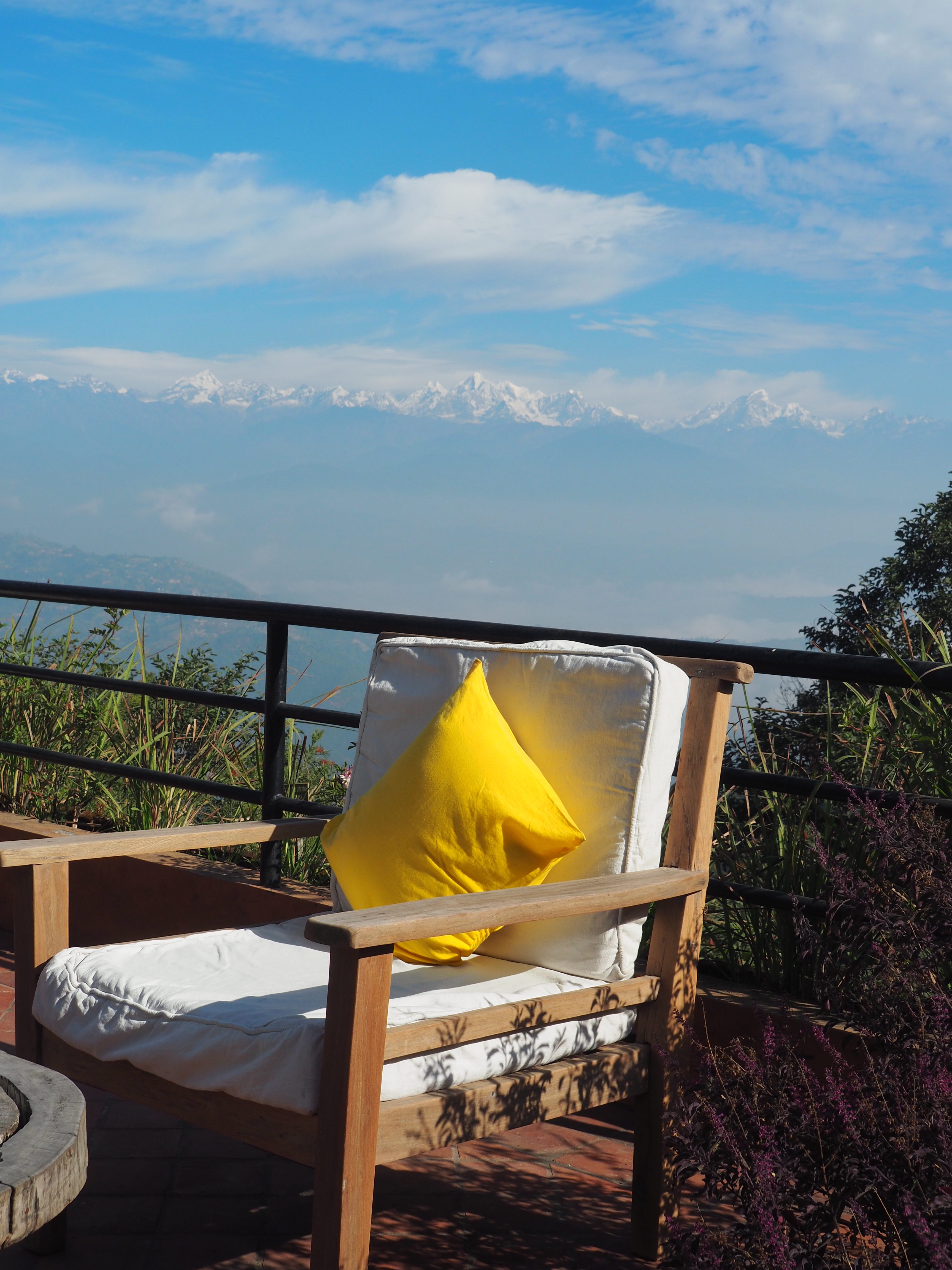
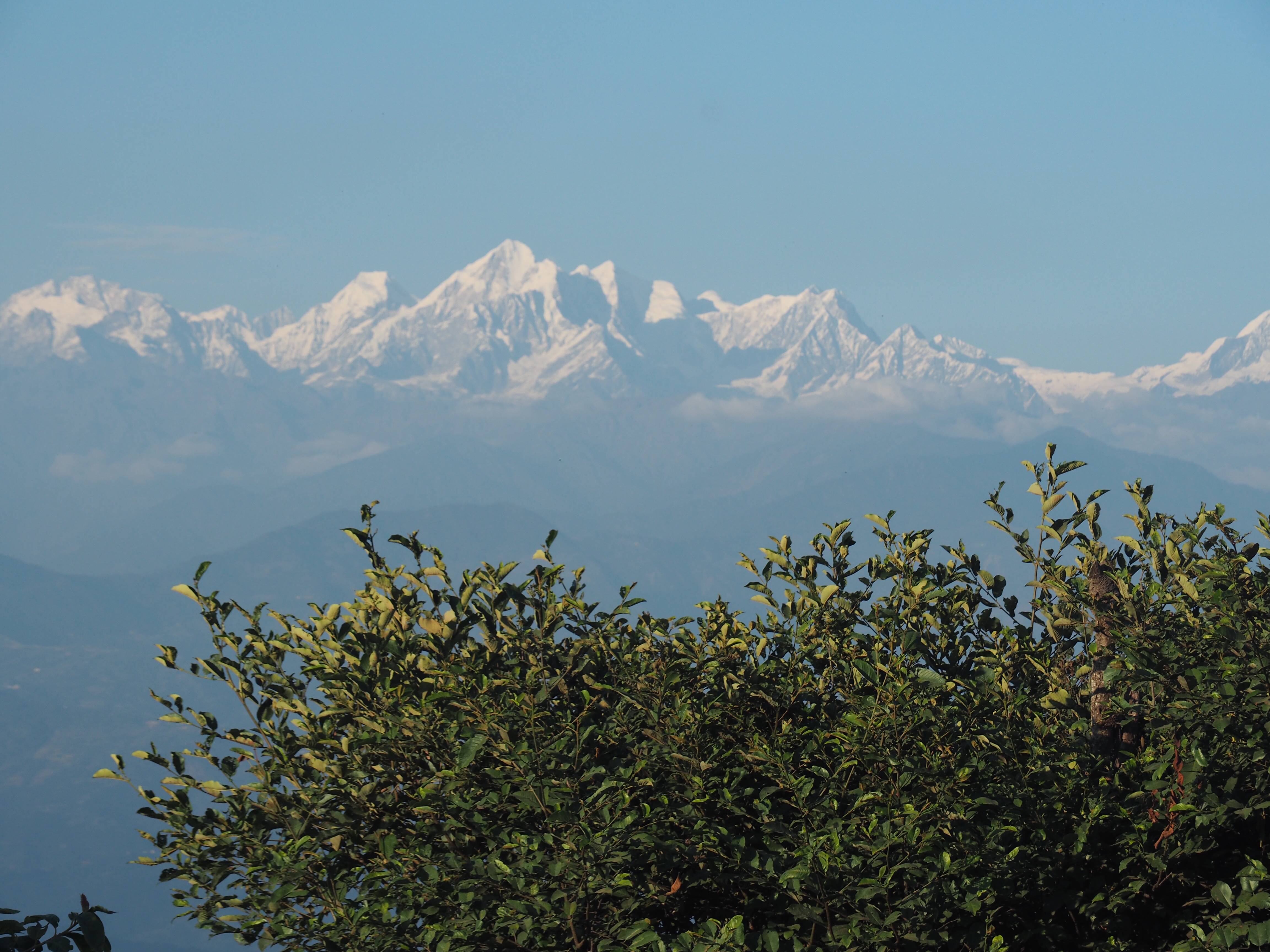
View of the Himalayas from my seat at breakfast.
My morning wasn’t nearly adventurous. I went to the gym and used the barely functioning elliptical before going for a long spa treatment. Maryse had a massage at the same time.
Maryse climbing up to her massage cottage.
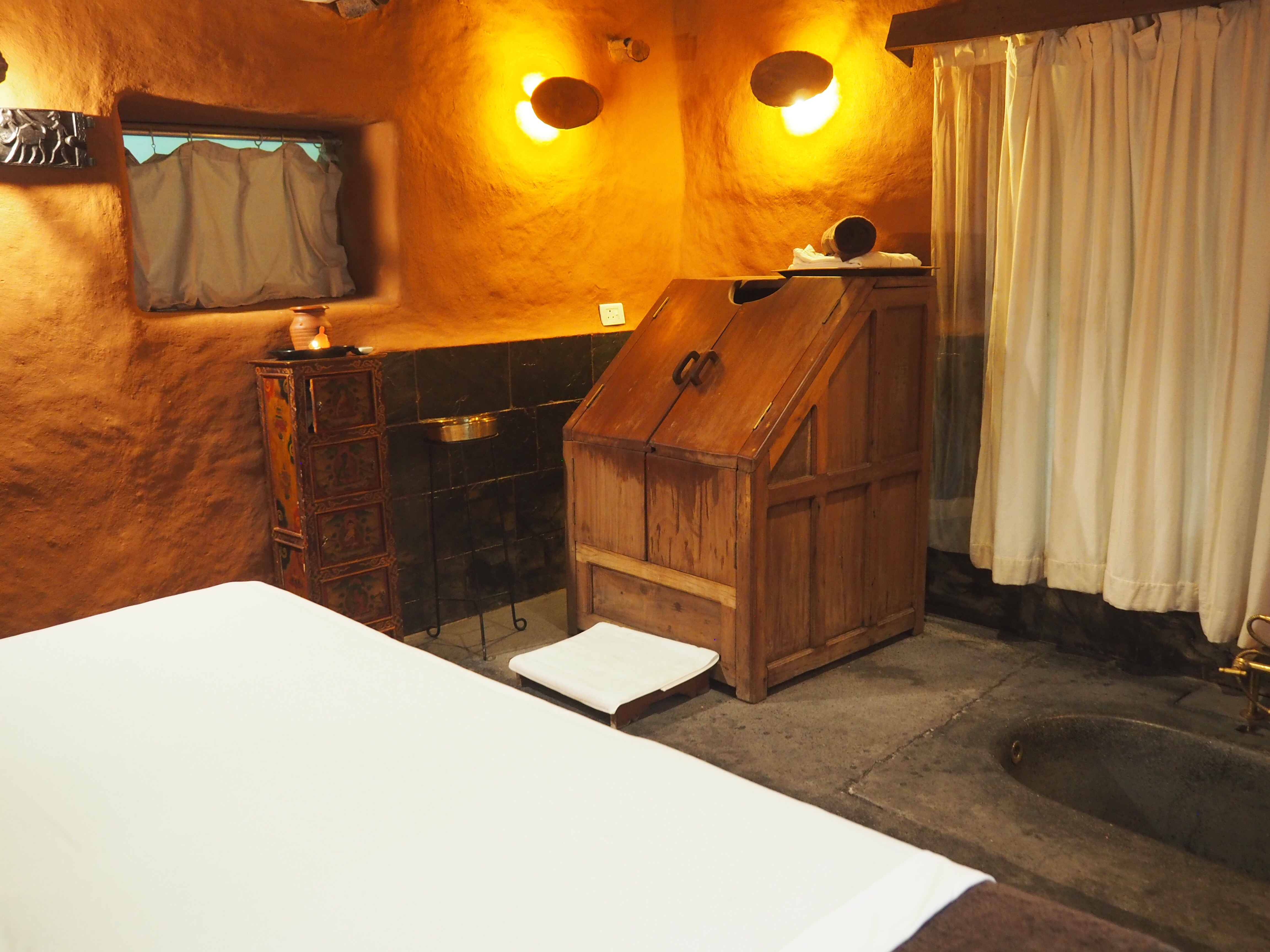
What I got was called “total wellness” and consisted of a massage, time in a steam bath, and a facial. They do the spa treatments in what they call “Spa Village”, essentially a group of buildings that are situated about half way up the hill. The cottages are well equipped for anything one might want. I learned that the steam bath is an Ayurvedic one which means the body is hot and the head is cool. In this photo you can see the thing I sat in for that part.
The steam contraption.
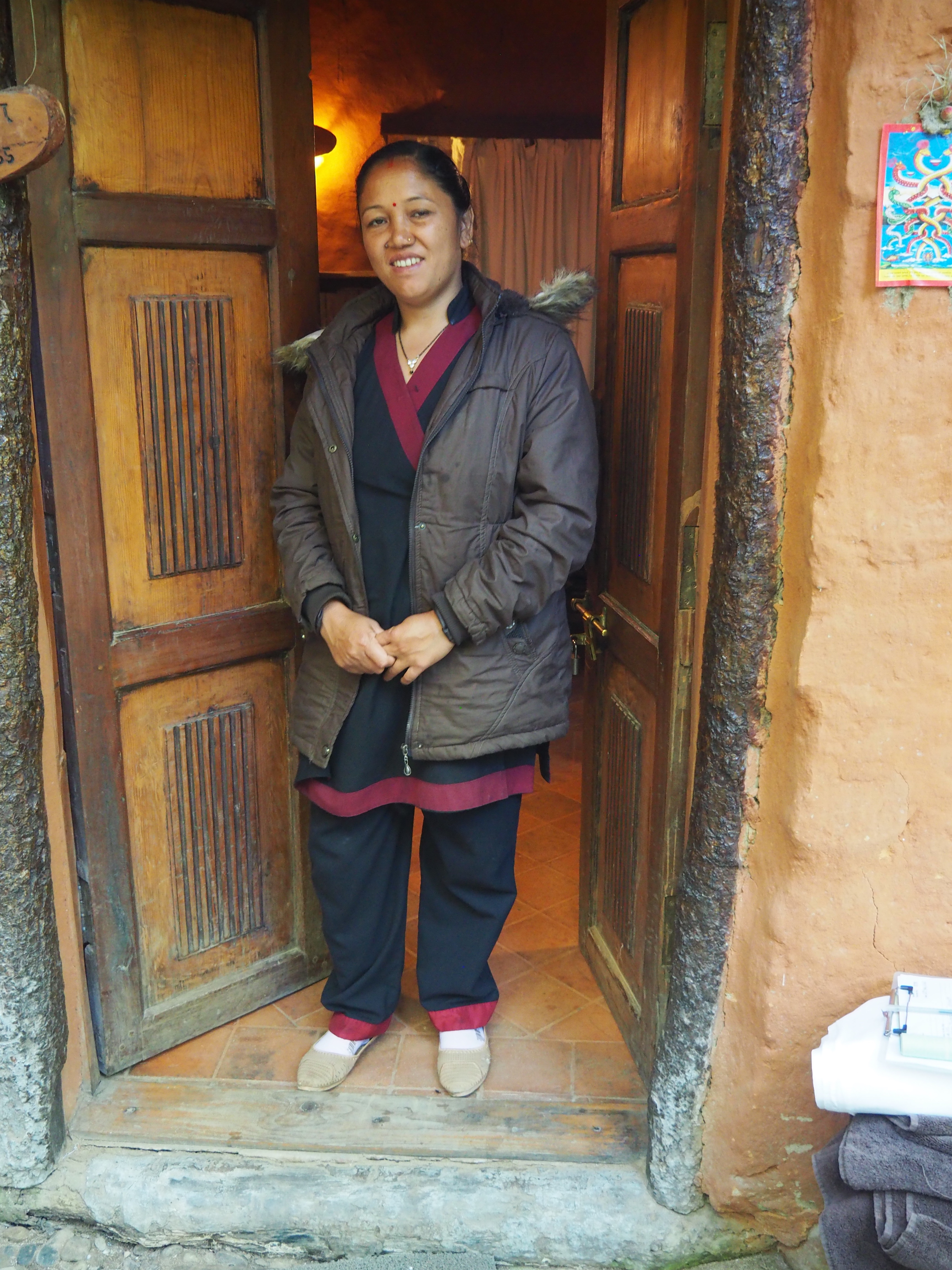
The woman who did the treatments is named Bala. She comes from about 500 kilometers from here but now lives in this area with her mother and six year old “baby”. Her husband has been in Qatar for four years and will return in another year or so. You may remember that our Nepali guide told us that many people go to the Middle East for work.
Bala.
After I was finished, Kathy and I had a quick, albeit late, lunch by the pool before I went to a meditation class and she went to another cooking class.
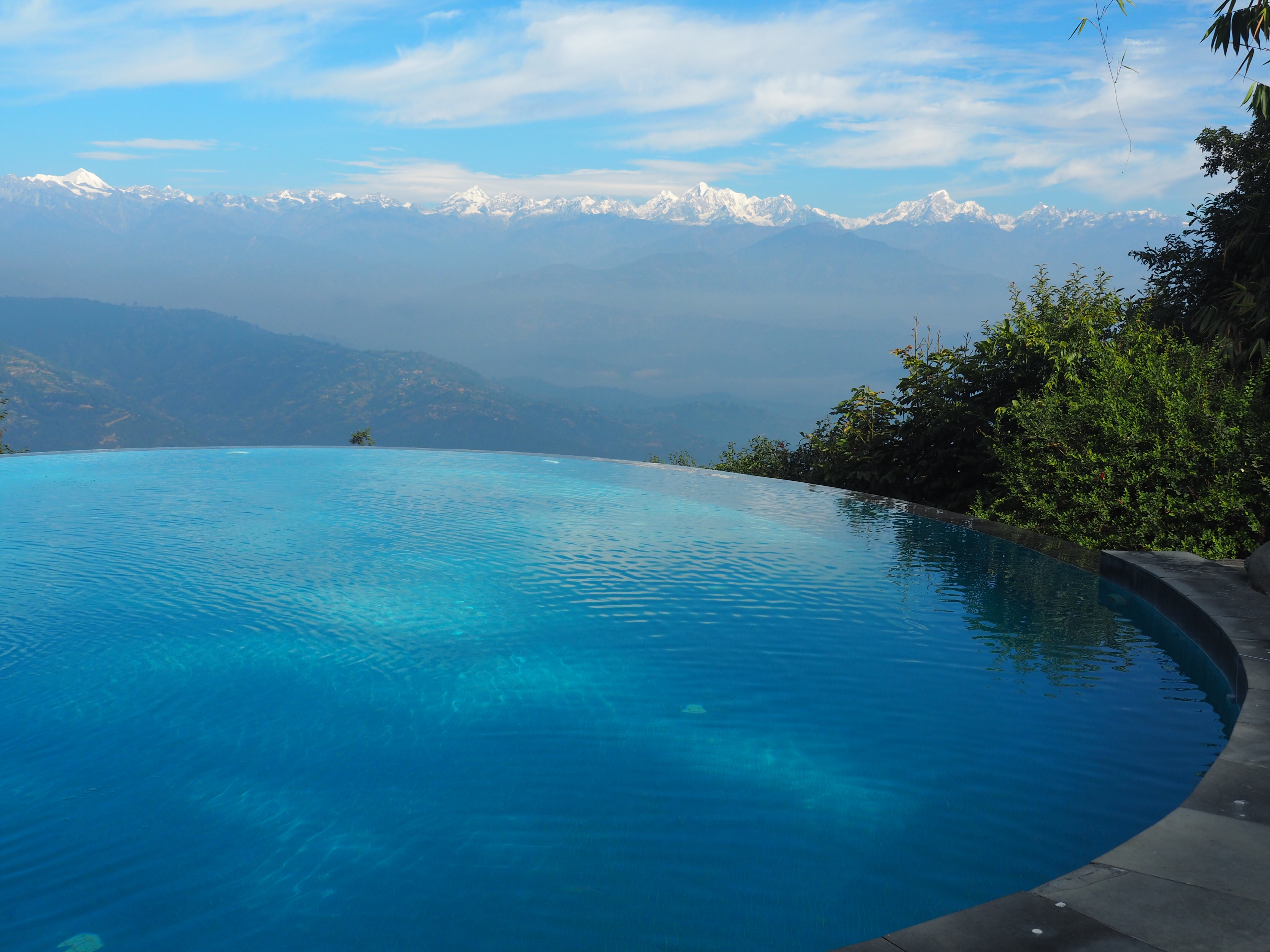
The pool is beautiful!
Infinity pool.
The meditation was “sleeping meditation”. I am usually quite able to understand people who speak English with strong accents. However, I couldn’t understand a word spoken by the instructor. I used it as a time to lie still and relax…that can’t hurt anyone!
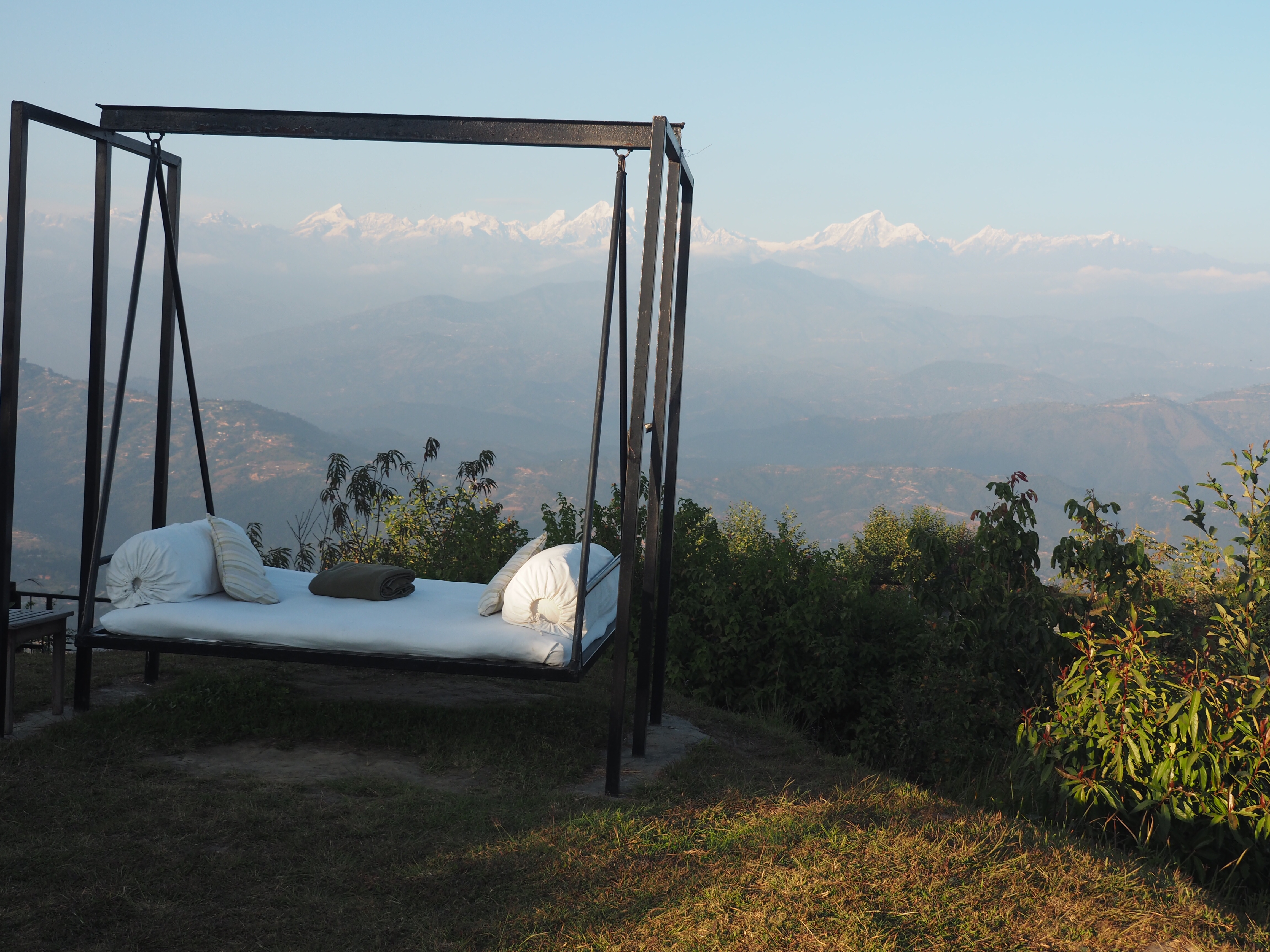
The Meditation Hall is near the very top of the resort. I hadn’t really explored that area before so did so after the class. At the top of the mountains there are many, many spots to rest and enjoy the views.
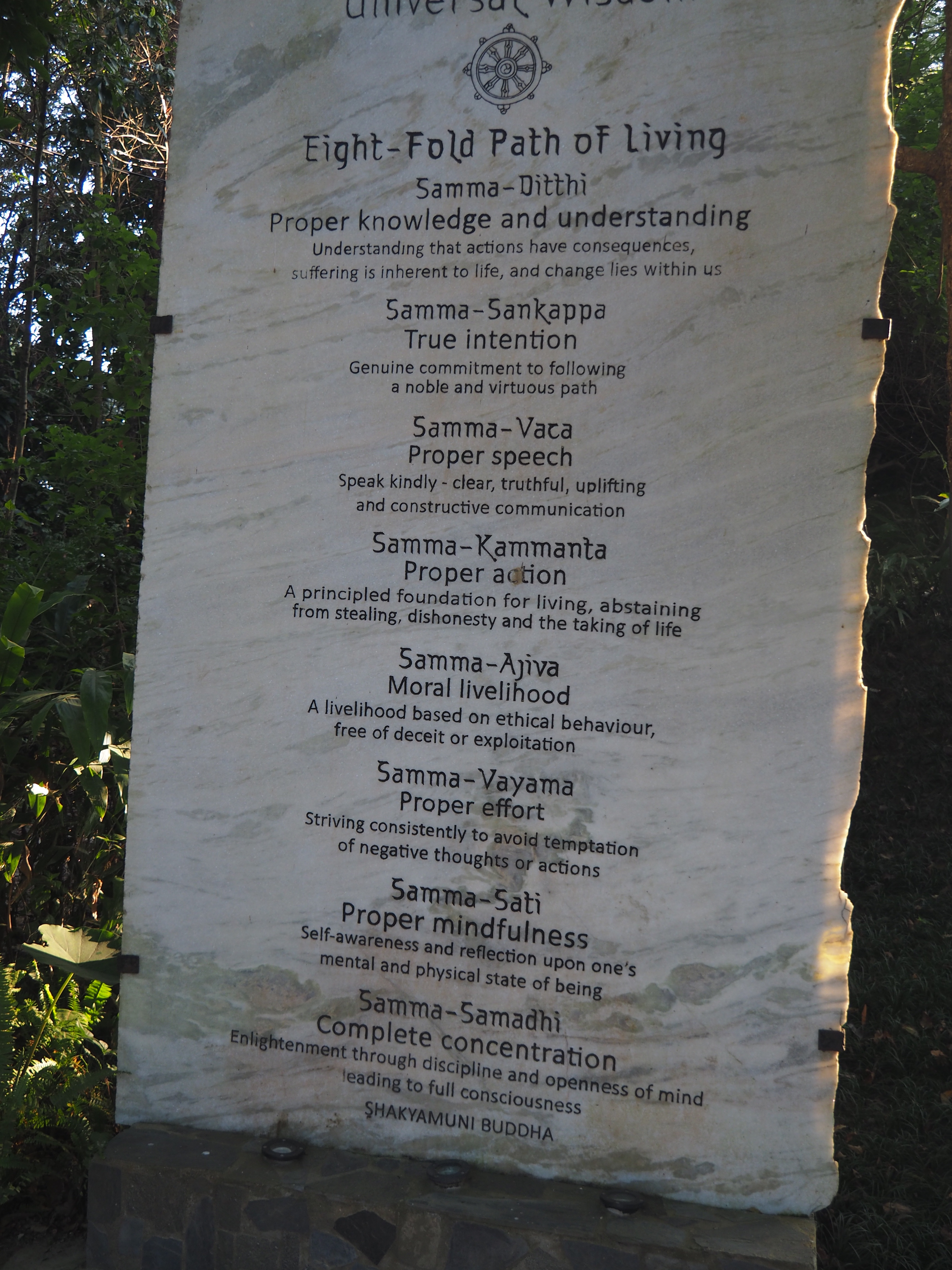
I mentioned the eight-fold path for living in a post from Bhutan. The “rules” are carved in a large stone here:
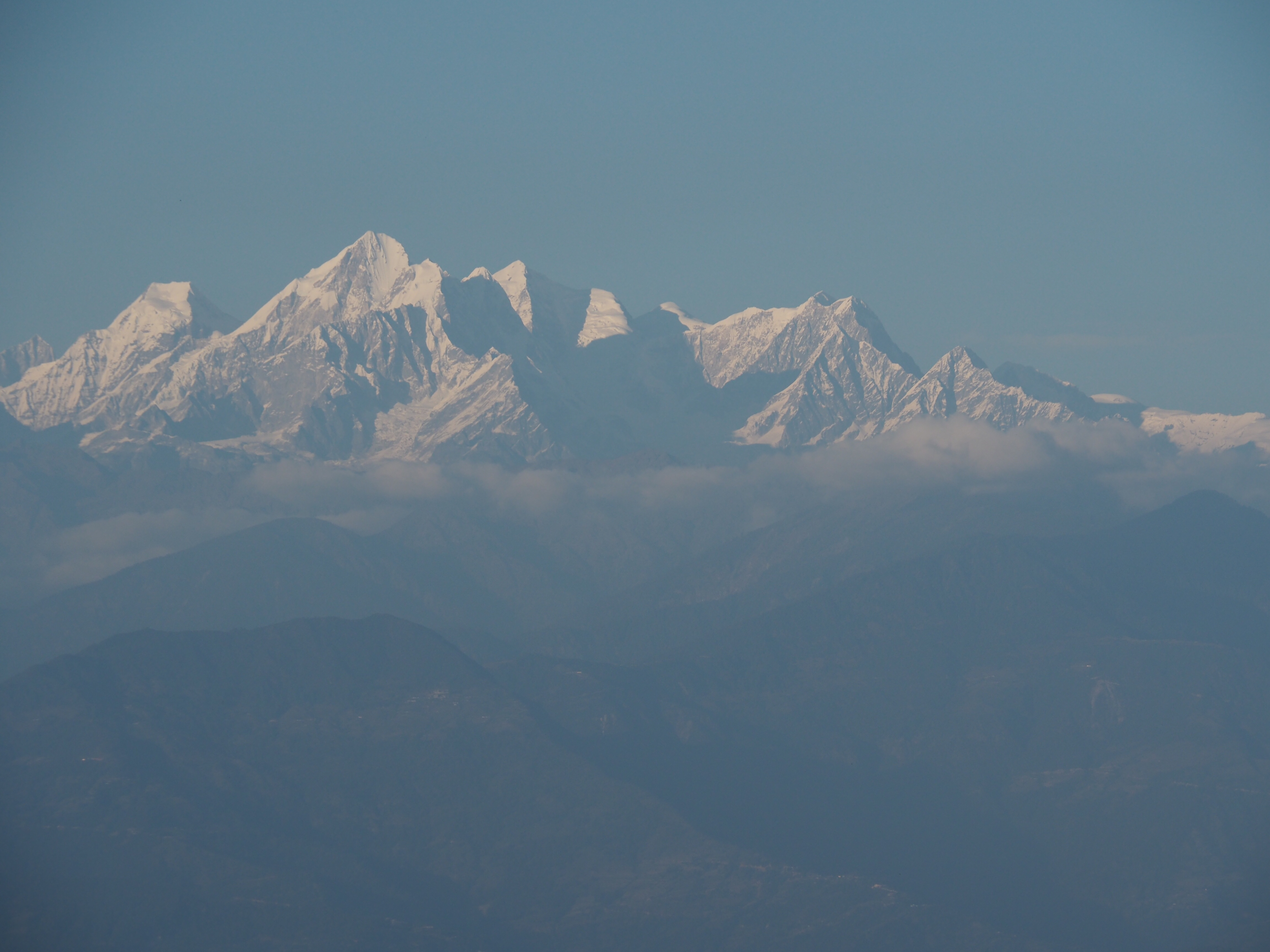
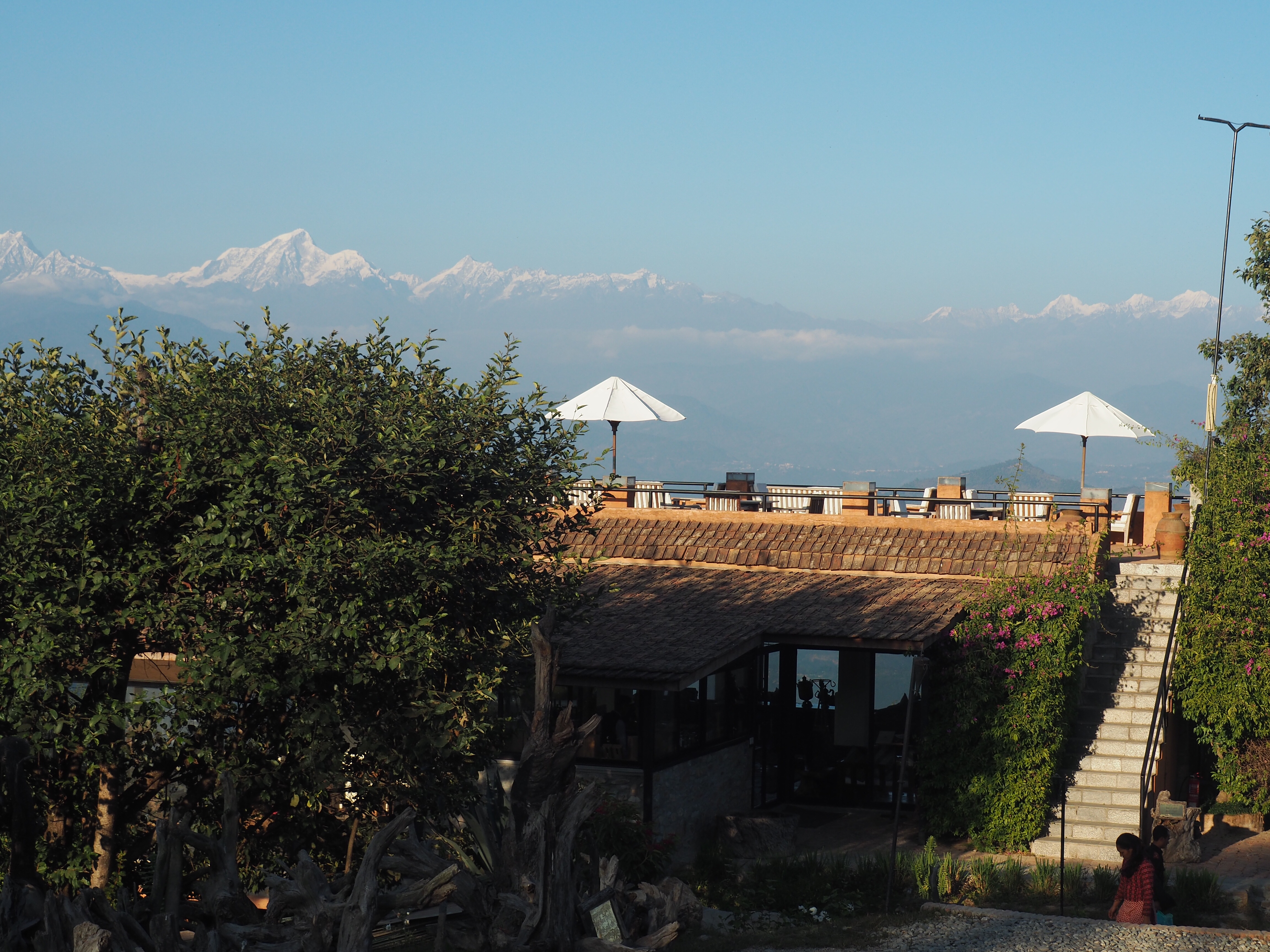
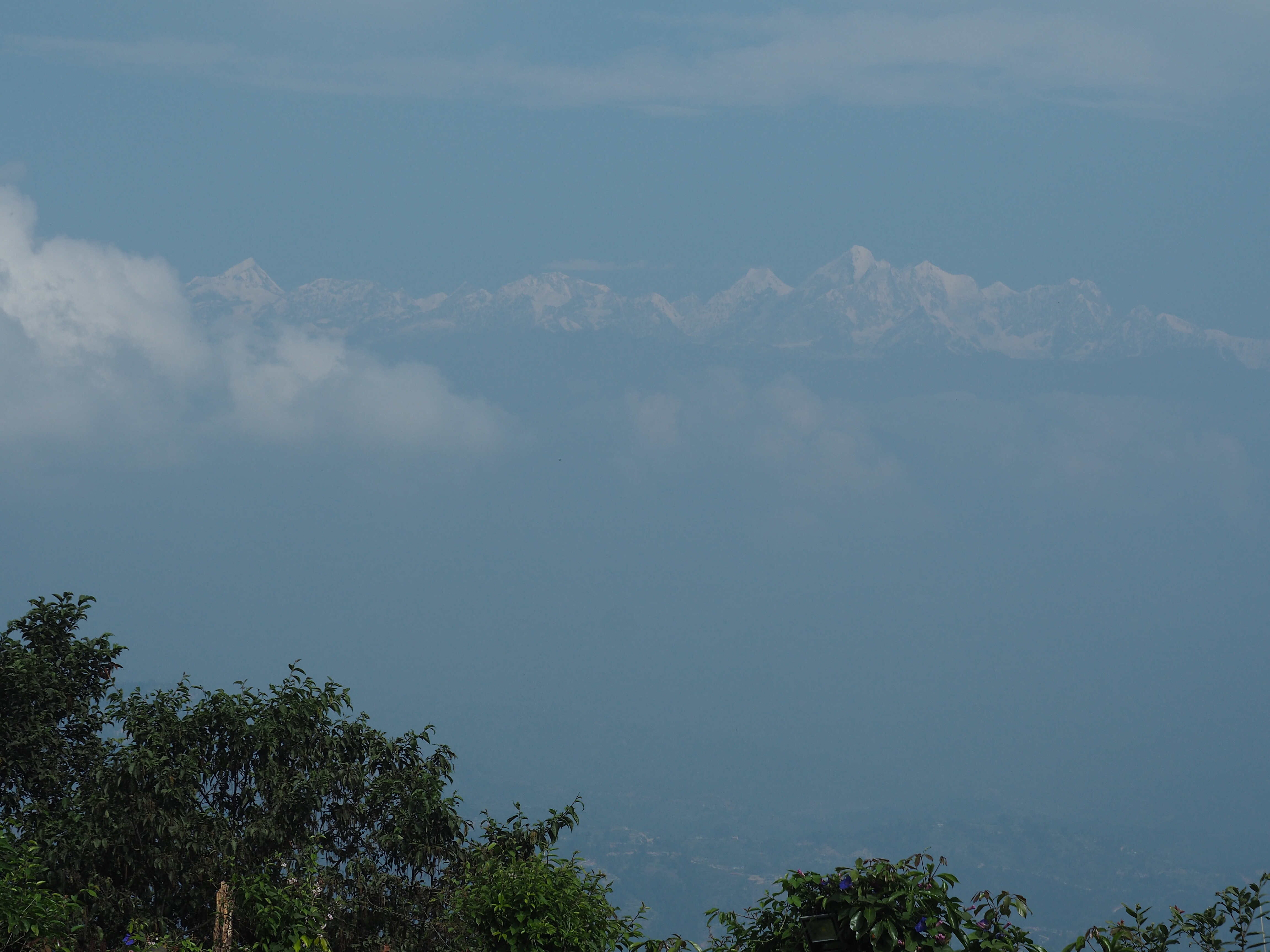
It has been a very clear day with great views of the mountains. I cannot get over the immensity of the Himalayas. The go on and on and are breathtaking. My photos do not do them justice!
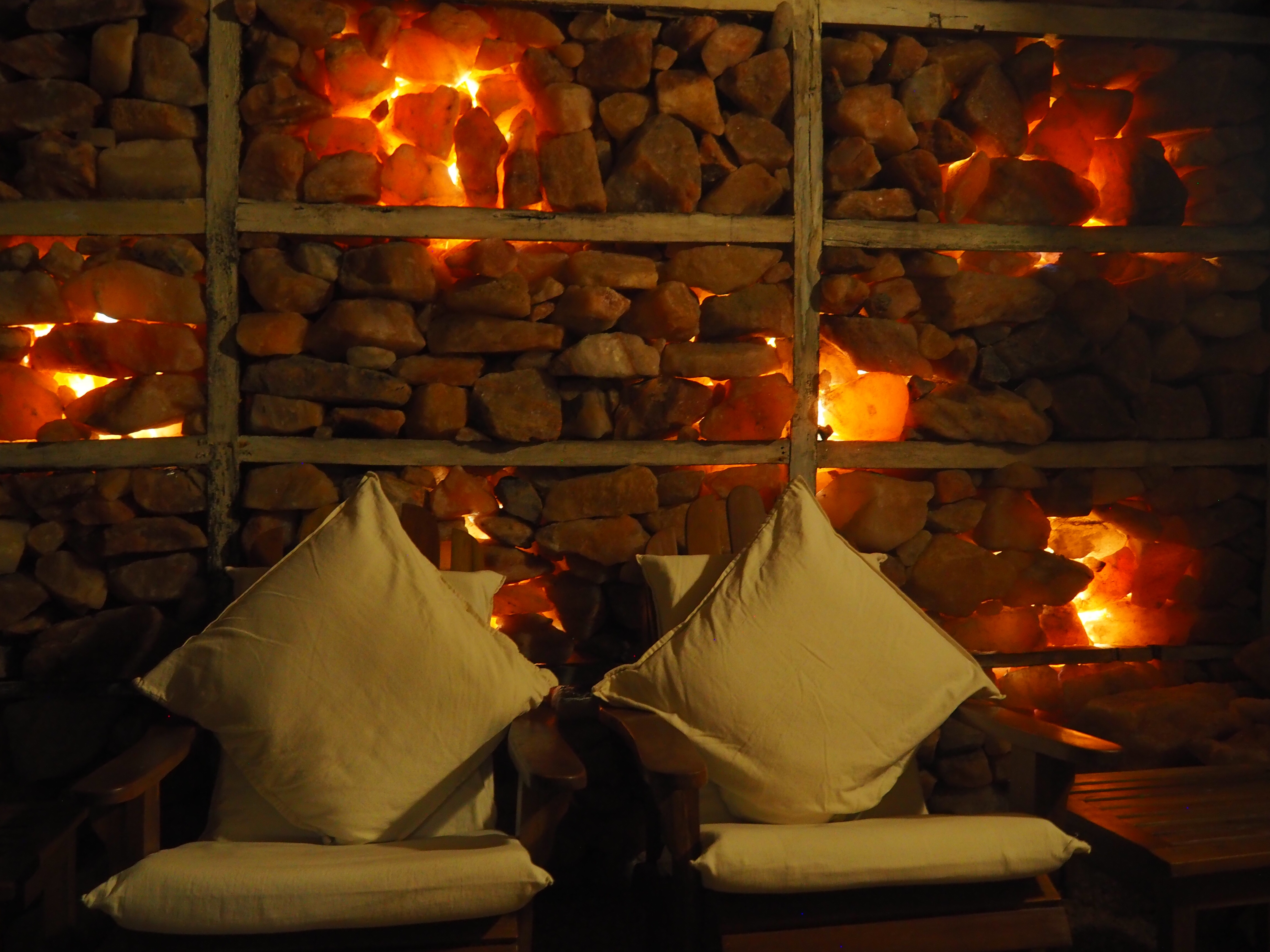
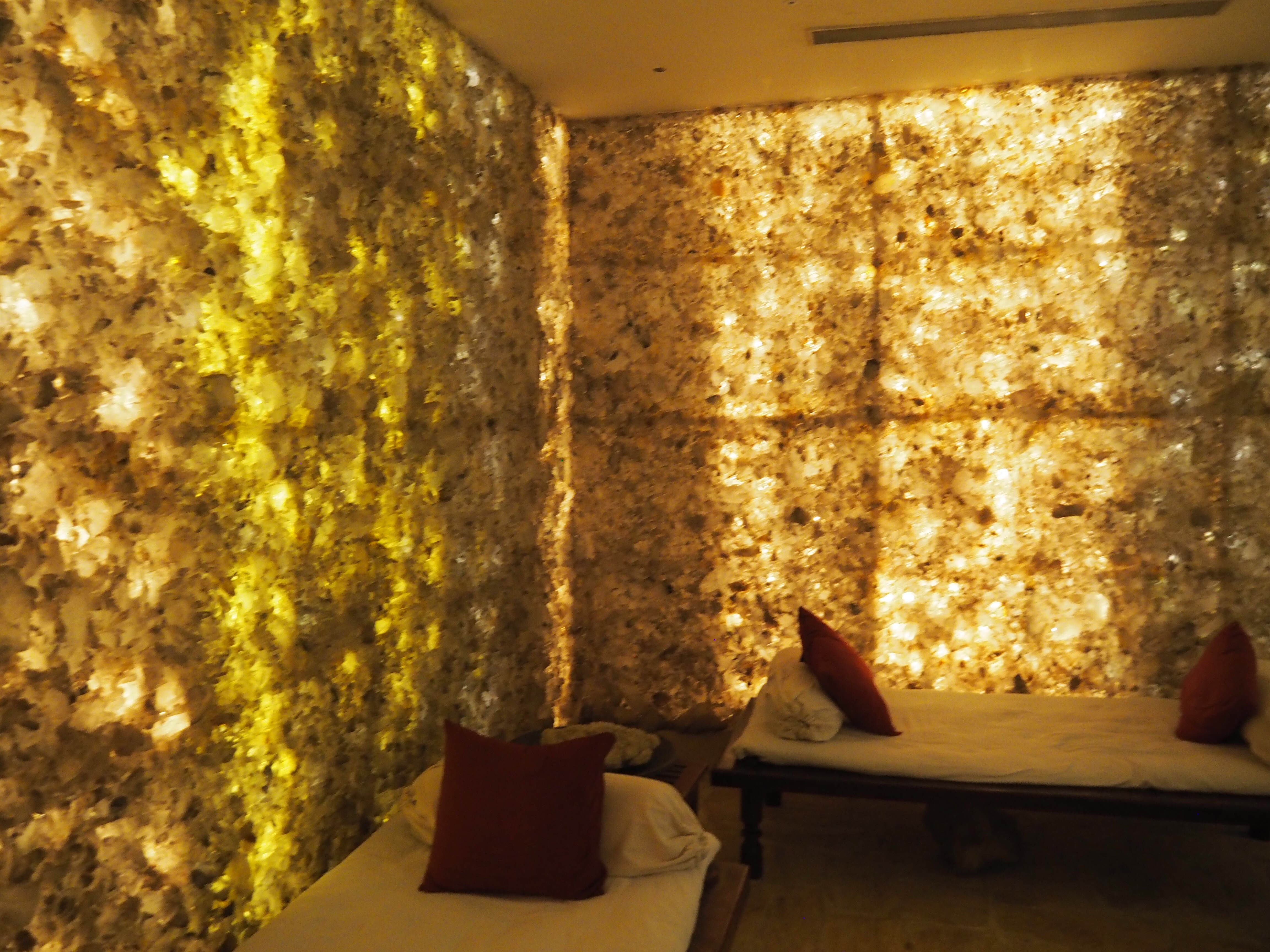
On the way back to my room, I stopped into the salt house to sit for awhile. I’m still not sure if it does any good, but like the meditation it certainly won’t hurt! Today I made sure that the lights were not so bright inside.
The salt room with mood lighting.
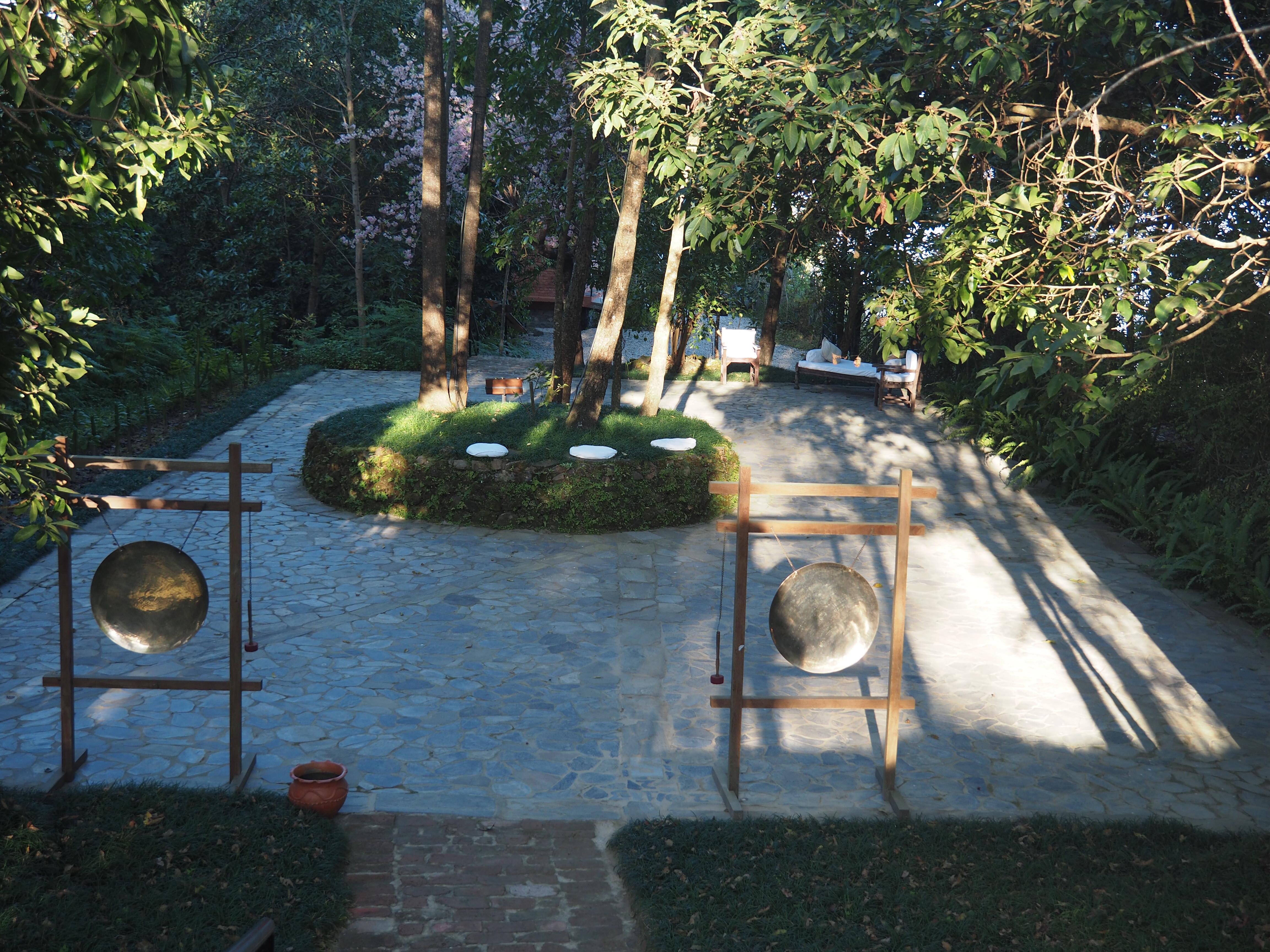
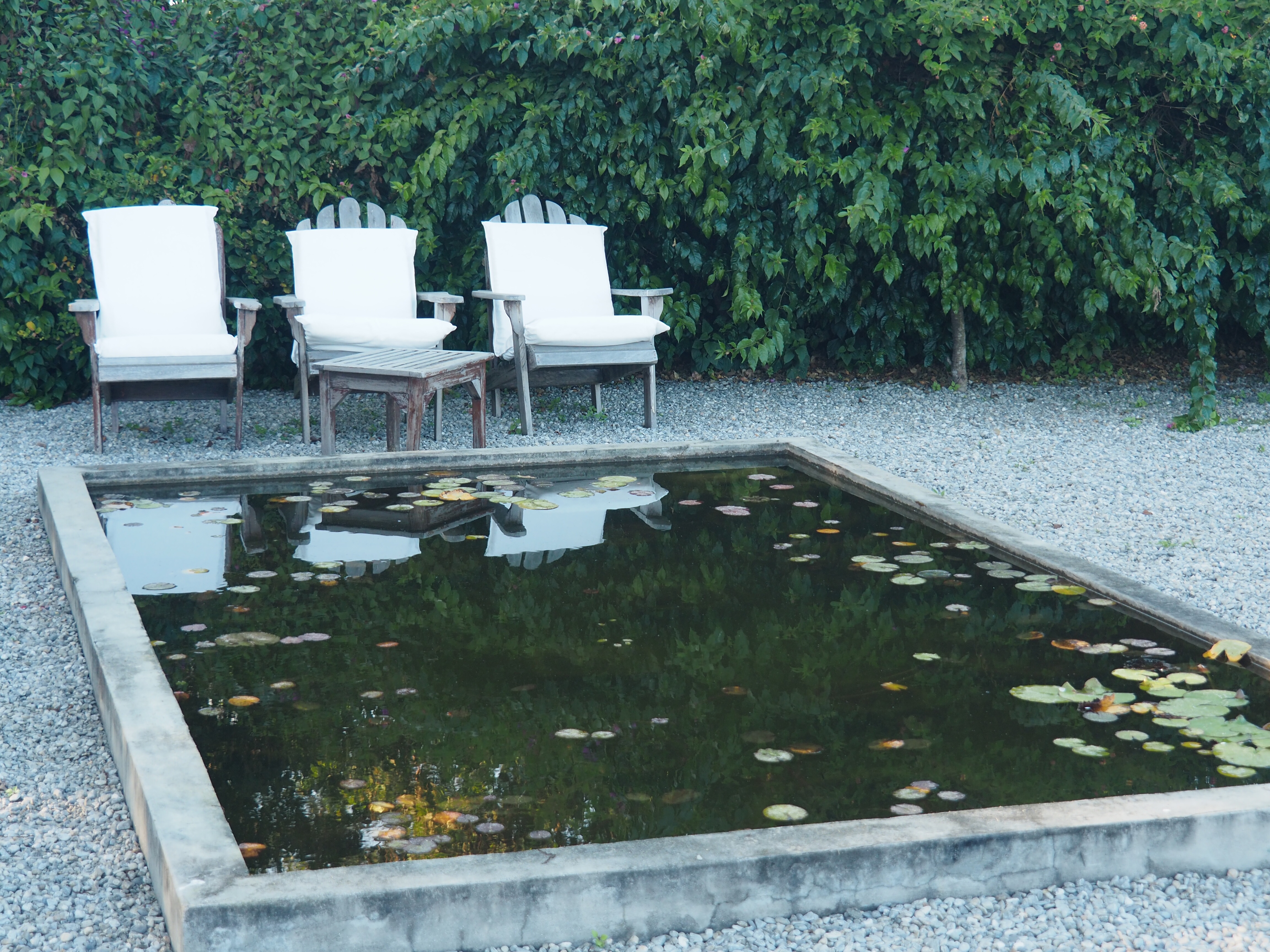
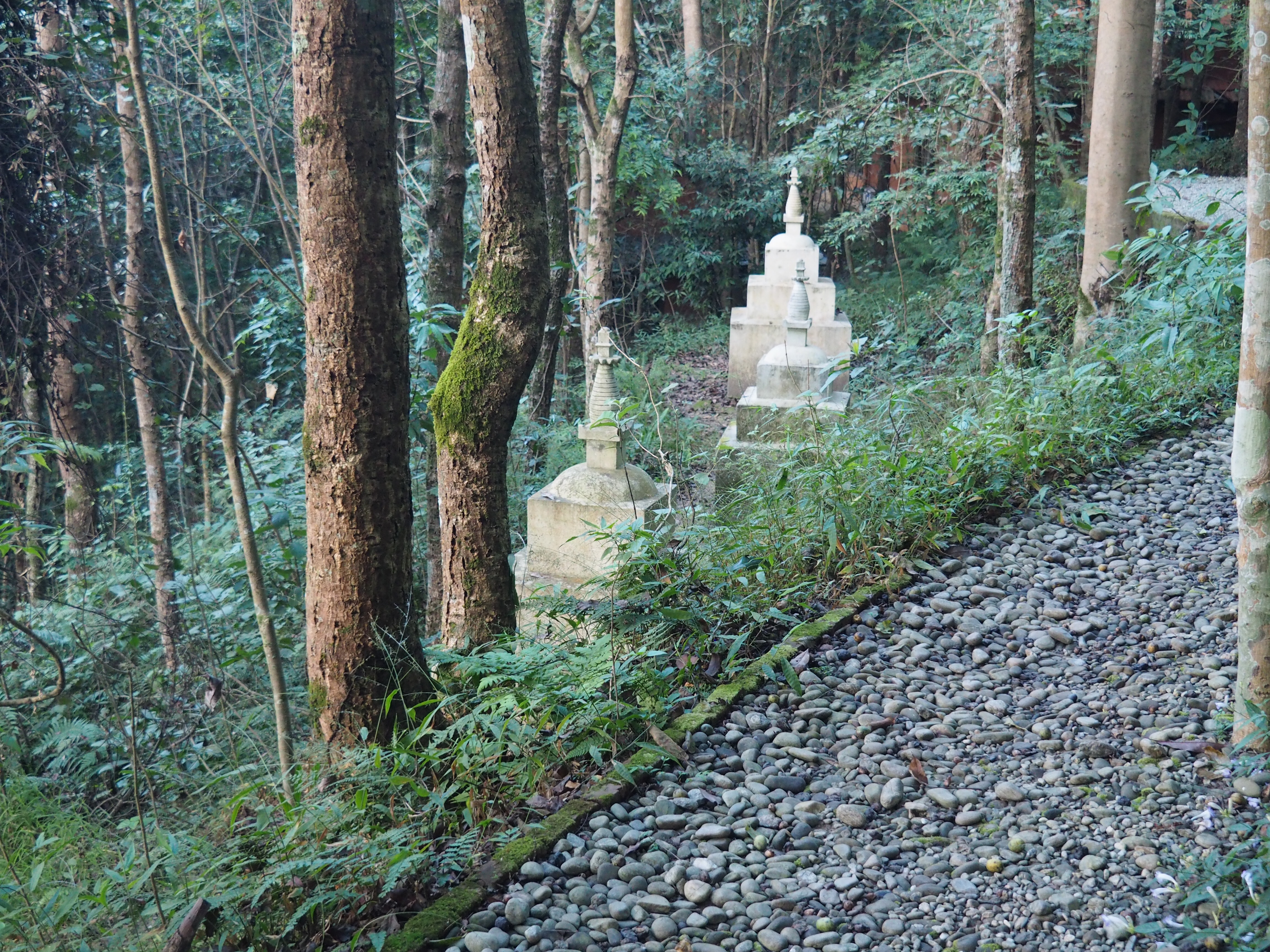
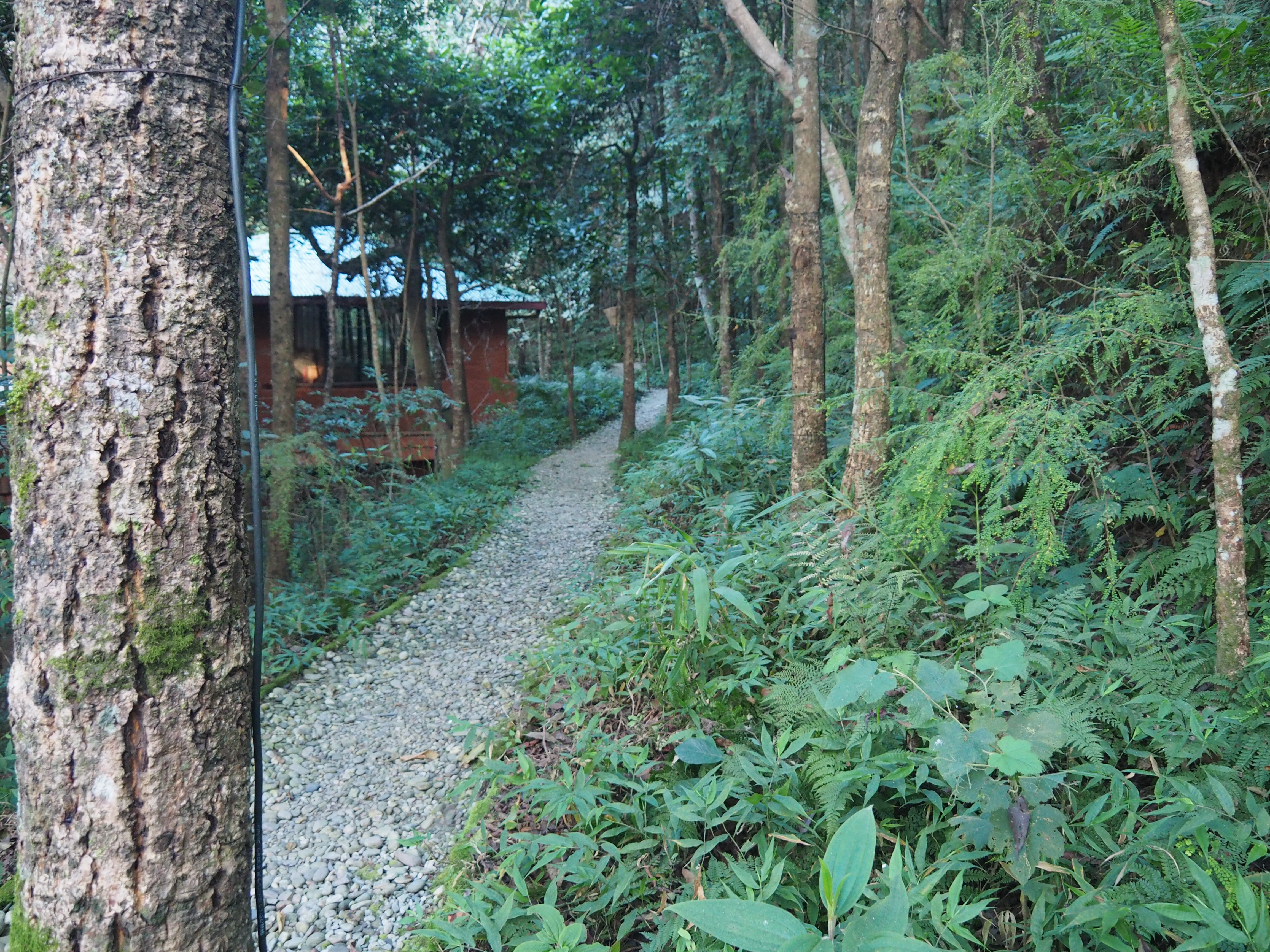
Here are some photos of the grounds that I took during my walk back to my room.
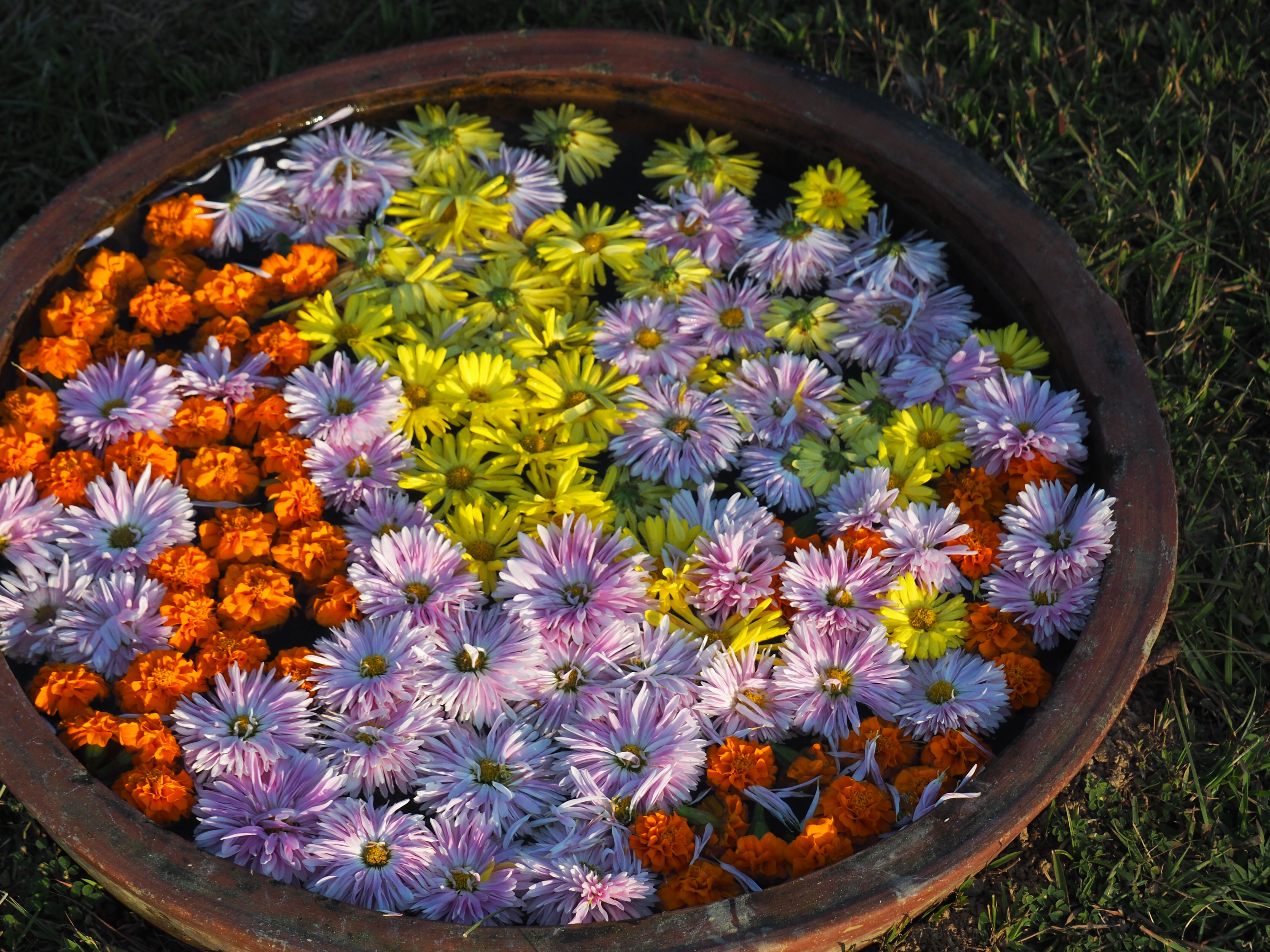
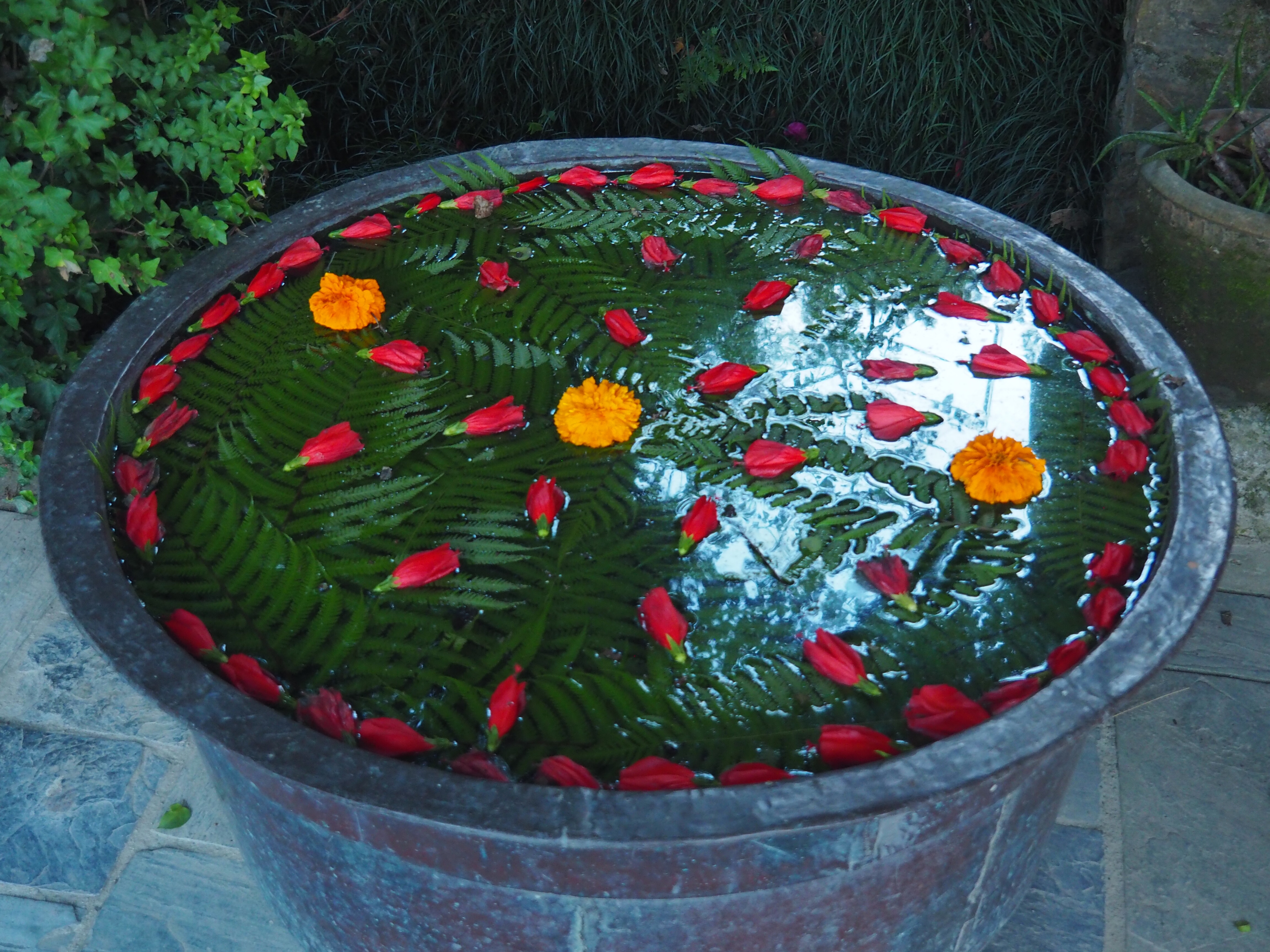
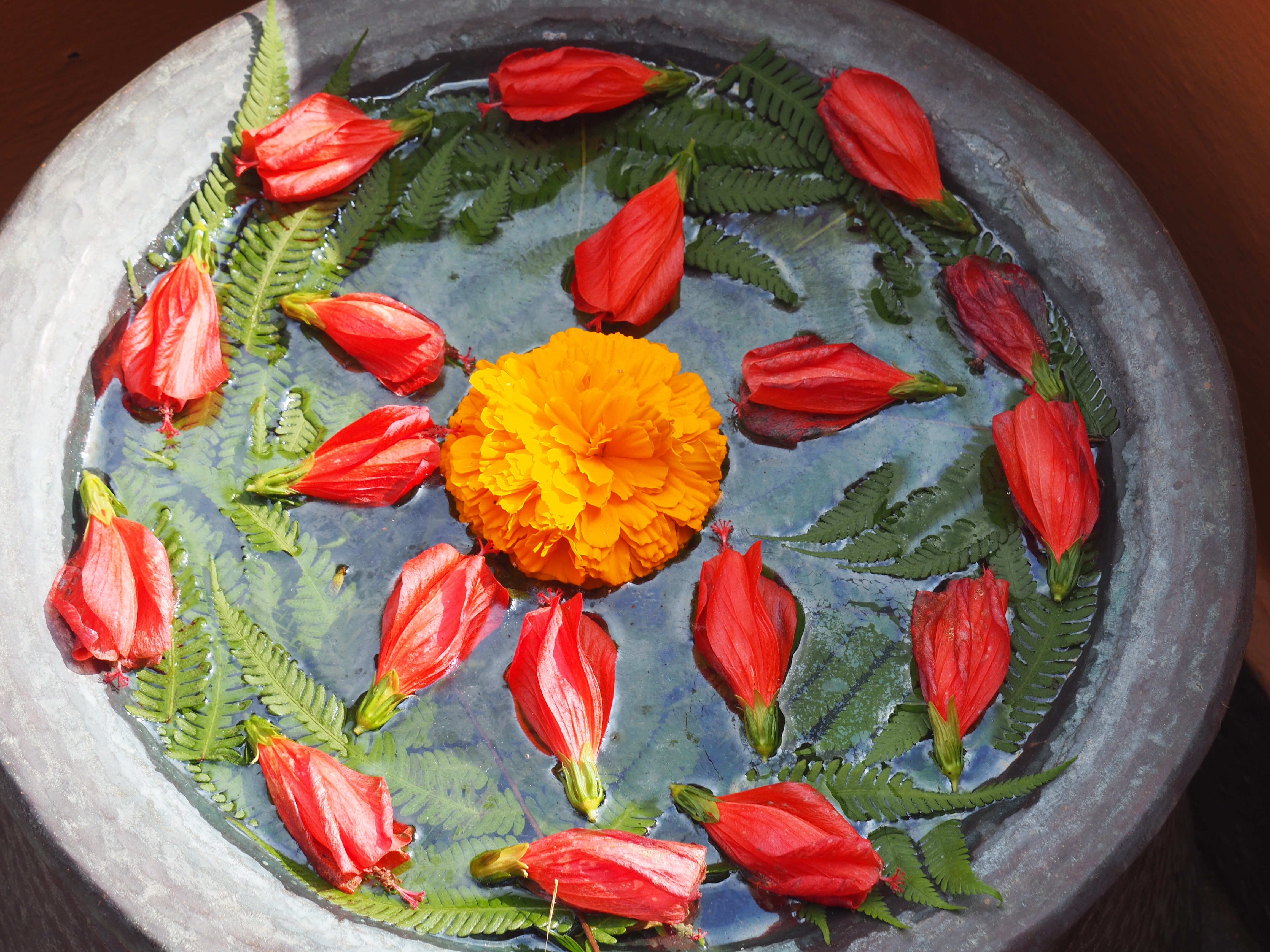
In many places they put these bowls with flowers.
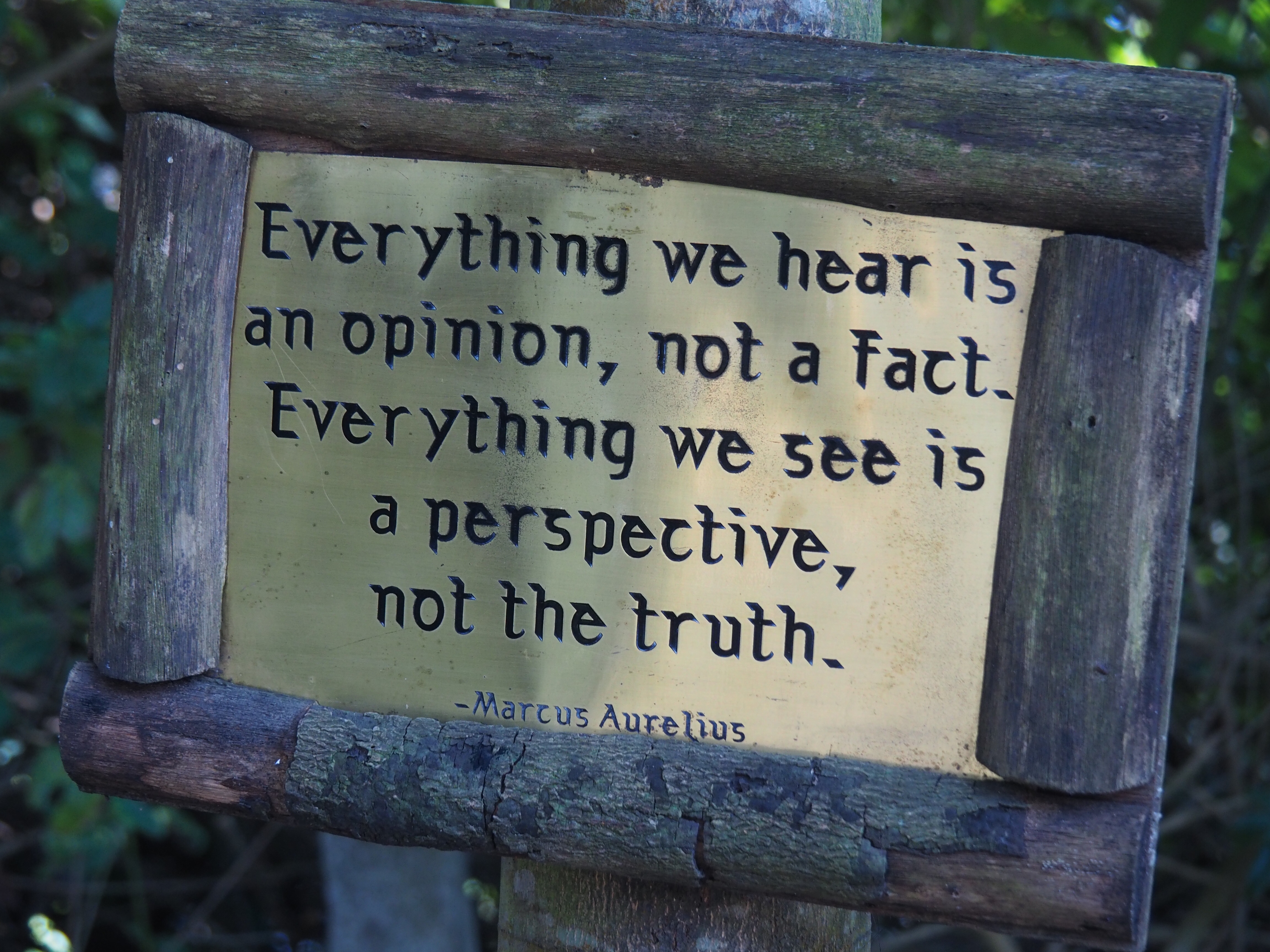
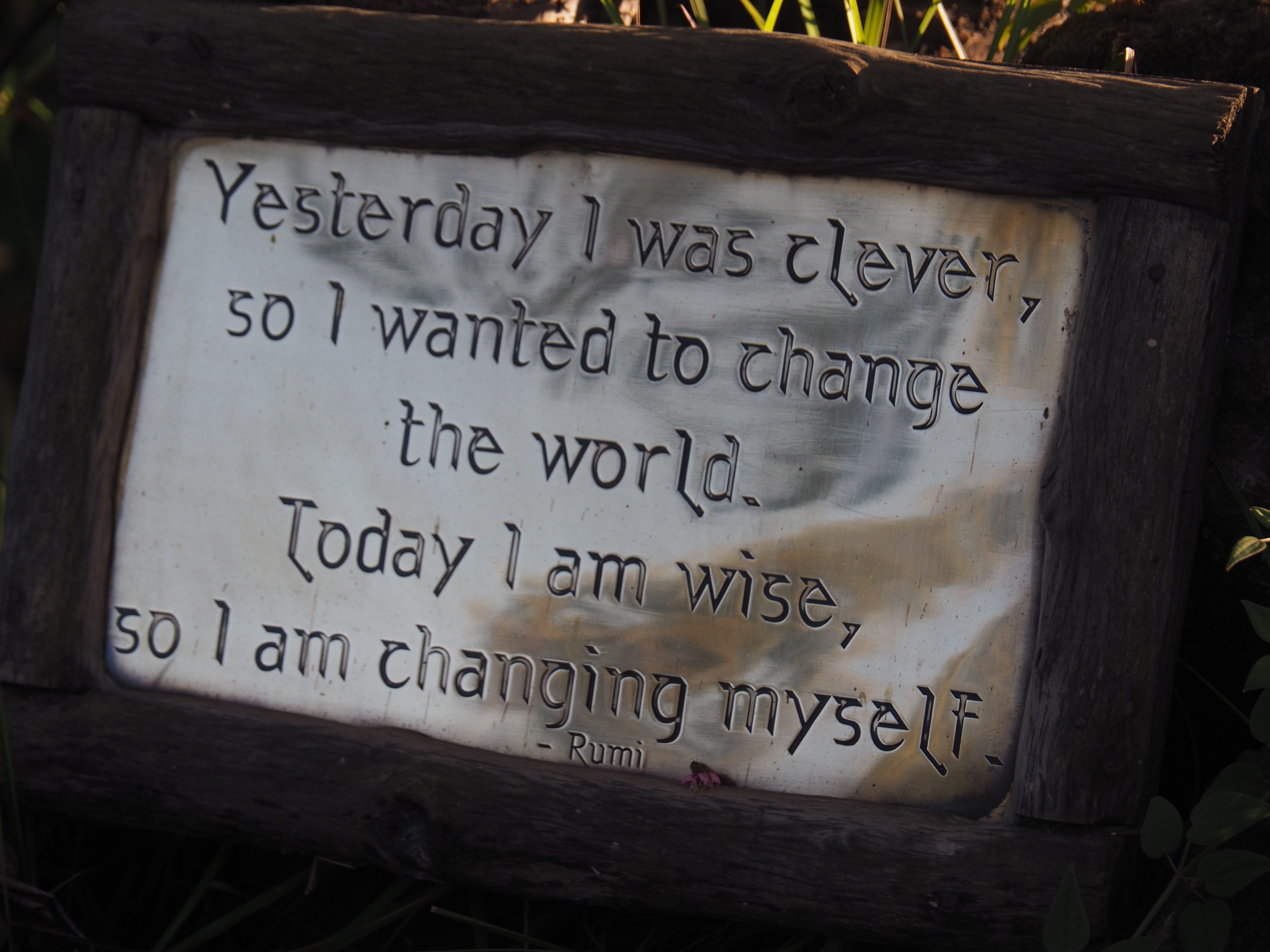
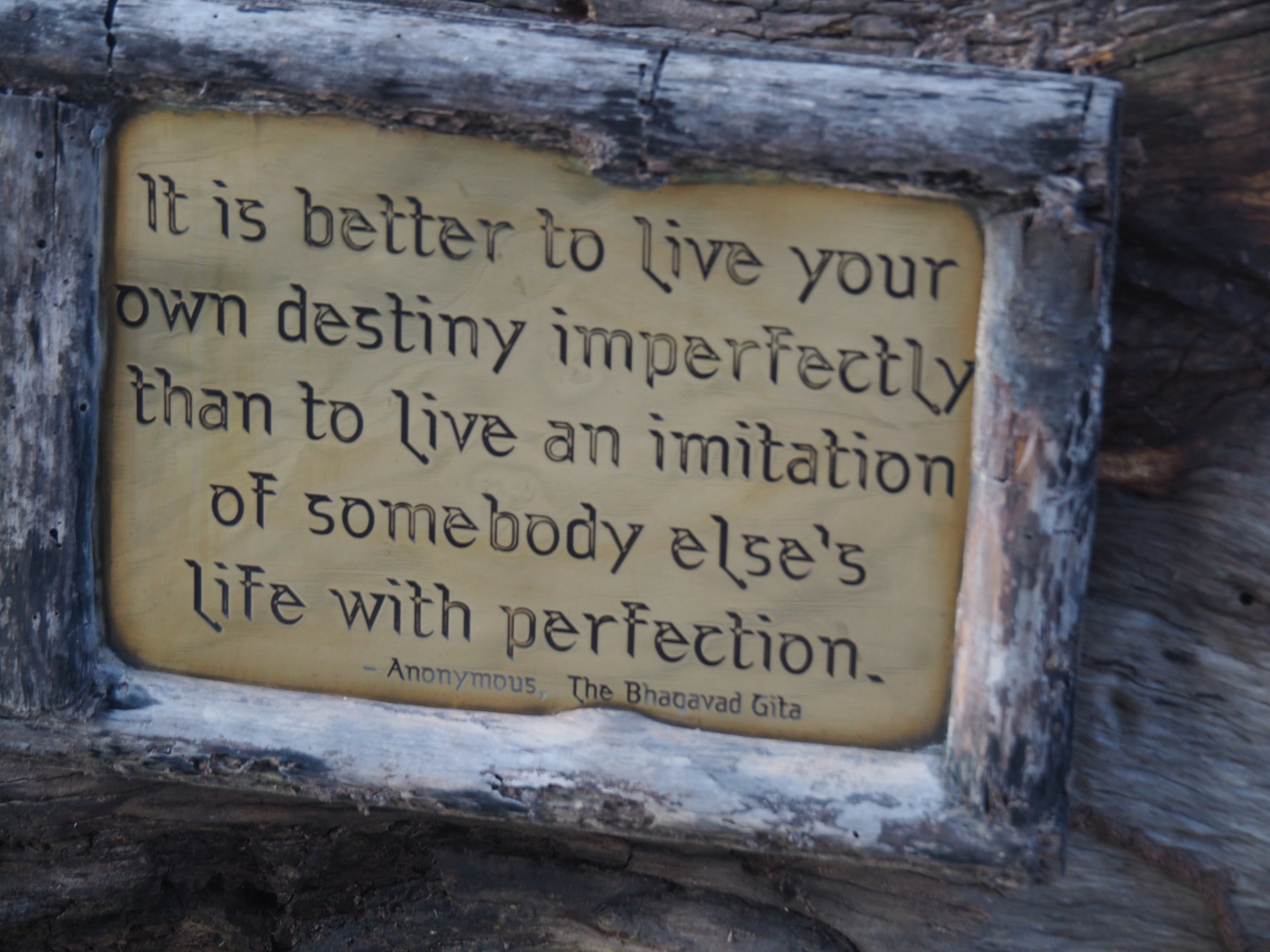
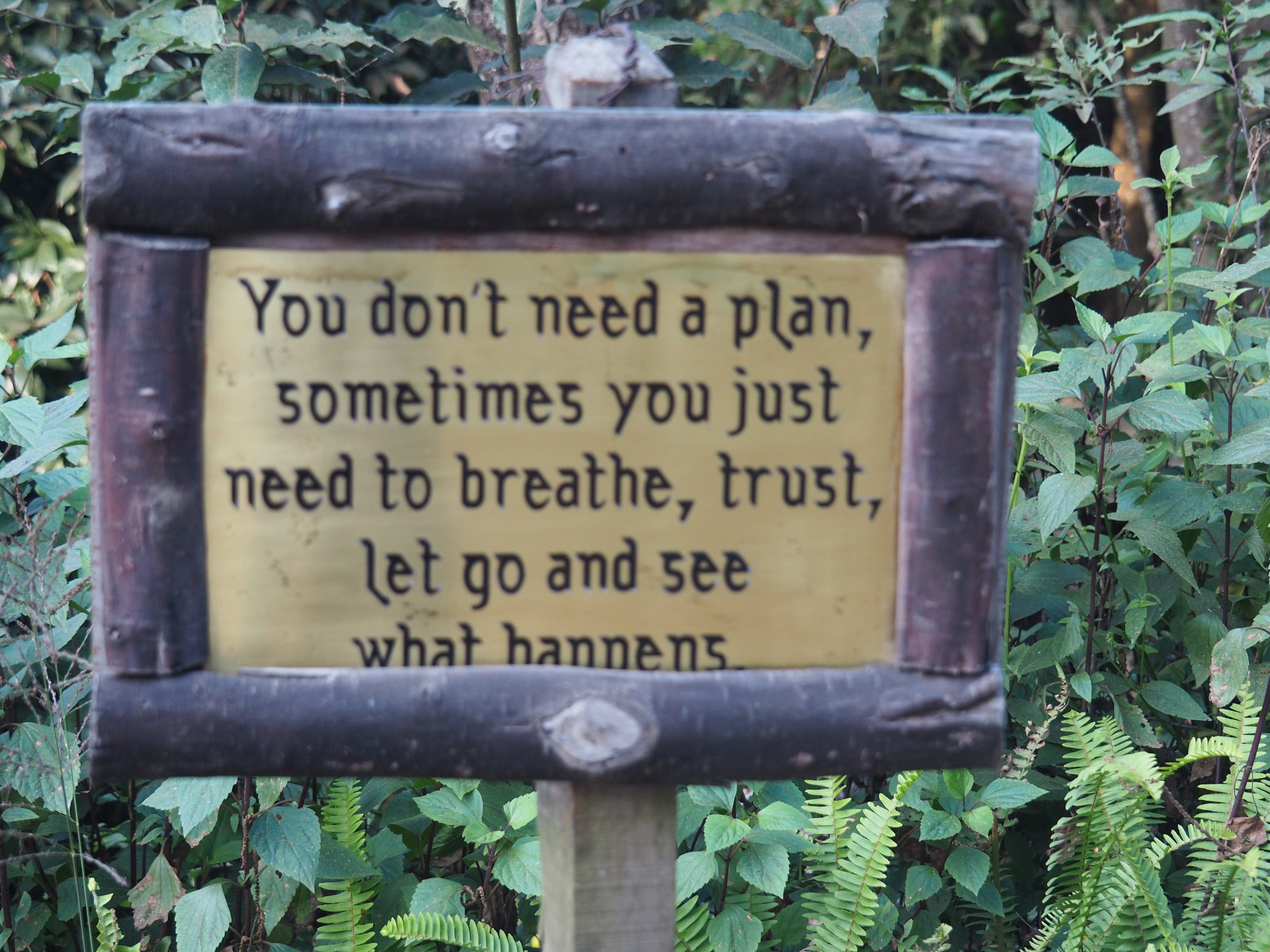
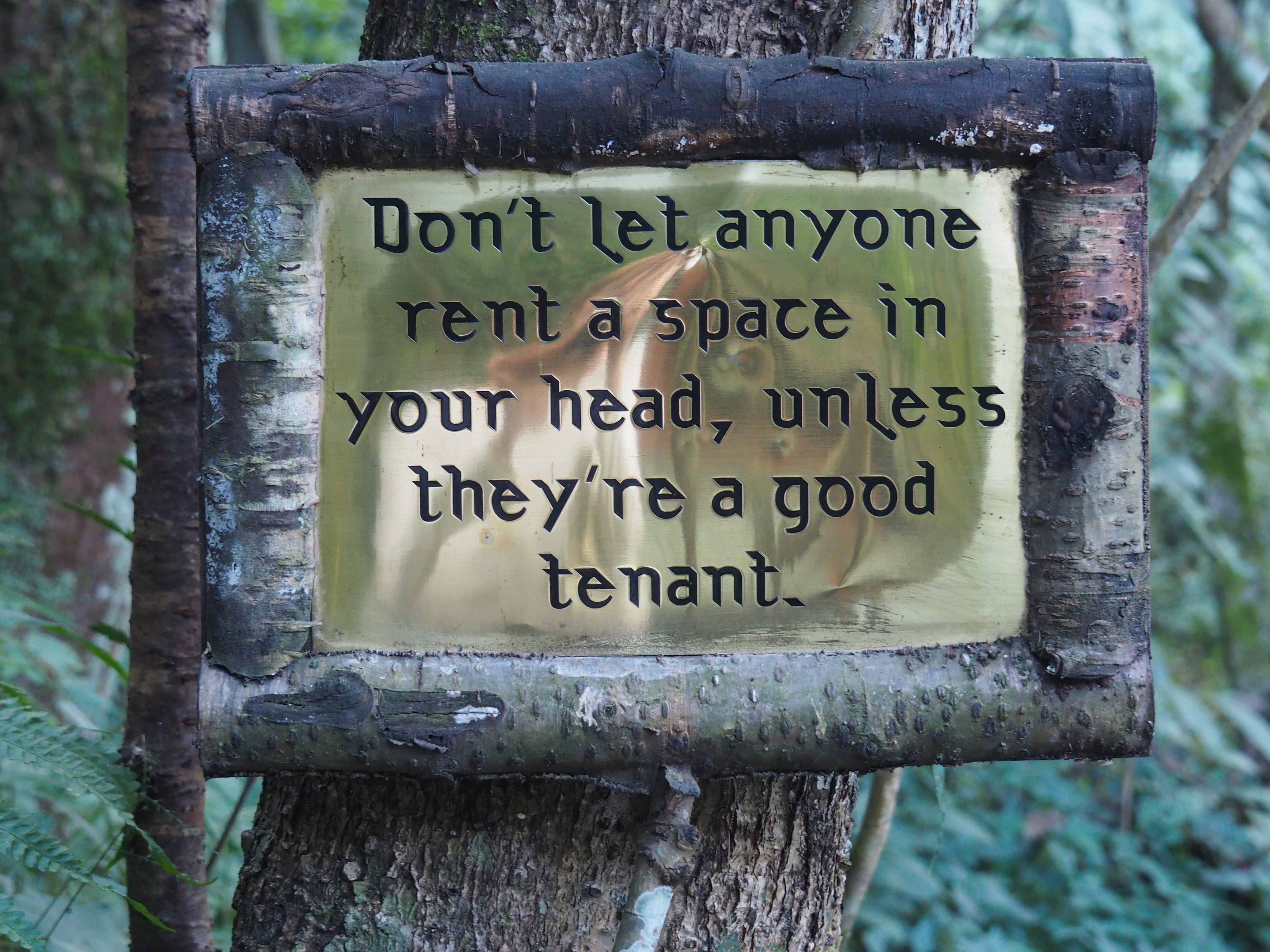
Of course, the day wouldn’t be complete without some of the signs! Again, I apologize if any are duplicates from previous days.
I had some down time in my room before dinner, however, it wasn’t peaceful! There is some sort of festival in the town at the bottom of the hill and it is loud! When I went to dinner I saw the doctor and he told me that there was a party going on at a hotel down the hill. Fortunately, it had ended before I went to bed.
I spent time today off and on trying to arrange a late check out from the hotel for Kathy and me because we don’t have to leave here until 4 pm. I contacted the company rep in Boston last night and finally began to get some answers today. It is interesting that no matter where I am on the property, they can find me for a phone call. It’s either great service or a bit creepy. Nevertheless, Christian came through for us in a big way! If we couldn’t stay here, he had arranged a very nice spot for us to go in Kathmandu. Either way, we would be in good shape. On my way to lunch, the hotel guest services manager stopped me and said that they will allow us to stay in our rooms until our departure time. I think there are some good tips in the future for Christian and the manager.
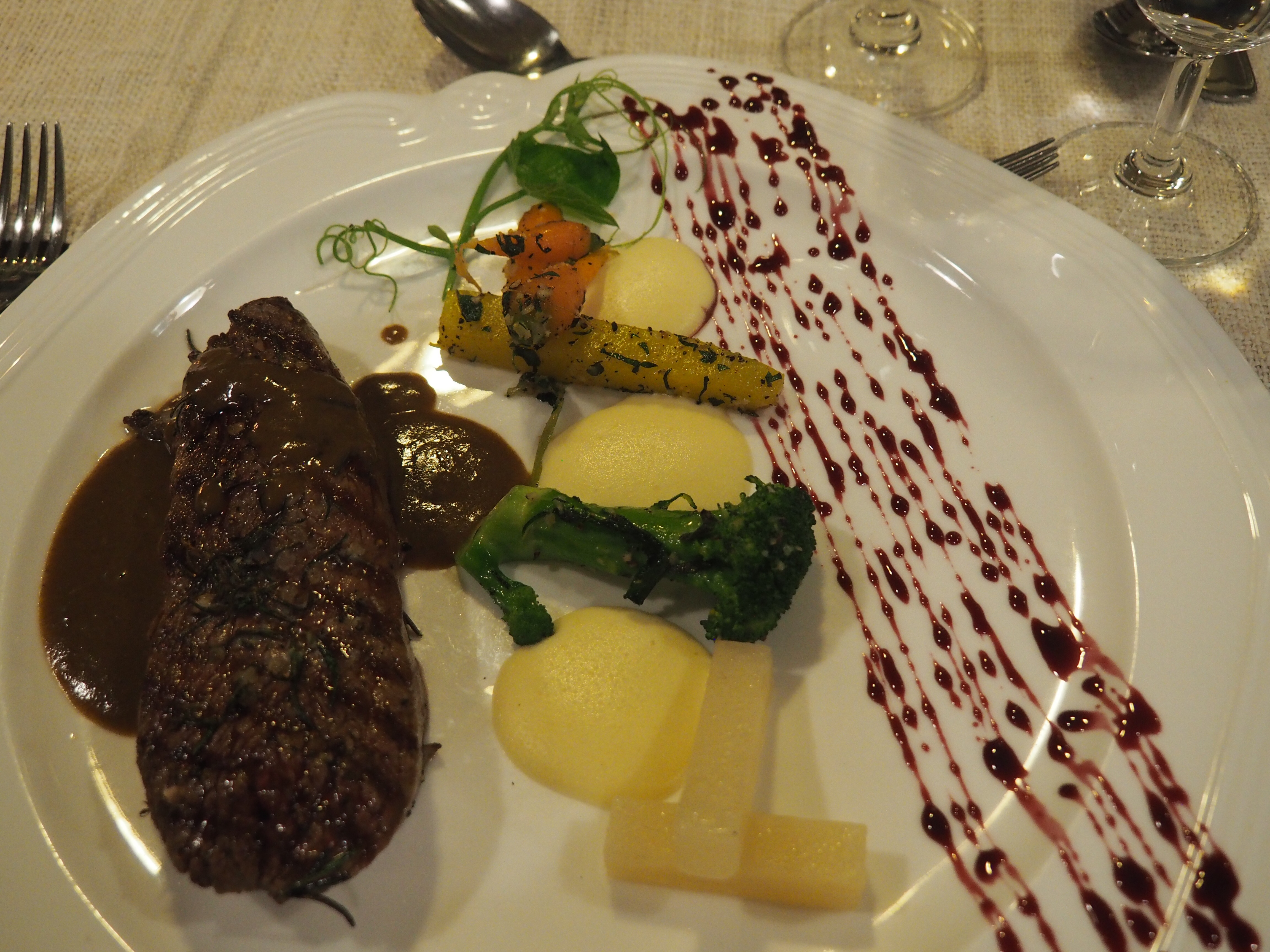
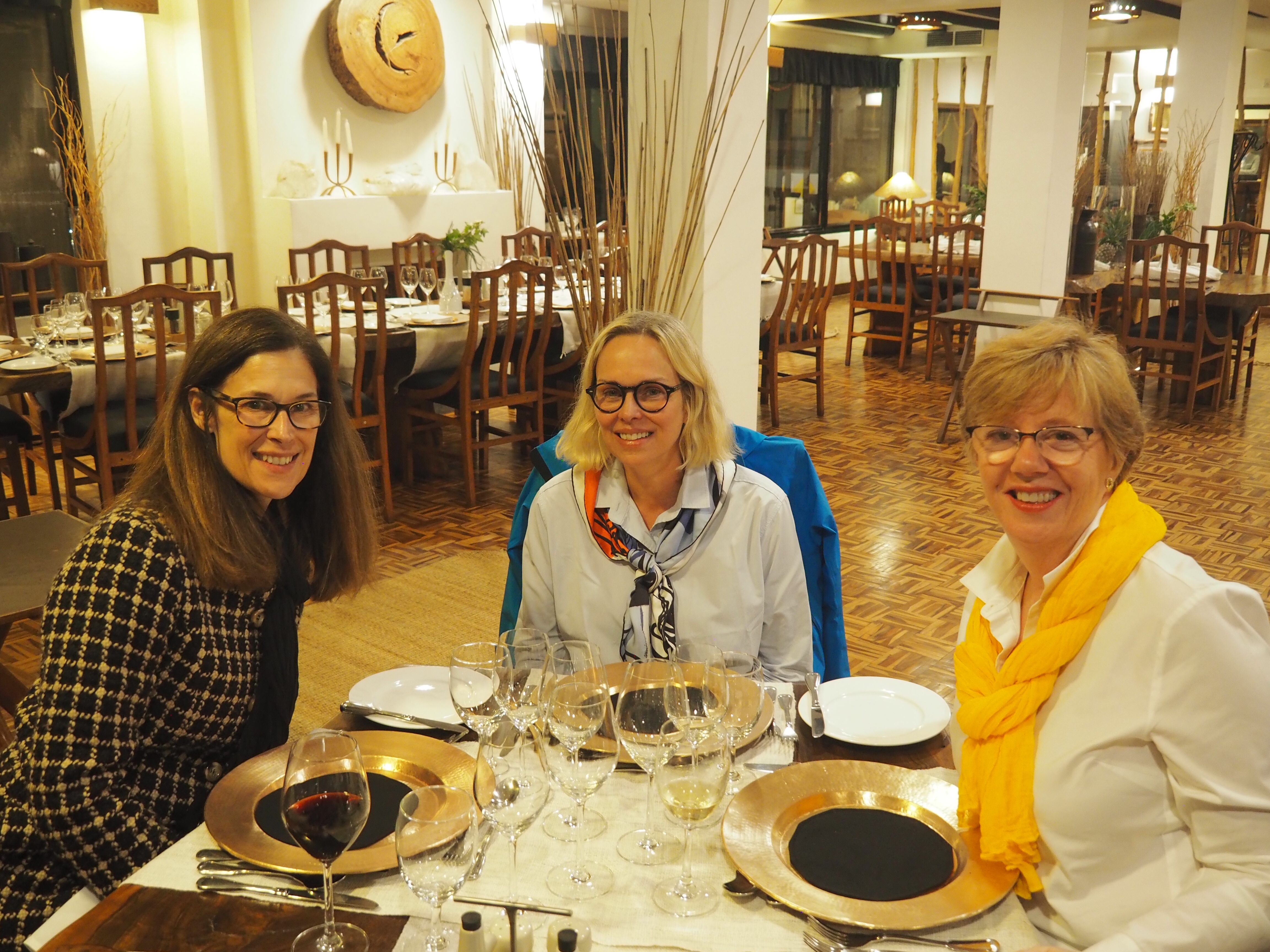
Tonight was our last dinner together since we go our separate ways tomorrow. Maryse and I opted for the ostrich and Kathy stuck with the traditional Nepali cuisine.
My ostrich. It tasted like a nice filet of beef! It was yummy!
Maryse leaves us early tomorrow. It has been so nice to spend time with her… even though we don’t see each other often, I feel as if I’m leaving a good friend.
Kathy and I will have a more leisurely day now that we have been allowed to stay here until our departure for the airport.
For the first time during the trip, I didn’t need to set an alarm. It didn’t matter because I I woke up at 5 am! Maybe it is because we gained back the fifteen minutes we lost when we went to Bhutan! It is more likely that my body is used to the early starts we have had most days. I was leisurely in my very comfortable room and did not go to breakfast until about 9:30; Maryse and Kathy beat me there. The setting for breakfast (like for everything here) is lovely and serene.
If you look hard, you can see the mountains in the distance.
Last night we were each given a scarf to wear today in the “color of the day”. Today’s color is green … here is information about Wednesday (according to information provided to us by the hotel):
– the gem for the day, not surprisingly, is the emerald.
– the planet for the day is Mercury. Mercury is the messenger of the heavens. It facilitates clear communication and carries new information to our awareness in extremely precise and effective ways.
– Wednesday is the day of communication, making connections, and thinking. It is the Middle day of the week – connecting the past and the future… the turning point.
– Today we should study, travel, research, meditate.
– The prickly chaff flower is the plant of Mercury. It is a good remedy for inflammation of the internal organs, itch, abdominal enlargements, and enlarged cervical glands. The plant is used in piles, skin eruptions, ophthalmia, dysentery, eye and liver complaints, rheumatism, scabies, bronchial infections, and in leprosy. (I had to look up what piles are, that is another word for hemorrhoids.). Oh my! I hope I don’t get any of those ailments!!! If I do, I’ll know to use the prickly chaff flower as a cure!
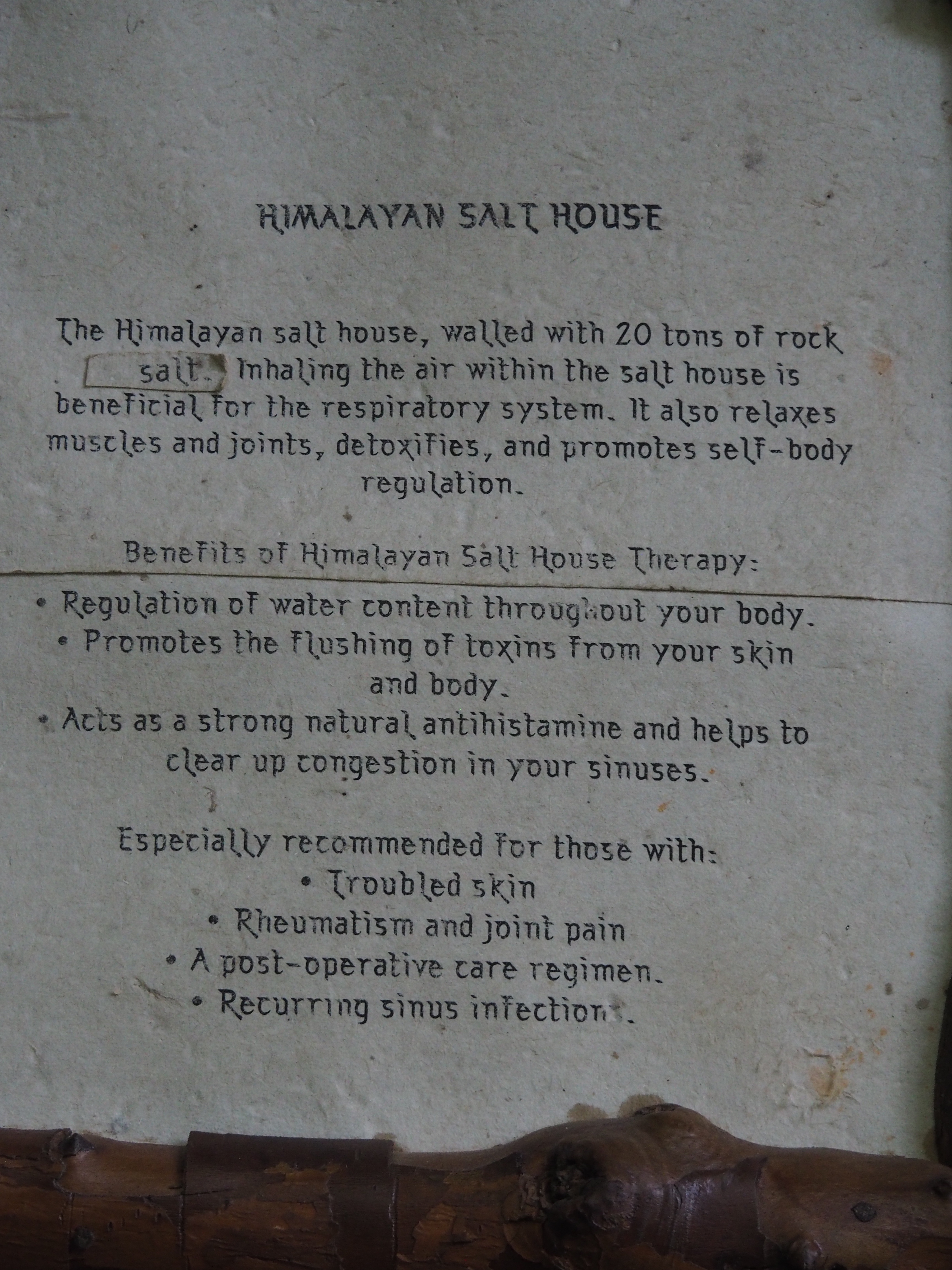
After breakfast Kathy and I went to the gift shop, it is one of the nicest we have been in. After that, we went our separate ways. Kathy and Maryse took a chakra meditation class while I spent time in the salt room and then in the gym. Here is more information about the salt room.
Maybe it’s my imagination, but after fifteen minutes in there, I did feel like my sinuses were clearer. As far as the gym goes, I have used exercise equipment in gyms all around the world and have always figured out how to operate anything I have tried. Today was a first – for the life of me, I couldn’t get the elliptical machine past some of the initial set up. That said, it was on and had some resistance so I persisted and did manage to get my heart rate up.
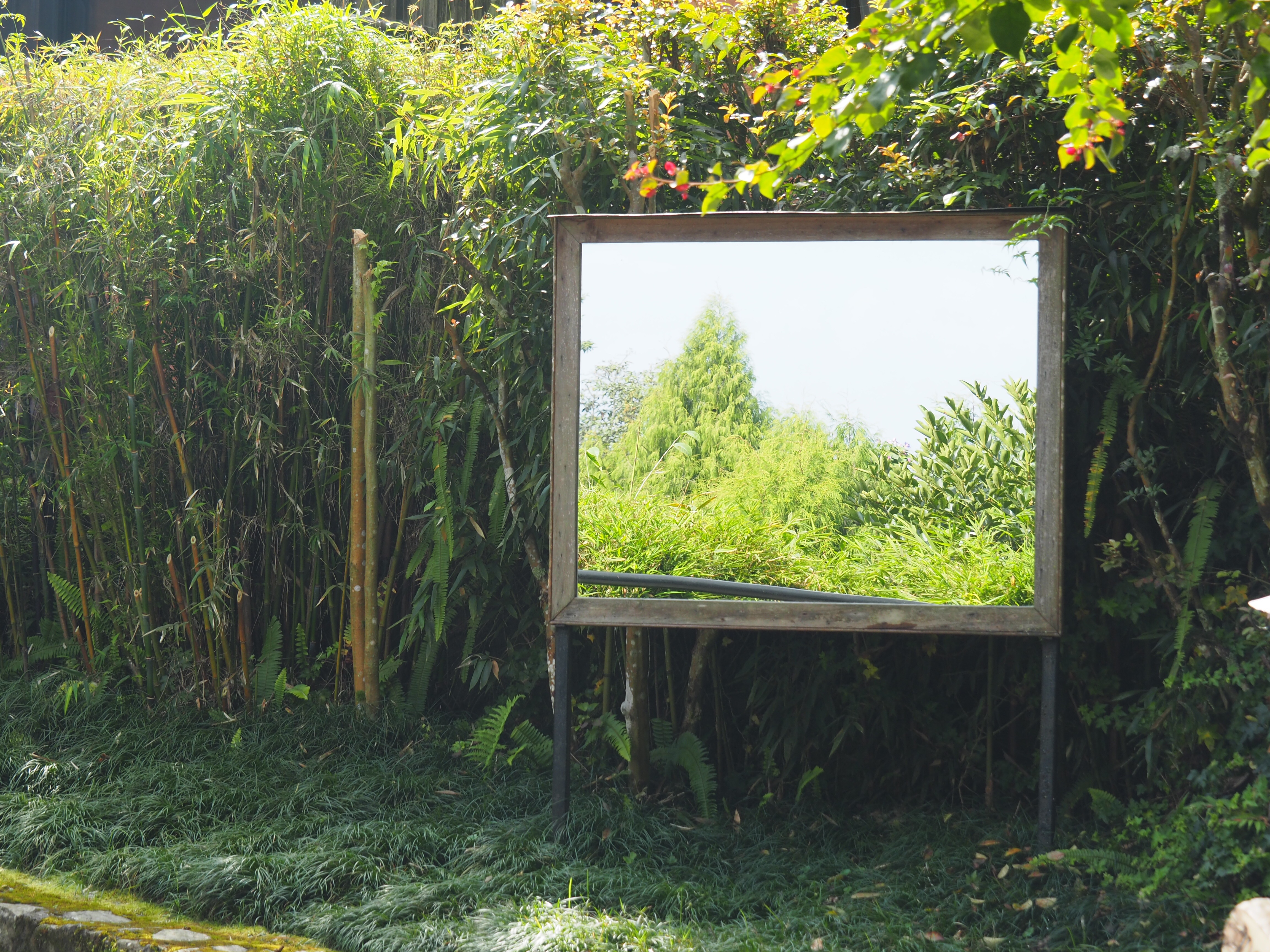
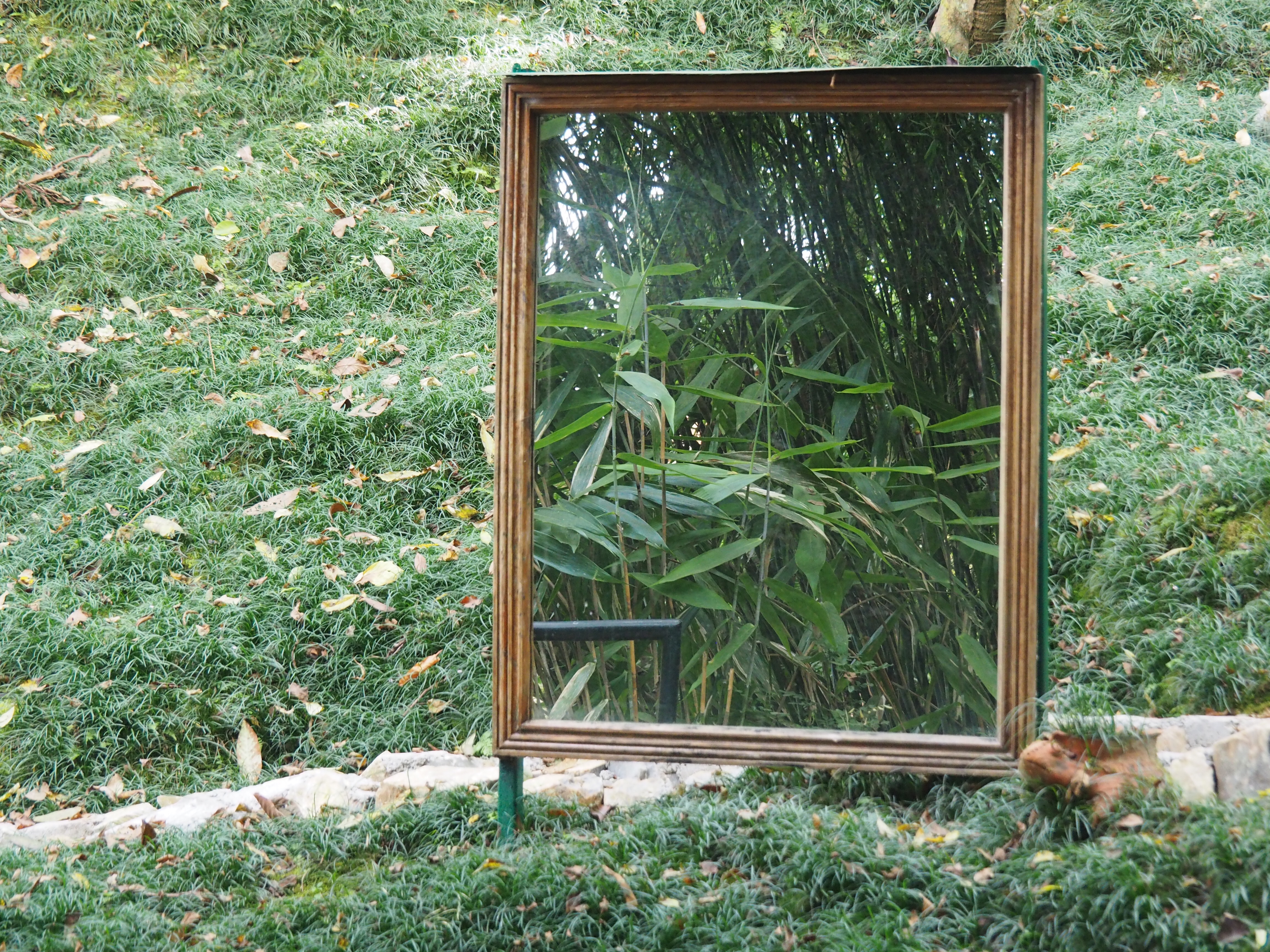
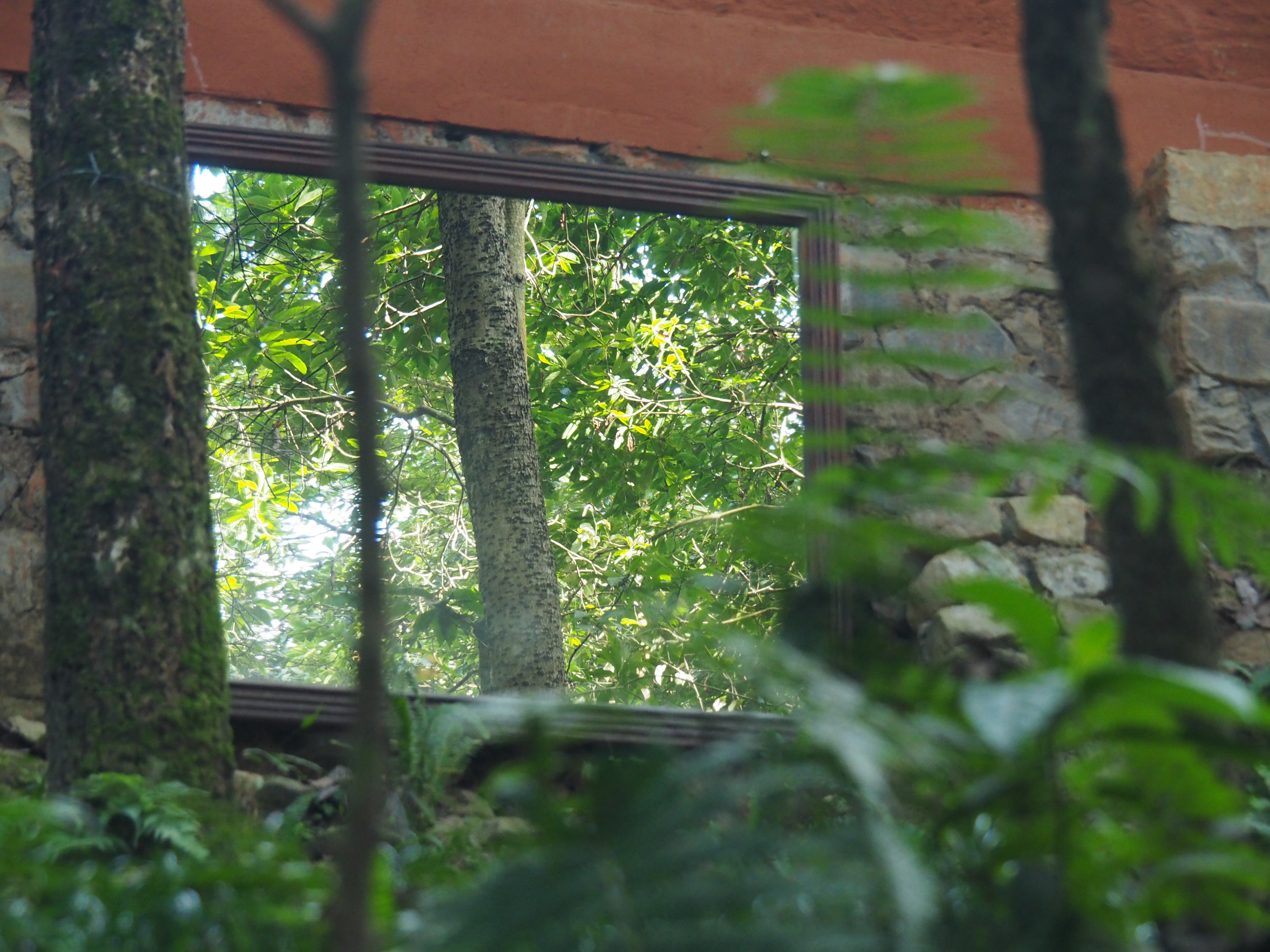
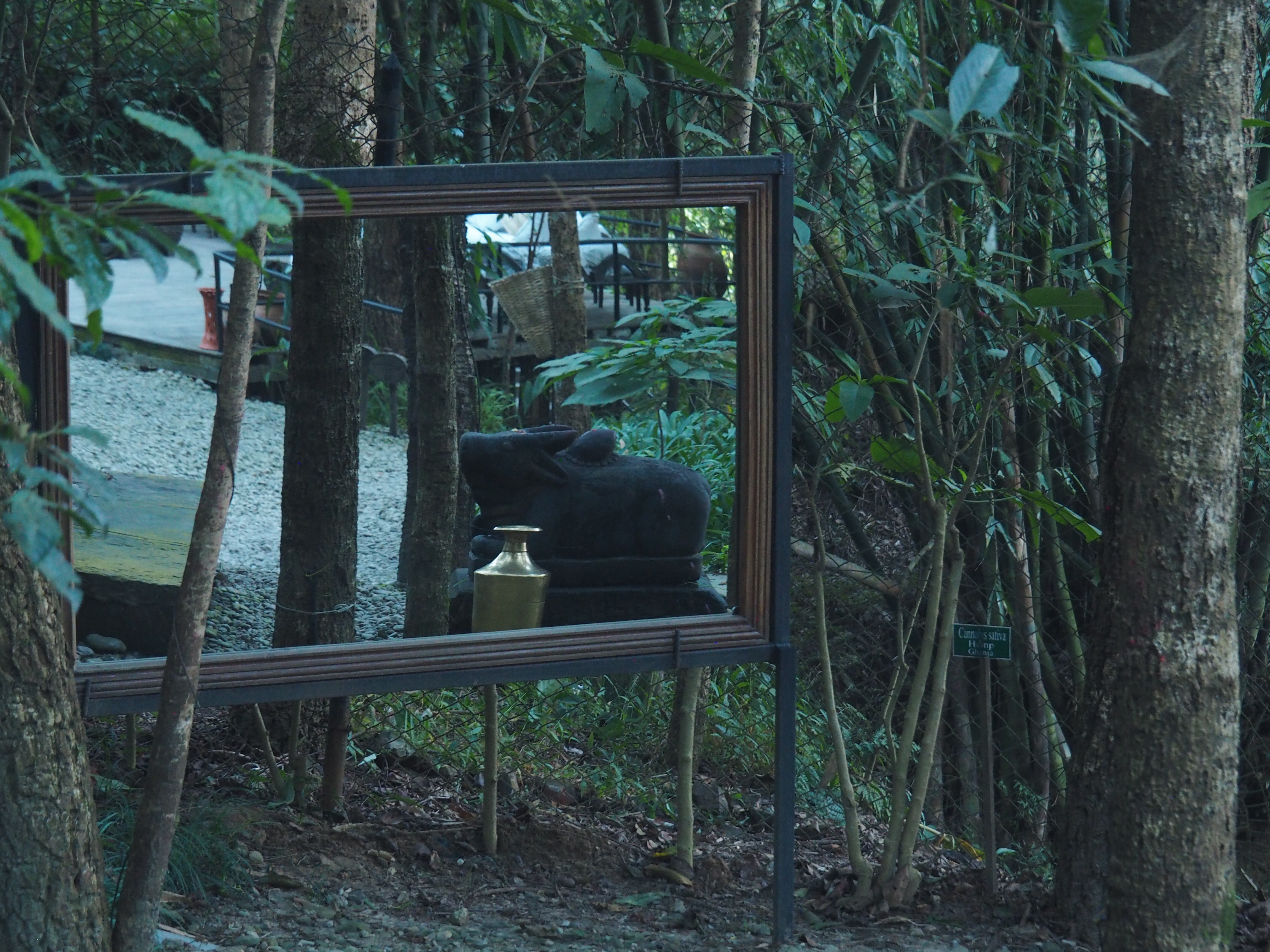
As I mentioned, the grounds here are pretty. They strategically use mirrors to look like paintings.
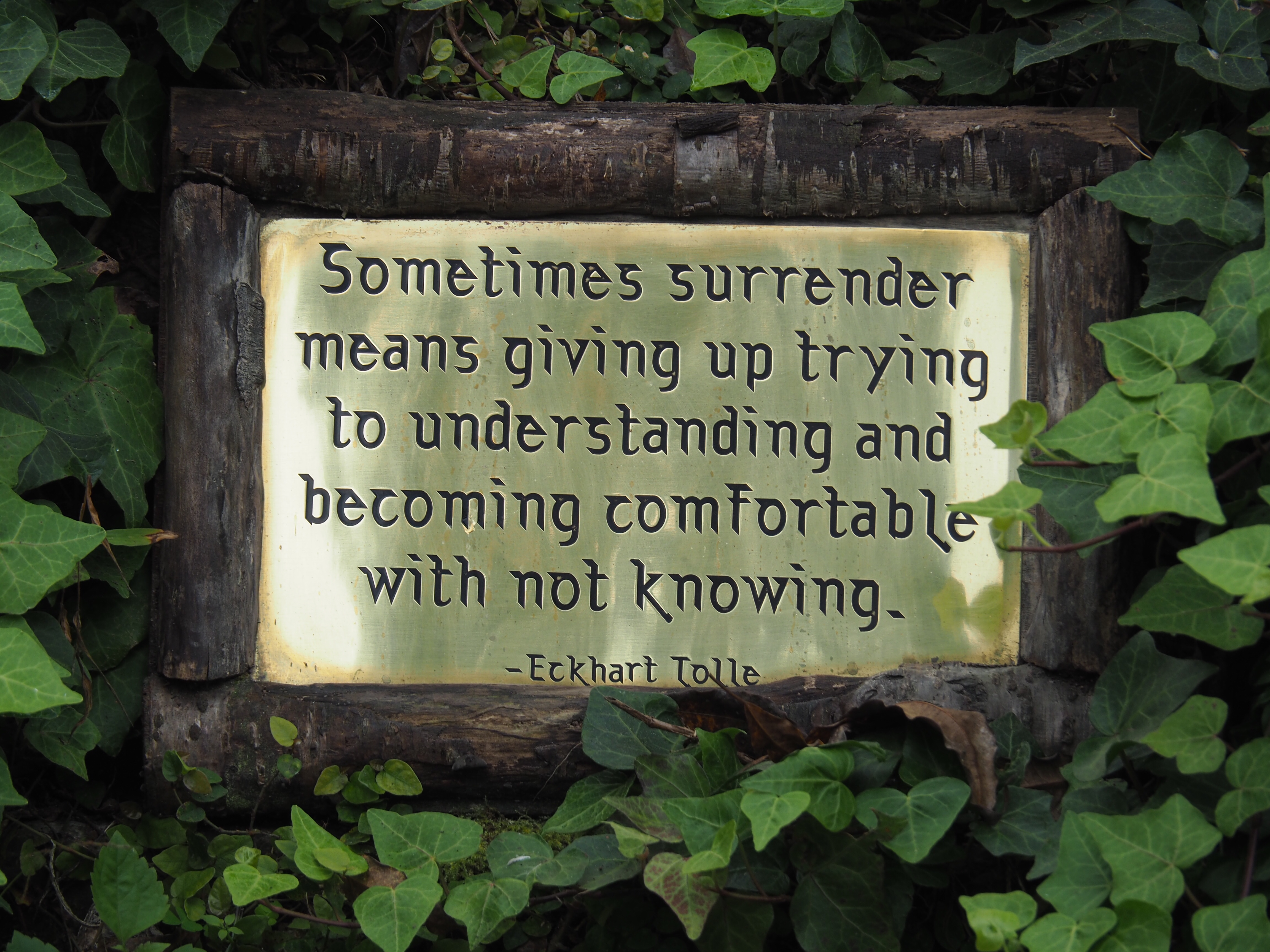
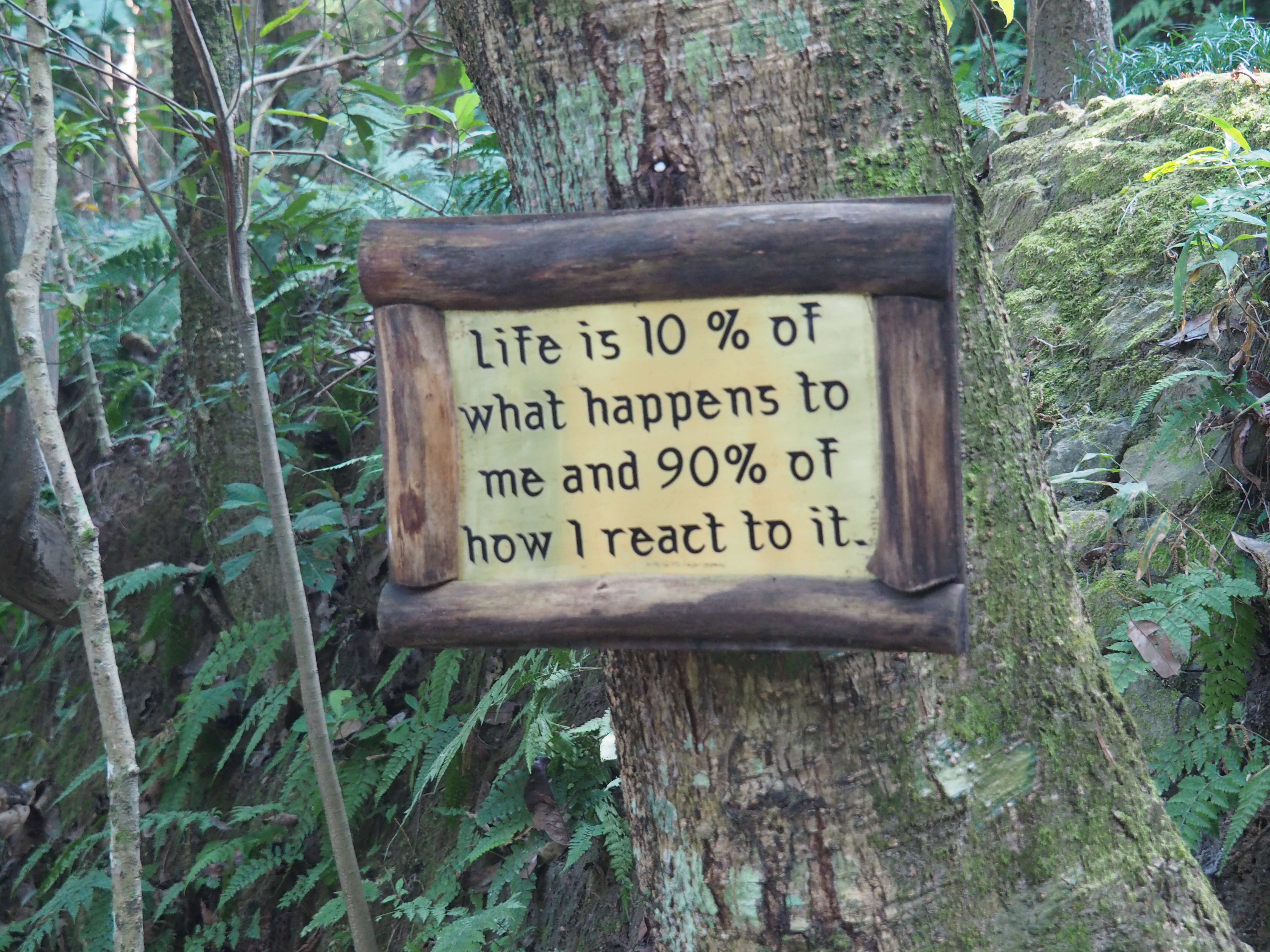
I showed some of the signs yesterday, here are some more. I apologize if there are duplicates!
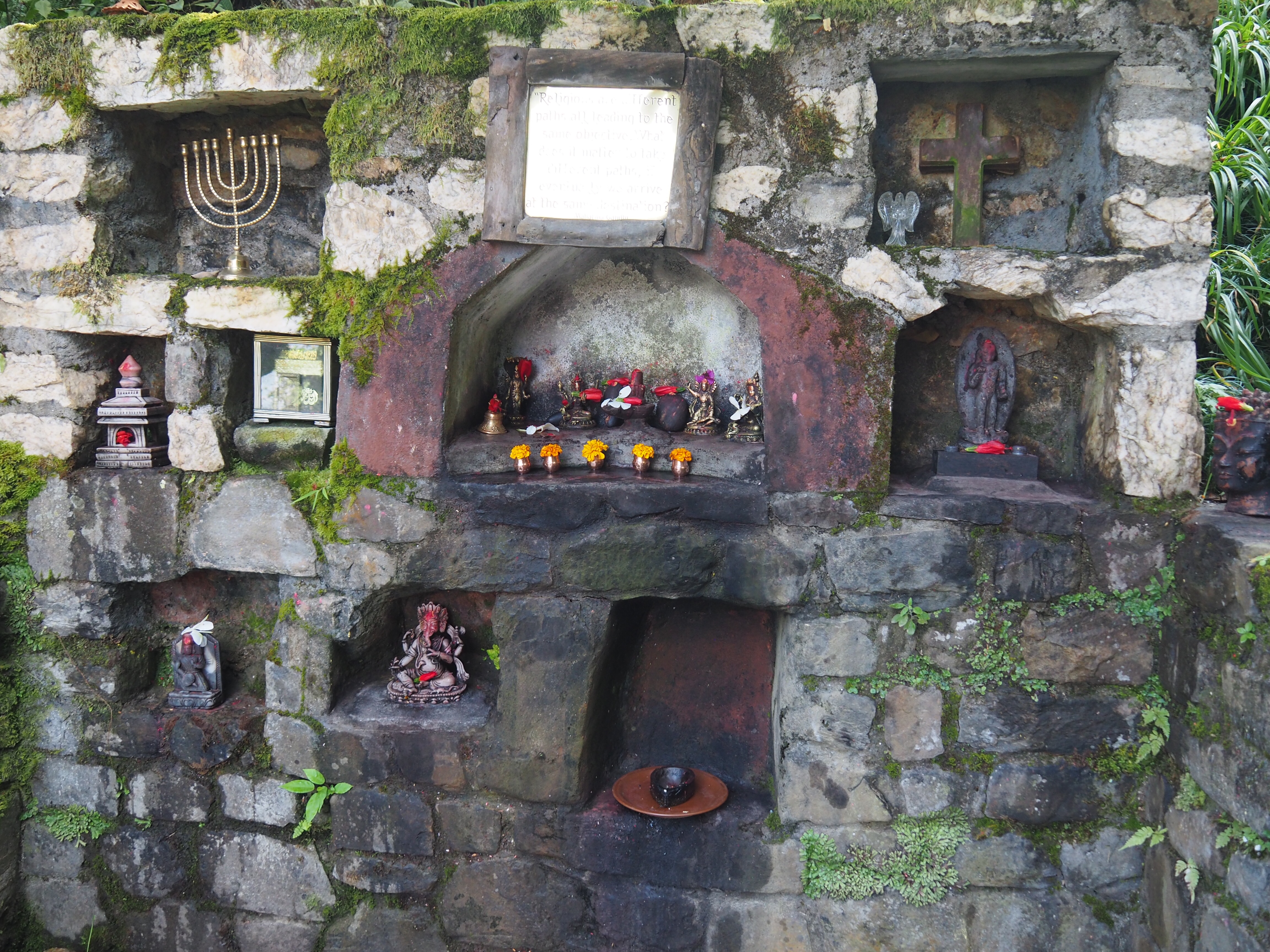
I also found this small later along/shrine the way.
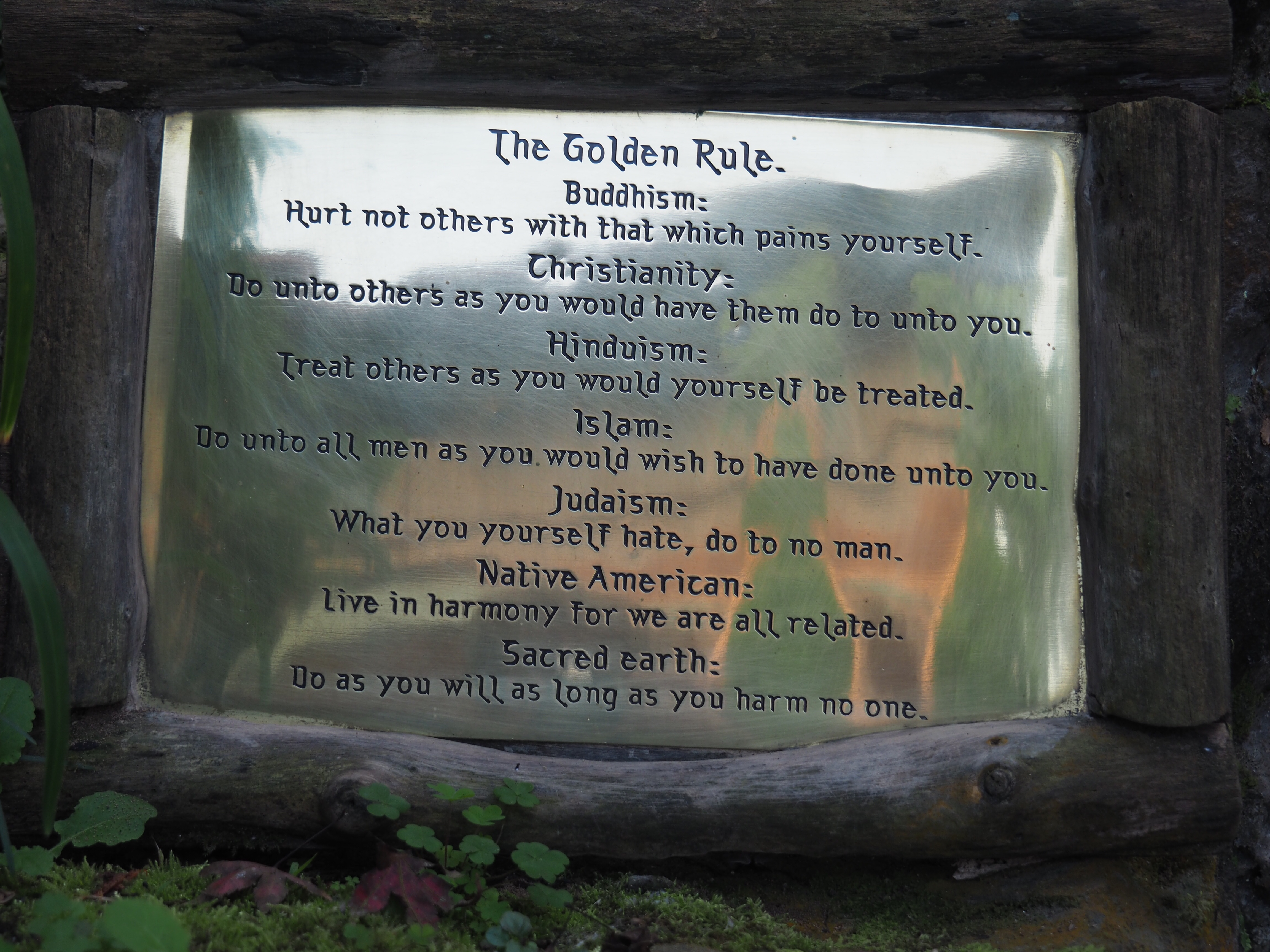
Each niche represents a different faith. This sign is next to the shrine/altar shown above.
After a bit of time sitting on my balcony, I had an appointment to meet with an Ayurvedic doctor. Ayurveda means “knowledge of life” and dates from 5000 BC in the Himalayas. It is based on the theory of “tri dosha” which classify our energy/force/functions by body type. These forces fall on a spectrum:
-Vata is associated with the sky/space and wind/air
-Pitta is associated with Fire
-Kapha is associated with water and earth.
The theory is that we all have a dominant dosha but that we need to maintain balance. By listening to my pulse, he was able to ascertain that my nature is Pitta – fire and wind, meaning I have lots of energy. My Vata is a bit too strong, and out of balance. His “prescription” for me is to maintain a strict schedule of eating and sleeping times. Not surprisingly this is a vast oversimplification, but this is probably enough. It was all very interesting and gives food for thought.
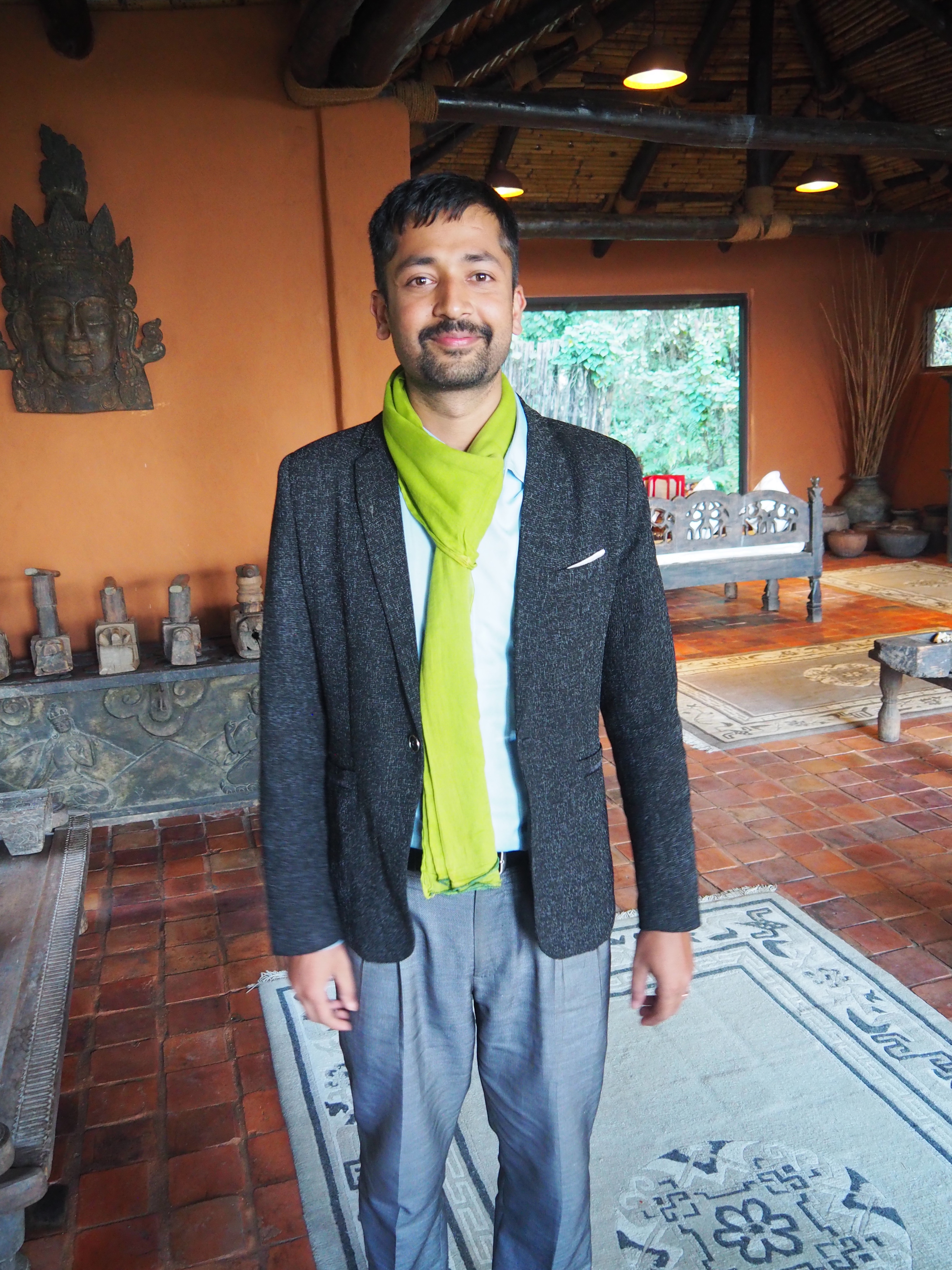
“My doctor”. Note that he is wearing the color of the day!
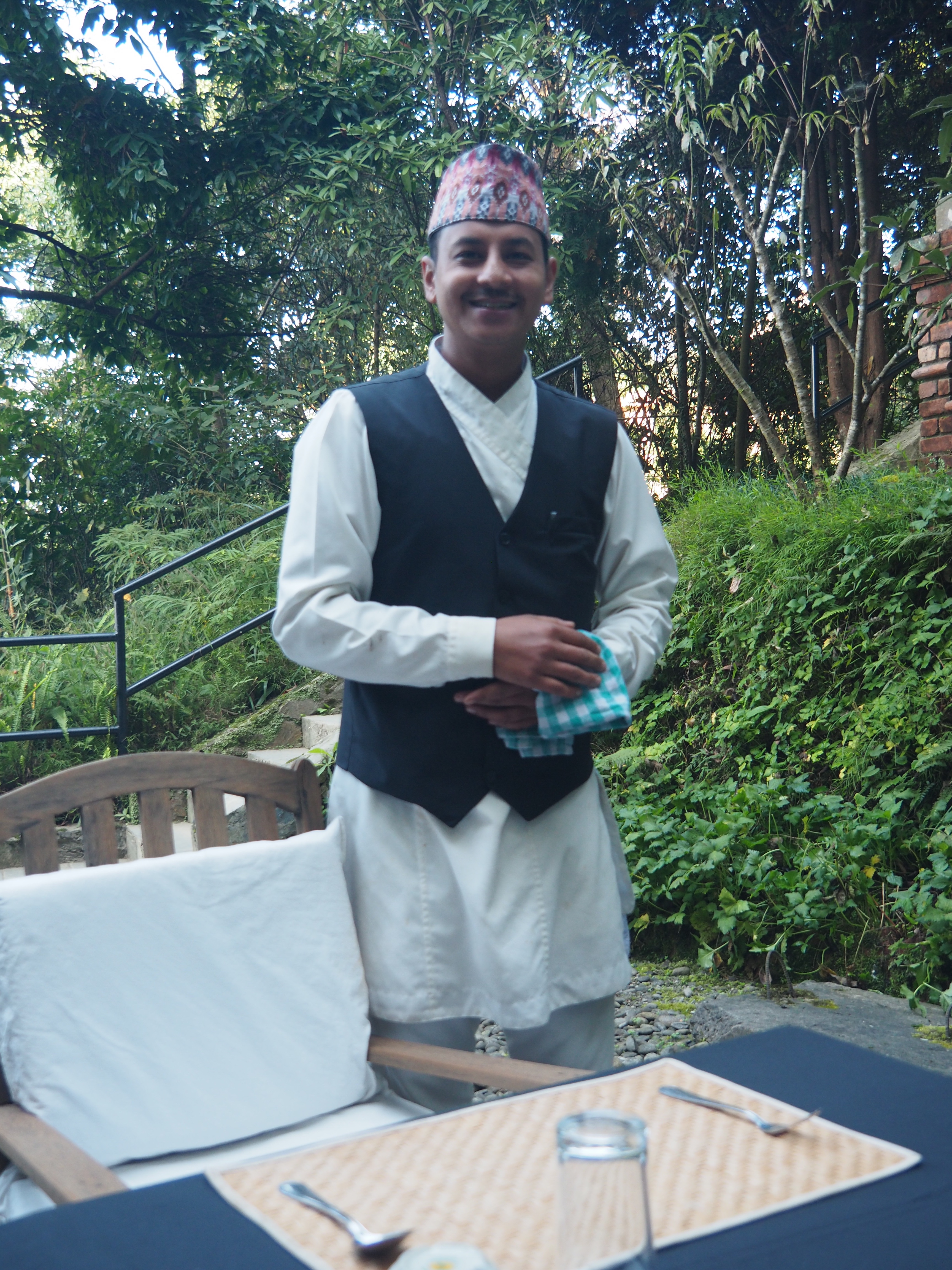
Next, on the agenda was for the three of us to take a three of us cooking class where we learned to make Nepalese curry. I got the time wrong and got there early. Instead of leaving, I had a nice visit with Anish who is a server here at the resort.
Anish.
Anish is from the town of Dhulikhel, where we are staying. He graduated from hospitality management school in Kathmandu and has been working here for a few months. His goal is to get some experience here and then go to the US or UK to work in the hospitality industry. He is single and lives with his parents and grandparents; his brother lives in the US. His family operates a Newari restaurant in the town. I learned that Newari is a caste here in Nepal. The restaurant specializes in making Chi-ura with Buff meat. Chi-ura is a way to prepare rice which we have seen. If I understand it correctly, the process to prepare it is to cook rice, dry it and then beat it so that it is flat. It can be served that way, or it can be made even crunchier by frying it in a pan without any oil. This is served with the buff (buffalo) meat in one of three forms: minced, smoked which is quite spicy, or fried.
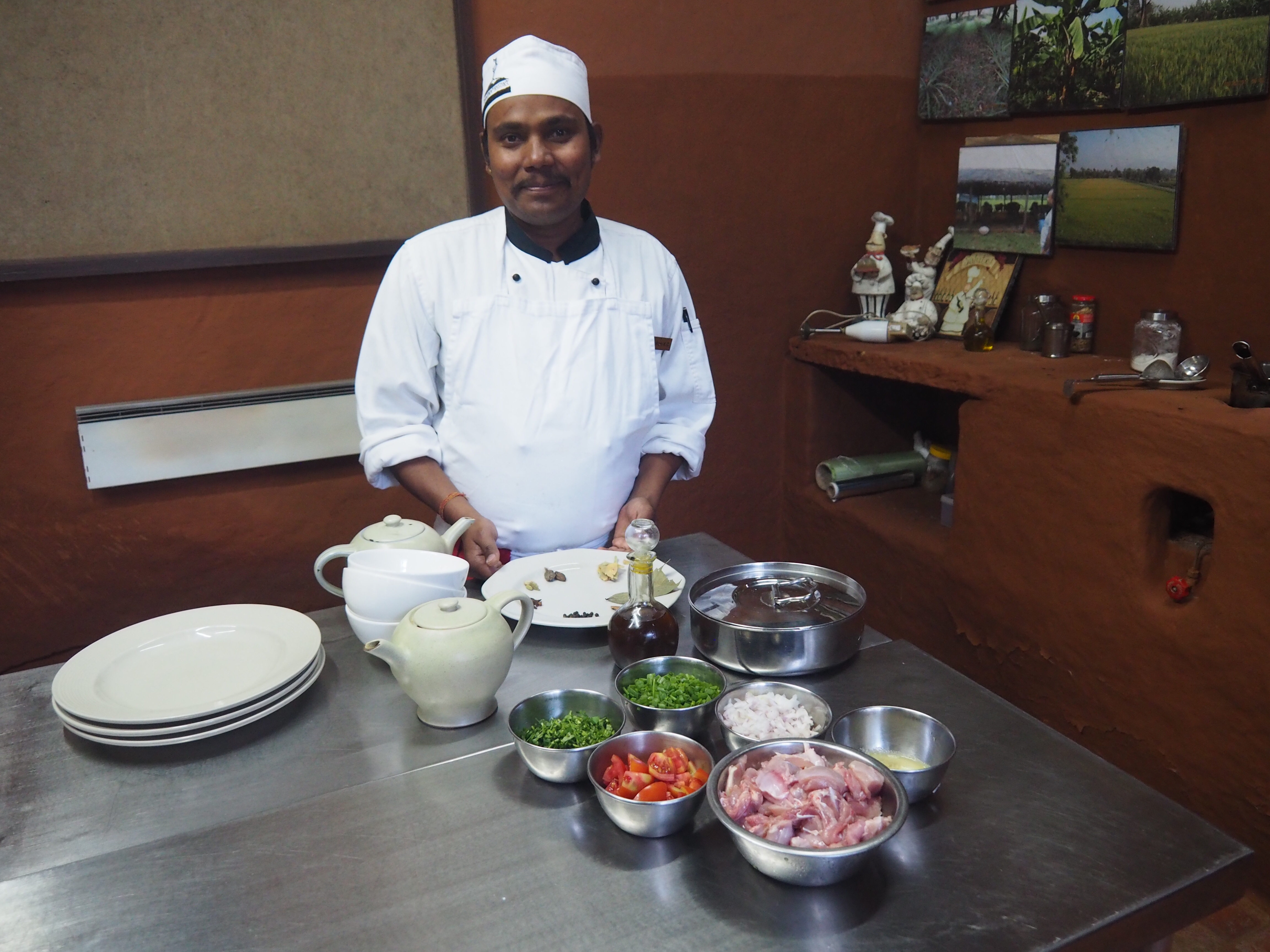
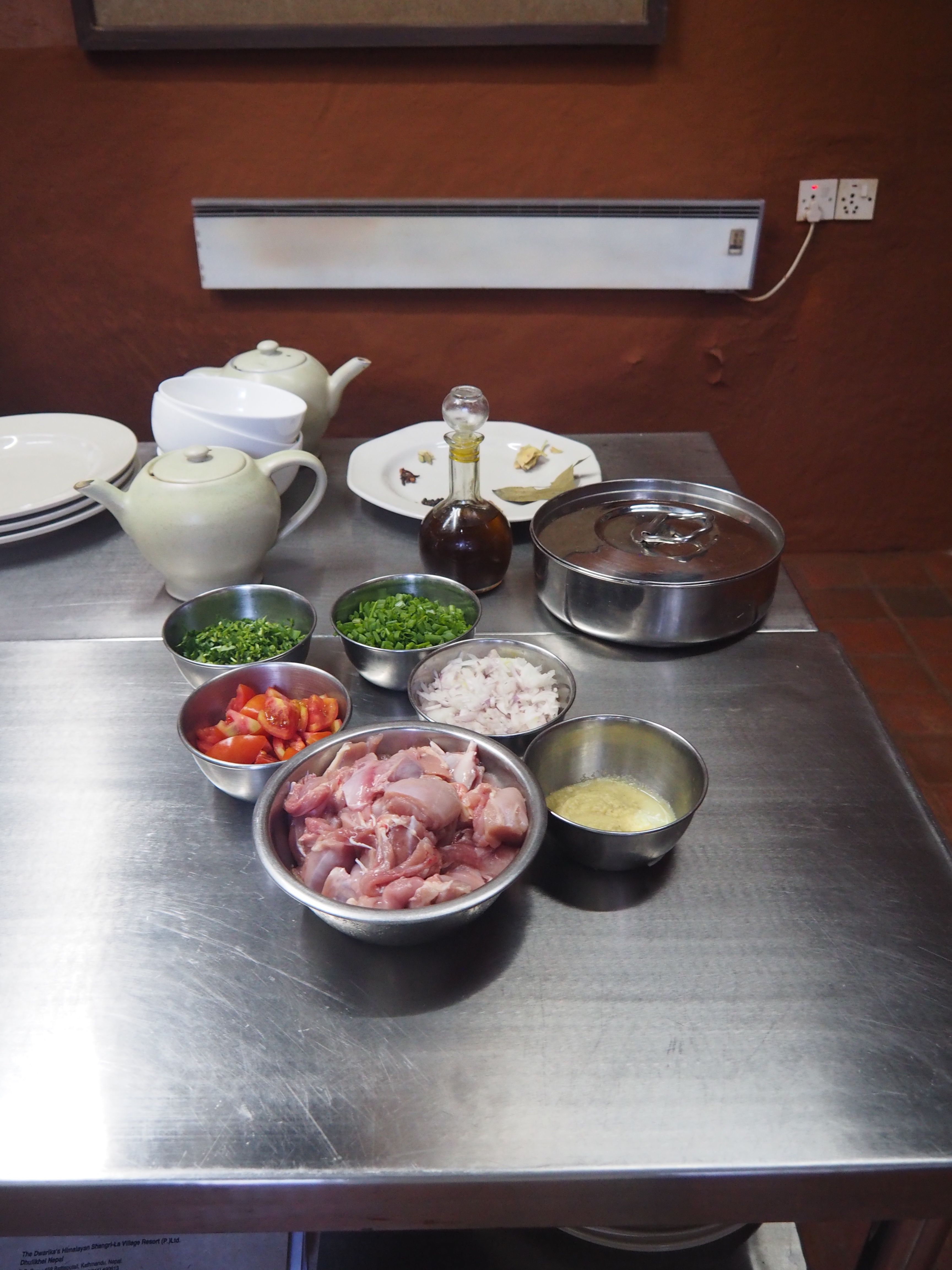
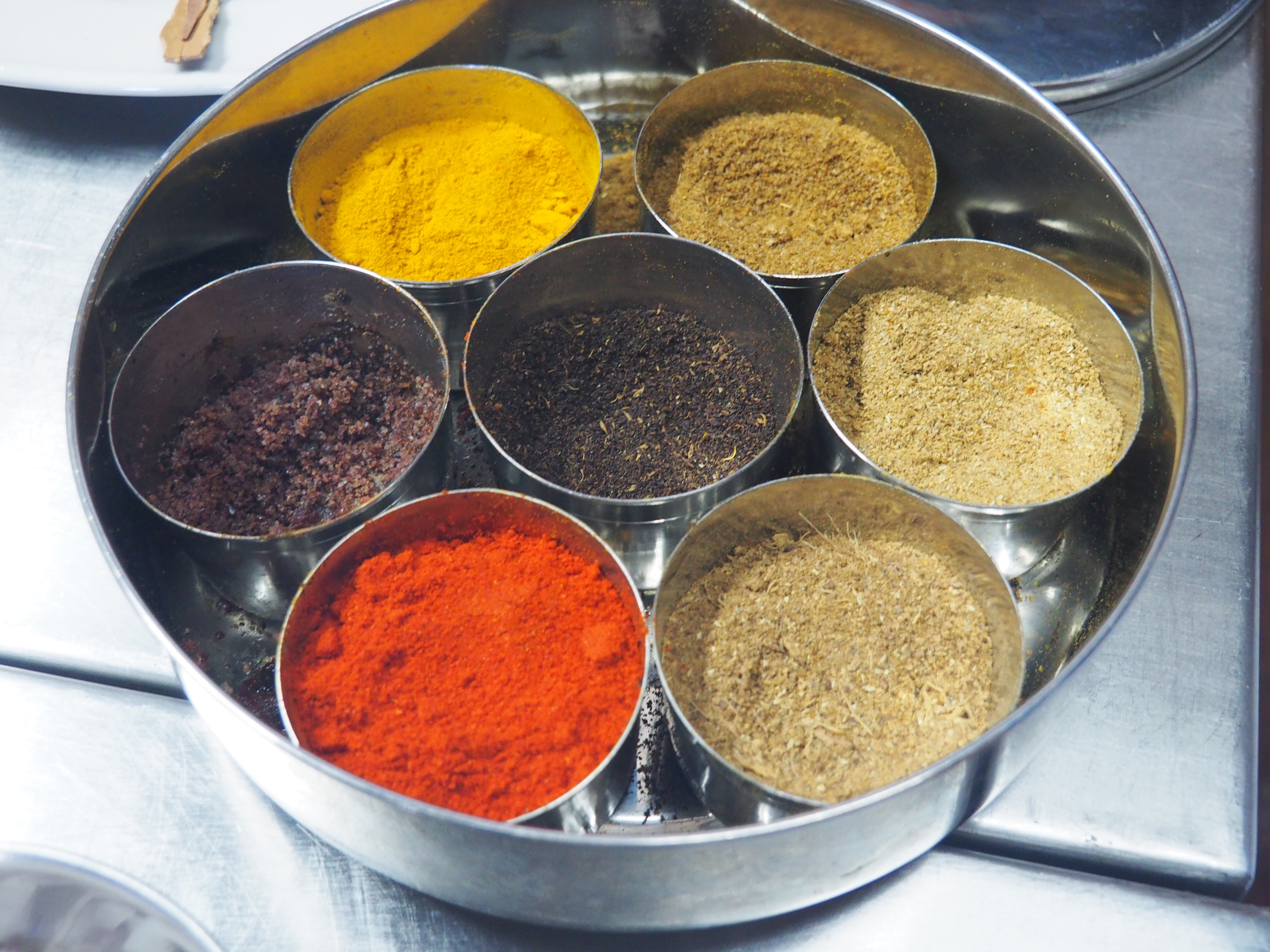
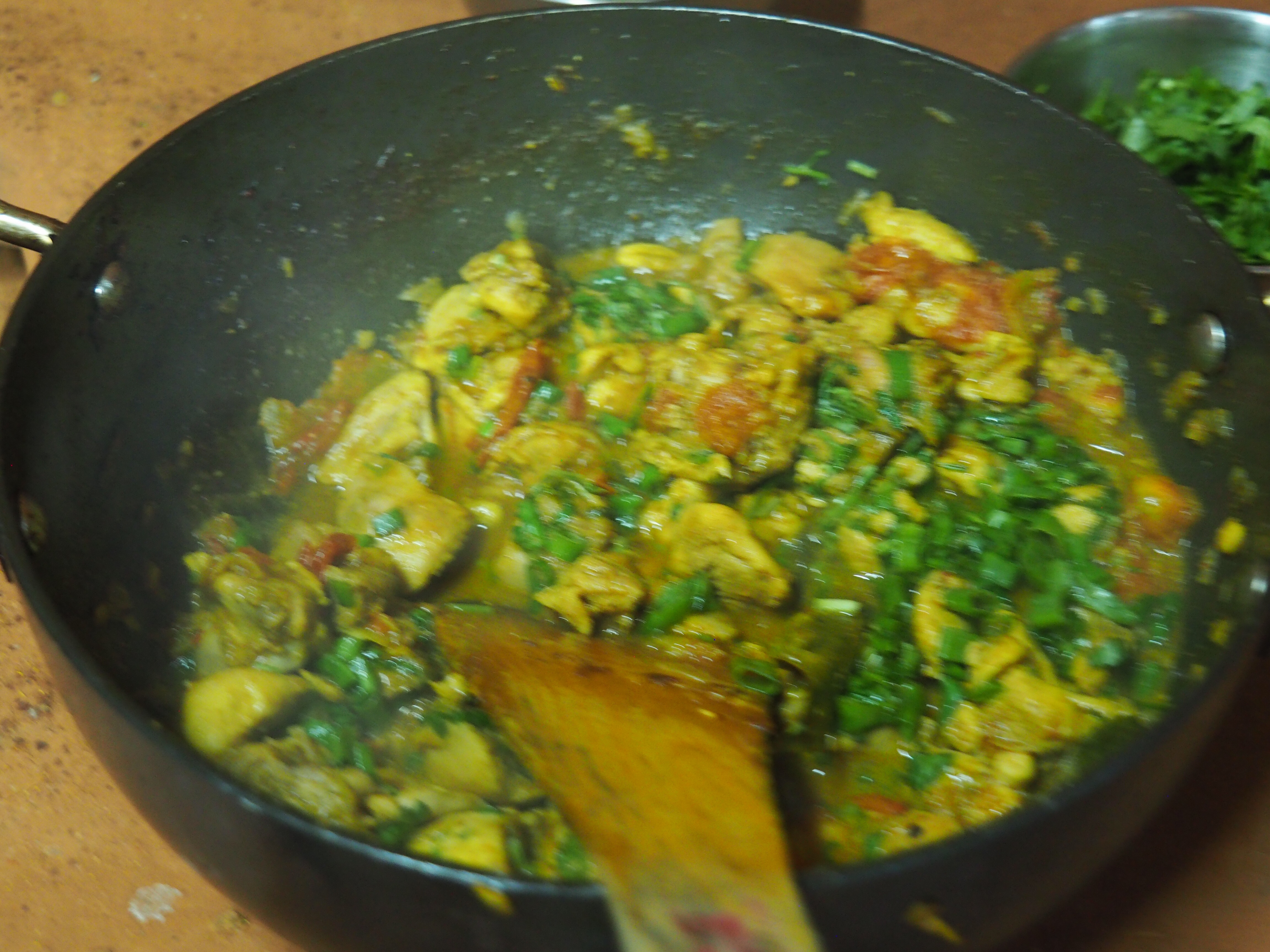
After that quick cooking lesson, it was time for the real thing. We were met by one of the hotel chefs who demonstrated how to make chicken curry and then we got to taste it. We all donned aprons and washed our hands… these steps seemed quite unnecessary since, other than Maryse using a mortar and pestle on some of the spices, we only watched the chef work. In addition to the curry, he also demonstrated how to make masala tea. This is a drink that is tea cooked with milk and has a number of spices added to it. I think we all agreed that the key to the tea is to let it cook a long time so as to let the spices really flavor the tea/milk. We learned that in summer the Nepalese have the tea in the morning and evening, during the winter they drink it four times per day.
Our teacher. The curry ingredients The spices to be used. The final product…it was yummy!
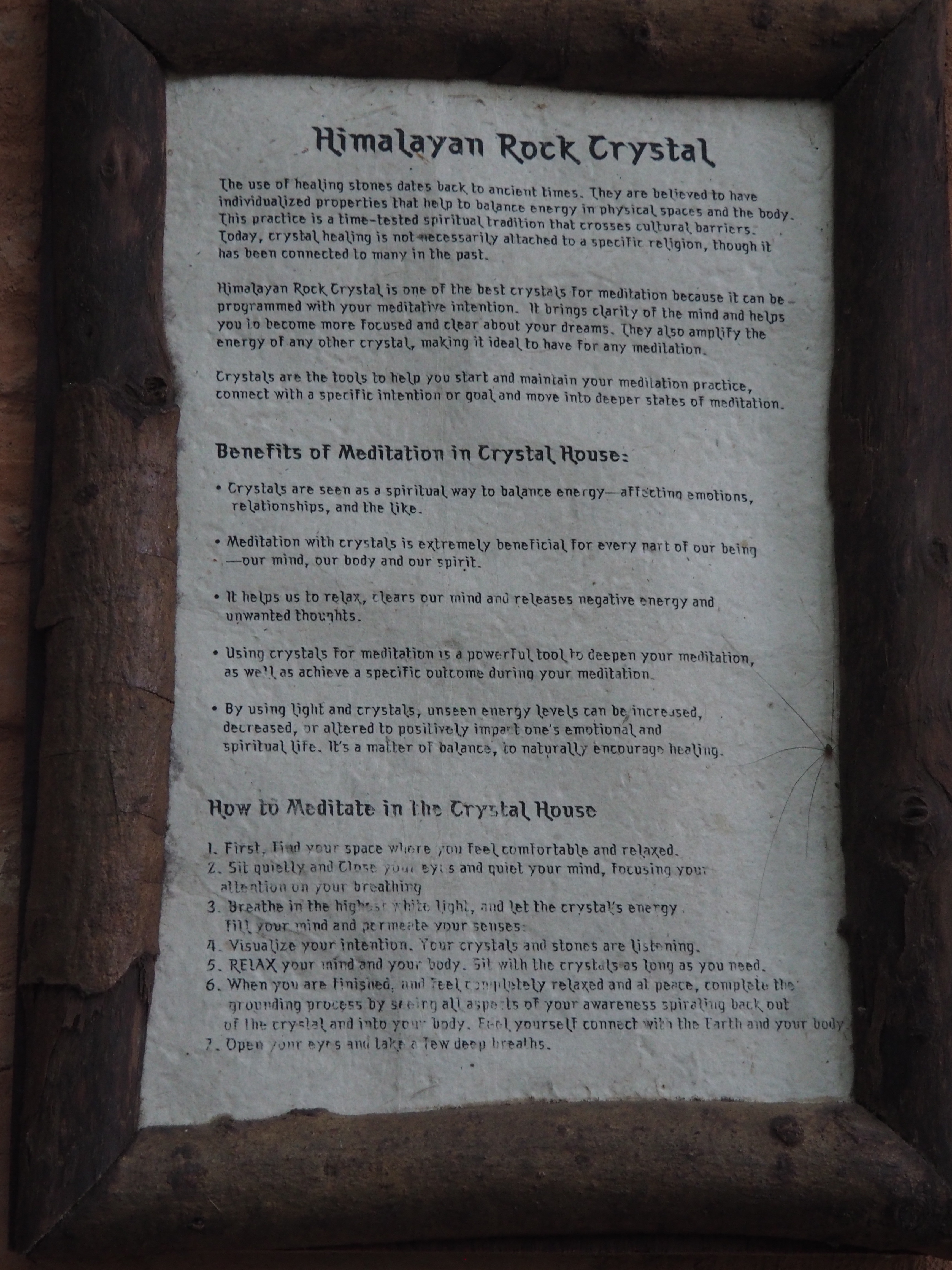
The cooking class didn’t take all that long so I decided to walk up the mountain to give the crystal room another shot. Here is the information about the crystal room:
Sorry the writing is so small!
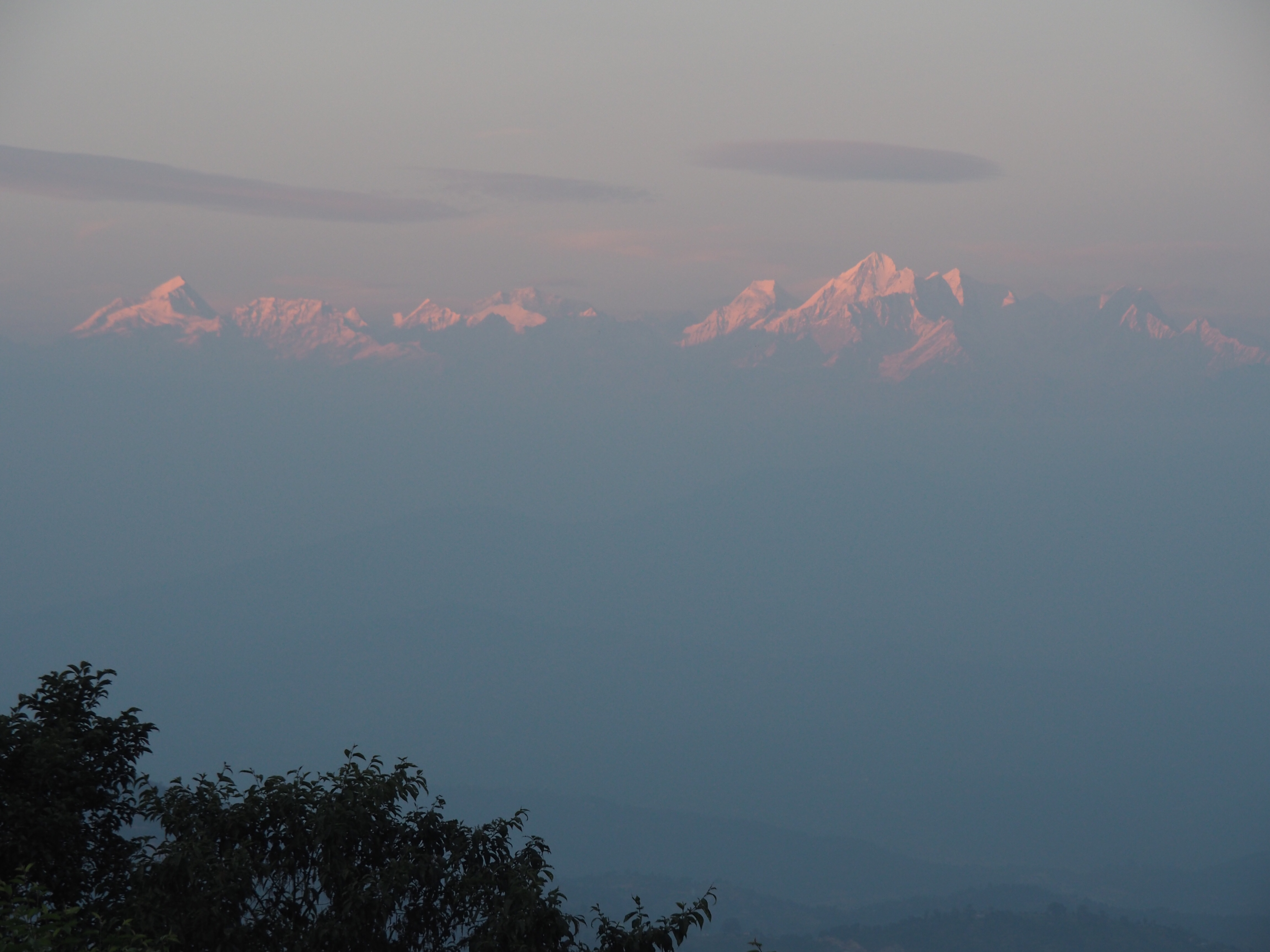
On the way back to my room, I saw this pretty view of the mountains.
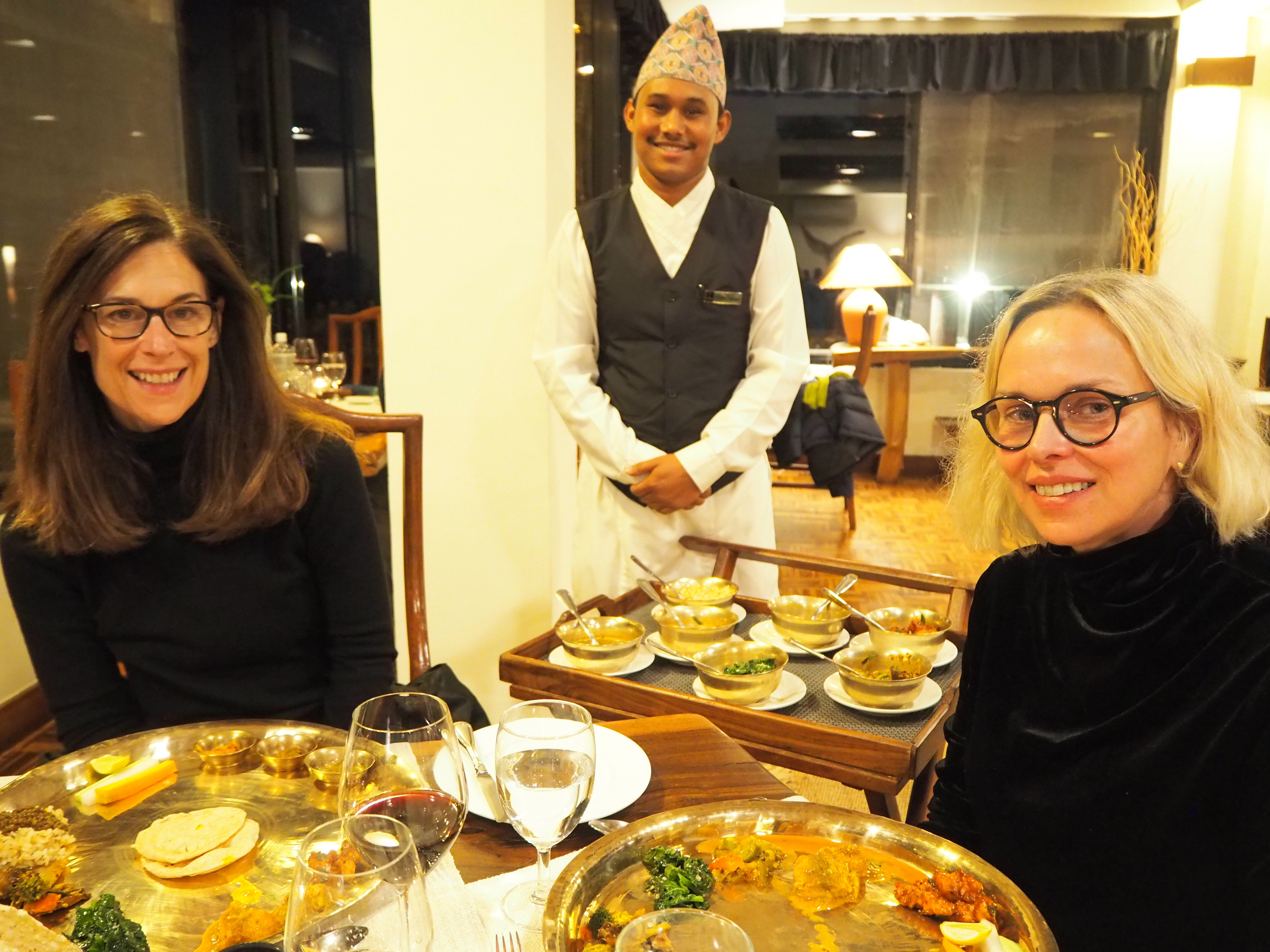
I had some time to relax before our group reconvened for dinner. I opted for the a la carte menu and Maryse and Kathy had another traditional Nepalese meal.
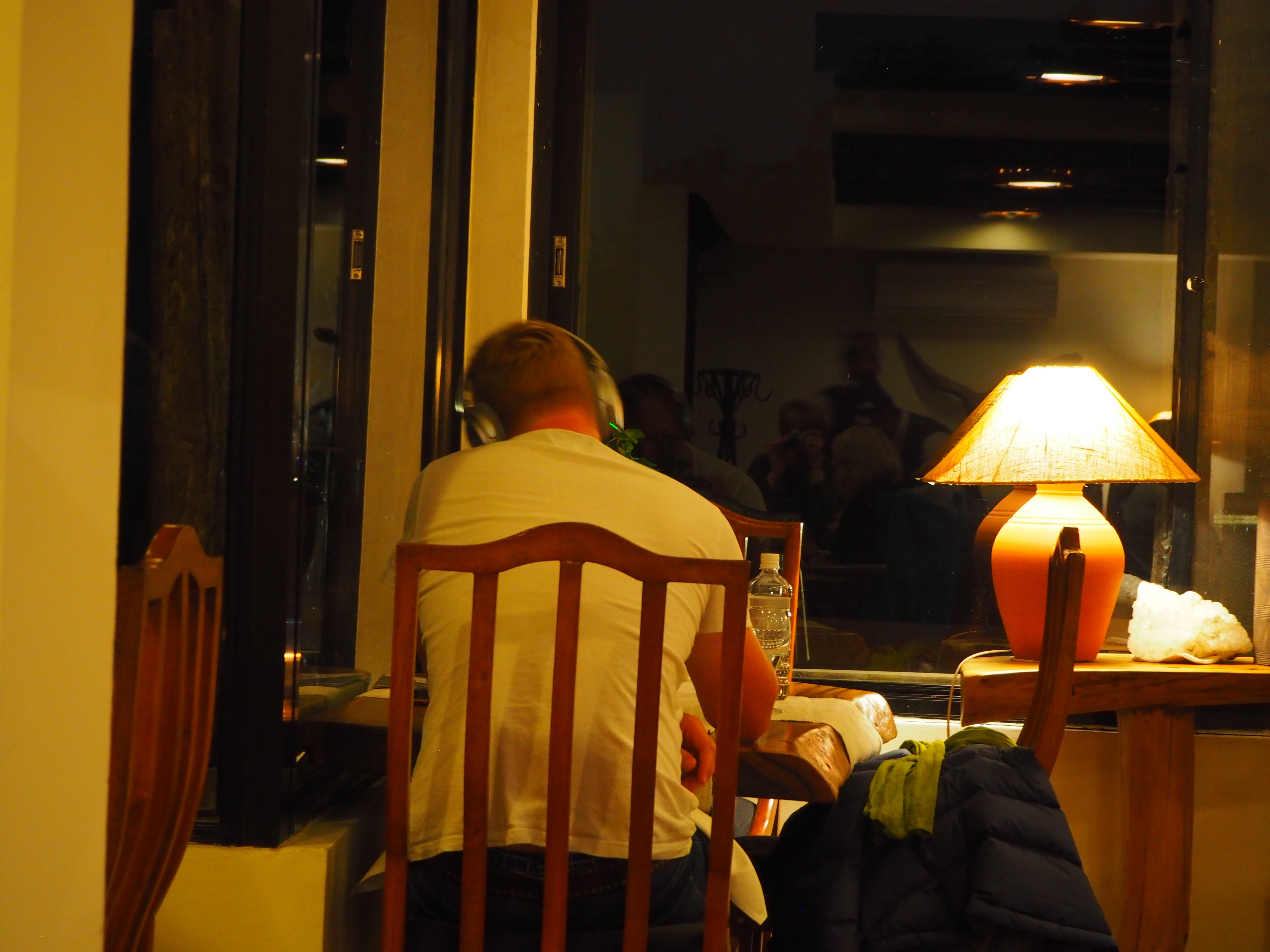
This was a first for me, another diner earning headphones!
It was another full, enjoyable, and interesting day! Tomorrow is Yellow day!
It is difficult to believe that we are beginning the last part of our trip. Wang and Mr. Poo met us at 8:30 am to take us to the airport. Wang had had another late night at the snooker tables; he is the one who kept the group up late this time because he did well. He won seven of fifteen games. One of his guide friends had to get up to take his guests for a 4 am departure! As payback to Wang, the friend made several calls to Wang just to wake him up. It certainly seems like Wang leads two lives, one as the family man and the other as the college boy.
Yesterday during our descent from the Tiger’s Nest, I learned more about Wang’s family. He and his wife bought his wife’s store from Wang’s sister, the oldest one who is living in Australia. His wife sells mostly clothing that is imported from Nepal and India. She gets most of her merchandise from importers but she does occasionally travel to buy some goods. She gets the mens samples in Wang’s size so he can wear anything that doesn’t sell.
Their son is four and started speaking English at one year old. He learns most of it online watching YouTube and playing games. He is evidently the favorite grandchild of both sets of grandparents because he is very polite! Wang said it is difficult to get childcare; they rely on family members. When his nephew leaves to go to Australia, his wife’s niece will live with them during her winter break to take care of their son. If/when they move to his wife’s family’s farm, they will need to sell the store but they will have built in child care from her parents. He told me that at that point they may have another child.
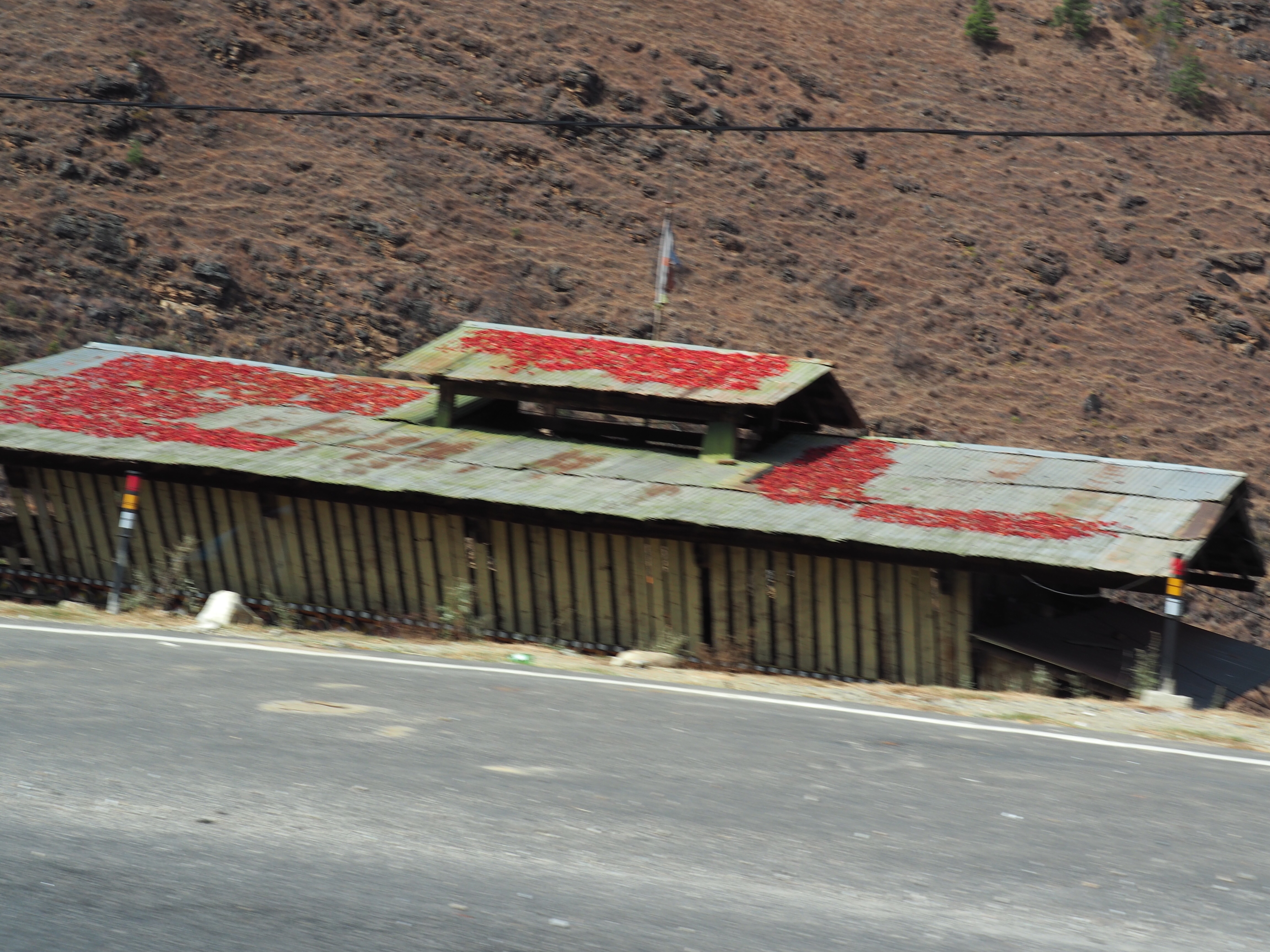
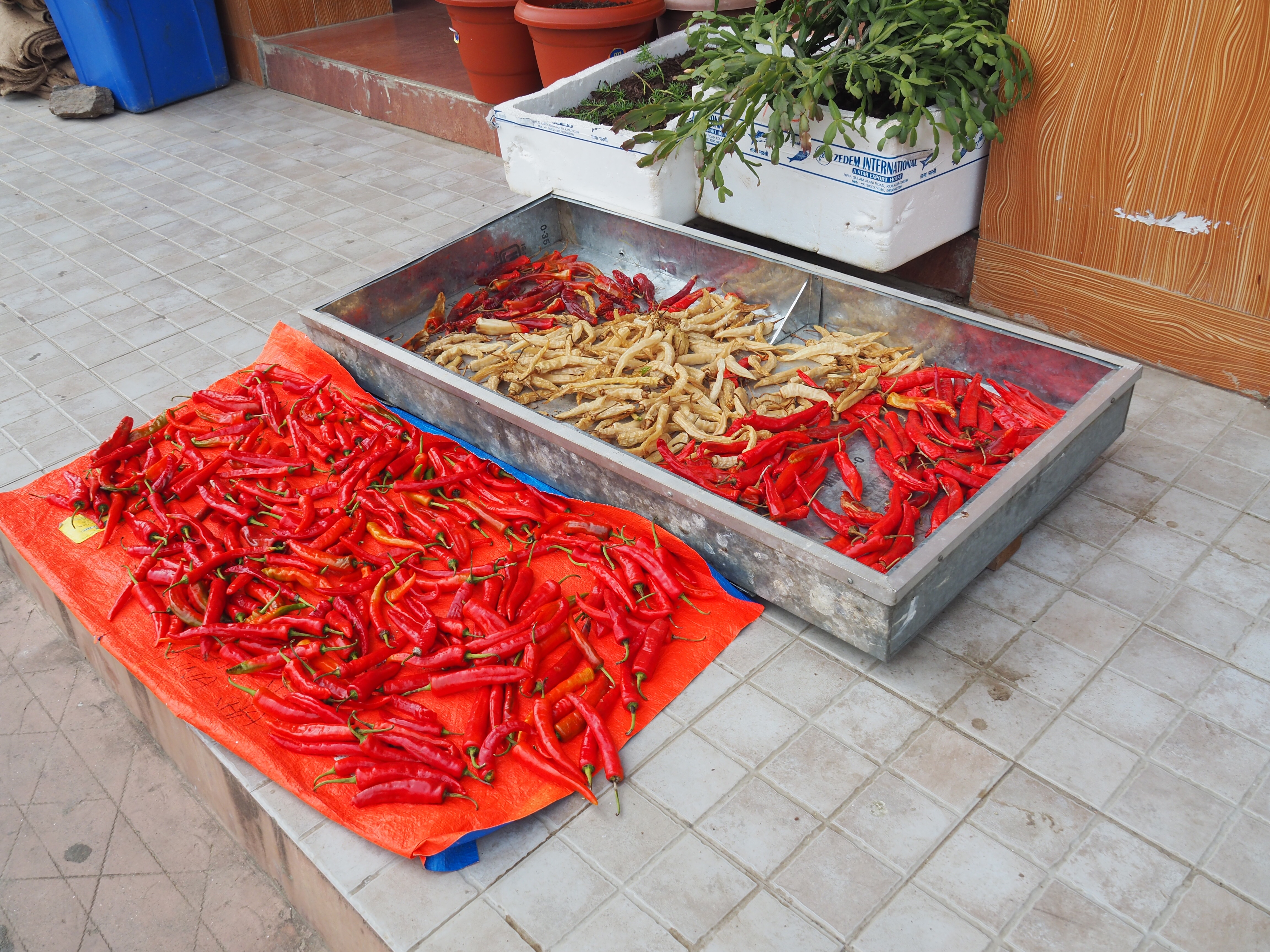
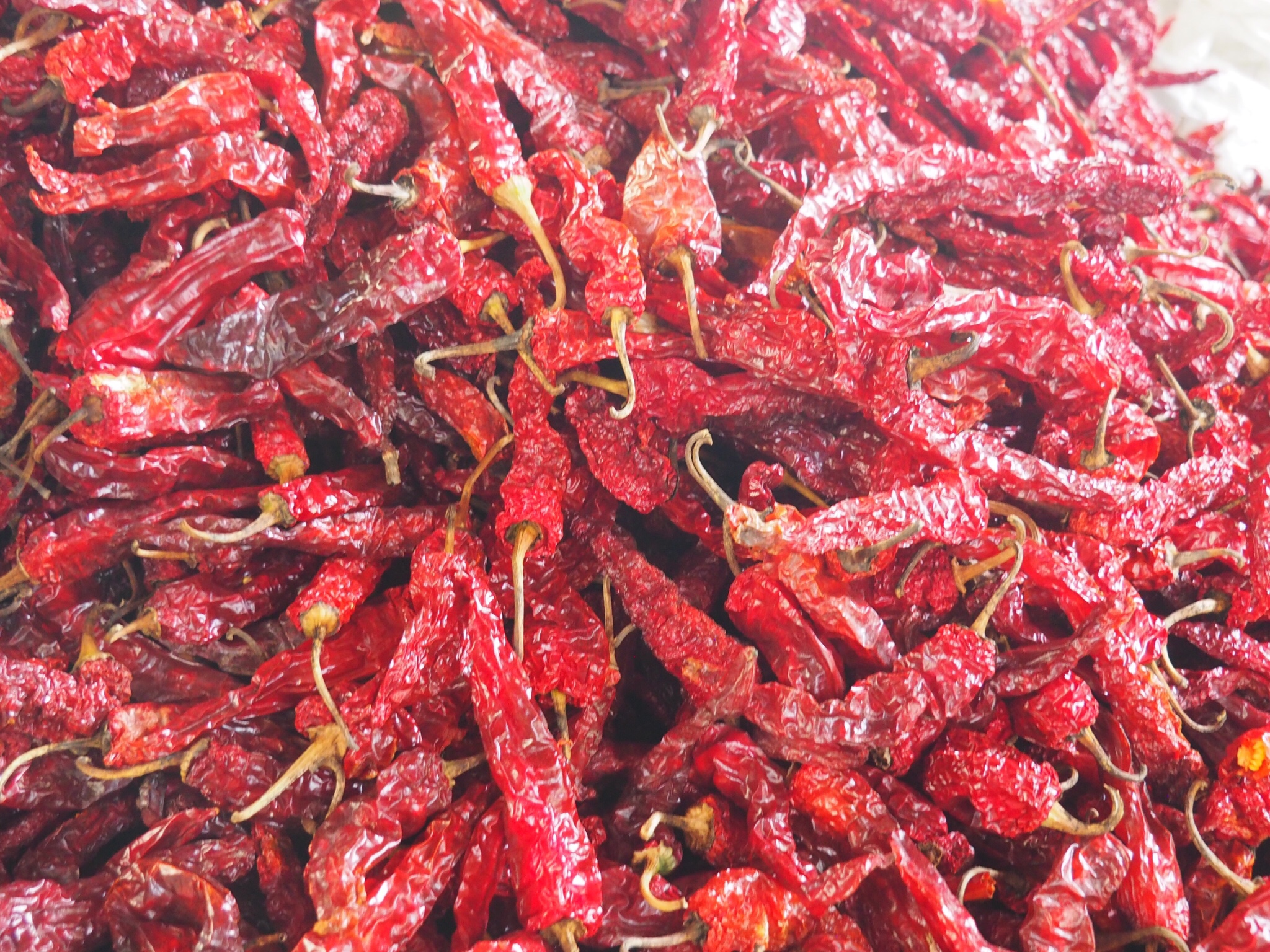
I realize I never said much about the Bhutanese food. That is probably because there really isn’t much to say. Each meal, including breakfast, consists of rice: red, white, or plain, or sometimes all three! They use lots of vegetables including tomatoes, eggplant, potatoes, beans, onions etc. They serve some lamb and chicken but none of us tried any of the meat. Before we left Nepal, Christian advised us to avoid the meat unless we could be assured it was fresh. That was enough to keep any of us from trying any of it! The one thing that really distinguishes the food is the spice. Even the non spicy food tends to have a bit of a “bite” to it. They have a chili paste that they use at every meal. Most of the time, Wang would eat with us but he would have a different plate of food that was much spicier. After only a few meals, it was easy to understand why there were chilies drying on so many roofs!
Chilies drying.
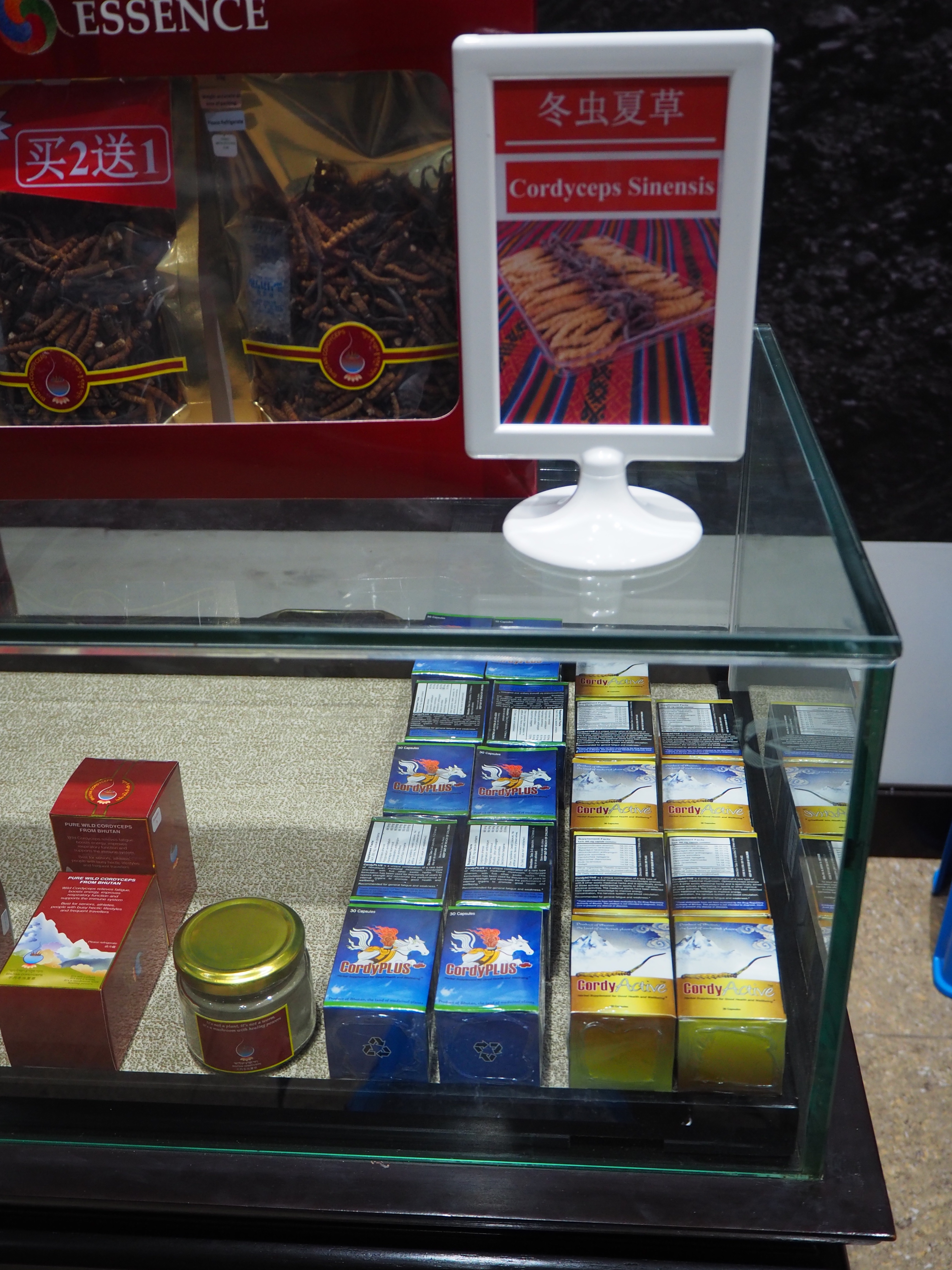
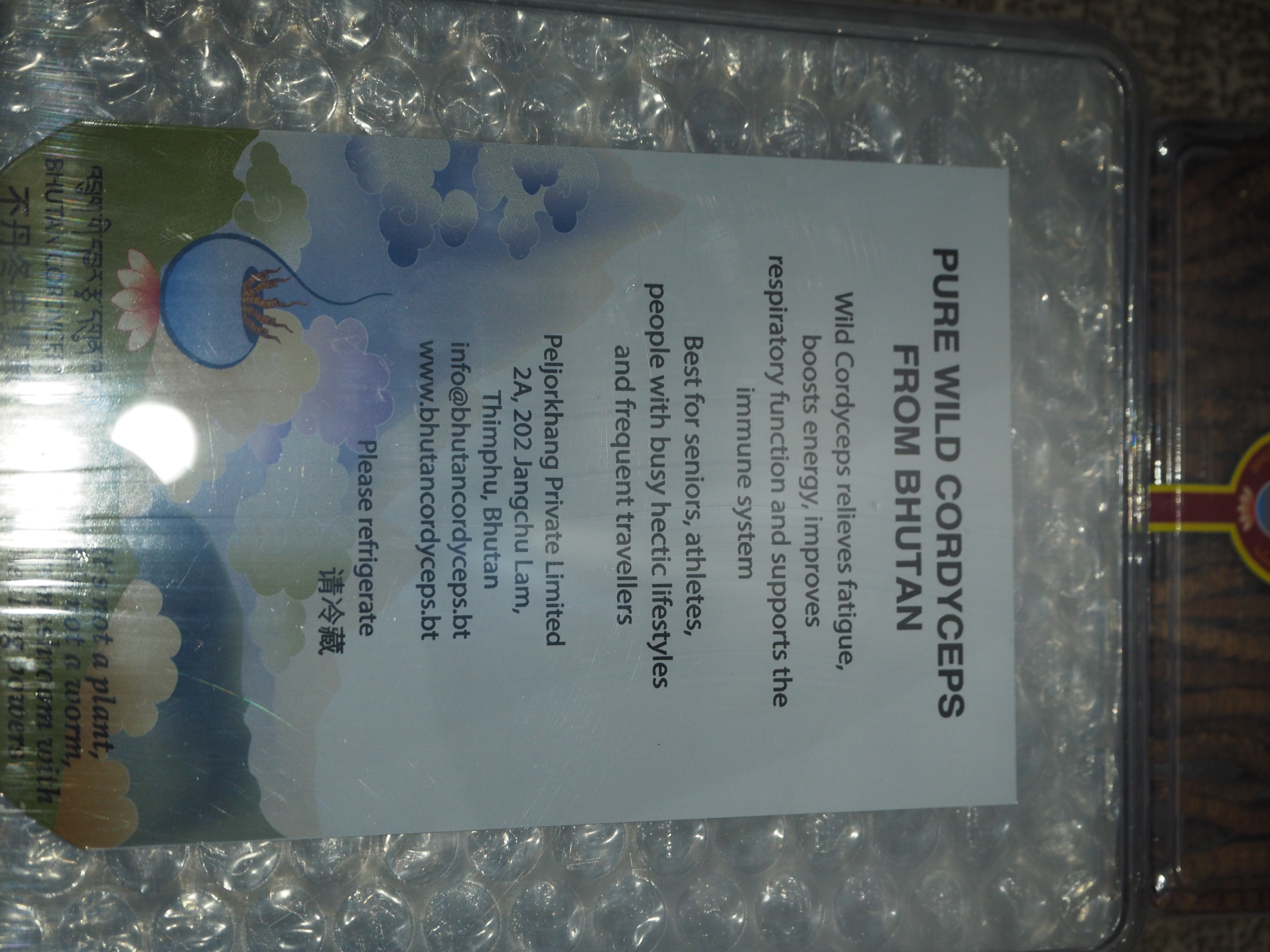
We arrived at the airport fairly quickly and got through the check in, immigration and security easily. Unlike Nepal, this airport is very nice and it only has about seven flights in and out each day! There were numerous shops, a coffee shop and a restaurant. One of the shops specialized in selling a Bhutanese herb that is supposed to be good for your health…Maryse decided to try some! From what we could tell, this little thing comes from the ground and the bigger it is, the more expensive it becomes.
Sorry! I don’t know how to turn this photo! It describes the wonder herb purchased by Maryse.
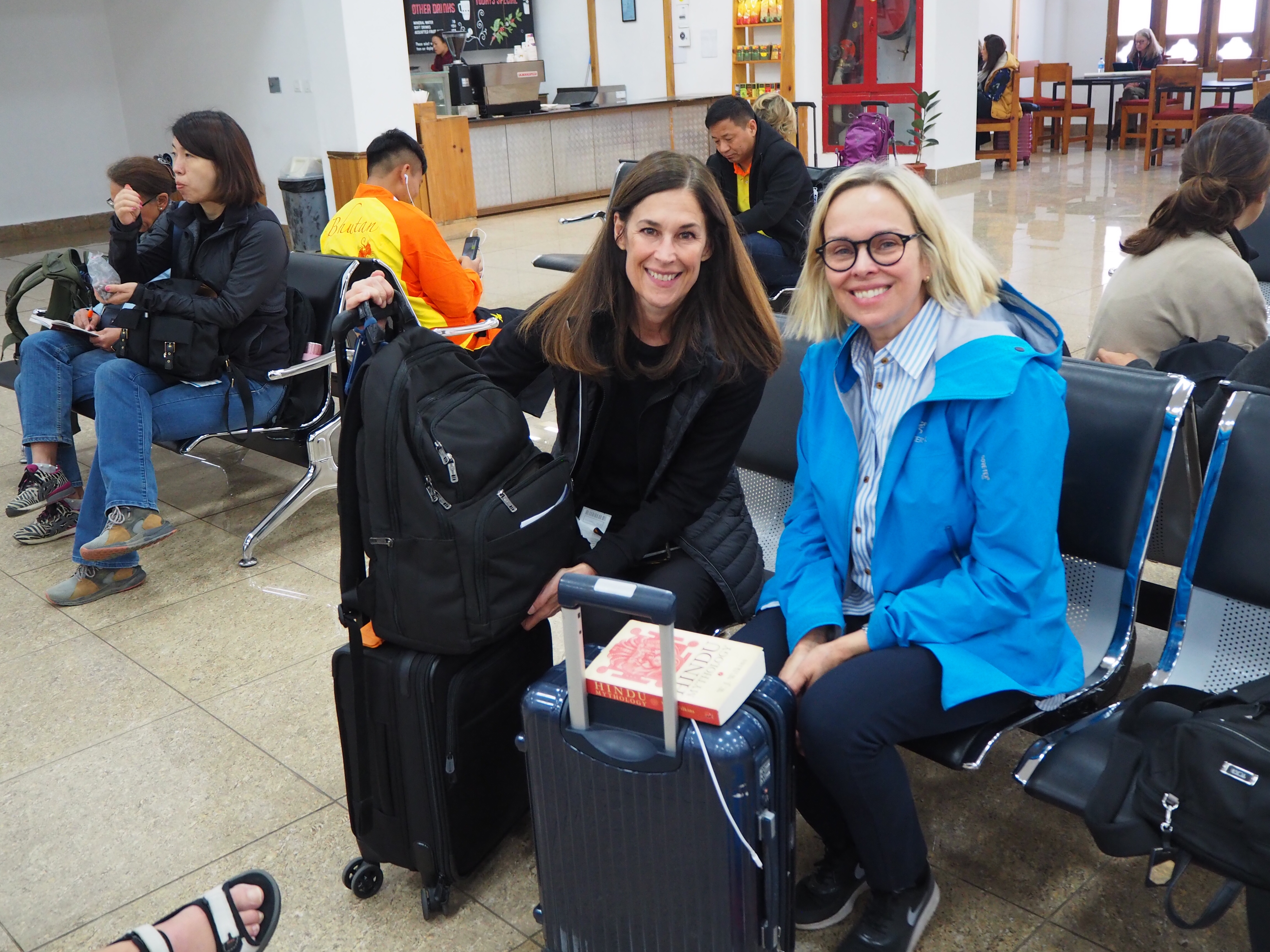
After a bit of retail therapy, it was time to wait for our flight.
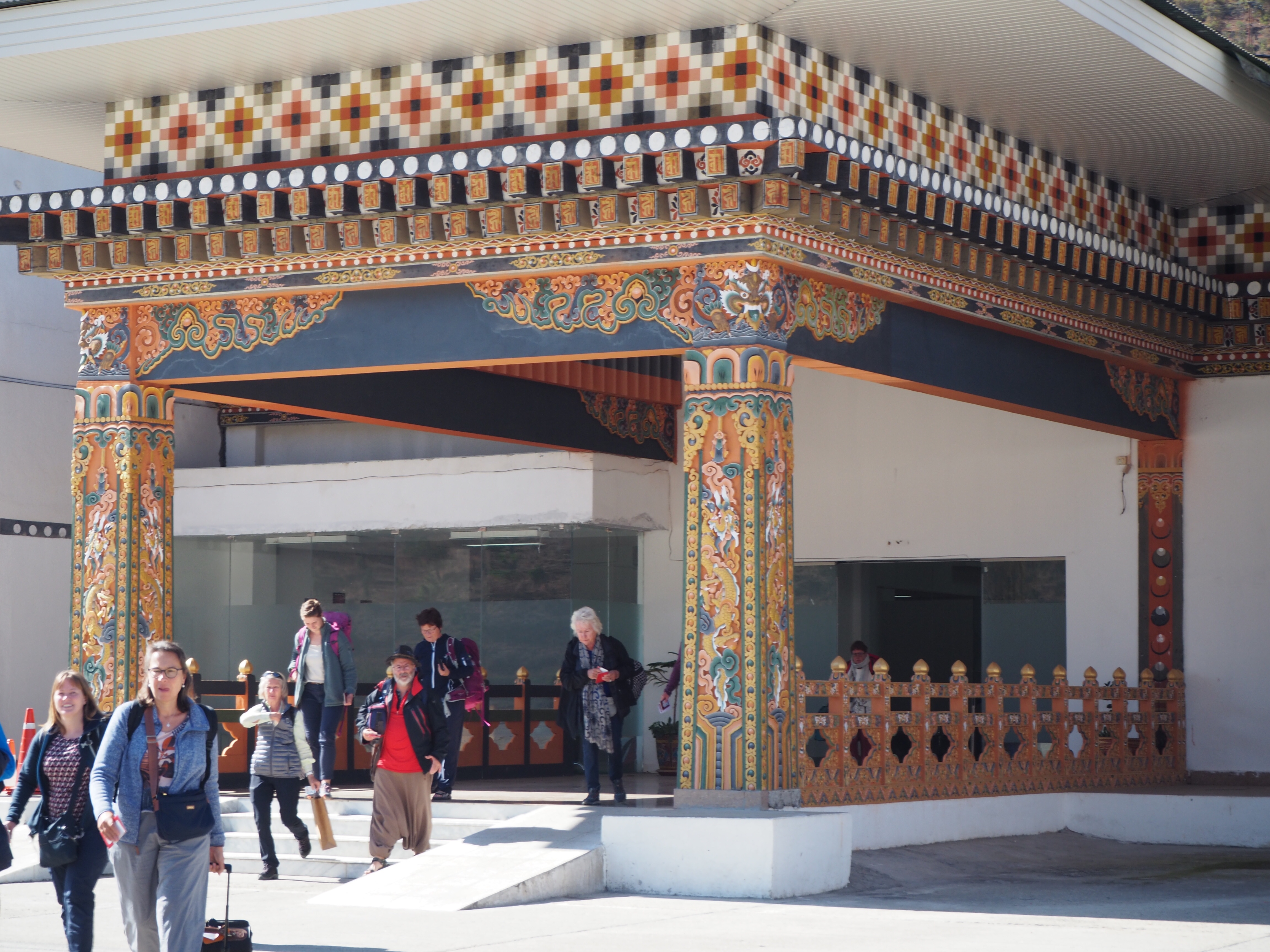
In the boarding area. The outside of our gate, as I headed to the plane.
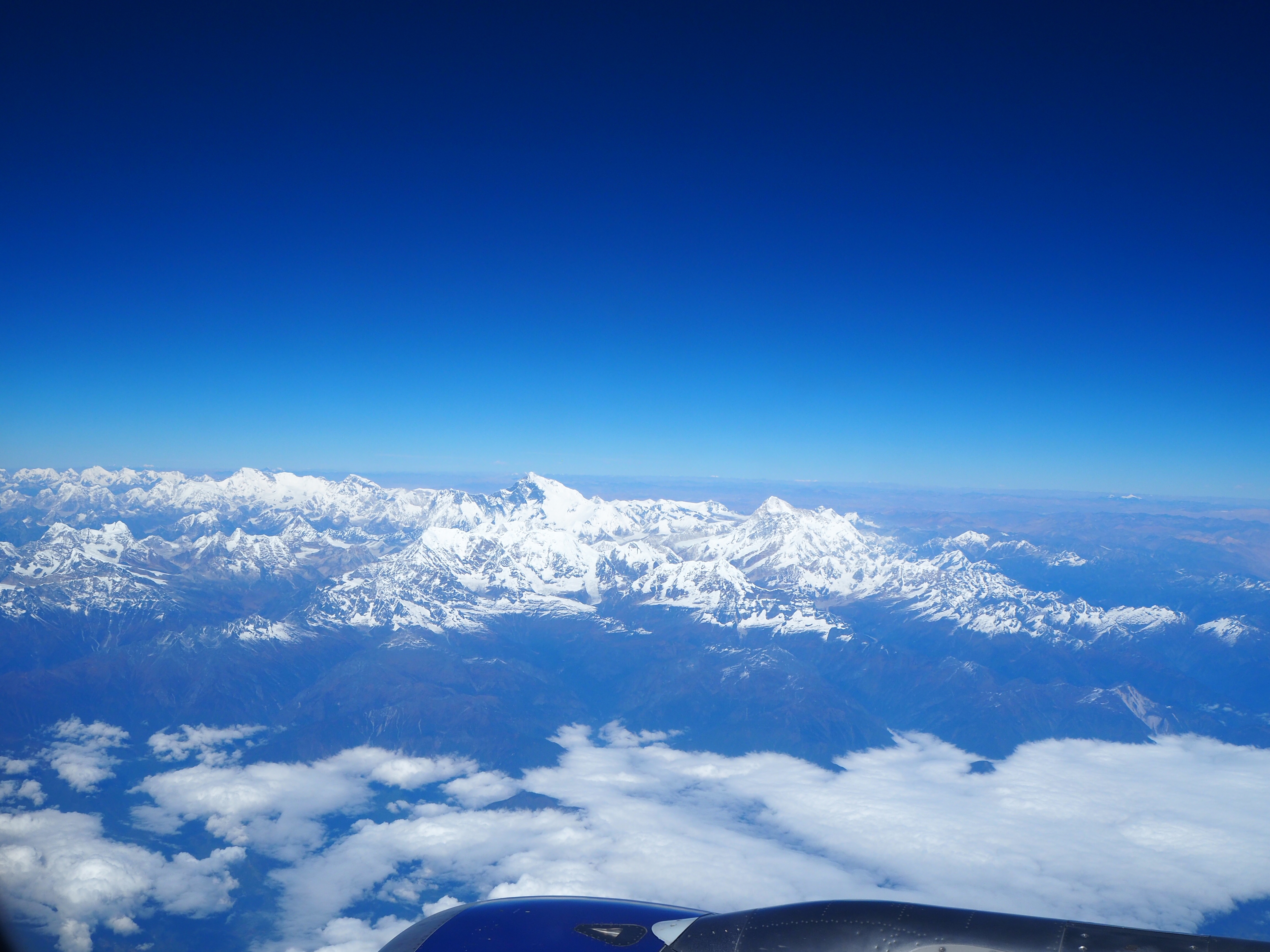
Unfortunately, we were not as lucky as we had been on the way out, we were on the right side of the plane but not by a window. It was a very clear day and all the mountains were in view.
Maryse found a group of French speakers who we had seen one day at lunch. In French, she asked, Philippe, who was sitting next to Kathy and me to take some photos using my camera.
This might be Mt Everest, I am not sure!
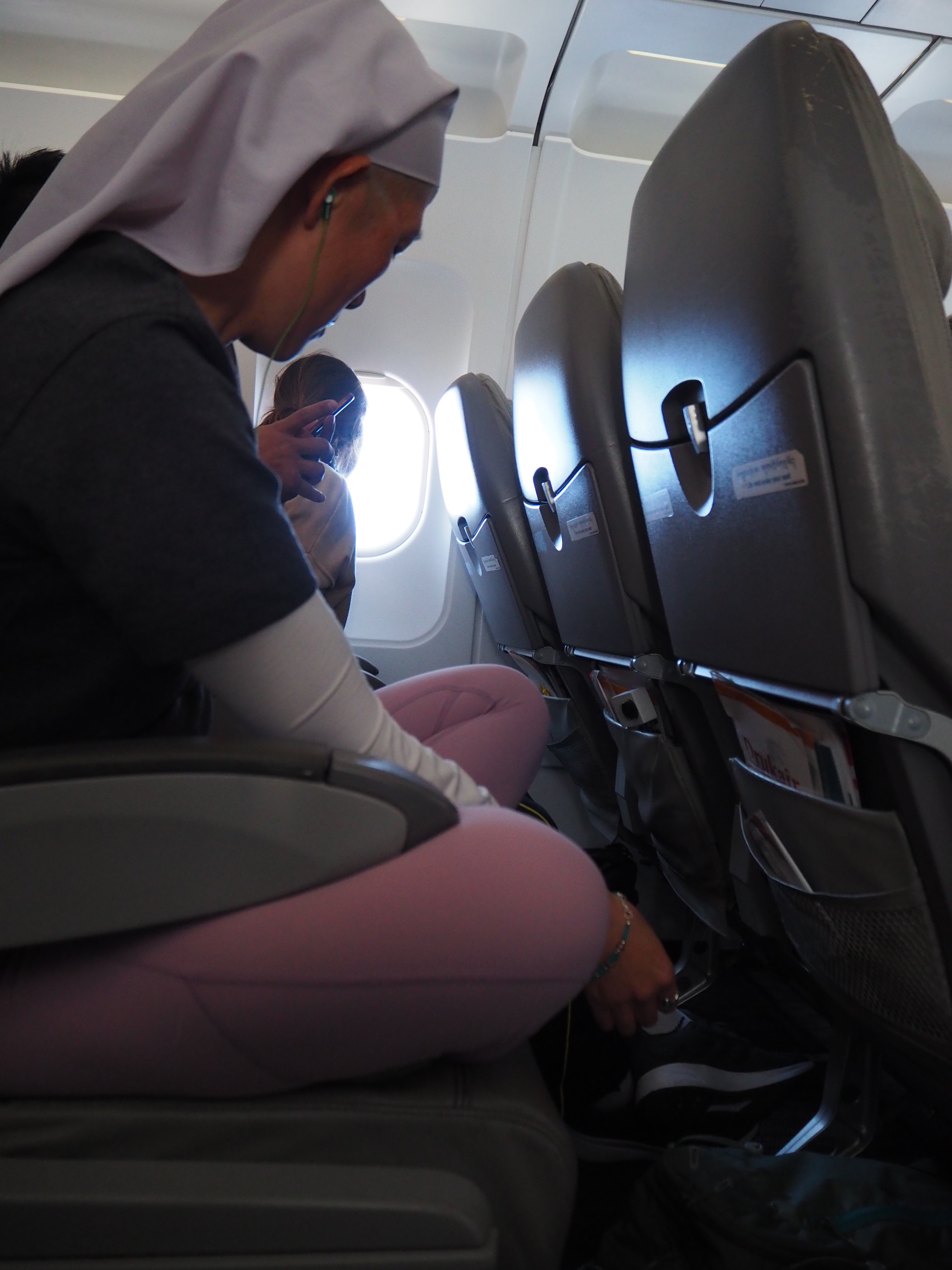
The view inside the place was quite interesting too. This woman was sitting across the aisle from me:
Some kind of Nun wearing workout wear.
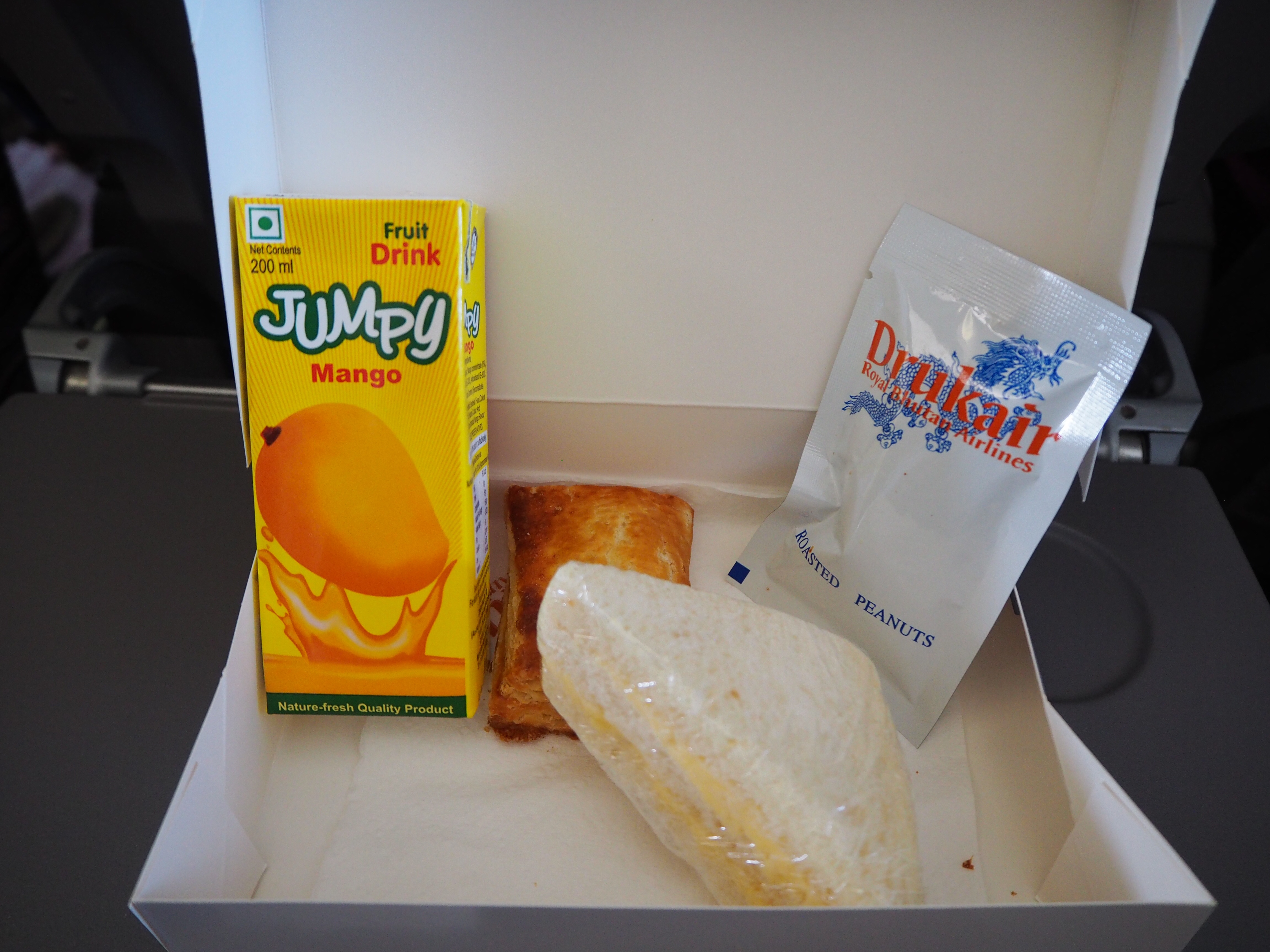
We got another snack on the flight, and once again I stuck to the water!
I decided that Jumpy Mango juice wasn’t for me.
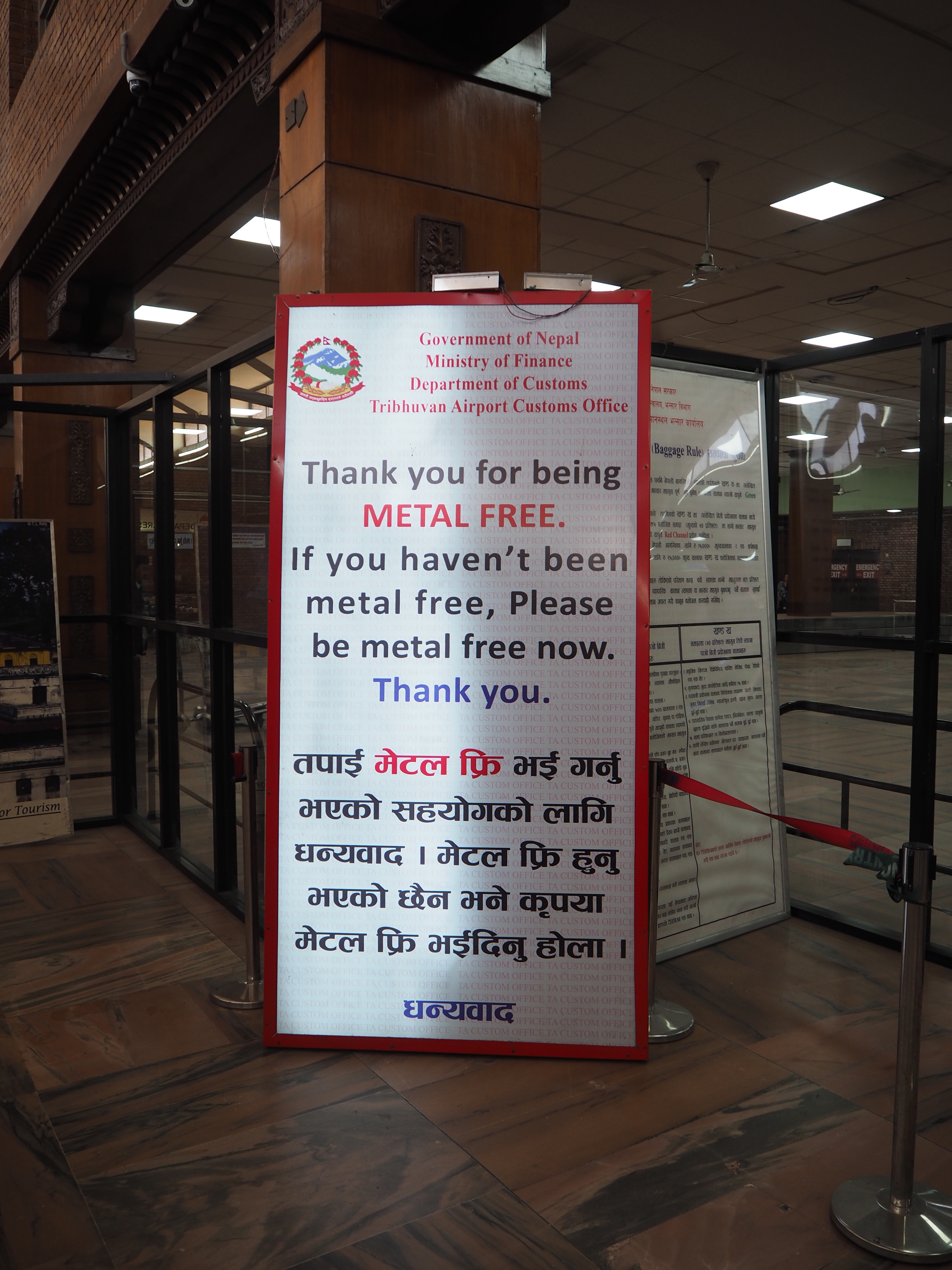
Fortunately, we didn’t have any delays and landed in Kathmandu on time. Also fortunately, we didn’t have to buy another visa! Ours allow for multiple entries so we could go directly to immigration. We made our way down stairs to the Metal Free Area.
I think this is a notice to indicate that we were about to go through the metal detectors.
Once again, the women at the metal detector machines paid zero attention to the screen. Their role seemed solely to monitor the speed that the items traveled on the belt so as to avoid having anything fall on the ground at the end! Most people seemed to set off the machine through which we walked, but there wasn’t anyone around to pay any attention. Of course, the basic question could be asked… why are people screened at all when walking into the baggage claim area ?
We then collected our luggage and found Christian outside. He got us into a van and sent us on our way to our hotel in the Kathmandu valley. The first thing we noted was that the road was lined with both school children and a massive police presence to welcome the King of Bangladesh. The king didn’t seem to be going to the same place that we were because at a fork in the road, the police all lined the other road. Our ride took just under ninety minutes in bumper to bumper traffic for the entire drive. For about half way we were on a divided four lane road and then on a basic paved road with one lane going each way. The roadsides were busy and active for the entire ride. We saw school children on their way home, businesses of all kinds, some residences and even a bit of farmland. We did not see any cattle or horses, on this trip that seems to be more of a Bhutanese phenomenon.
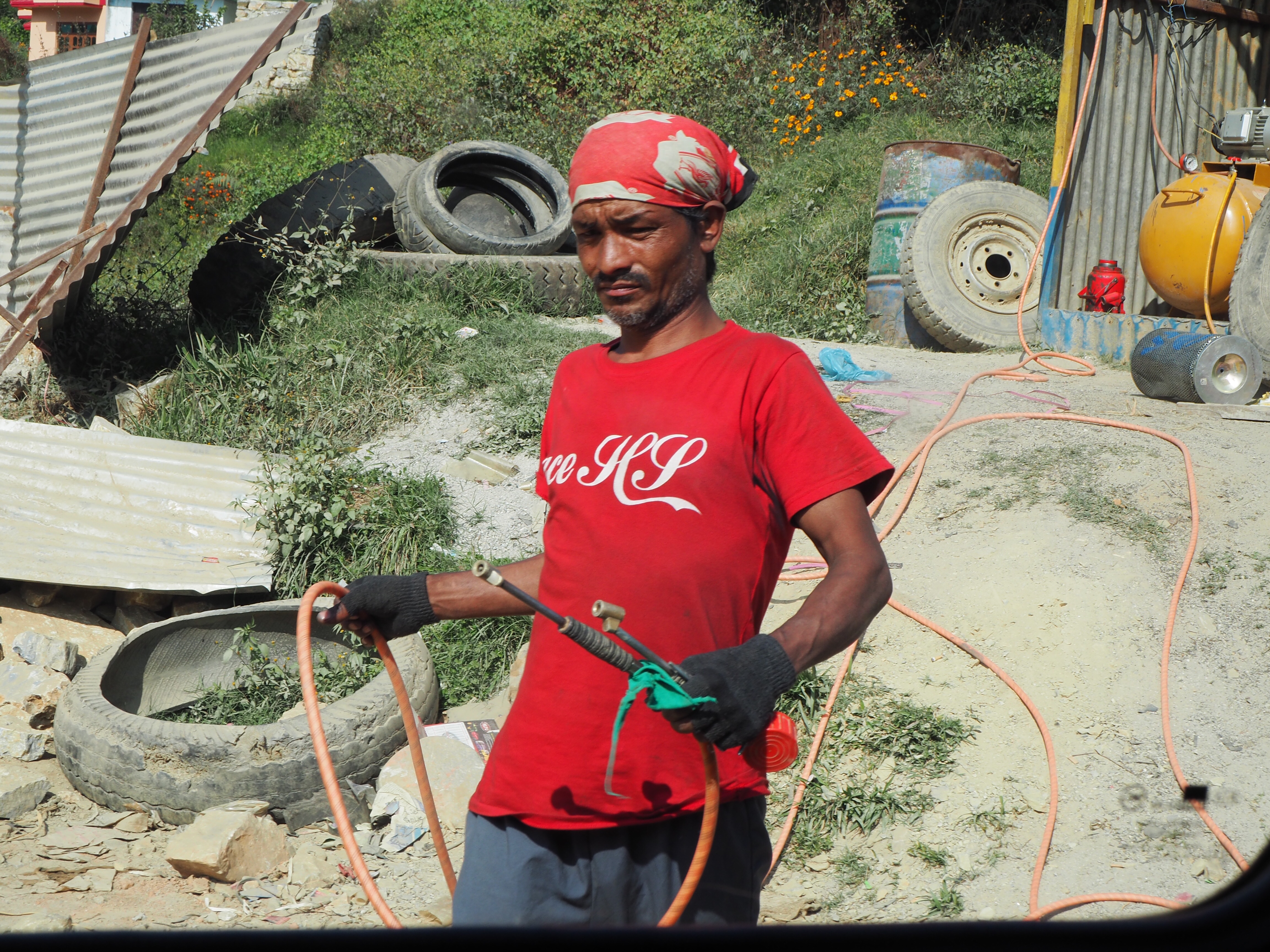
We all had a brief moment of concern when the driver pulled off the road into what looked like a very rudimentary service station. He and the worked had some conversations about the tires, during which I had visions of being stuck on this busy dusty road in the middle of our drive. Fortunately, the air seemed to do the trick and we made it safely to our destination.
The service station attendant.
Our hotel is lovely. It is all built and designed around the ideals of healing living, particularly using the Ayurvedic philosophy. I’ll be able to tell you more after I’ve been here for a bit.
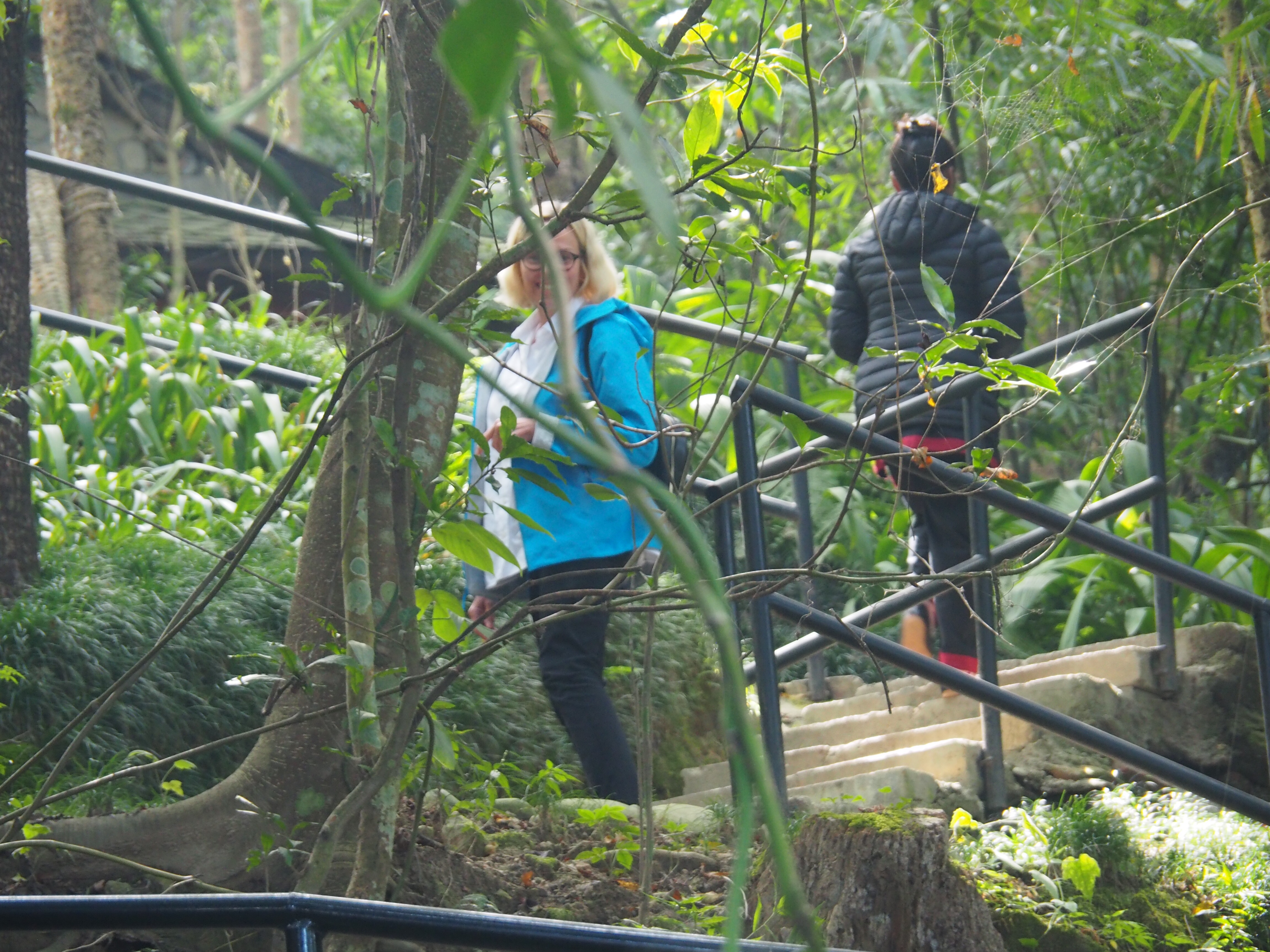
I did take a walk to explore theresort which is built entirely on the side of a mountain. We haven’t gotten away from climbing just yet!
I sat in the Himalayan Salt Room. The salt supposed to be good for sinuses and blood pressure to name two benefits. I also laid down in the Crystal Room. I have no idea what this is supposed to do for me!
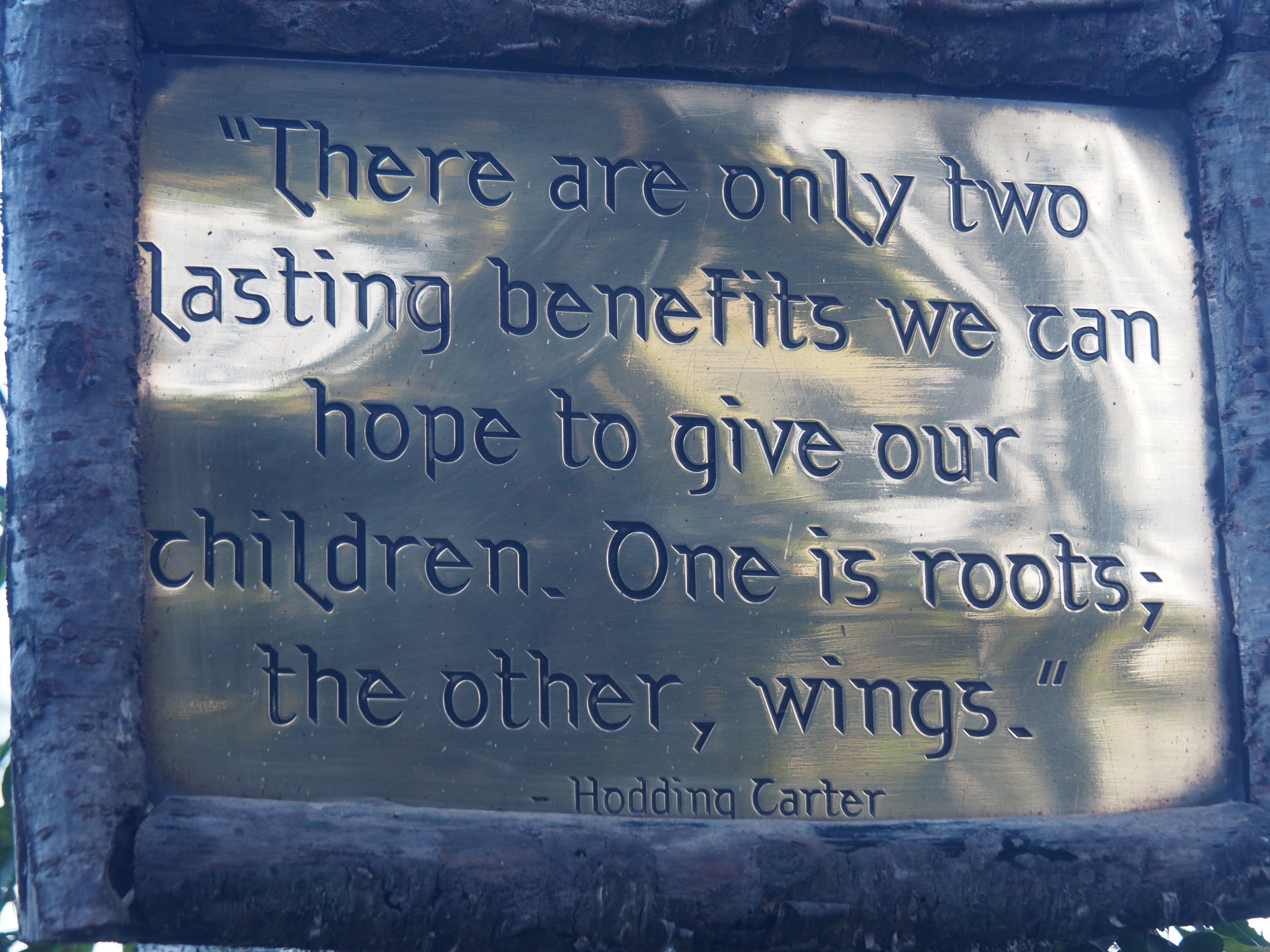
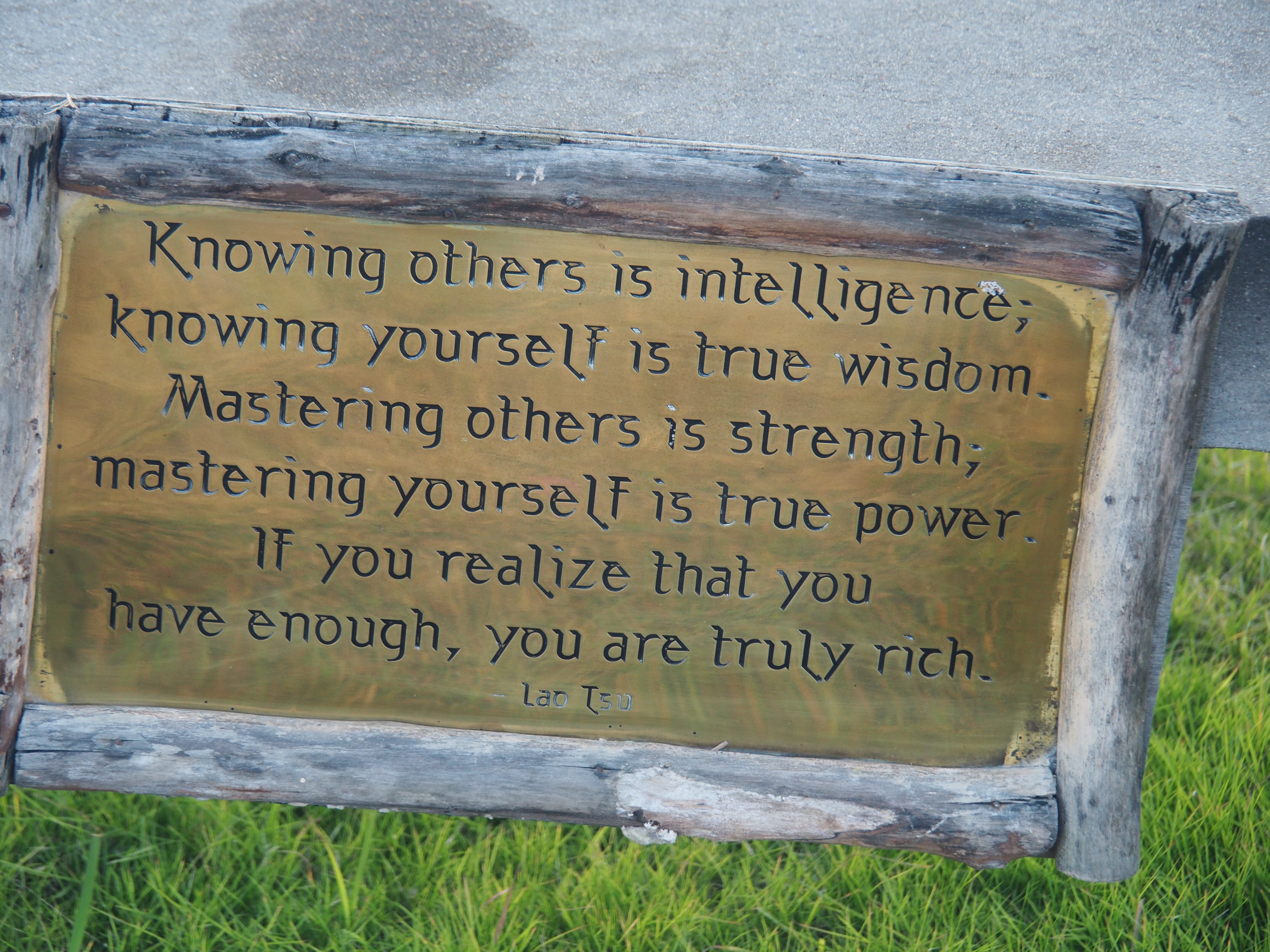
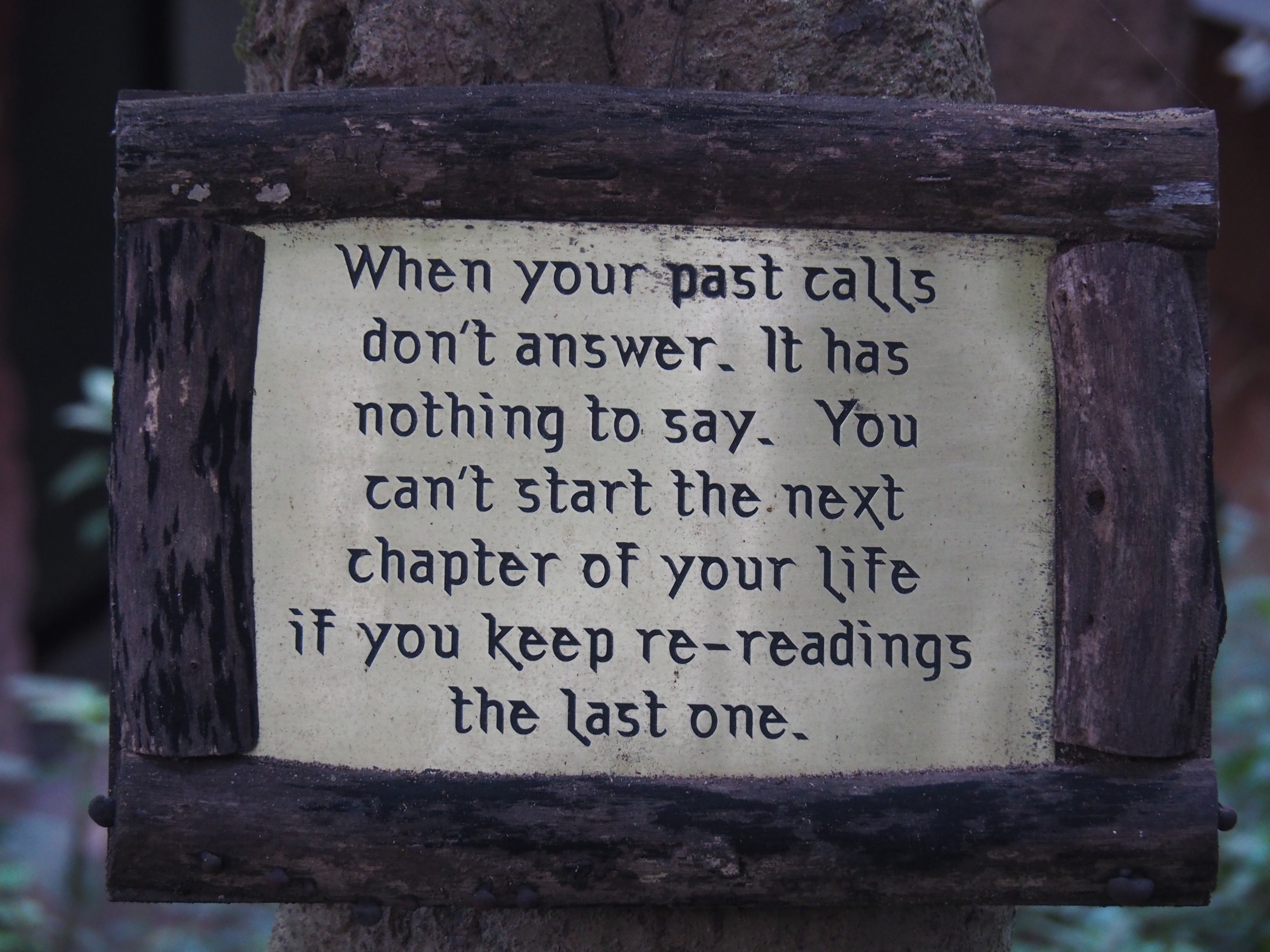
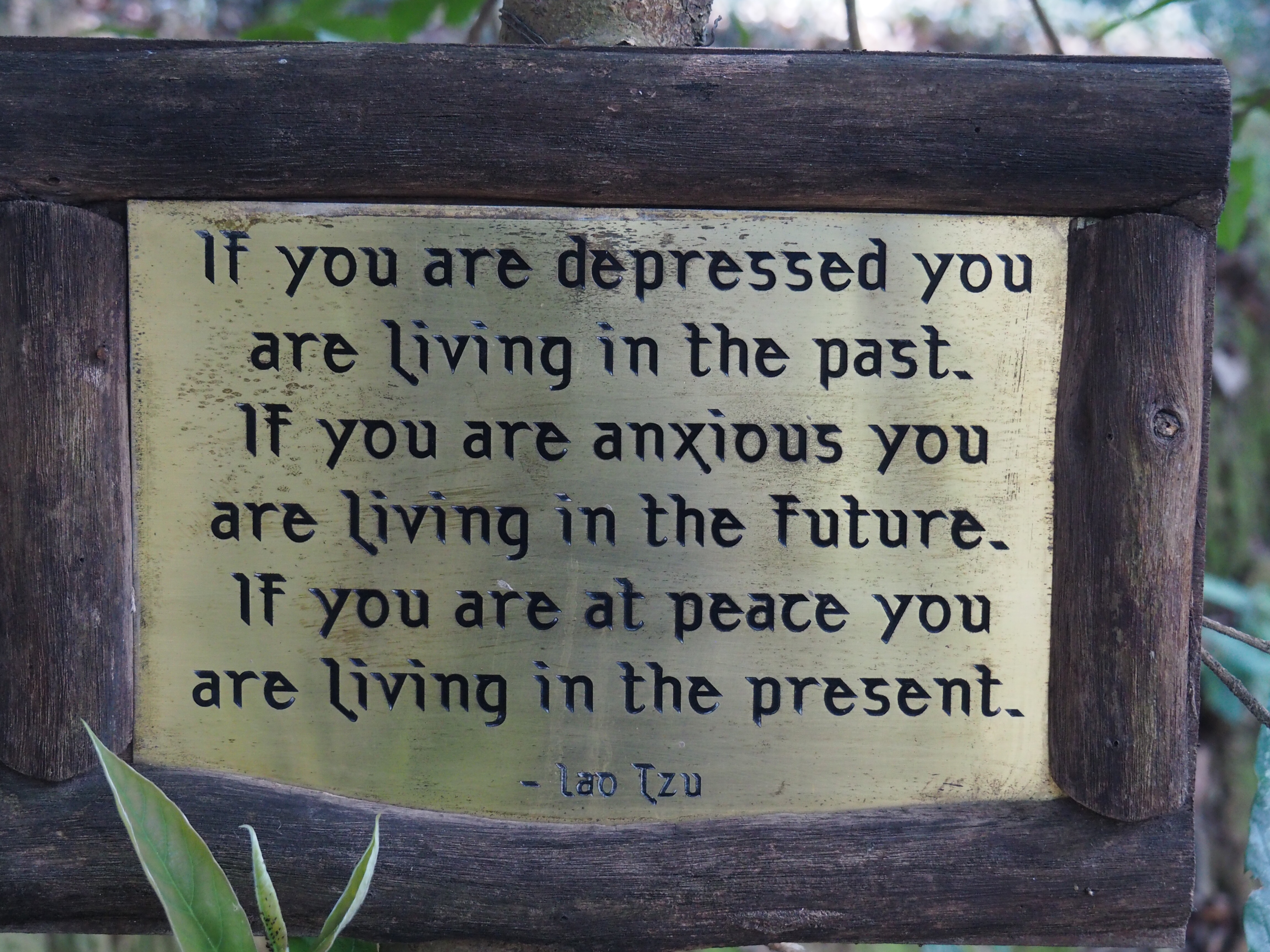
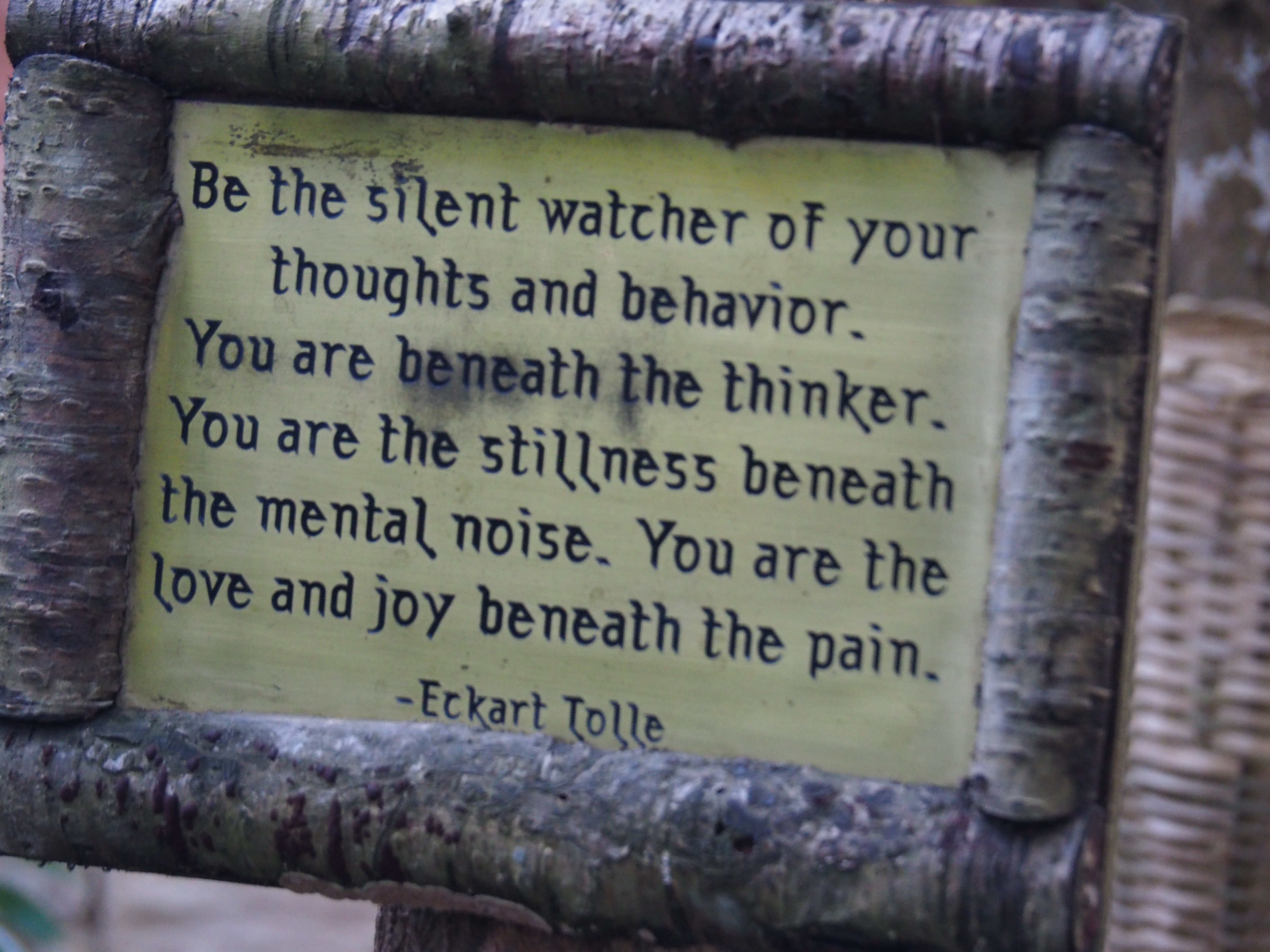
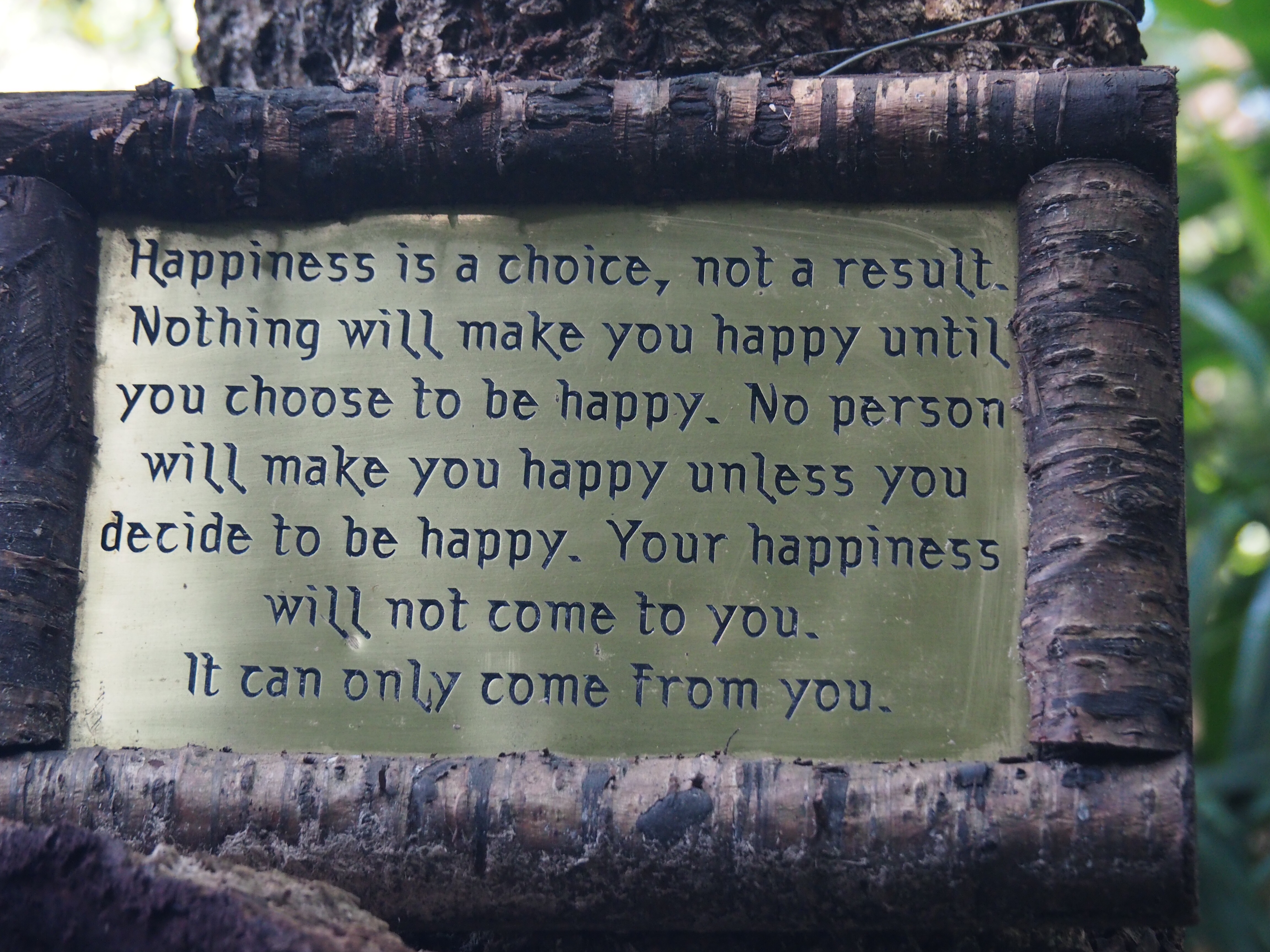
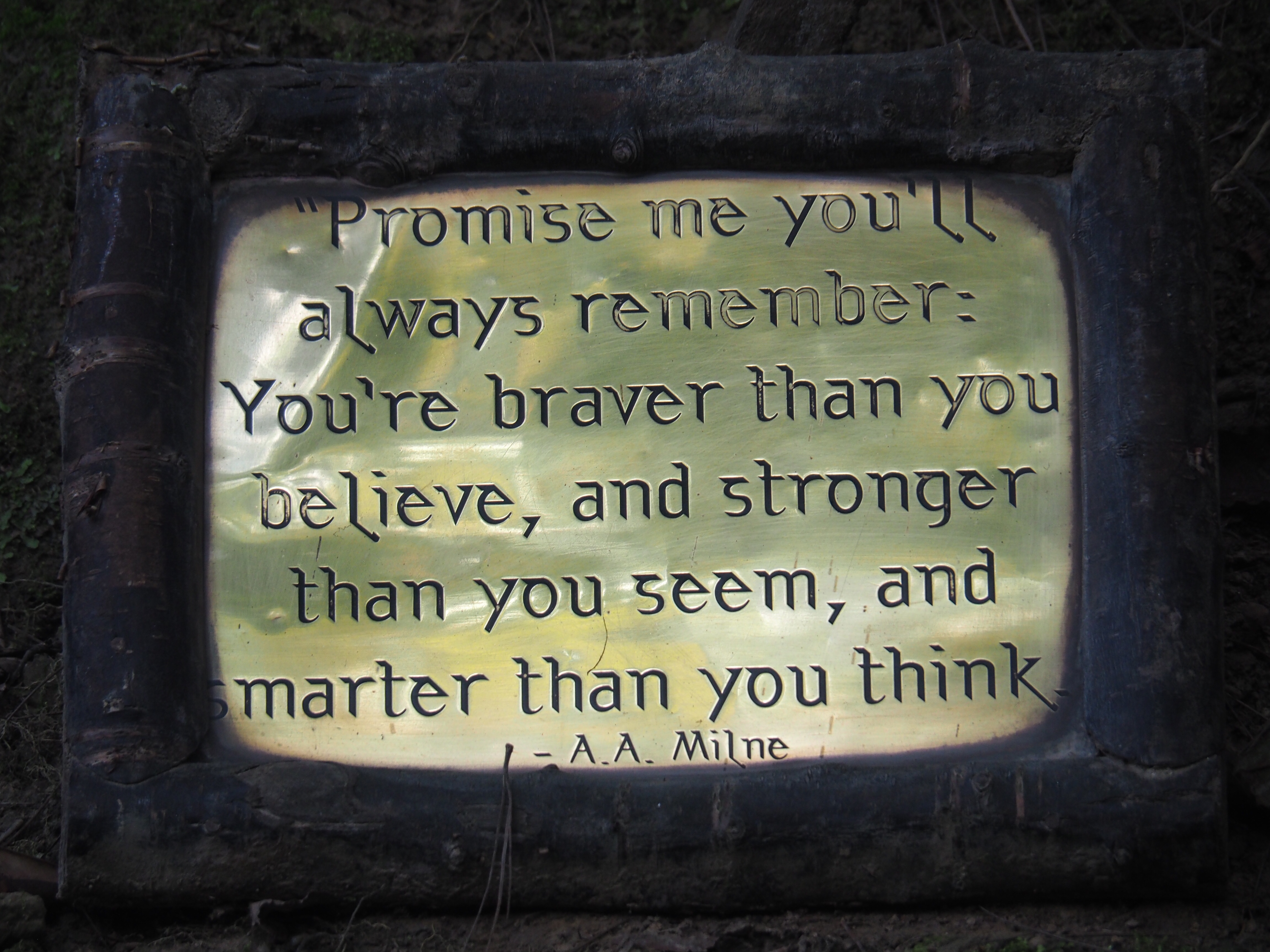
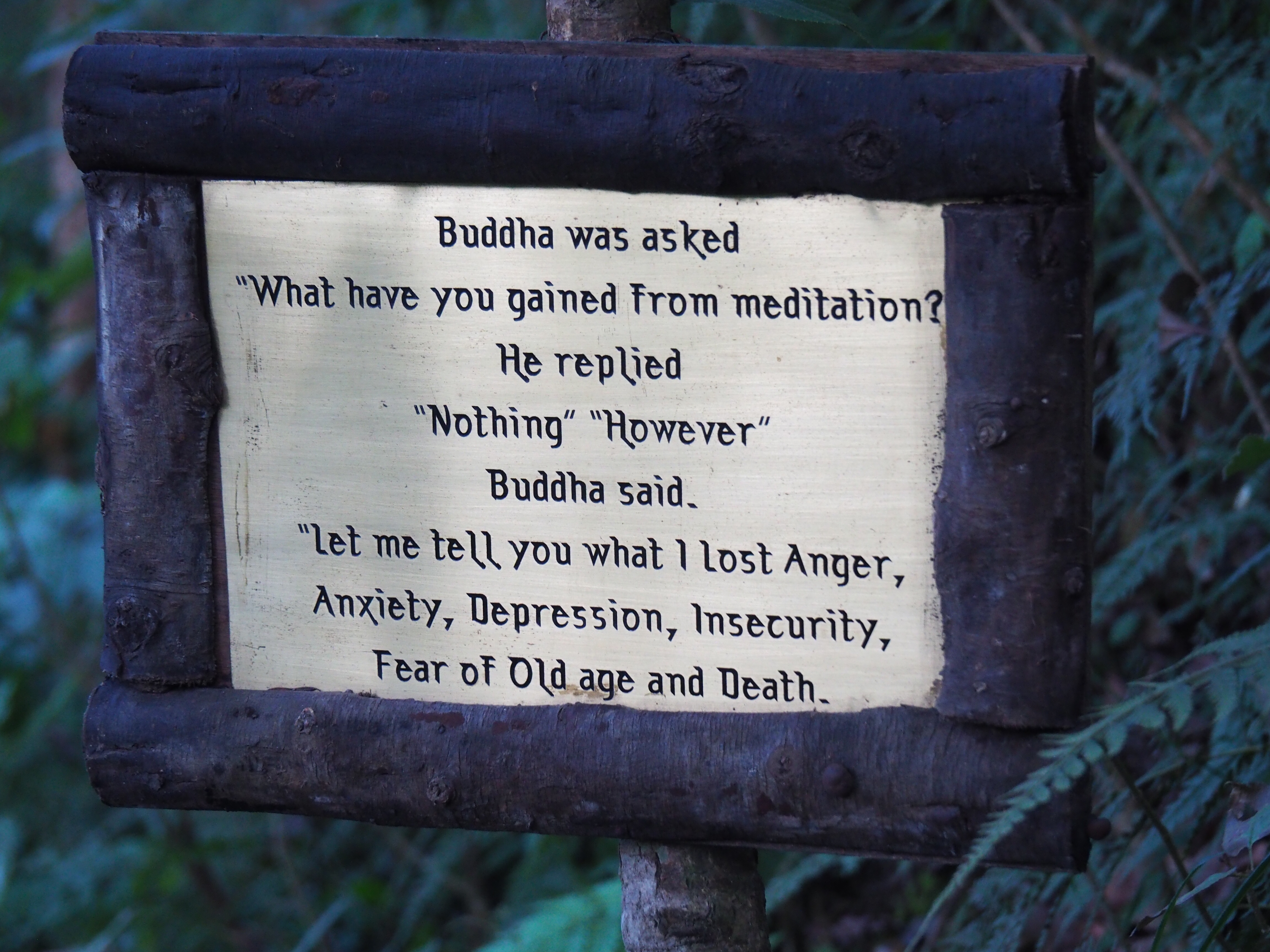
They have signs with “food for thought” throughout the resort.
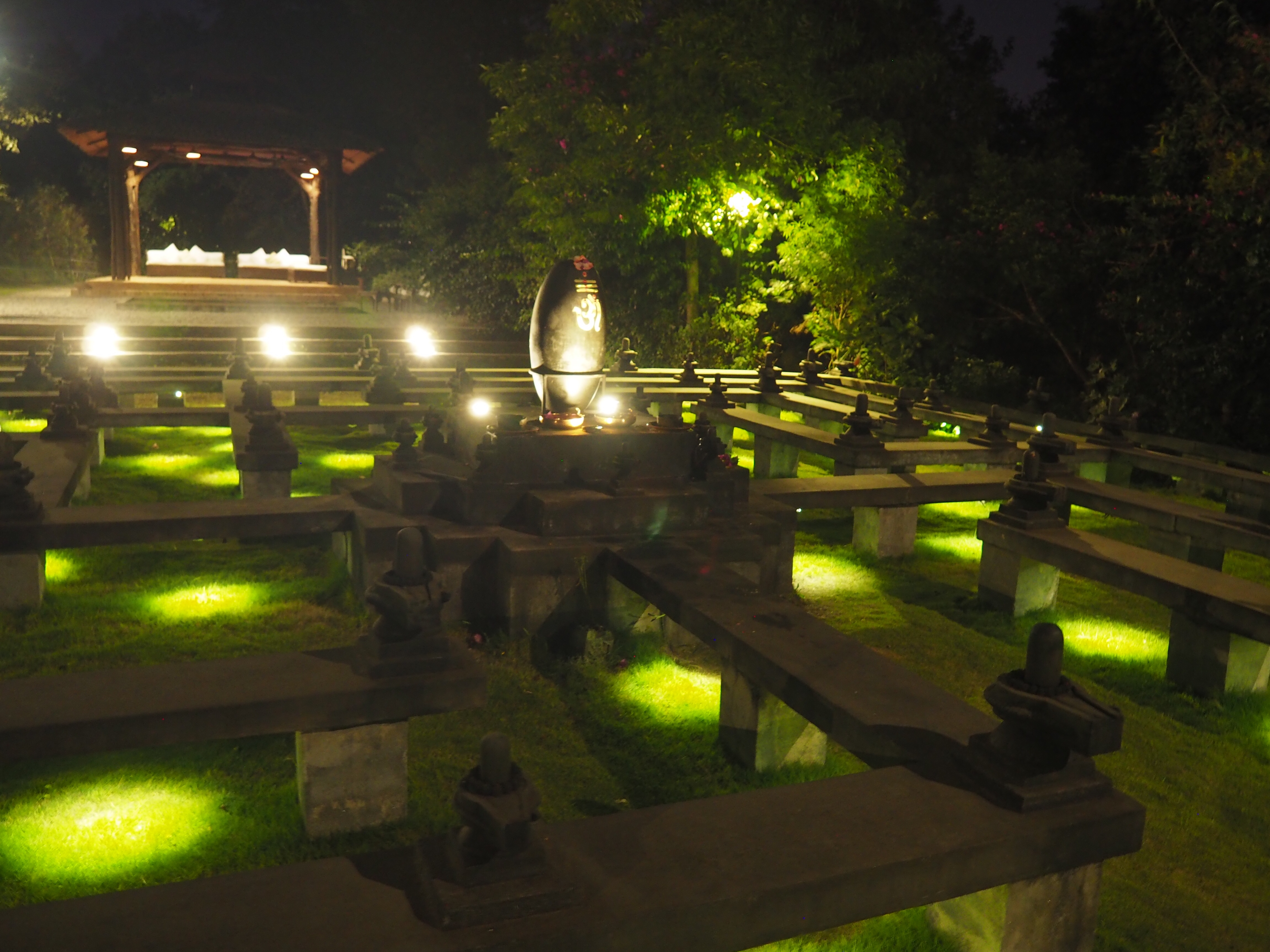
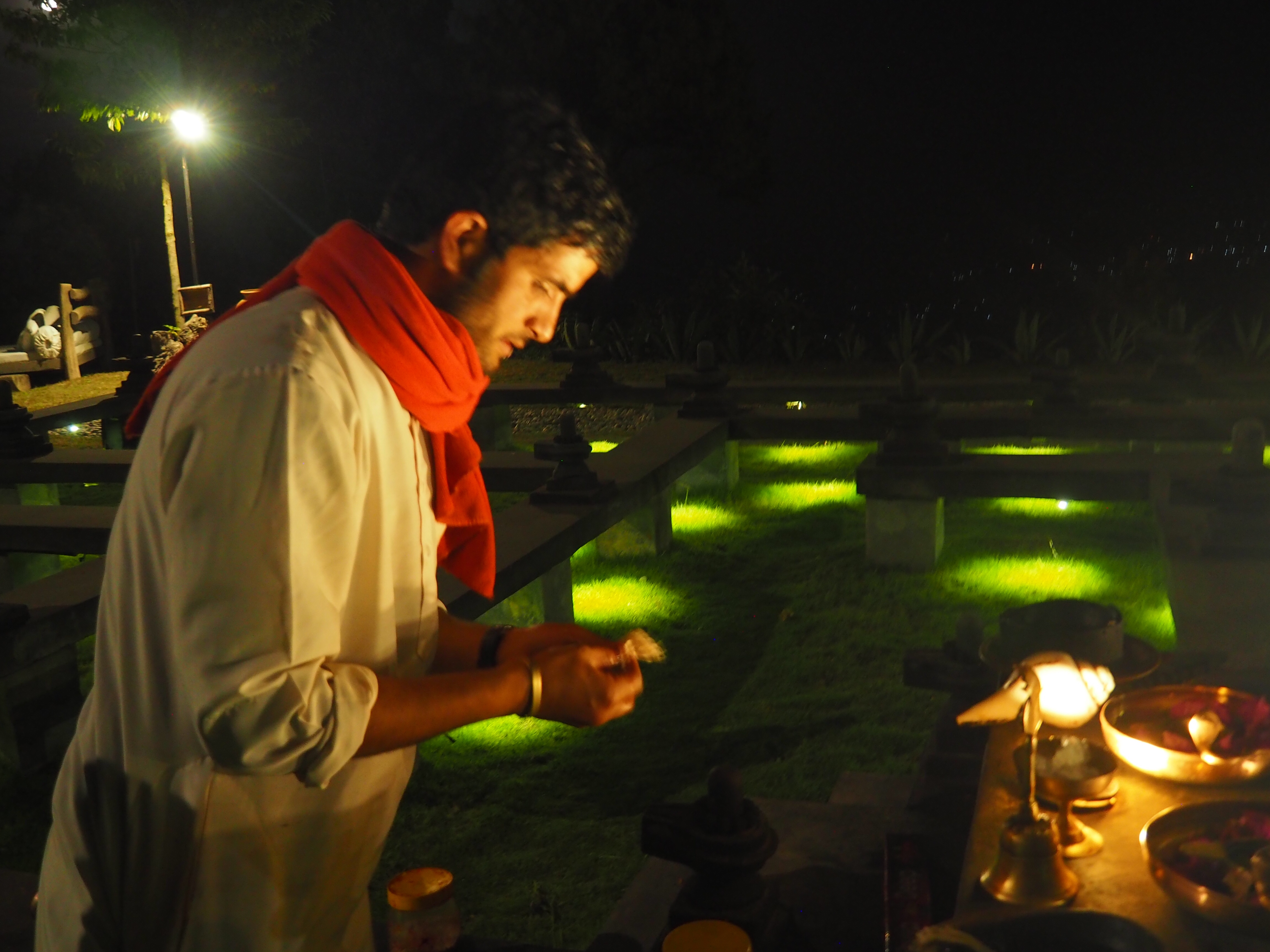
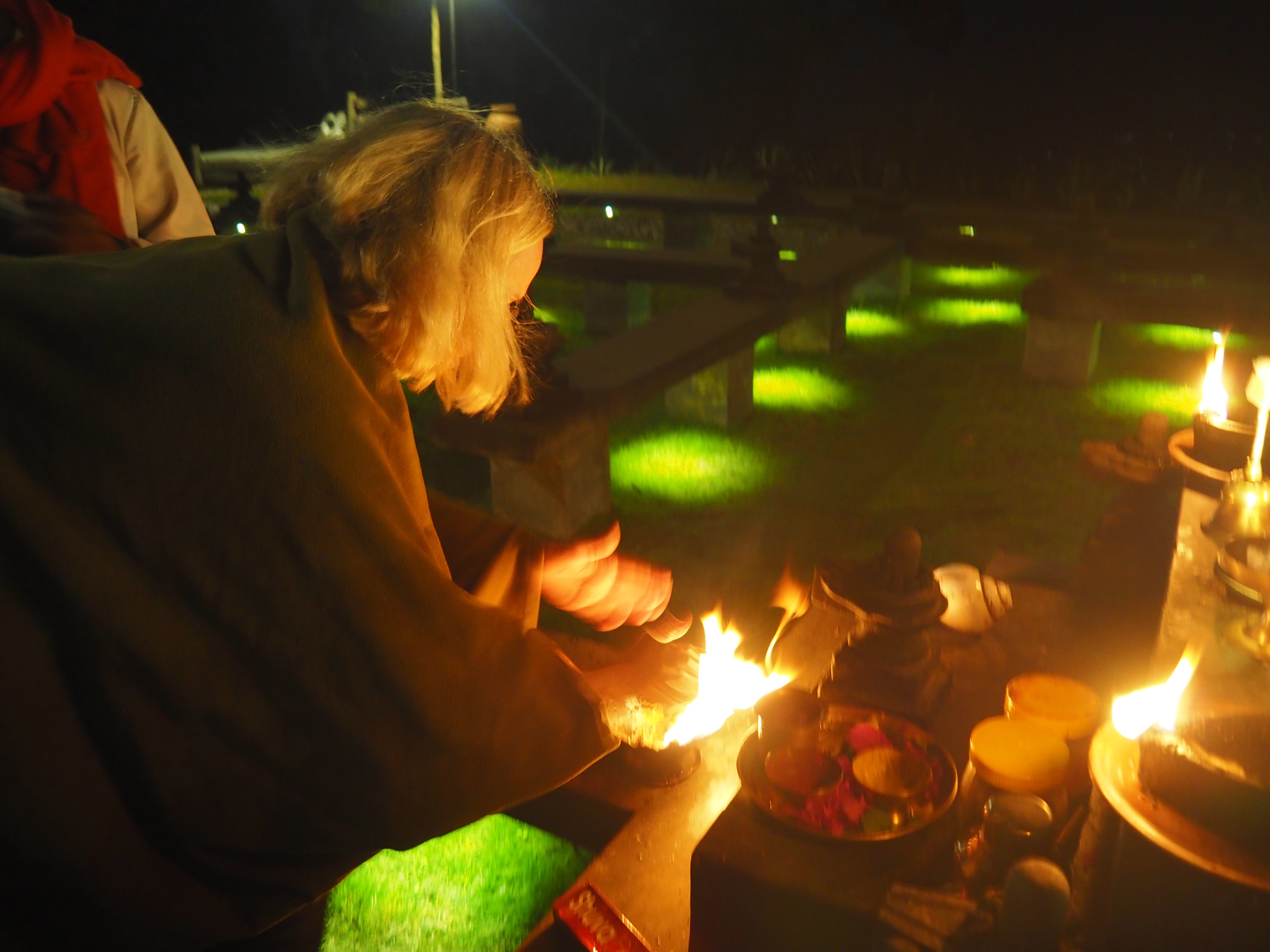
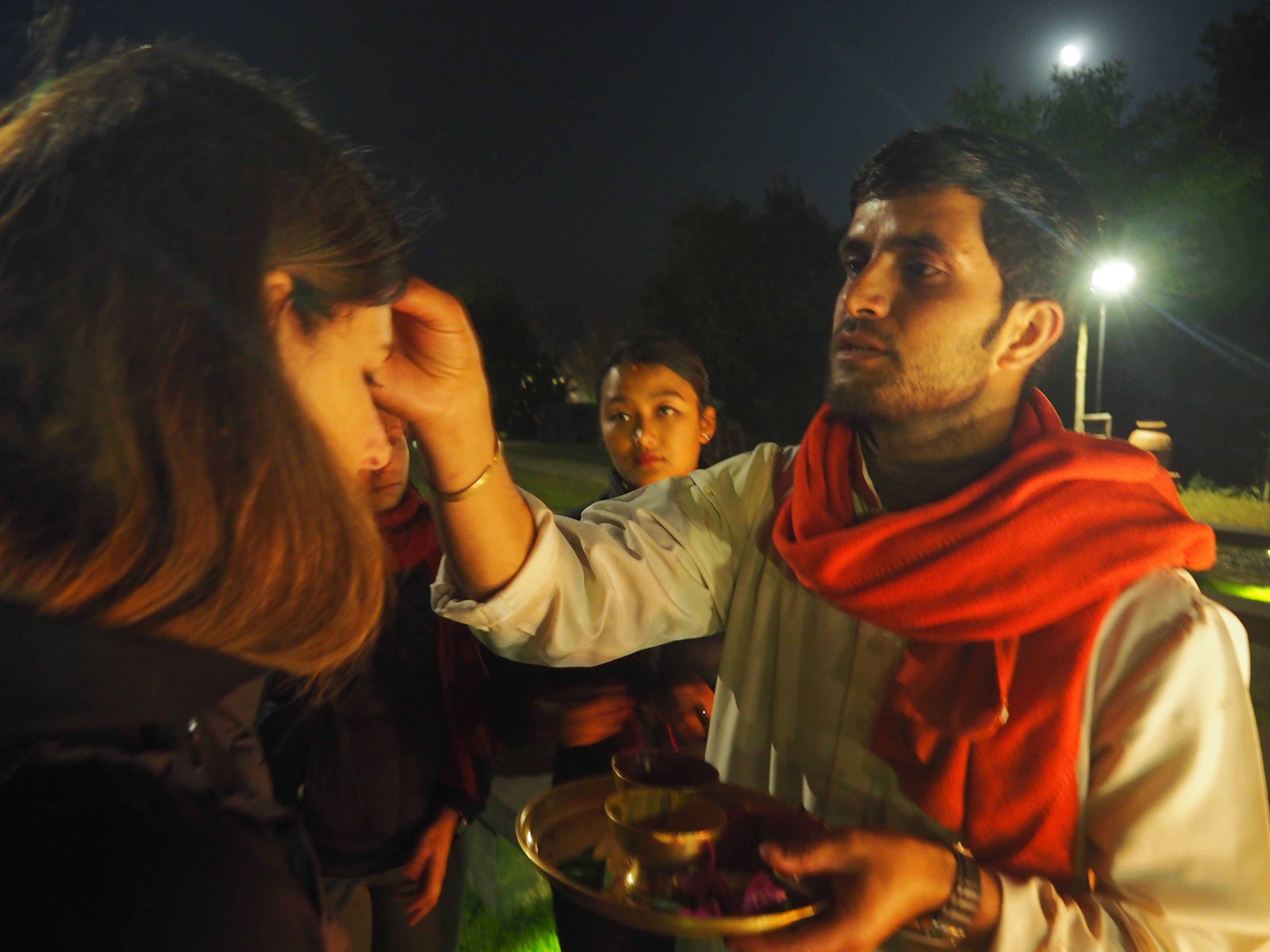
Maryse, Kathy and I went to the lounge at the very top for a drink before going to dinner. It turns out that we were finished in time to go to the nightly blessing done by a Hindu priest. It was done in the meditation maze. It never ceases to amaze me how much religions have in common. Basically, we asked for forgiveness of our sins and for a blessing to a good life going forward. The priest had us repeat a number of things as part of the ceremony. We also received the red dot on our foreheads and a red thread “bracelet” that we are to keep on for a week. When we take if off, we are to put it in nature and not throw it away in someplace dirty.
The maze before the service. The priest preparing. Maryse saying some prayers over the fire. Kathy getting her red dot. I’m positive there is a name for this, but I don’t know what it is!
After the ceremony, we made our way all the way from the top of the hill to close to the bottom, where the restaurant is, for dinner.
Tomorrow the three of us are going to do a cooking class later in the afternoon, other than that we will each do our own thing until dinner. There are lots of things to do here, I’m sure it won’t be difficult to fill the time.
Today is the birthday of the Fourth King and also Constitution day. We chose to celebrate by visiting the Tiger’s Nest Monastery, the highlight of any visitor’s trip to Bhutan.
For this holiday, the children go to school but they have a celebration at school instead of regular classes. There were also celebrations all over the country. We saw some local people visiting the monastery for the day.
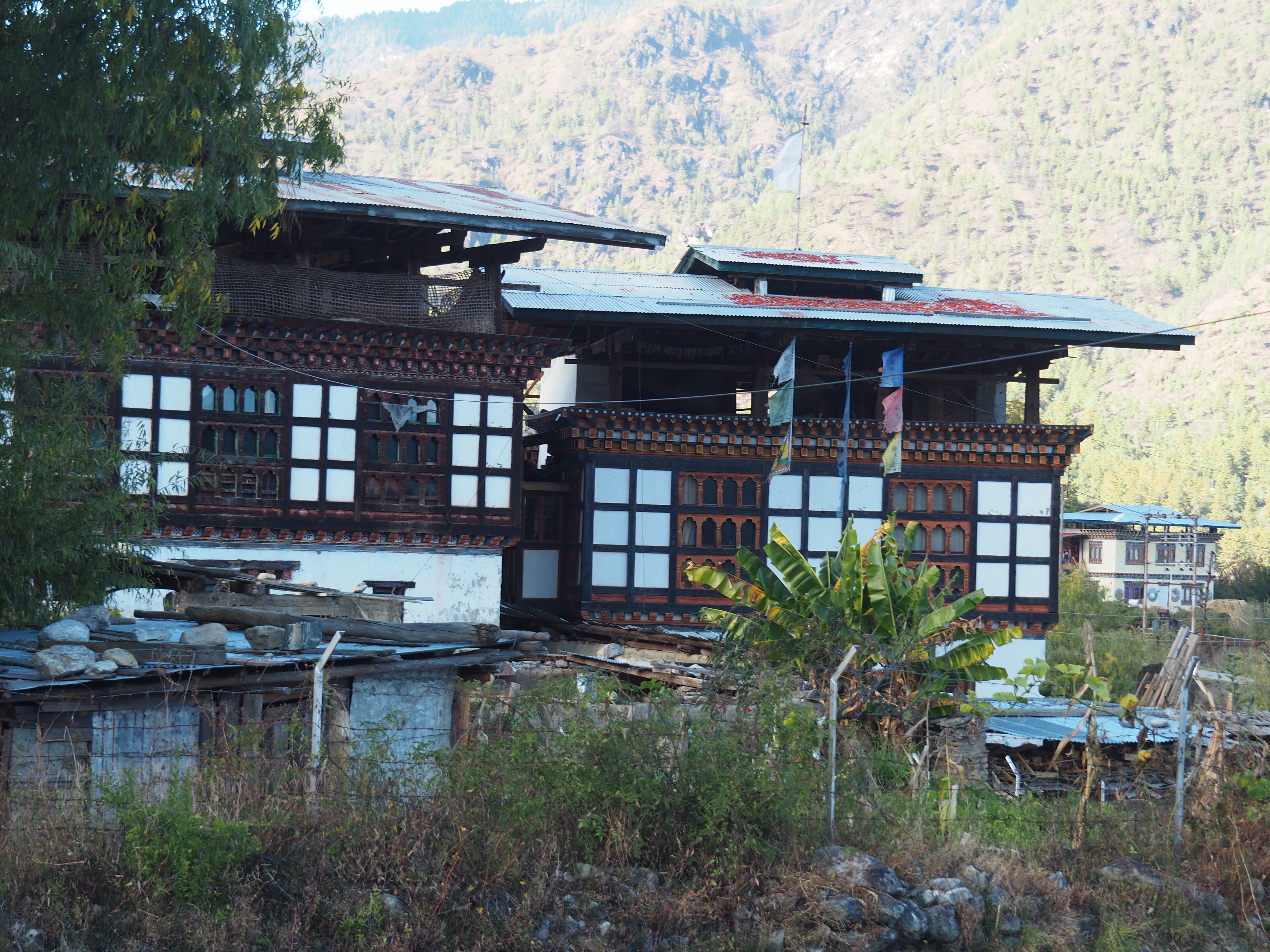
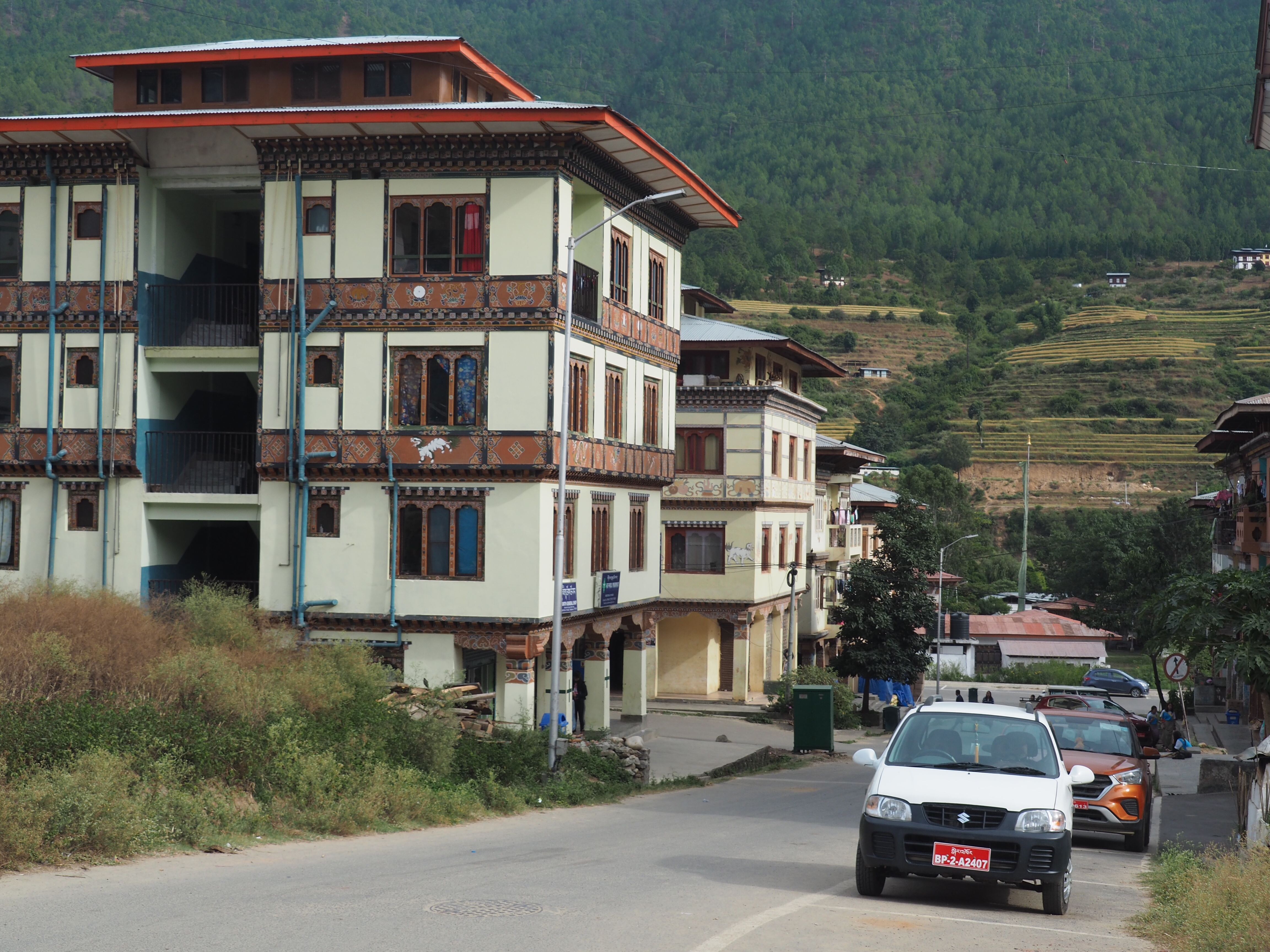
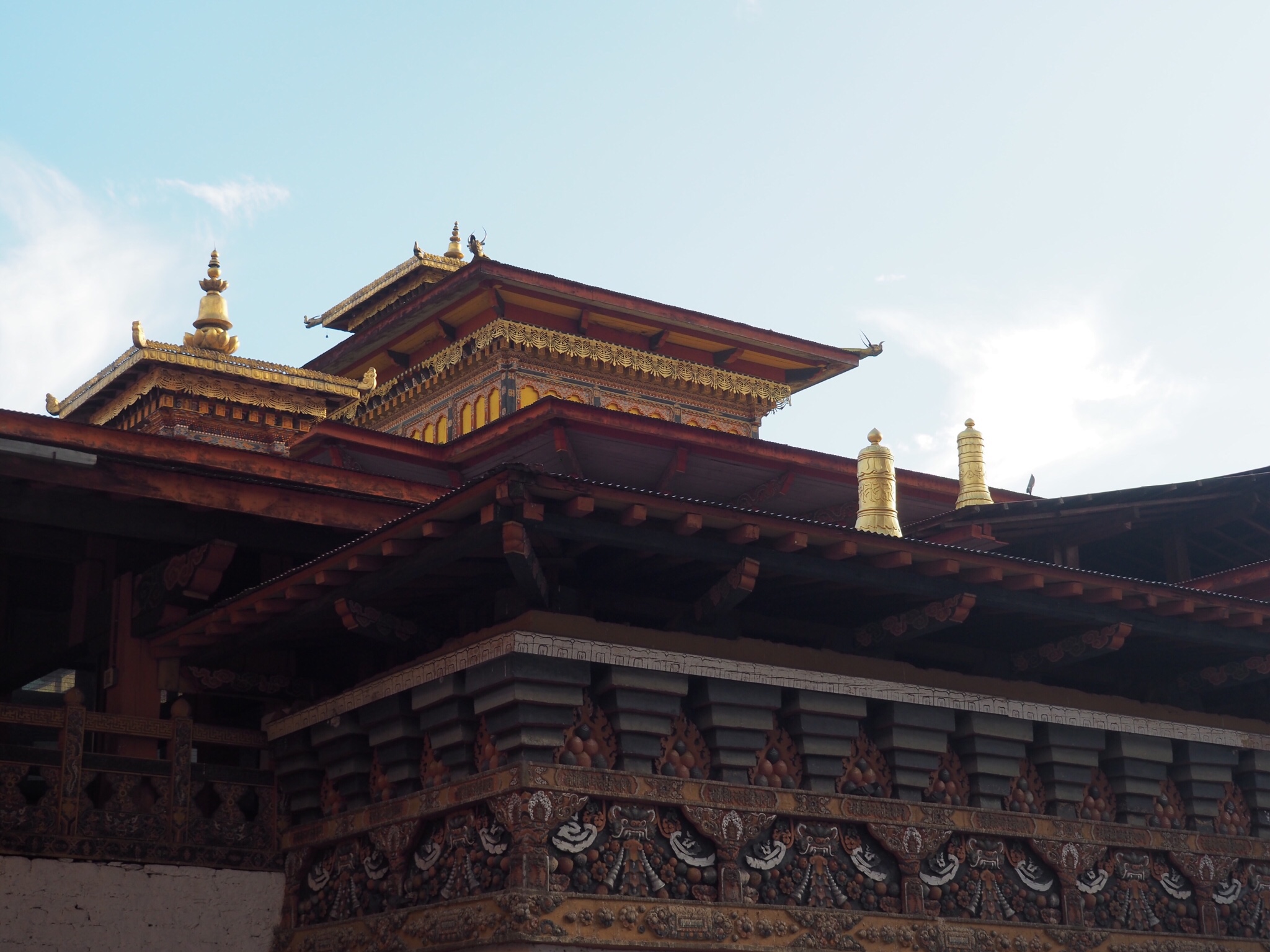
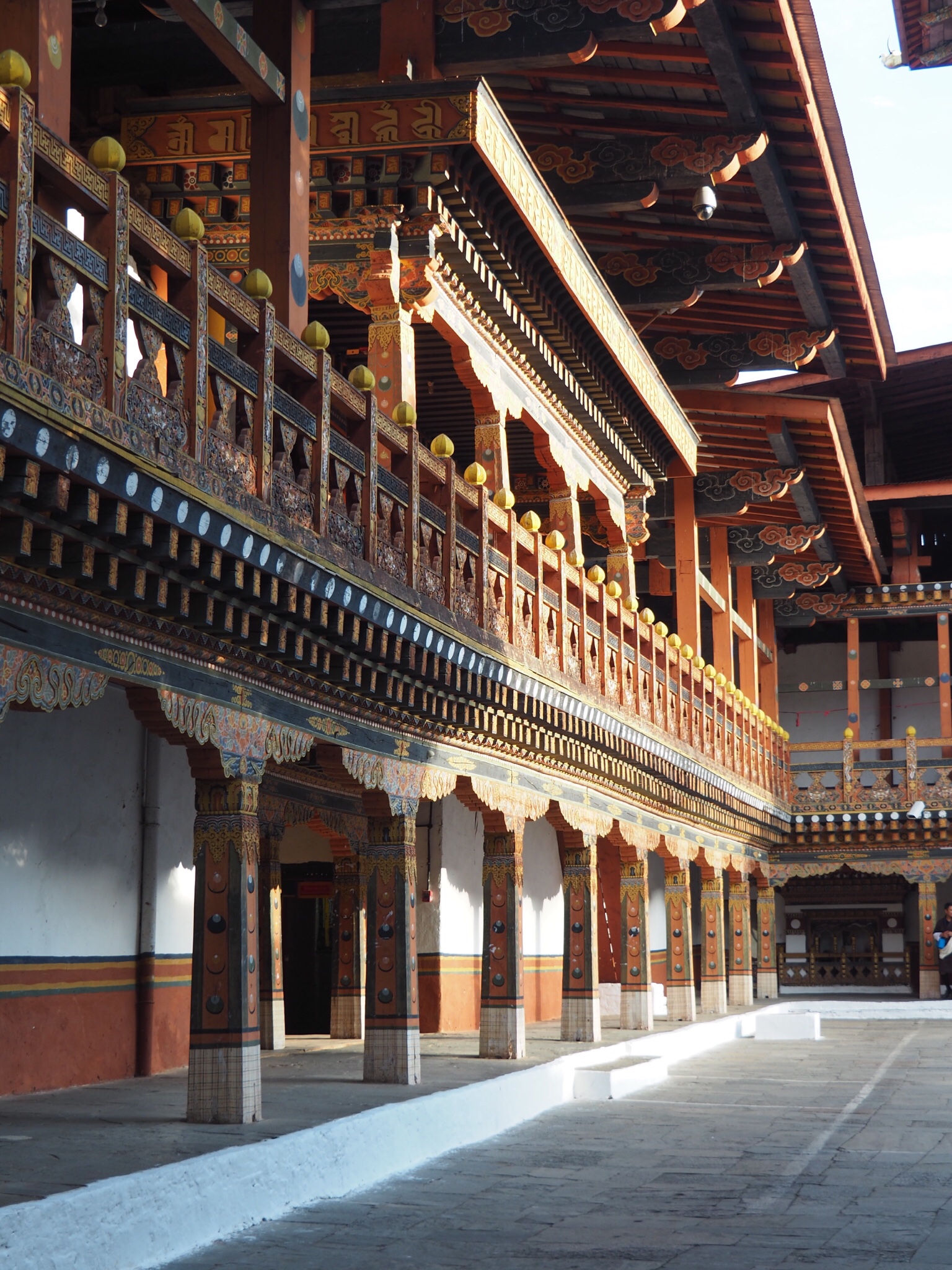
Before telling about our day, I have wanted to tell you a little bit about Bhutanese architecture. I’ve never seen buildings quite like the ones I have seen here. I’ll describe a typical house.
A fairly typical house in Bhutan. They each vary a bit, but the basics seem to be the same.
-At the top is a prayer flag.
– The shingled roof is sometimes held down with stones. We always see stones on smaller structures near a house, but not always on the house itself. Wang told me that they have gotten better at attaching the roofs to the houses so they don’t need the stones like they did in the past.
– Under the roof is an airy attic area that is used for storage and for drying chilies. We have seen a lot of chilies drying on the roofs!
– Under the attic is an elaborate wooden cornice.
– Below that, is the living quarters. I showed pictures of those in a previous post.
– The lowest level is often used to store grain or house livestock.
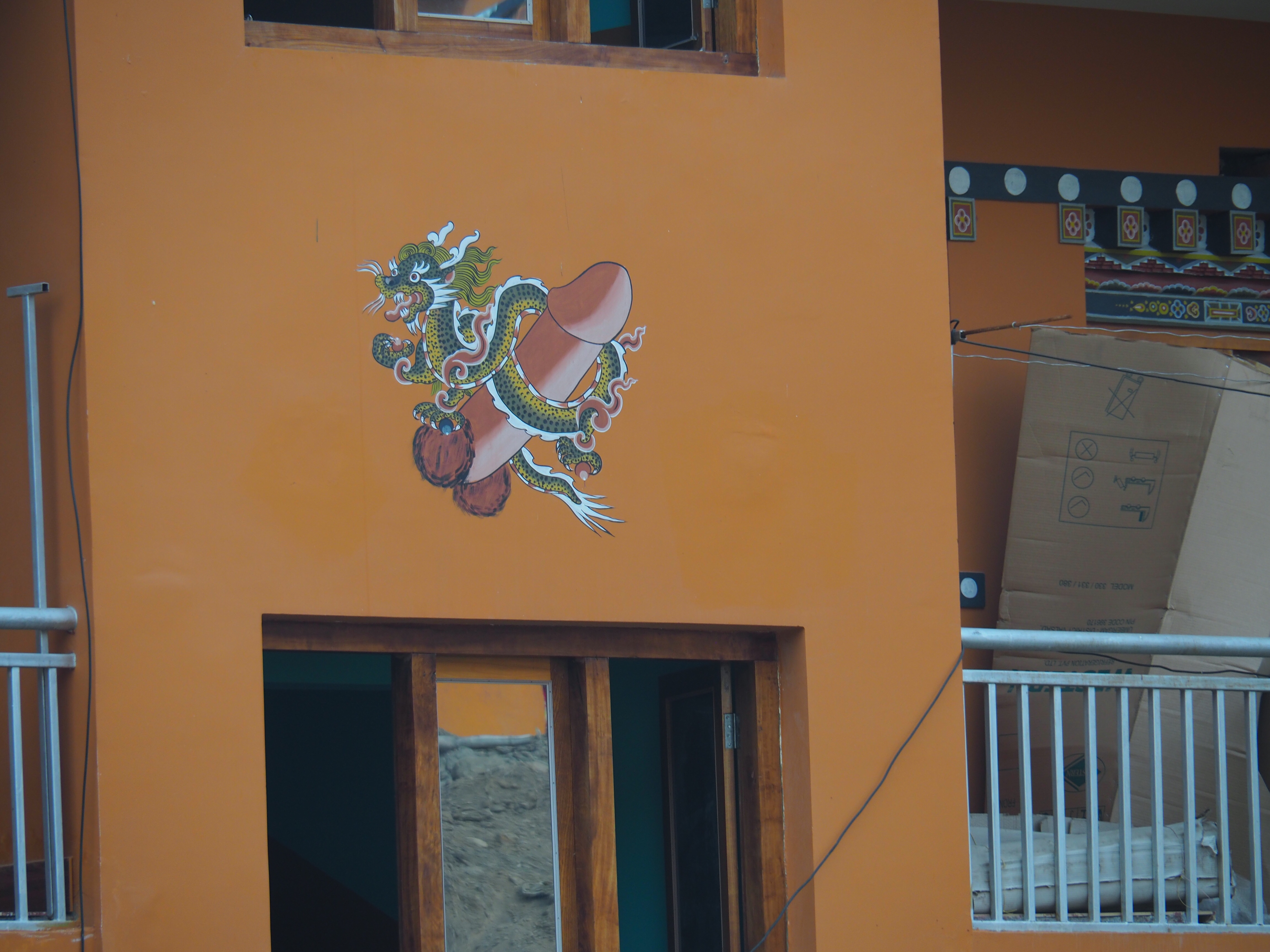
– Many of the houses have a wooden phallus hanging from one corner of the roof.
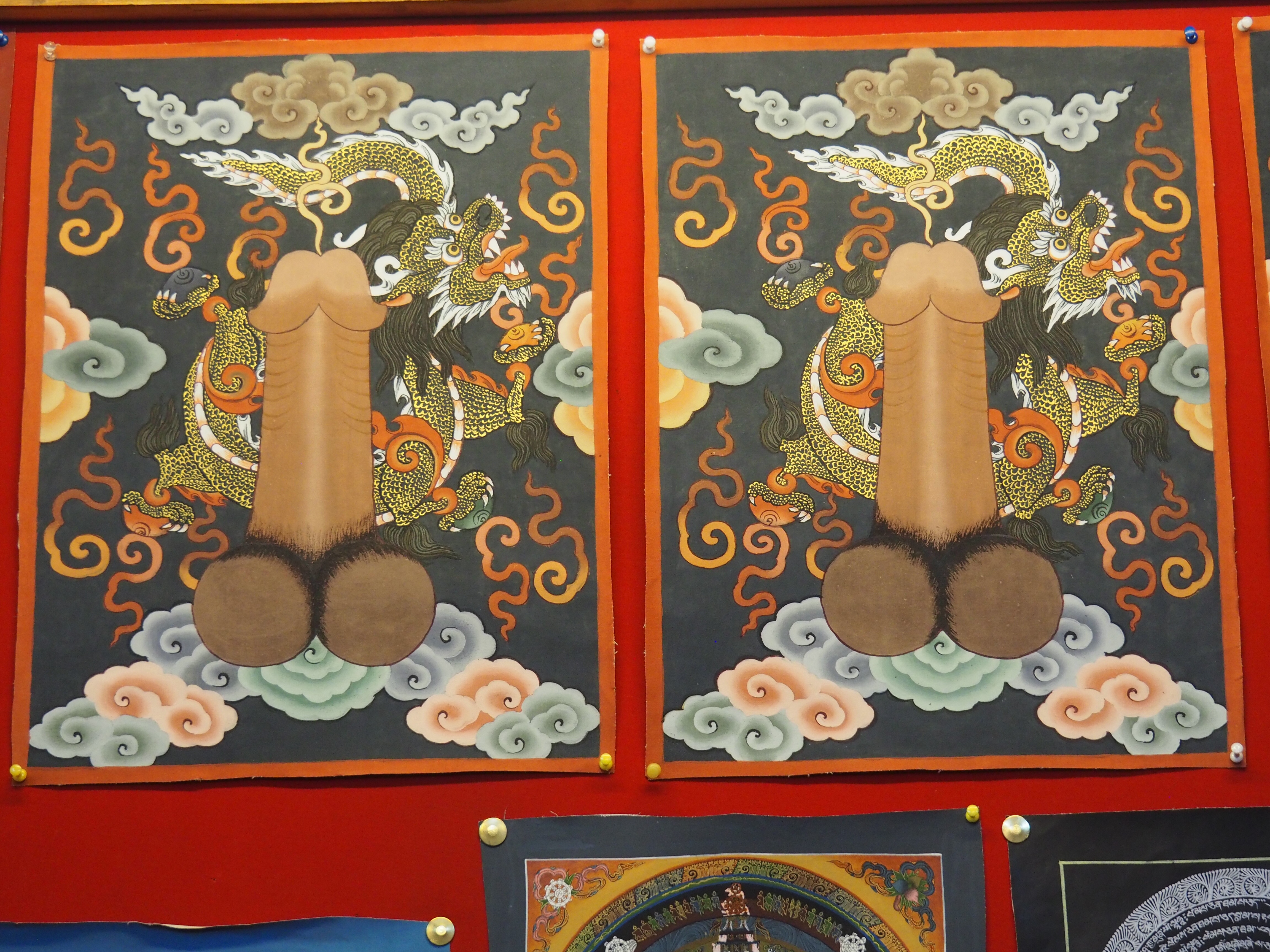
– There is almost always painting, on the outside of the door at a minimum. These paintings are generally of a Garuda with a snake in his mouth and a phallus. Houses of the more well to do residents usually have more, and more elaborate artwork. These paintings have to be repainted regularly, only the wealthy can afford to have a lot of artwork regularly redone.
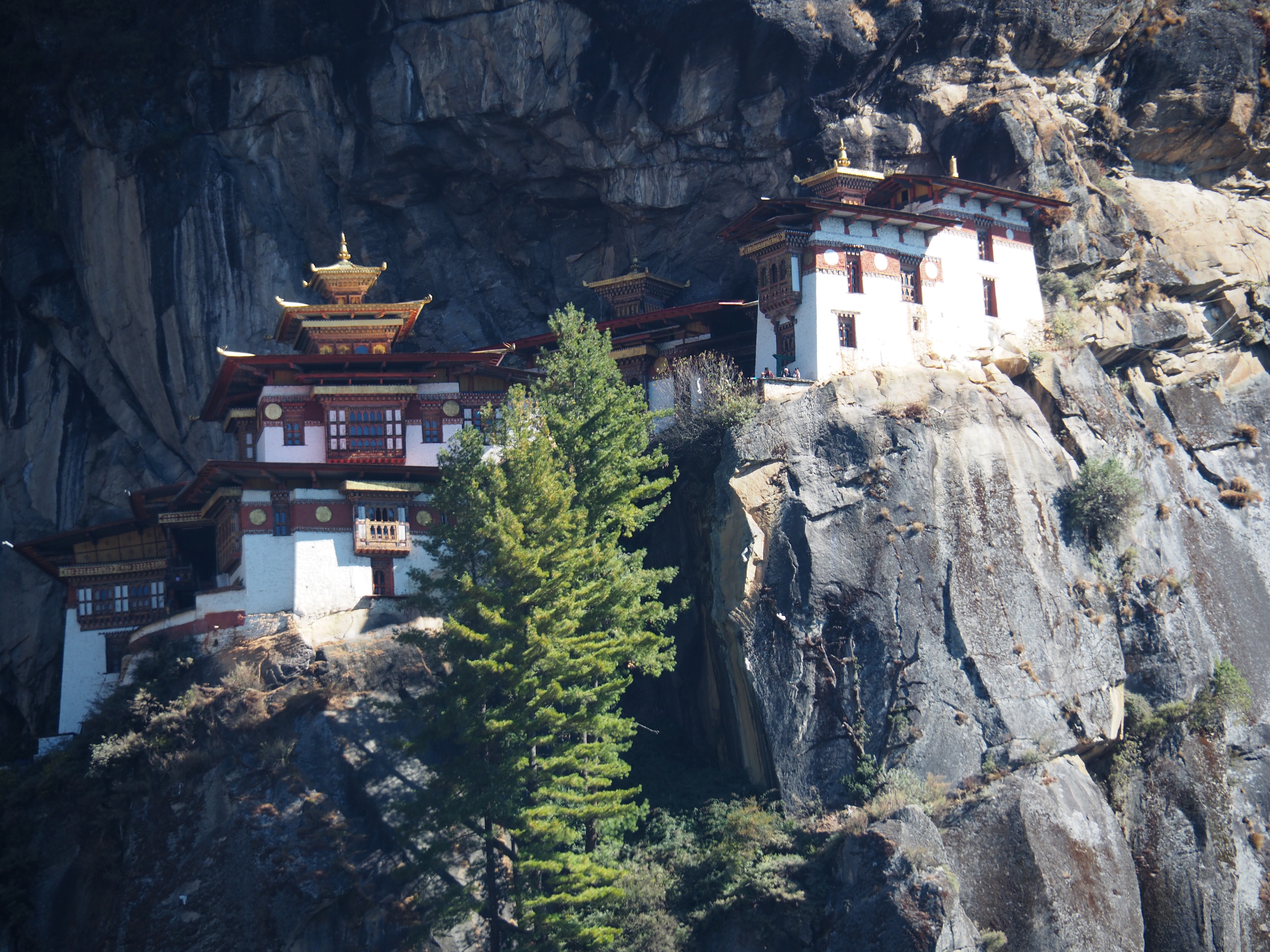
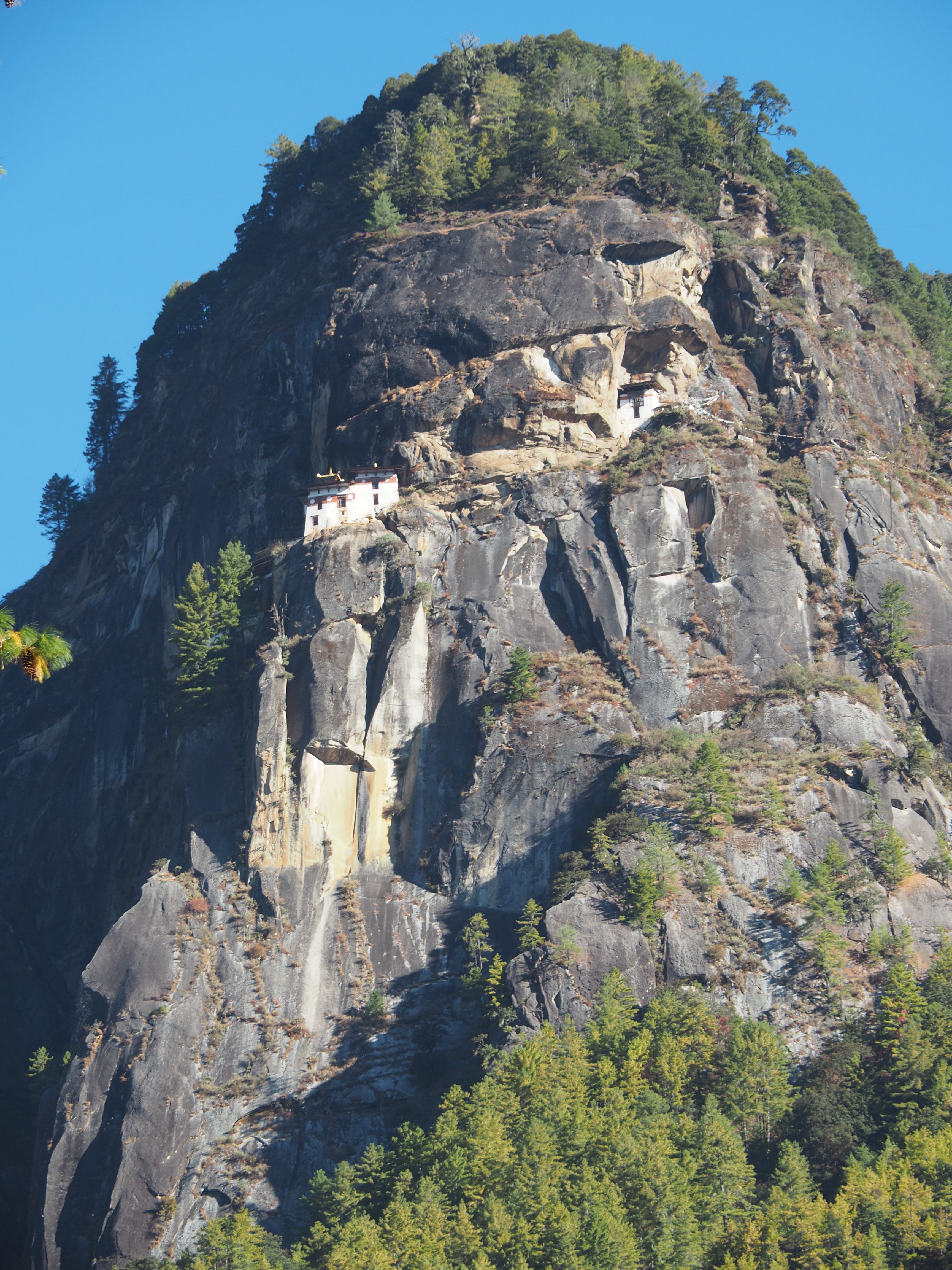
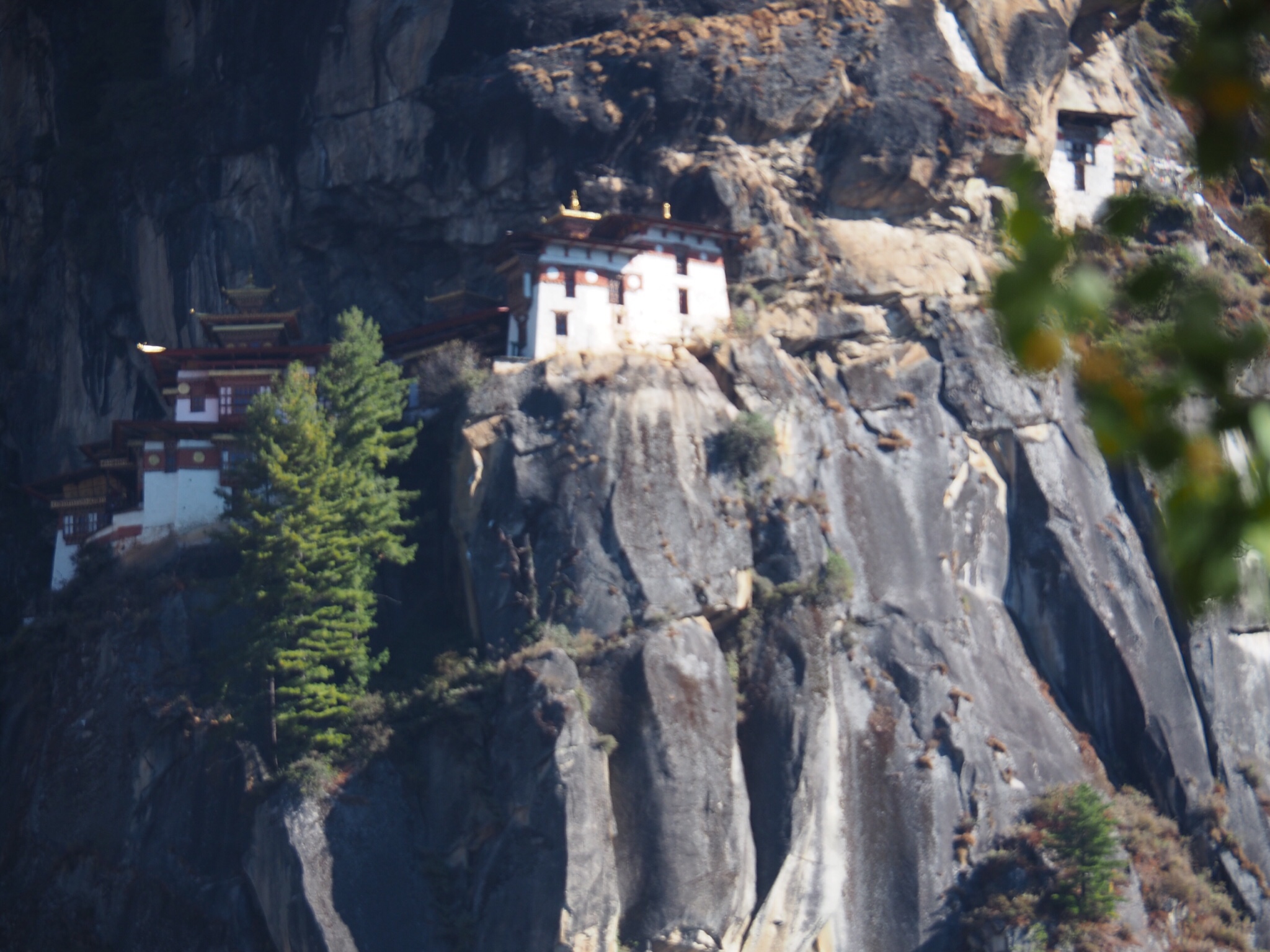
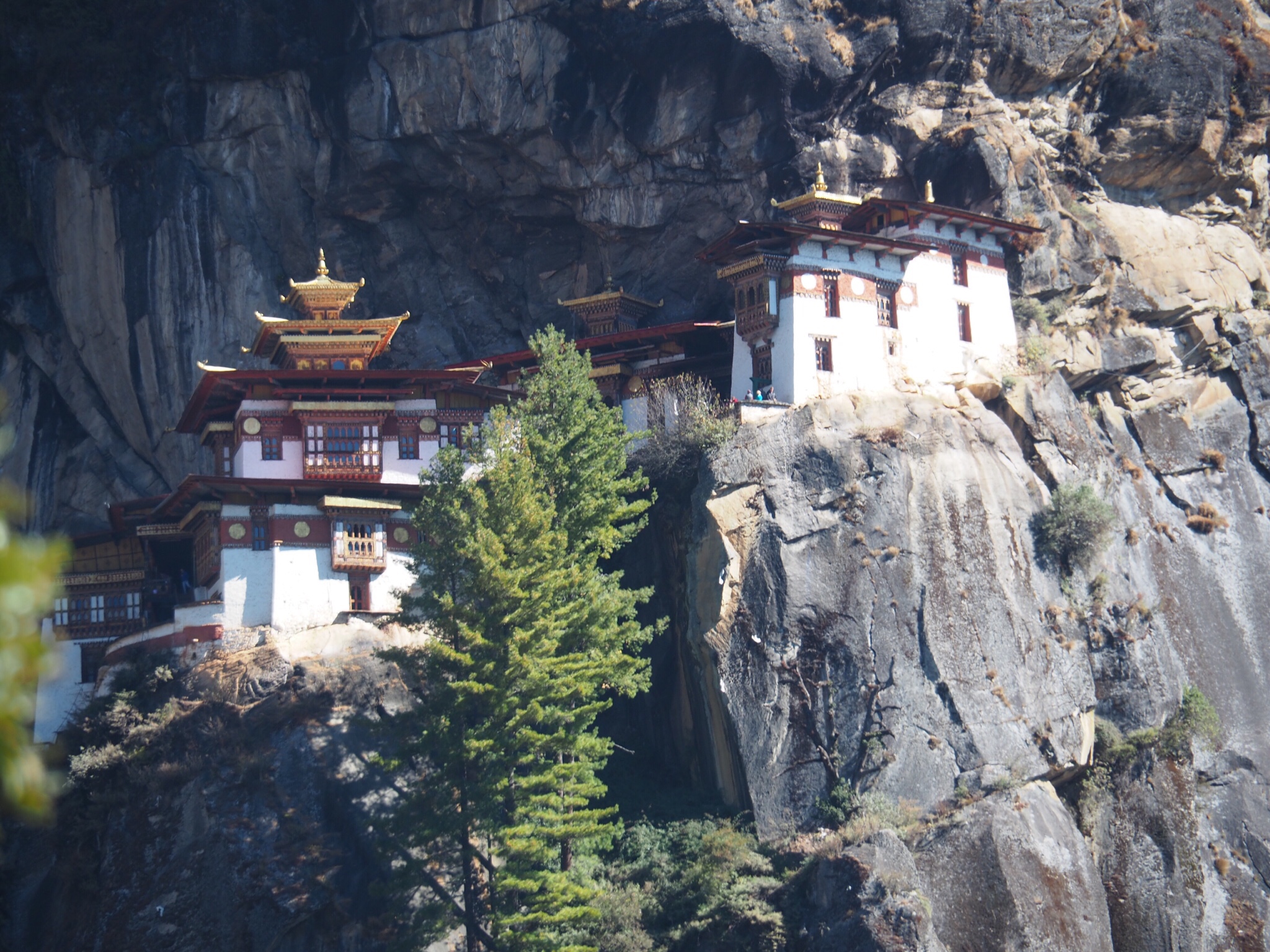
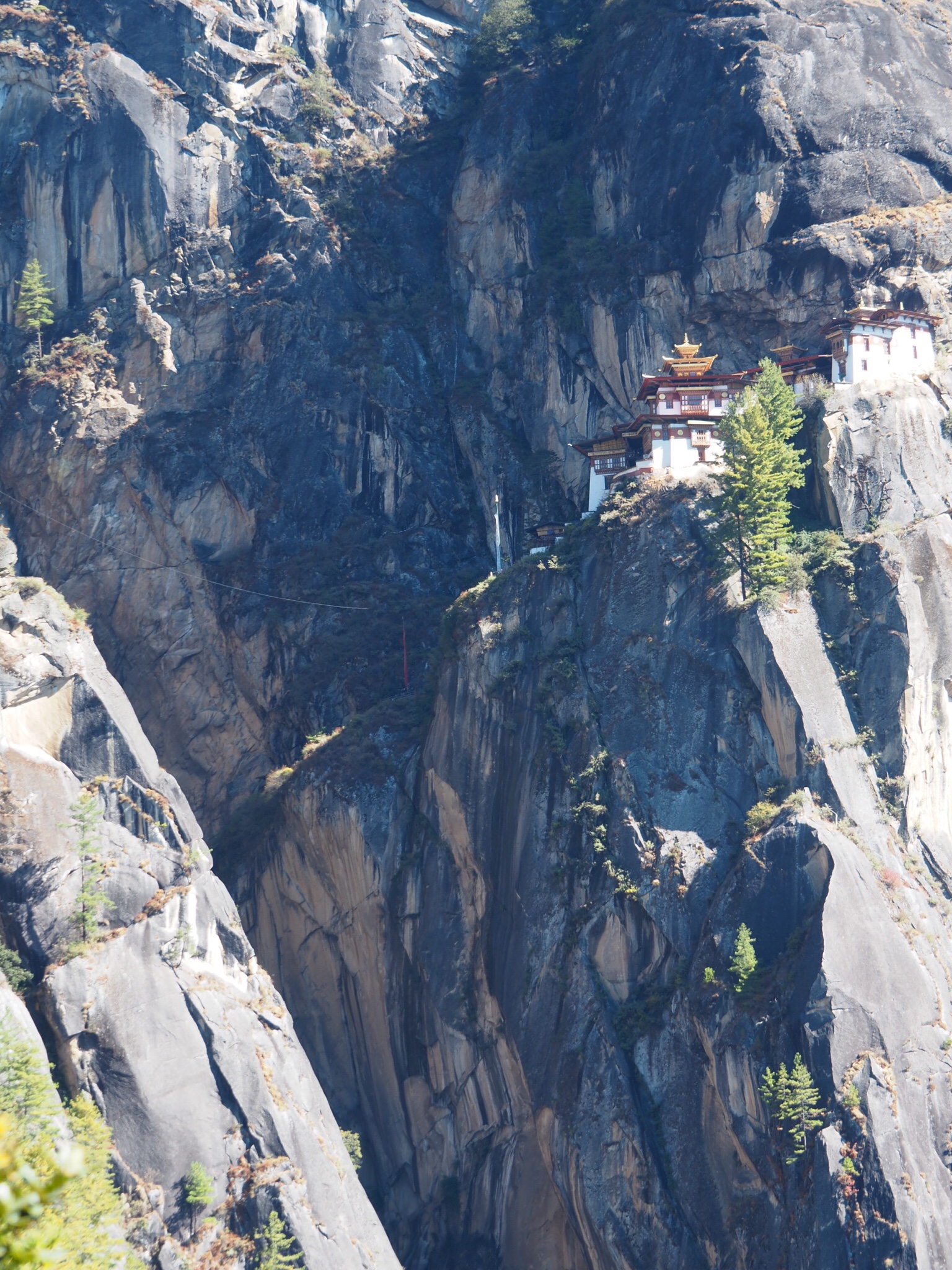
So now , back to our expedition. We departed from the hotel at about 8 am. Wang had an early night at snooker so was well rested to lead us on our expedition. Tiger’s Nest was founded in the late 1600’s. It is perched on a rocky ledge about 900 meters (almost 3000 feet) above the valley floor. Legend has it that Guru Rinpoche flew to the site on the back of a tigress to subdue a local demon and then meditated in a cave there for three months. The monastery had a bad fire in 1998 but efforts have been made to repair it back to its original state.
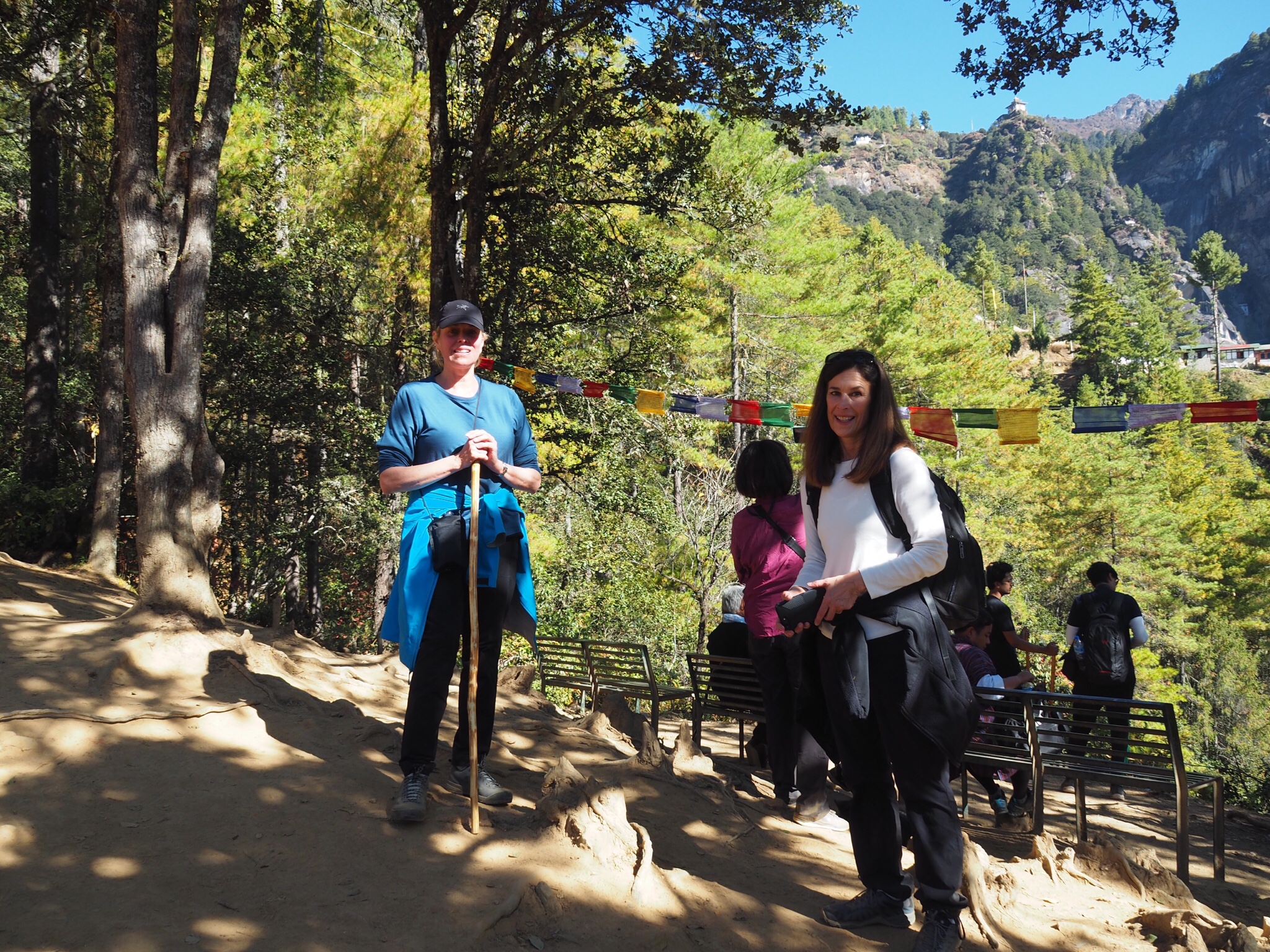
Hiking to the monastery is not for the faint of heart. The three of us agreed in advance that we would go as far as we could, but that if we couldn’t make it all the way it was ok. This hike made our hike the other day seem like a stroll in the park. We took our walking poles from Mr. Poo and the three of us, Wang, and Mr. Poo began to make our way up the mountain.
The Tiger’s Nest as seen from our starting point.
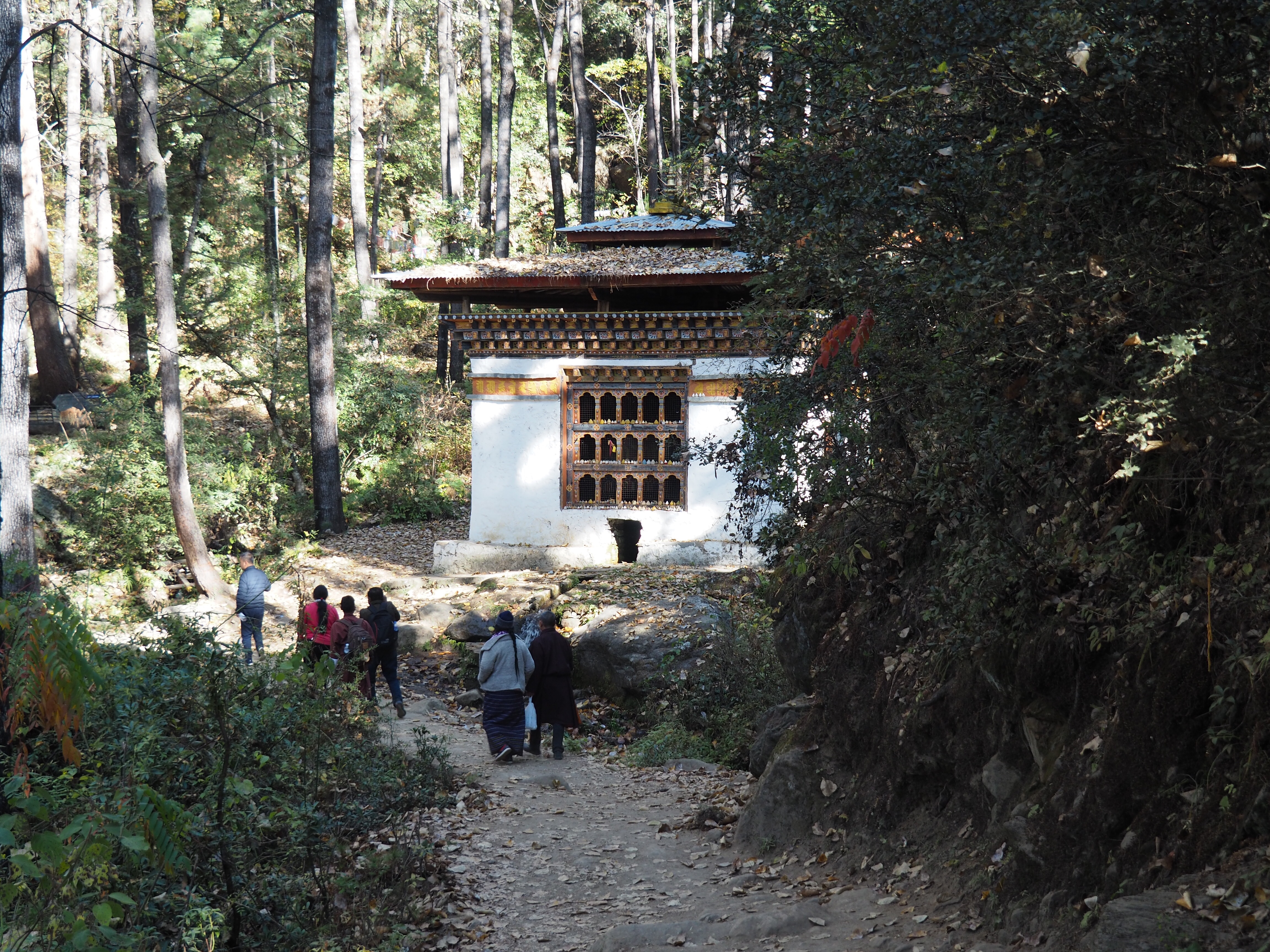
The path is mostly dirt, with tree roots and rocks. It is steep for the entire walk. We began at about 8:40 am. We soon came upon these structures that have prayer wheels inside, they wheels are turned by the water from a stream that flows from the mountain top.
There are three buildings like this.
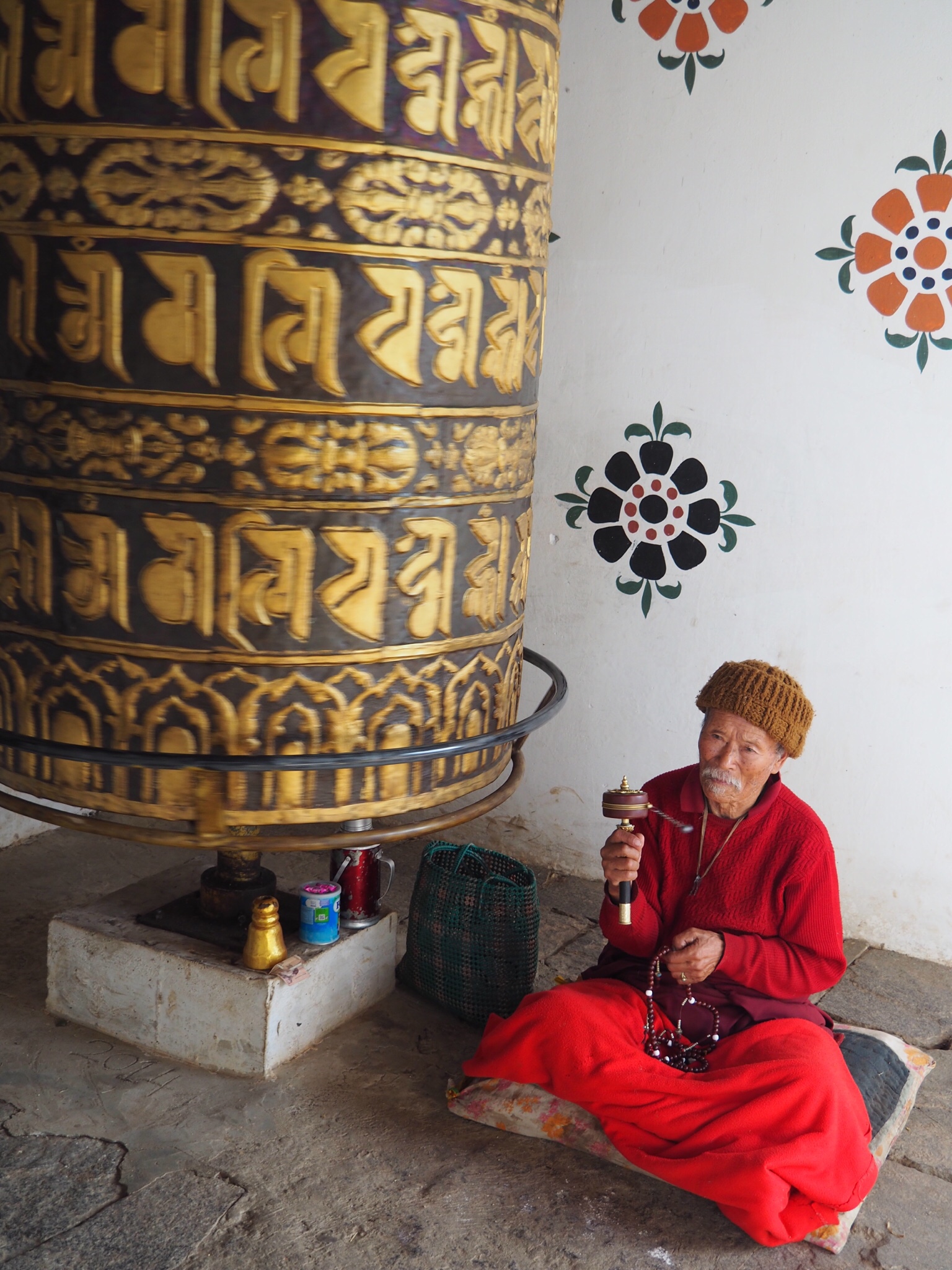
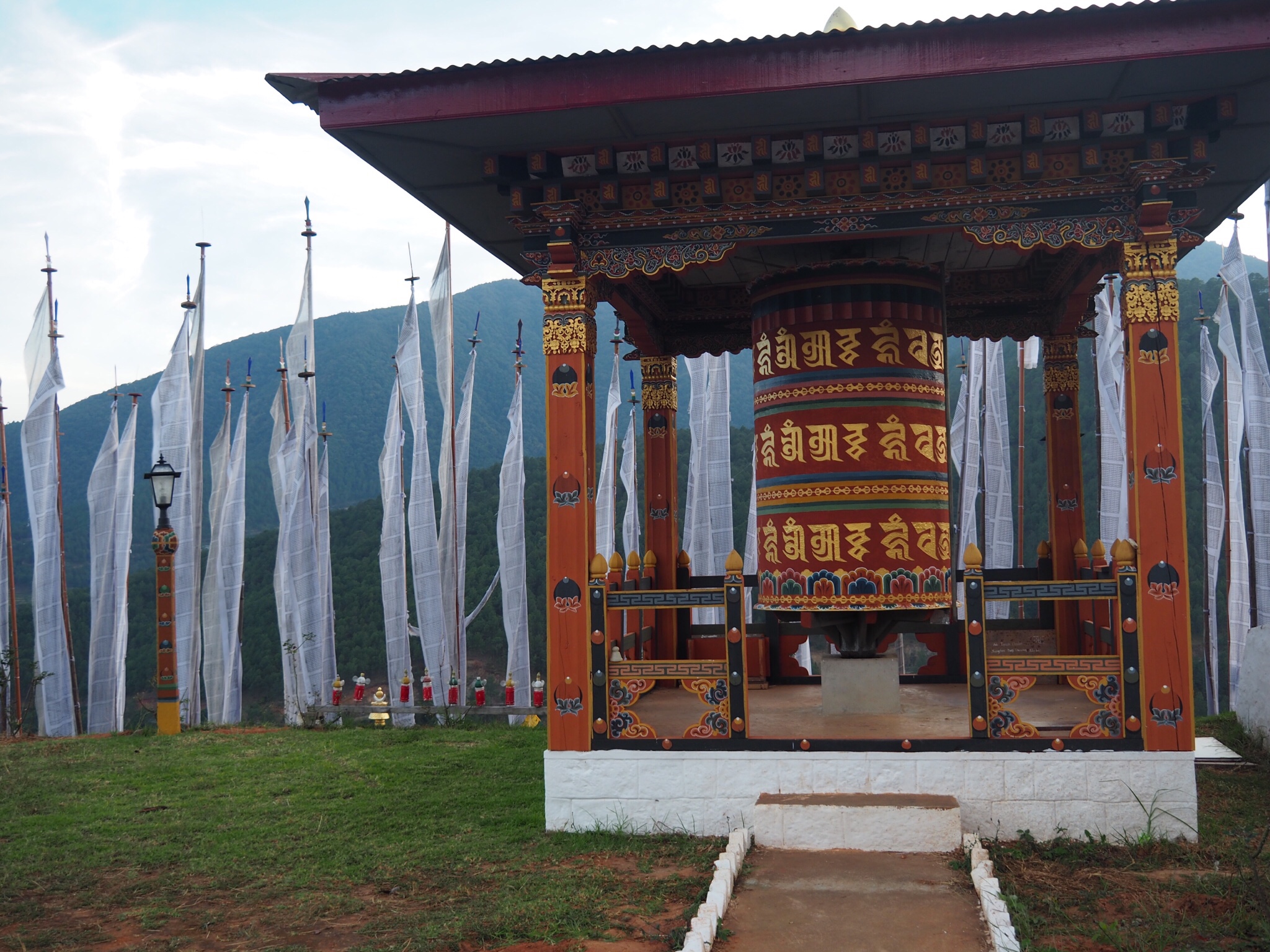
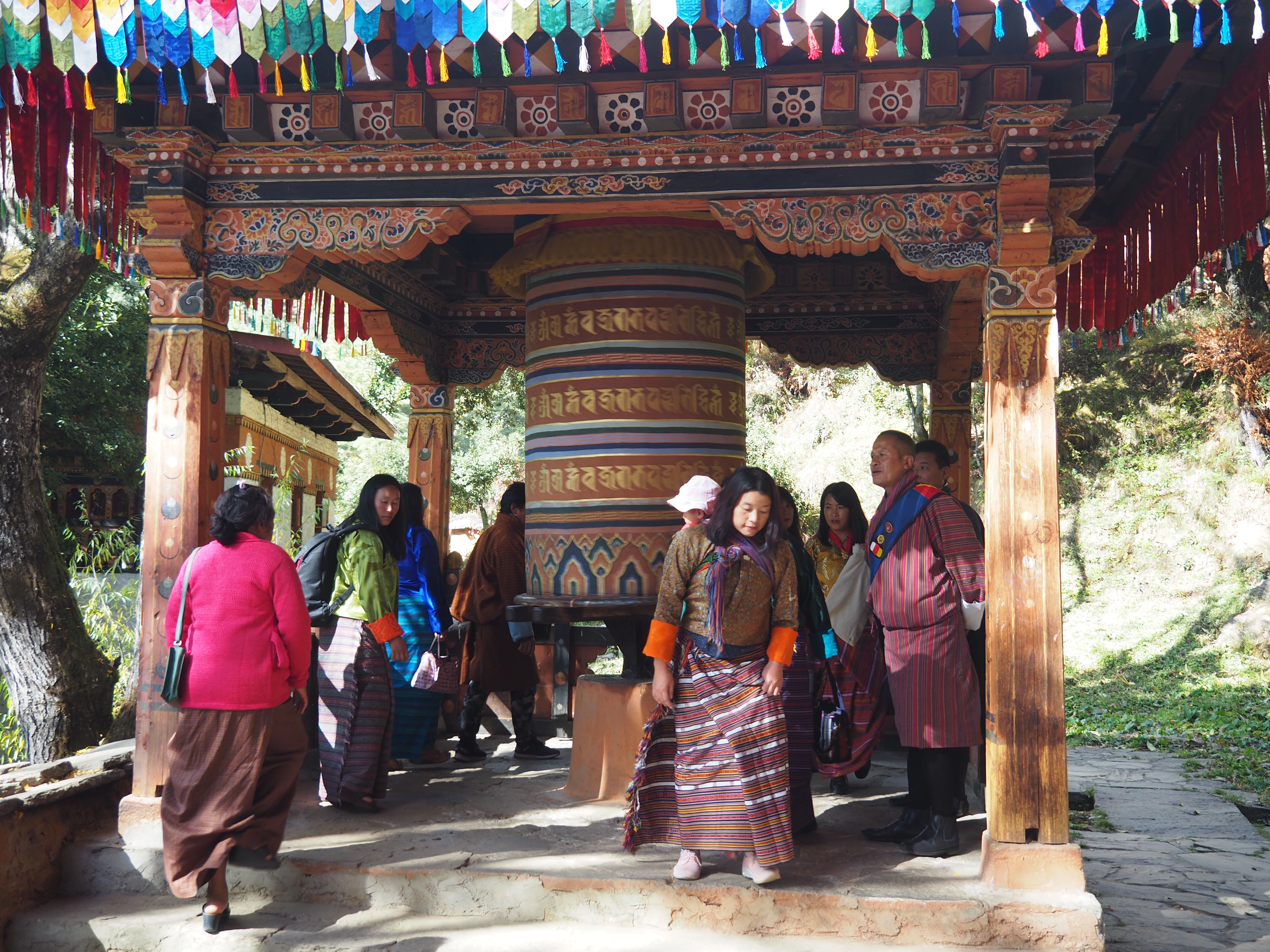
As an aside, I am not sure I have described a prayer wheel. We see them everywhere! They come in all sizes, from huge ones that one walks around to small ones that are hand held. Each one is filled with printed prayers that are “activated” every time the wheel is turned. Like everything else, they must be turned clockwise!
Now, back to our hike. As we made our way along the path, I found that my legs were doing quite well, but I could not catch my breath. The altitude was really getting to me. It has affected me for much of the time in Bhutan, but this trek really tested my limits. As we kept moving along, Kathy began to feel the effects. As we got closer to the tea house, a stopping point about 500 meters up from the staring point, (Remember, the starting point was at about 2100 meters) Maryse began to feel heaviness in her chest! We were all ready for a rest! We had some tea and crackers at the rest stop.
After catching our collective breaths, we decided to soldier on, only to find that the next part of the path was even steeper than what we had already traversed. We had gone about another 100 meters up but we all decided that it was time to turn back. At that point I figure we were at about 8600 feet up. Wang assured us that even if we didn’t make it all the way, we would still get all the good energy from the site.
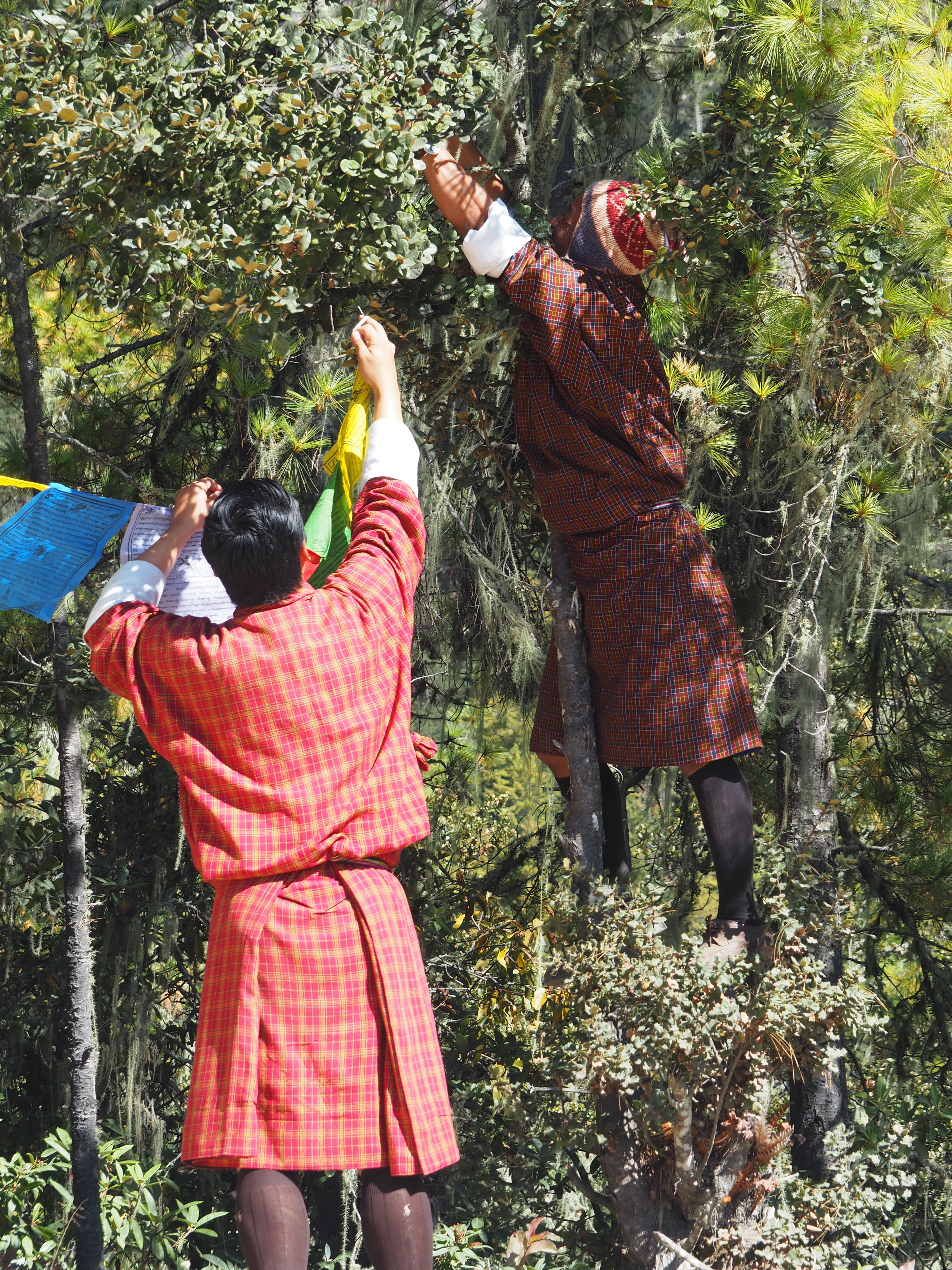
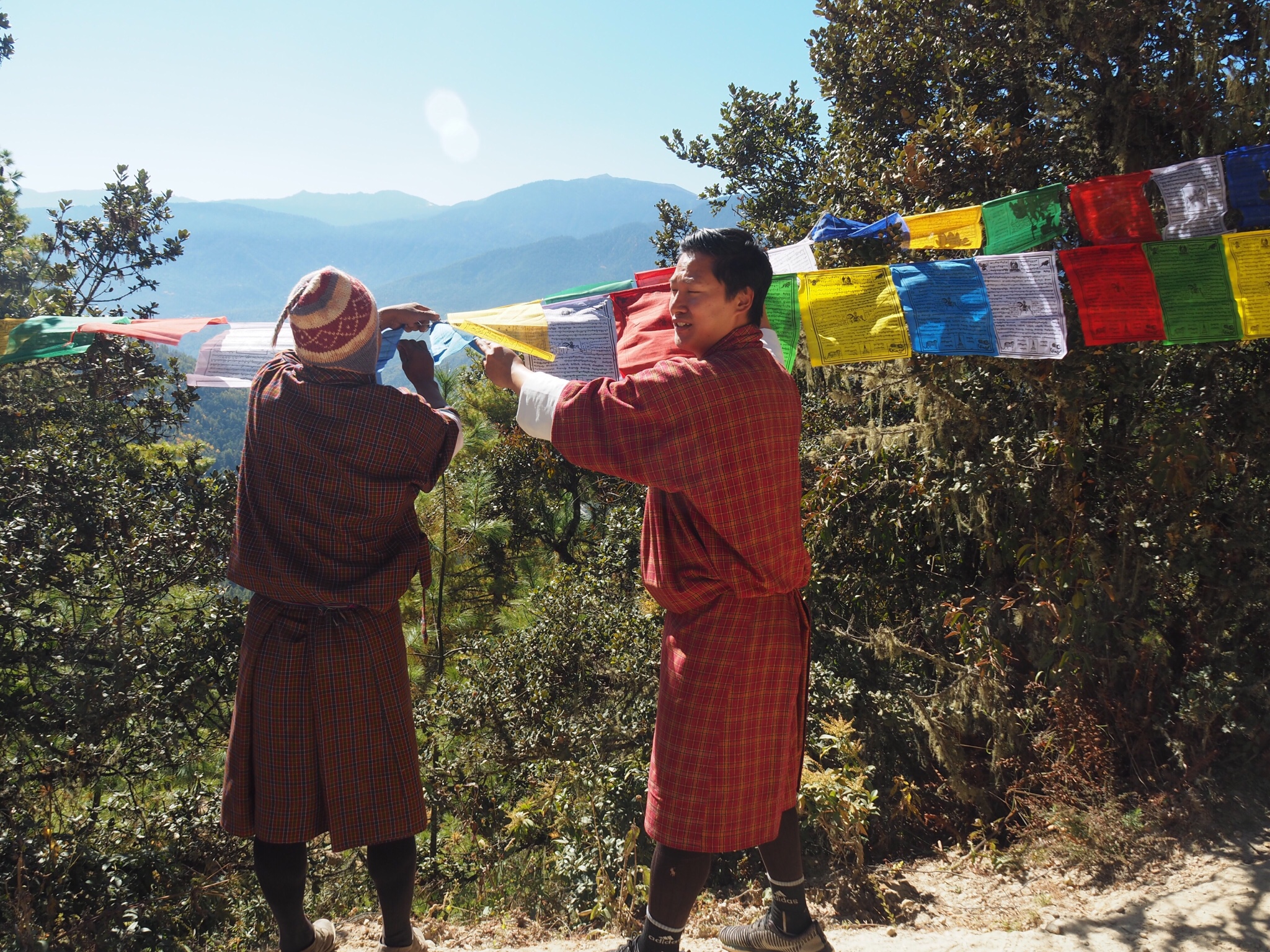
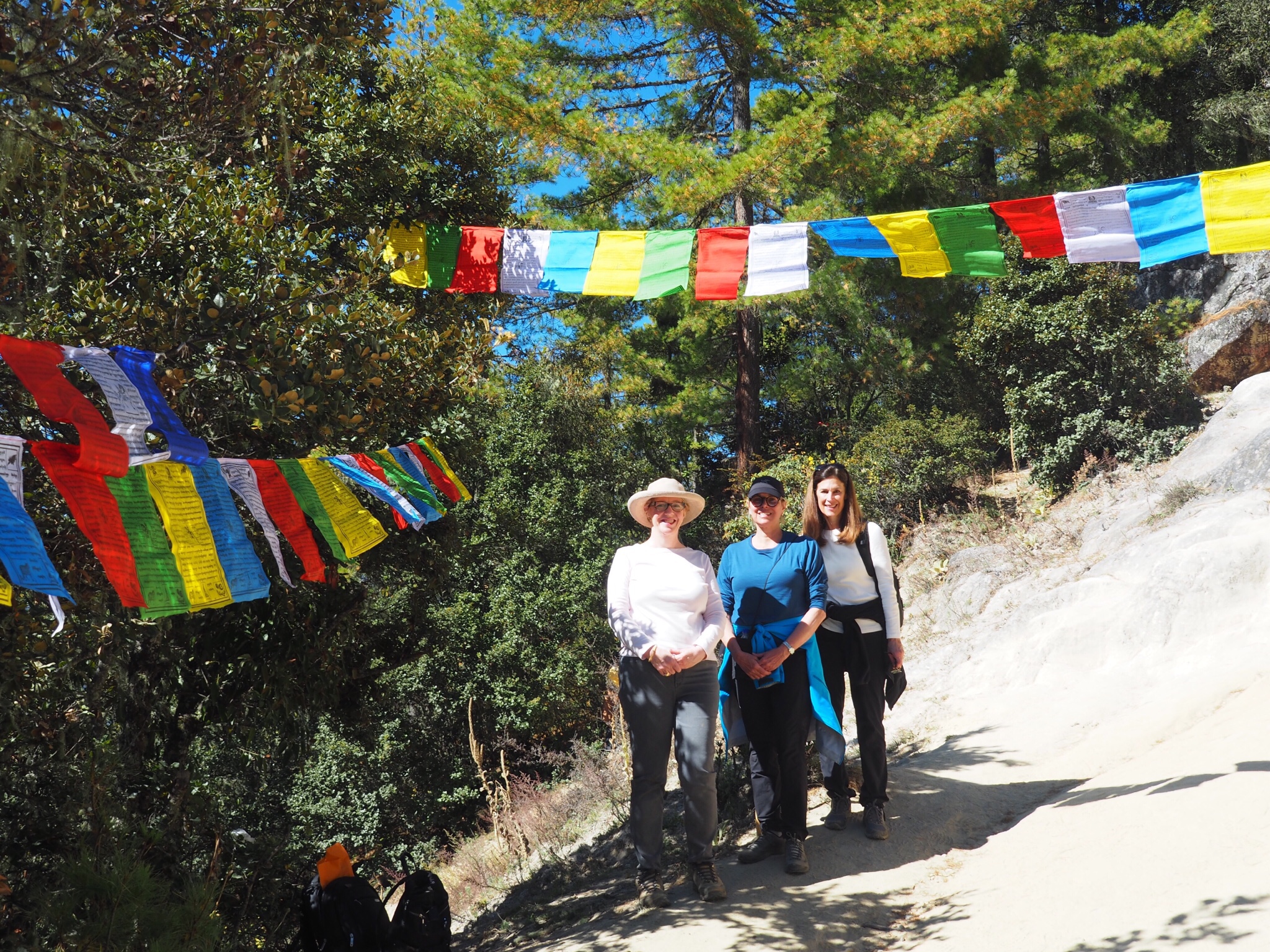
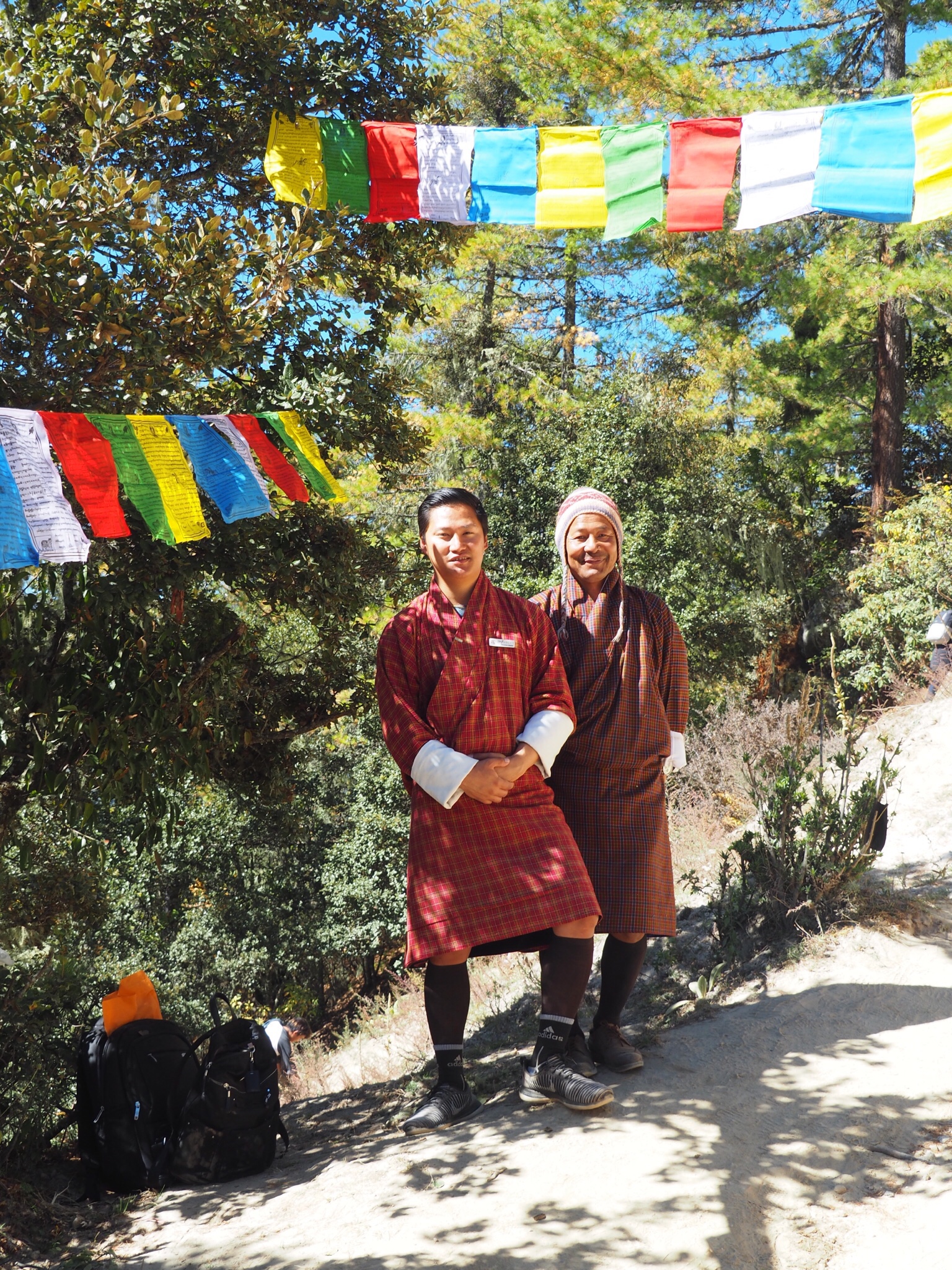
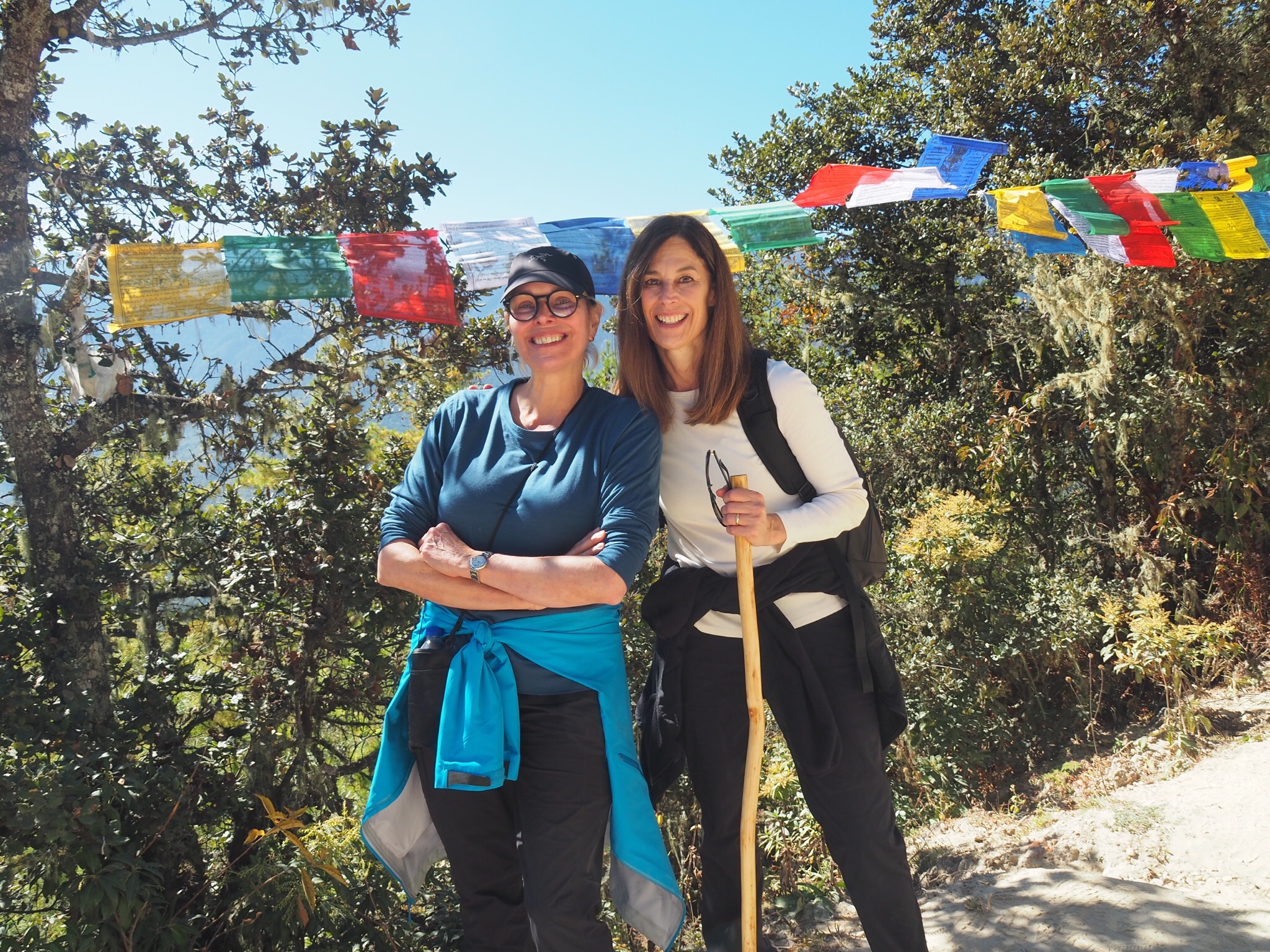
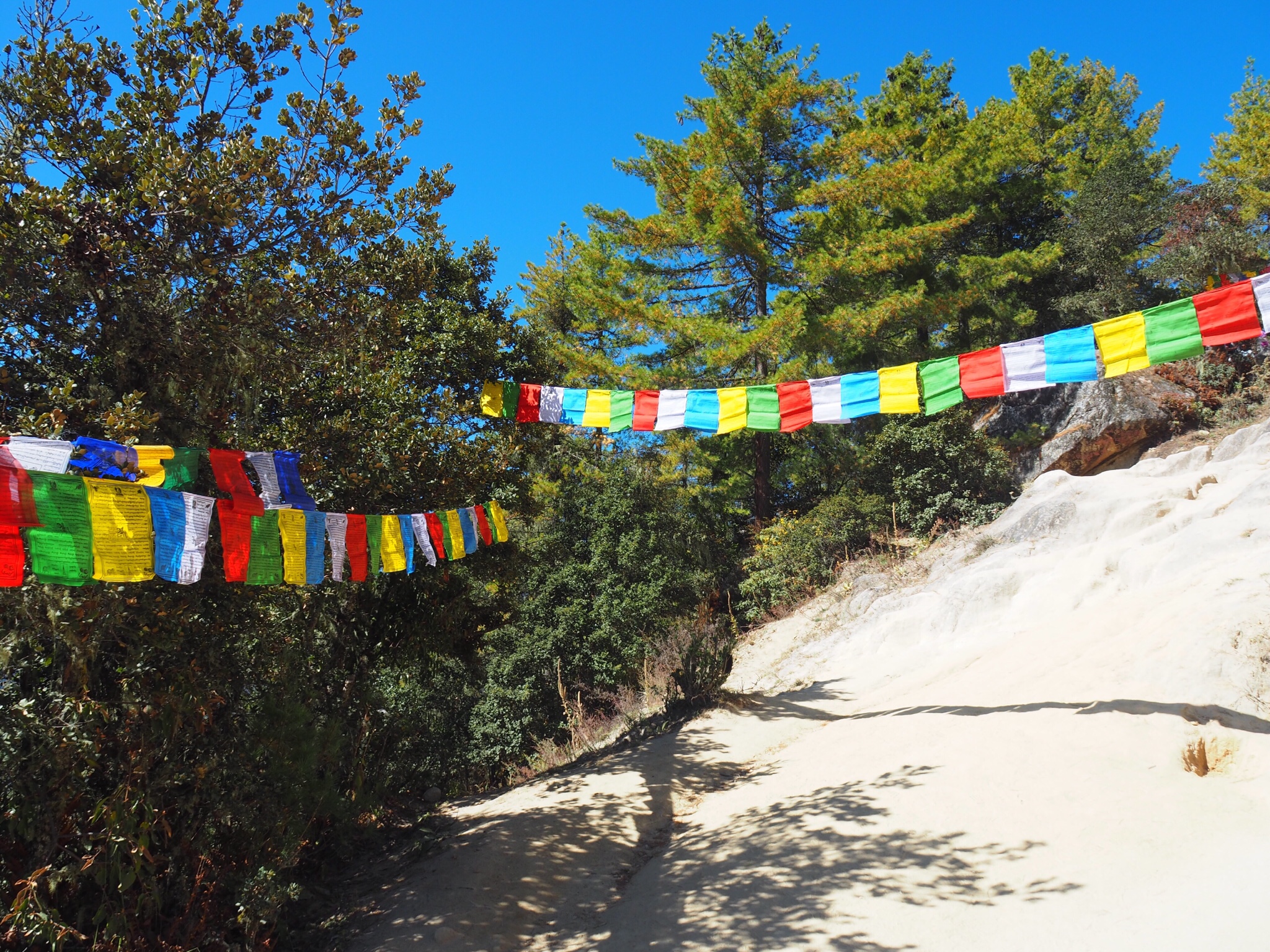
It was at this point where we hoisted our prayer flags. Mr. Poo climbed the trees to attach them and they are now at a prominent place along the walk. After they were hanging we said a blessing as instructed by Wang and then had time for our own prayers. It was quite touching.
Mr Poo and Wang hanging our flags. Still hanging them. Wang and Mr Poo under our flags.
Here are some scenes from our hike.
These hikers don’t look a bit tired! Our flags.
After our walk, Kathy’s tracker indicated we had gone 5.1 miles, 12,659 steps and 92 floors! And, we didn’t go the whole way!
Since we finished earlier than anticipated, we had lunch at a home restaurant in the valley instead of up at the tea house. They do seem to change arrangements for meals and visits all the time!
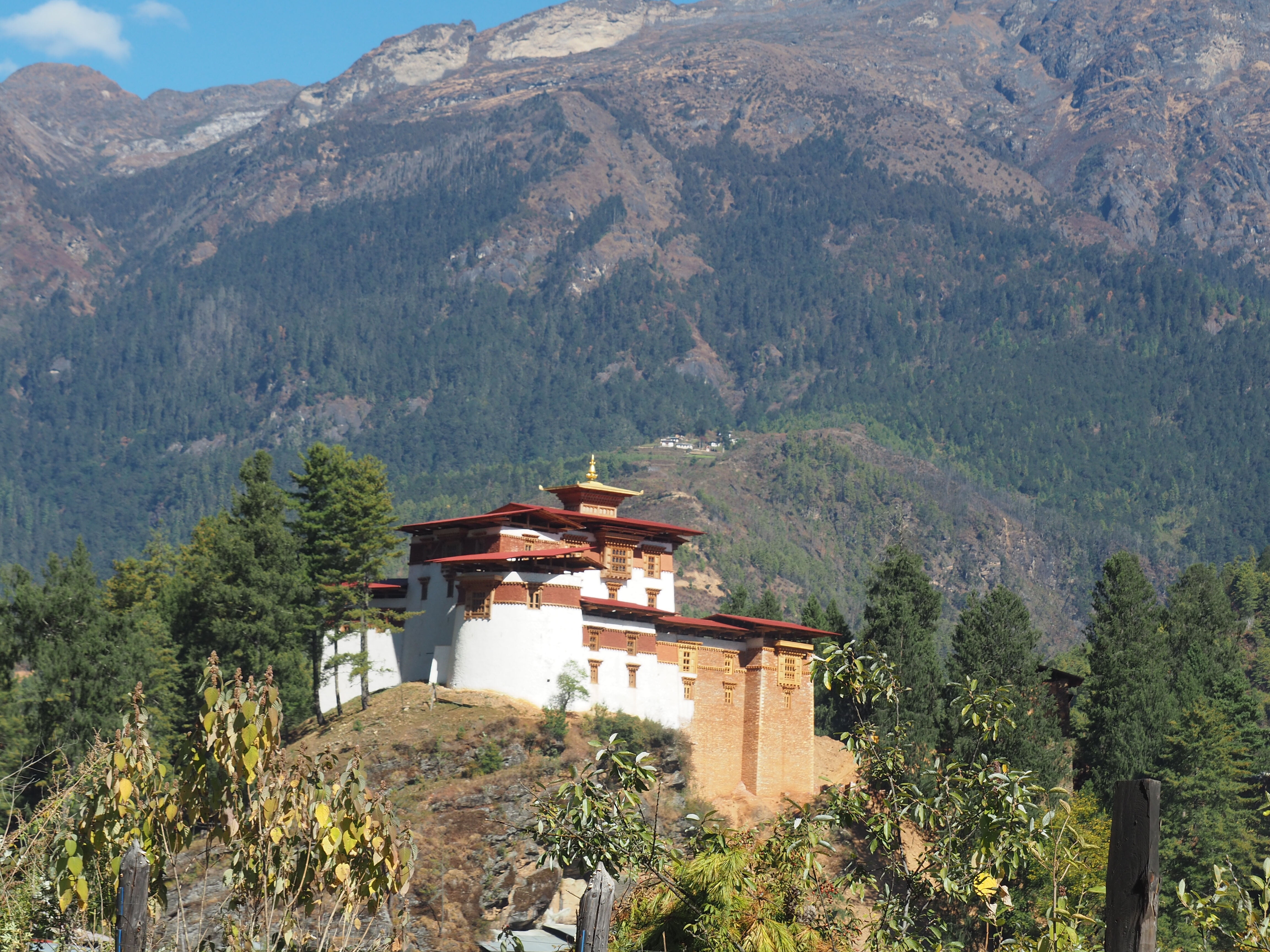
The plan for after our hike was to go for a hot stone bath. Since we finished early, we had to kill some time before the bath. So, guess what? We went to look at a Dzong and to see a temple! The Dzong is Drukgyel, which was built in 1649. It is undergoing renovation and isn’t open. I think we were all just fine with looking at it from a distance.
Drukgyel Dzong
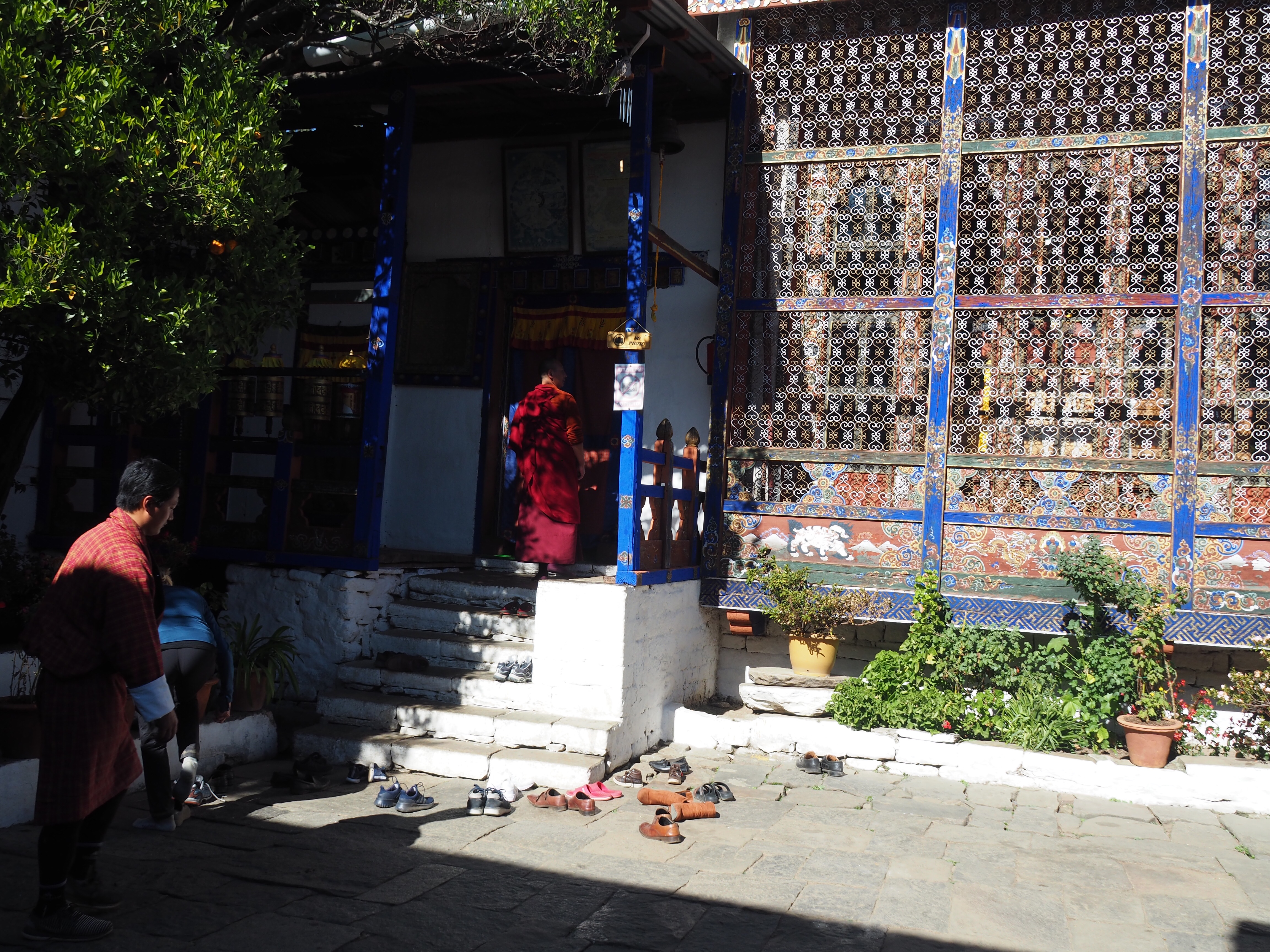
We headed for our bath, but still had some time to kill so we stopped at the Kyichu Lhakhang temple. It reportedly dates from 649, making it one of the oldest in the country. There are actually two temple halls inside. We watched a family that had come for a special service. When we asked Wang what it was about, it turns out that the family was there to ask for blessings for their new car!
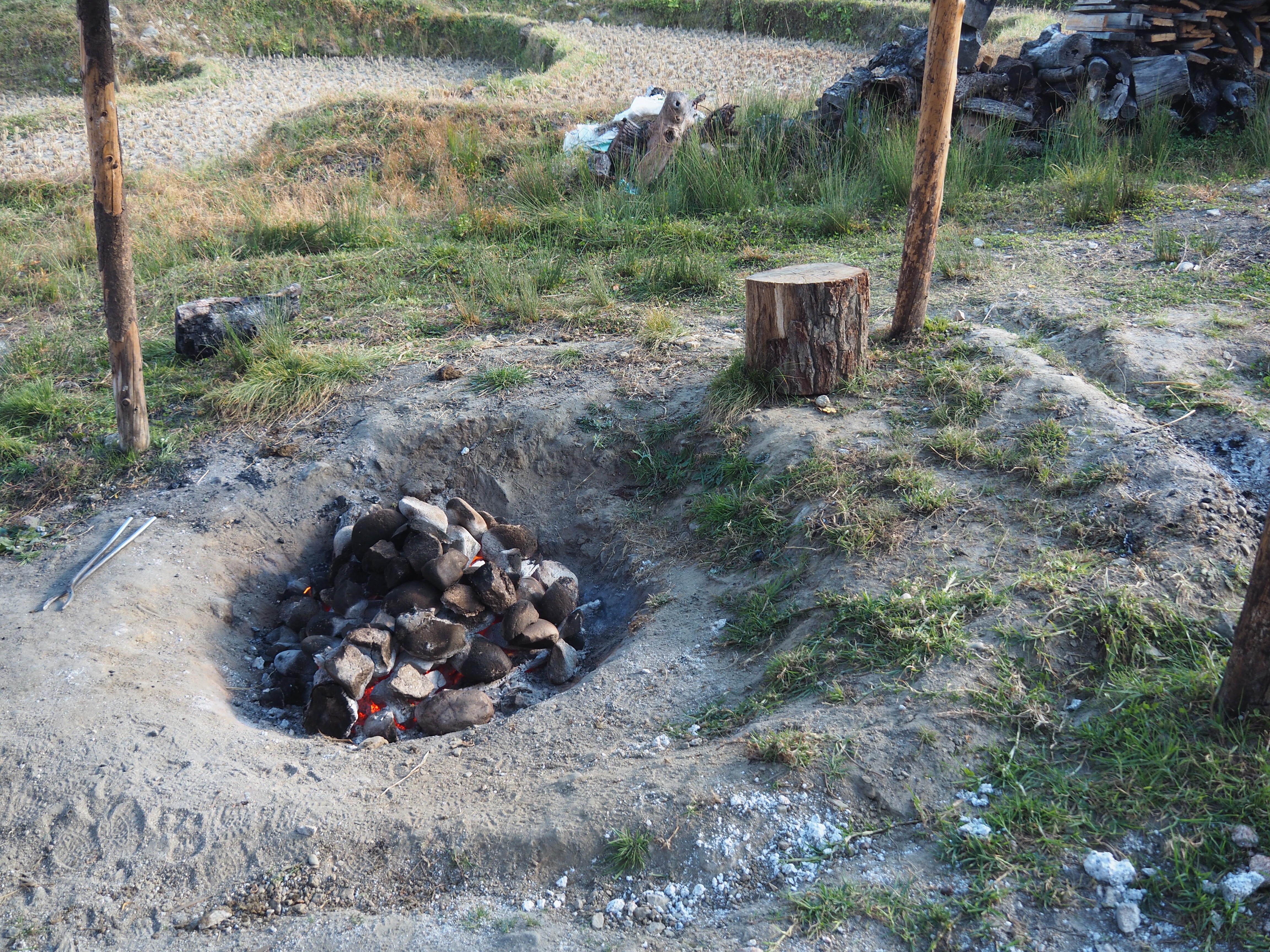
Finally, it was time to go for our hot stone bath, a treat for our aching bodies. This treatment is a traditional one in Bhutan. The reason that we had to kill the time was to allow the people to heat the rocks.
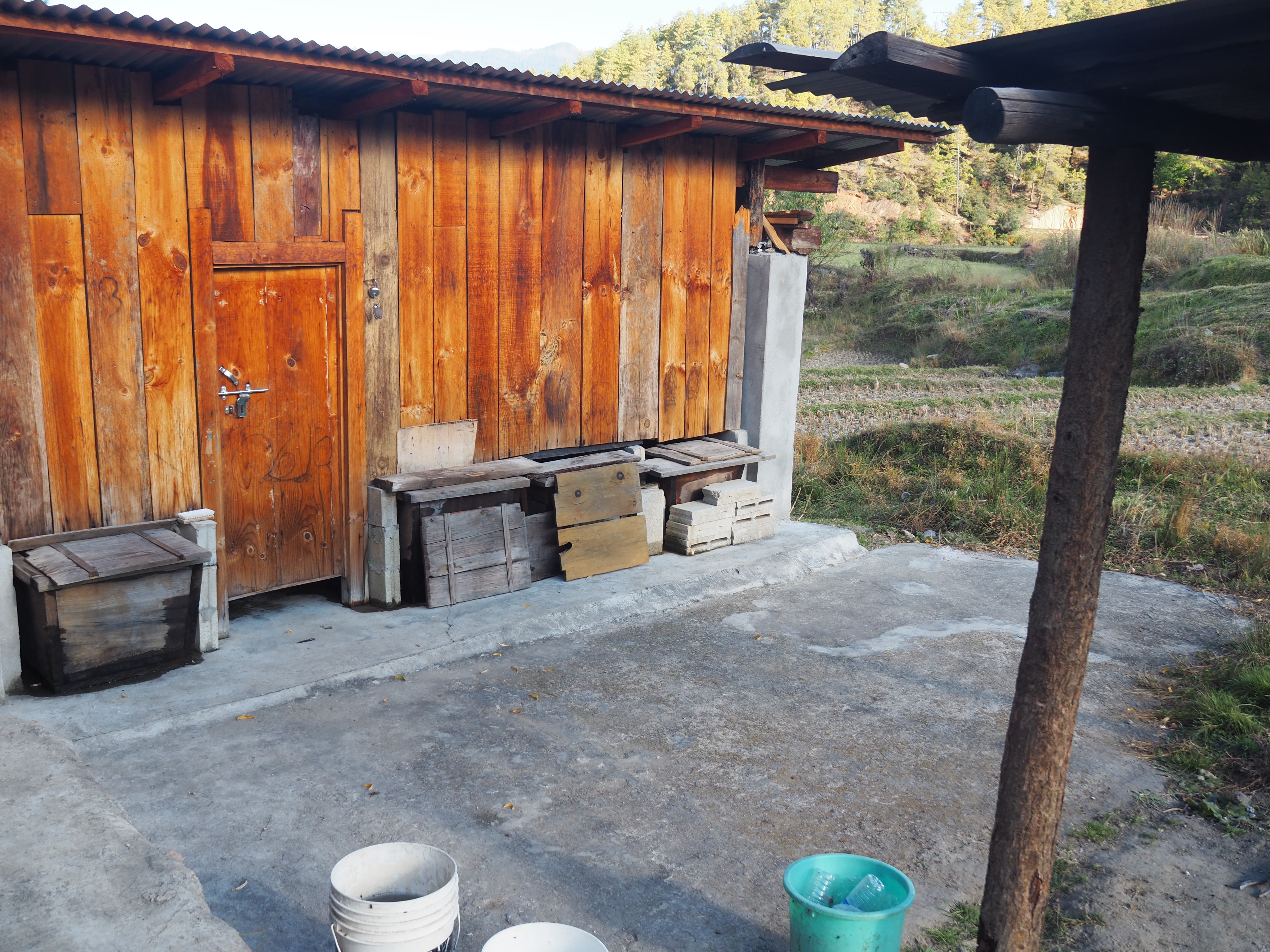
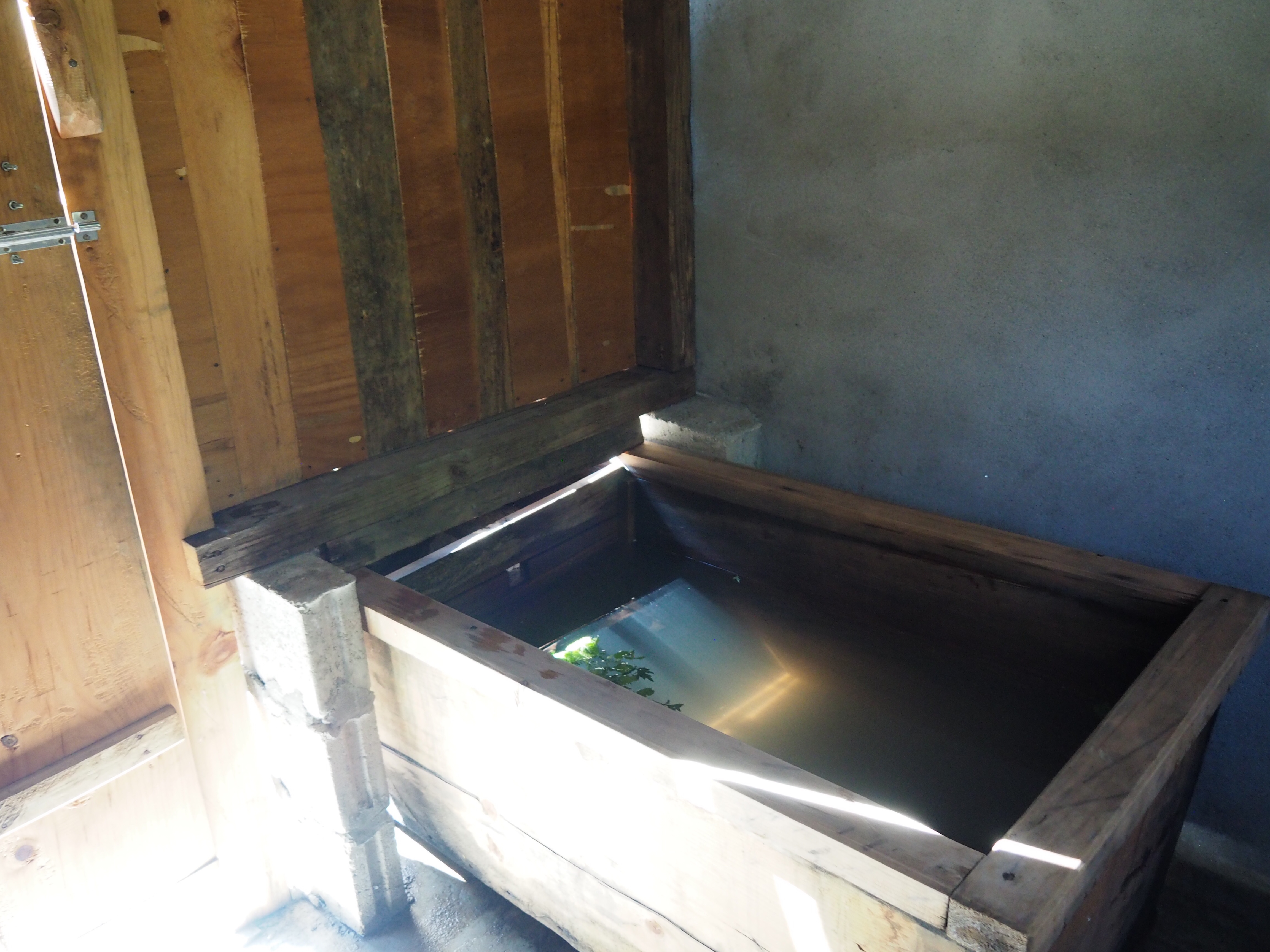
We arrived at a very basic farm and had to walk through the fields, past cows, to the bathing area. I think we were all surprised to find that we would be receiving this treatment in buildings that looked like outhouses!
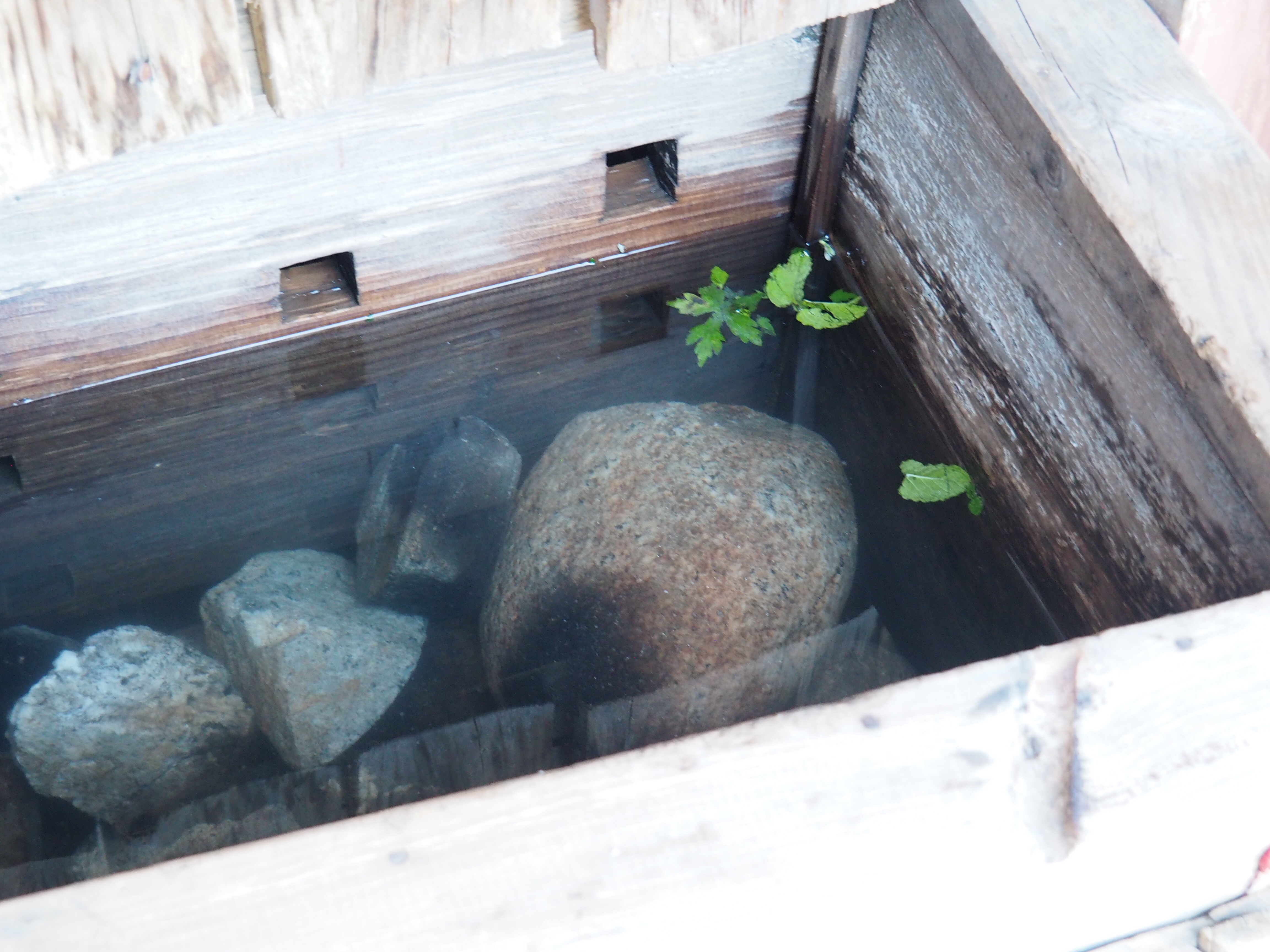
The outside of the bathhouse. The hot stones go into the gray boxes. Inside the house is the tub. My “tub”. The water is from a local spring and has mint and Artemis in it. I sat in this part and hot stones were added on the other side as I requested.Where the hot stones are added. The stones being heated. These creatures were on the path leading back to the van.
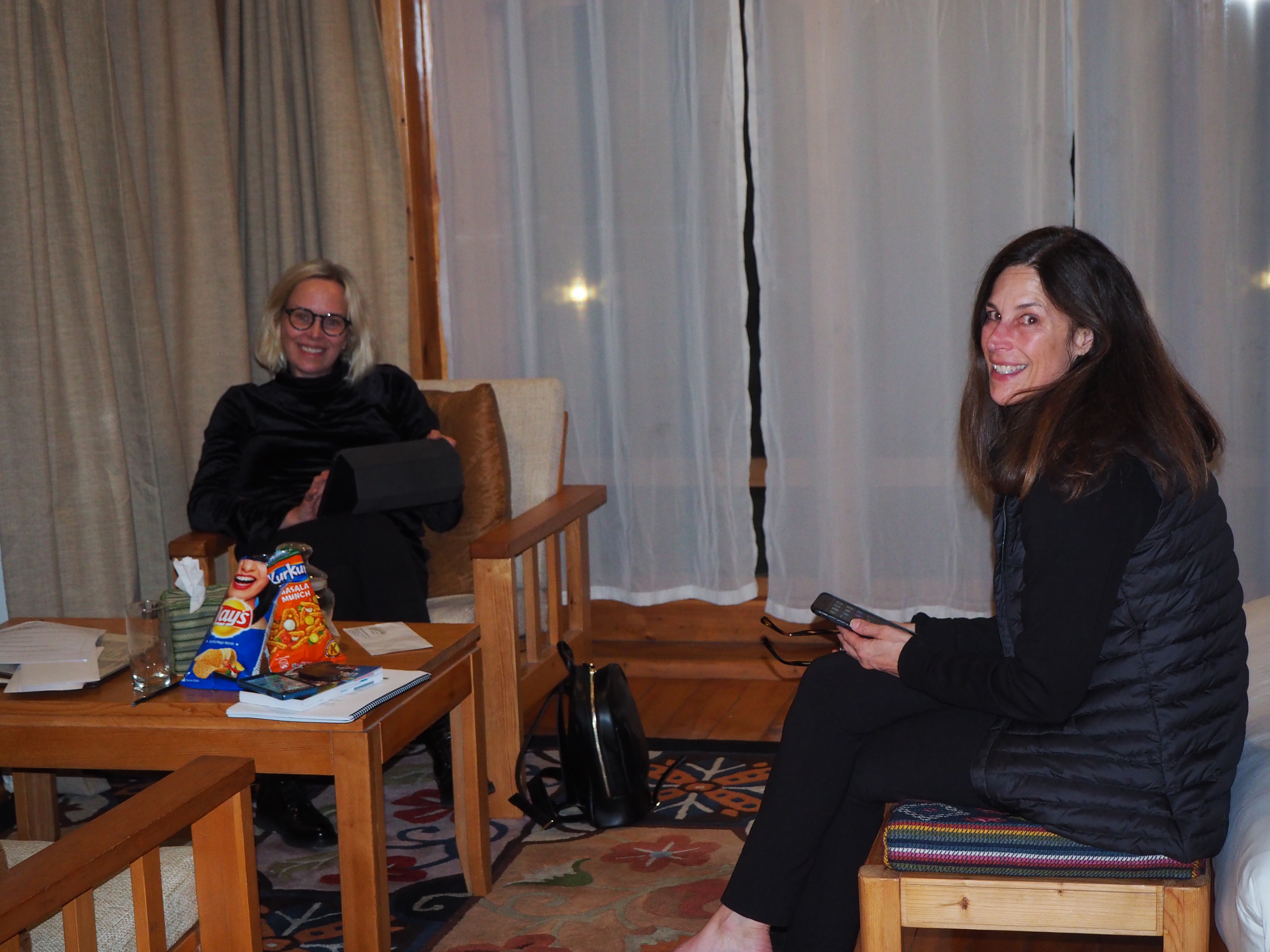
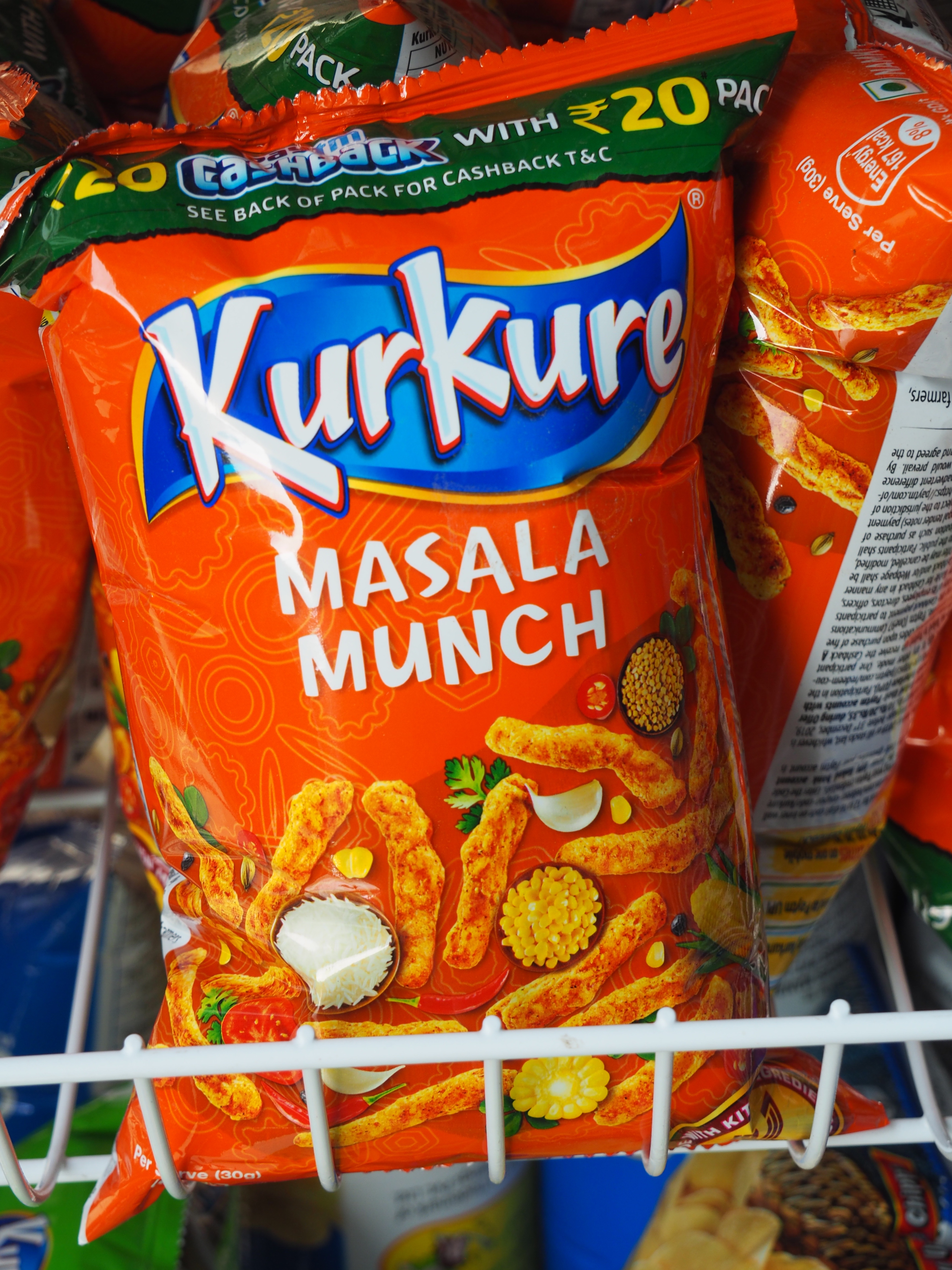
After a very full day, we made it back to the hotel with time to regroup before our departure tomorrow. As the unofficial group leader, I invited my fellow travelers for a group party in my room before dinner. Maryse brought Bhutan wine and Kathy brought masala snacks. It’s easy to have a party when your guests bring all the food and drink!
Group party pic.
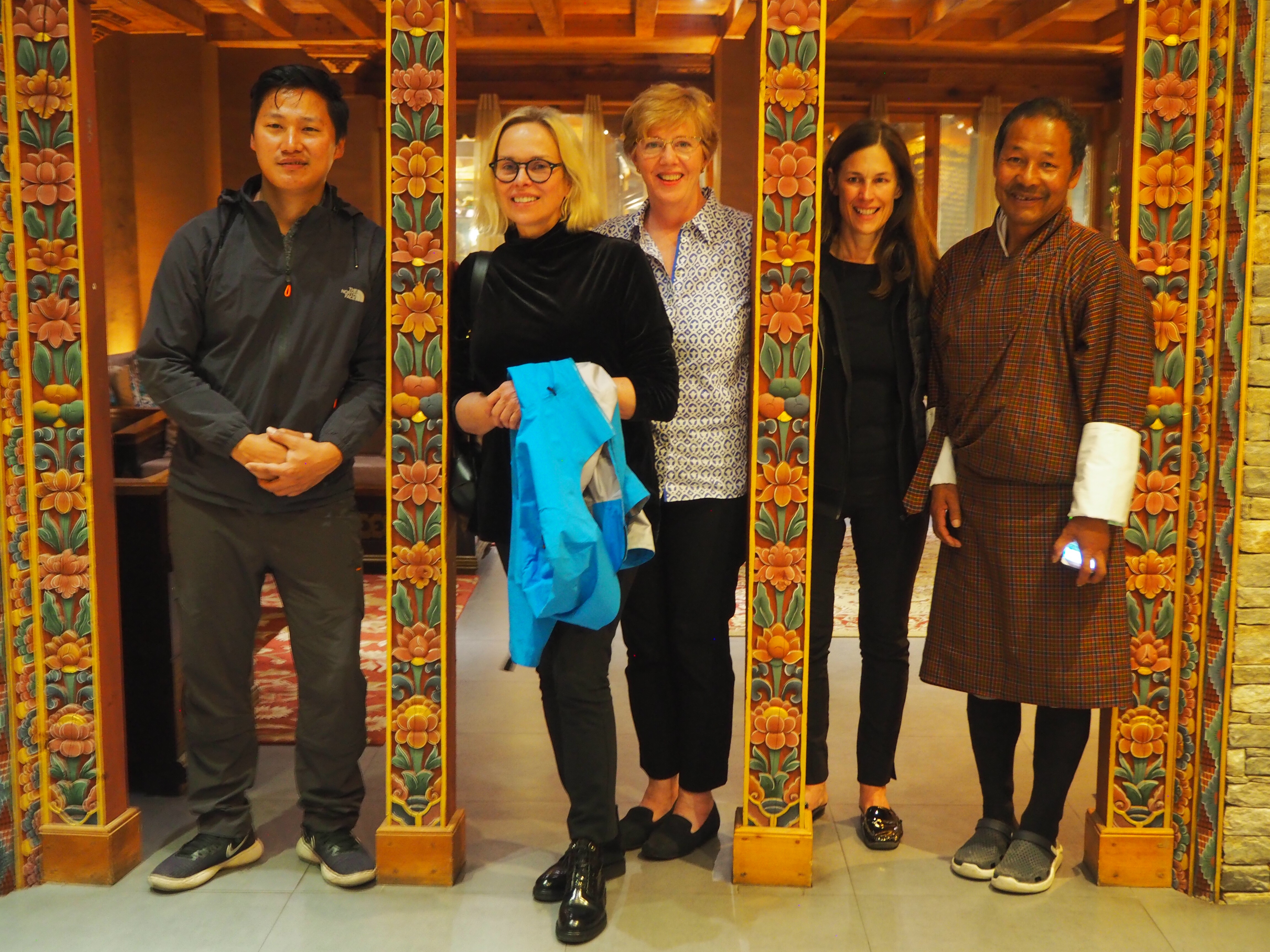
Wang and Mr Poo met us for dinner since it is our last night together. We learned more about Mr Poo he has many siblings, more than ten, I think. He is 57 and has three children and five grandchildren. He will be off the road for a bit after our trip so he can go home and help with the harvest at his farm. We have grown to love Mr Poo. He is quiet, but a great driver and a very thoughtful man.
Our group photo.
This was a very full day! Tomorrow we head back to Nepal for the final leg of our trip.
We left Punakha at about 8:30. I can’t say that I was sad to leave our hotel. It was a bit too simple for any of our tastes. In particular, the bath mat felt like I was standing on really pointy AstroTurf. It hardly made for a relaxing shower! That said, the people there could not have been nicer; they bent over backward to please all the guests.
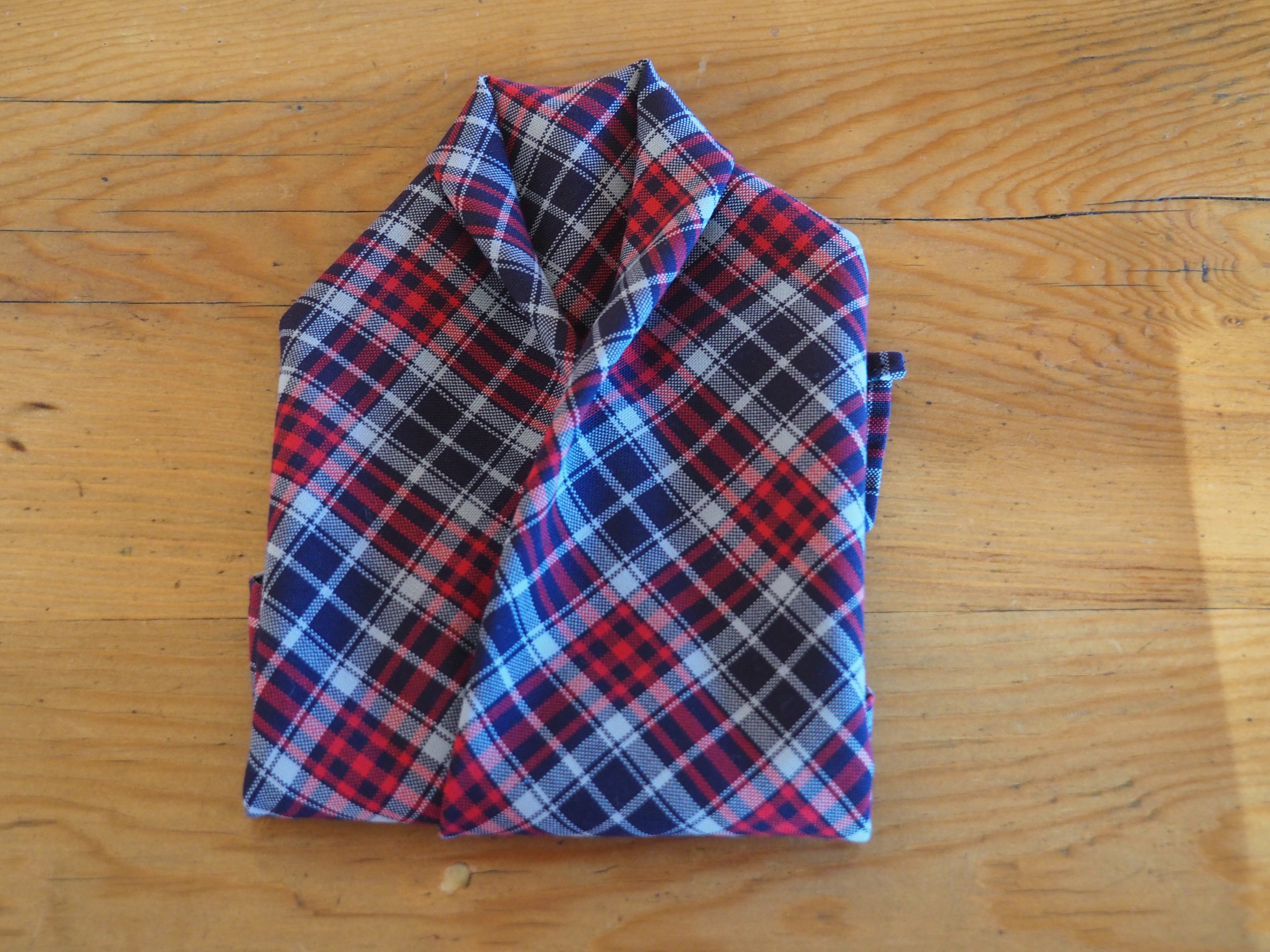
They did a nice job of folding the napkins.
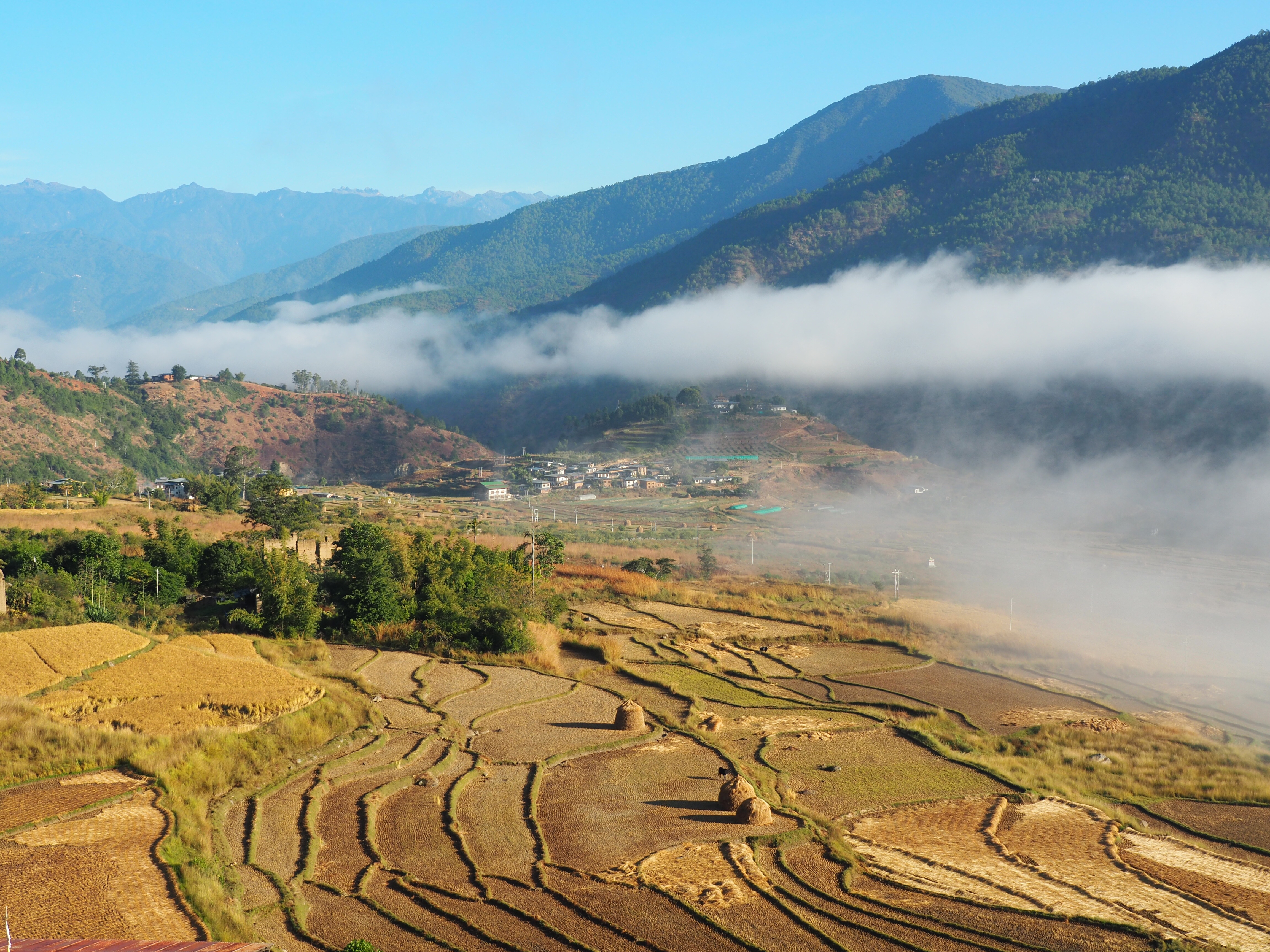
The morning was quite misty, which made for pretty views while we ate breakfast.
I think Wang was happy to have a travel day. He told us that he had been out until 2 am playing snooker with the other guides! He was able to get some sleep in spite of the bumpy, winding drive.
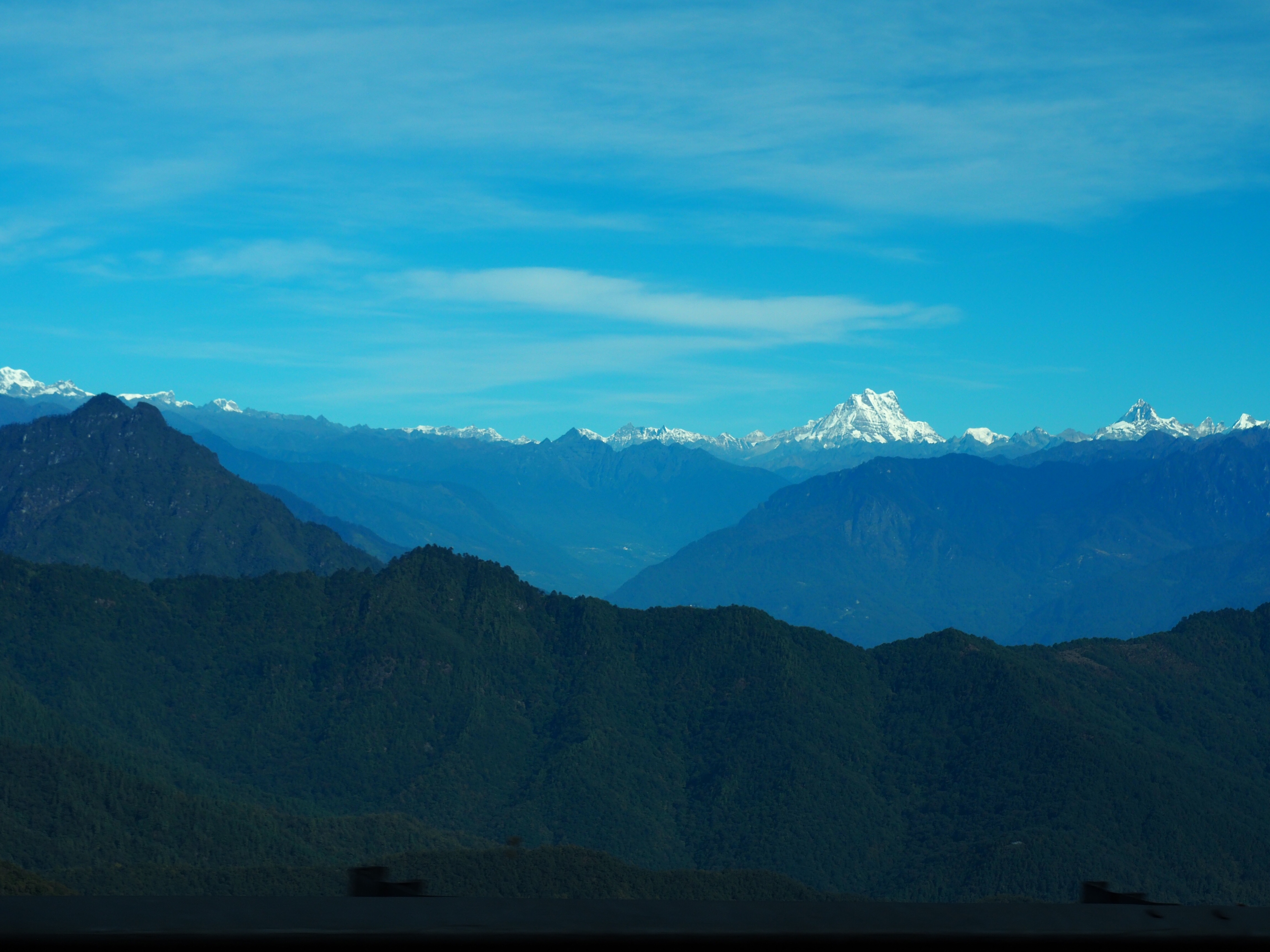
Our drive involved retracing our steps over the pass we visited two days ago, then around Thimpu and back to Paro where we first landed last week. It was a beautifully clear day and the views during the ride were spectacular.
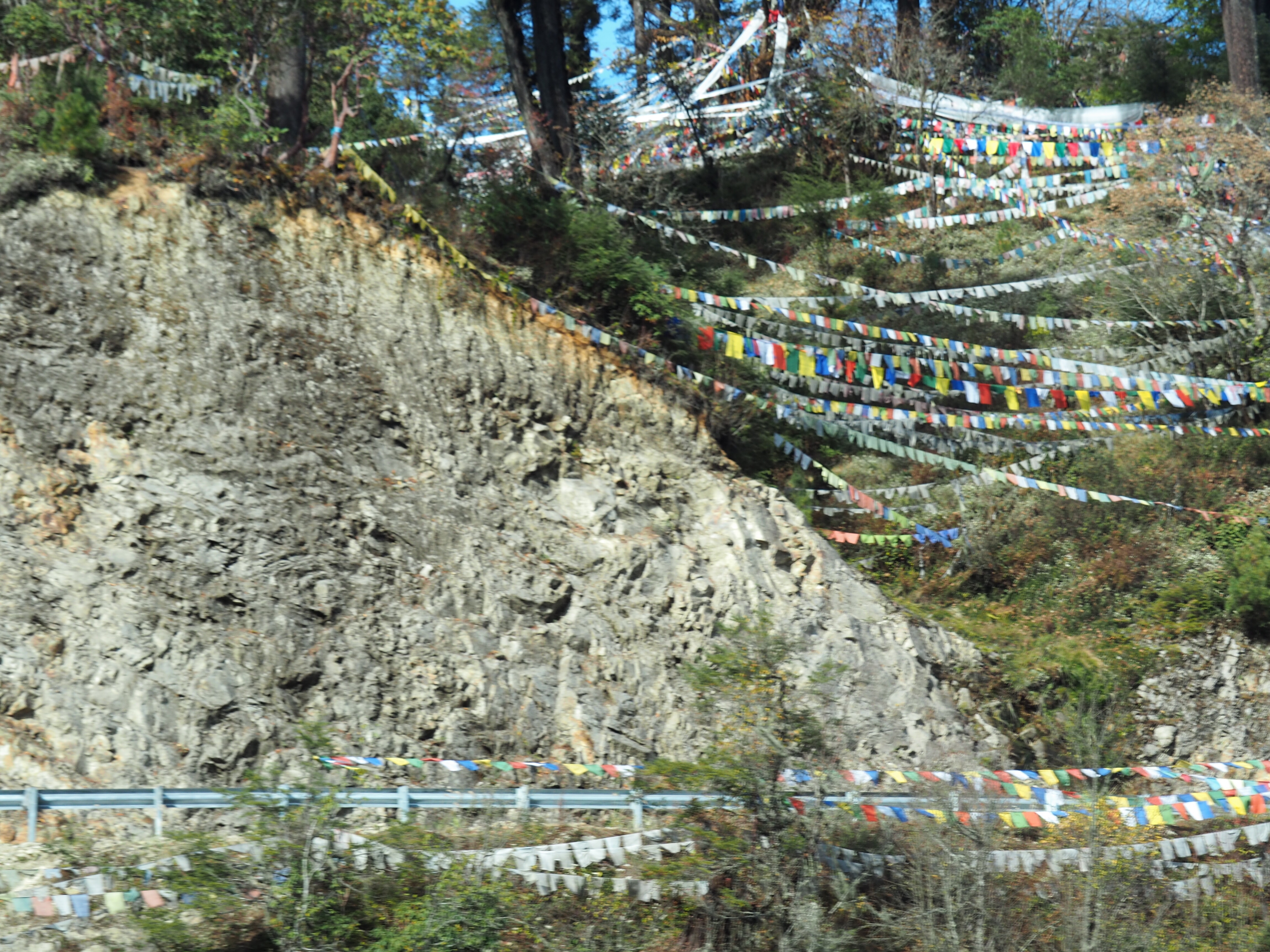
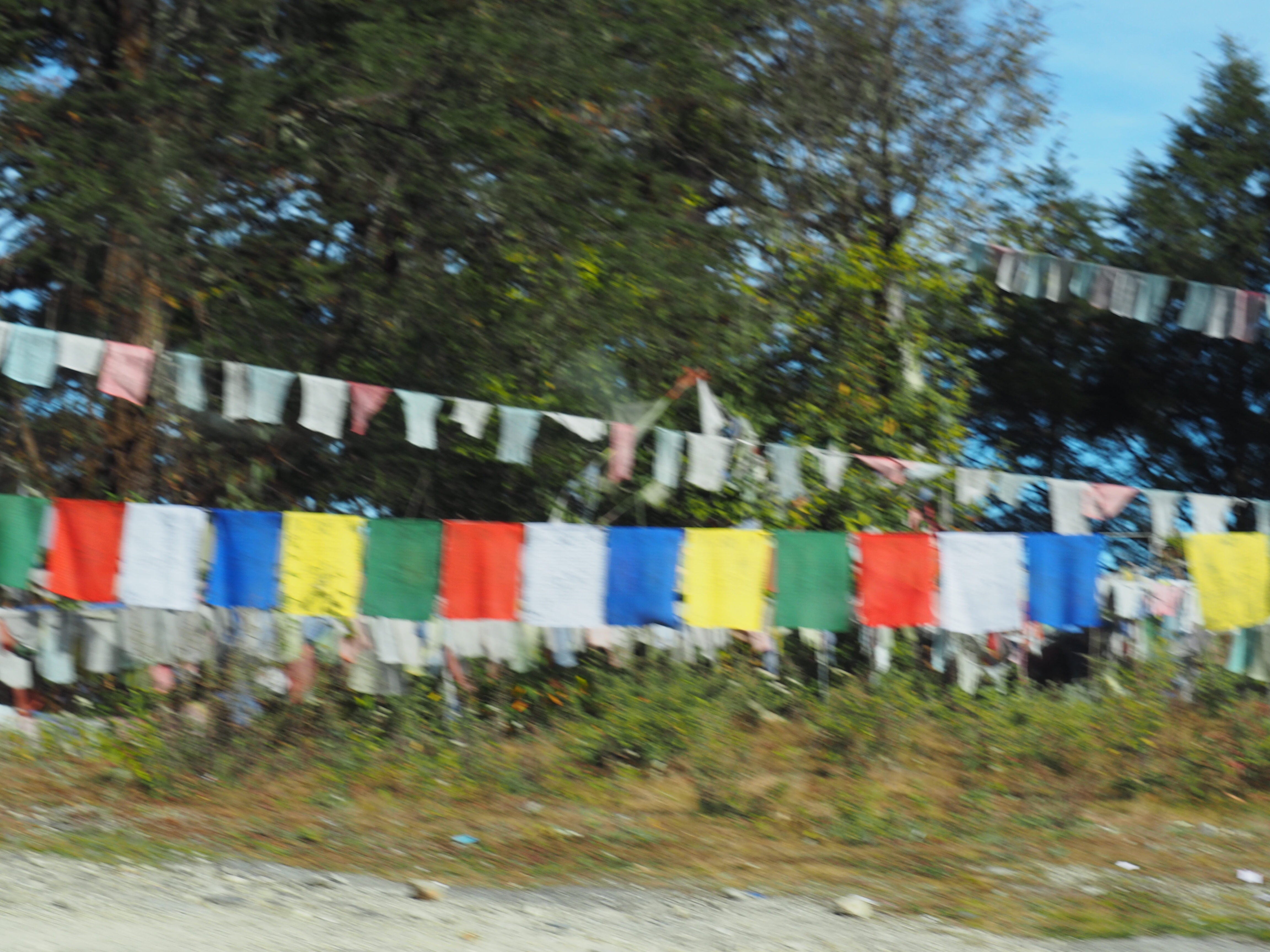
This was taken from the top of the pass. Prayer flags we saw along the road. Some more prayer flags.
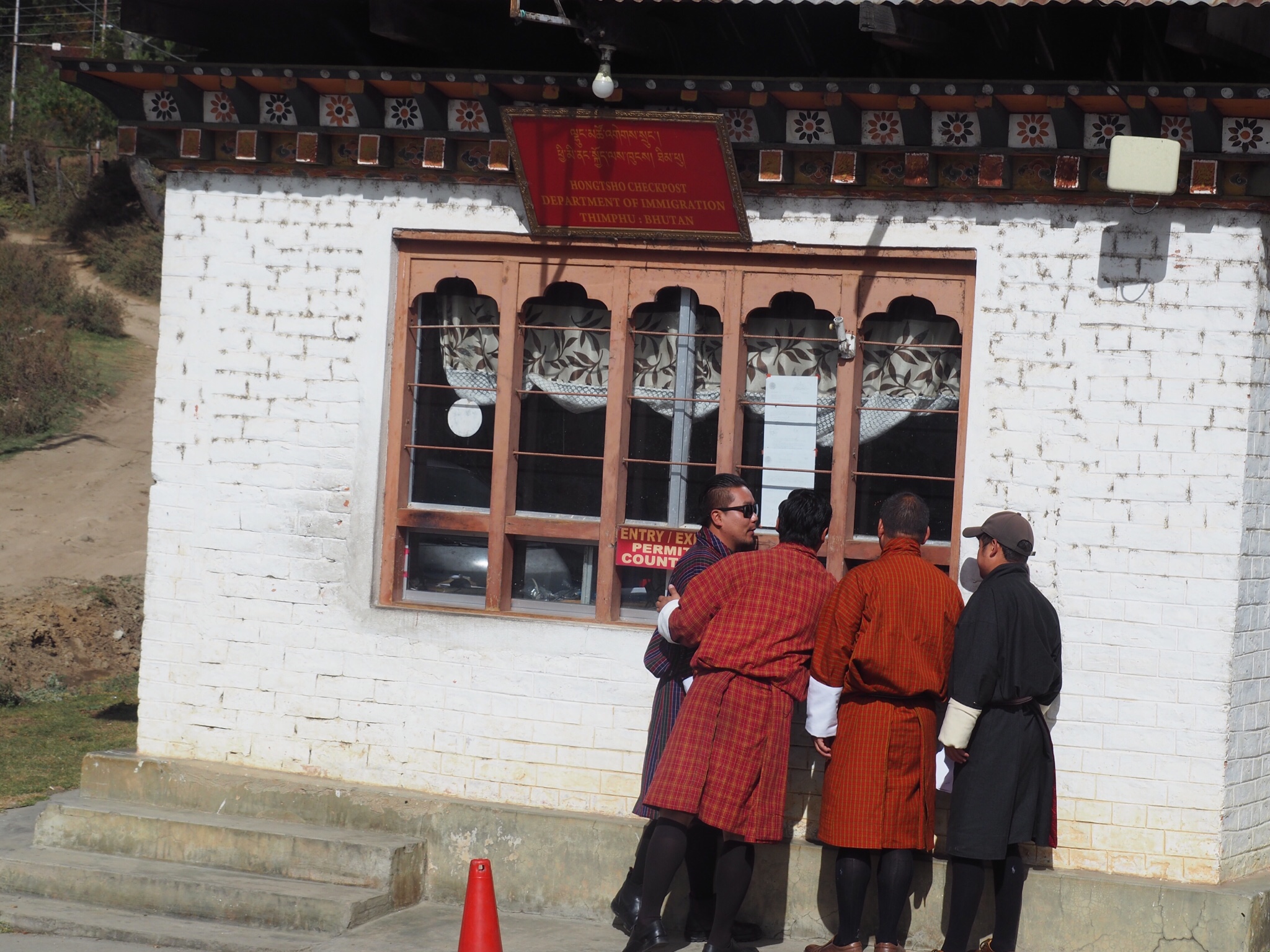
Along the road we had to stop at a checkpoint where Wang had to show our visas.
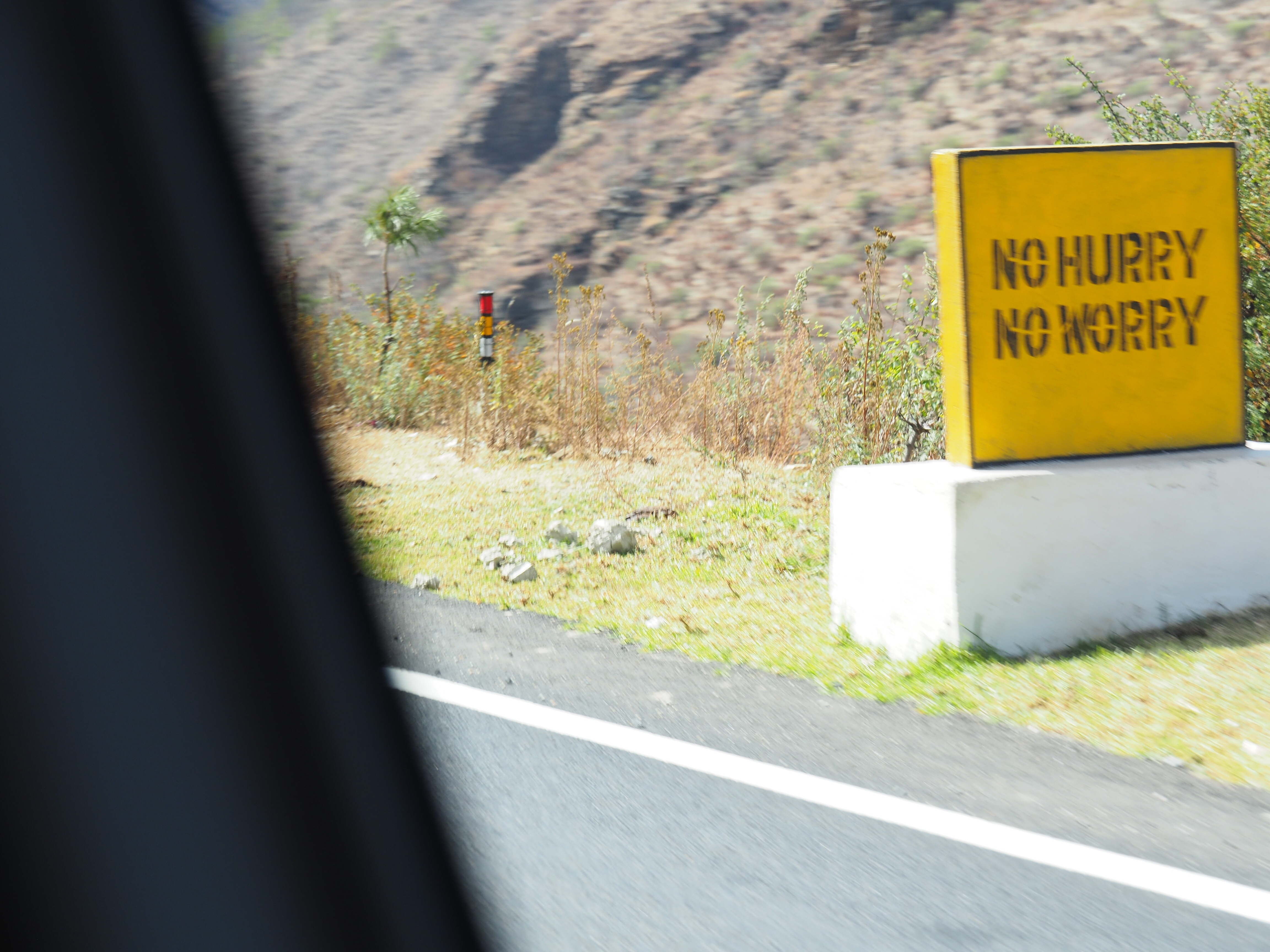
They have interesting road signs along the way.
Others we saw said things like “No Overspeeding” and “Be Predictable on the Road”.
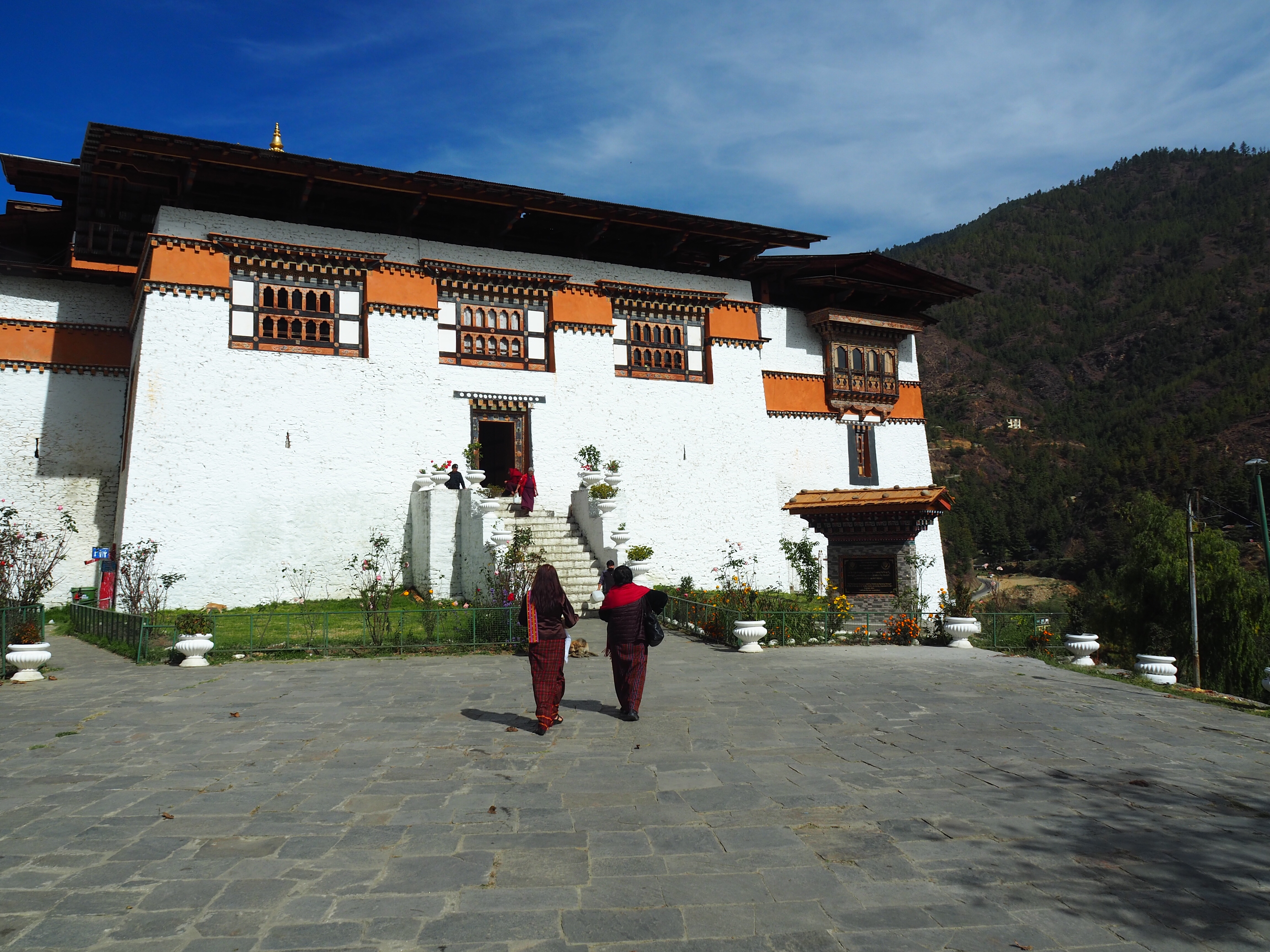
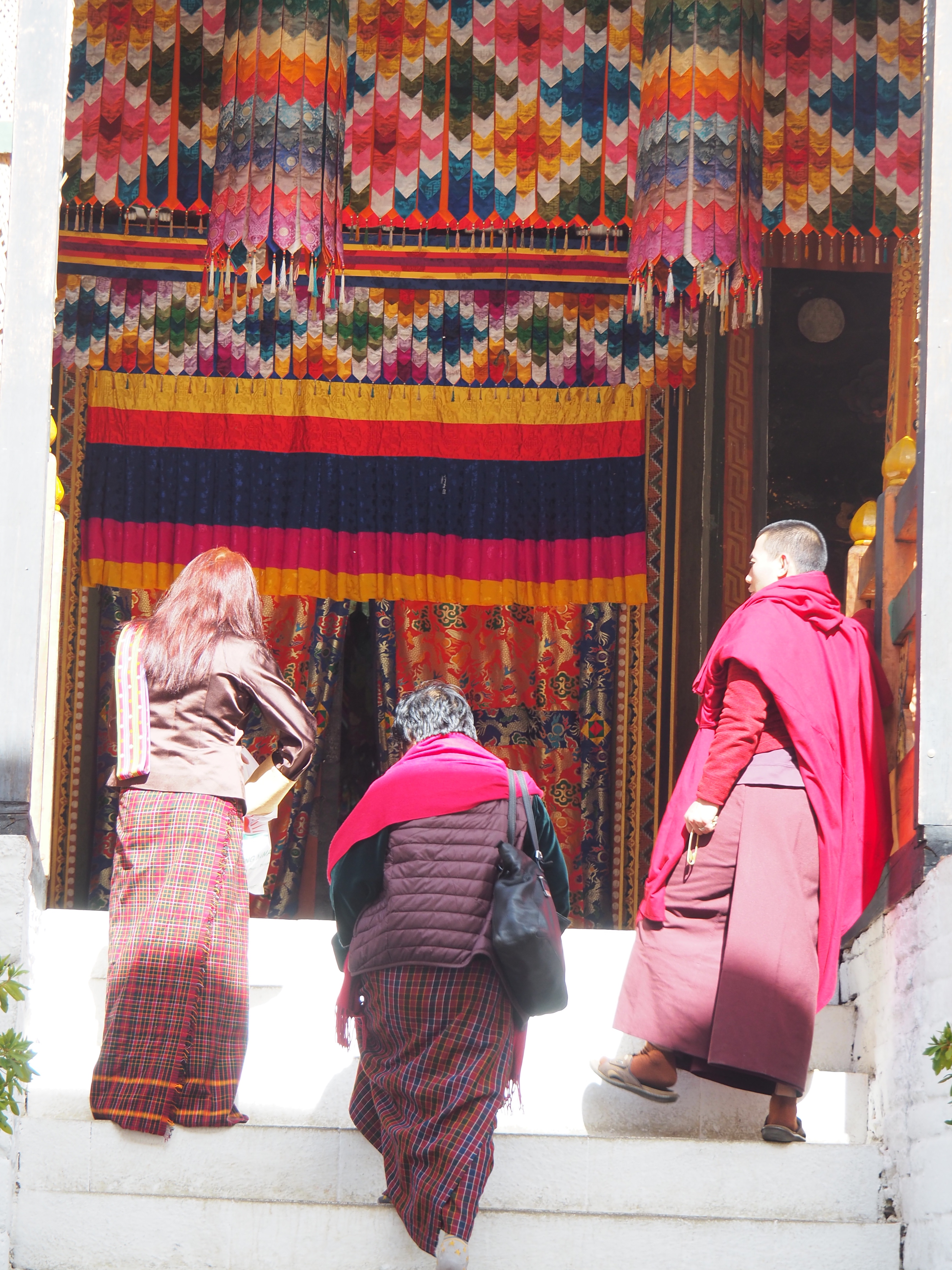
When we got to Thimphu, we made a stop to see the country’s oldest temple. It has a Buddha that is on loan from the Indian government. The policeman on duty watched our every move while we were there to be sure we didn’t touch anything and to be sure we didn’t take any photos.
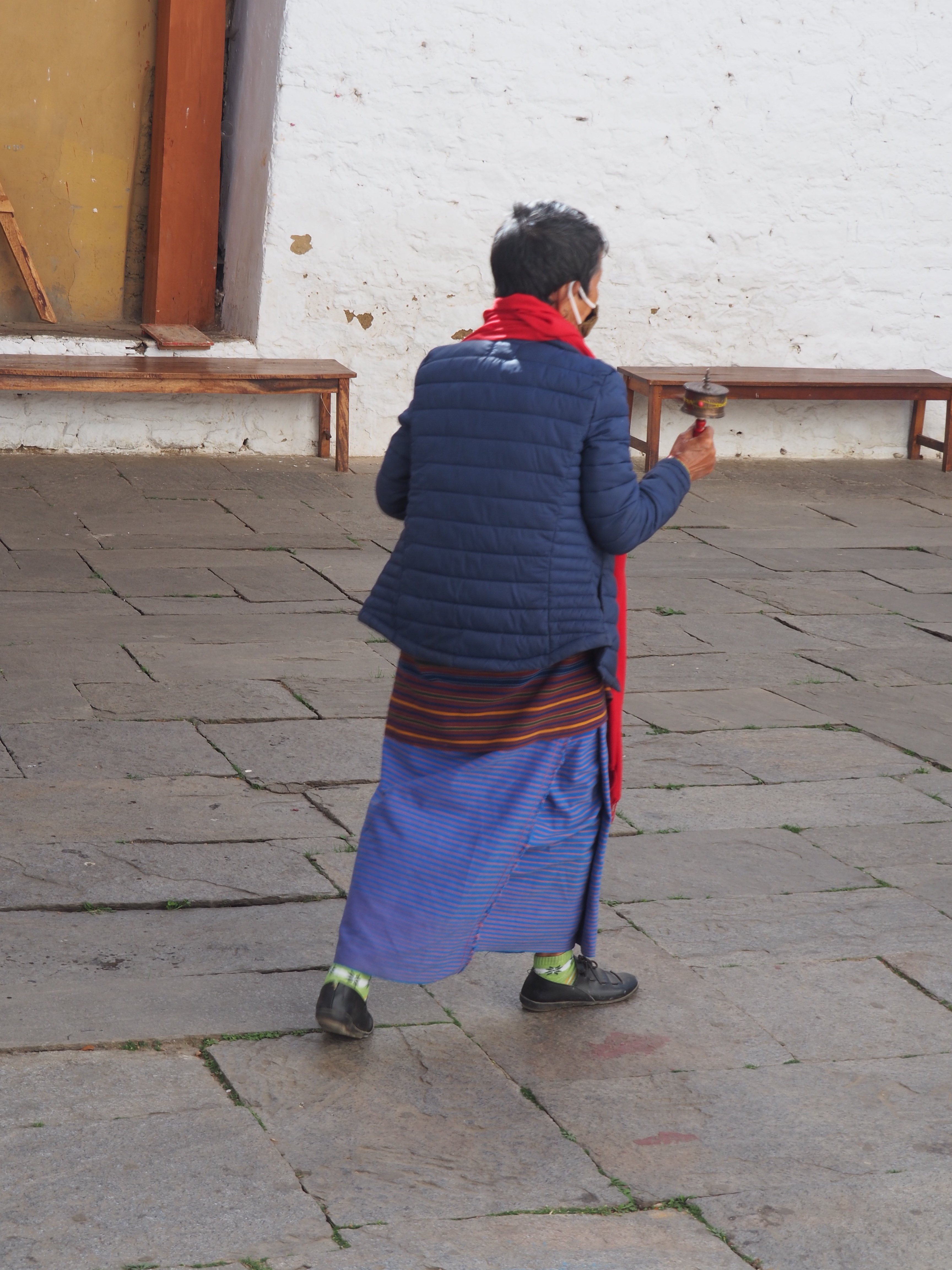
Entrance to the oldest temple. A woman circling the temple clockwise (the only way to go!) and using her prayer wheel, also circling it clockwise. People entering the temple.
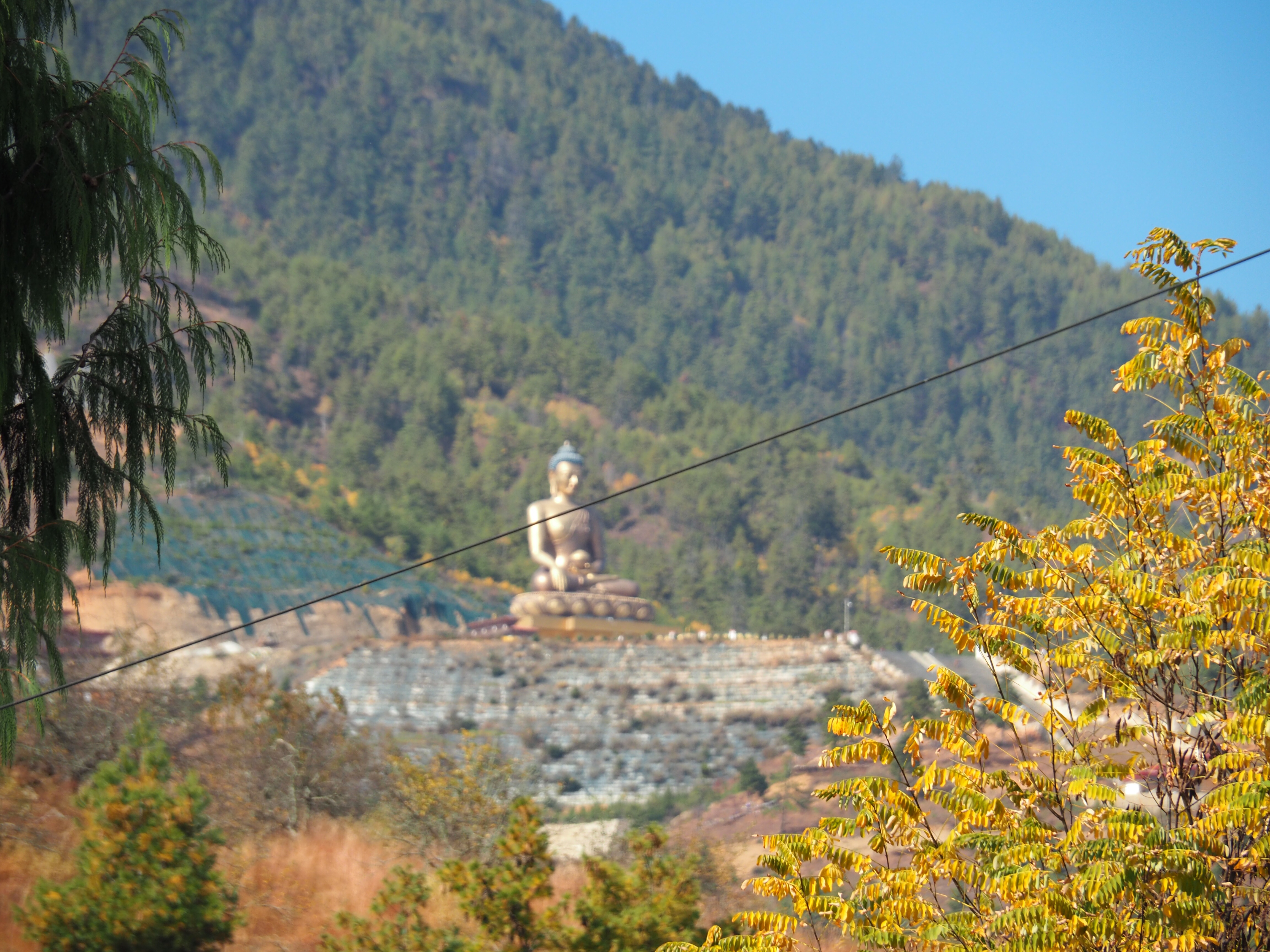
We could see the giant Buddha from a long distance.
Sorry about the electric wire!
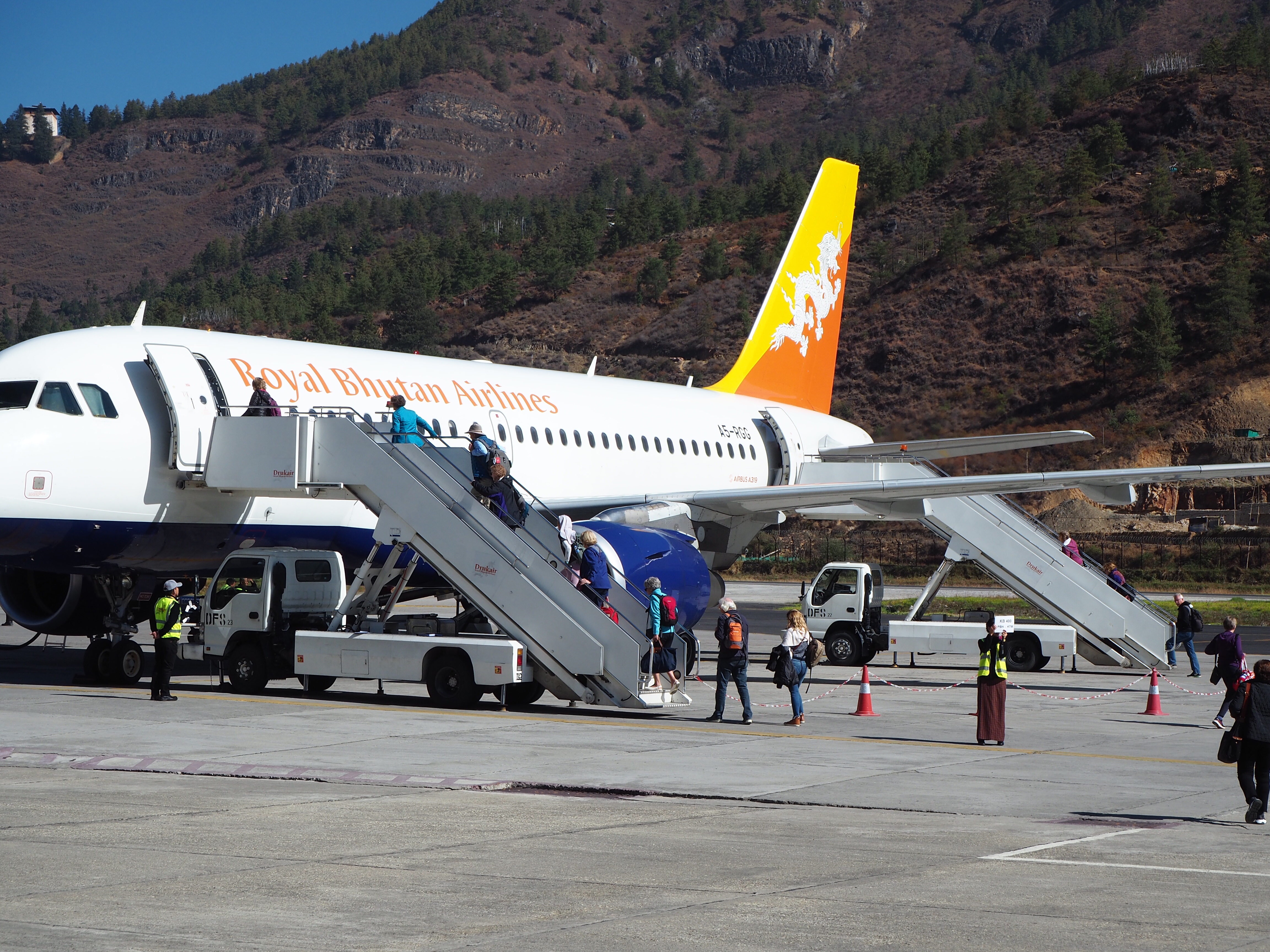
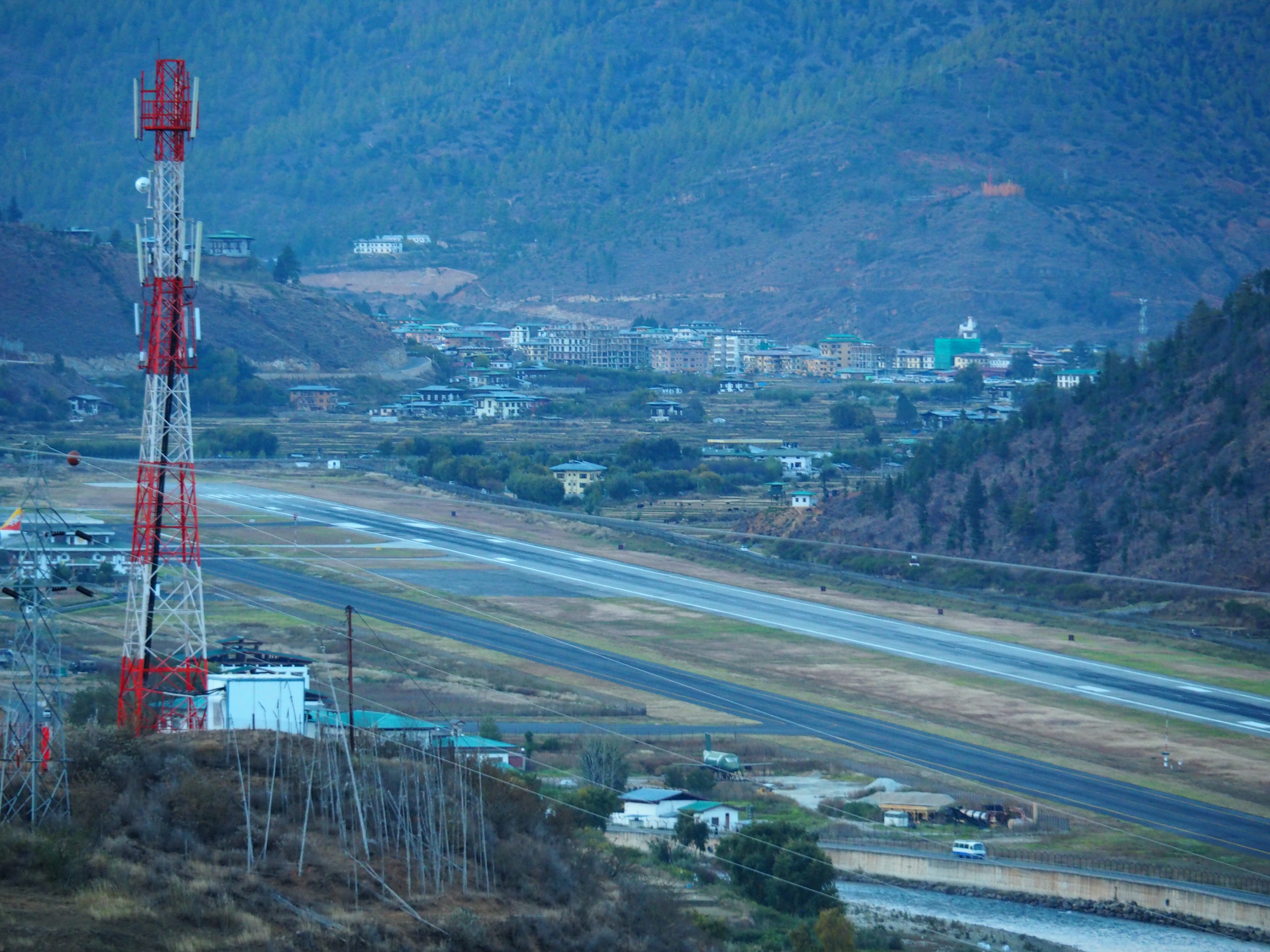
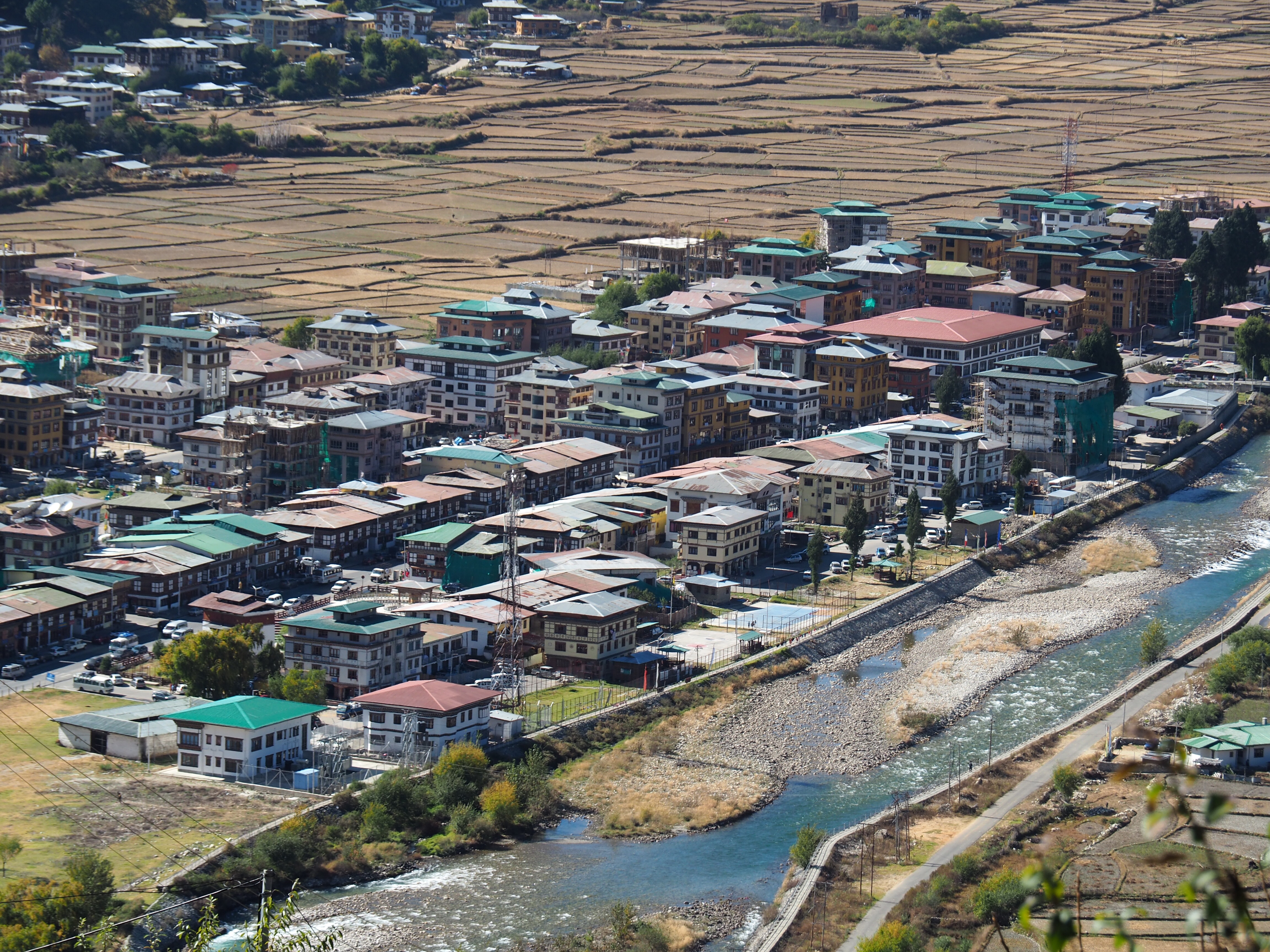
Next, we were on our way to Paro. Paro has a population of 35,000 and sits on the banks of the Paro Chhu River at an altitude of 2280 meters (about 7500 feet). Paro has the only international airstrip in the country. We got a good view of it later in the day:
The mountains surround it on all sides.
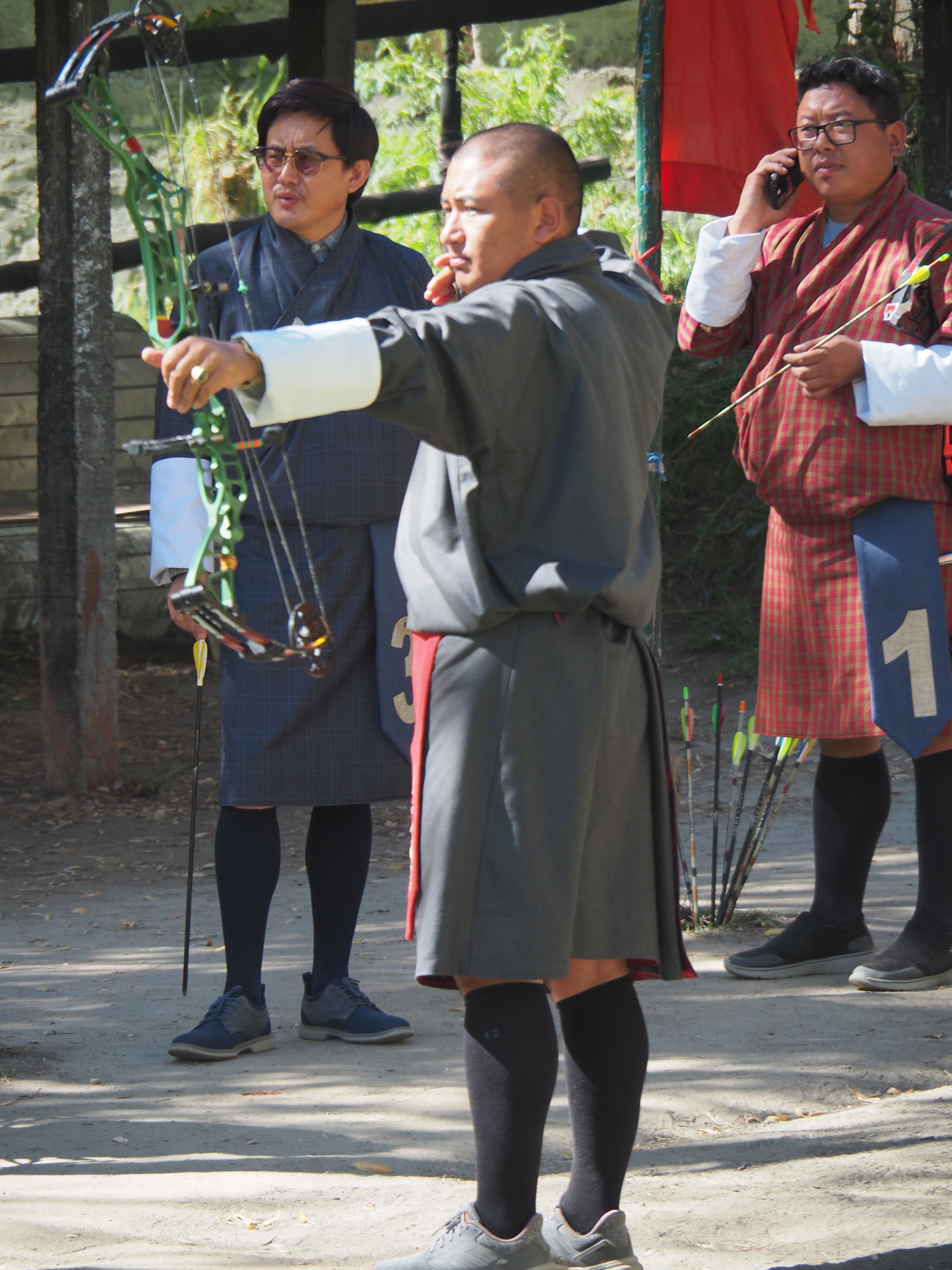
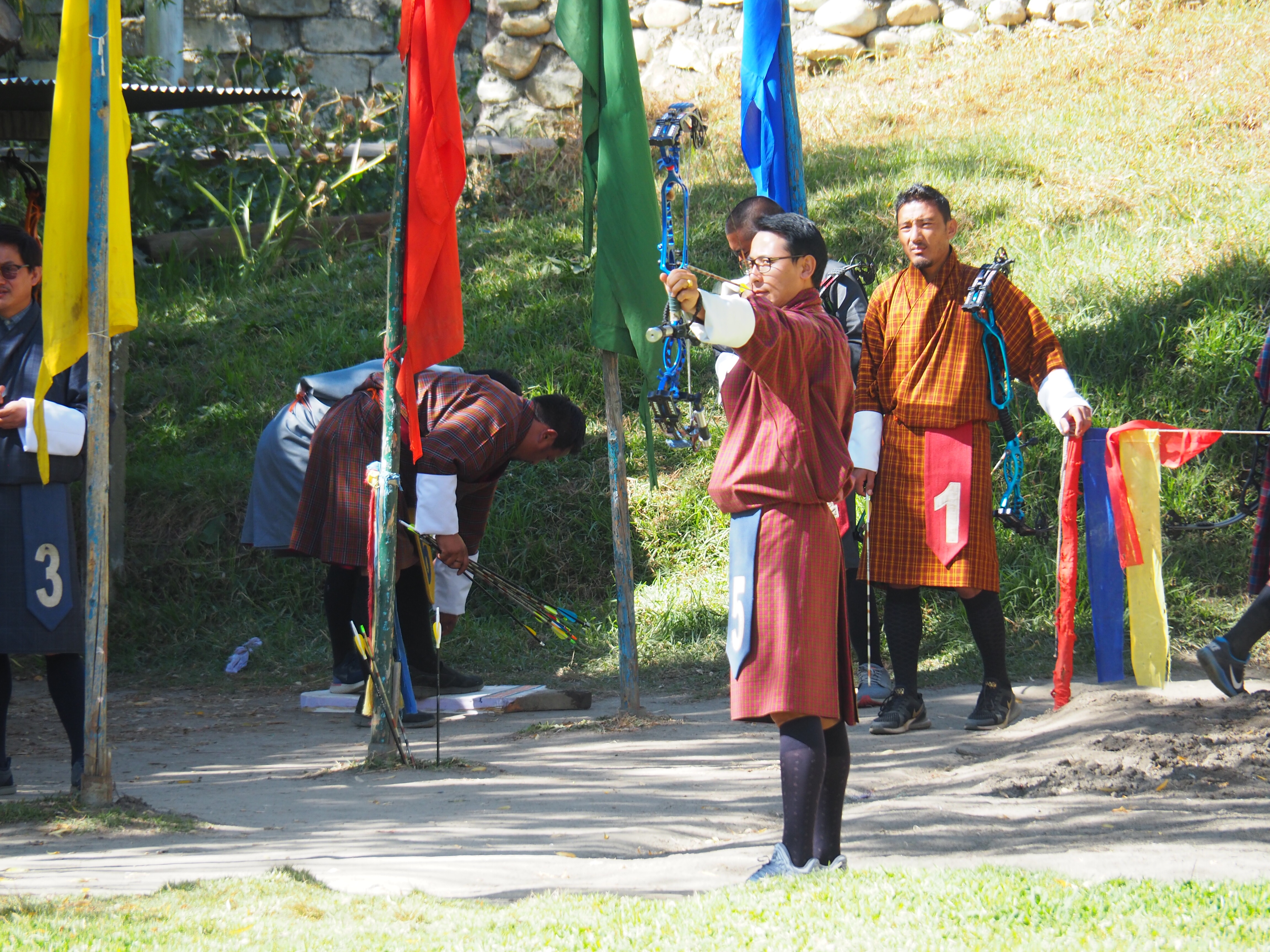
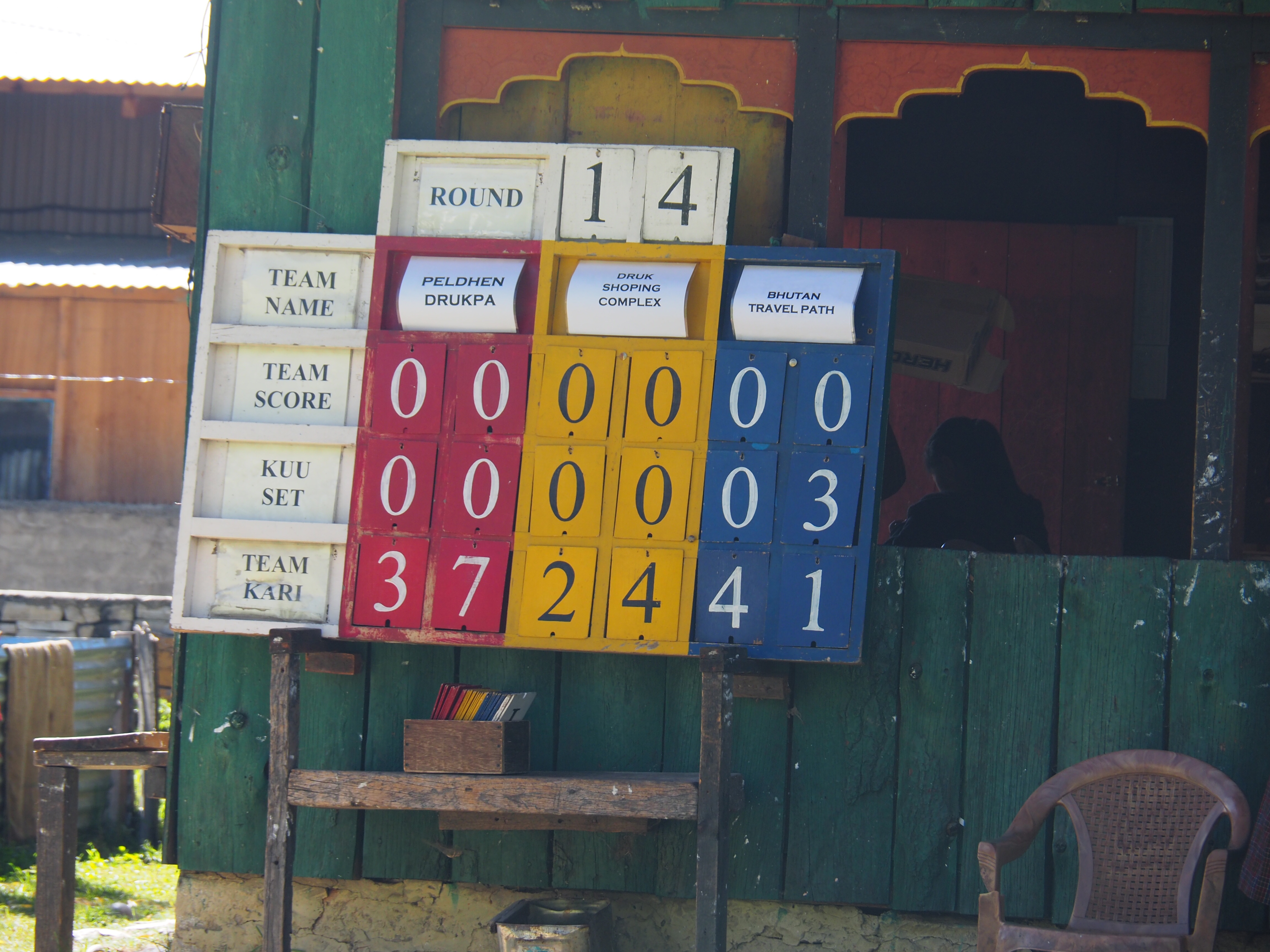
Once we got here, our first stop was to watch a group of men playing archery. It is the national sport. We saw three teams that were at the end of a 15 round match. Each team has eight players and each player takes two shots during each round. They shot those arrows a very long way!
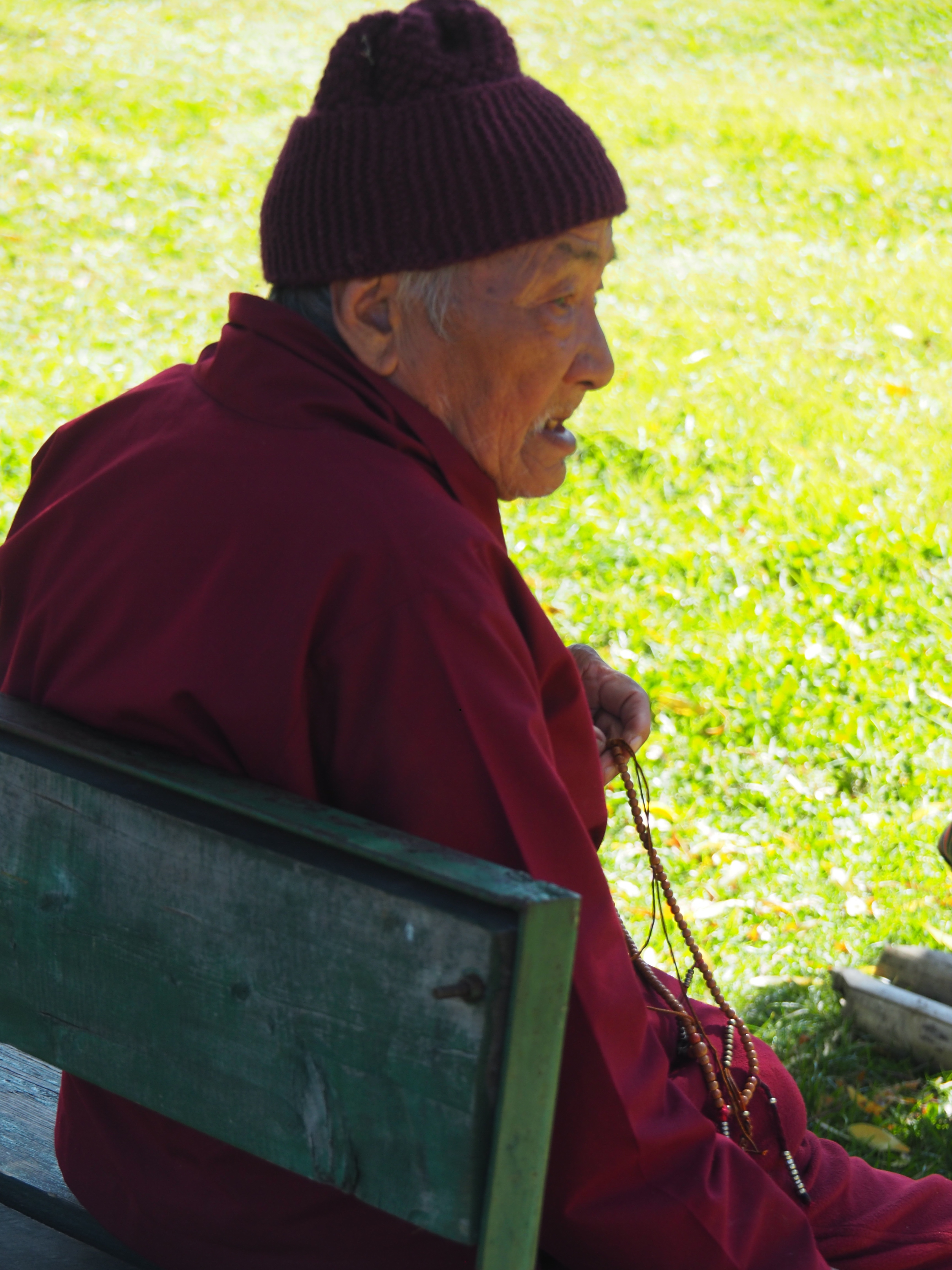
Getting ready to take a shot The scoreboard. One of the spectators.
Next, we had lunch at a home where the owners operate a restaurant. The bathroom contained the toilet, a shower, and a small washer and dryer in one space. We met a couple that is following somewhat the same route as we are. The man climbed to the Tiger’s Nest Monastery in a very fast pace… 3 1/2 hours, he gave his guide a run for his money!
After lunch we visited the National Museum, actually an annex of the museum. The museum itself is housed in the watchtower for the Paro Dzong and is under renovation. They have taken some key items from the museum and put them in a side building. It is quite interesting…. we saw festival masks, displays about the flora and fauna of Bhutan, including an interesting section about their herbal medicines. There was also a 3-d display of the county. It is basically all mountains except for the very southern part. It is bordered on the lower half by India and on the upper half by Tibet. Seventy-two percent of the land is forest and of that part 60 percent is protected.
View of Paro from the museum.
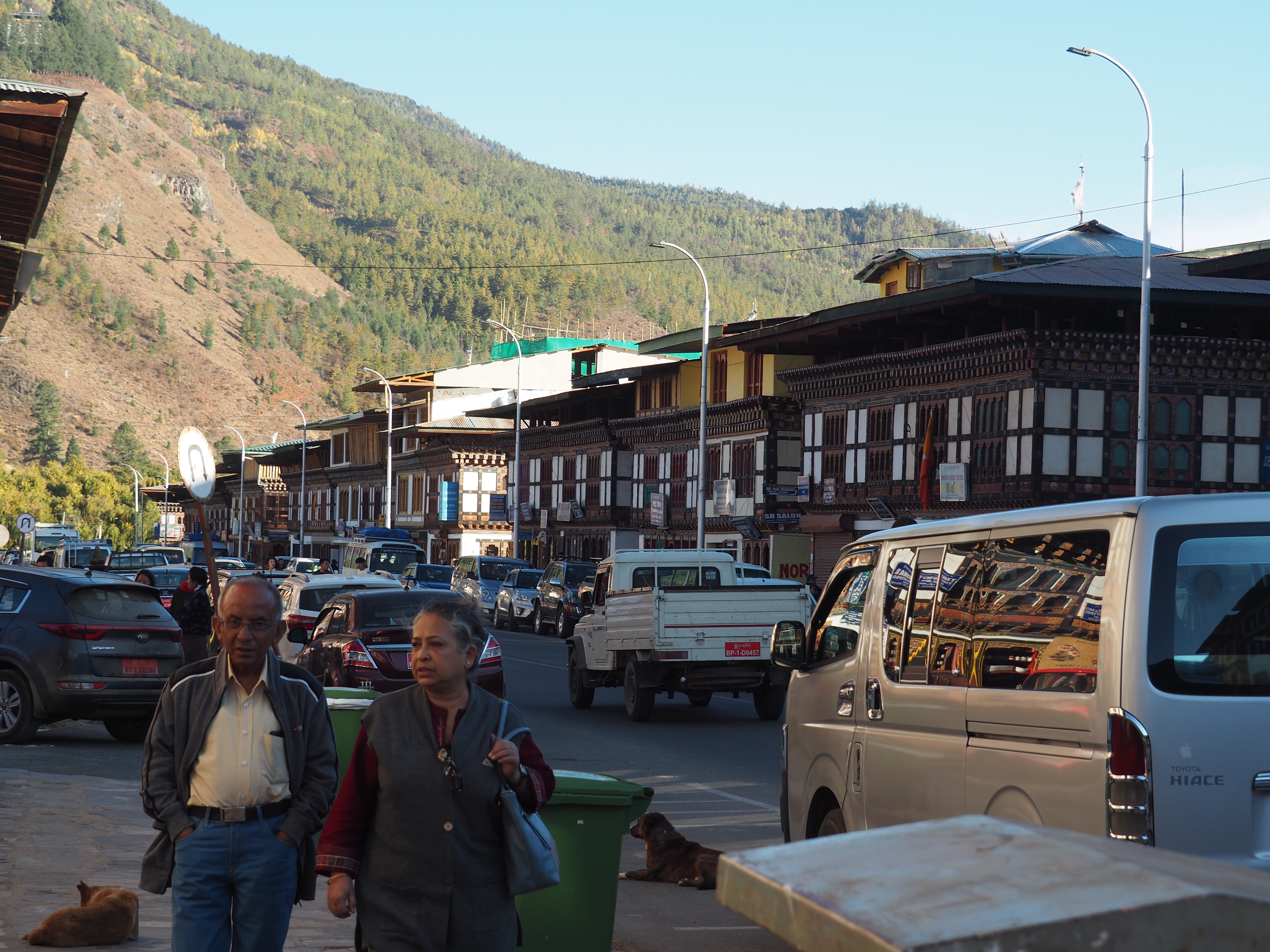
We then went to the Main Street where we had time for a bit of retail therapy. Frankly, there isn’t a lot to buy but we did find a few things.
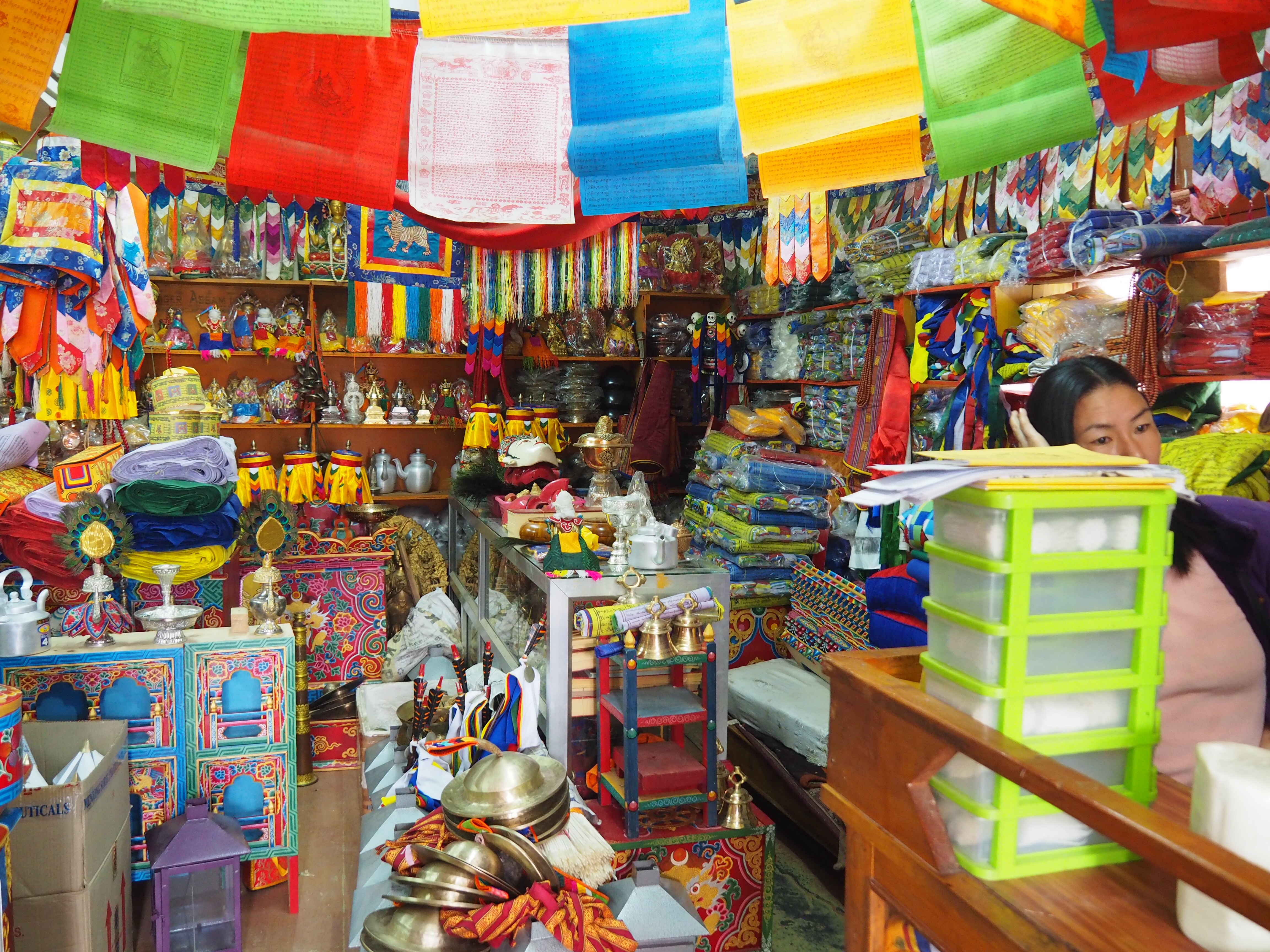
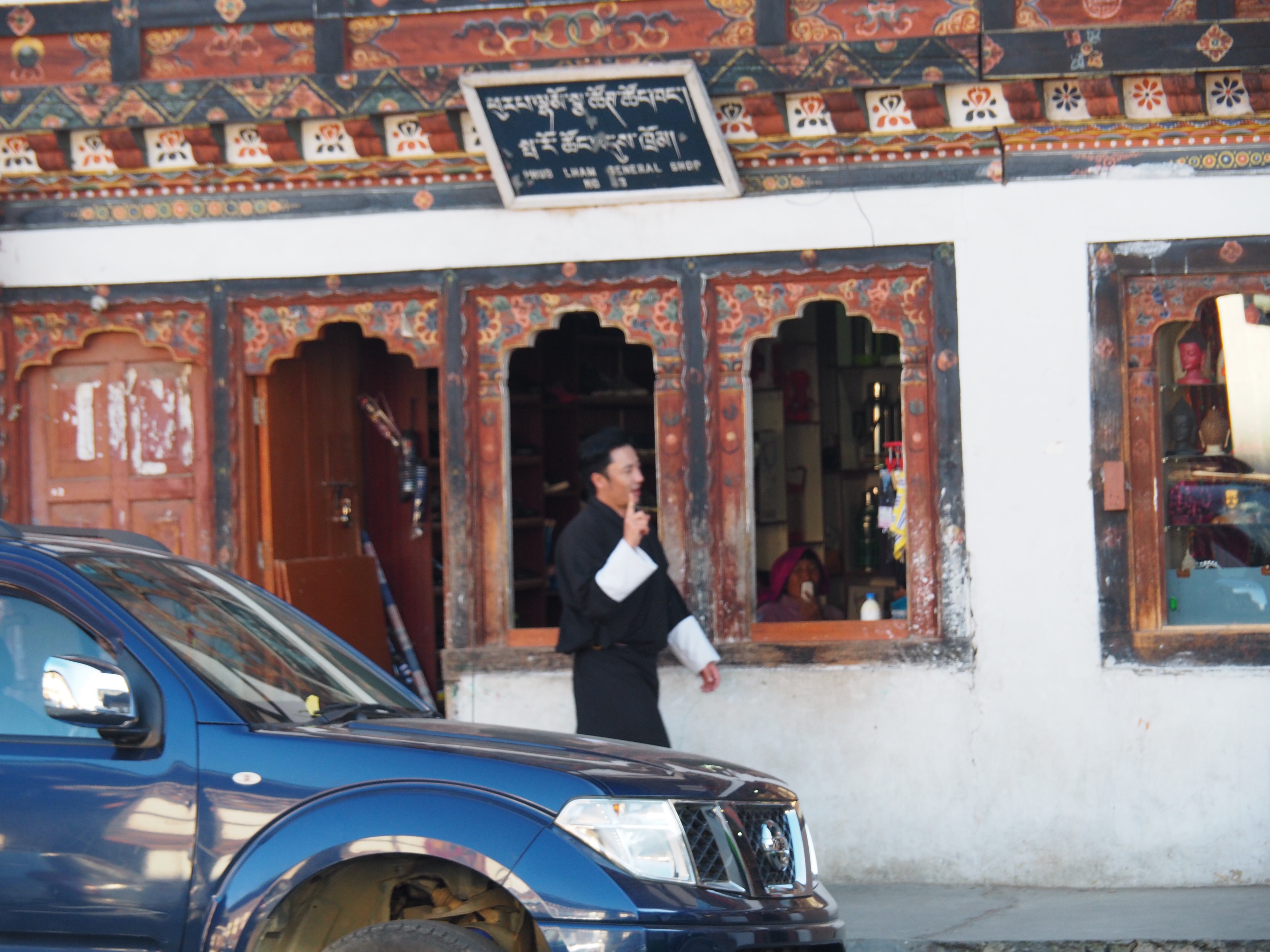
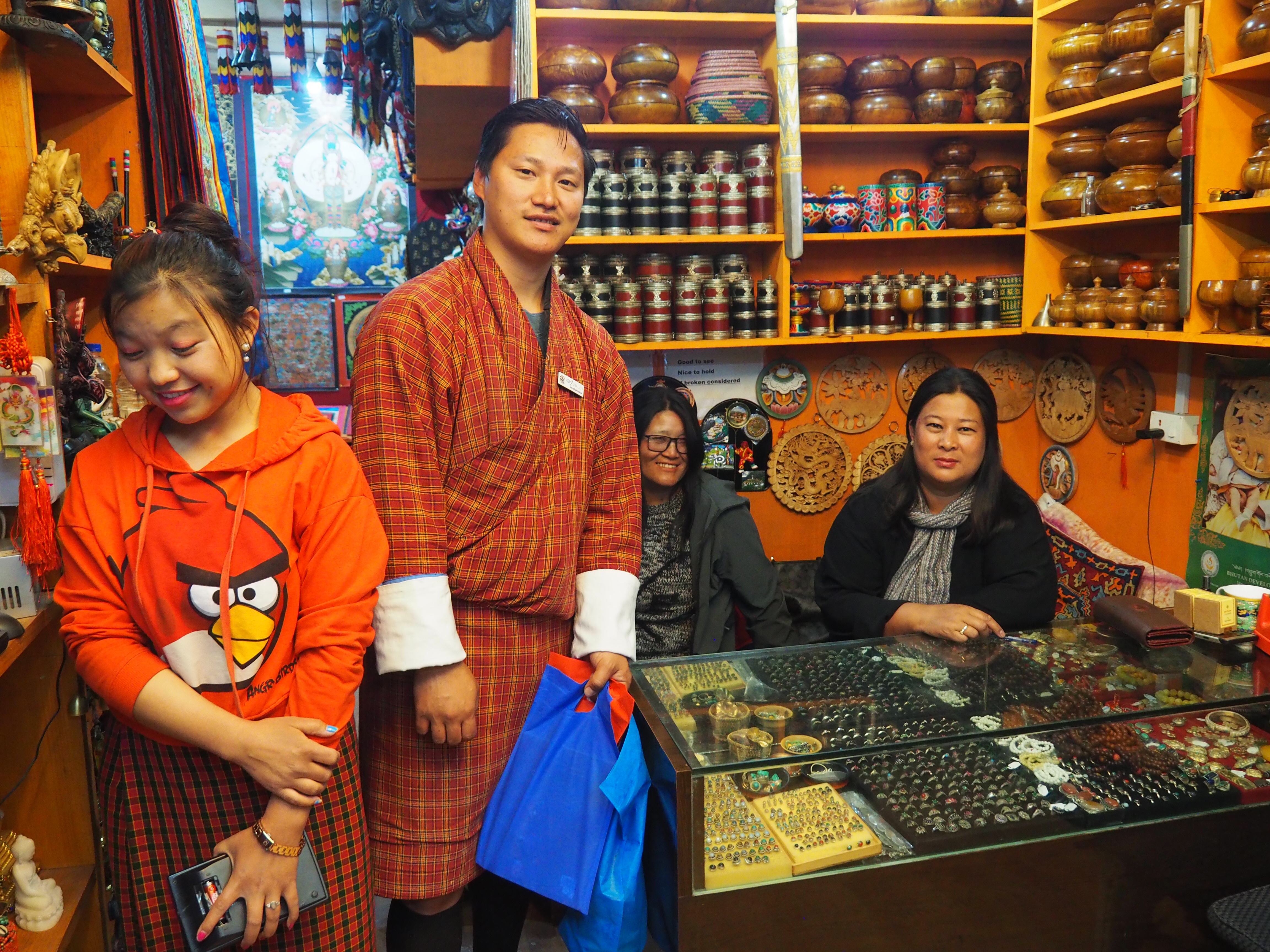
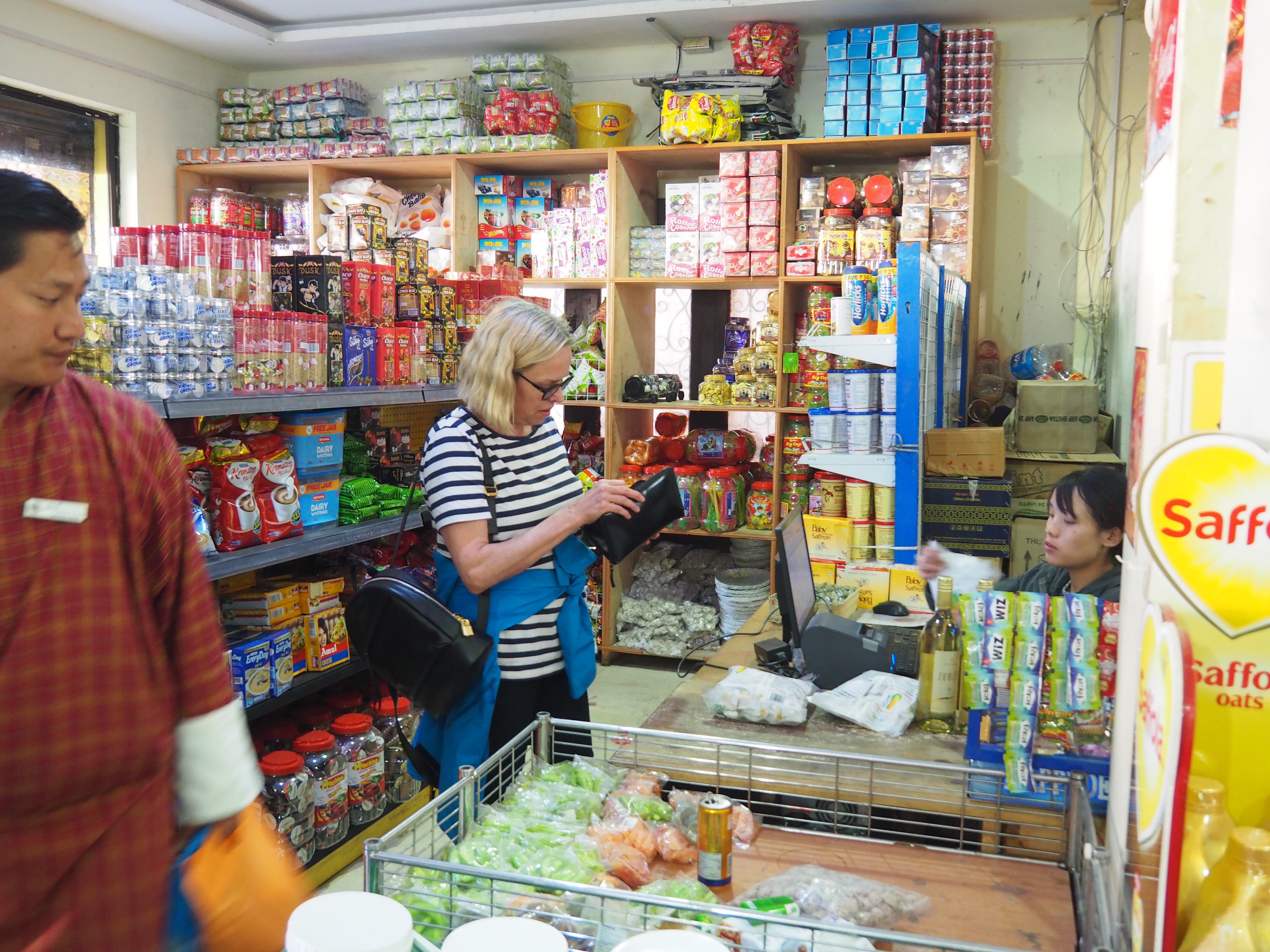
We went into this store to purchase prayer flags which we will hoist tomorrow during our Tigers Nest expedition. This guy is a famous Bhutanese movie star who was filming on the Main Street. One of our stops. Wang said he is very good at carrying the bags because he gets lots of practice with his wife! Maryse helped the economy!A view of the Main Street.
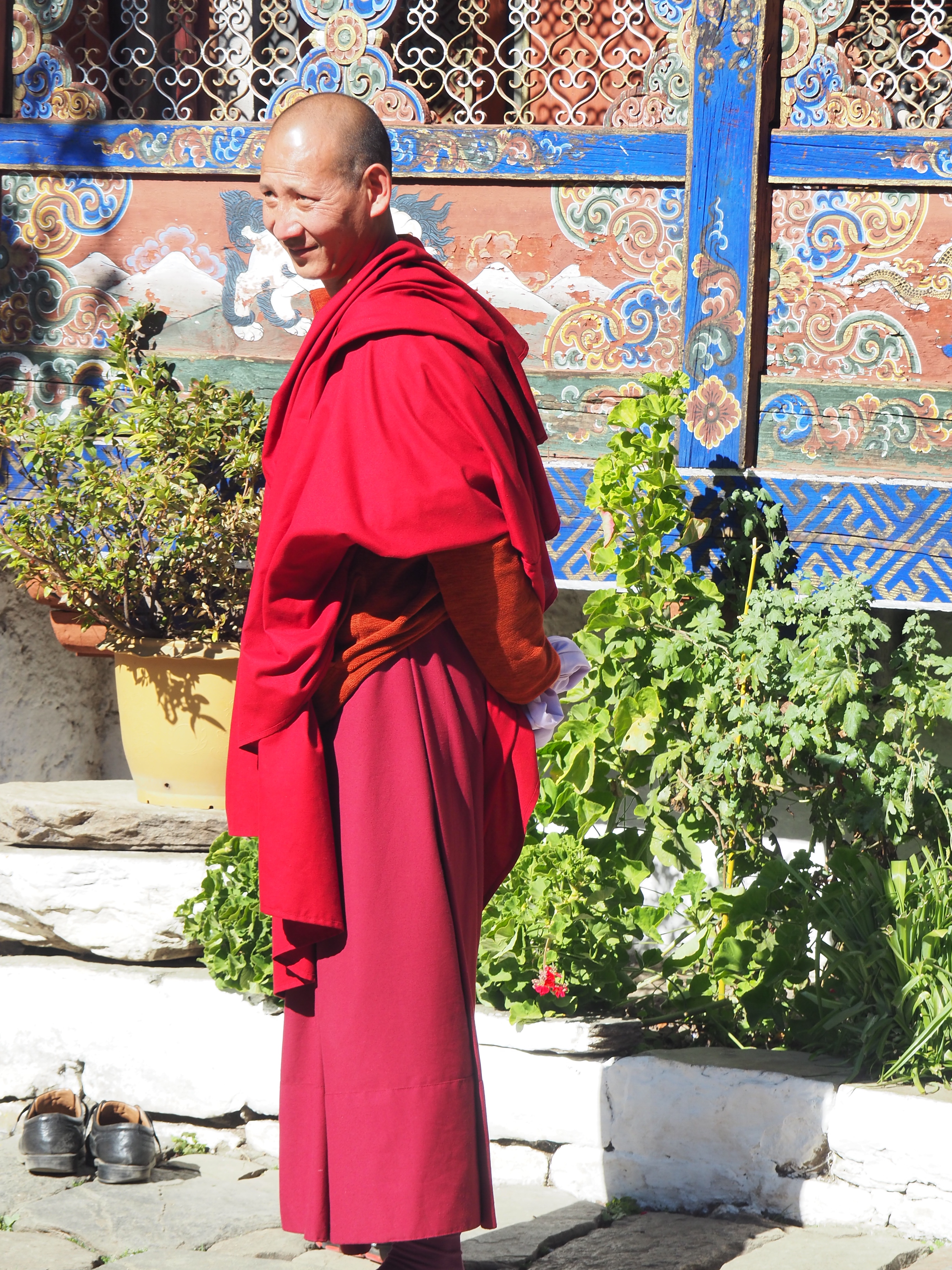
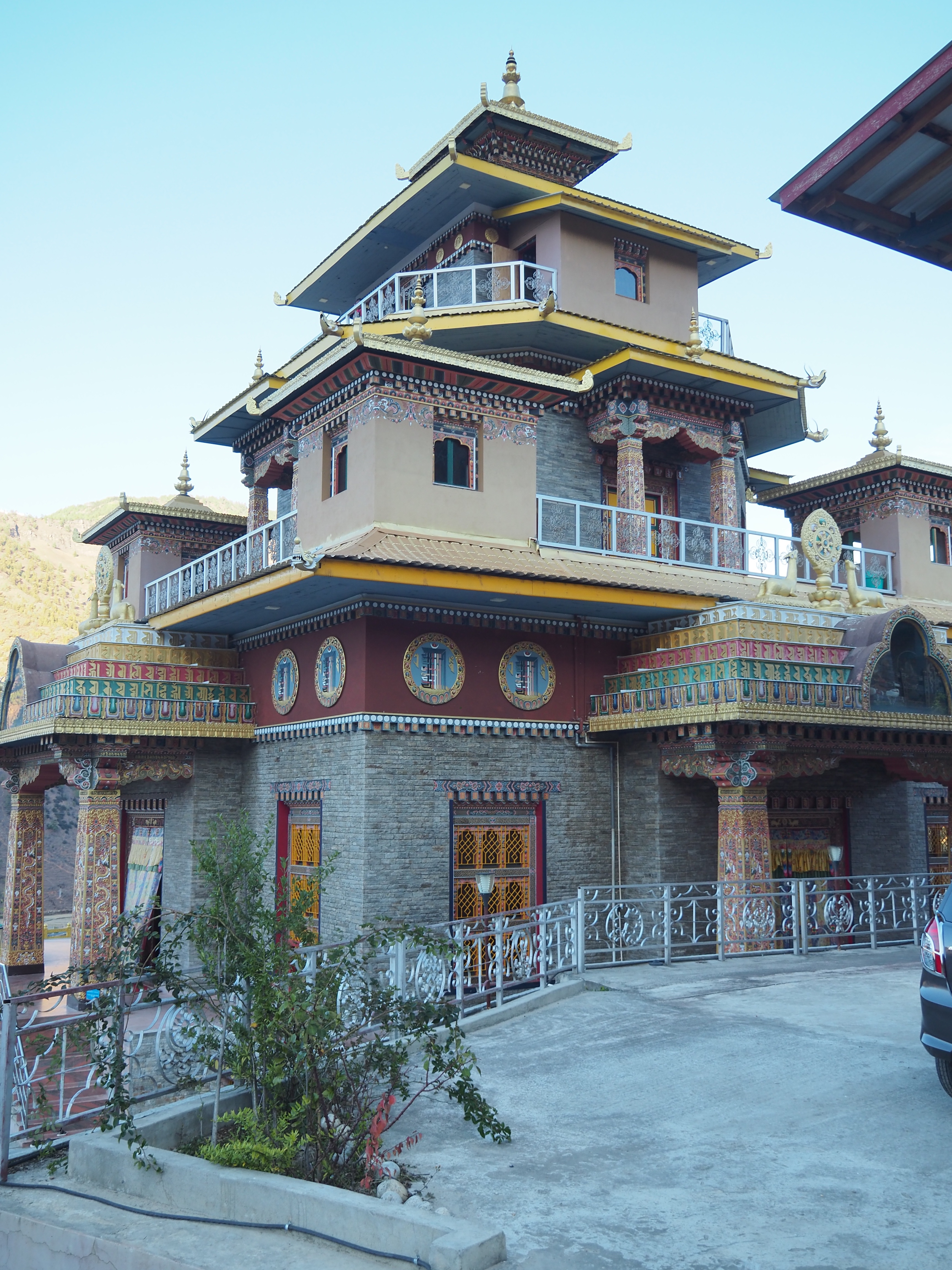
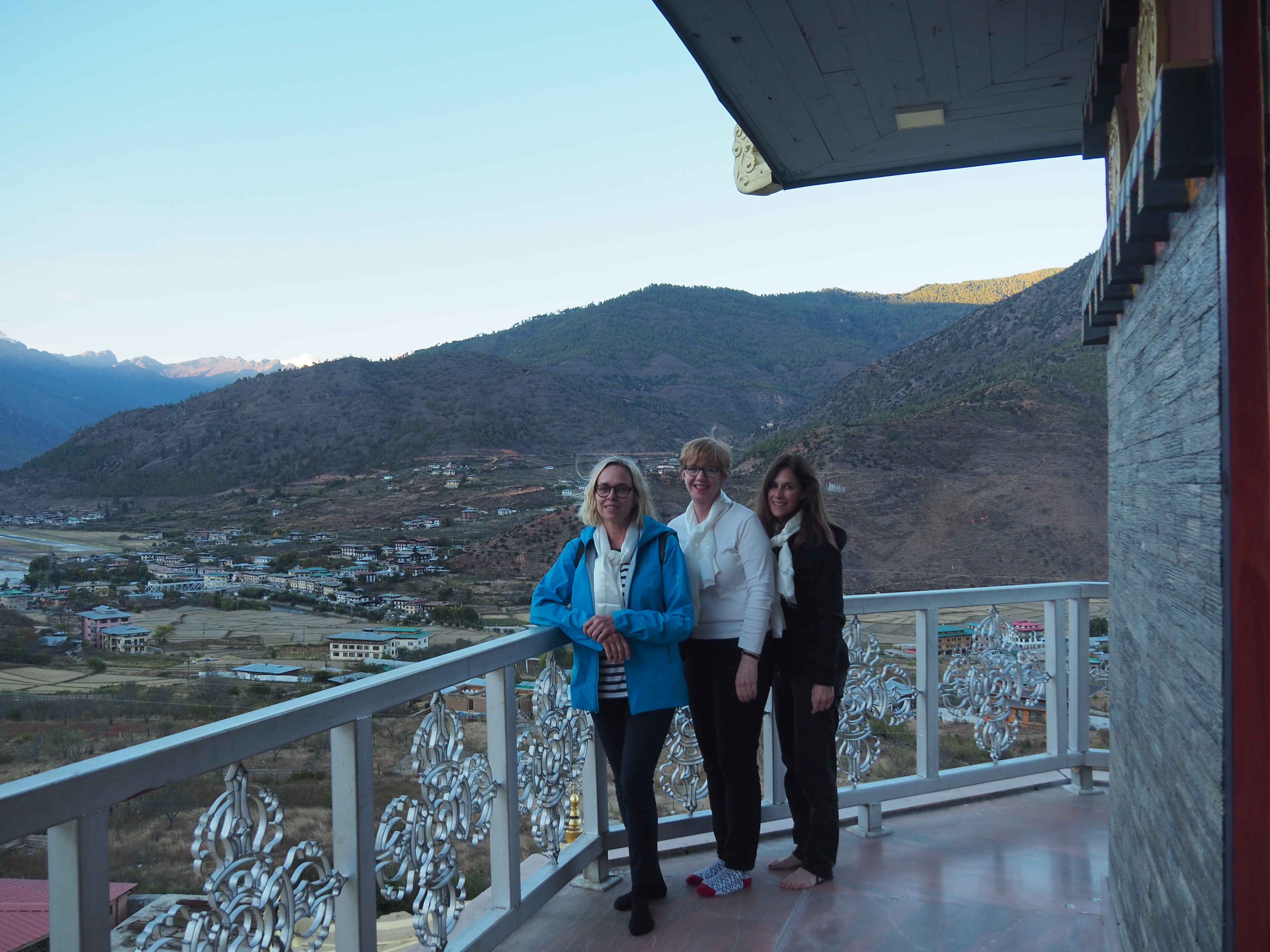
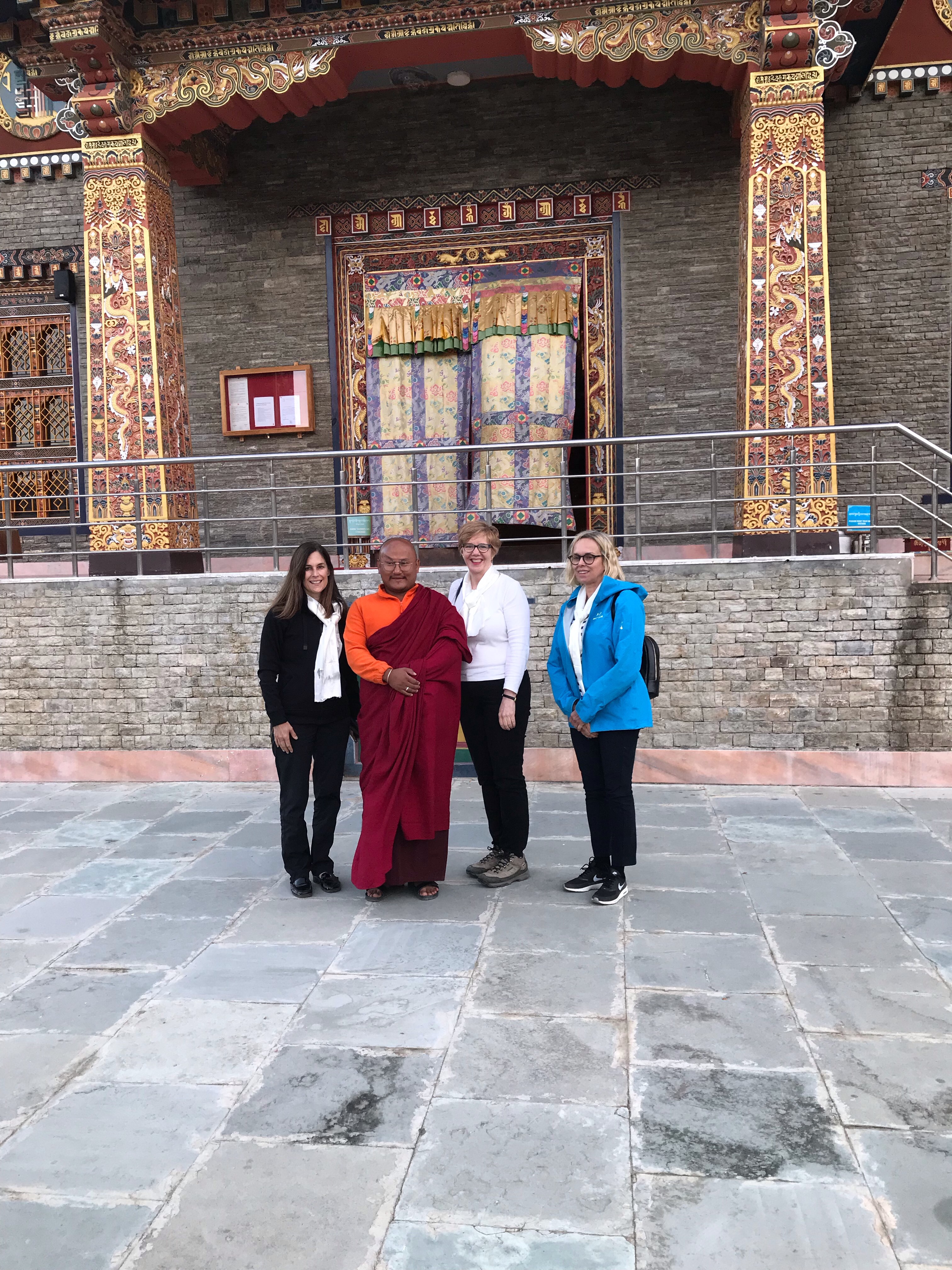
Our last stop was a visit to a monastery to have our prayer flags blessed before we can hoist them tomorrow. We had three monks perform the ceremony. Wang told us they prayed for a safe journey among other things. The chants were similar to those we heard the other day at the mad monk’s temple. The sounds are mesmerizing. After the flags were blessed, we were each given some seeds to carry. When we bought the flags, we each also purchased a white scarf. We gave the scarf to the monk as a thank you for the blessing and he gave it back as a blessing. At the very end we presented each of them with a donation, about $15 each. Blessings don’t come for free! The whole thing lasted maybe 10-15 minutes and took place in a temple that is not open to the public. I think all three of us found it to be a very special experience.
The temple where the blessing was held. The ceremony was held on the second floor. The three of us on one of the balconies. With the monk who performed the service.
With that, we made our way to the hotel. It was dark when we arrived so we really haven’t been able to see the grounds. That said, it is a lovely property in the hills. Getting here wasn’t easy, however. We drove quite a long distance on a single land dirt/gravel road that had lots and lots of potholes! Along the way we saw the local driving institute…it had one very small circle where people can practice driving. Frankly, I don’t think that place would give people an inkling of how to drive on these roads!
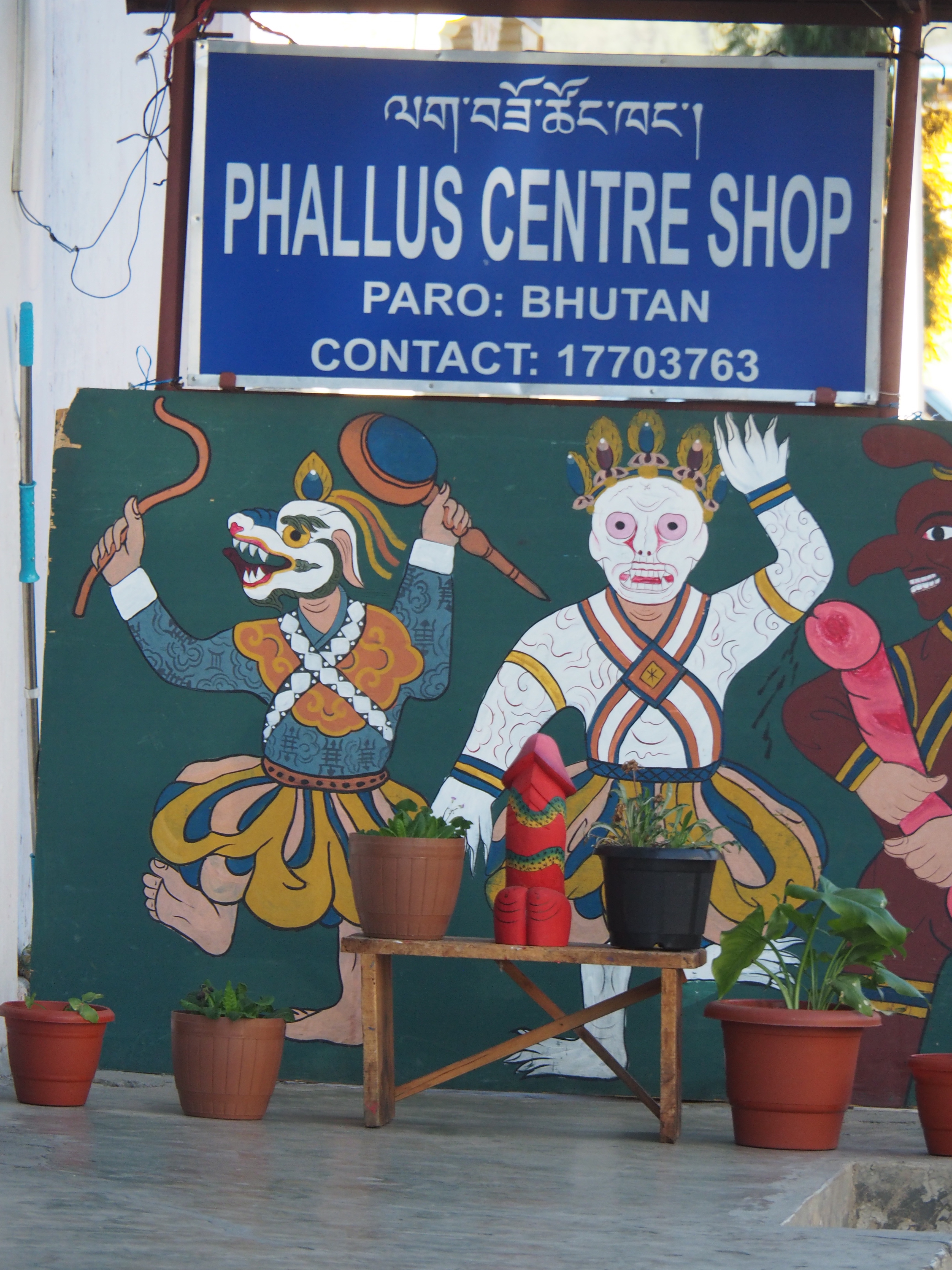
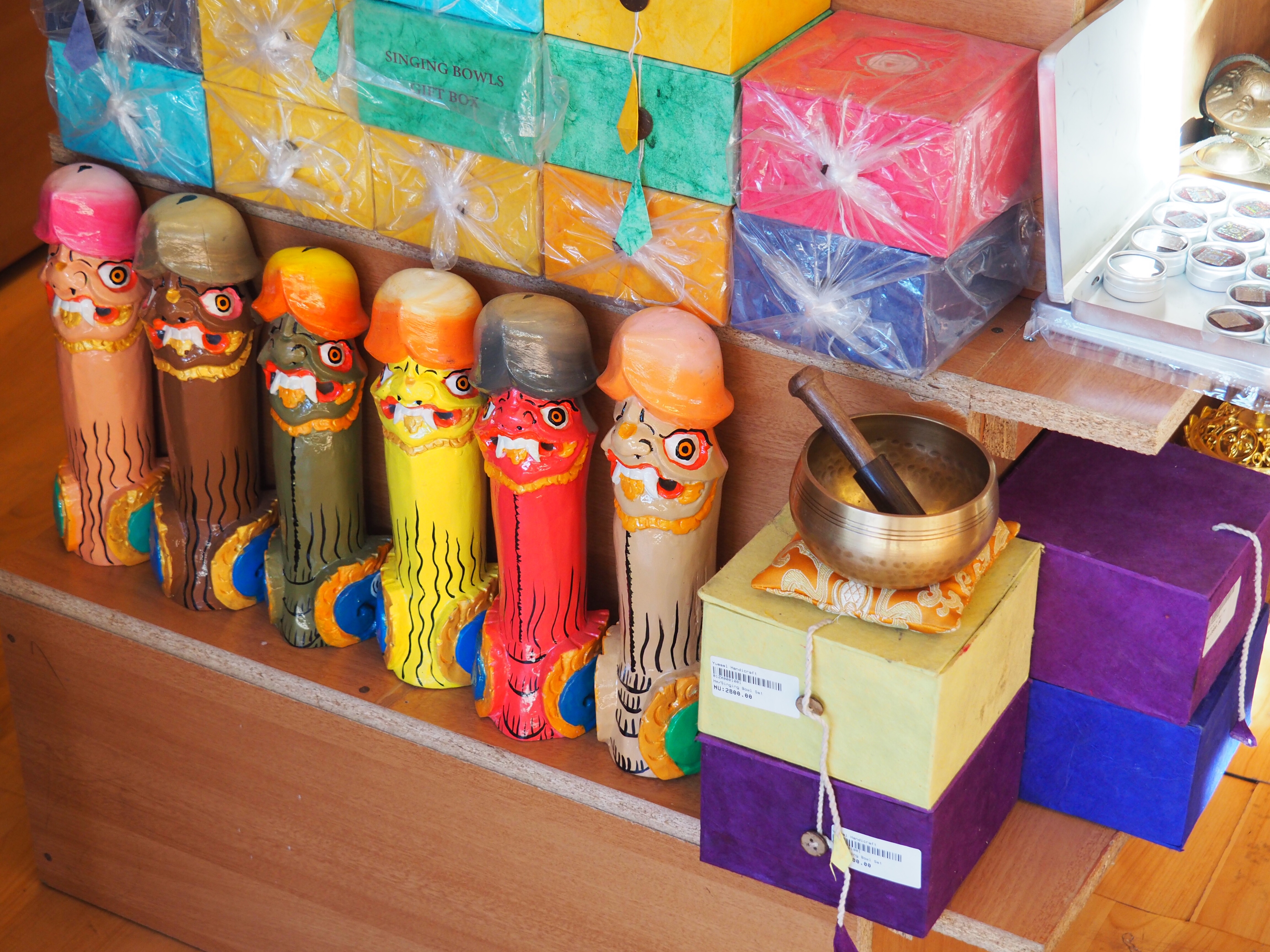
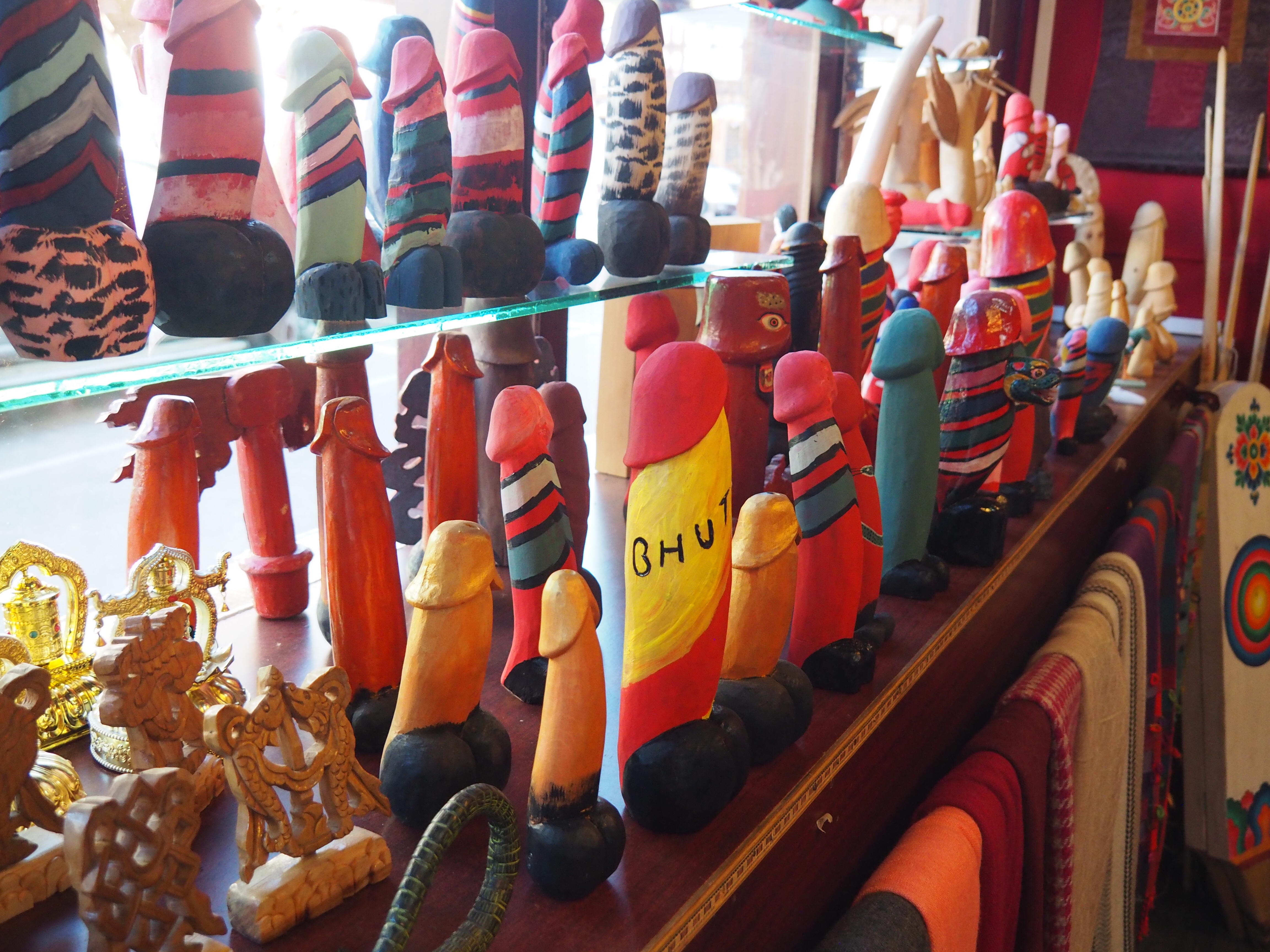
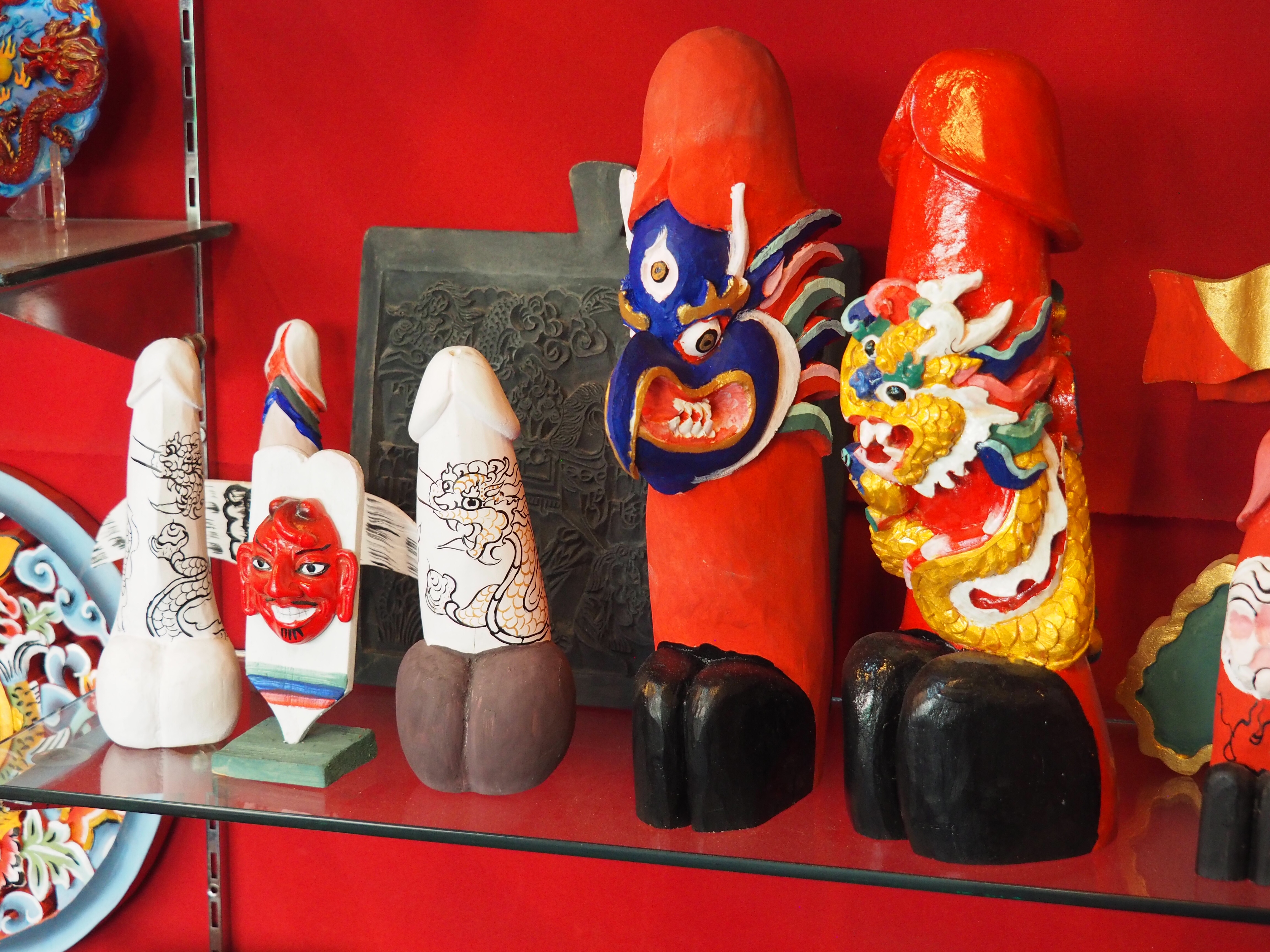
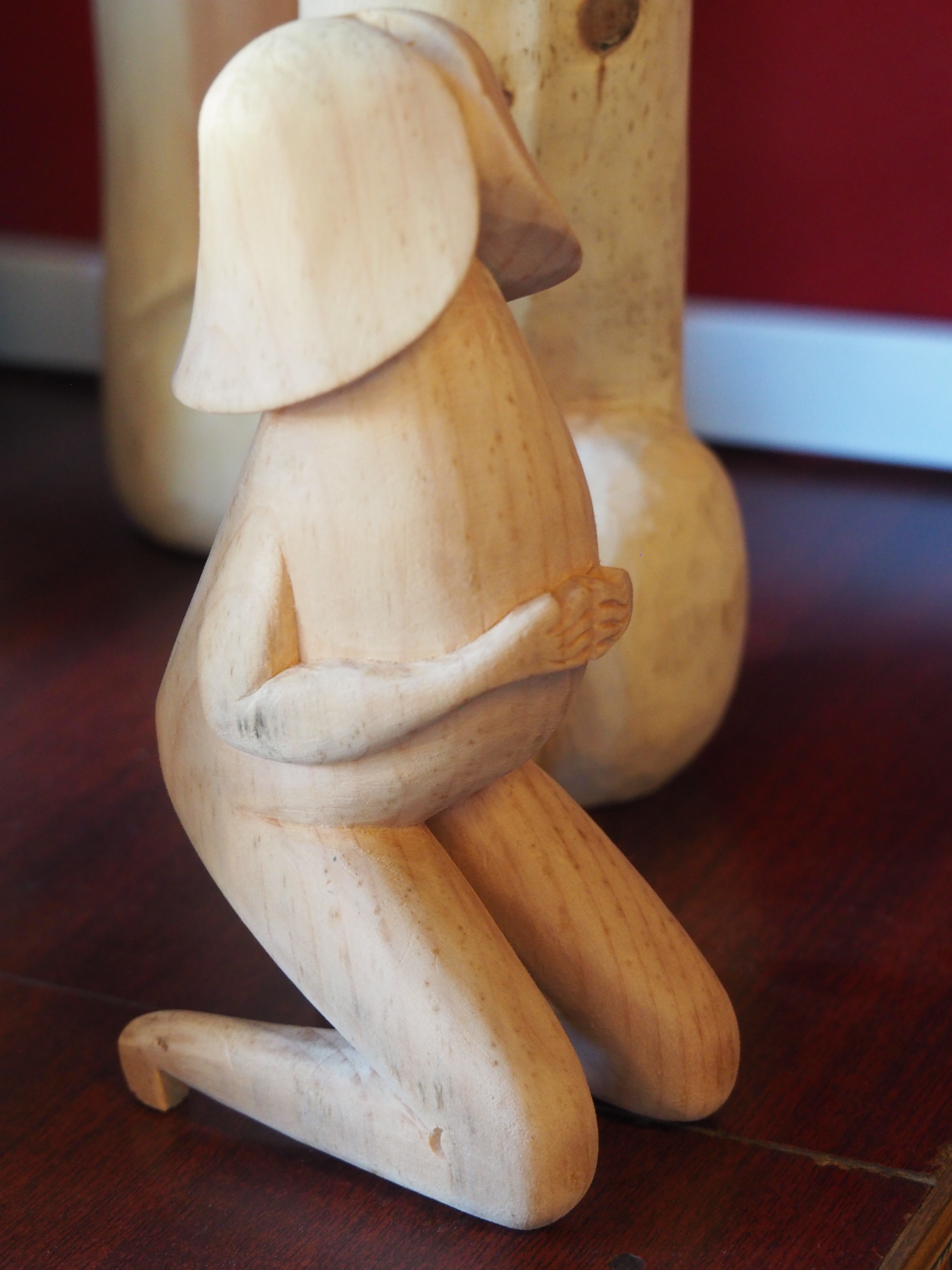
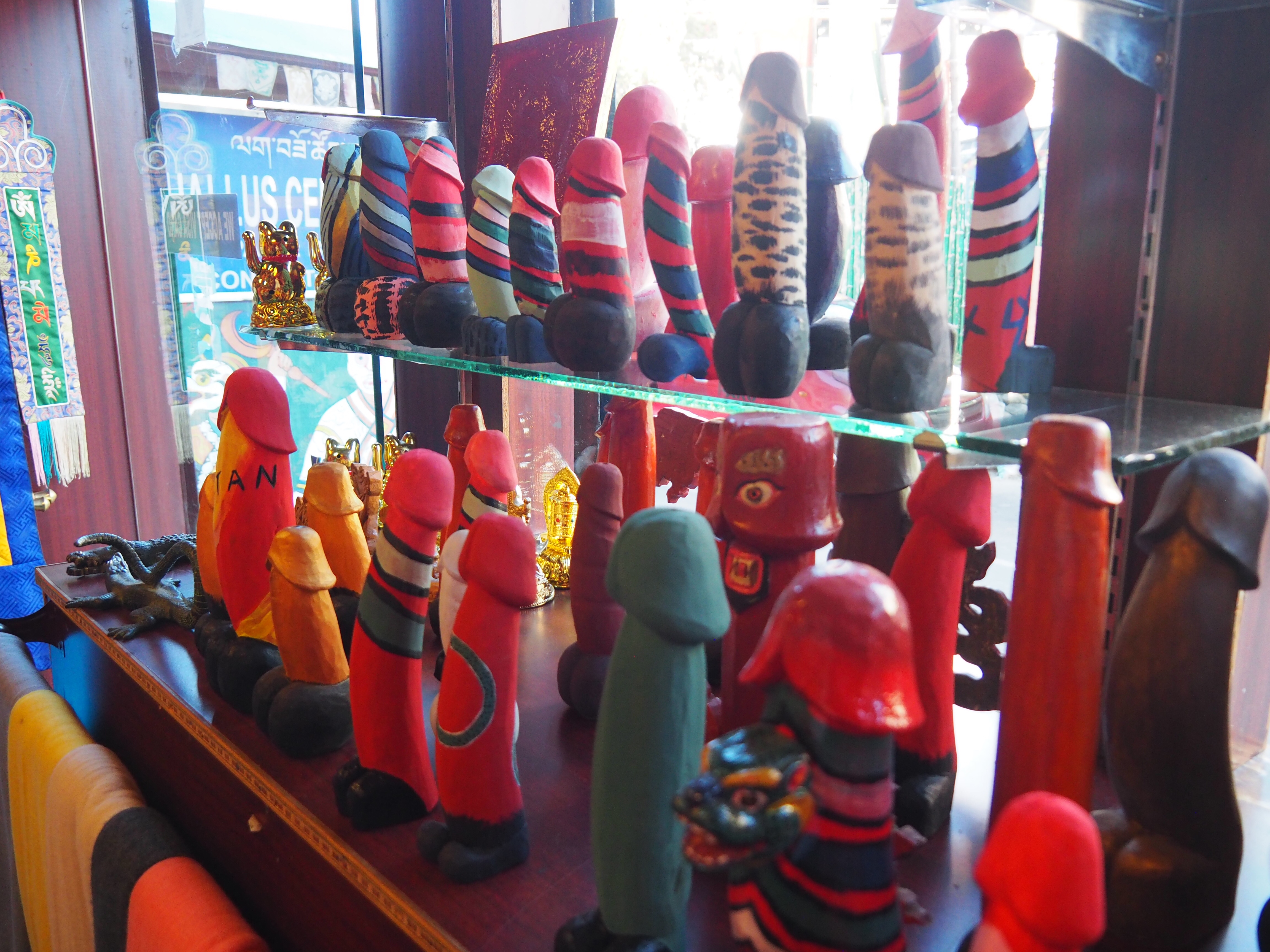
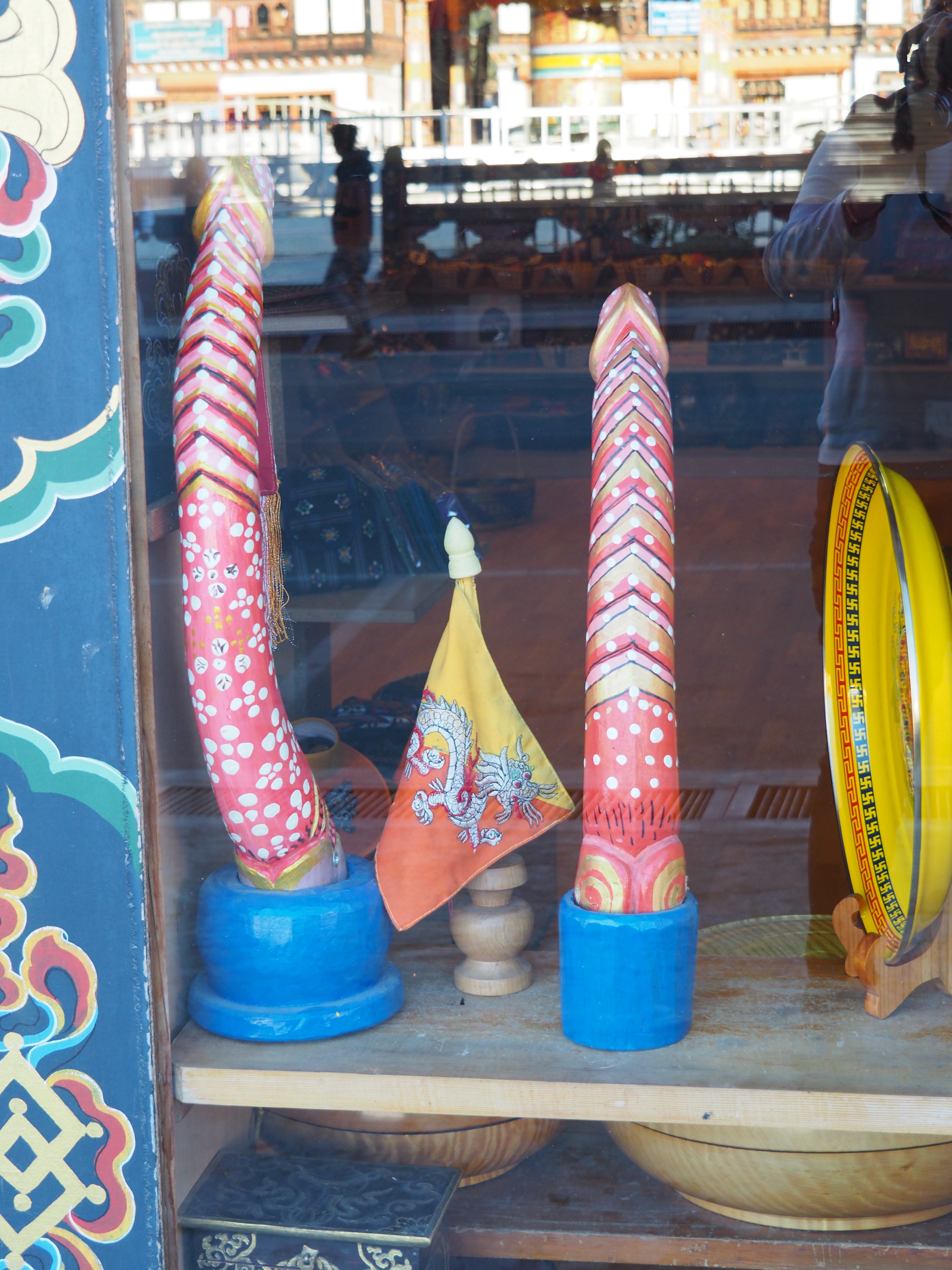
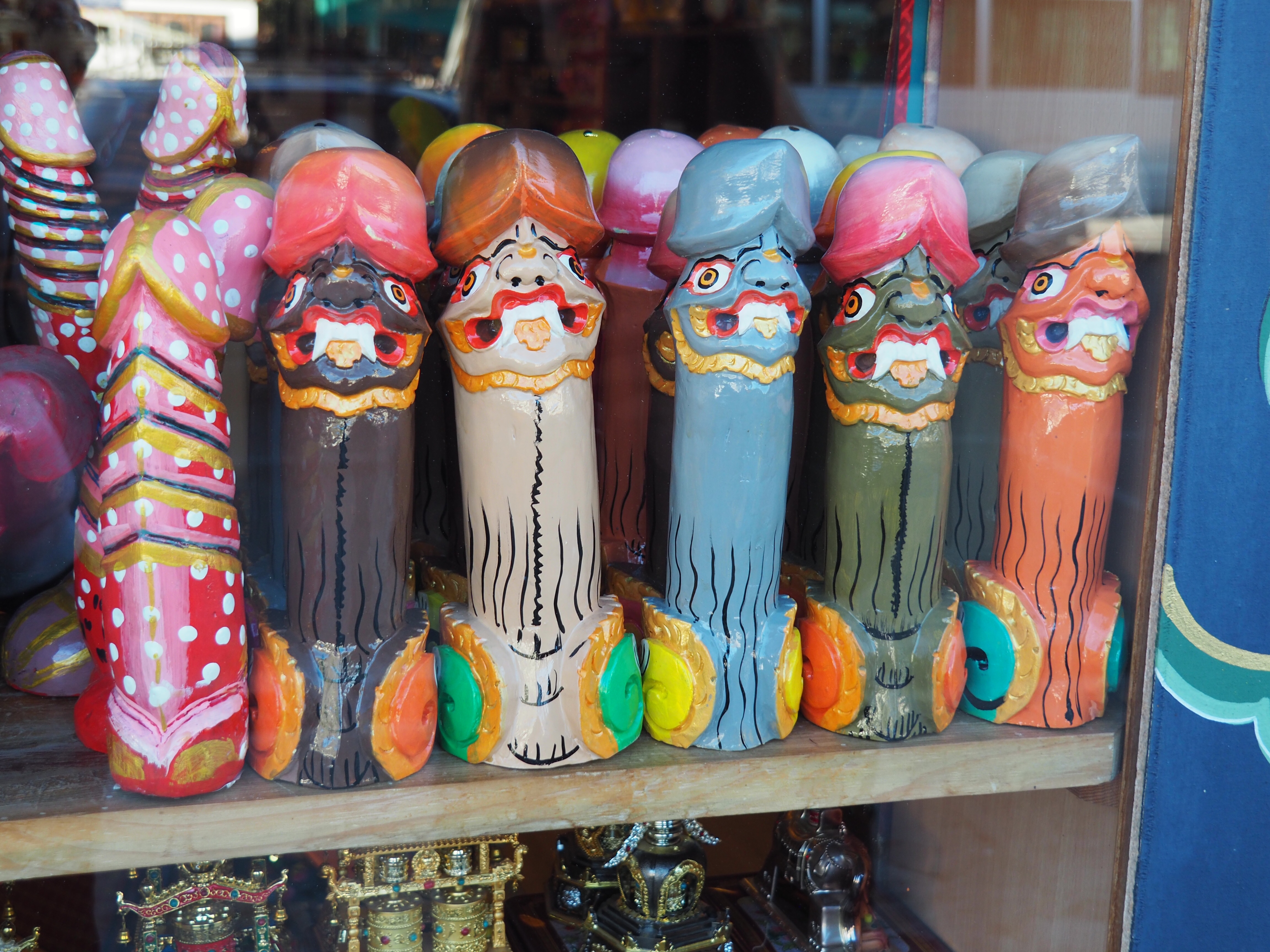
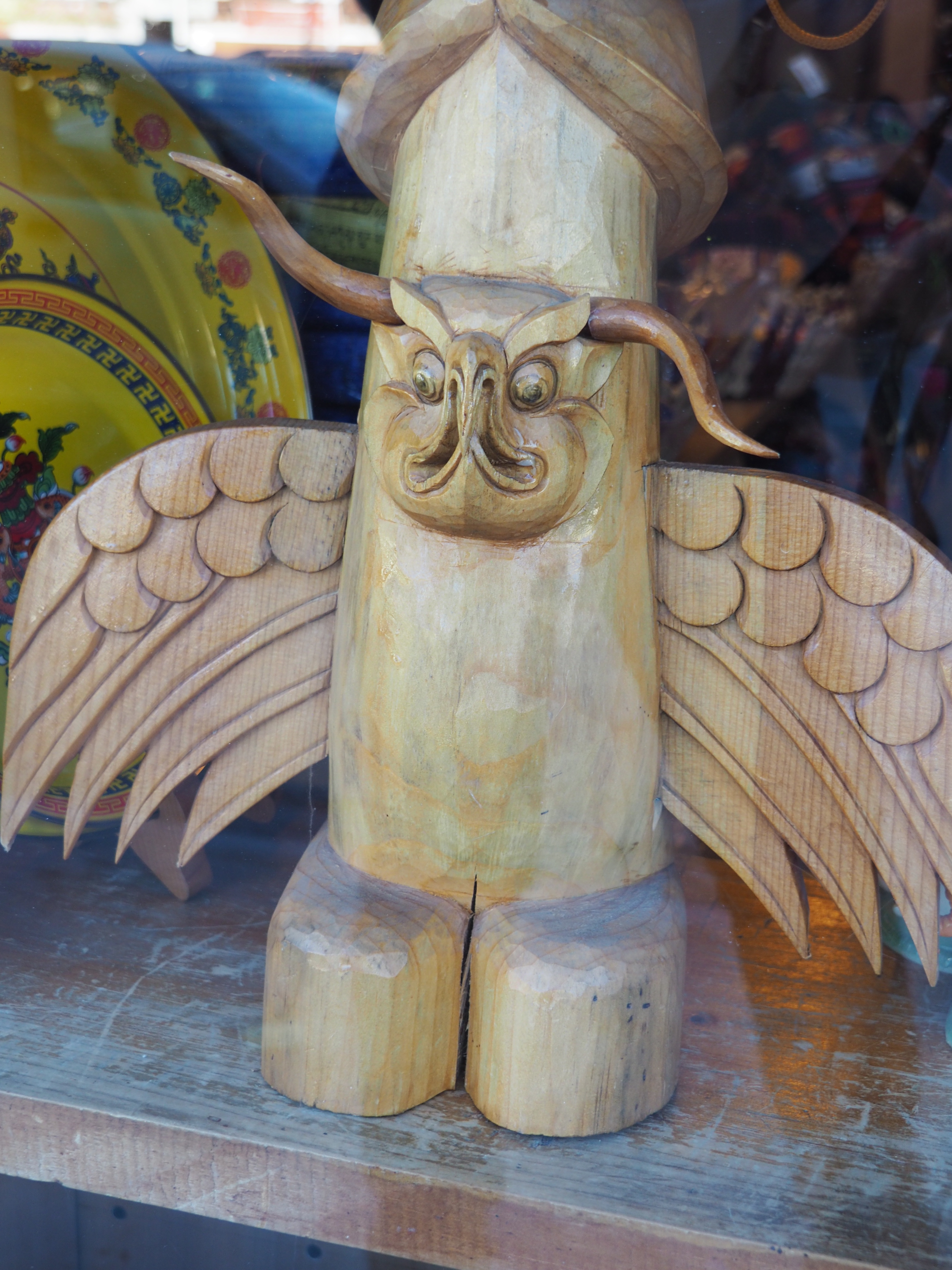
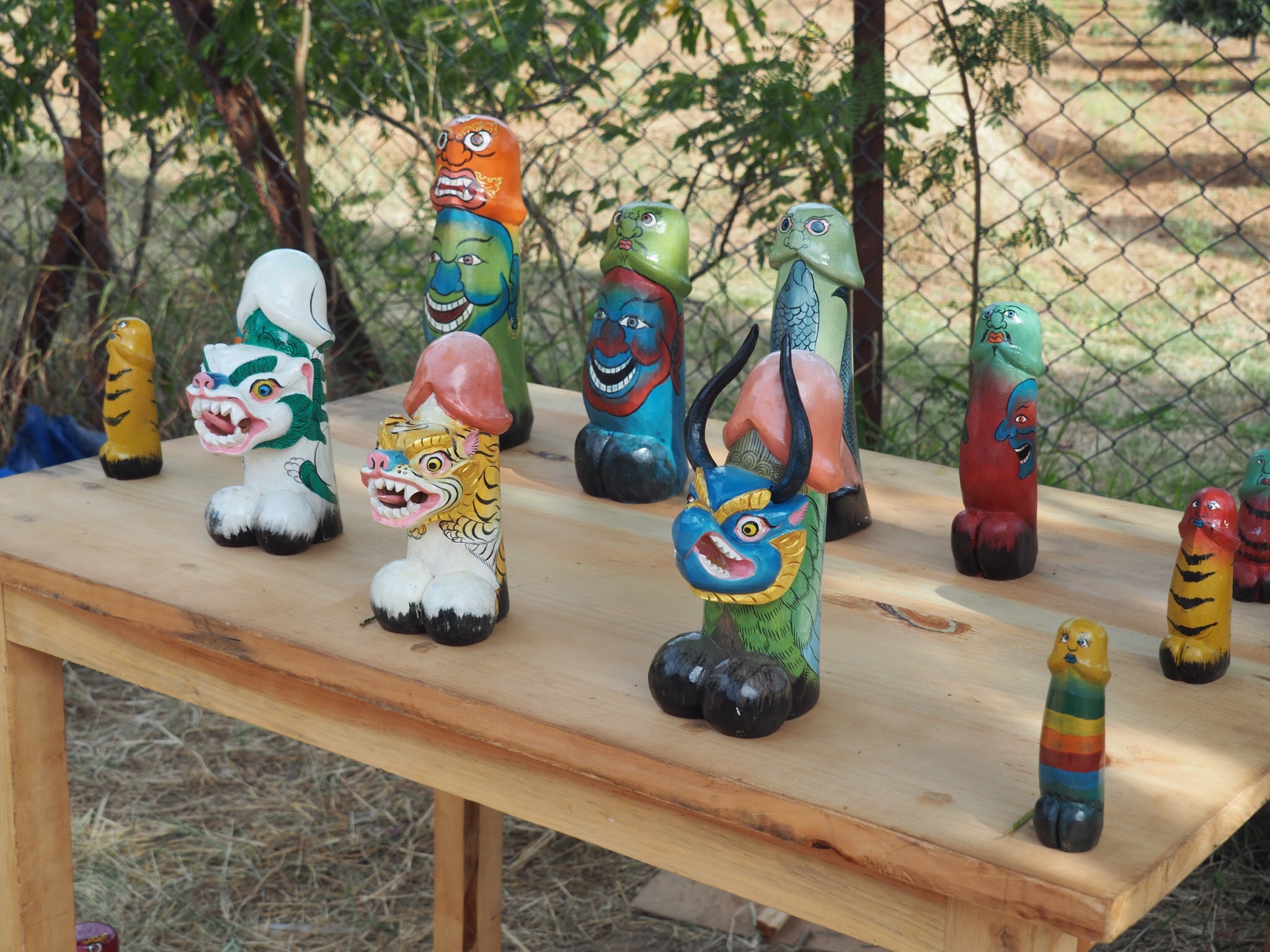
Perhaps I save best for last, or at least the most unusual for last. I’ve mentioned the importance of the phallus in this culture. Well, while shopping today we saw an impressive array. I will let the pictures speak for themselves!
The stray dogs in Punakha seem to be night owls like the ones in Thimphu! They awakened me at some point in the middle of the night! Otherwise, my room in this very simple hotel provided a decent night’s sleep. With enough beds, my room could easily sleep eight people. We were told this is a “medium” hotel which is probably the best there is around here.
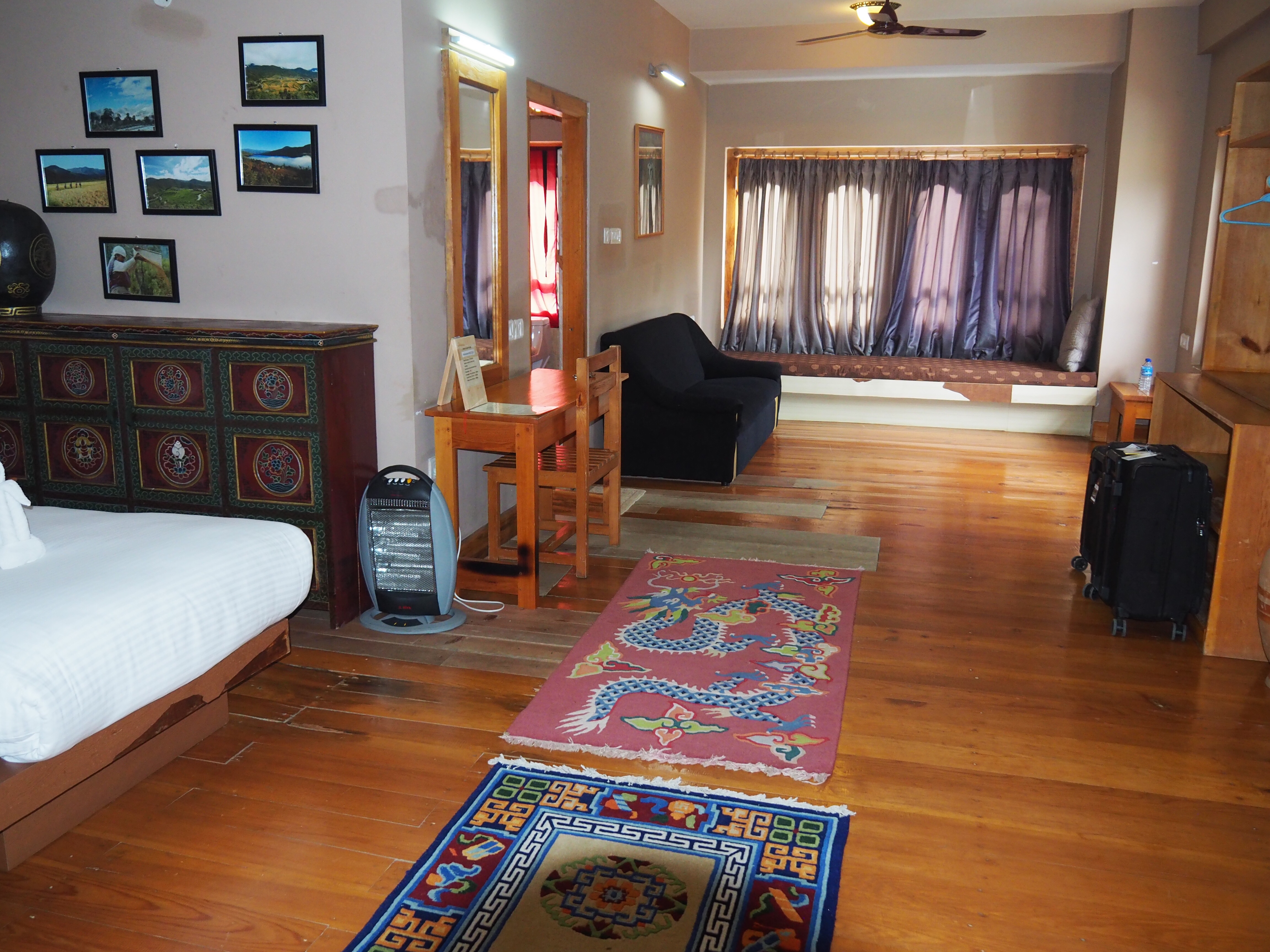
My room
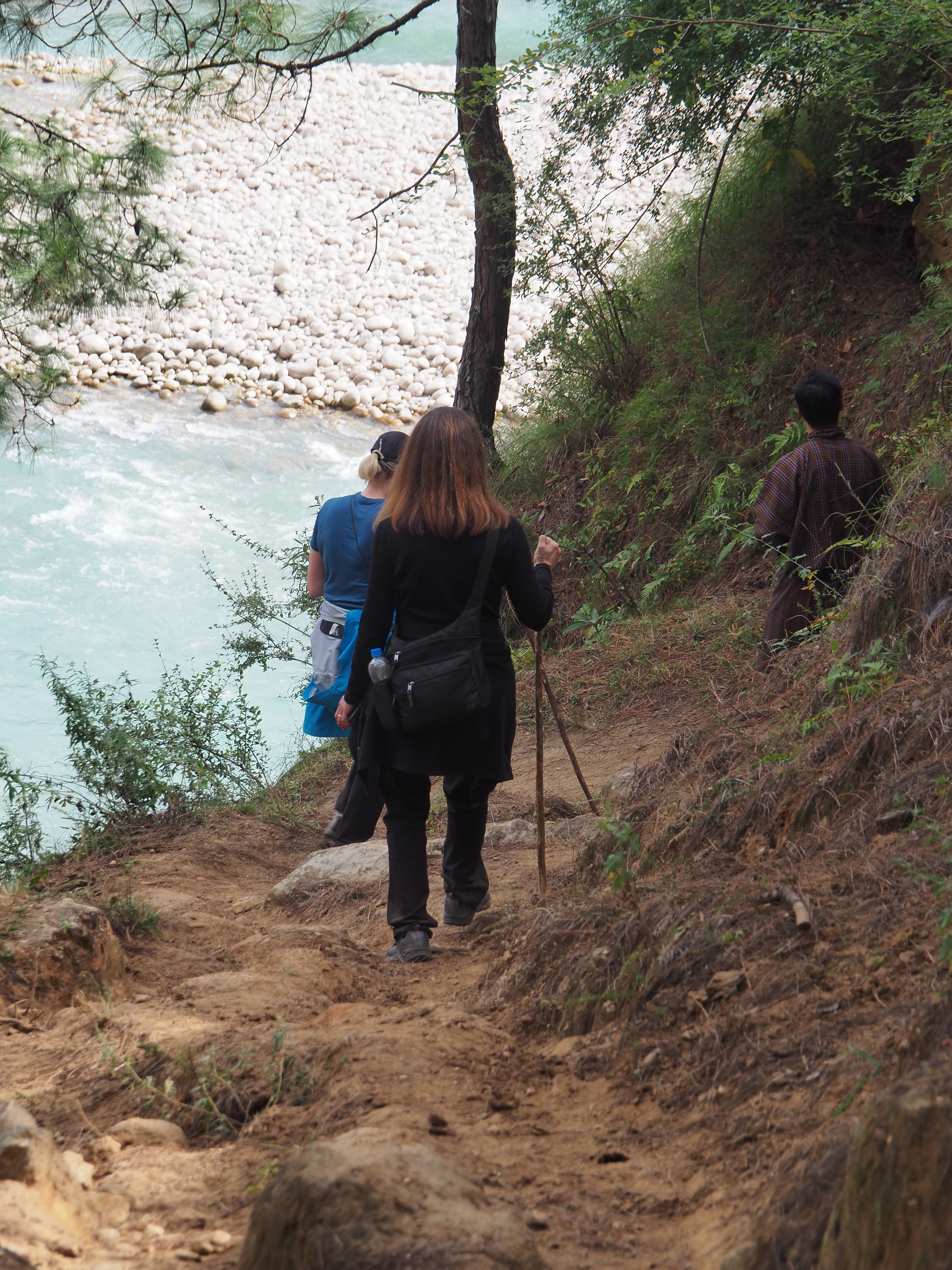
We had a bit of an earlier start today so that we could begin our three hour hike before it got too hot. What had been described to us as a “walk” to visit local villages and farmland turned out to be a serious hike in the mountains without a village to be seen anywhere along the way. I should have known when they handed us each a walking stick that this wasn’t going to be a stroll! While the views were pretty, after about an hour I had had enough and we still had two hours to go. Kathy tracked it and we walked five miles and climbed the equivalent of 29 flights of stairs. I kept asking Wang when we would see the villages and he kept saying further along the way we would see them! I guess we need to think of it as training for our visit to the Tiger’s Nest on Monday.
Here are some scenes from the walk.
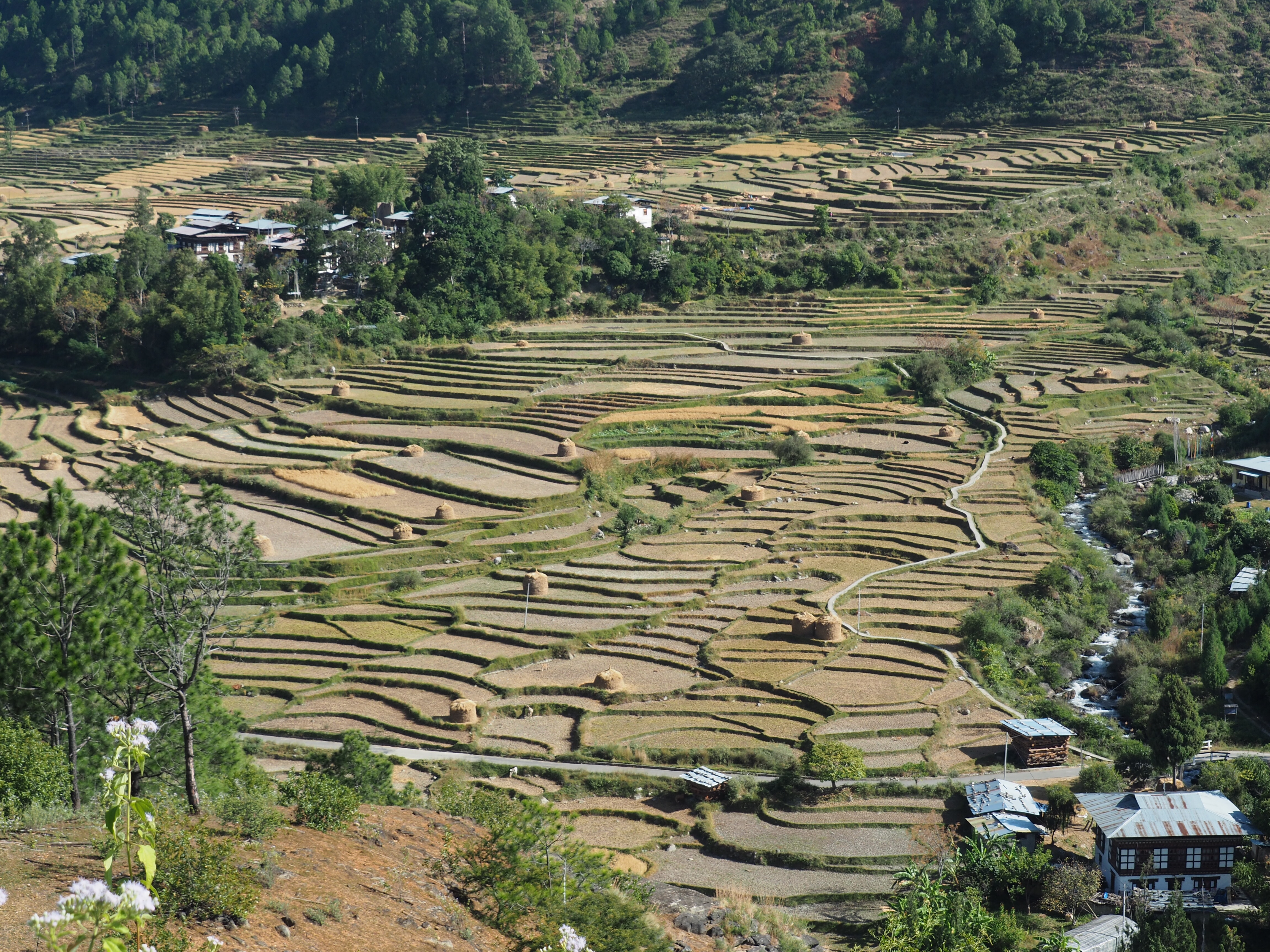
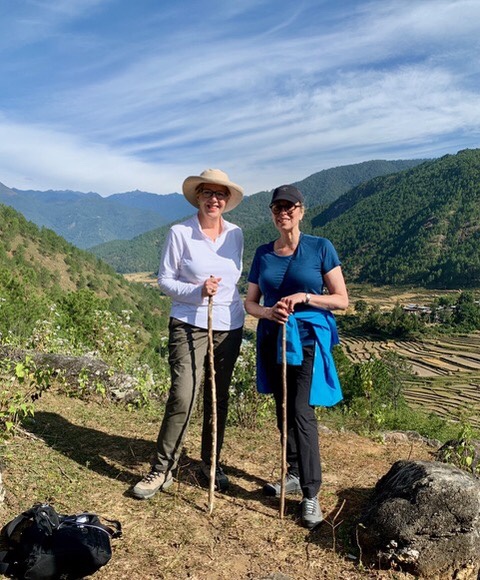
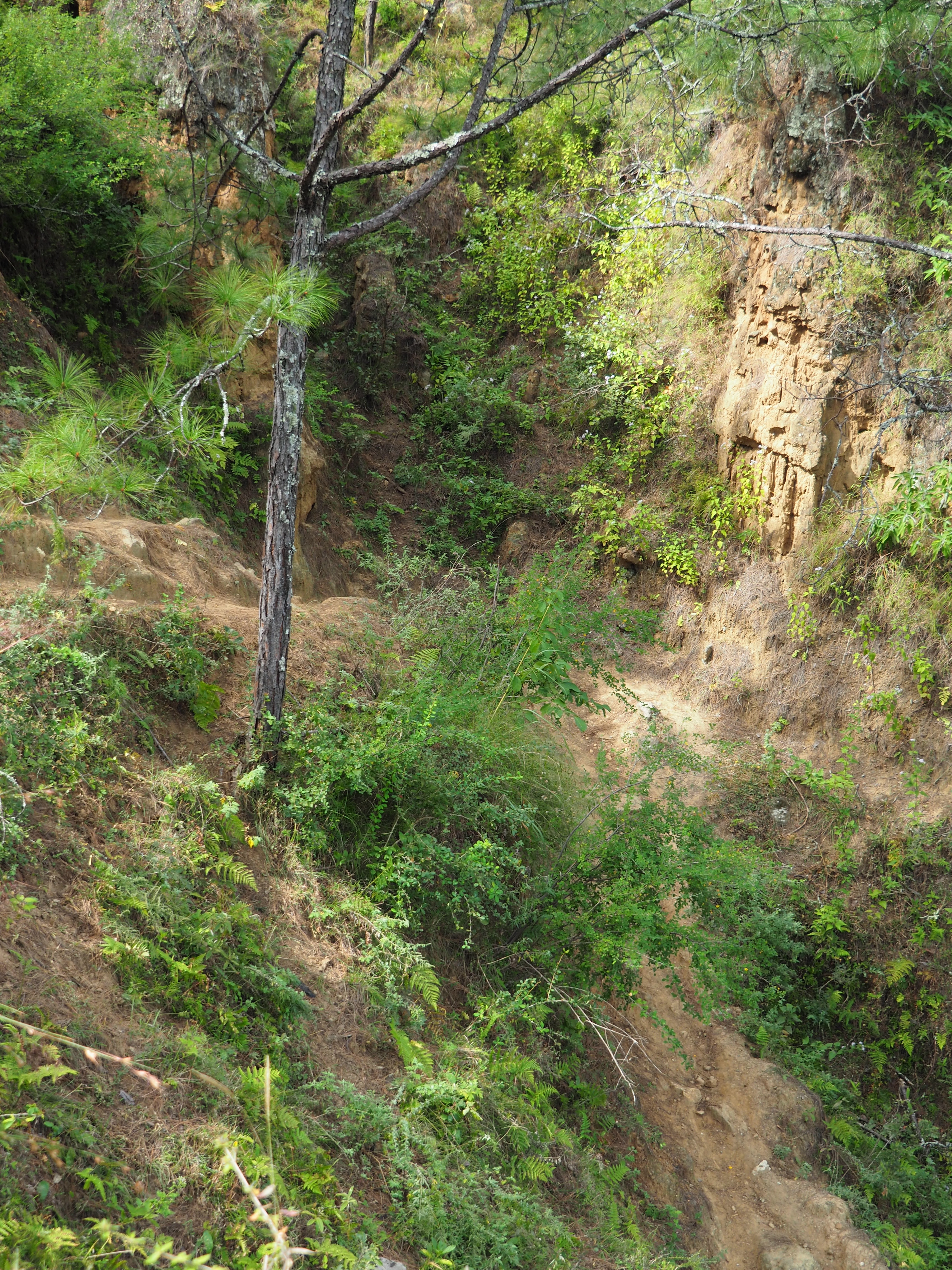
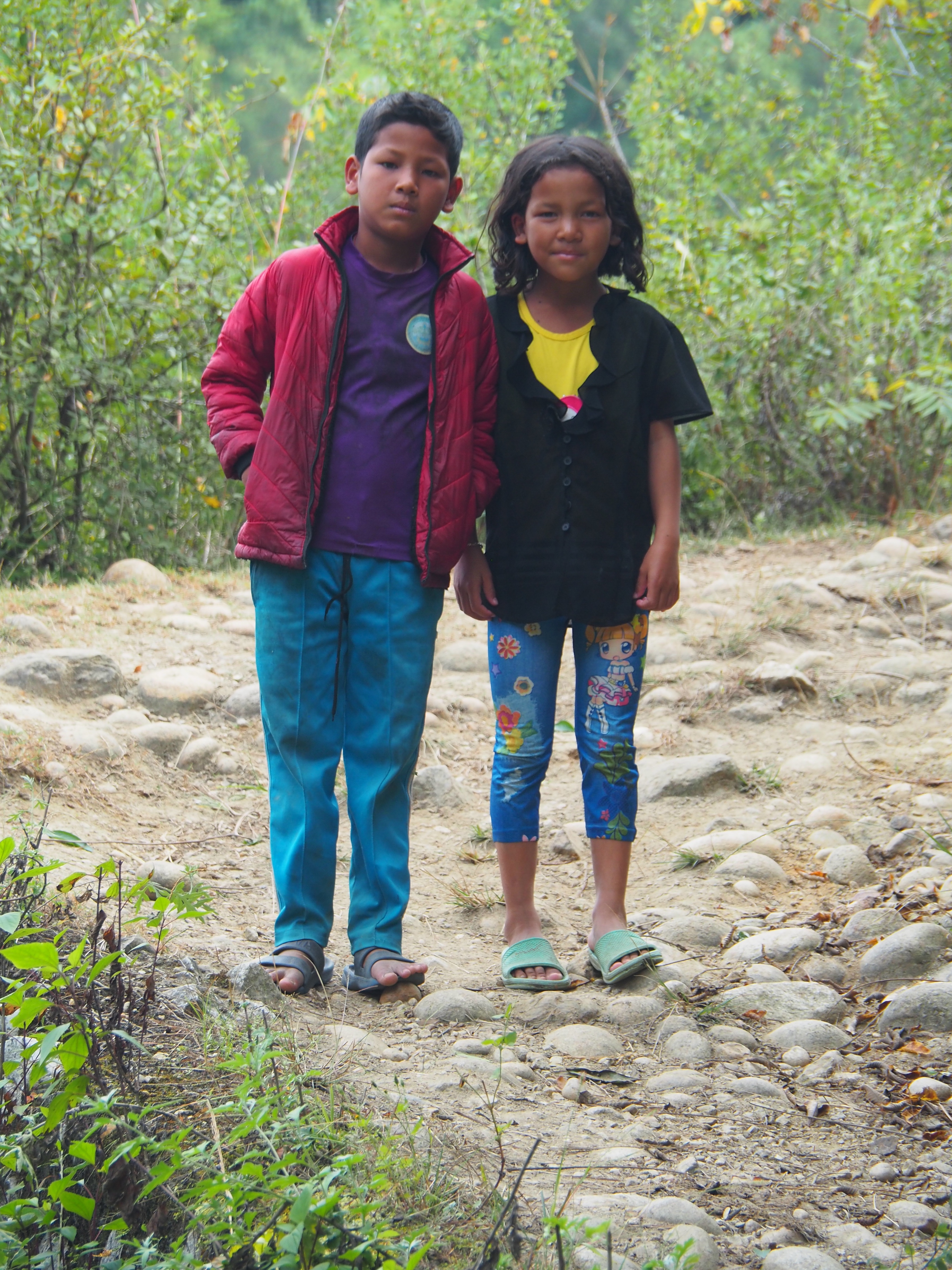
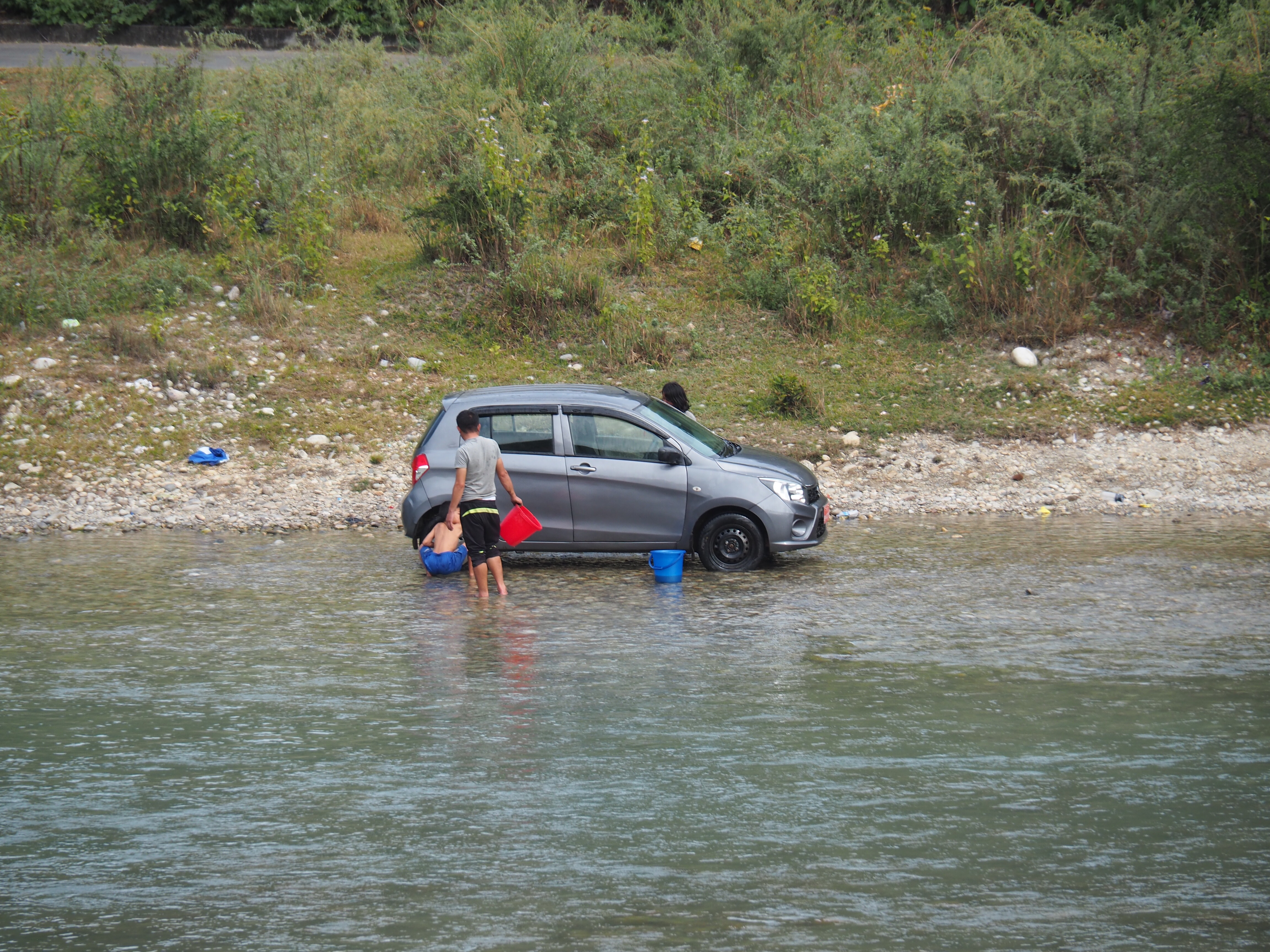
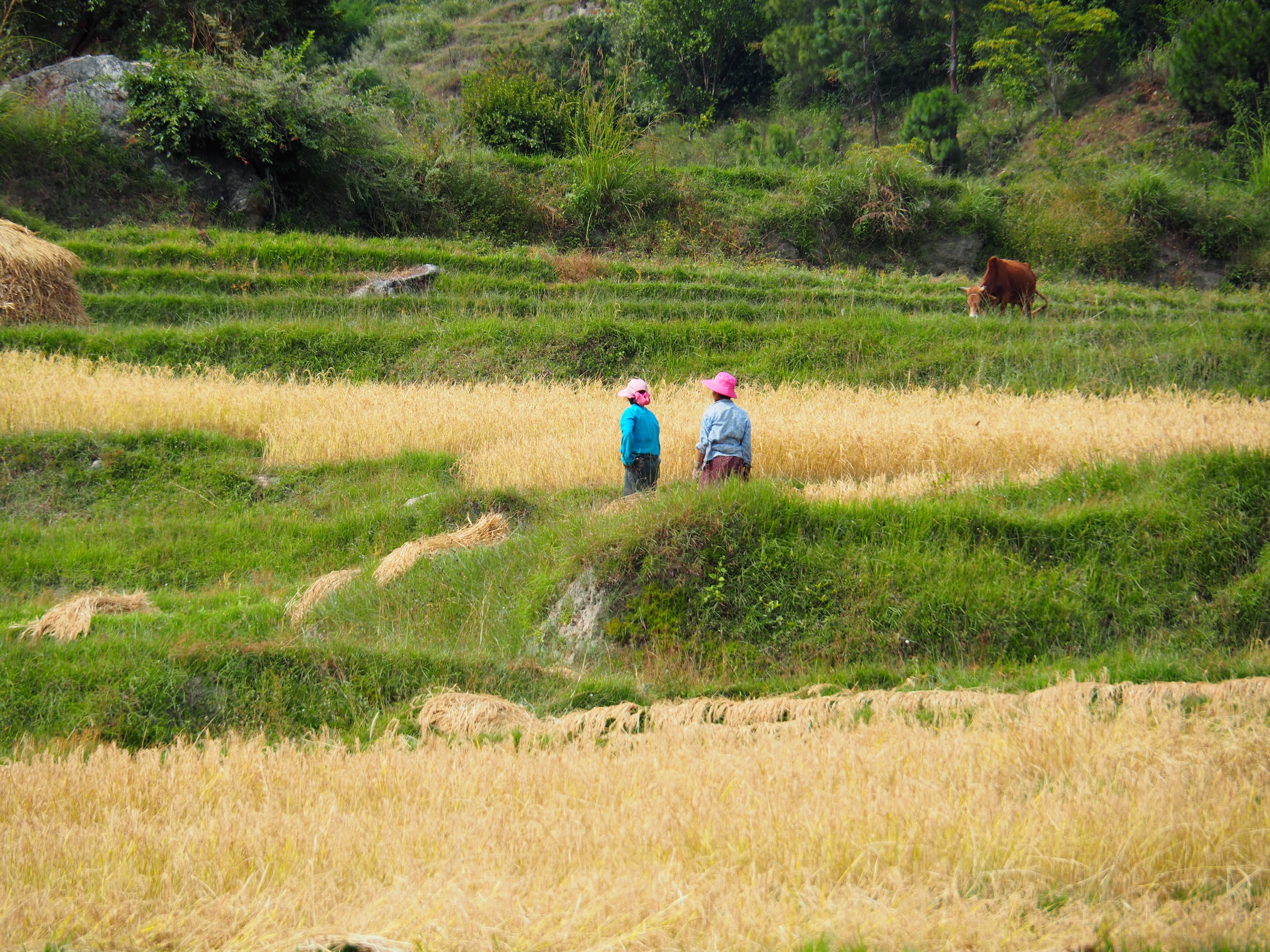
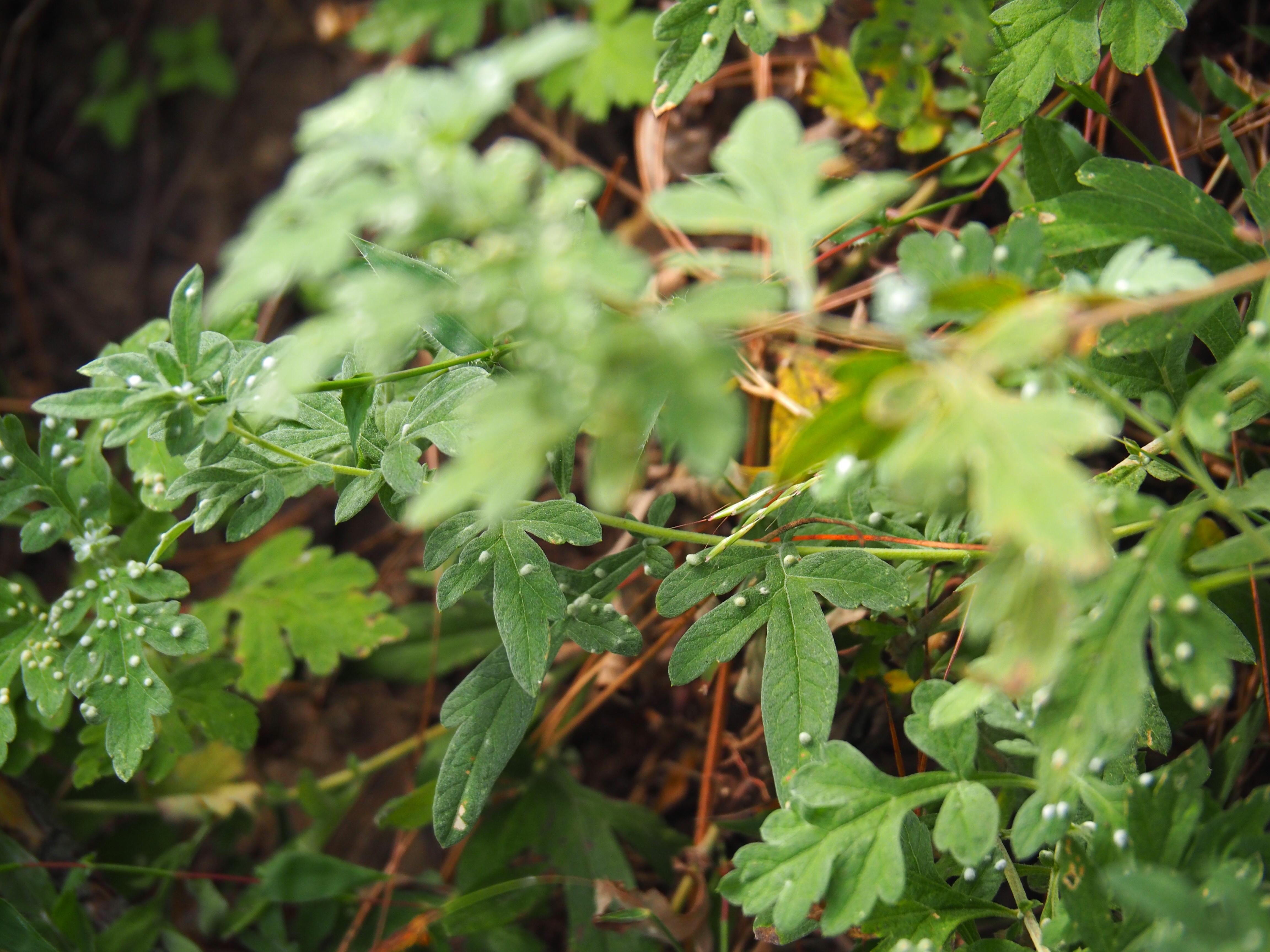
The terraced farms on the other side of the river. Maryse and me at the top. The path for one of our descents. Wang, Maryse and Kathy lead the way. Near the end, these children appeared. Notice their shoes! We had on hiking shoes and the were traversing these other in sandals!Near the end, we saw this family out washing their car on the other side of the river. At the very end of the hike we saw farmers out working in the fields harvesting the wheat. They grow rice starting in March and then switch to wheat. This plant is used on the fields instead of pesticides.
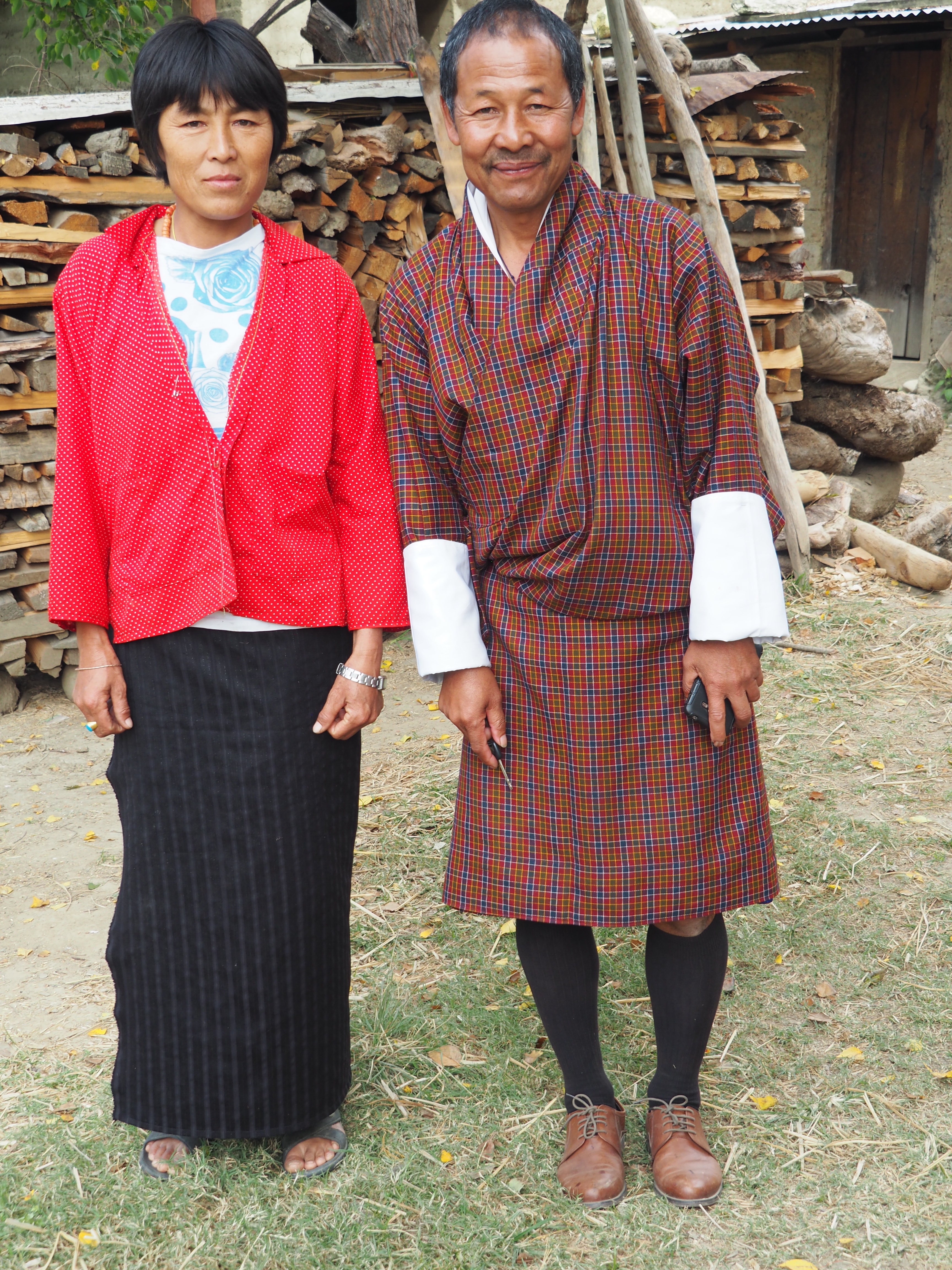
When we finished, I think Wang understood that he had three unhappy campers in his midst since we hadn’t seen anything we had been promised. He said that the farmers are all out harvesting the crops and can’t receive visitors. I’m not sure who we would have visited up on the mountaintop! Mr. Poo came to the rescue! He is from this area and he called a friend who is a local farmer and we were able to visit his house. It is his wife’s 2 acre farmthat she inherited from her parents. She was in from the fields to fix lunch and welcomed us and showed us around.
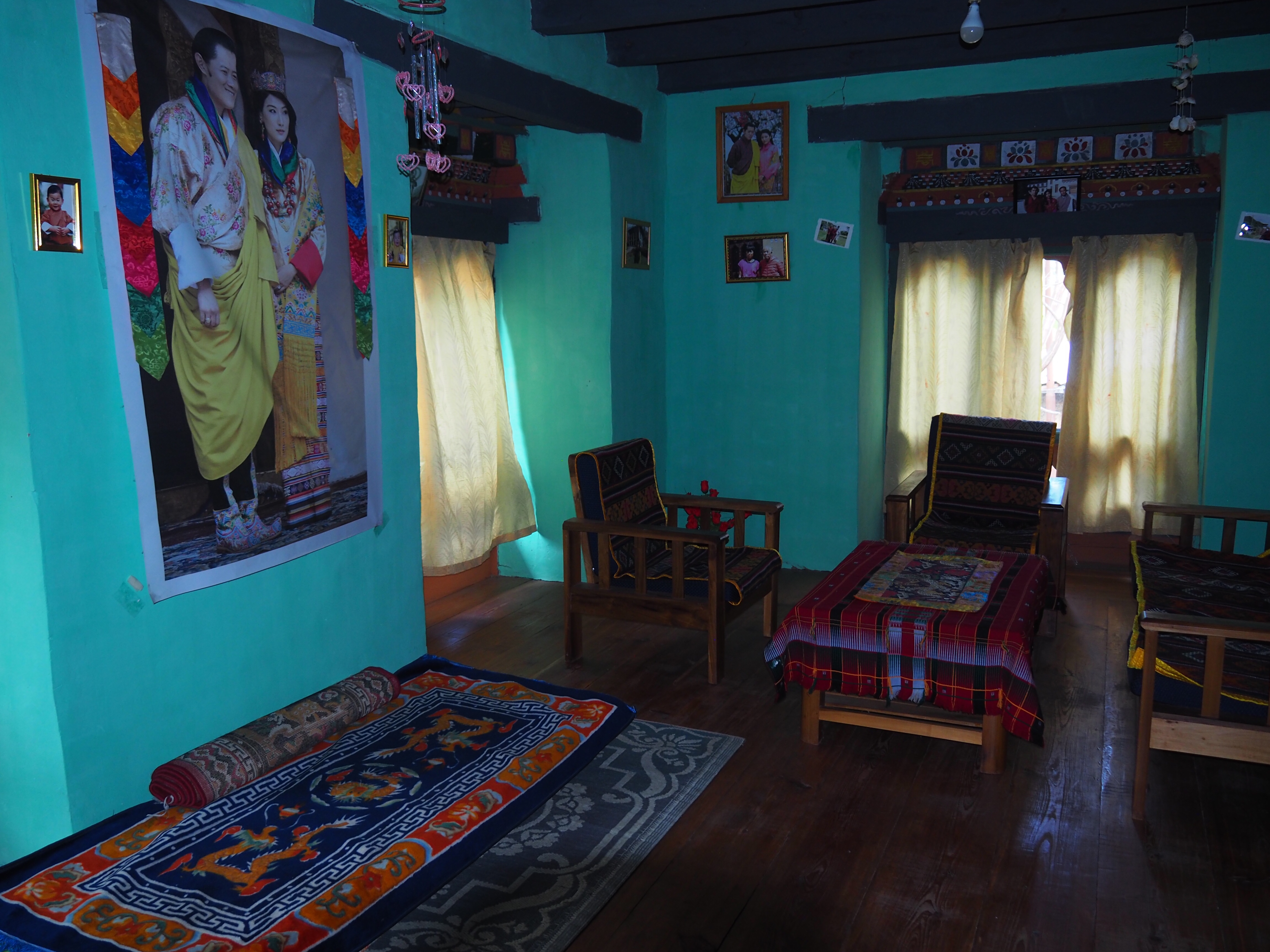
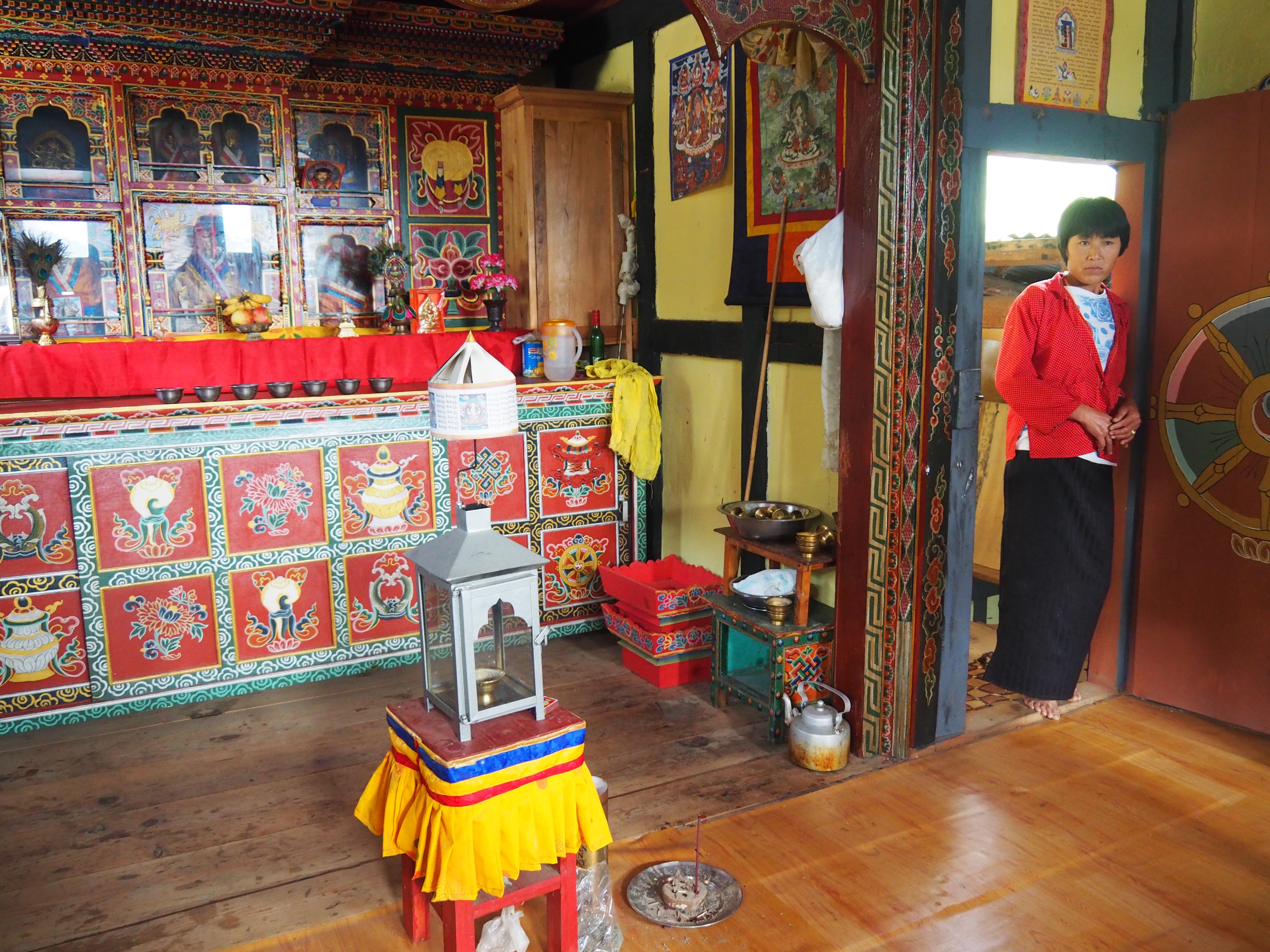
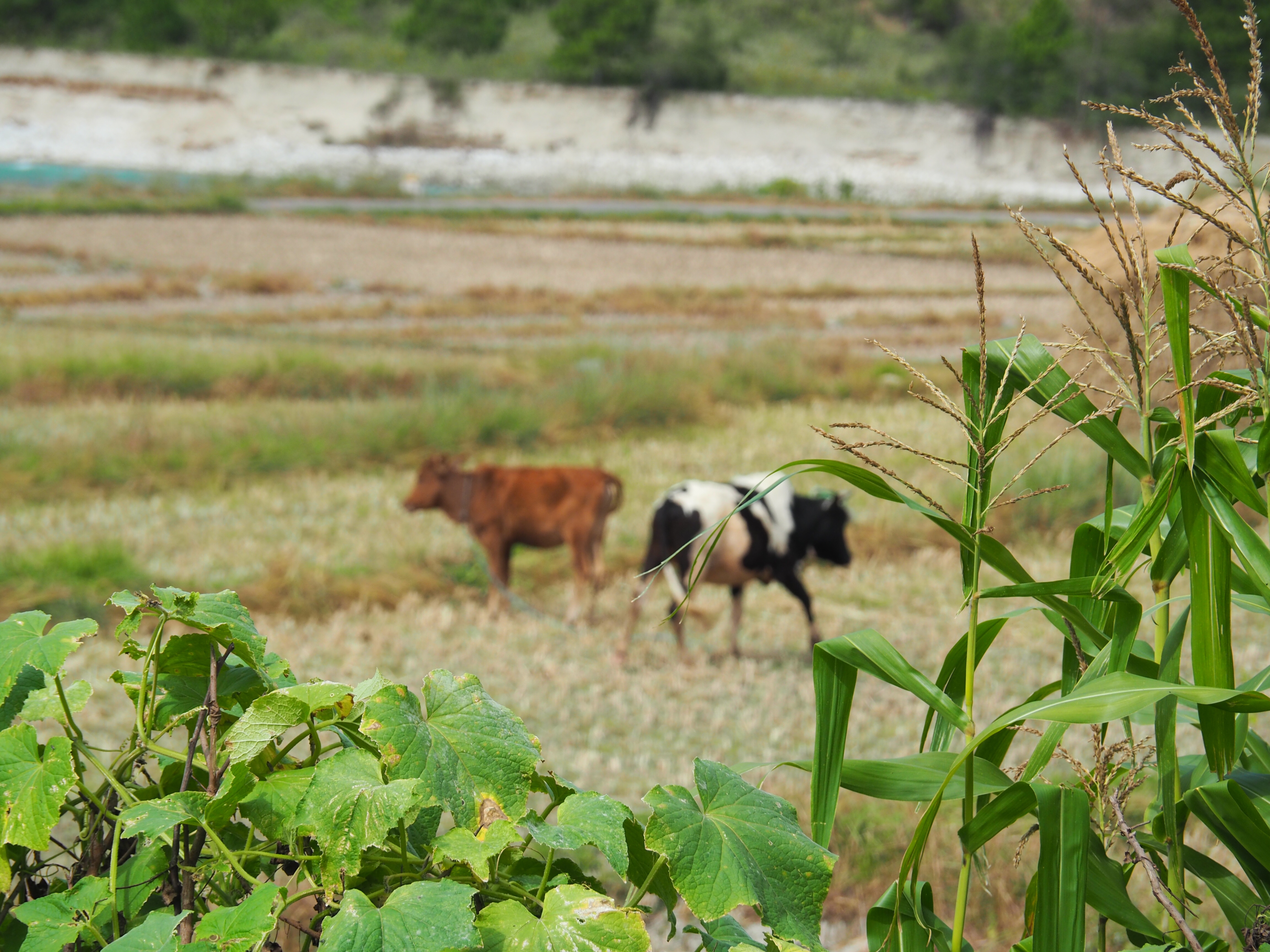
The kitchen The living room The shrine room upstairs. The wife makes offerings each day and the lamas come before the planting season and after the harvest to have a service. These services are attended by several lamas and are very important. A lama might also visit if someone is sick. Two of their three cows. The homeowner and Mr. Poo.
Our next stop was lunch. We dined at a spot overlooking one of the rivers, where we could see the Dzong we visited yesterday. The setting was nice. There is a woman who operates a restaurant and they bring the food to this place for tourists to have a meal. When we arrived there were a number of people there already who were waiting for the food to arrive. There was a woman who was alone at a table, they made her move and put us at her table!
This very hip looking guide arrived with another group. Notice his haircut and shoes!
Wang had planned to take us on another hike, this one was to be 45 minutes to an hour straight uphill to visit a temple. At the end of the other “walk” we all informed him that we weren’t going. Instead we took a walk around the city of Punakha. There really isn’t much to see, there are shops of various kinds and some restaurants.
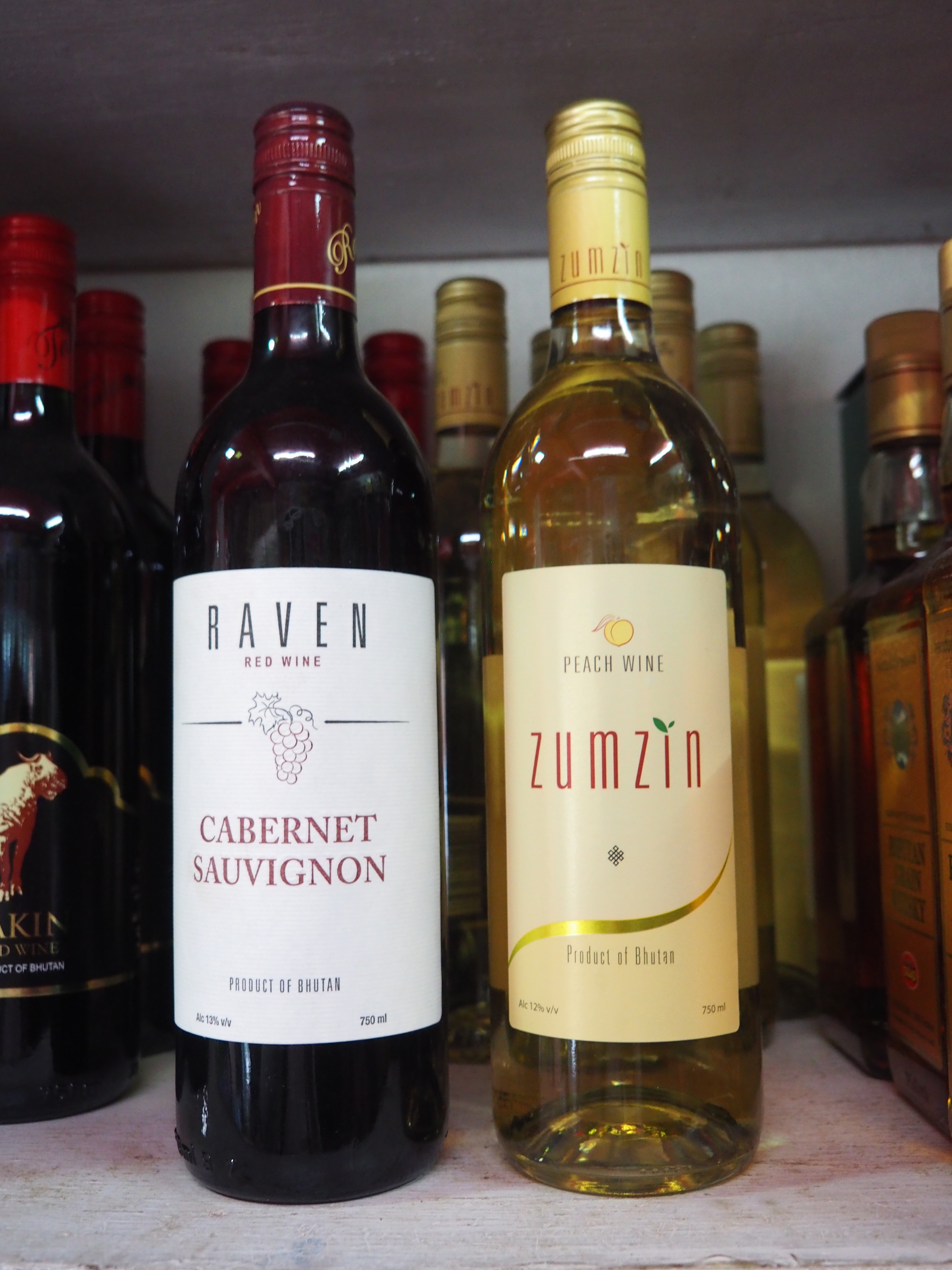
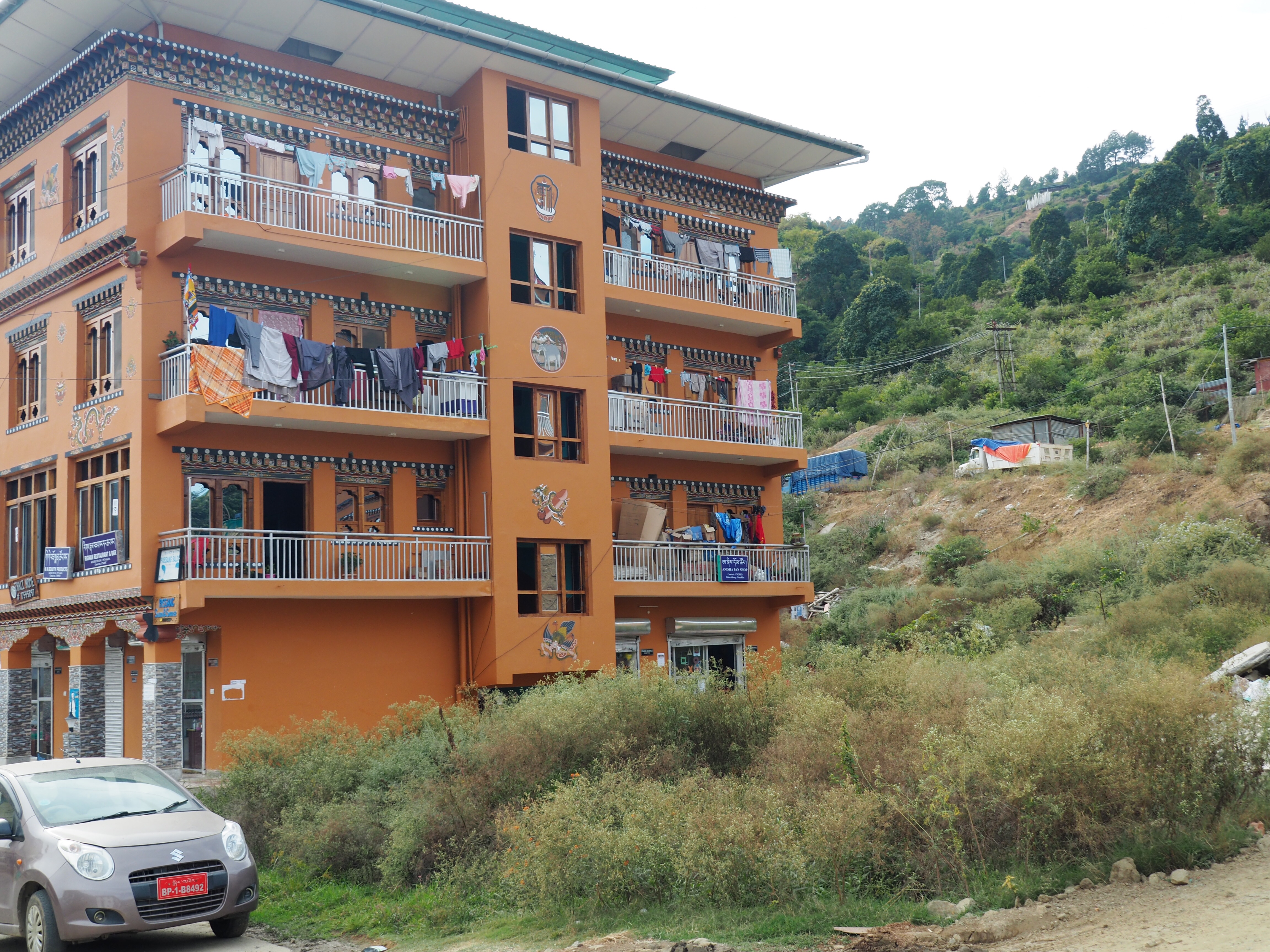
Chilis drying in front of a shop. Bhutan makes wine, but Wang says it isn’t very good. Maryse and I had some at dinner and it was actually quite good. A close up from the building above. Kathy bought some. Students from the nearby boarding school enjoy an outing to town. The view down a side street.
Since it took only about 45 minutes to see all that we needed to see in the town, we decided to come back to the hotel for some downtime.
Since I have a bit of time, let me attempt to explain what very little I know about Buddhism in Bhutan. I’m piecing things together from what I have learned from our guides and from the guidebooks I have read. The Buddhism they practice here is Tibetan Buddhism.
Here we go!
– Buddhism has four noble truths: suffering exists, suffering has a cause, suffering can end, and there is a path to the end of suffering.
– The eightfold path outlines a middle way, a path between the extremes of self indulgence and denial. The eight components are right understanding, right thought, right speech, right action, right livelihood, right effort, right mindfulness, and right concentration.
– The “Second Buddha” is the man who greatly expanded Buddhism in Bhutan. The first Buddha’s teachings were all oral, the second Buddha formalized his teachings.
– The Buddhists believe in reincarnation and it is important to use this life to build enough merit to avoid being reborn into one of three low realms.
– Death is important in Buddhism. It reminds people of their impermanence, death is an unavailable part of life. It does not, however, mean an end rather it means the passing into another life. Prayer flags are hoisted chortens (shrines) are built to bring merit to the person who died.
– A person is reborn into one of six different realms, three higher and three lower within 49 days of death. There are specific days within those 49 days when the family says prayer for the deceased.
– Karma is a word we all know. It comes from a Sanskrit word meaning action or deed. All actions have consequences and whether an action is good or bad depends upon the person’s intentions. Rebirth into different realms is determined by ones Karma. Buddhists believe in personal responsibility for shaping ones own destiny by accruing merits. This is the idea that drives Buddhists everyday life.
– The Buddhist community here is led by the chief abbot and he is assisted by five masters. The government pays to provide the basic accommodations and food. The monks can keep money they receive for performing rituals, such as what I mentioned above for the farmers. We learned that Mr Poo’s brother is one of the five masters!
– Families will try to send one son to be a monk because that will help create merits.
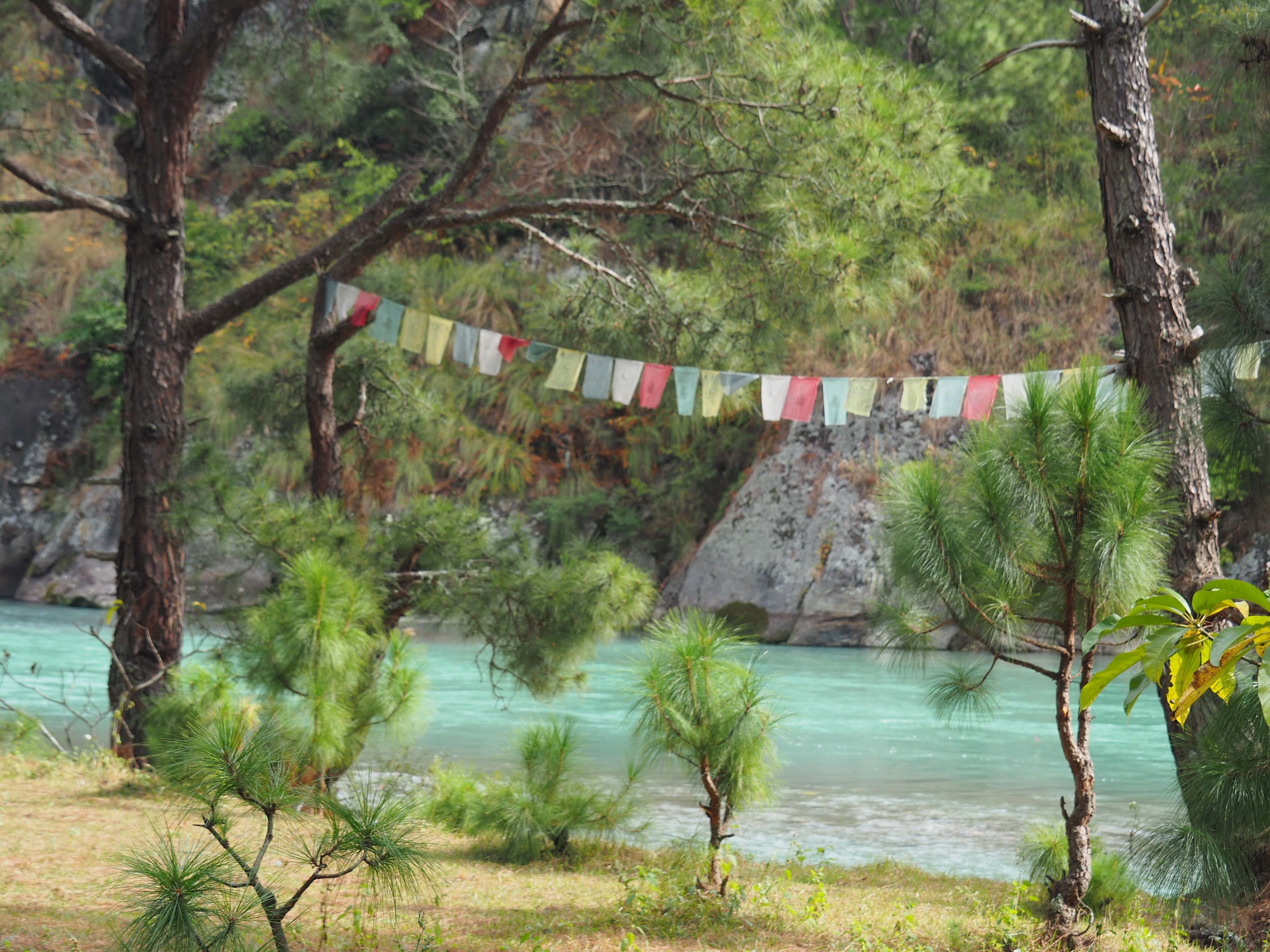
I have have mentioned the prayer flags that we have seen all over. These come in five colors: blue, green, red, yellow, and white symbolizing the elements of water, wood, fire, earth, and iron respectively. They also represent the five meditation Buddhas, the five wisdoms, the five directions, and the five emotions. (There are lots of groups of fives!) The prayer for the flag is carved into a wooden block and then printed on the cloth in a repeating pattern. Depending upon the type (below) all the flags used have the same prayers.
There are also four different types of flags!
– Goendhar flags are the smallest and are mounted on the rooftops of homes. They include blessings for the main protective deity of Bhutan.
– Lungdhar flags are the ones hoisted on hillsides and can be for good luck, to keep from getting sick, to celebrate an achievement, etc.
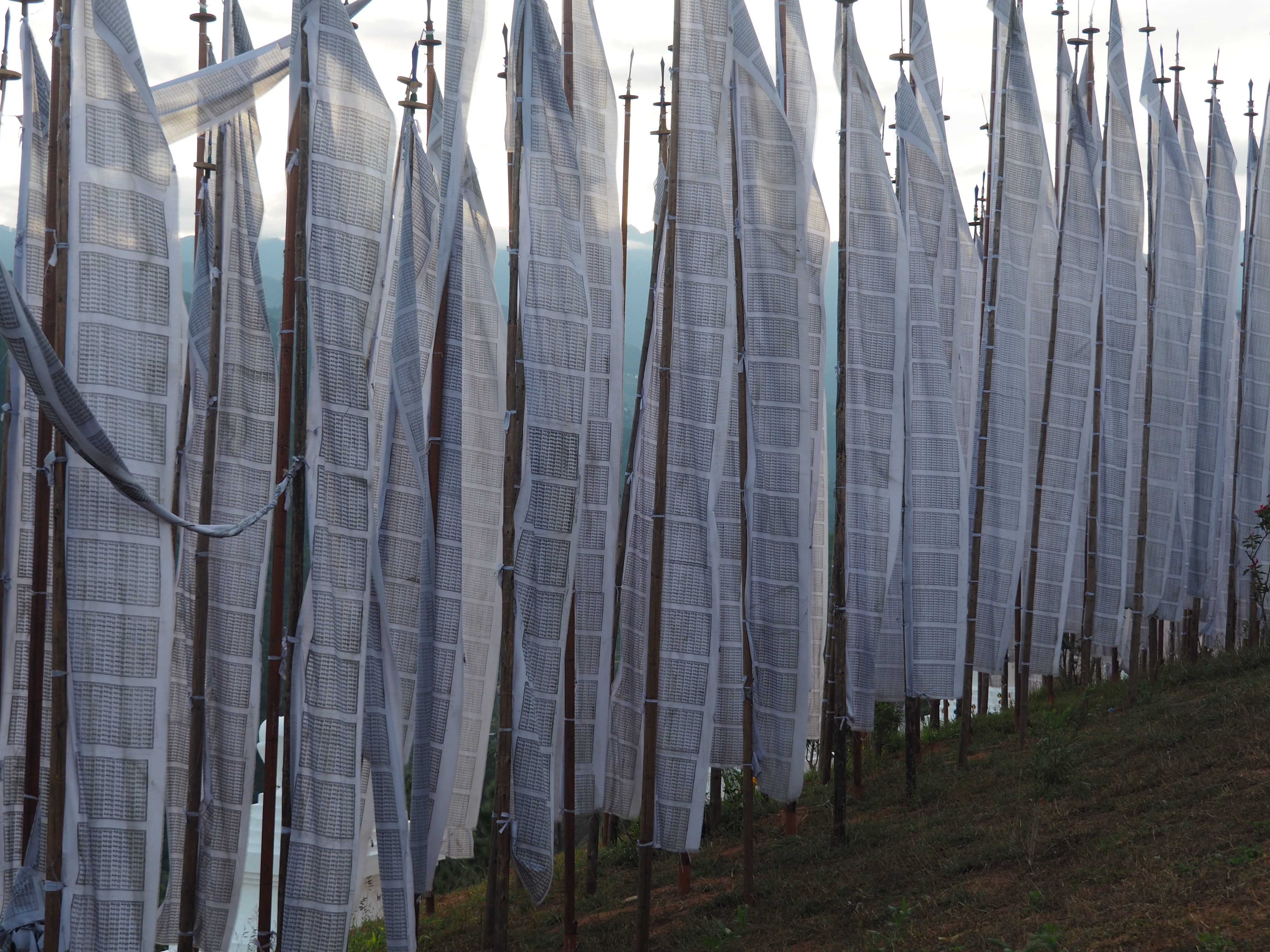
– Manidhar flags are the ones erected vertically in honor of a deceased person. (like the ones I showed in yesterday’s post. ) They are posted in groupings of 108 on hillsides from which a river can be seen so that the river will carry the prayers.
-Lhadhar flags are huge ones that are placed at Dzongs or other important places. They represent victory over the forces of evil. They don’t usually have any text.
That is certainly enough education for one day! I had time to write and so I did! We had dinner with Wang before he headed out for another night on the town with other guides playing snooker! He tells his wife that he is going to go to bed early but instead goes out. When I asked him yesterday if he misses his family while he is away, he says it is 50/50. He does miss them, but likes to get away as well. Even though Mr, Poo is from here, yesterday he wasn’t sure if he would tell his family that is he is home. It turns out that he did go see them.
Mr Poo doesn’t speak good English, but he understands. He heard us talking about walking sticks for the Tiger’s Nest walk. He went to his Village and got the the the walking sticks for us! I think he should get some credits for that!
By the end of the day, Kathy’s tracker showed that we had walked over six miles and climbed the equivalent of 49 flights of stairs.
This is more than enough for today. Tomorrow we go to Paro!
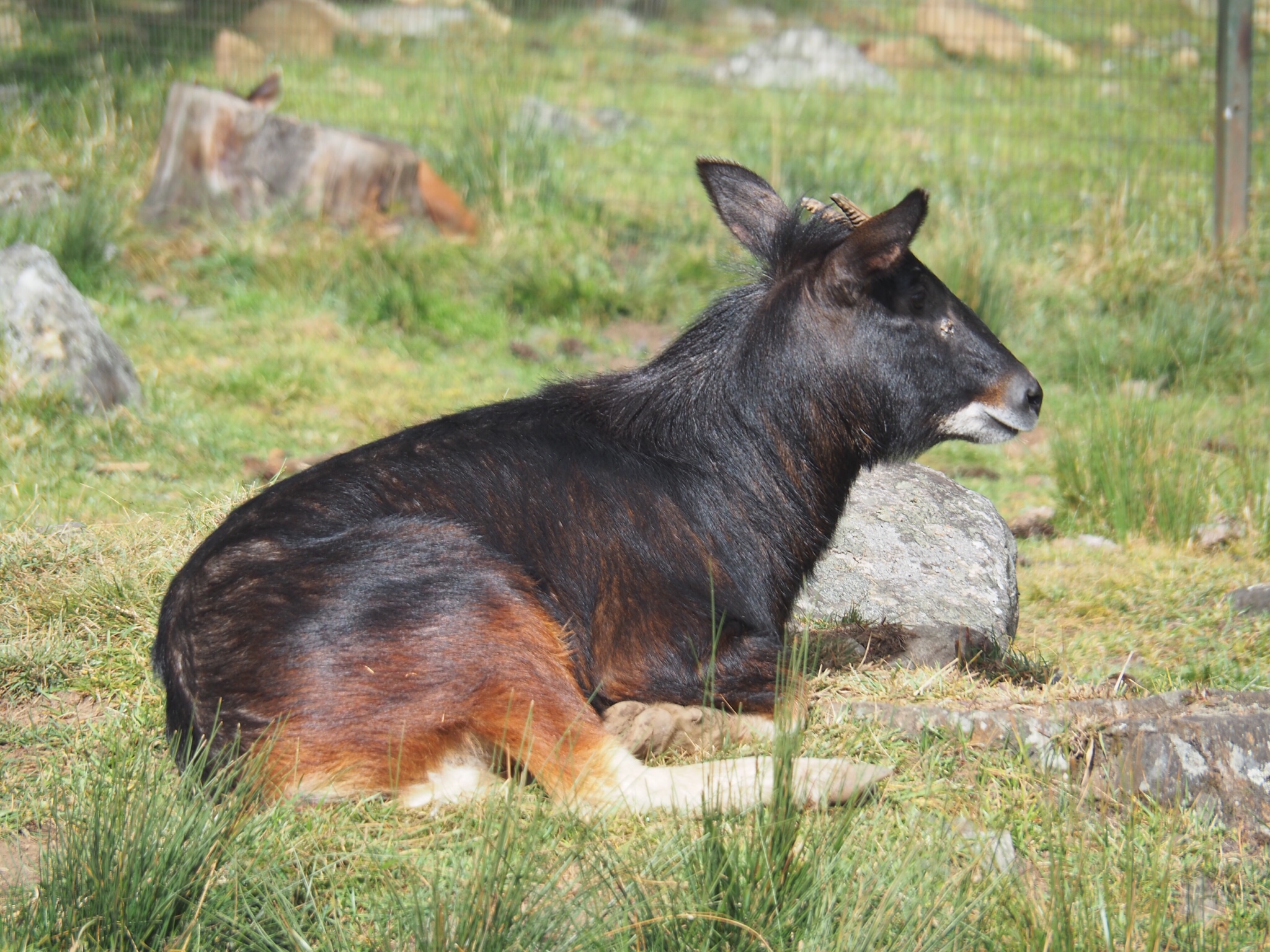
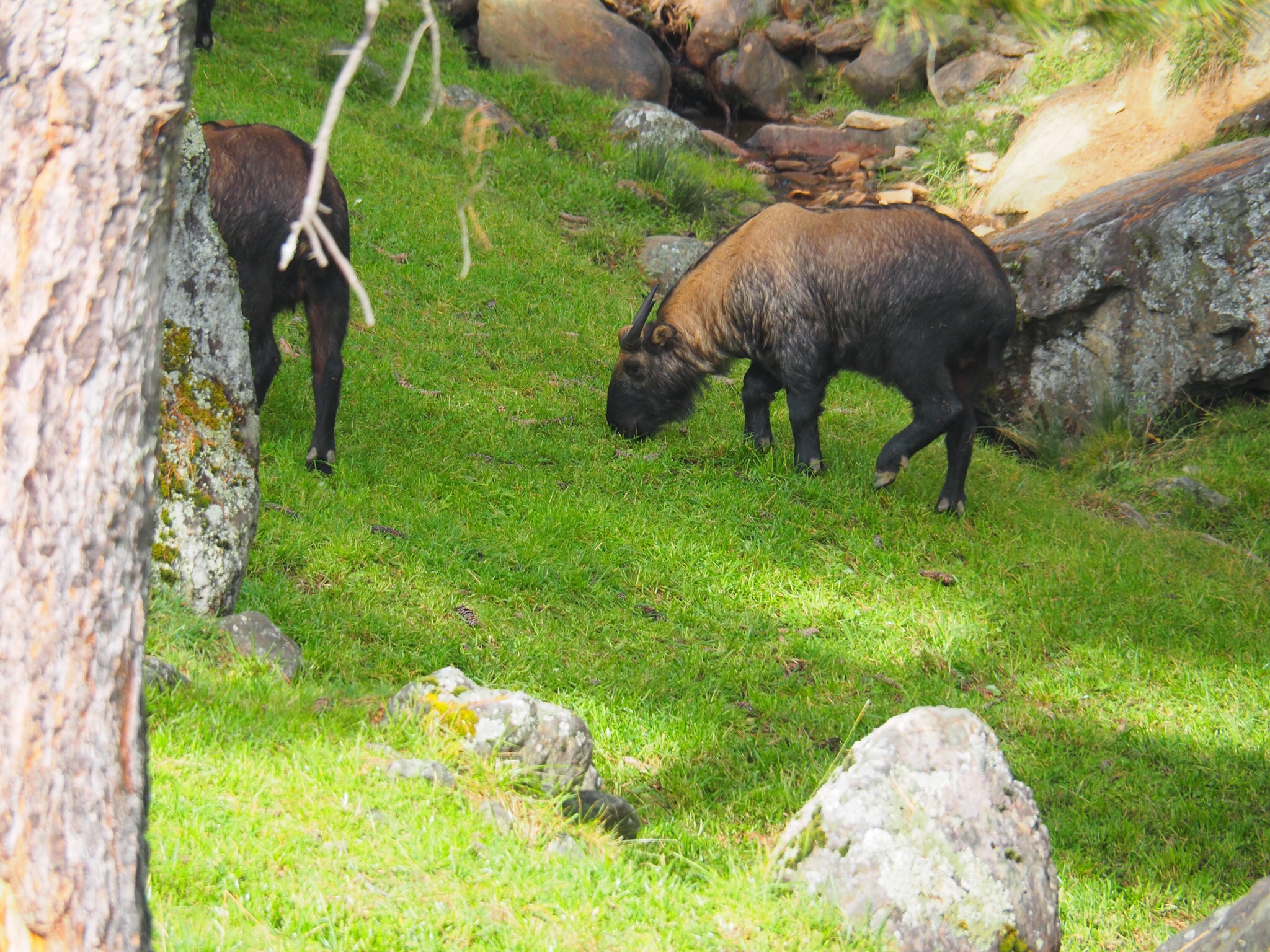
Today we finished sightseeing in Thimpu before making the drive to Punakha, We visited the zoo where we had a walk around the grounds to see some takins, the national animal.
The takin is the national animal because of it’s importance in religion and mythology. The story goes that the divine madman (a lay lama) visited Bhutan in the 15th century and performed a miracle by taking a goat’s head and putting it on a cow’s body. The story is more complicated than that, but suffice it to say it’s a bit of a strange looking creature.
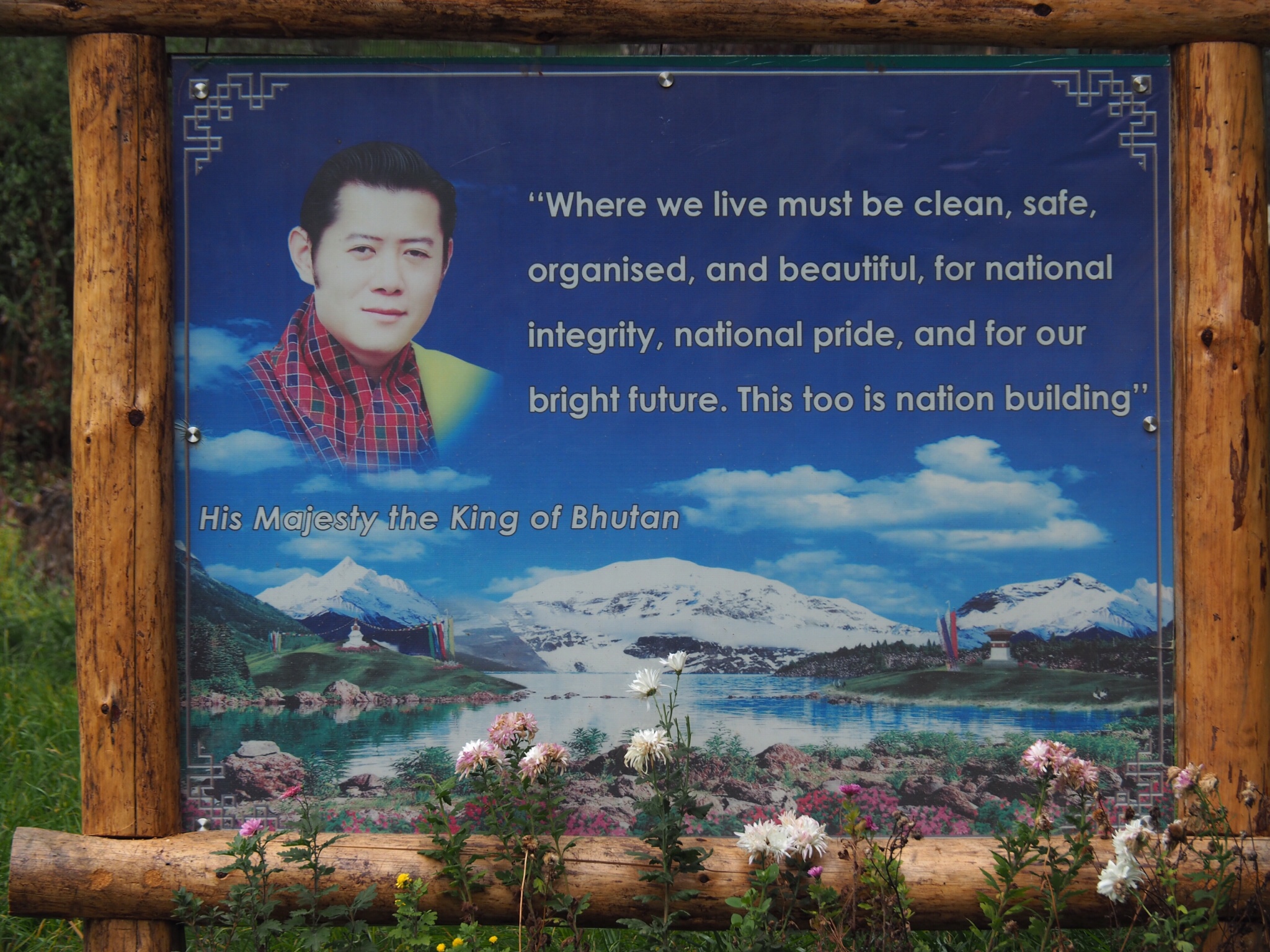
This sign is at the entrance to zoo:
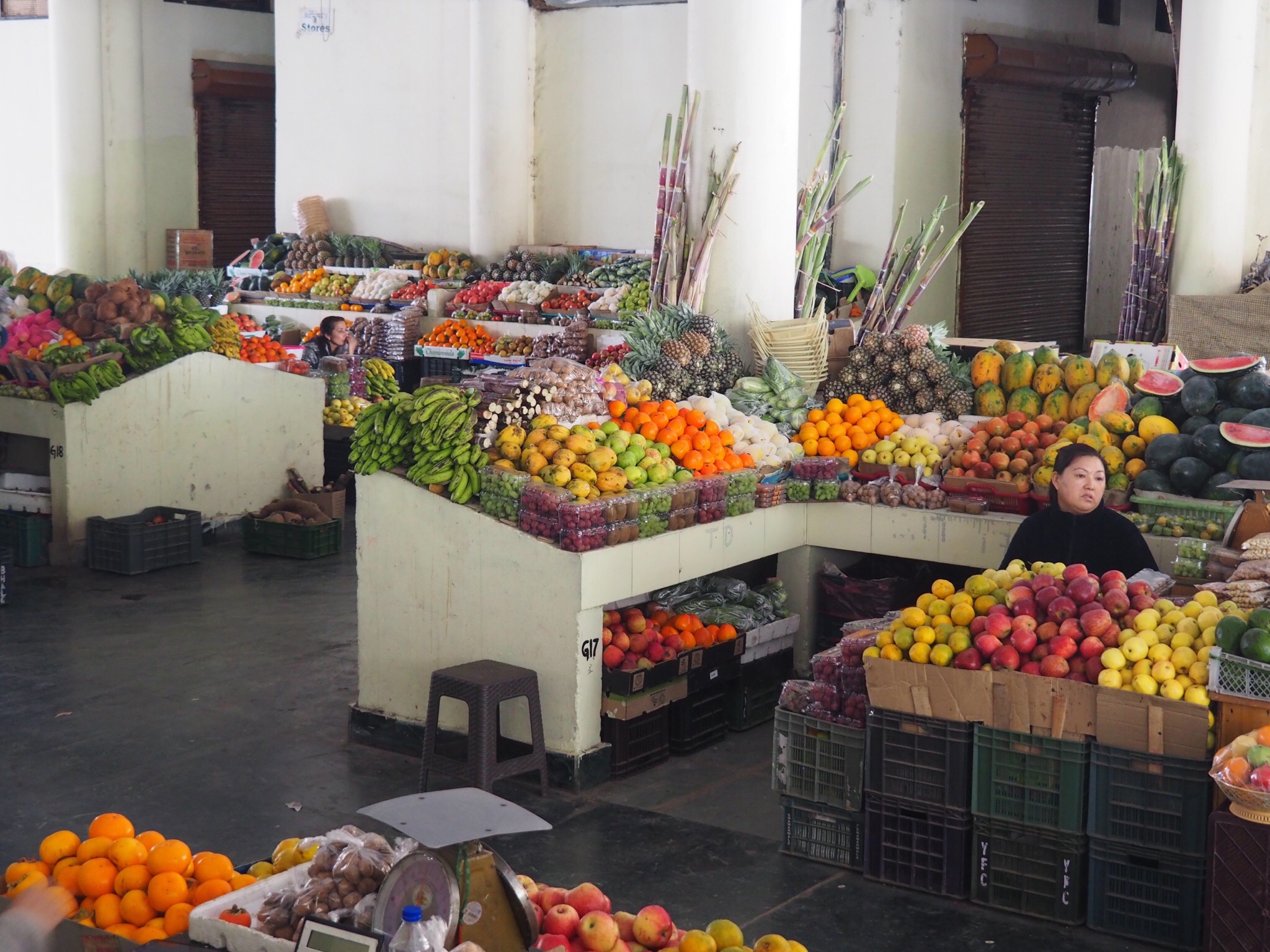
We made a stop at the local market.
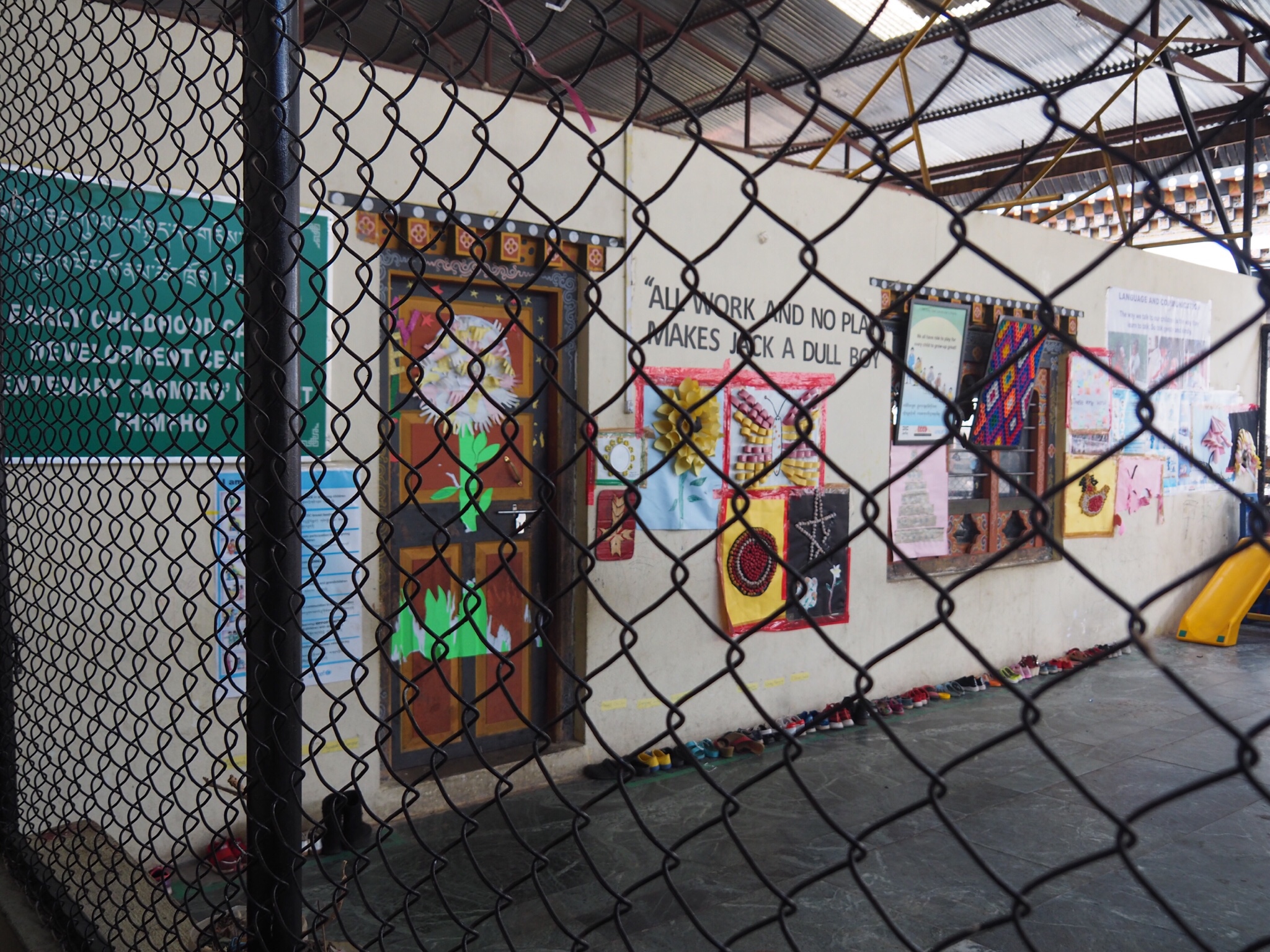
The government operates a daycare for children of the farmers who sell their goods in the market. Just one kind of the hot peppers they love to use in cooking here!
After our visit, we began our drive to Punakha. It is only about 40 miles, but the drive takes nearly three hours. The roads are paved but are only a narrow two lanes with no lines. We constantly Made hairpin turns for the entire drive. This is not a country to visit if one is prone to serious car sickness!
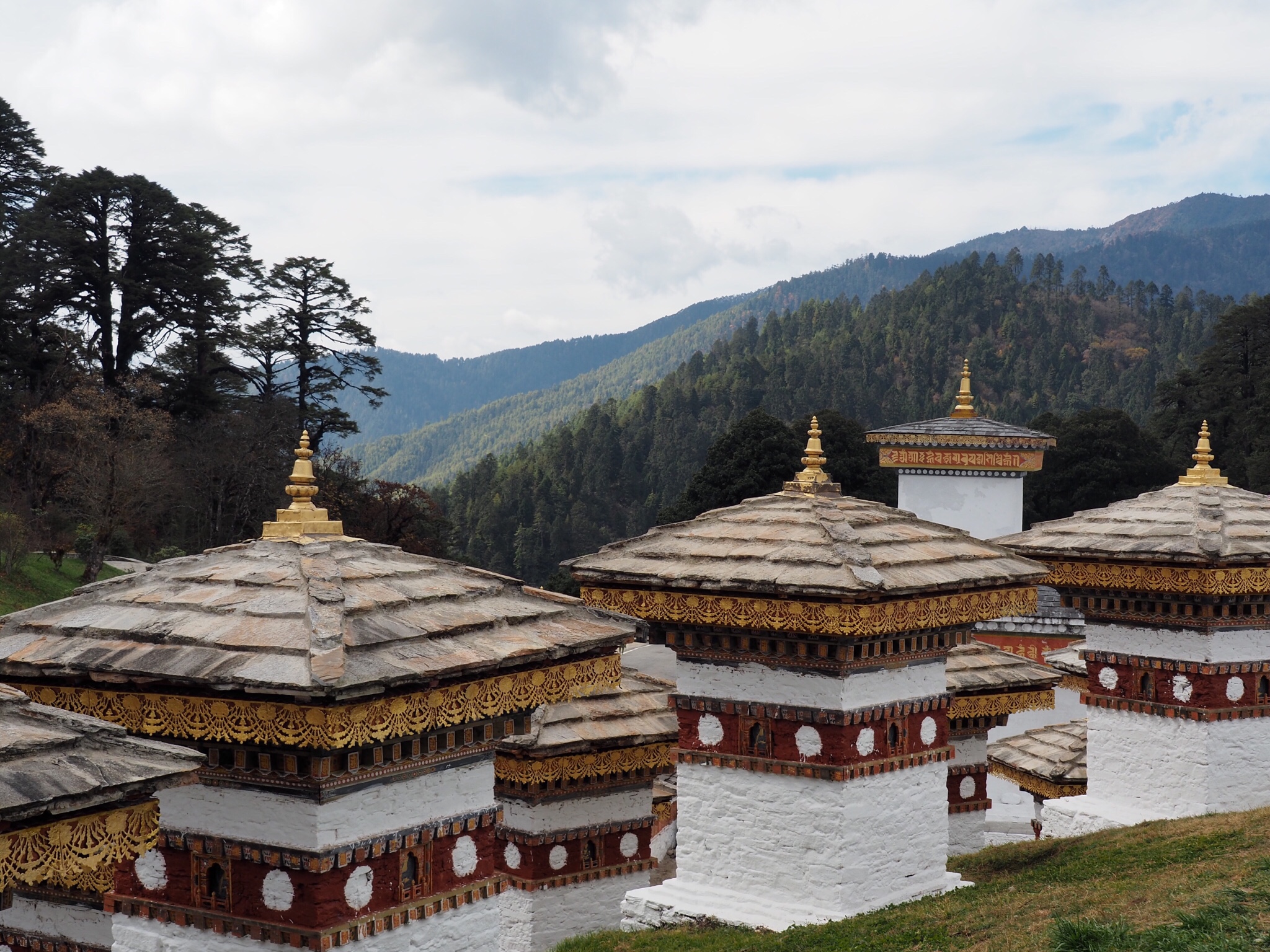
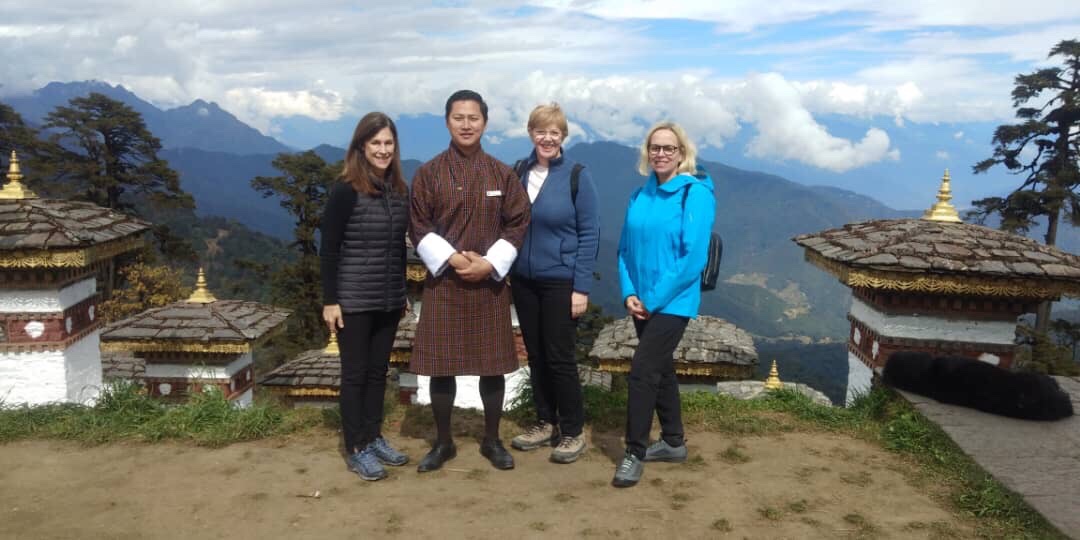
Our drive was broken up with a few stops along the way. We crossed the Dochu La Pass which it at 3100 meters (over 10,000 feet). We made a stop at the top and had an incredible view of the Himalayas. There are also 108 Chortens (receptacles for religious offerings) which commemorate the loss of life in an uprising in southern Bhutan. We walked around the site and then had some tea at the restaurant that is there.
A look at some of the chortens Our group with the Himalayas behind.
We continued for awhile longer until we stopped for lunch and then continued on to our hotel in Punakha.
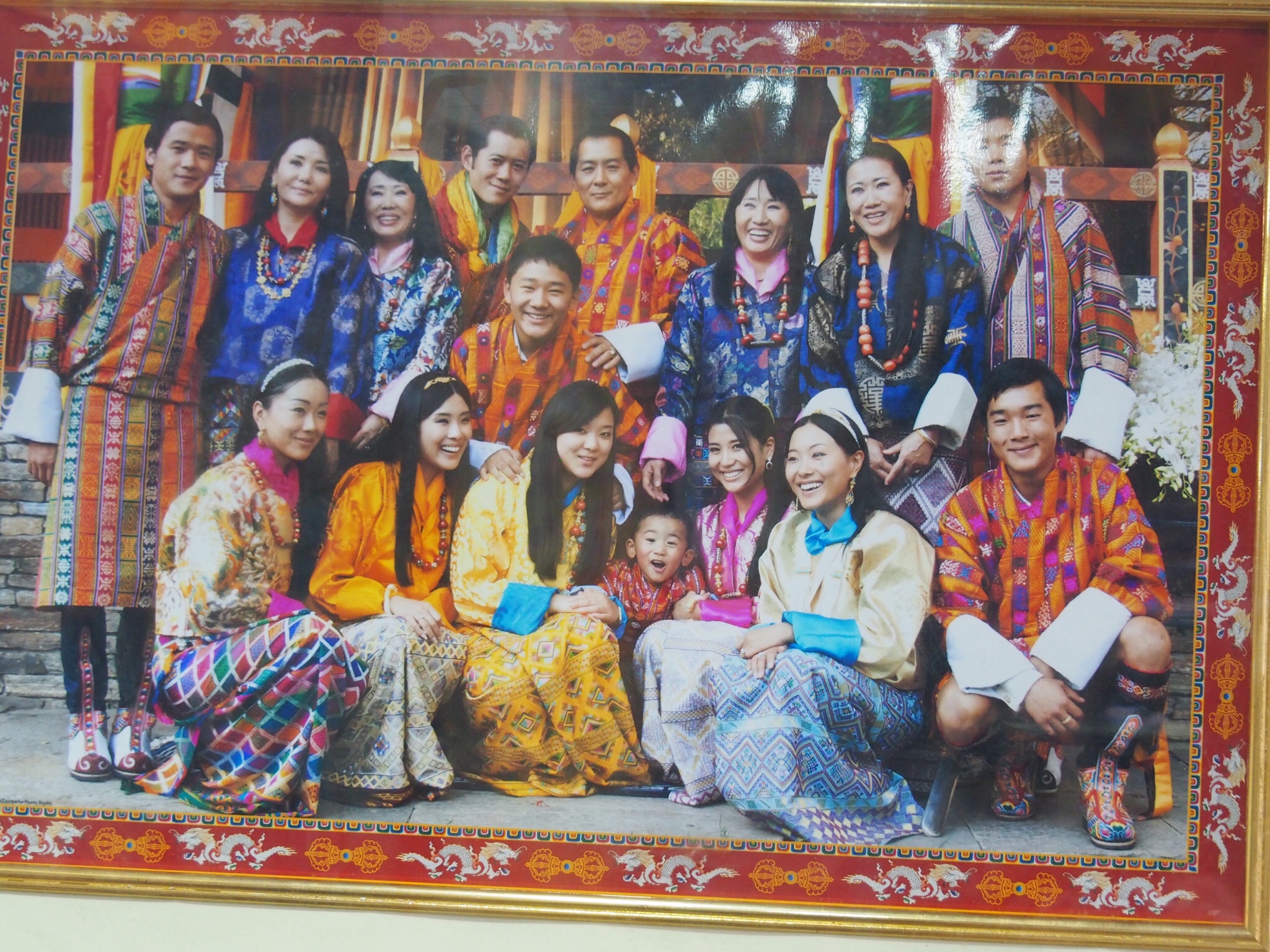
At the lunch restaurant we saw this photo of the fourth king, all his wives, his son who is the current king and his siblings. More information about all of them is below.
Punakha sits low in a valley in central Bhutan and lies at the junction of two rivers. It was the National capital until 1955 and is an area with very fertile farmland. It serves as the winter home of the Central Monk Body, I think this is like the governing group for the monks.
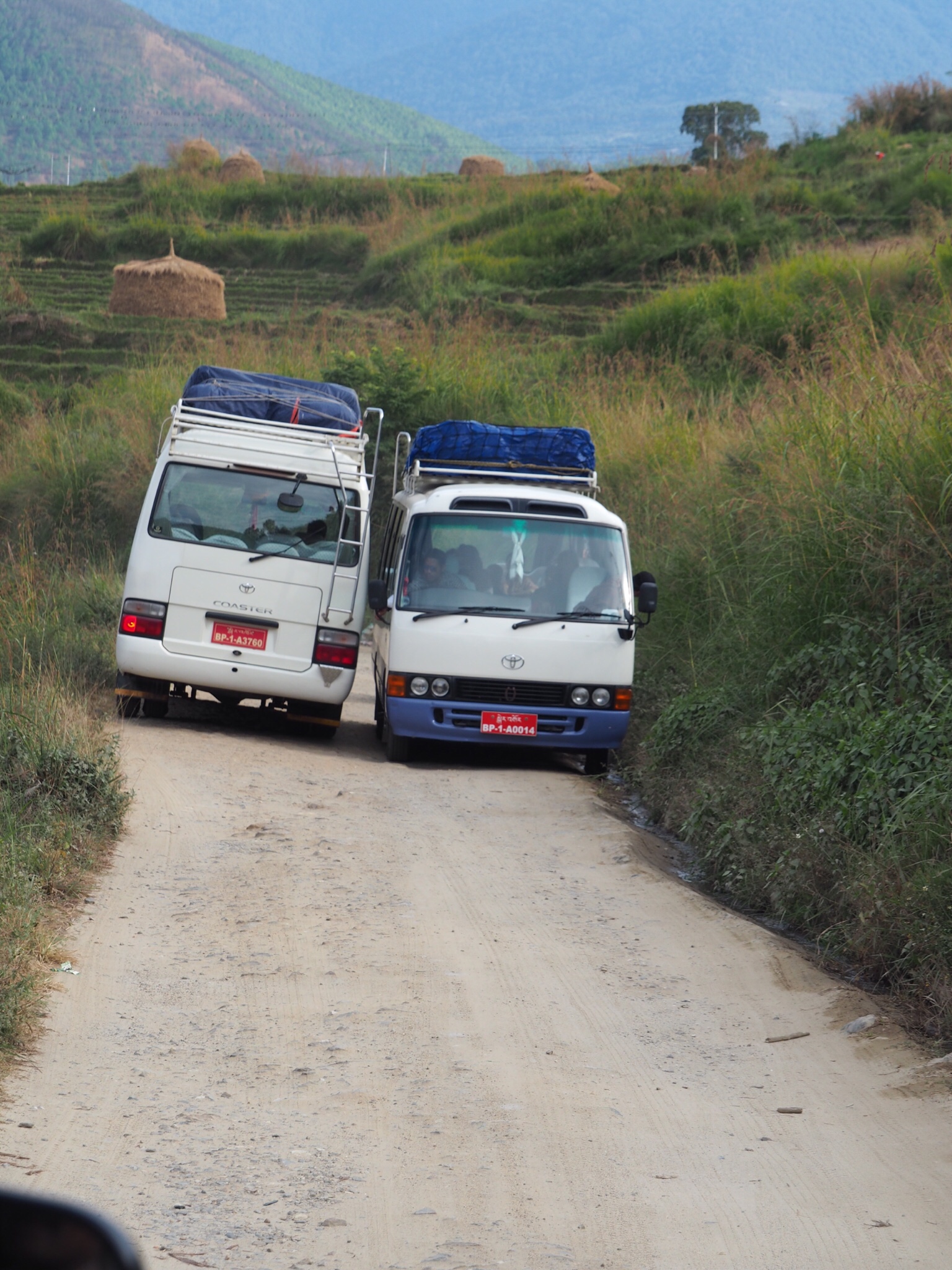
Since Wang had a full afternoon planned for us, we didn’t linger at the hotel before heading out. He originally had planned for us to take a 45 minute walk to get to our first stop, but I think he took a look at his tired group and gave us a break…. Mr. Poo would drive us instead. The drive involved a stretch on a one lane dirt road:
The photo needs no explanation.
Our destination at the end of the road was the Chimi Lhakhang, the temple of Drukpa Kunley, otherwise known as the divine mad monk, who is one of the country’s favorite saints. He was from Tibet but traveled all over this country using crazy stories, songs, and outrageous behavior to share his teachings. He is the one to introduce the phallus to Bhutanese Buddhism. This latter fact is commemorated in many interesting items available for purchase outside the temple.
Inside the temple we witnessed a group of monks making a pilgrimage to the site. We listened to their prayers, which were mesmerizing. After their prayers, Maryse and I were fortunate enough to receive a blessing from a monk who used the madman’s bow and arrow and a wooden phallus. I think that is likely going to be a once in a lifetime experience!
The Madman’s temple.
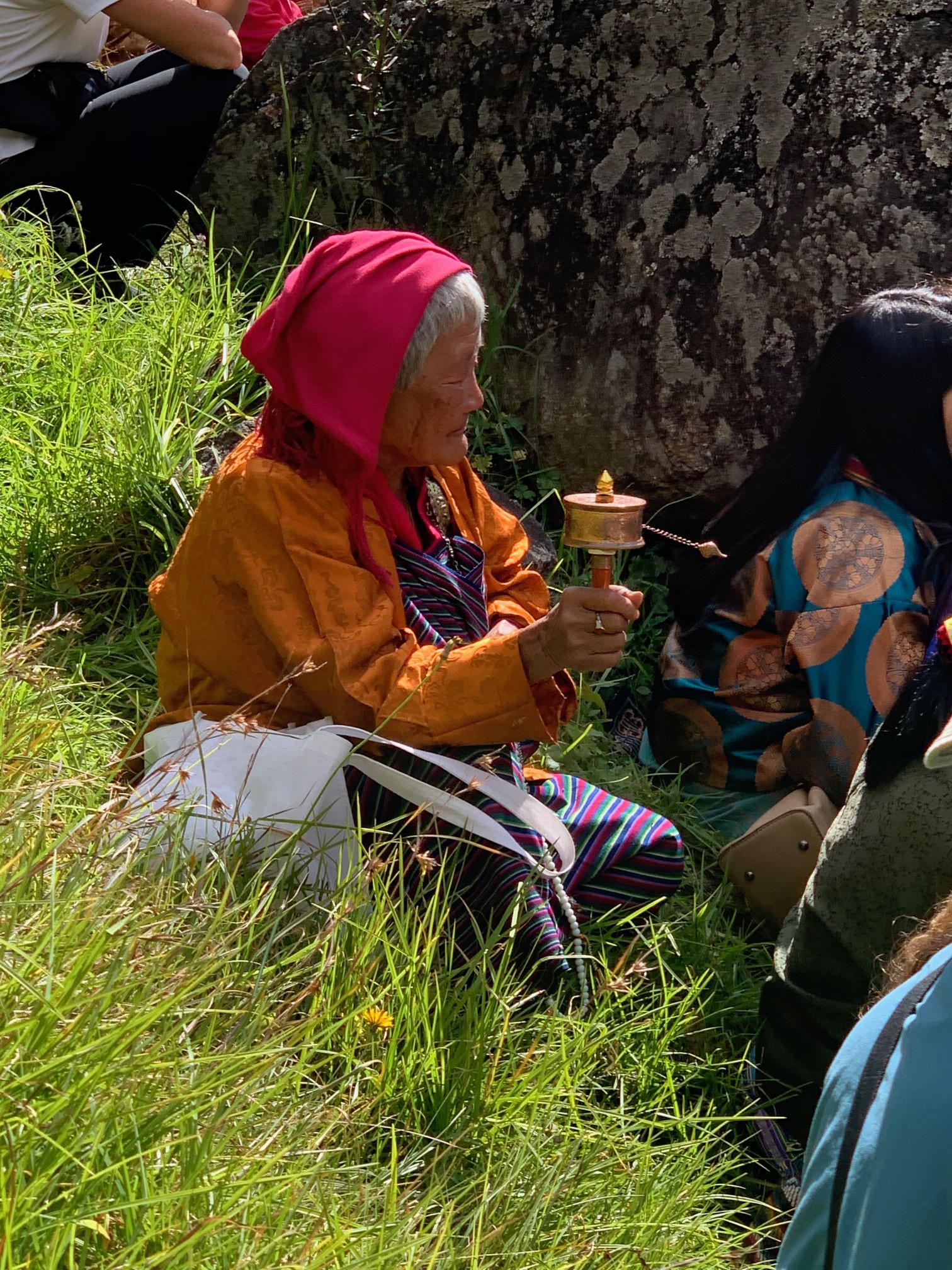
This man was near the entrance, using his prayer wheel. We learned that inside the wheel there are a series of prayers. One always spins it clockwise.
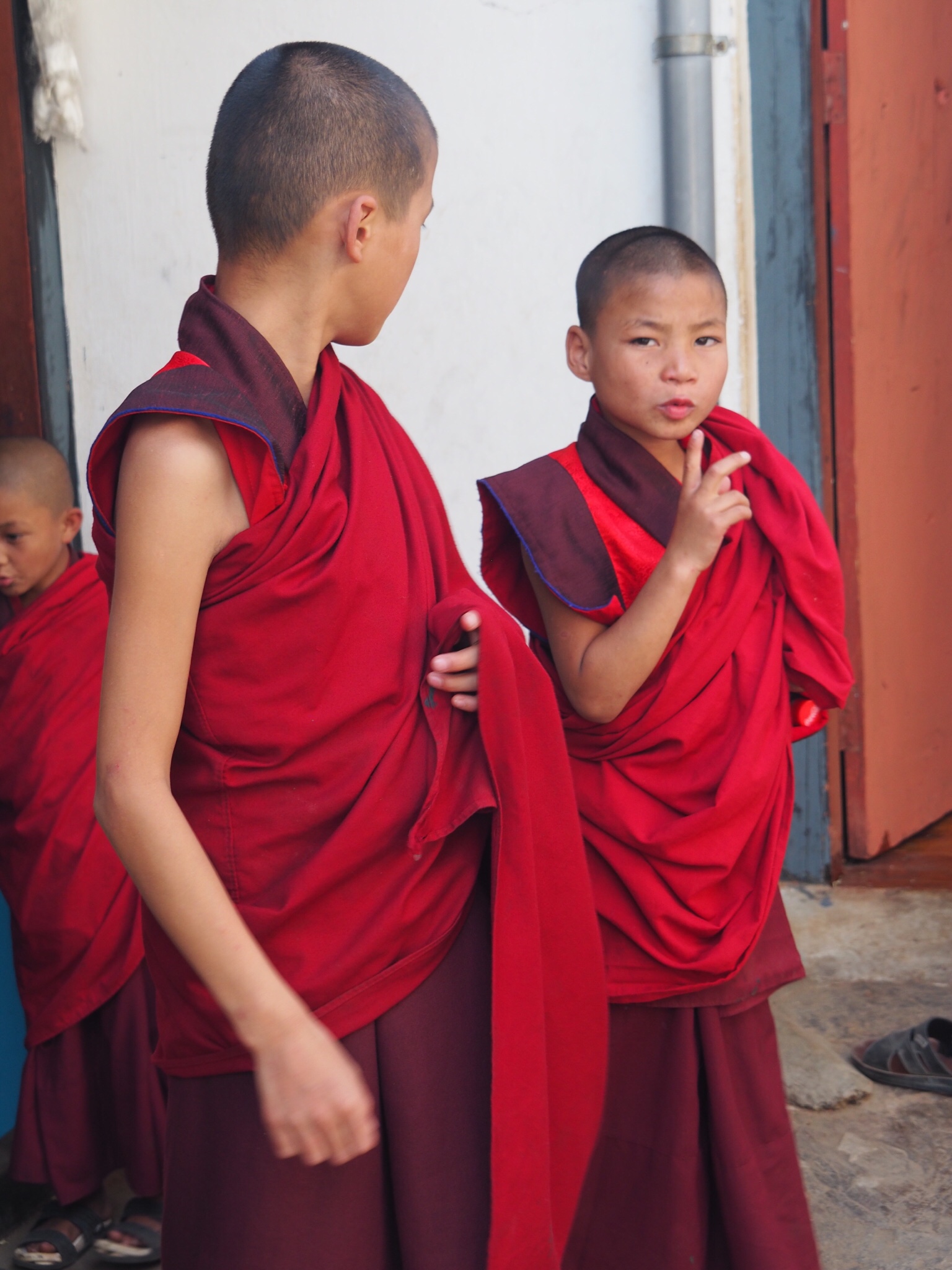
A couple of the visiting monks.
After our visit, we retraced our steps along the one lane dirt road back to a main road to travel to the Punakha Dzong. As I mentioned before, a Dzong can be both the religious and government center for an area. It served as the center of government until the capital moved in 1955. This one is situated at the confluence of the two rivers, it is lovely.
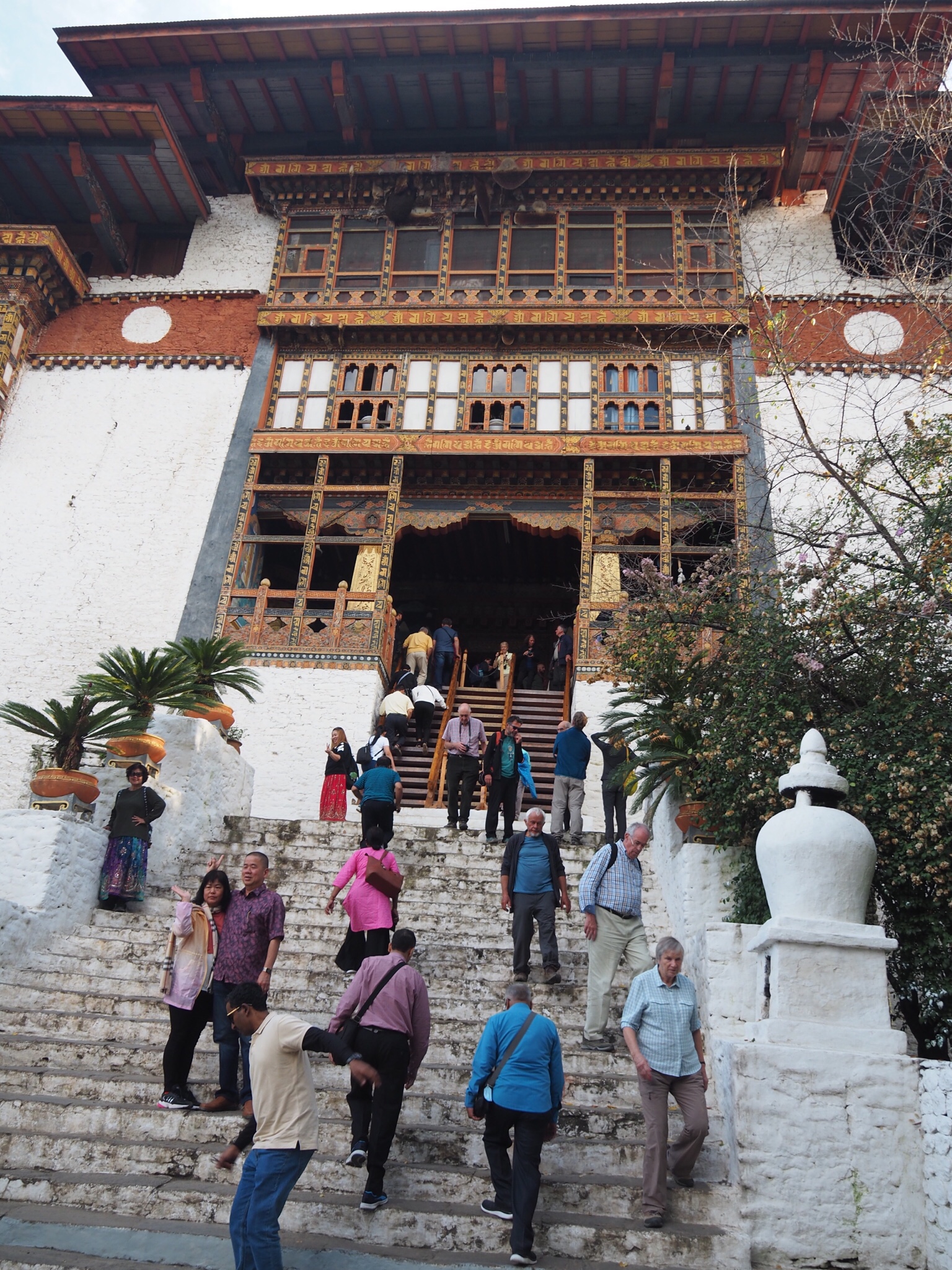
A view of the Dzong from the outside. One of the courtyards inside. The stairway to enter the Dzong. The center stairs at the top are reserved for the king and chief abbot.
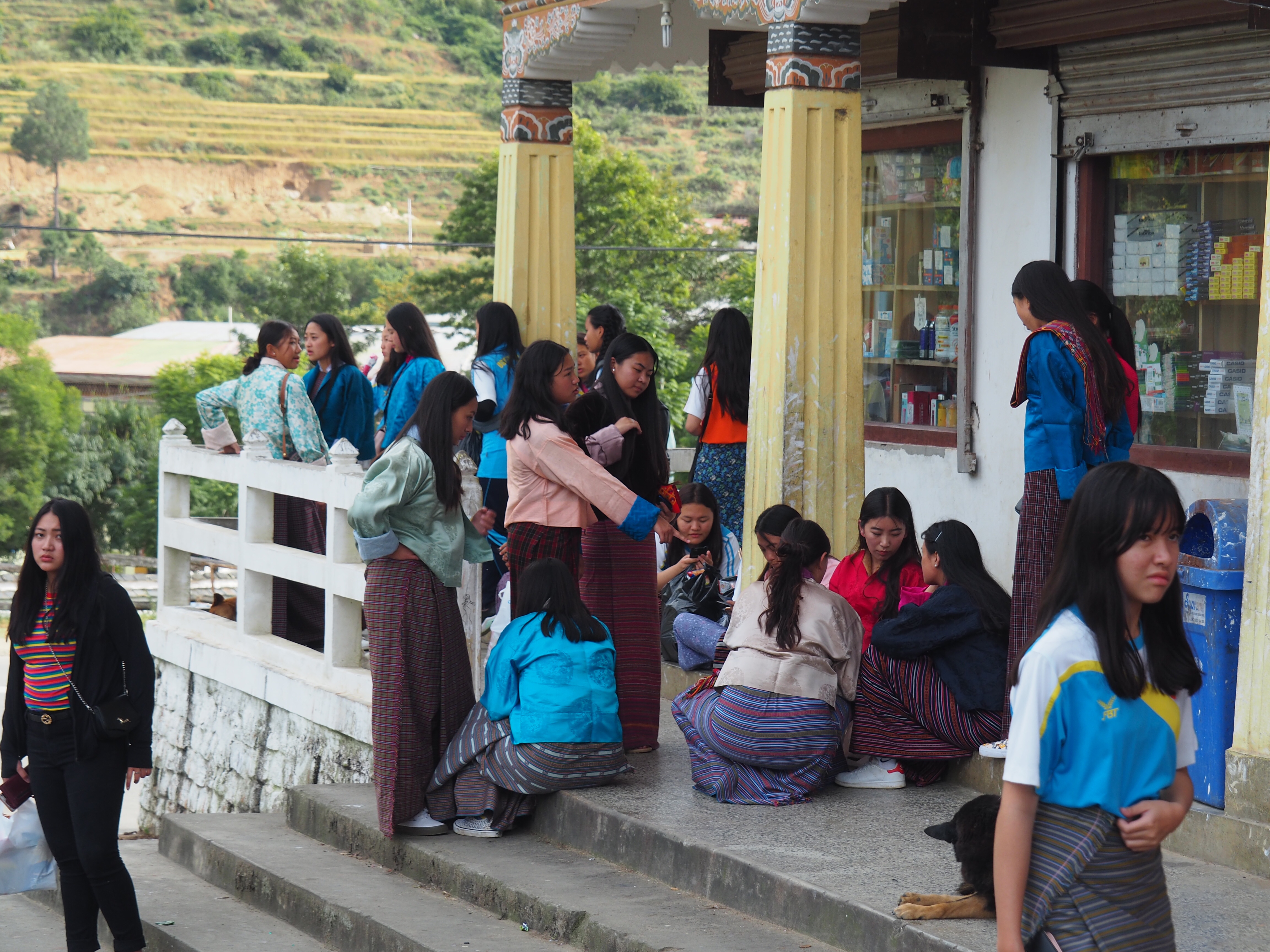
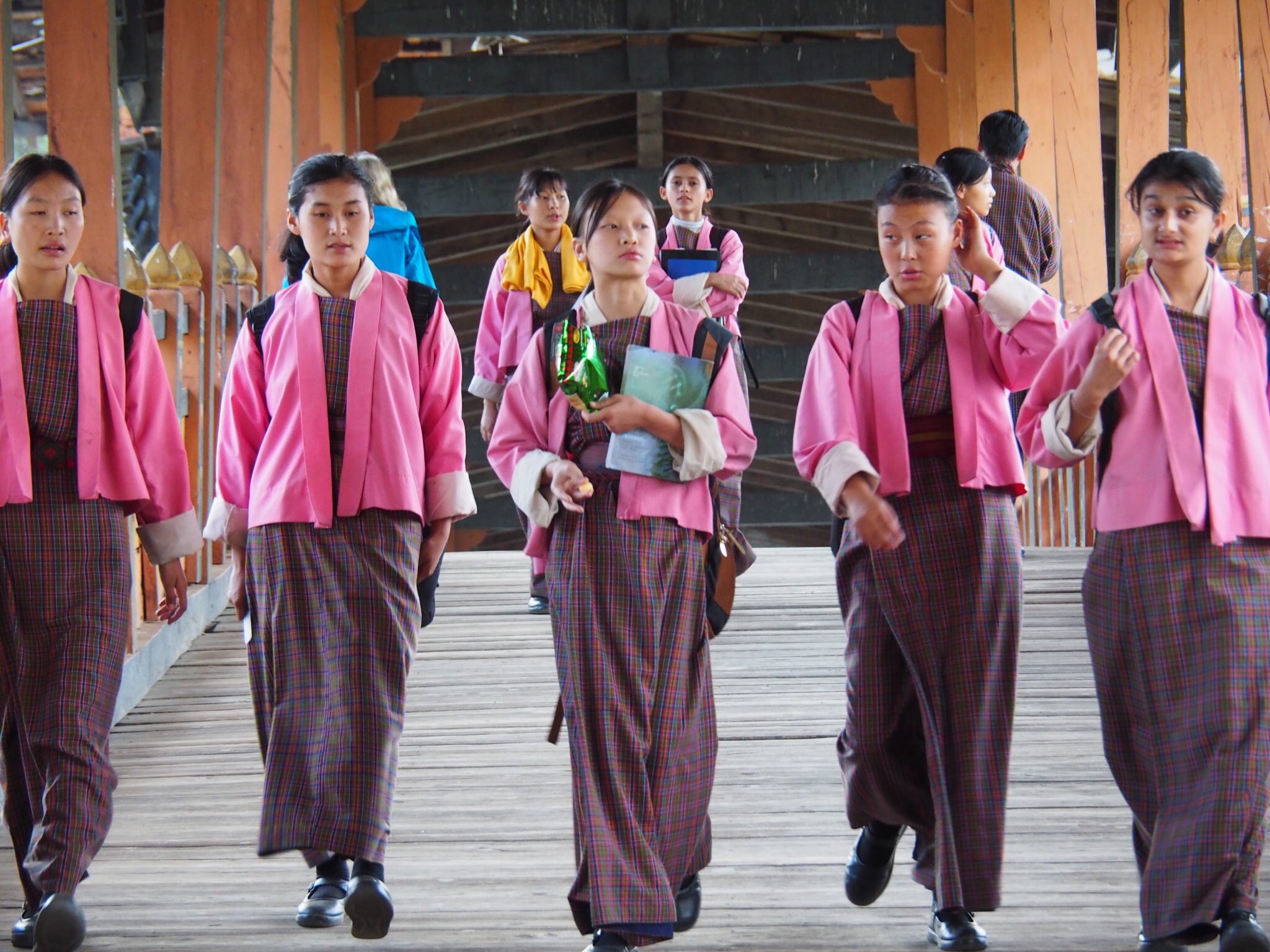
On our way out, we saw these girls walking home from school. They are wearing the traditional dress for girls/women called kiras.
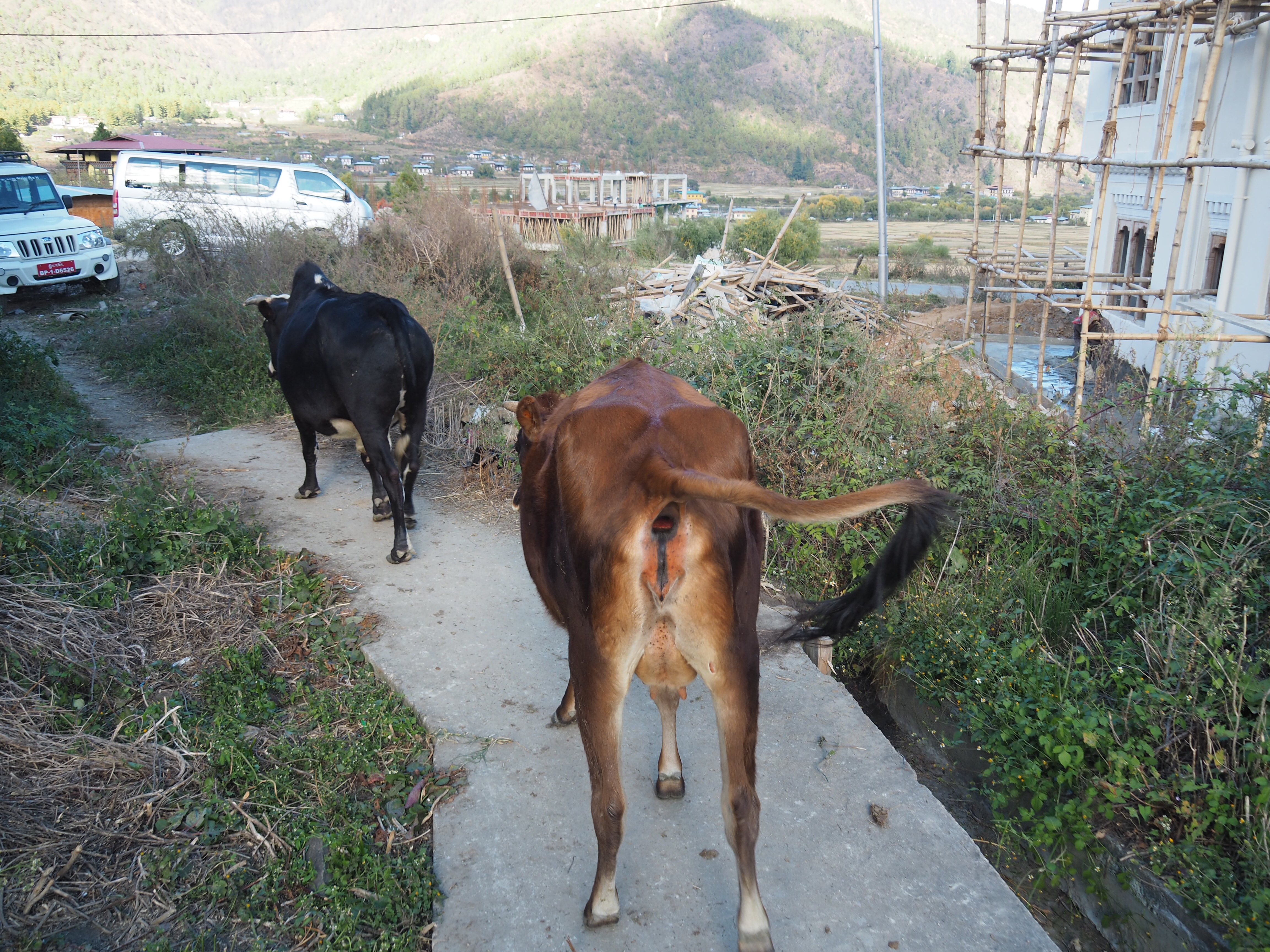
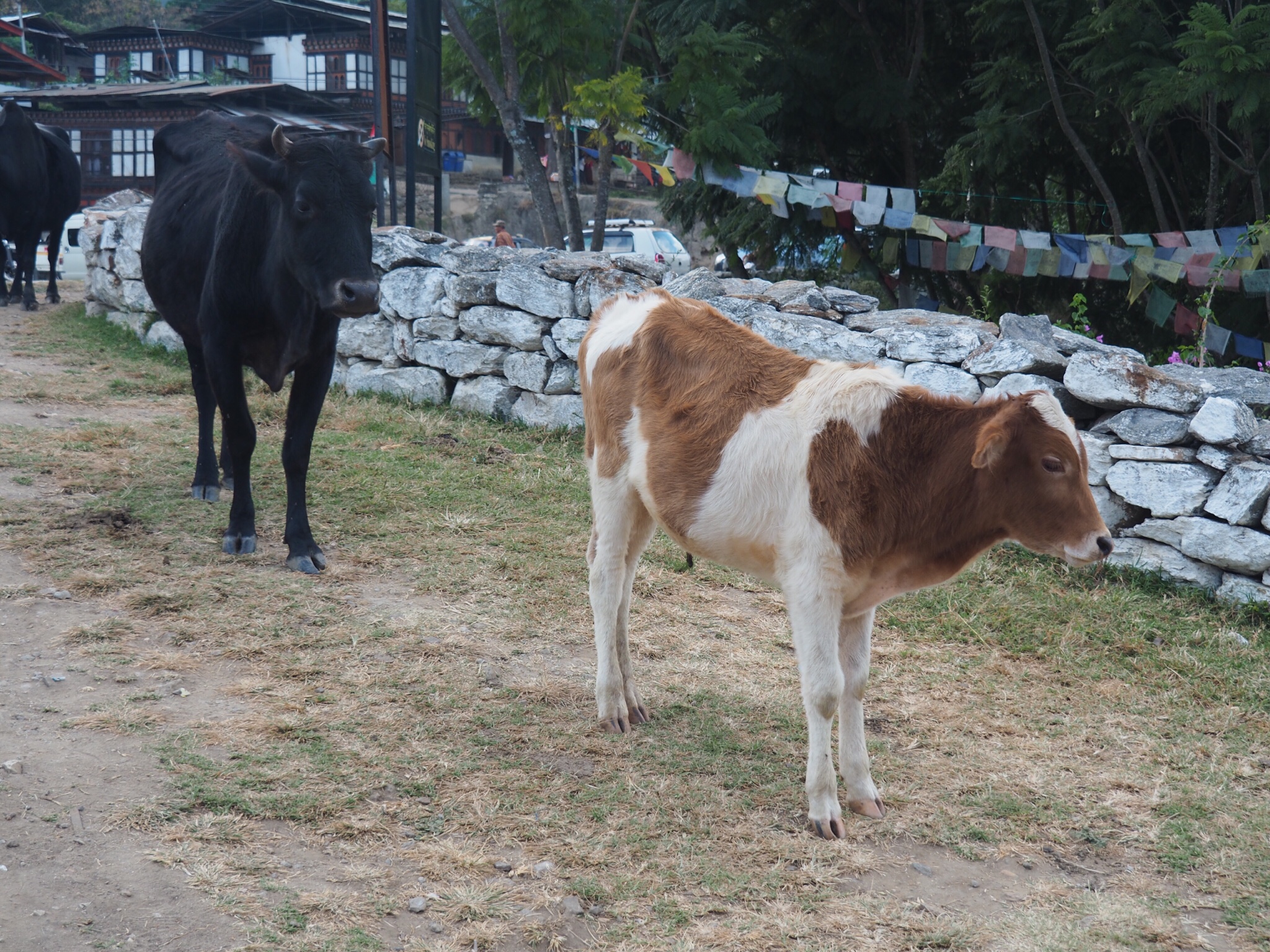
These girls are in their school uniforms. These cows were near the entry way. They belong to a nearby farmer. We have seen cows wandering all over – in towns and along the roads.
We still had one more stop to make before our day was complete. This was to the nunnery. This one was financed by the fourth king’s father-in-law (the current king’s maternal grandfather) to serve as a Buddhist college for over 100 nuns. The king’s grandparents’ house can be seen just across the parking lot from the nunnery. The grandfather died in October of this year and they were still taking down the stands and rooms that were used for his cremation service. His stupa and the one that will be used for his wife are in the outside courtyard.
The king’s grandfather’s stupa is in the back on the right. It contains his ashes. A prayer wheel in the nunnery.
These are prayer flags in honor of the king’s grandfather. We see this all over on the hillsides. There are always 108 of them out in memory of someone after he or she does. They must be placed where there is wind to take the prayers.
Wow….this was a very full day! We all opted for an early dinner because tomorrow we have not one, but two hikes on the agenda. One will take us along one of the rivers and through fields. The other will take us to another temple. We have joked with Wang that he is testing us to see if we will be able to make it to the Tiger’s Nest on Monday. He assures us that we will all make it.
I have felt fine physically from our various walks, however, I have really felt the effects of the altitude. My breathing is extremely labored. They say we become more acclimated but so far I am not convinced!
Some interesting things to know about Bhutan:
– Like Nepal, this area is prone to earthquakes. Unlike Nepal, their traditional architecture is designed to withstand the quakes. Thus, they haven’t had the devastation that Nepal has had.
– School is taught in English. All the signage is in English, making it very easy for tourists like us to understand things and to get around.
– The current king is 38 years old and his wife is 28. They got married three or four years ago. They first met when she was ten years old and the king (before he was king) visited her school. It was, literally, love at first sight…he told her “we will meet again”. They did, and now they are married.
– The king’s father, the fourth king, has four wives and all of them are sisters! He married them in one ceremony. The current king is the second child of ten from all the wives, but he is the first born son.
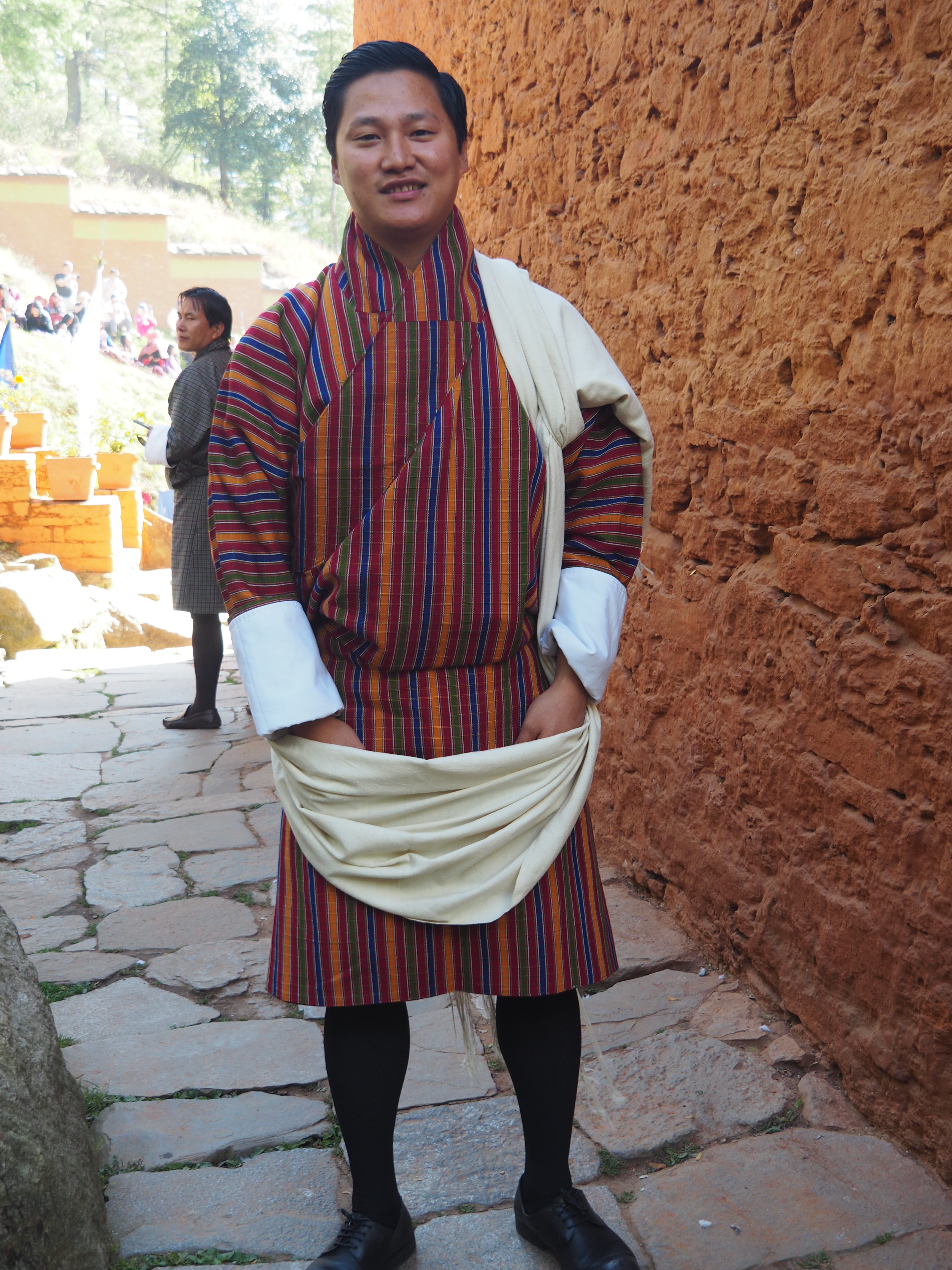
– Yesterday, I showed you Wang wearing his white scarf over his robe. One can tell a man’s role by the color of his scarf. The commoner wears white, a government official wears orange, and a regional official wears maroon.
– The money here is called the Ngultrum, Nu for short. It is tied to the Indian Rupee.
– We see stray dogs everywhere! Evidently, the government takes care of getting them vaccinated. The dogs recognize the white truck and don’t want to go for their shots, who can blame them? In Thimphu, the dogs sleep all day and then roam at night and bark in the wee hours! They are loud enough to wake people up, including everyone in our group!
– I mentioned the cows we have seen wandering along the roads, but we have also seen a lot of horses!
– We asked Wang if people use more traditional or western medicine. This area is known for its many medicinal herbs and plants. He told us that about 70 percent of the people opt for western medicine; it’s free from the government.
– The average laborer makes the equivalence of about $200 per month.
– People from Eastern and Central Bhutan are known to be more kind and humble. Those from the west are know to have more dominant personalities.
– Whenever we visit a stupa or go around a prayer wheel we must walk in a clockwise direction.
– Plastic is mostly banned. At the market there are some items packaged in plastic out of necessity.
I haven’t written much about Buddhism. Frankly, the more I hear and learn about it, the more utterly confused I become. I do know that the Bhutanese are Tibetan Buddhists and that seems to be quite different from other types. I will attempt an explanation as best I can before I leave here!
Today was a bit of a whirlwind, we began with local festival and ended with a visit to the area where the parliament meets and saw many things in between. Thimpu is the National capital and has a population of 100,000; the population of the entire country is only 750,000!
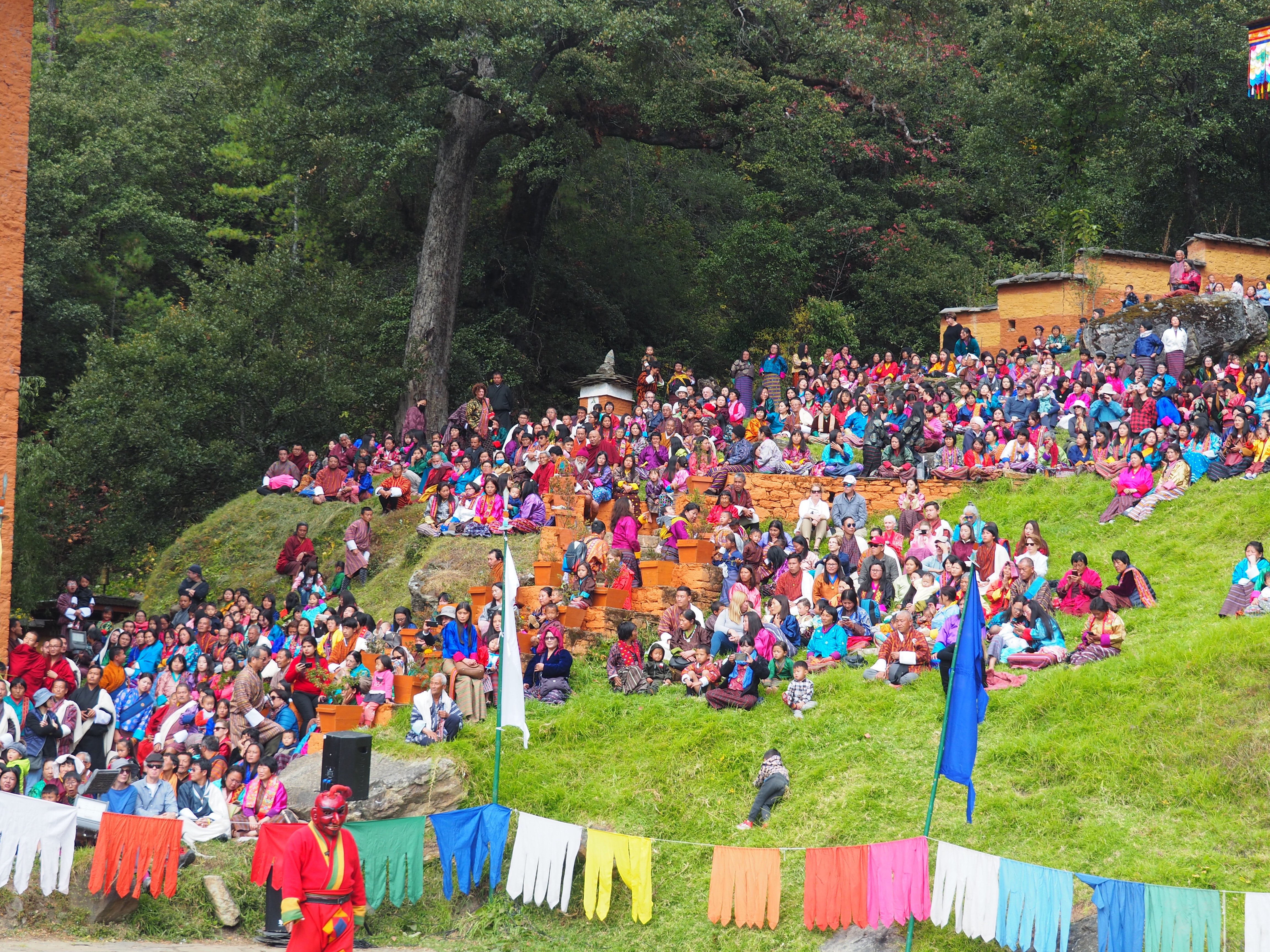
Wang and Mr. Poo met us at 9 am and we immediately made our way out of the city so that we could witness a Tsechu, a local festival. This one was at a village about 30 minutes drive from the city. The festival took place at a temple of a protective deity of the country. It was being held today because it is the tenth day of the lunar month and honored the second Buddha.
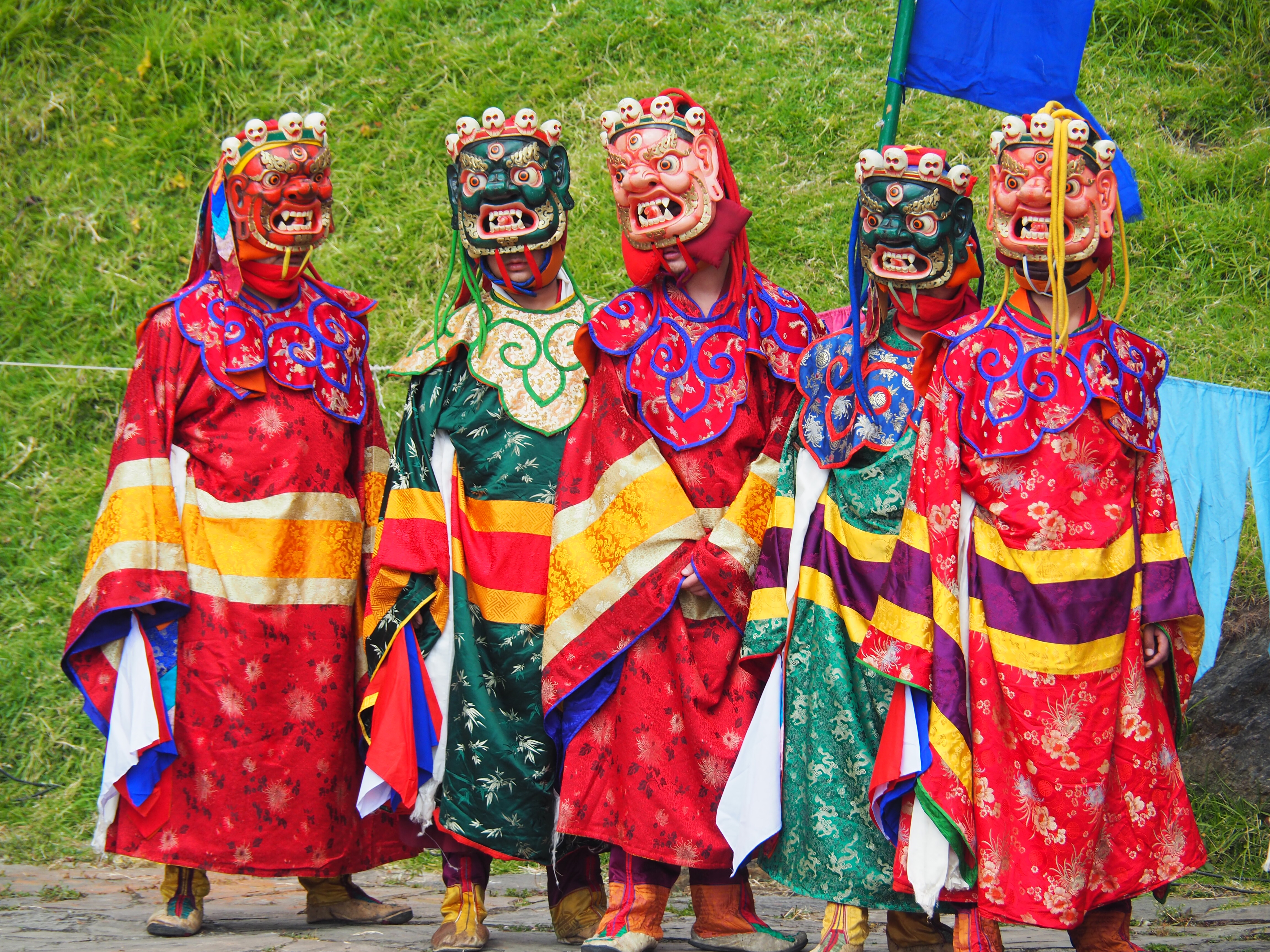
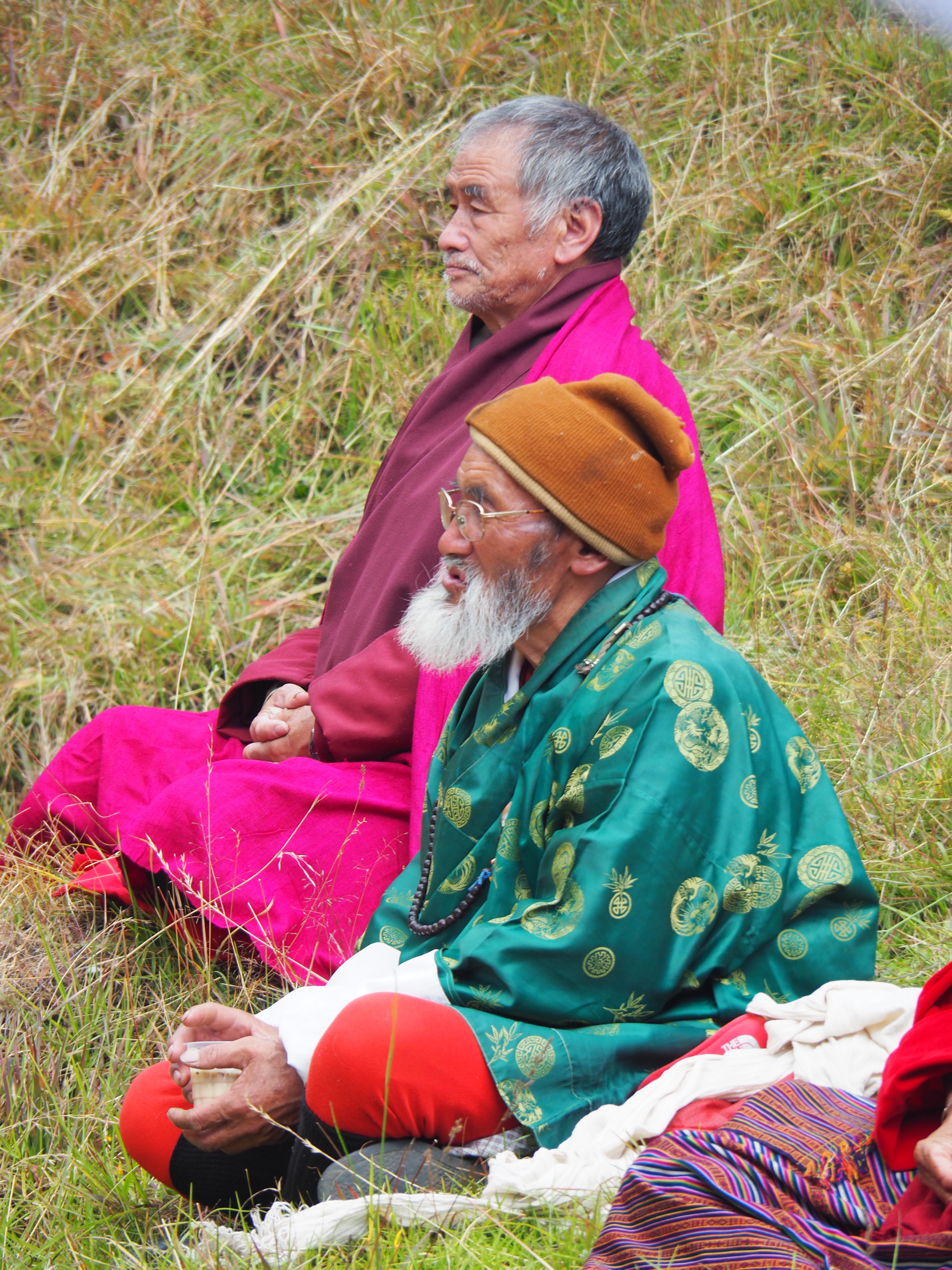
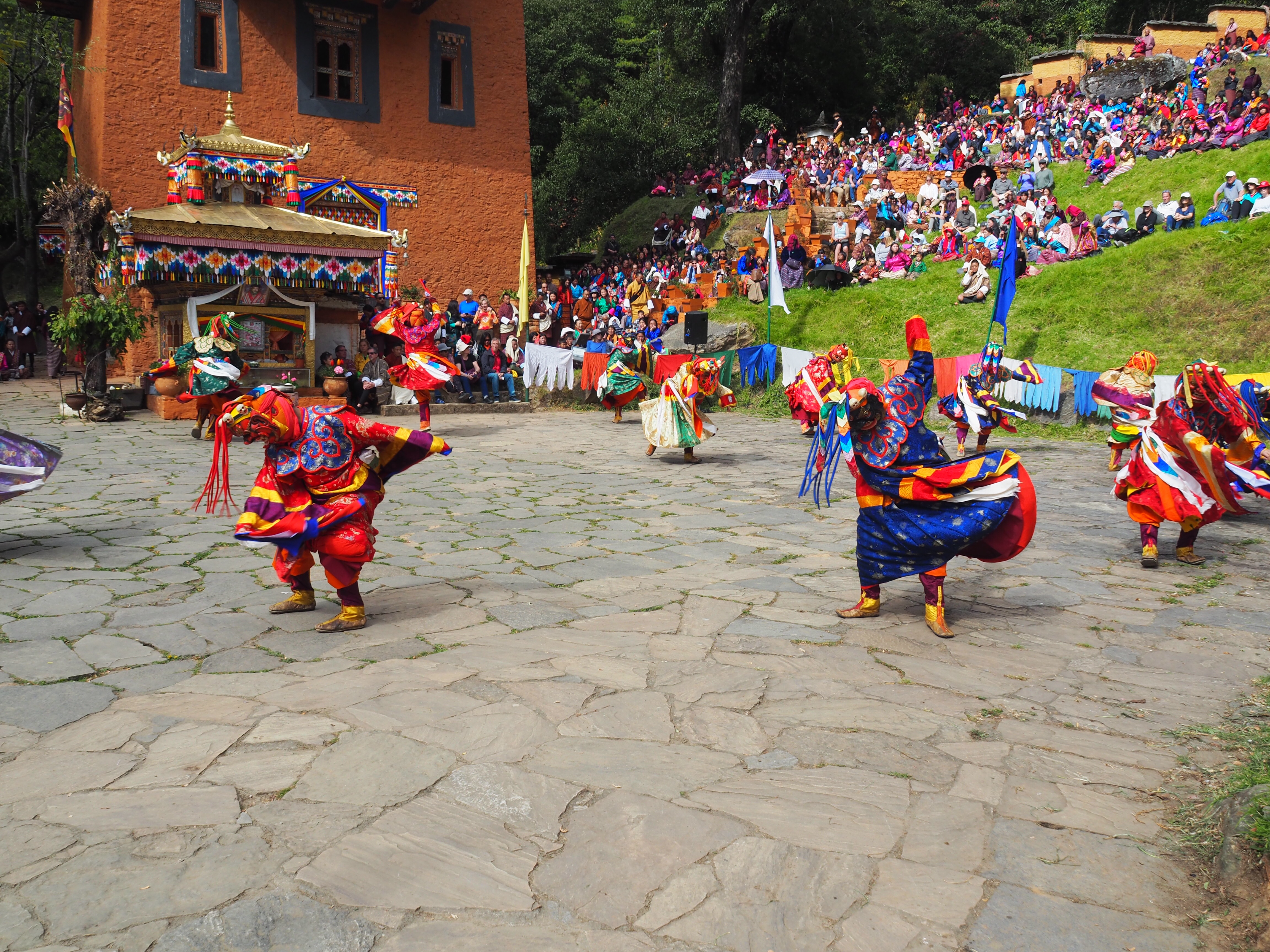
The tsechus have a series of ritual religious dances that are performed by dancers in elaborate costumes. Some of the dancers were monks and some were from a national dance academy. We saw people walking great distances to attend and they were dressed in their finest clothing. Wang told us later that he wore a fancier gho, the traditional Bhutanese man’s outfit, because we were attending the festival. The Bhutanese believe they attain merit by attending.
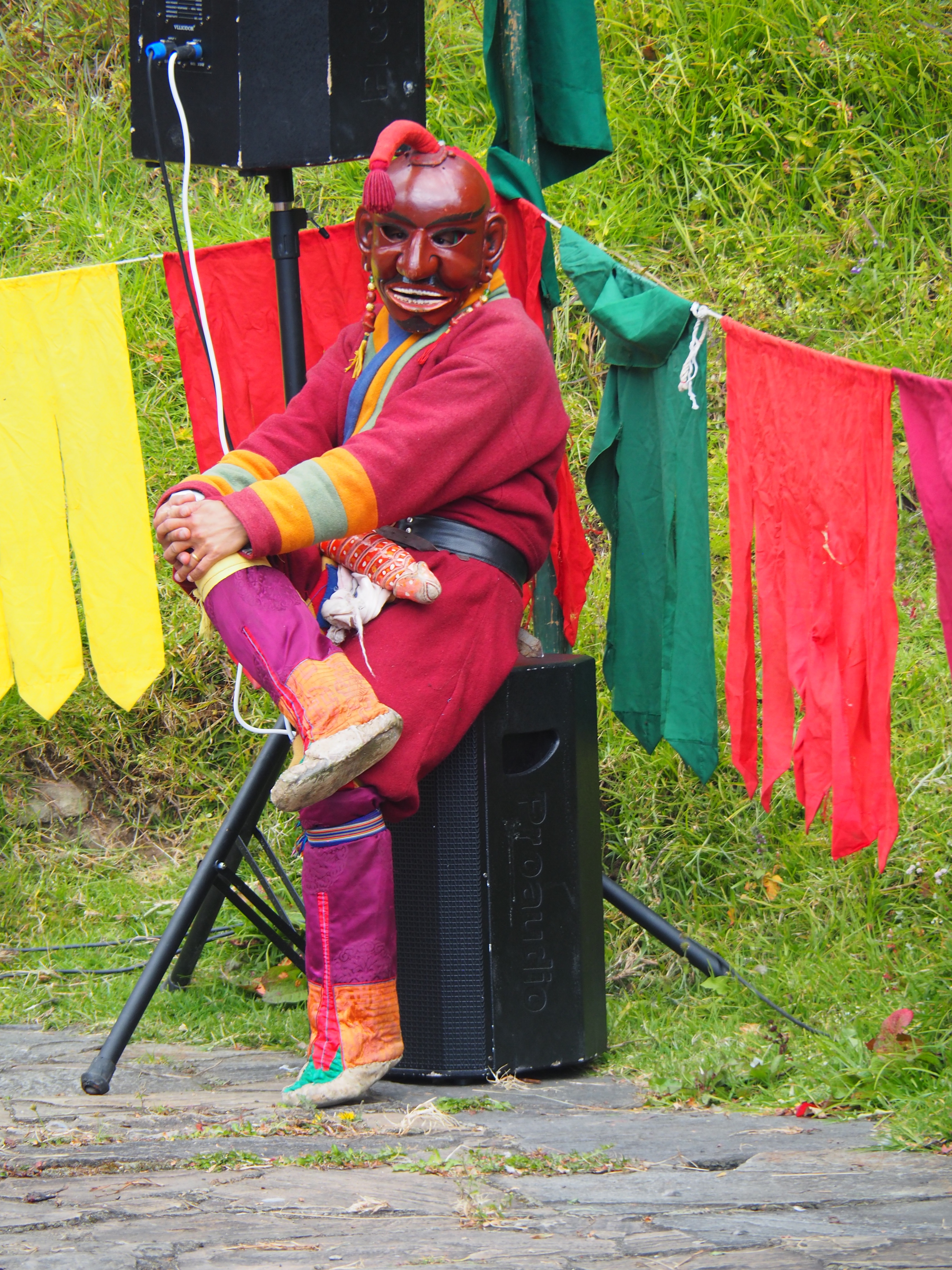
During the dances atsara, we would call them clowns, mimic the dancers and perform comic routines. They wear masks and one of them carries a wooden phallus. We had to ask Wang about the phallus….he said this is used to seduce demons and also symbolizes fertility. Mostly, the same dances are performed at all festivals. There were two that were unique to this one.
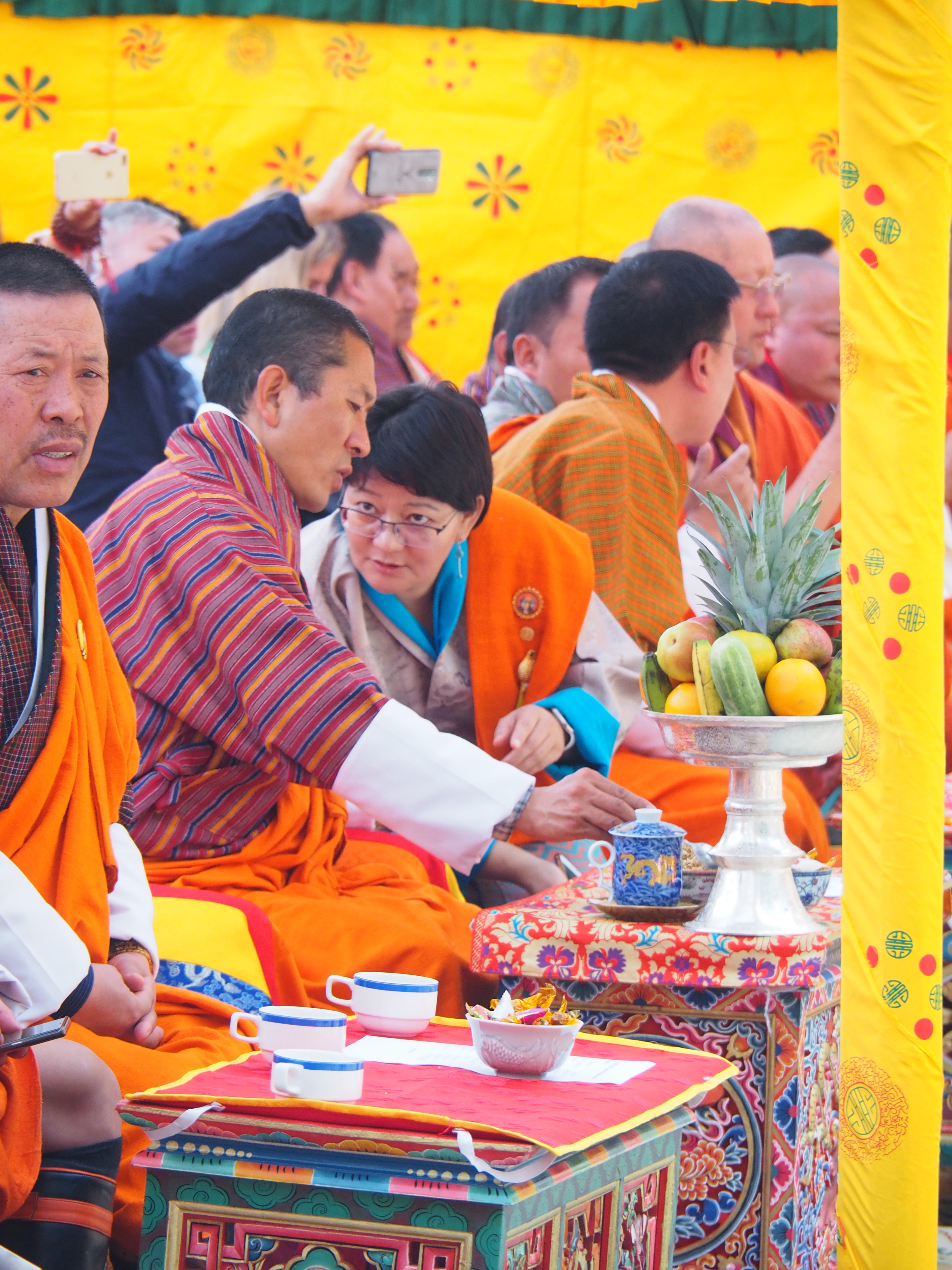
The Prime Minister, who was elected last year, was in attendance. He is a urologist and still practices two days a week; he is the only urologist in the country. Both being well known as a physician and the fact that he promised wifi for the entire country helped to ensure his election! He was joined at the festival by numerous other government dignitaries, including the only woman minister who serves as the minster of health. This particular festival is fairly new. It started in 2003 to celebrate the end of an uprising on the southern border. It became open to the public about six years ago.
Here are some pictures from the festival:
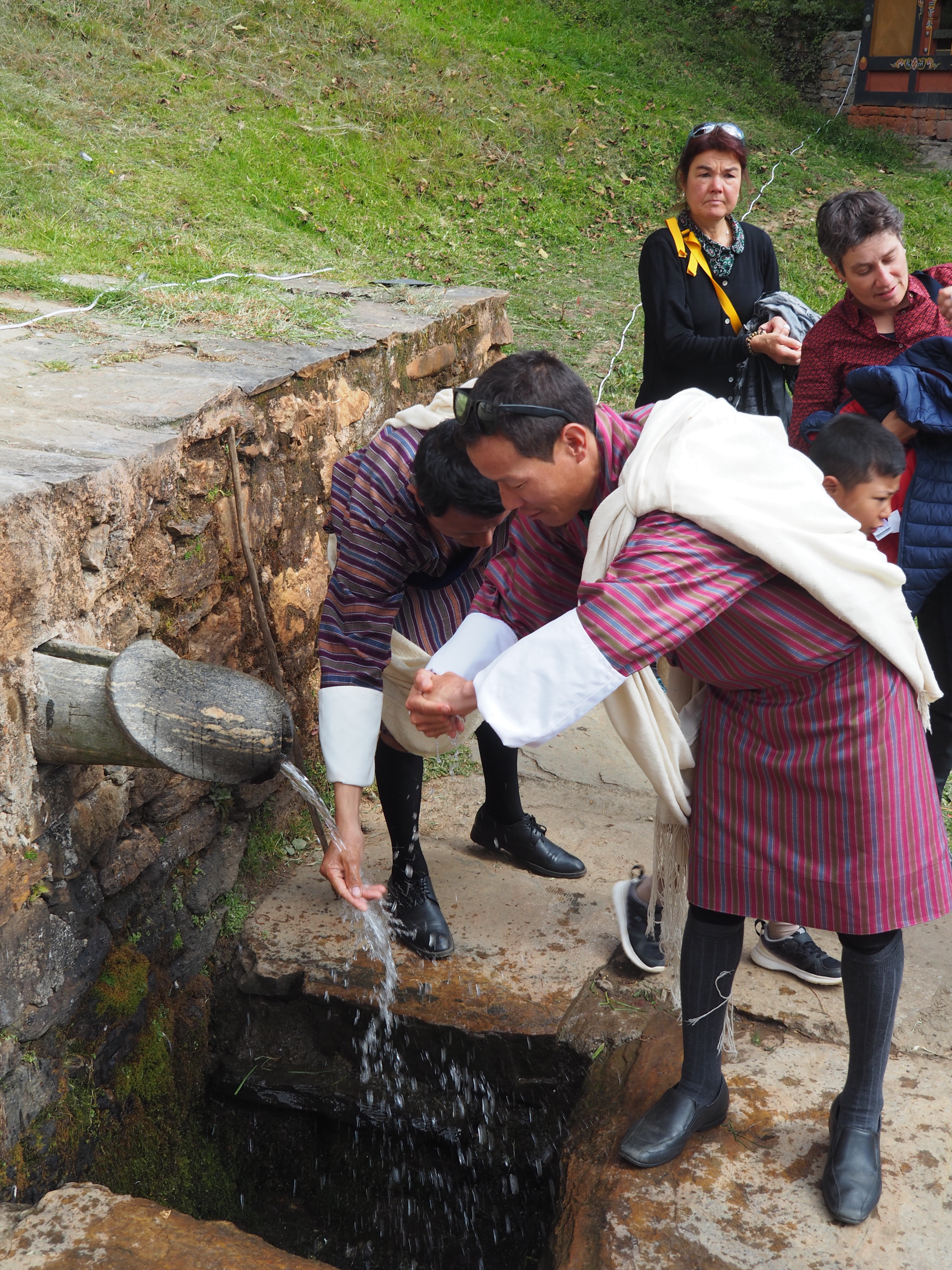
Attendees pass by the prayer wheel as they enter. Our guide, Wang, in his traditional dress. The white scarf indicates he is a commoner. One of the clowns. An attendee with her prayer wheel. The prime minister and health minister enjoying the festivities. It looks like they are conducting a bit of business as well!This is the place with the holy water at the entrance!One of the traditional dances. This one is performed by the monks.
We left at the same time as the prime minister, though the dancing wasn’t yet over. We made our way to town for lunch at what Wang told us is the best restaurant in Thimpu.
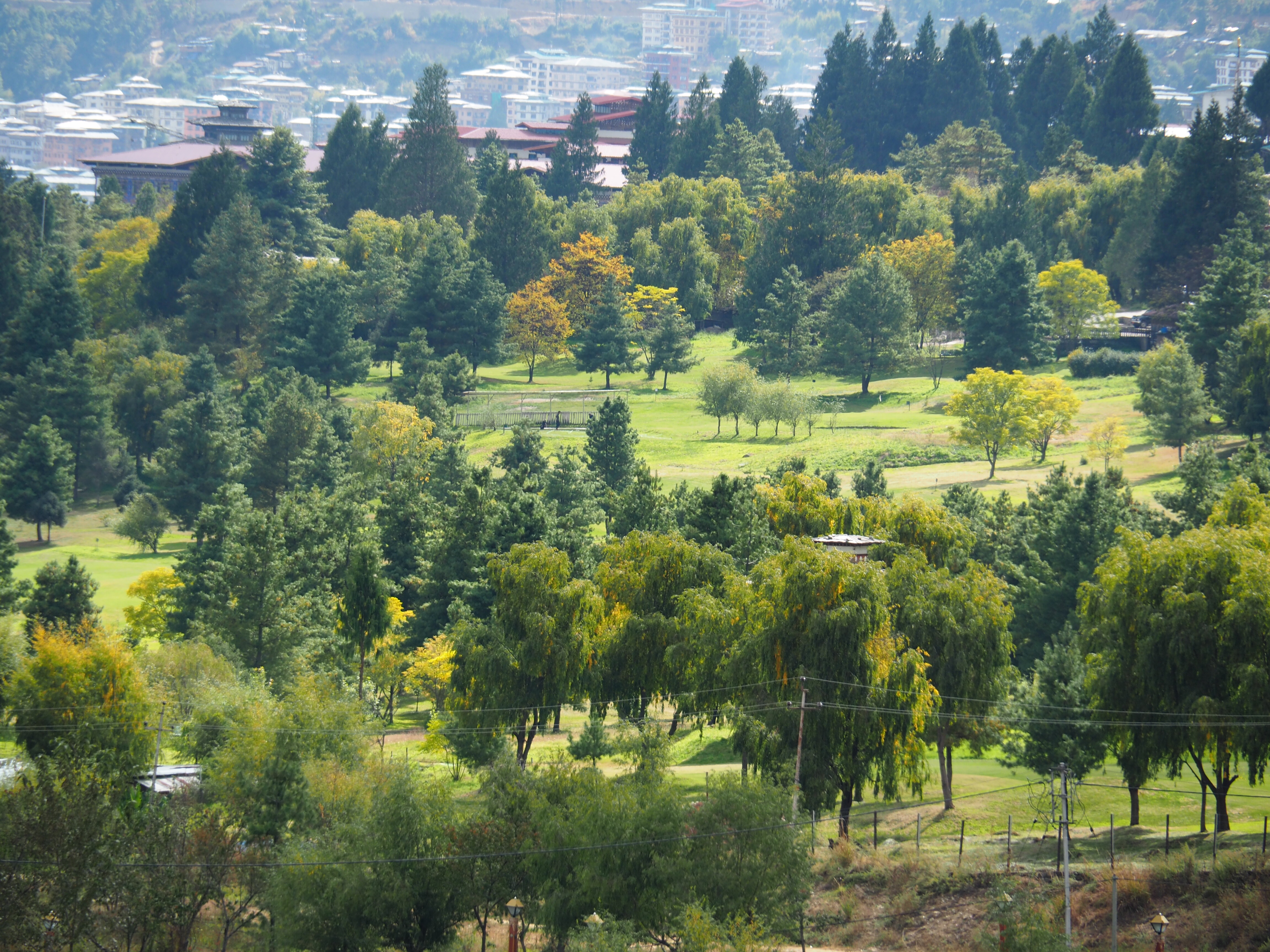
On the drive, we made a stop to look at the valley and saw the world’s highest nine hole golf course, as well as the parliament complex.
Golf course.
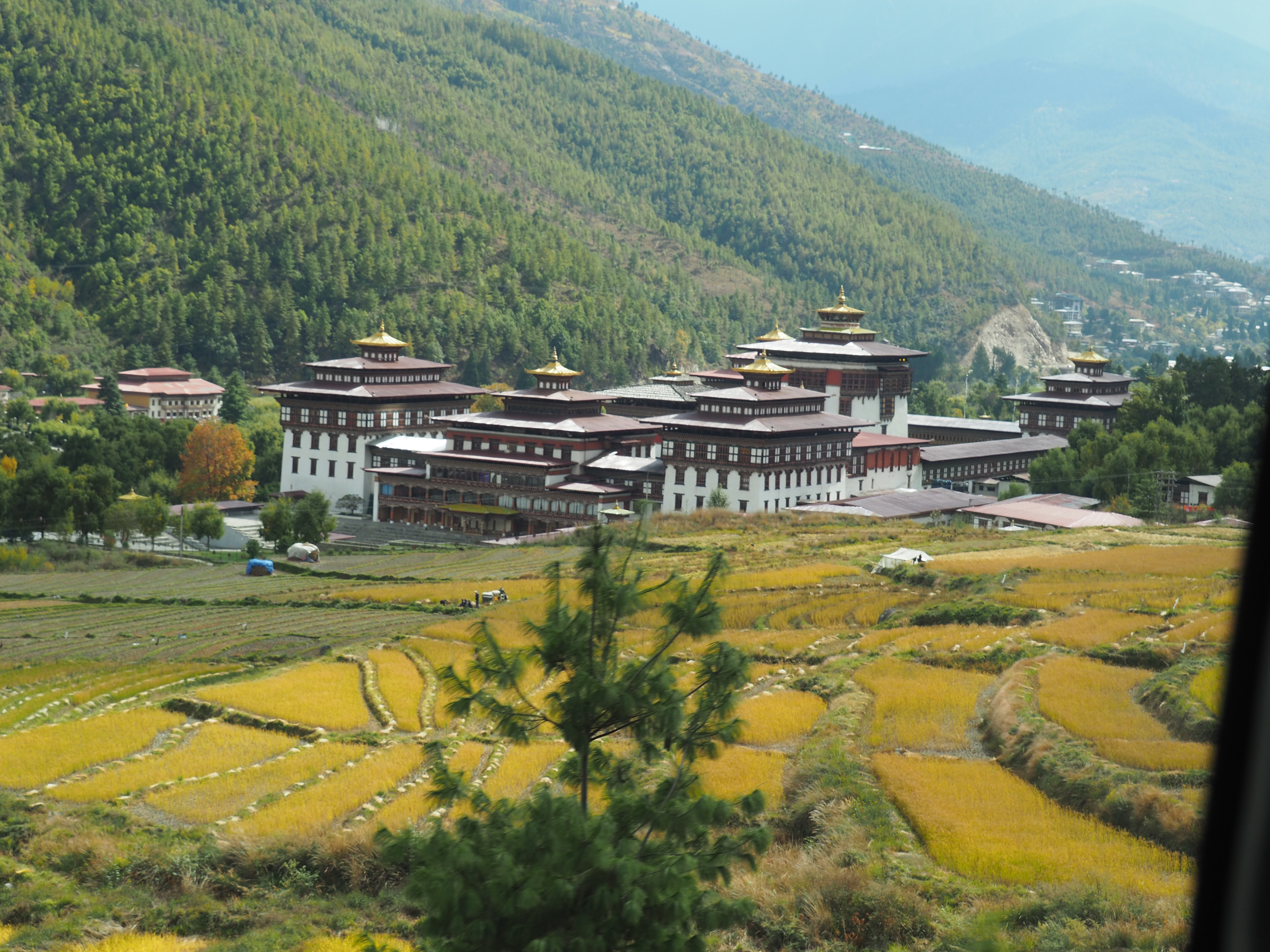
Parliament complex surrounded by rice fields.
During lunch, Wang told us a bit about his family. He is one of ten siblings and comes from the central part of the country. His wife has three siblings and comes from the west. In Bhutan, the girls inherit the parents’ property. Wang’s eldest sister is tne one who inherited from his parents. When his father retired from teaching, his sister became responsible for paying for his education.
Wang and his wife lived together for a number of years until they had their son. When he was born, they got married so they could register the baby’s birth. His wife works in the fashion business in some way, I think she may do something in retail. It sounds like his wife may inherit her family’s farm. If that happens, Wang and his wife will be responsible for planning two ritual per year, in addition to managing the farm operations. This is quite a responsibility because they need to entertain the local villagers and everything must be perfect. In Bhutan, women are the primary farmers.
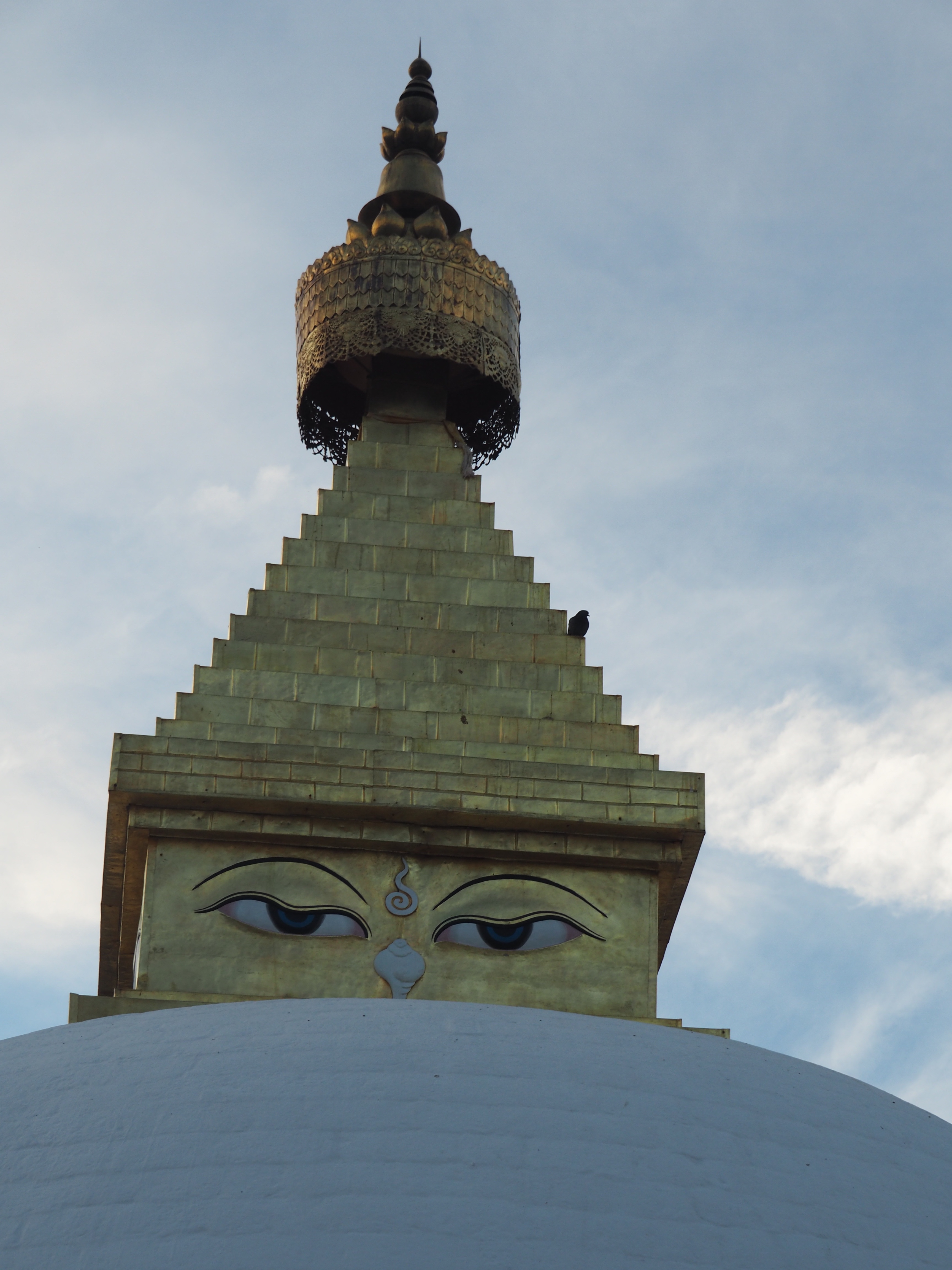
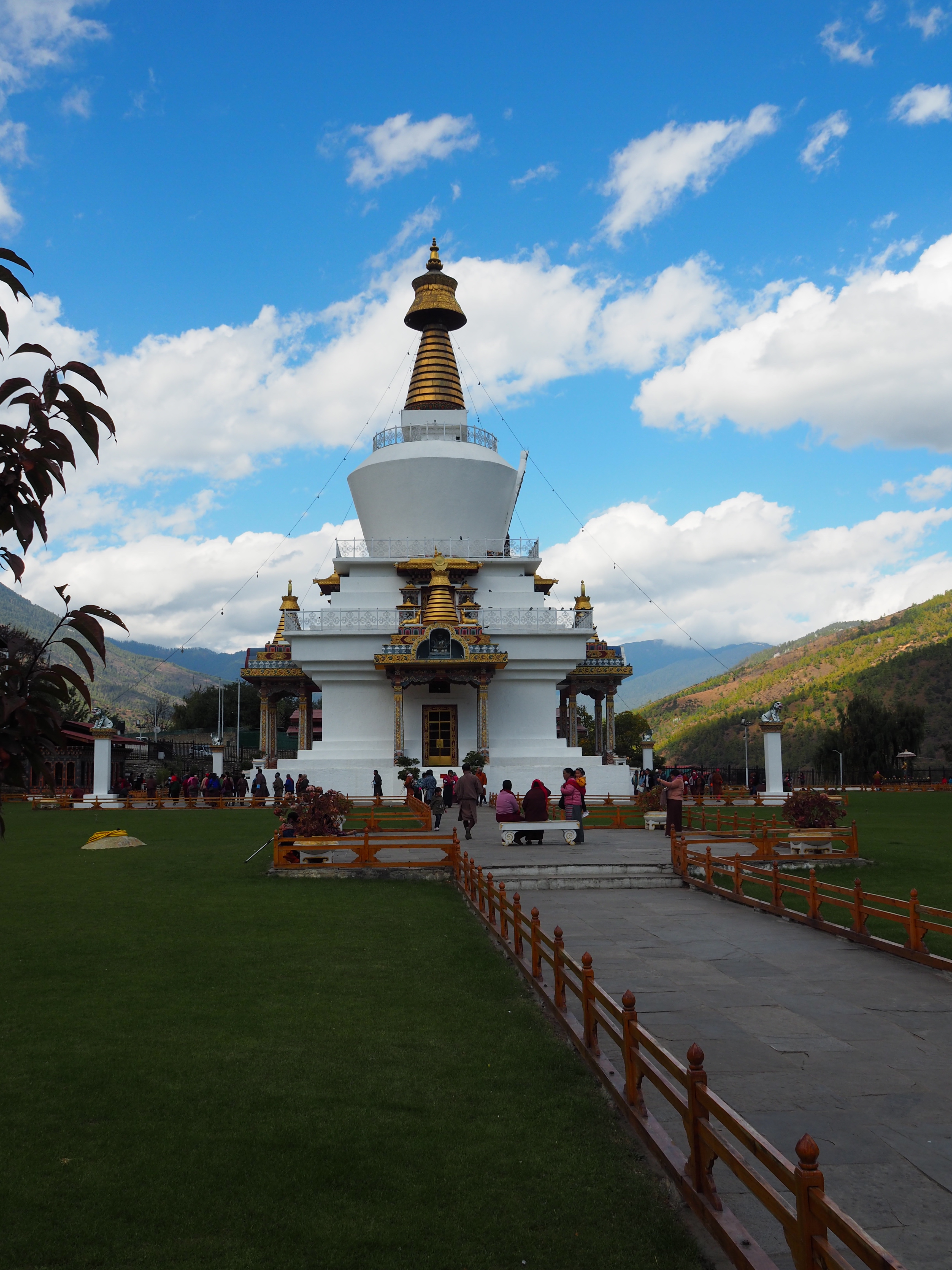
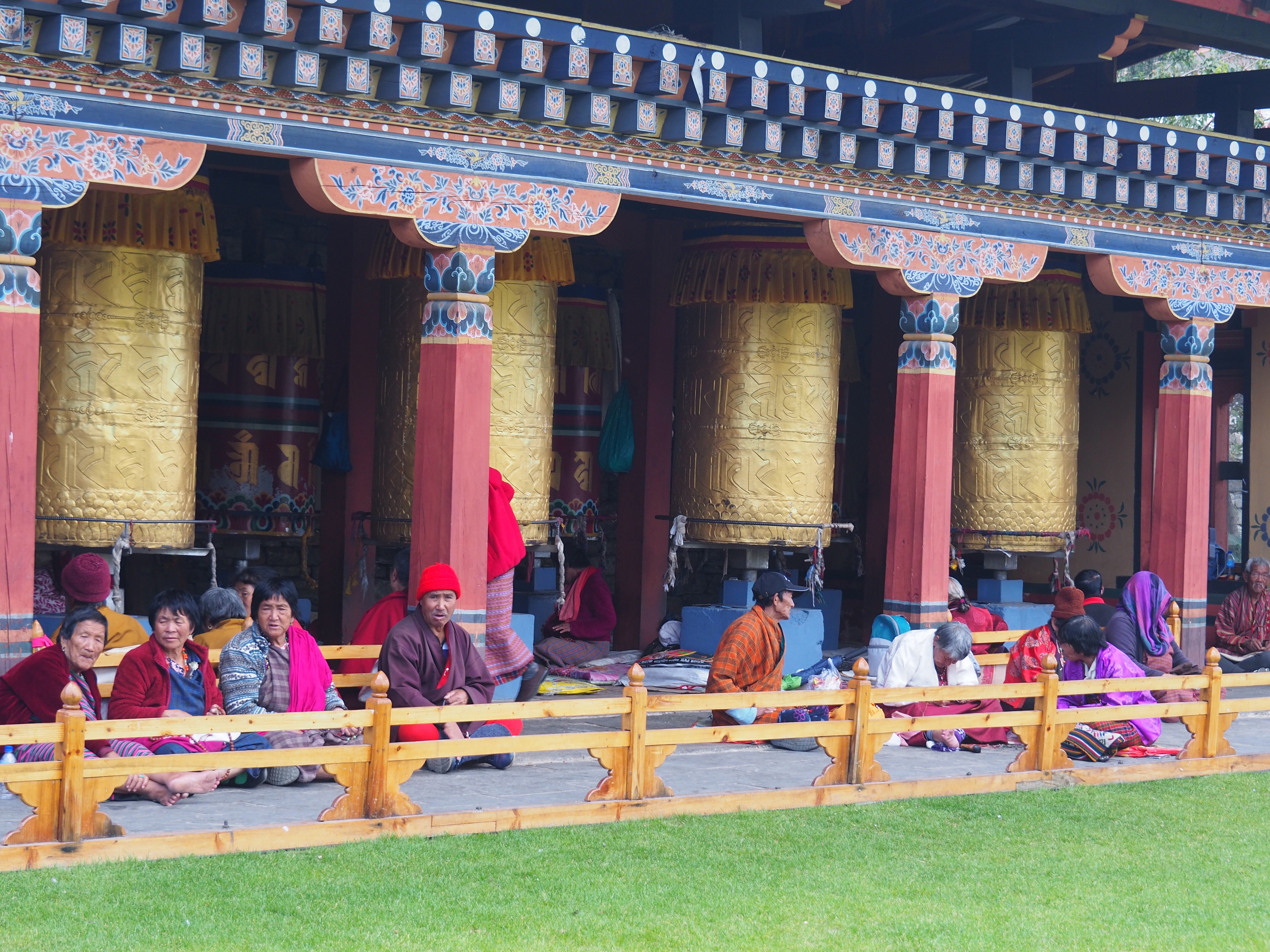
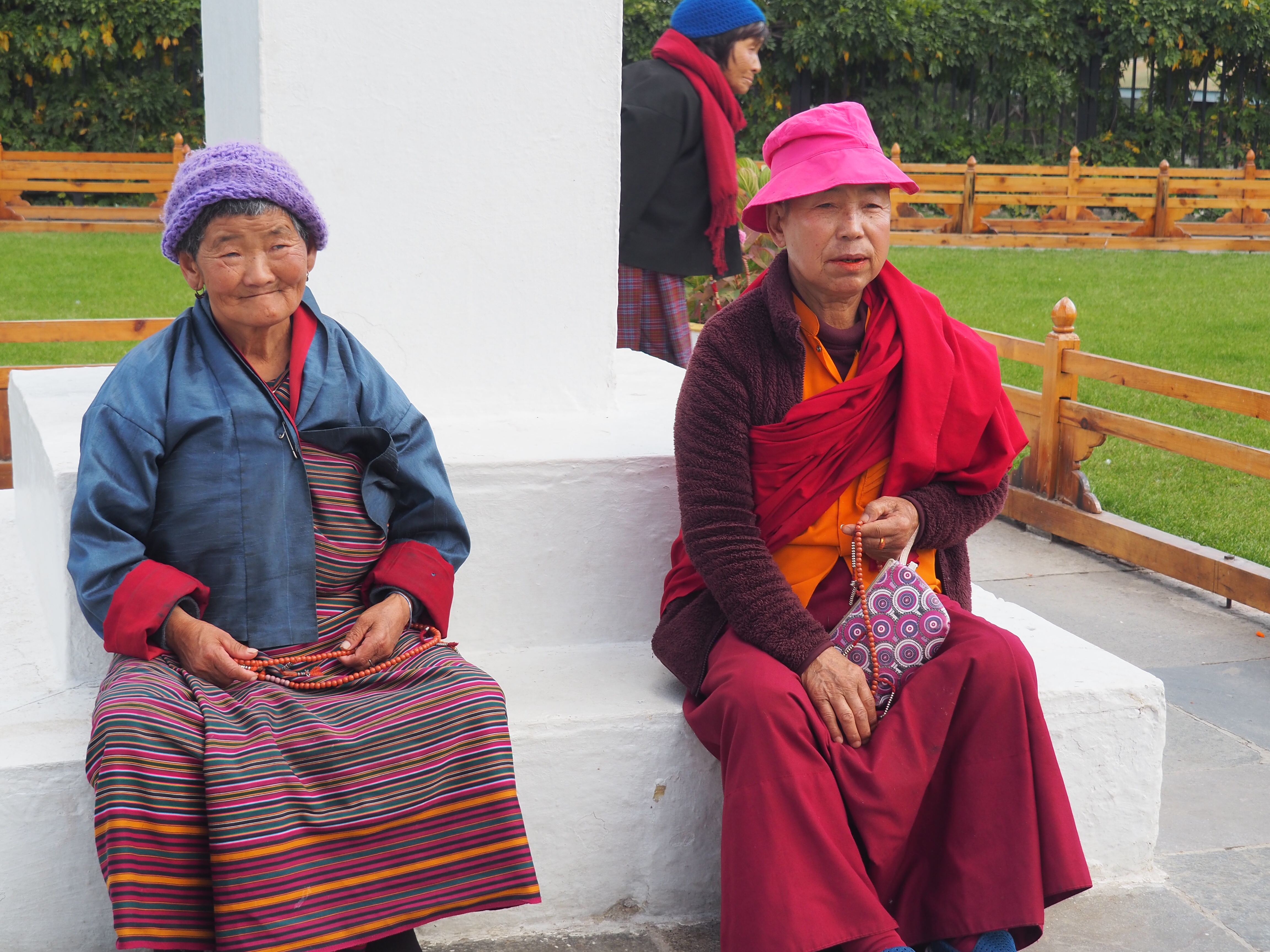
After our lunch, we visited the National Memorial Chorten, a Tibetan style stupa which was built in 1974 as a memorial to the third king. Each day many Bhutanese, particularly older people, come to pray, spin the prayer wheels and walk around the grounds. Many of the people spend the day there and walk around the stupa 500-800 times! This place was consecrated by an important llama from Tibet. It is held in place by four wires because it is so important, it must be “held down”.
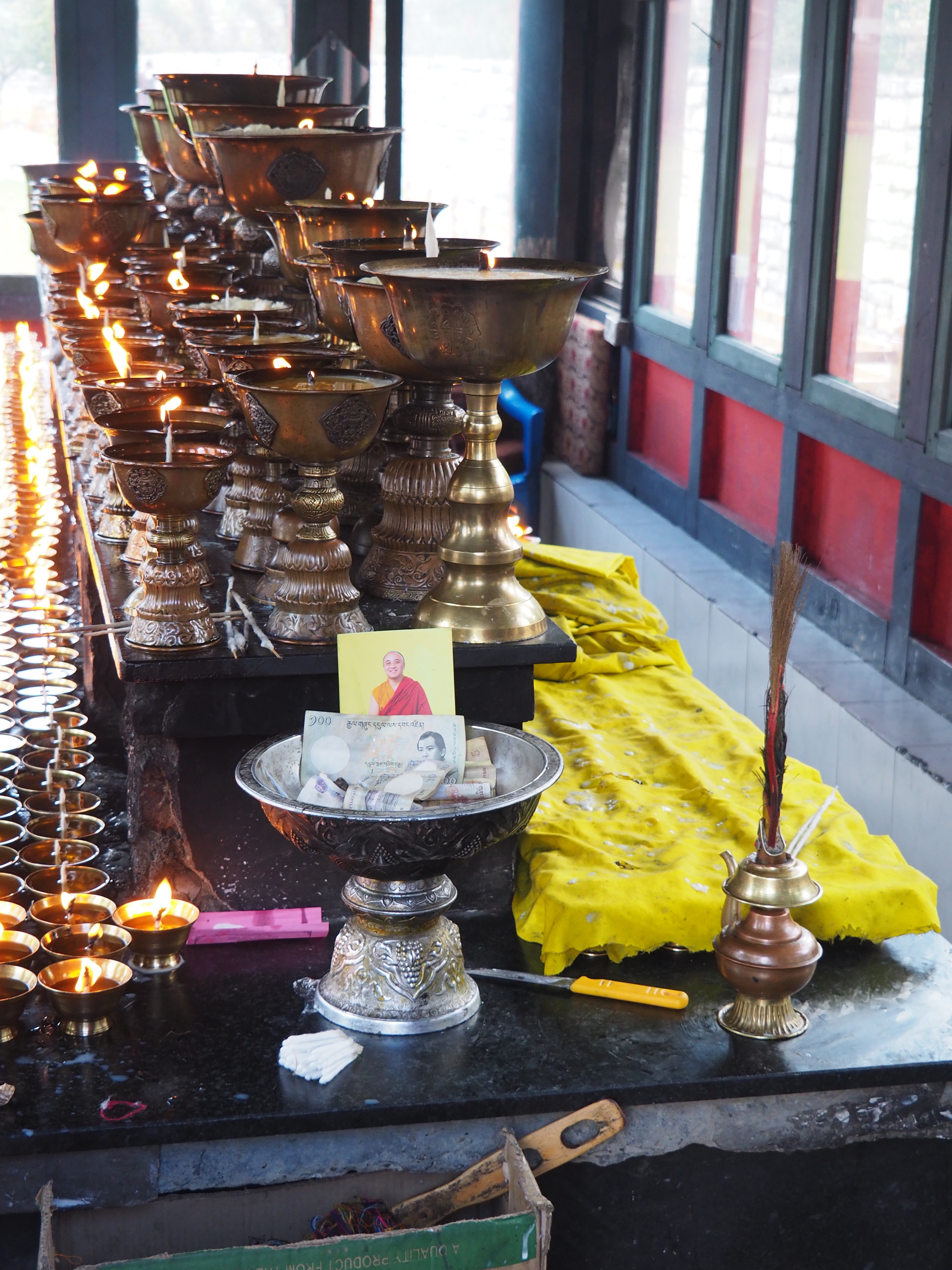
The prayer wheels. A place to light a “candle “ snd make an offering.
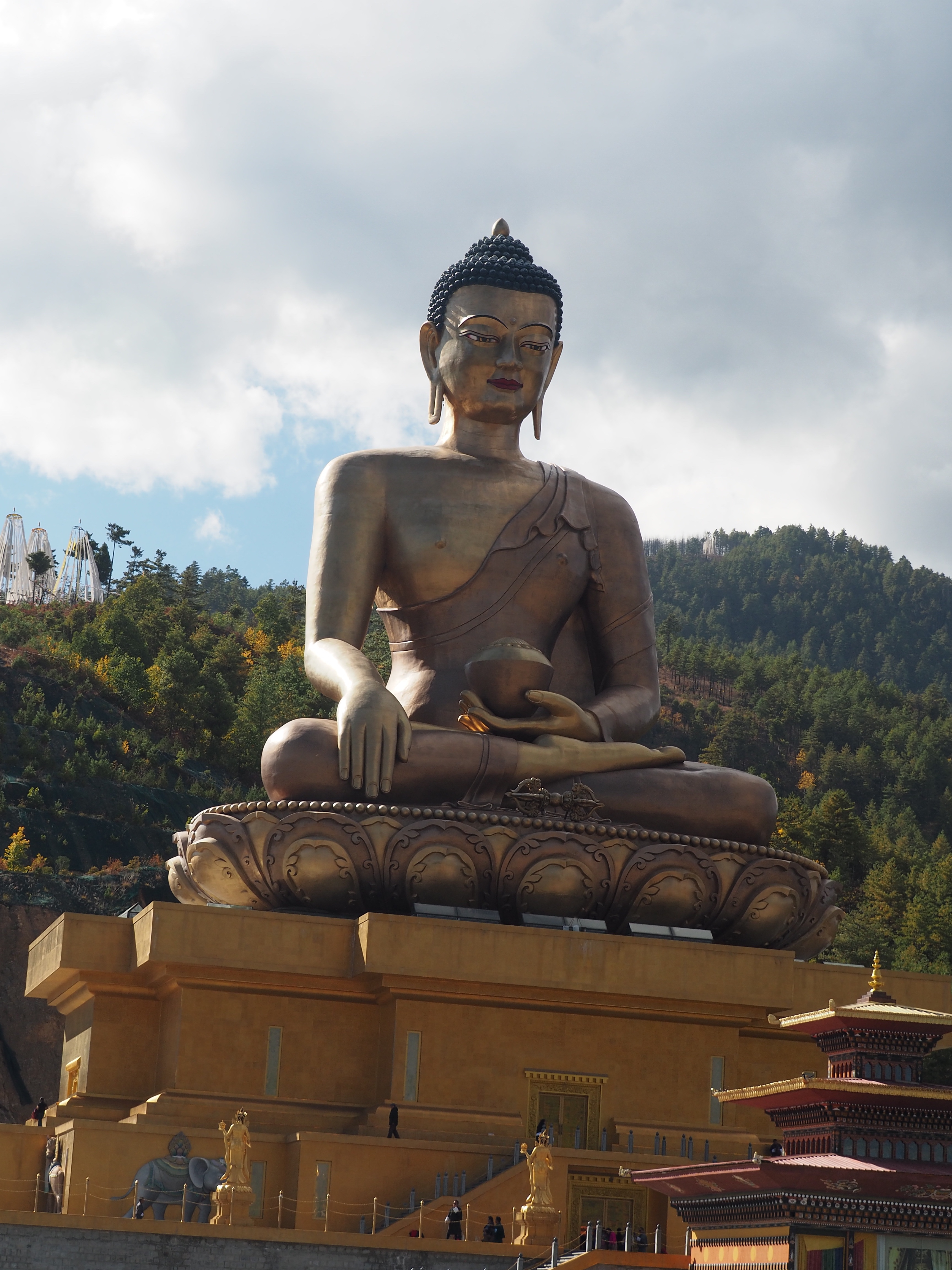
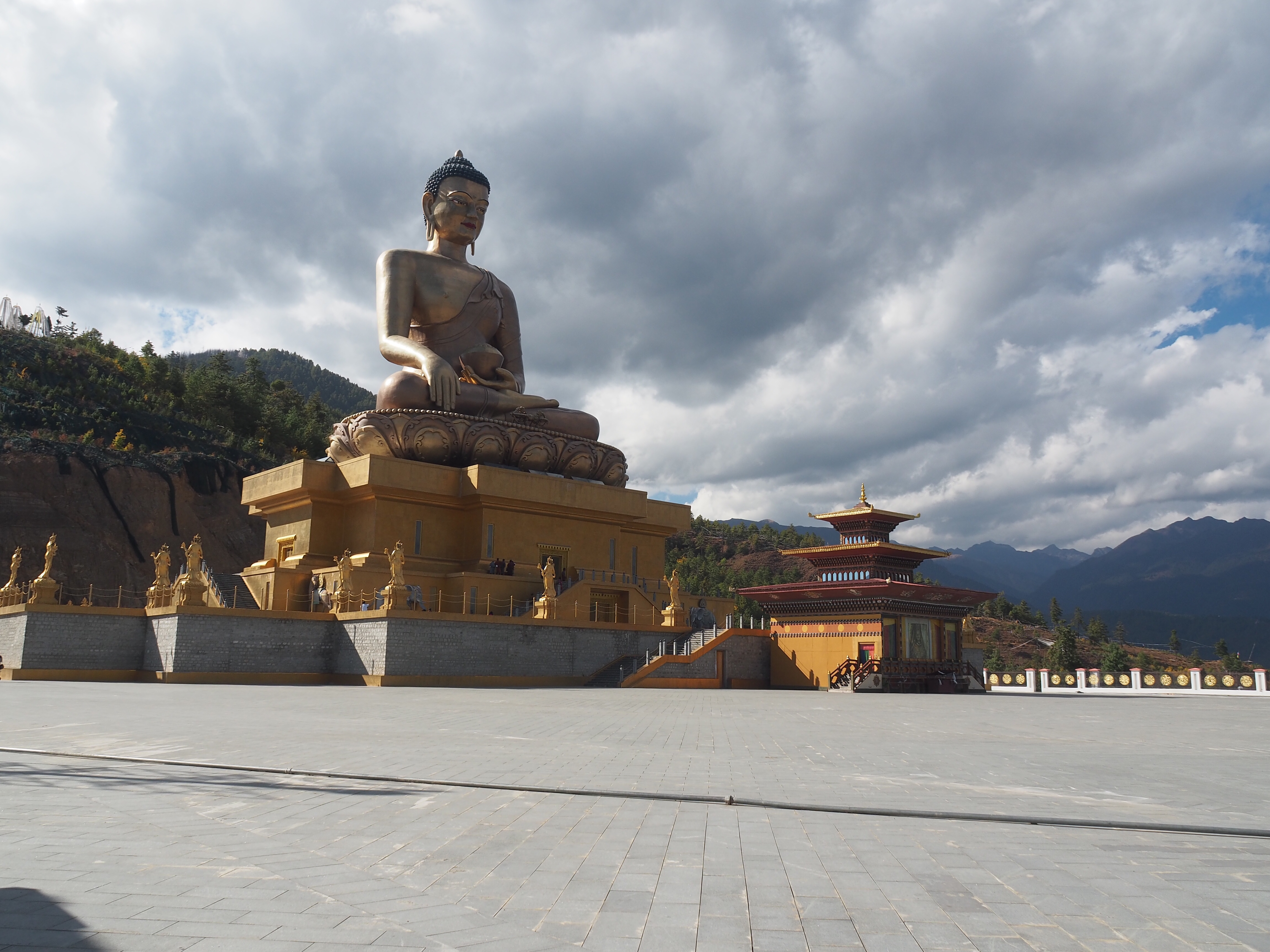
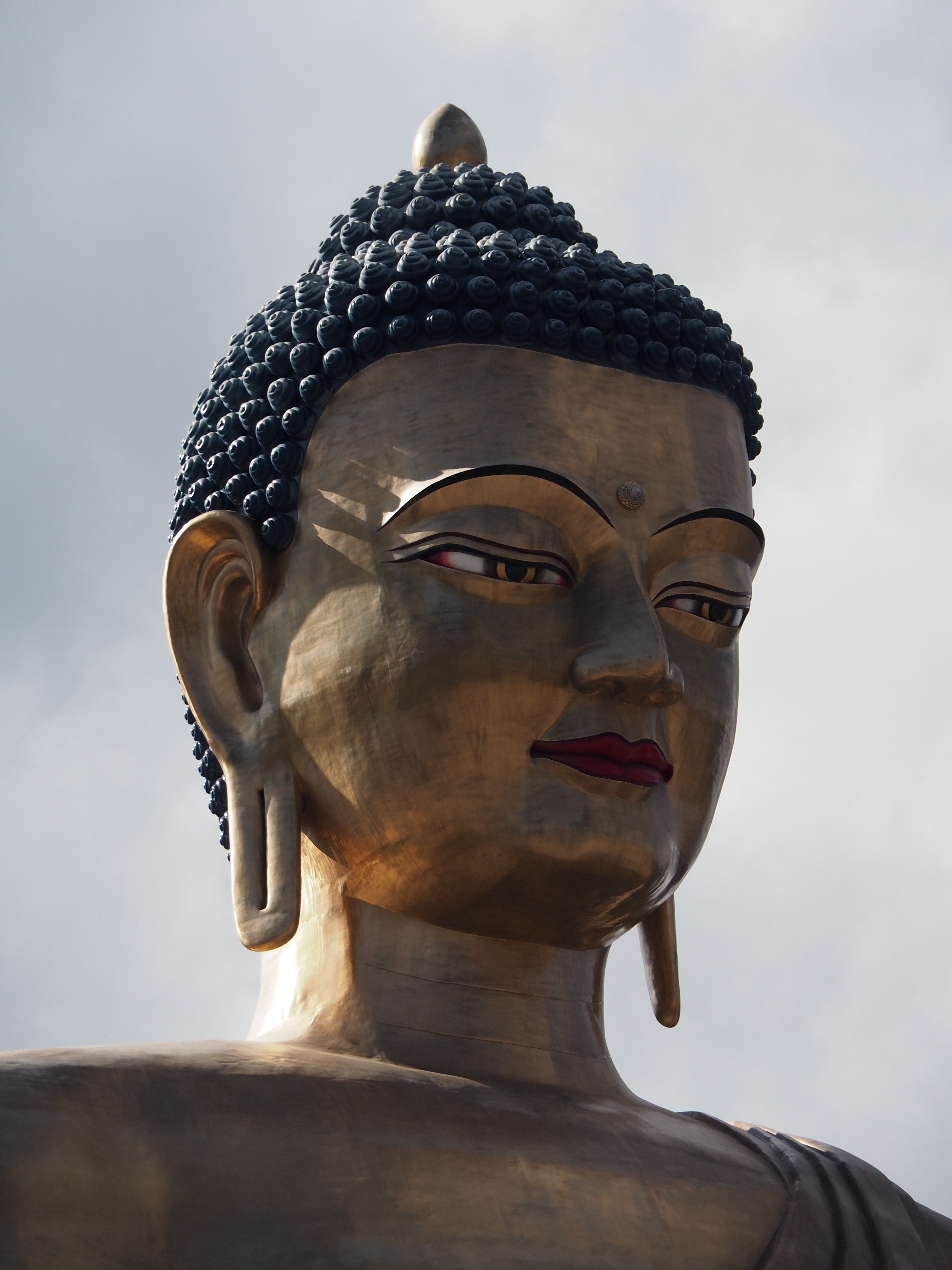
Our next stop was high atop one of the hills where we saw was is reported to be the biggest Buddha in the world, the Buddha Dordenma. It is 51 meters tall and sits atop a huge three story building that houses a large chapel.
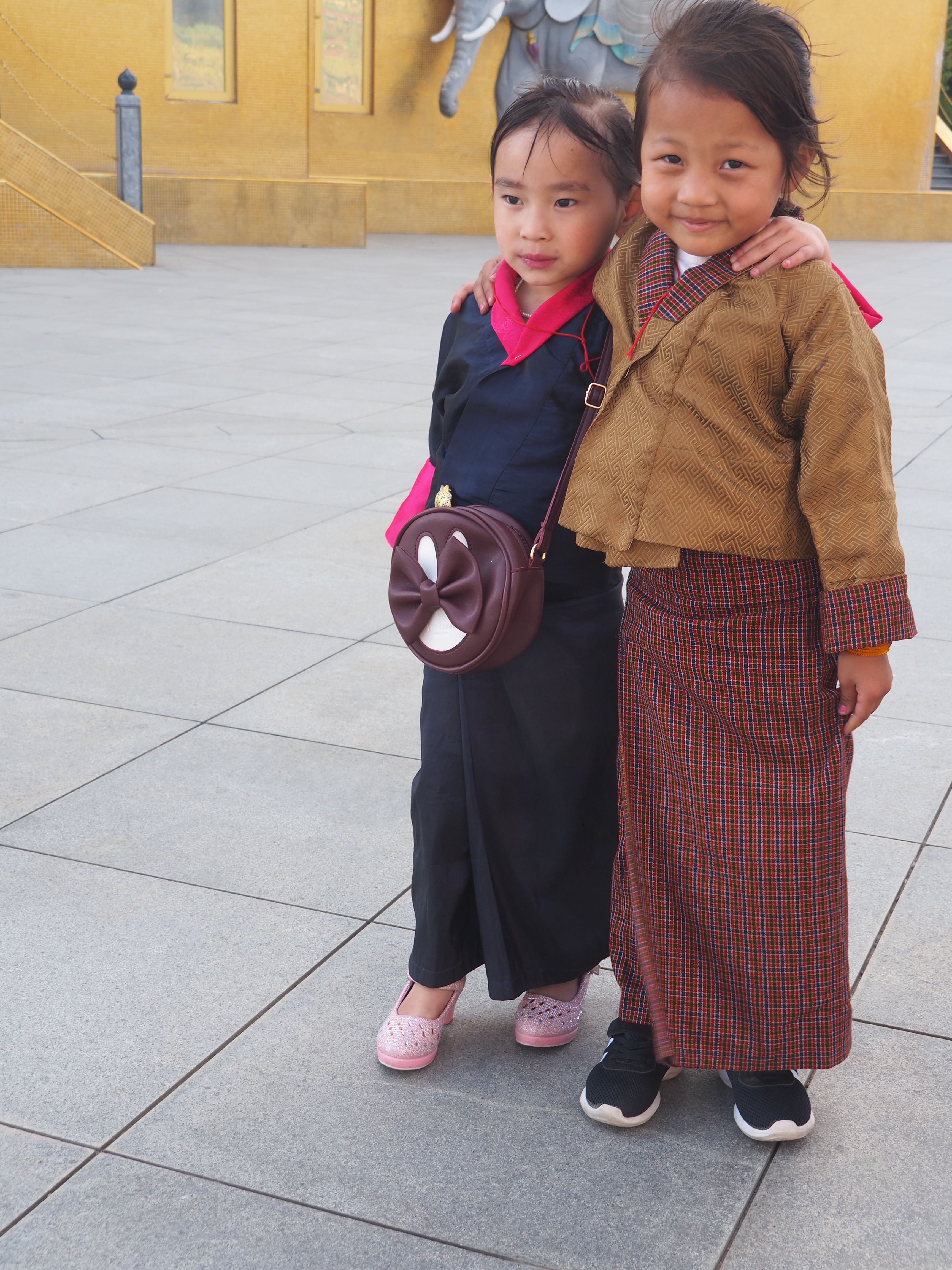
These little girls were visiting the Buddha. Maryse was getting a lesson in Buddhism from Wang.
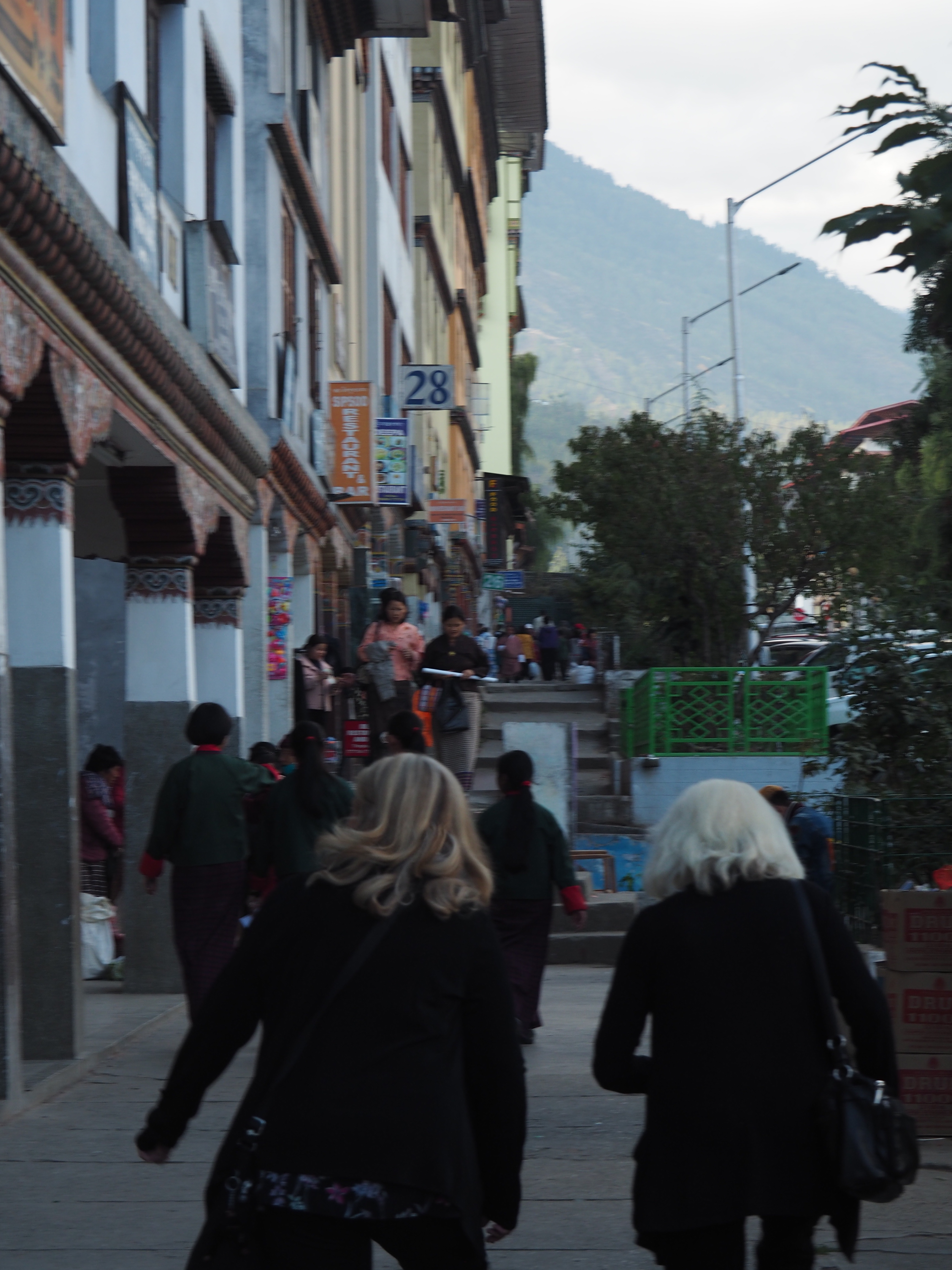
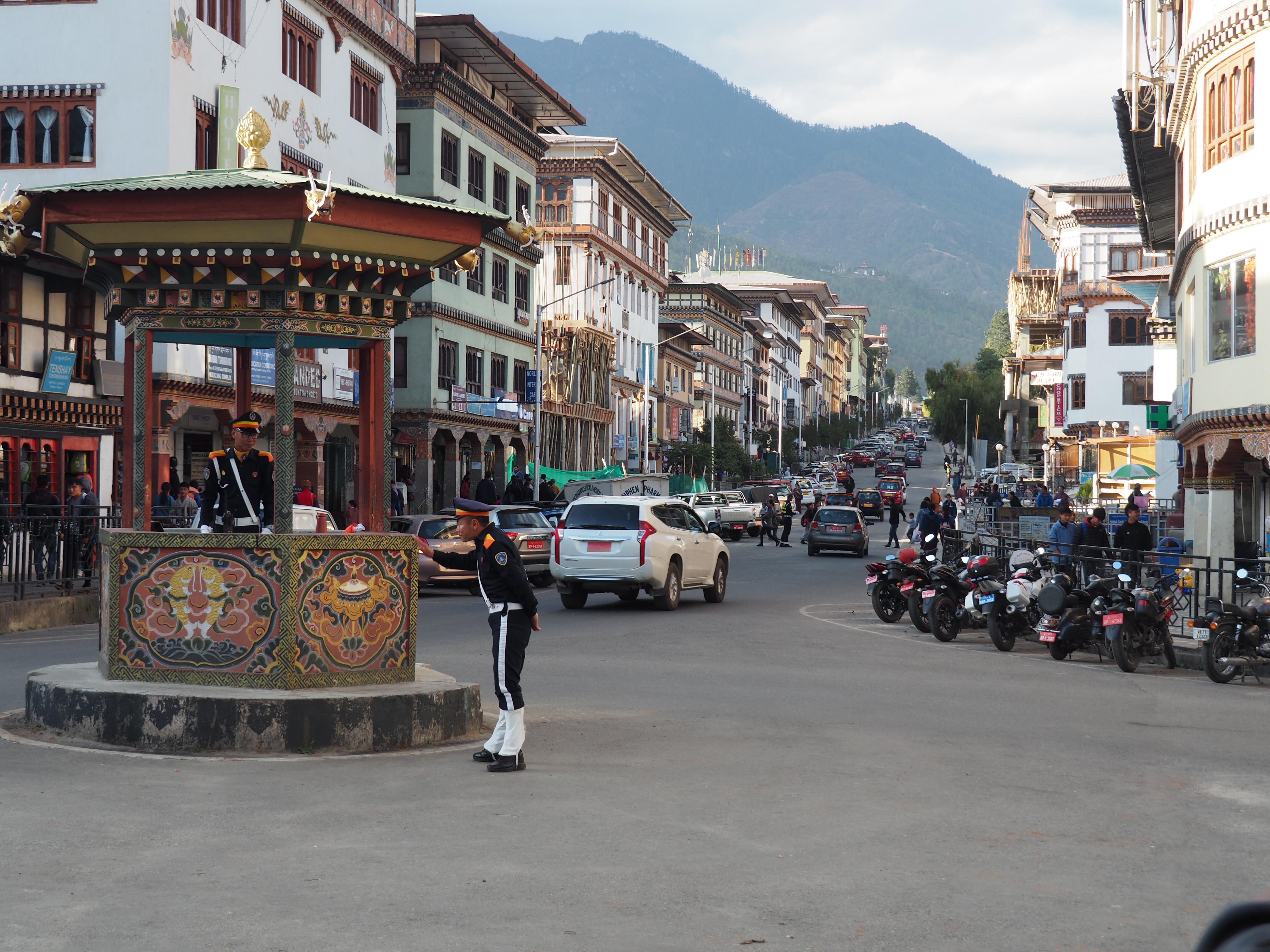
We visited a local weaving place where we were able to have a bit of retail therapy before coming back to the hotel for a very quick break. We then spent a bit of time walking through the downtown area. We saw the city’s traffic police at work. They attempted to put in a traffic light a few years ago but the people hated it and they returned to having the police direct the traffic. This is the only capital city that doesn’t have a single traffic light!
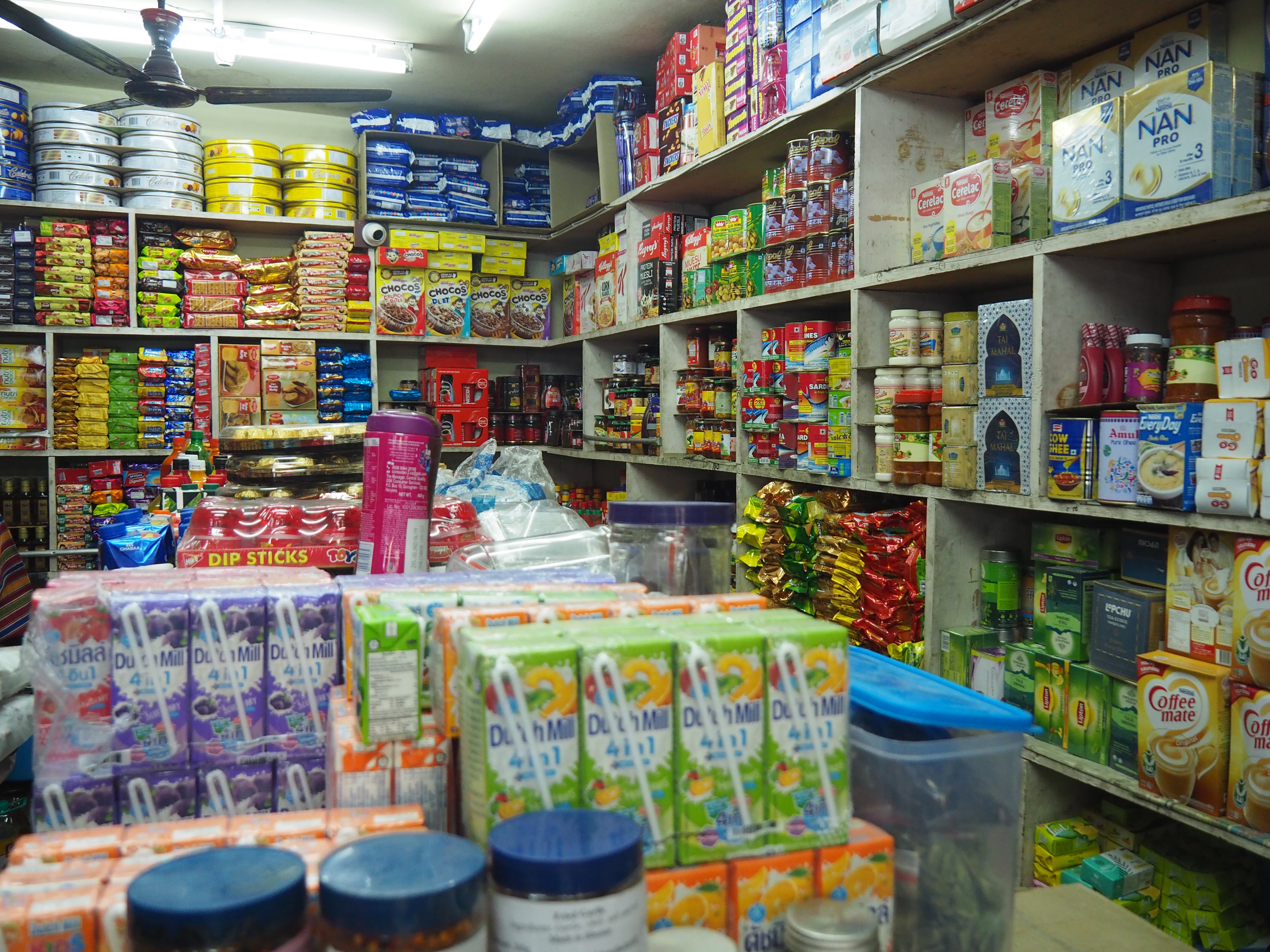
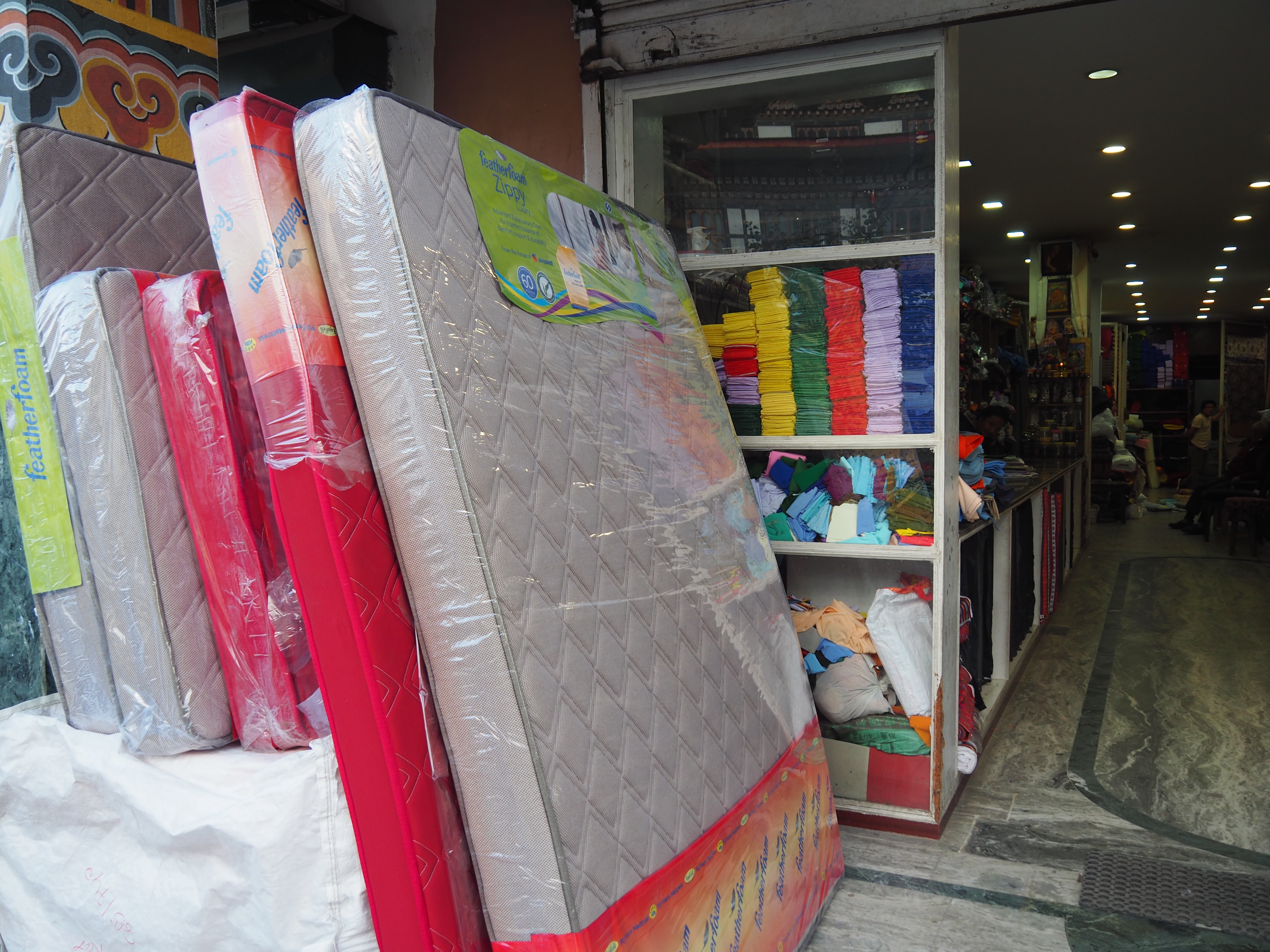
A local grocery store. You can find just about anything, including a mattress!
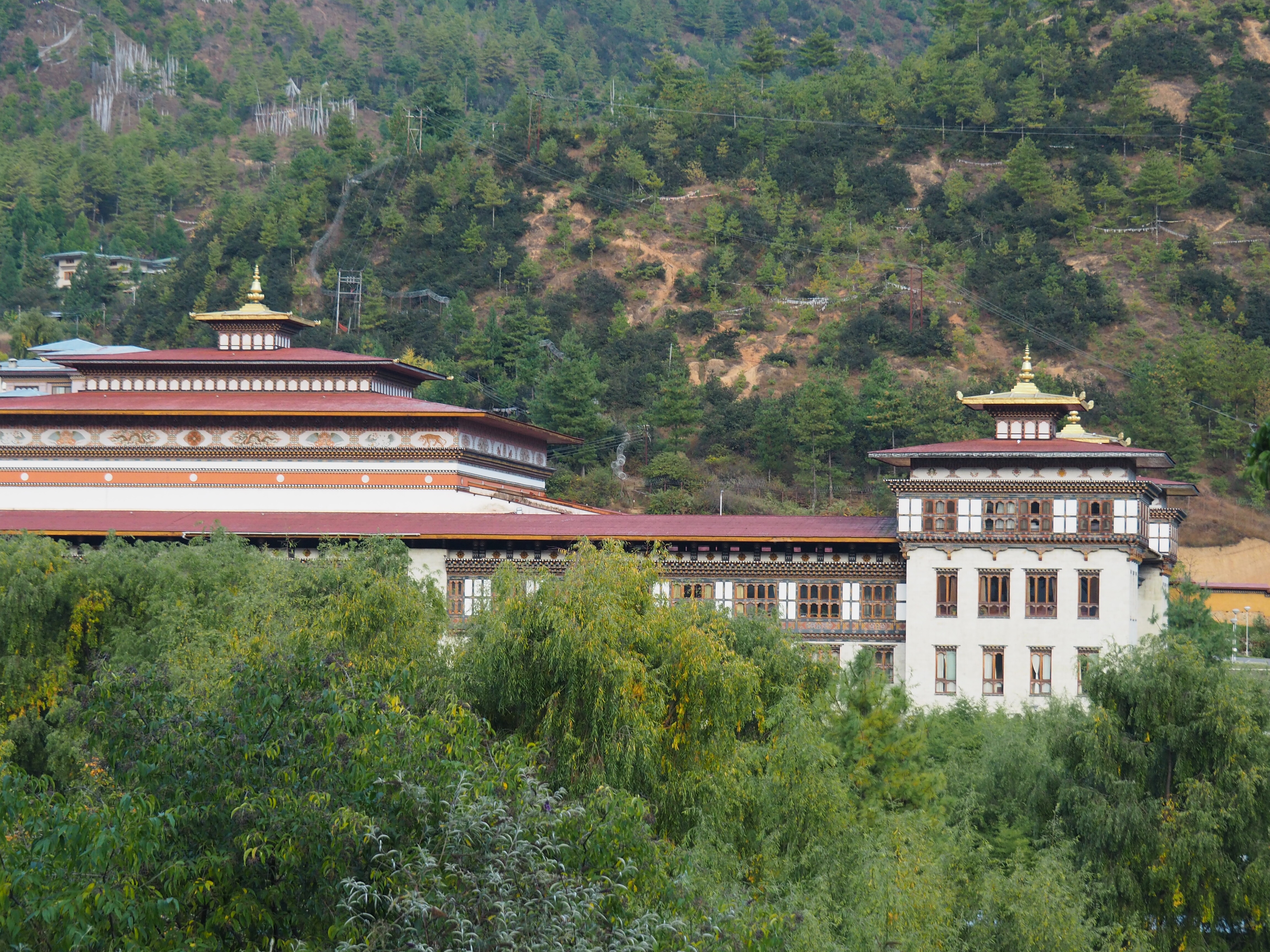
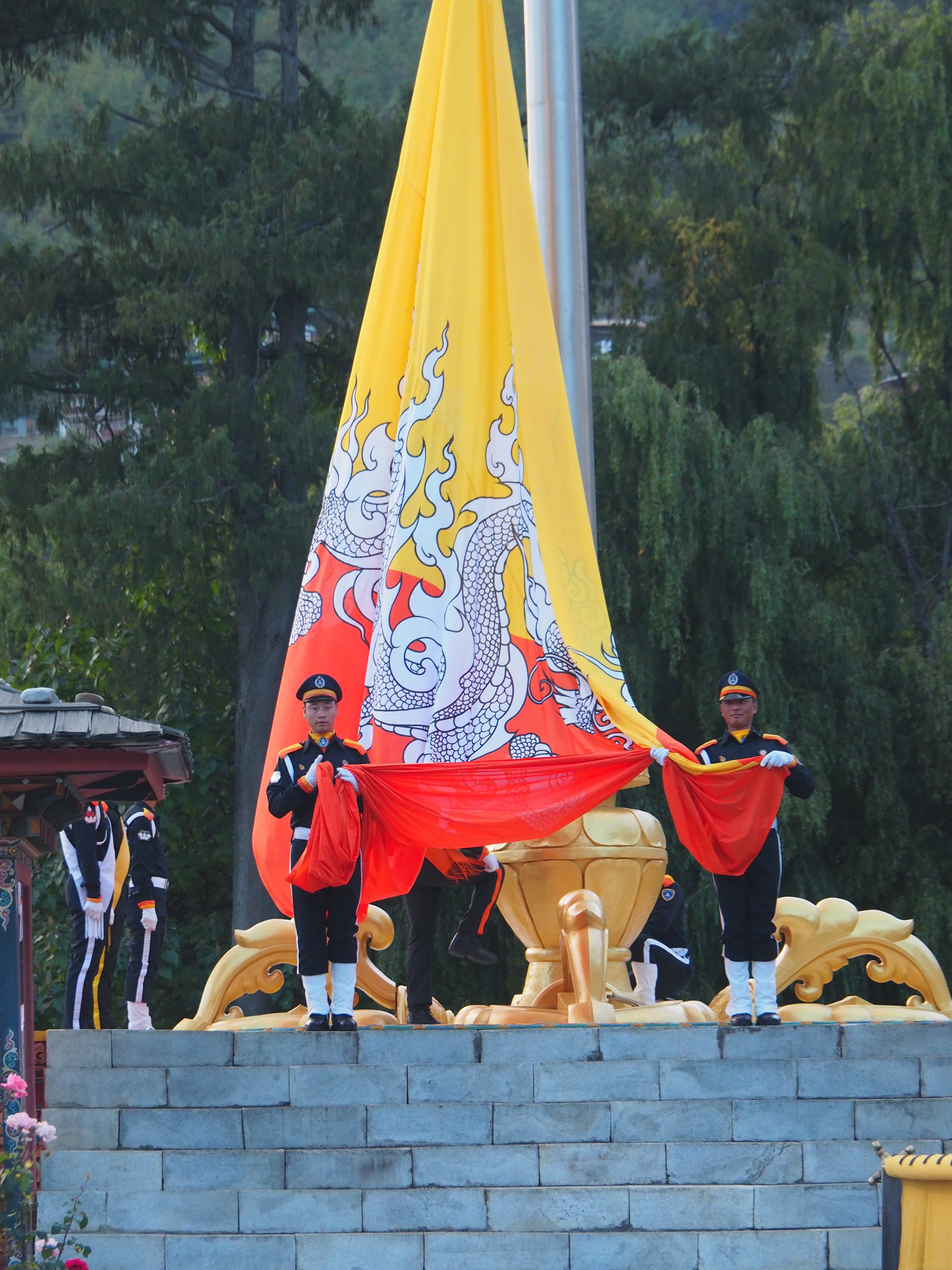
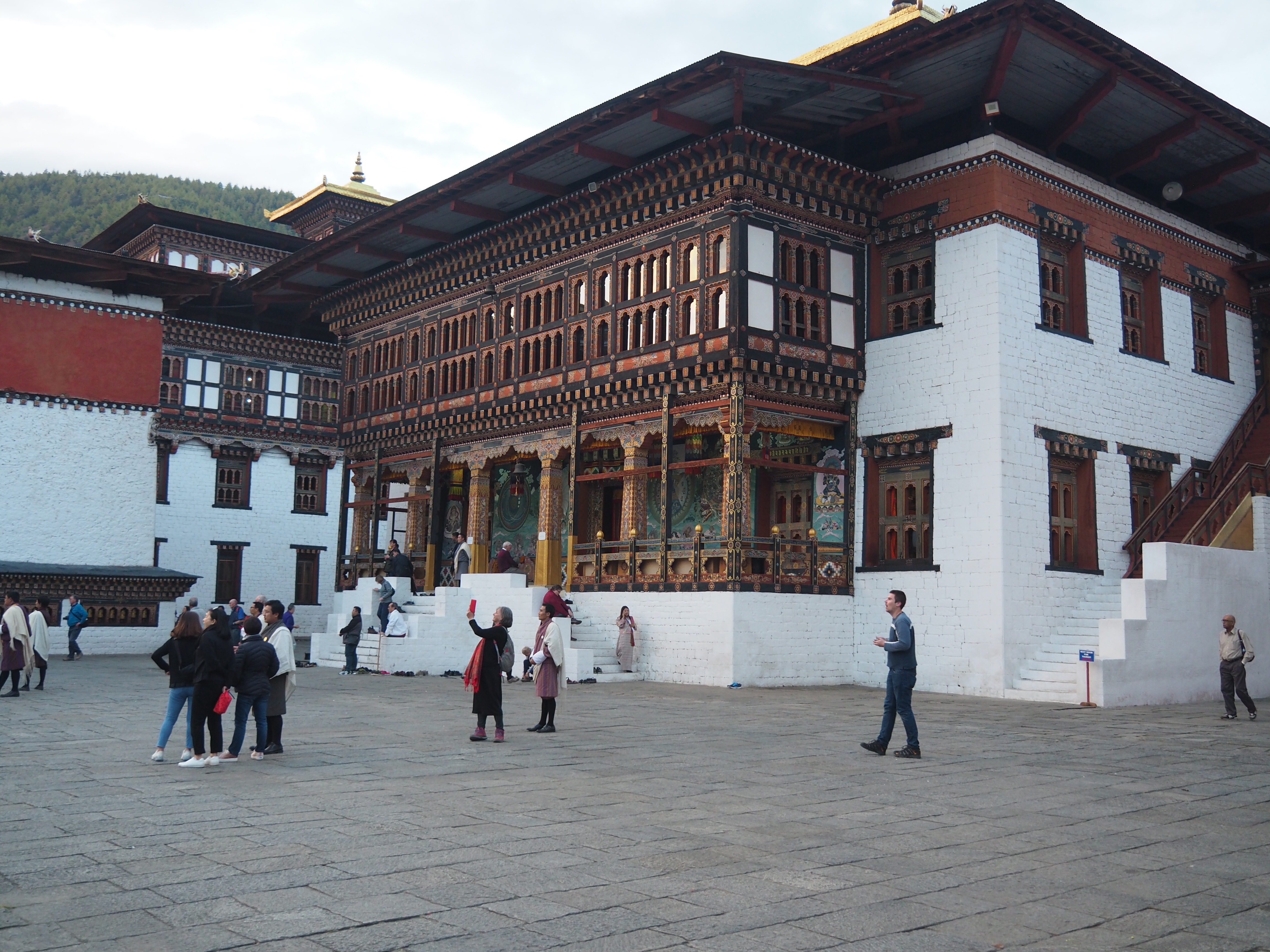
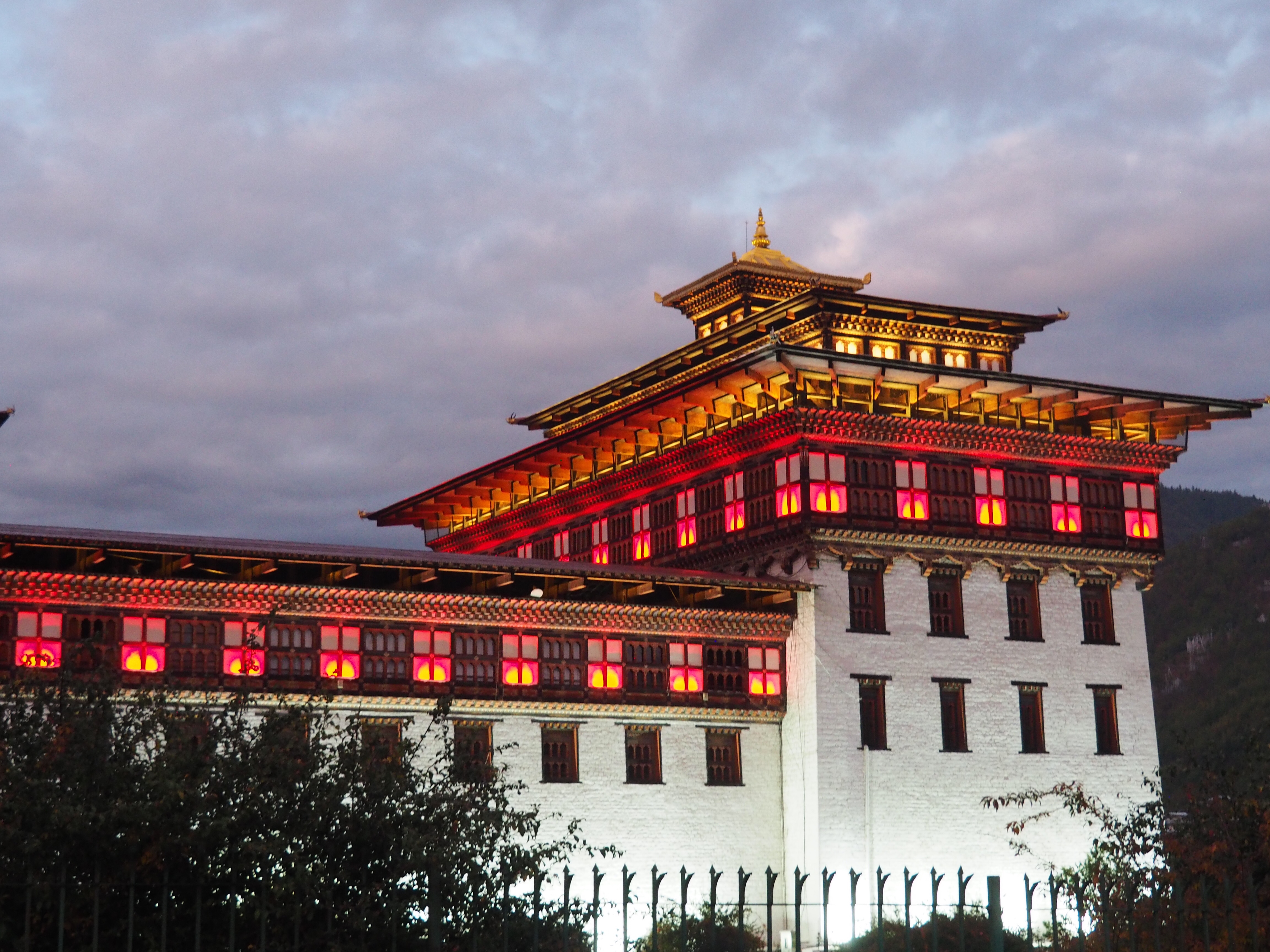
After our walk, we made our way to the Trashi Chhoe Dzong. We have learned that a Dzong is both a government and a spiritual center for a community. This Dzong is where parliament is located and houses the temple where the king is coronated. This complex is not the original one, it was restored in the 1960s to repair damage done by numerous fires and a severe earthquake. It is the summer residence of the main monk body. During our visit we saw the formal flag lowering ceremony before visiting the coronation temple.
Entrance to the flag lowering ceremony Courtyard looking at the building housing the coronation temple They turned on the lights as we were leaving.
We made our way back to the hotel and had a bit of down time before meeting for dinner. There is so much more I could write but it’s getting late. I’ll leave it with this for now.
Tomorrow we do a bit more in Thimphu before driving to our next stop, Punakha.
 jrhnepalandbhutan2019